
Does artificial grass work for dogs?
It depends on the yard and the dog. CCGrass, an artificial turf maker (so this is the manufacturer's view), says turf stays green and even through heavy foot traffic, without the mud, yellow patches or bare spots of a natural lawn, and that dog urine generally does not yellow it. The same page lists the downsides: turf absorbs heat in direct sun, odor can build if liquid or residue builds up on a poorly drained or rarely cleaned area, the upfront cost is higher than real grass, and turf has a limited lifespan.
So the question is less "is it dog-safe?" and more "will the area drain, get shade and get cleaned?". The design choices below are about those three things.
How to lay out a dog area
SitePrep, a site-prep supplier, gives these rules of thumb for a side-yard dog run. They are one company's guidance, not a standard, so check them against your dog and your yard.
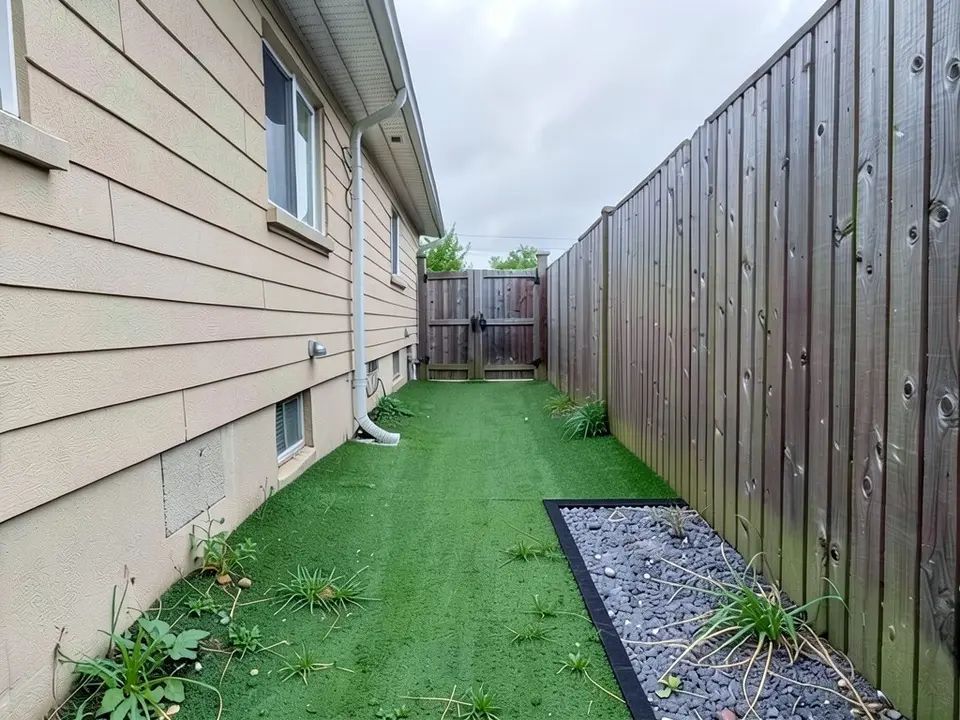
- Long and narrow beats square: SitePrep says dogs move best in a straight line, and that a 5 by 20 foot run beats a 10 by 10 foot square. Our first example is that shape.
- Size by dog: SitePrep's minimum and comfortable sizes: under 25 lb, 3 by 10 ft and 4 by 15 ft; 25 to 60 lb, 4 by 15 ft and 5 by 20 ft; 60 to 90 lb, 5 by 20 ft and 6 by 30 ft; over 90 lb, 6 by 25 ft and 8 by 40 ft. For a large dog it says a run under 15 ft needs extra walks.
- A potty corner: SitePrep and Kevens Landscape both suggest a set spot with gravel, mulch or turf. Kevens says it concentrates wear, simplifies cleanup and keeps the main lawn neat.
- Gates and latches: SitePrep suggests a gate at each end and a latch at the top, out of a standing dog's reach.
- A slope for water: SitePrep aims for a 1 to 2 percent slope so water runs away from the house foundation, says to fix existing flooding or muddy spots before building, and to have a hose bib nearby for cleanup.
- Digging dogs: SitePrep describes an anti-dig footer: bury the bottom of the fence outward, 12 to 18 inches underground. Call 811 before any digging in the US.
- Sun and shade: SitePrep says that if less than 50 percent of the run is naturally shaded, add a shade structure or a roof panel, and give the dog both a sunny and a shaded spot.
Surfaces for a dog area, compared
These are the options SitePrep and Kevens Landscape describe, and what they say about each. A mix is common, such as turf with a gravel potty corner.
- Pet turf: SitePrep calls synthetic turf the recommended main ground cover for a run. Kevens says pet-grade turf drains well and stays green year-round.
- Pea gravel: SitePrep calls it the budget option, ideally with solid edging around the perimeter. Kevens lists smooth pea gravel for high-traffic areas.
- Concrete: SitePrep says concrete is durable but gets hot and offers no cushioning. Kevens says it works if textured or stained.
- Pavers: SitePrep names pavers as an alternative, with drainage channels built into the potty area. Kevens lists porcelain pavers for high-traffic areas.
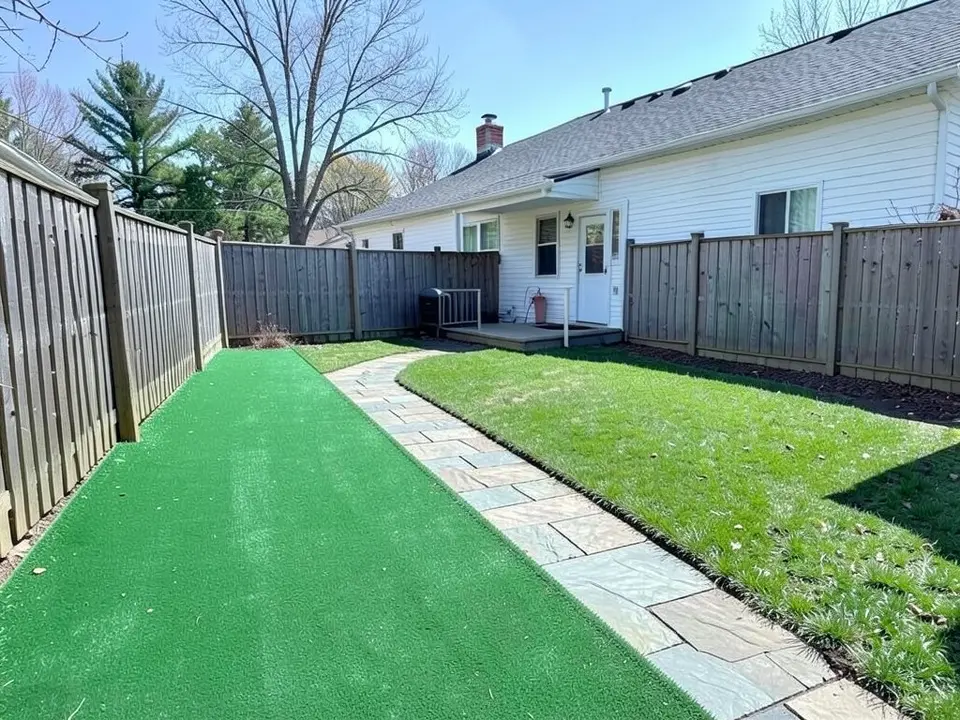
- Decomposed granite and mulch: Kevens lists decomposed granite for high-traffic areas, and flagstone, mulch or pavers for paths that guide the dog and reduce lawn wear. Our second example shows a flagstone-style path.
- A mixed layout: SitePrep's examples: turf with a gravel potty corner, a concrete center path with turf on the sides, or pavers at the gate with turf throughout.
What to look for in a pet turf
CCGrass lists these features for a dog area. They are one manufacturer's recommendations, not an industry standard, so treat them as questions to ask installers:
- Permeable backing: A fully permeable backing so urine and water drain through.
- Antimicrobial protection: CCGrass recommends it to inhibit bacteria and mold, which helps prevent odor.
- Pile height and density: About 25 mm pile for frequent use and easy cleaning, and a denser yarn that resists flattening, which it puts at 70 to 90 ounces.
- Materials: Polyethylene grass blades for durability, with a polypropylene thatch layer for a realistic look and a comfortable paw feel.
- A drained base: CCGrass says the base is typically compacted crushed stone or gravel for drainage, sometimes with weed barrier fabric, and sometimes a shock pad for cushioning.
Heat, odor and cleaning
CCGrass says turf heats up in direct sun, especially on hot summer days, and suggests spraying it with water, providing shade, or choosing turf and infill with cooling features. Test the surface with your own hand before you let the dog on it in the afternoon.
For odor, CCGrass says the risk comes from residue building up or poor drainage. It recommends rinsing urine regularly, picking up solid waste promptly, sweeping off hair and leaves, brushing the blades upright now and then, and treating spots with mild soap and water. Our examples show no drain, base or slope, so none of them tells you whether an area would drain.
Plants and the rest of the yard
Dogs eat and dig in beds. The ASPCA keeps a database of plants that are toxic and non-toxic to dogs and says to check a plant by its name, because a plant can look different from the photo in a listing. It also says any plant material may cause vomiting and an upset stomach in dogs, and gives a 24-hour poison control line on that page, (888) 426-4435. Check each plant you add before you buy it, and ask your vet if you are unsure.
Kevens Landscape suggests protecting delicate plants with raised beds, borders or small fences and marking a no-go area with river stones, and shade from sails, pergolas or trees.
How to try pet turf on your own photo
Use Custom mode for this. The Yard Redesign styles have no text box, so you cannot ask for pet turf, a gravel corner or a path there. Custom lets you name the area, the surface and what must stay the same.
- Take the photo in daylight from where you usually see the spot, with the house, the fence and the gate in frame.
- Open the landscape tool and sign in with Google or an email code. You get 1 free render with a free account.
- Under Select Landscape Mode, pick Custom.
- In the Custom Design Requirements box, name the area, the surface, any gravel corner or path, and what must stay the same, such as the house, the fence and the gate.
- Upload your photo under Upload Your Garden Image and click Generate Custom Design.
- Compare the result with your photo and change one thing at a time, such as where the gravel goes, and run it again.
What the AI can and cannot do
The AI shows a look: roughly how turf, gravel and a path would sit in your own photo, in the colors you name. That helps you decide where the dog area should go and explain what you want to an installer.
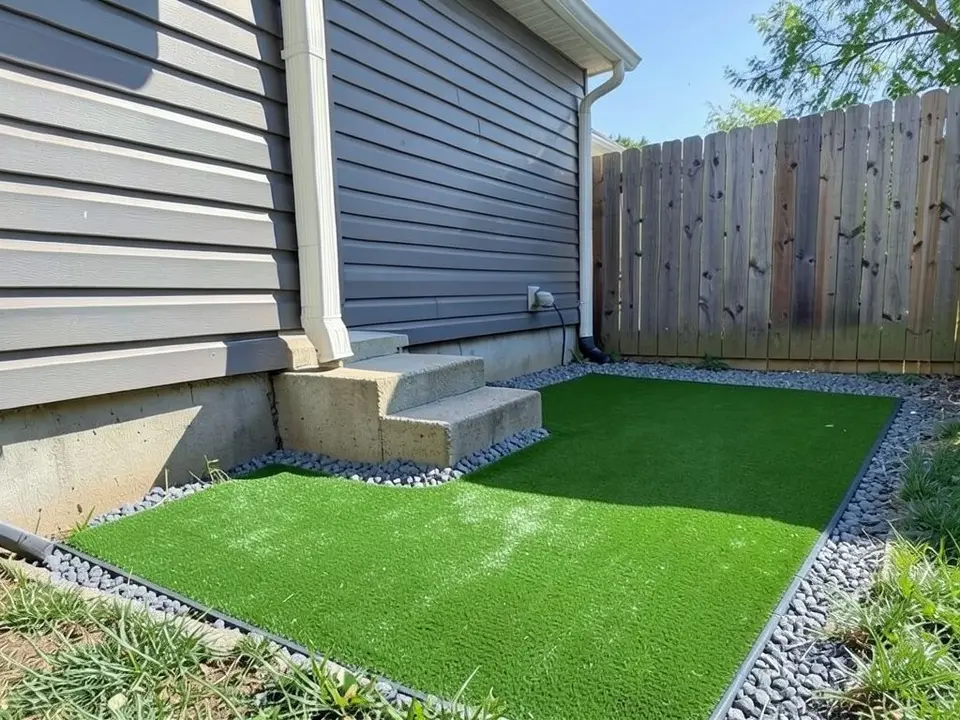
It does not measure the area, check drainage or slope, price the job, or tell you whether a turf will hold up to your dog or stay cool in your sun. It also does not always follow the instruction, as the misplaced gravel, the stone strip and the flat turf in our examples show. Treat the result as a picture of an idea, and get drainage, base and product advice from an installer.
Dog-area instructions to paste into Custom mode
These are the exact instructions we used for the three examples above, in the same order. In the landscape tool, choose Custom, paste one into the Custom Design Requirements box, then upload your photo. Swap in your own area, surface, border and what must stay.
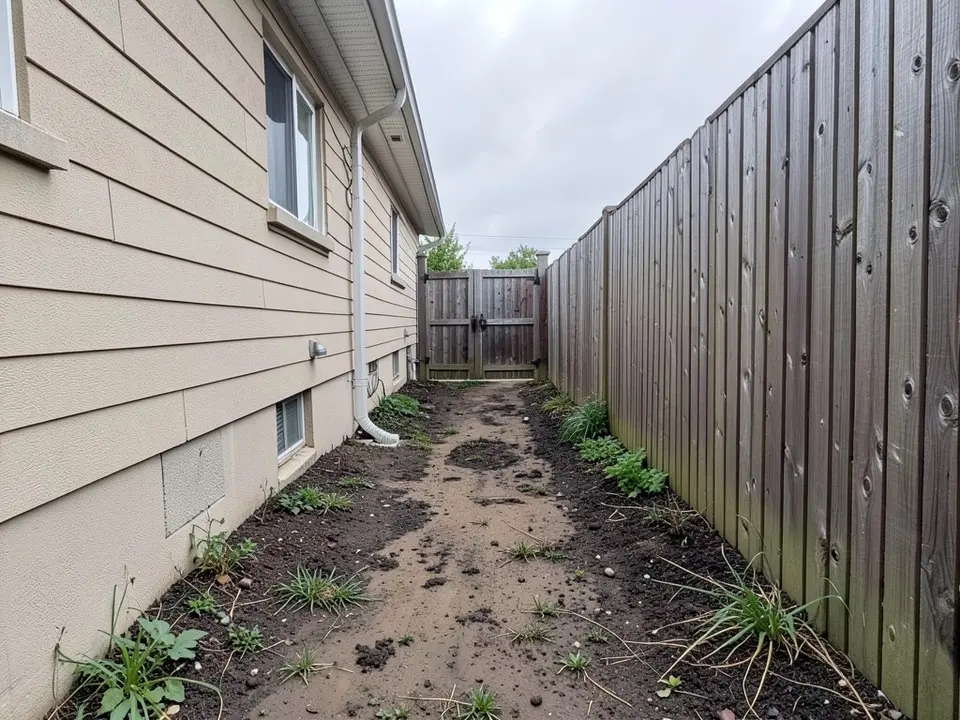
- Change ONLY the ground of the narrow side yard: replace the dirt and mud with short dense green artificial pet turf along the whole length, and put a rectangle of grey pea gravel in the far corner by the gate with a black edging strip between turf and gravel. Keep the house wall, the wooden fence, the gate and the camera angle exactly the same.
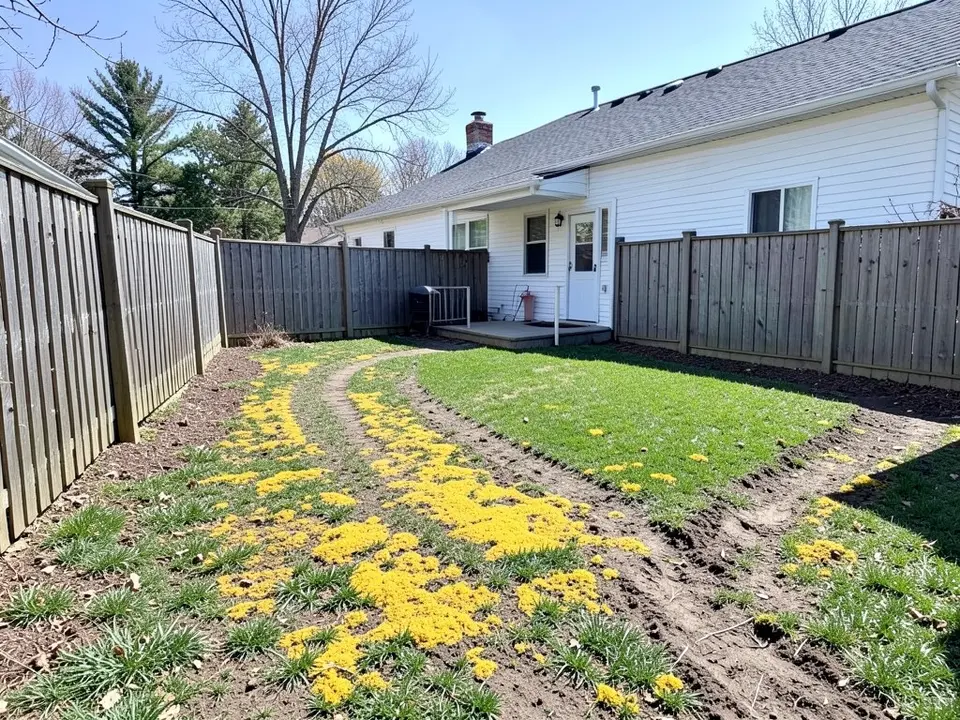
- Change ONLY the worn dirt track and the yellow dead patches in the foreground: replace them with a wide band of green artificial pet turf with a flagstone stepping path beside it, and keep the green lawn at the right as grass. Keep the house, the fences and the camera angle exactly the same.
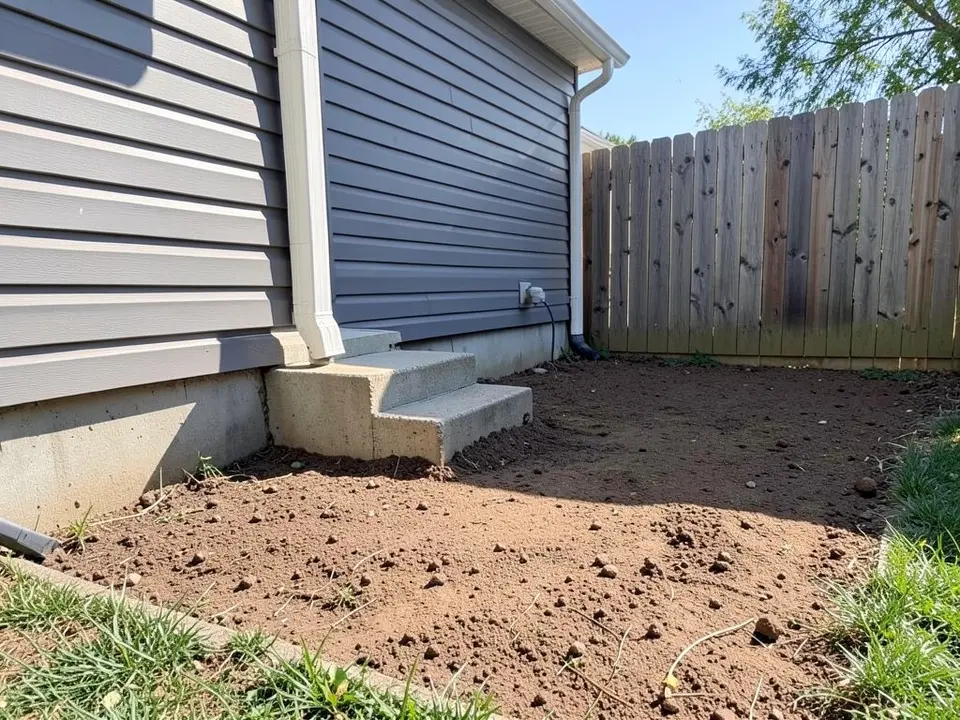
- Change ONLY the bare dirt: cover it with a clean flat patch of green artificial pet turf with a neat grey gravel border around it. Keep the house, the concrete back step, the fence and the camera angle exactly the same.
Frequently asked questions
Does dog urine ruin artificial grass?
CCGrass, a turf manufacturer, says dog urine generally does not cause yellowing or bare patches on turf, and that odor comes from residue building up or from poor drainage. It recommends a fully permeable backing and rinsing urine regularly. Ask an installer how they handle drainage for pet areas.
Does artificial grass get too hot for dogs?
It can. CCGrass says turf heats up in direct sun, especially on hot summer days, and suggests spraying water, shade, or turf and infill with cooling features. SitePrep says to add a shade structure if less than half of a dog run is naturally shaded.
How big should a dog run be?
SitePrep gives minimum and comfortable sizes by dog weight, from 3 by 10 feet for a dog under 25 lb to 8 by 40 feet for a dog over 90 lb, and says a long, narrow run suits dogs better than a square one. It is one company's guidance, so size the area to your dog.
What goes under artificial grass for dogs?
CCGrass says the base is typically compacted crushed stone or gravel for drainage, sometimes with weed barrier fabric and a shock pad. SitePrep adds that a run should slope 1 to 2 percent away from the house. Ask installers about their base and how deep it goes.
Is gravel or turf better for a dog potty area?
Both are common. SitePrep calls turf the recommended main ground cover and pea gravel the budget option with solid edging, and suggests a mix such as turf with a gravel potty corner. Kevens Landscape lists gravel, mulch or artificial turf for a set potty spot.
Can the AI tell me whether a turf is safe for my dog or how much it costs?
No. It draws the look you describe. It does not test a turf, check drainage or heat, or price anything, and it does not always follow the instruction exactly, as the captions above show. Get those answers from an installer and your vet.
Do I need an account, and is it free?
You need an account, and it is free: 1 free render with a free account, and free renders carry a watermark. More renders and no watermark come with a paid plan.
Sources
The facts above come from these pages, which we read in October 2026. We are not affiliated with any of them.