
What can replace a lawn
Yardzen, a landscape design company, lists eight ideas for a backyard without grass, and Gardeningetc, a magazine, lists low-cost surfaces. Between them they cover most of the options. The same yard looks very different in each, so it helps to see them on your own photo.
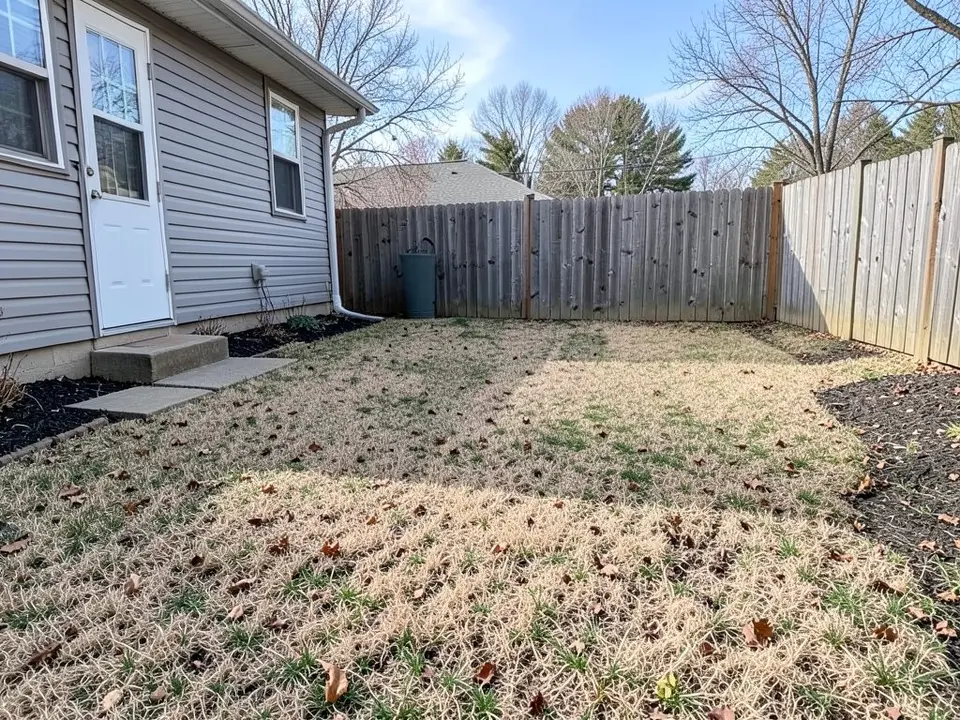
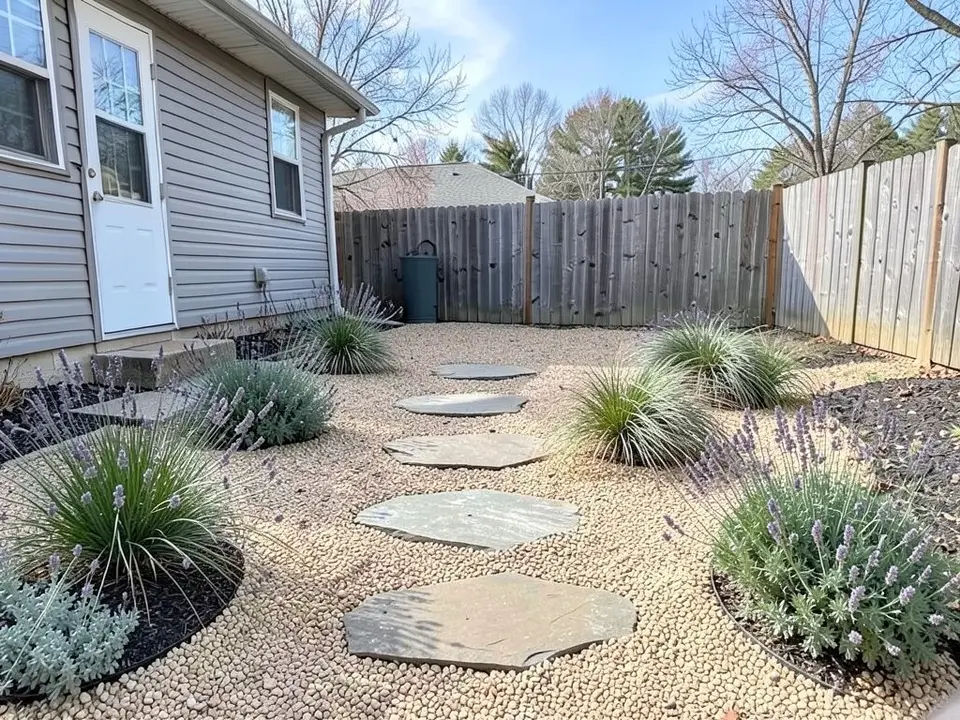
- Gravel: Gardeningetc calls gravel cheap, easy to install and low in upkeep, and says it absorbs rainwater. It suggests edging the borders so stones do not spread, and planting drought-tolerant plants straight into it. Our first example is gravel with stepping stones.
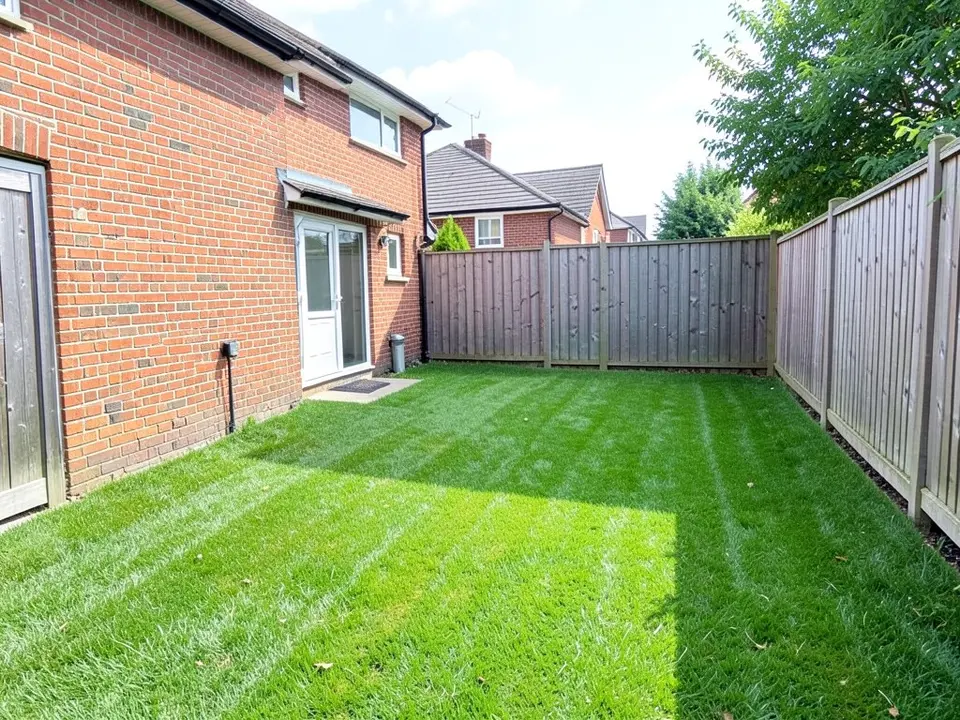
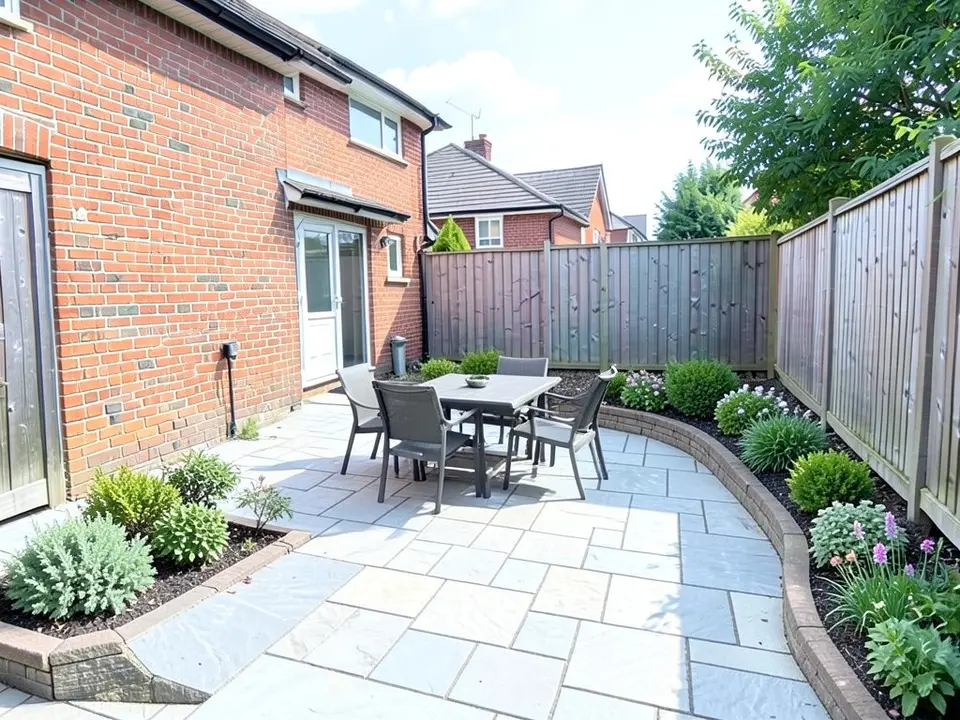
- Pavers or paving: Yardzen lists a paver patio in concrete, brick or natural stone, with a pattern that suits the house, for dining or relaxing. Our second example is a stone paver patio.
- Bark chippings or mulch: Gardeningetc says to lay landscaping fabric first to hold back weeds, and that chippings break down, so they need topping up now and then, unlike gravel. Our third example is mulch.
- Native plants or xeriscape: Yardzen says native plants suit the local climate and soil, so they are low in maintenance, and describes xeriscaping as drought-tolerant plants with gravel paths, rocks and mulch, suited to dry or drought-prone areas.
- Artificial turf: Gardeningetc calls it low-maintenance and always freshly cut, and quotes a supplier who advises buying a quality product so it lasts. We have a separate artificial turf visualizer page.
- Decking: Gardeningetc lists composite decking as low-maintenance, and click-together decking tiles for small plots, patios, balconies and rentals.
- Use-based yards: Yardzen also lists a vegetable garden in raised beds or containers, a zen garden of gravel or sand and rocks, an outdoor kitchen, a wildlife habitat and a play area as ways to use the space.
If your lawn fails in the shade
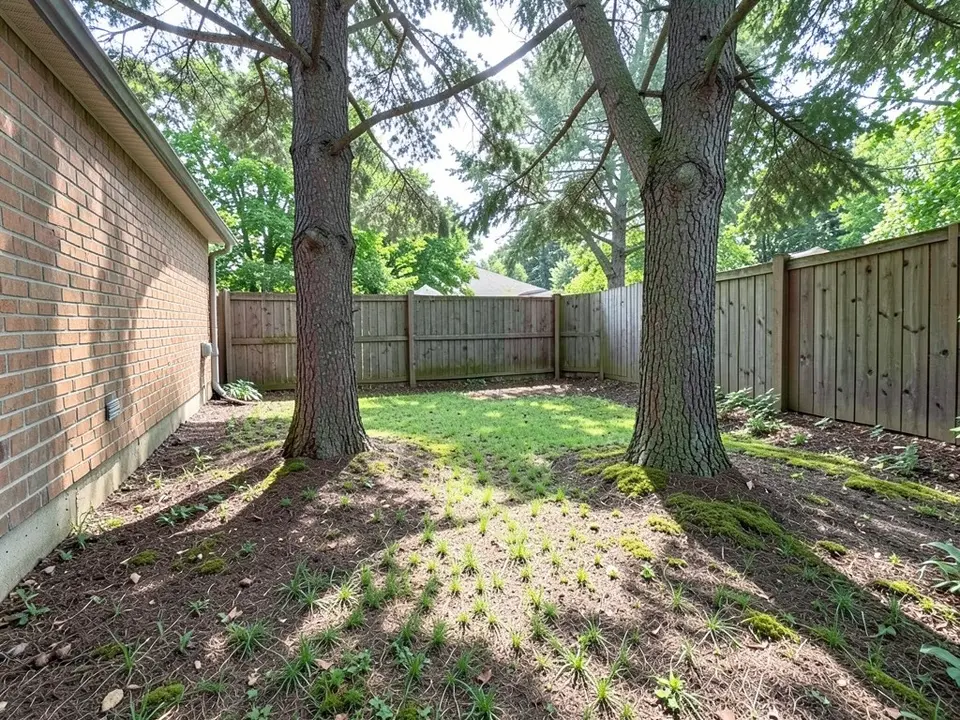
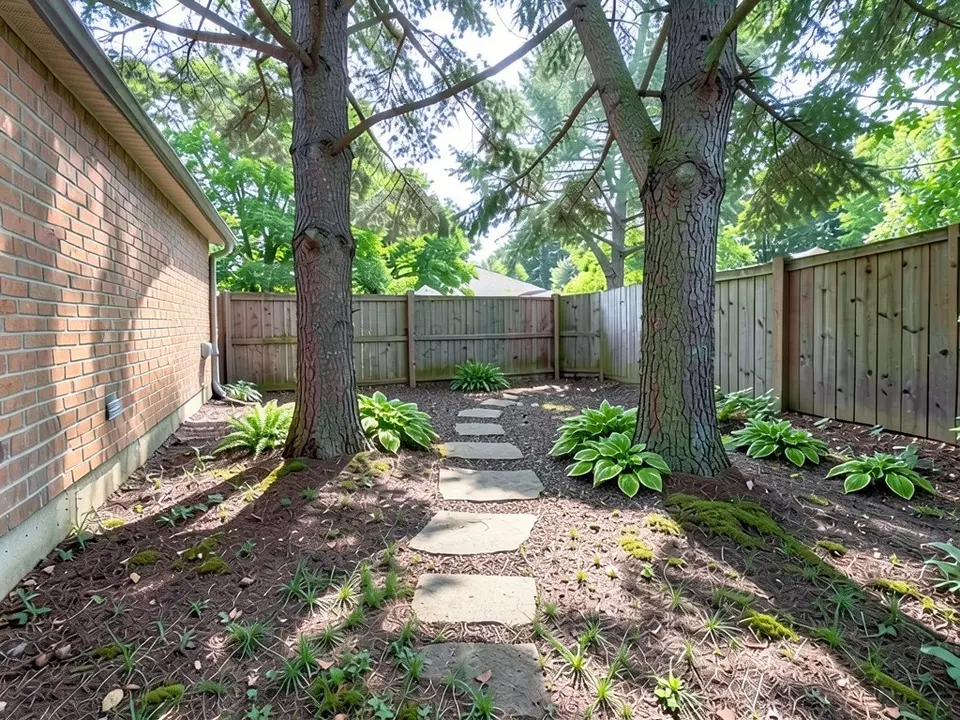
Gardeningetc says lawns struggle in shade, and suggests hostas, which it says do well there, planted in mounds around a path. Our third example shows hostas and ferns around two trees. See our shade garden ideas page for more.
Keeping the cost down
Gardeningetc says pea gravel is one of the cheapest and easiest ground covers, suggests reclaimed pavers, bricks or logs to cut costs, and says artificial turf and composite decking cost more at the start but need little upkeep afterwards. It gives no prices, and neither do we. Ask a local installer for a quote.
How to try a no-grass backyard on your own photo
The tool above is already in Custom mode. The Yard Redesign styles have no text box, so you cannot name a surface, a path or a plant there. Custom lets you name what replaces the grass, where the beds and paths go, and what must stay the same.
- Take the photo in daylight from where you would usually see the yard, with the lawn, the house or fence and some of the sky in frame.
- Describe the change in the Custom Design Requirements box: the new surface (gravel, pavers, mulch), whether any path, patio or beds go in, the plants, and what must stay the same, such as the house, the fence, the trees and the camera angle.
- Upload your photo under Upload Your Garden Image and click Generate Custom Design. You sign in with an email code or Google when you generate.
- Compare the result with your photo, change one thing at a time, such as the surface or the plants, and run it again. If grass still shows through, say "no grass anywhere" in the instruction.
What the AI can and cannot do
The AI shows a look: roughly how a yard with gravel, pavers or mulch in place of the lawn would appear in your own photo. That helps you choose and explain what you want to an installer.
It does not measure the yard, check drainage, plan the base under a patio, price the job or tell you what suits your climate, and the pages we read give no such numbers. It also does not always follow the instruction, as the leftover grass, the unasked extra bed and the season mismatch in the examples above show. Treat the result as a picture of an idea, and check the ground, the drainage and any local rules with a qualified installer.
No grass backyard instructions to paste into Custom mode
These are the exact instructions we used for the three examples above, in the same order. In the tool above, Custom is already selected: paste one into the Custom Design Requirements box, then upload your photo. Swap in your own surface, plants, paths and what must stay.
- Change ONLY the lawn: replace all the grass with light tan crushed gravel, add a path of large flat stepping stones across it, and add a few ornamental grasses and lavender plants in groups in the gravel. Keep the house, the back door, the fence and the camera angle exactly the same.
- Change ONLY the lawn: replace most of the grass with a large paver patio in light grey stone with a small dining table and four chairs, and a curved planting bed with shrubs and flowers along the fence. Keep the house wall, the back door, the fence and the camera angle exactly the same.
- Change ONLY the lawn: replace the grass with dark bark mulch, add a curving path of stepping stones through it, and plant hostas and ferns around the base of the trees and along the fence. Keep the trees, the fence, the house wall and the camera angle exactly the same.
Frequently asked questions
What can I put in my backyard instead of grass?
Yardzen and Gardeningetc list gravel, pavers or paving, bark chippings, native plants and xeriscaping, artificial turf, composite decking, raised vegetable beds, a zen garden of gravel and rocks, and use-based spaces such as a play area or an outdoor kitchen. Our three examples show gravel with stepping stones, a paver patio with beds and mulch with hostas.
What is the cheapest no-grass option?
Gardeningetc calls pea gravel one of the cheapest and easiest ground covers and suggests reclaimed pavers, bricks or logs to cut costs. It also says artificial turf and composite decking cost more at the start but need little upkeep. The pages give no prices, so get a local quote.
What do I do about weeds under mulch or gravel?
Gardeningetc says to lay landscaping fabric under bark chippings to combat weeds, and says chippings need topping up now and then because they break down. The pages do not cover weed control under gravel in detail, so ask an installer.
What works where grass will not grow in the shade?
Gardeningetc says lawns struggle in shade and suggests hostas, planted in mounds around a path. Our third example uses mulch, stepping stones, hostas and ferns. Mulch is one of the options the pages list for the ground itself.
Is gravel a good lawn replacement?
Gardeningetc calls gravel cheap, easy to install and low in upkeep, says it absorbs rainwater, and suggests edging borders so stones do not spread. The pages we read do not say how it suits every climate or yard, so ask a local installer about your ground.
Can the AI tell me what a no-grass backyard will cost or how to install it?
No. It draws the look you describe. It does not measure, price, plan drainage or a base, and it does not always follow the instruction exactly, as the captions above show.
Do I need an account, and is it free?
Create a free account with an email code or Google to generate. You get 1 free render, and free renders carry a watermark. More renders and no watermark come with a paid plan.