
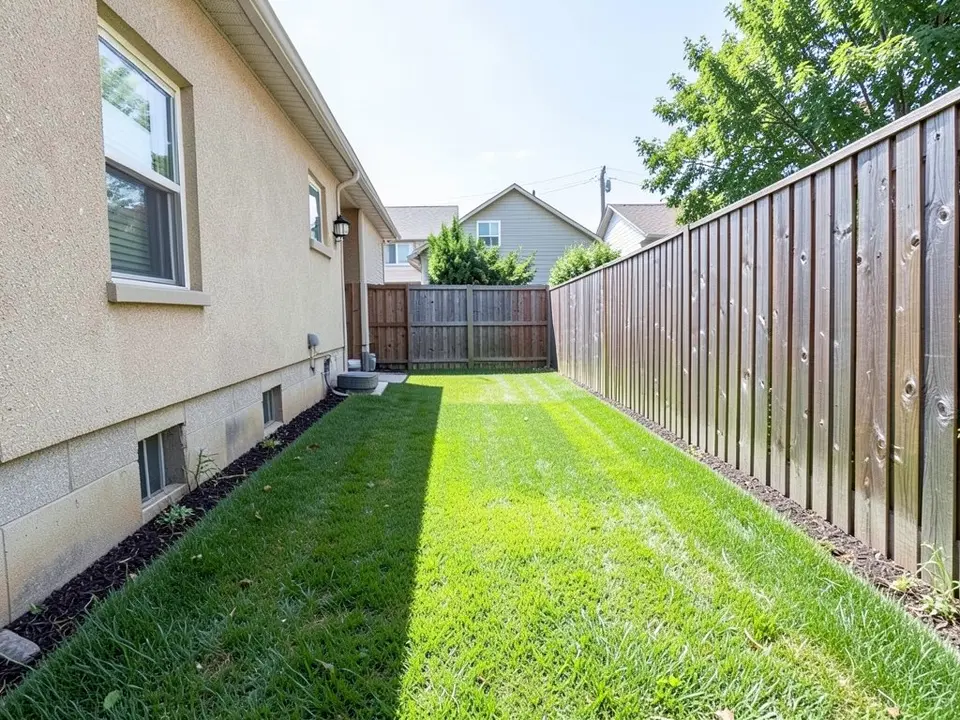
Start with what the side yard has to do
These ideas come from LawnStarter (updated December 11, 2024), YardShare (April 10, 2026), Livingetc (June 22, 2023), Landscaping Network (undated) and ShrubHub (updated January 21, 2025). They are design advice, not tested in any climate, so check plants against your own growing zone and light.
- Fix drainage first: YardShare says to fix a wet, swampy strip with gravel, stepping stones, a bridge-like crossing or a narrow dry creek bed, then plant around it.
- Choose one focal point: YardShare suggests a small focal point such as an arbor or birdbath, supported by layered foliage and repeated color, to make a narrow side feel lush.
- Plan for light: Livingetc says side yards are often shadier and drier, and suggests compact, shade-tolerant, drought-tolerant plants with year-round interest, such as camellias, star jasmine, clematis and ferns.
Paths and stepping stones
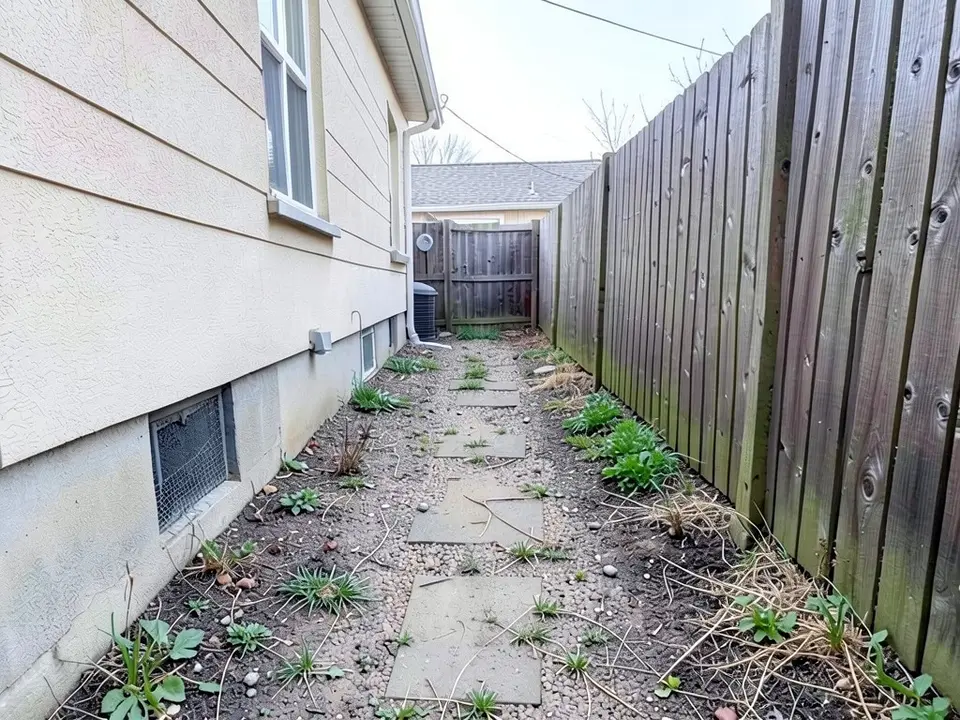
Our first example is this idea.
- A path from front to back: LawnStarter suggests a garden path of stepping stones, pavers, gravel or flagstone, bordered by plants such as hostas, daylilies or boxwood.
- A serene pathway: ShrubHub suggests pavers or stepping stones bordered by garden beds, softened with ground covers such as creeping thyme or chamomile, with solar path lights.
- A planted passage: YardShare describes treating the side route as a garden walk with one clear path, controlled plantings along the edges and an arbor, trellis, birdhouse or tall container for interest.
- Lighting: LawnStarter suggests string lights or low-voltage fixtures for safety, and solar in-ground lights where there is sun. See our landscape lighting design ideas.
Vertical planting and screens
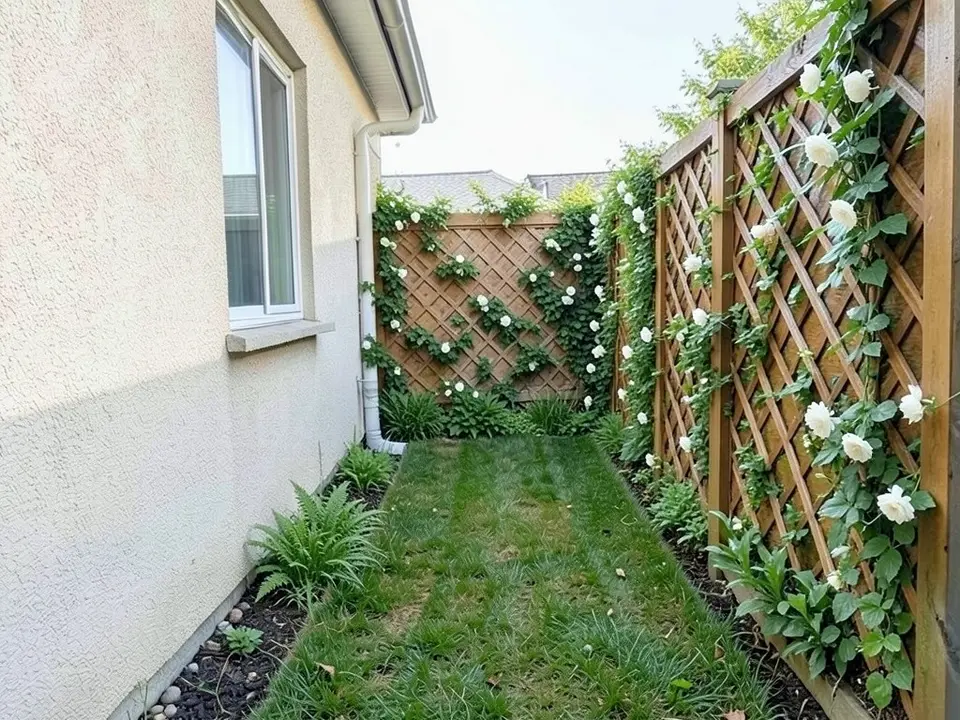
Our second example is this idea. With little ground space and a path to keep clear, the pages go up.
- Vines: Landscaping Network says vines are often the best choice for a side yard, suggests smaller, well-behaved types like clematis rather than rampant ones, and says buying the tallest vines available helps them reach sunlight, since small ones languish in shade.
- Panels on the fence: Landscaping Network says taller panels such as lattice, bamboo, ironwork or vertical wall planting against the fence add height, and vines can grow on them. It also says the view from side-yard windows is often a fence and a neighbor's windows, and that builders often ignore side-yard views.
- Green walls: LawnStarter says a green wall built from wood, metal or concrete block uses height instead of ground space, can screen a view of a neighbor's yard and may need a permit, so check local rules.
- Arches: LawnStarter says arbors and pergolas add an elegant feel and, with string lights, seating or climbing vines, can become a dining area.
Seating nooks and small rooms
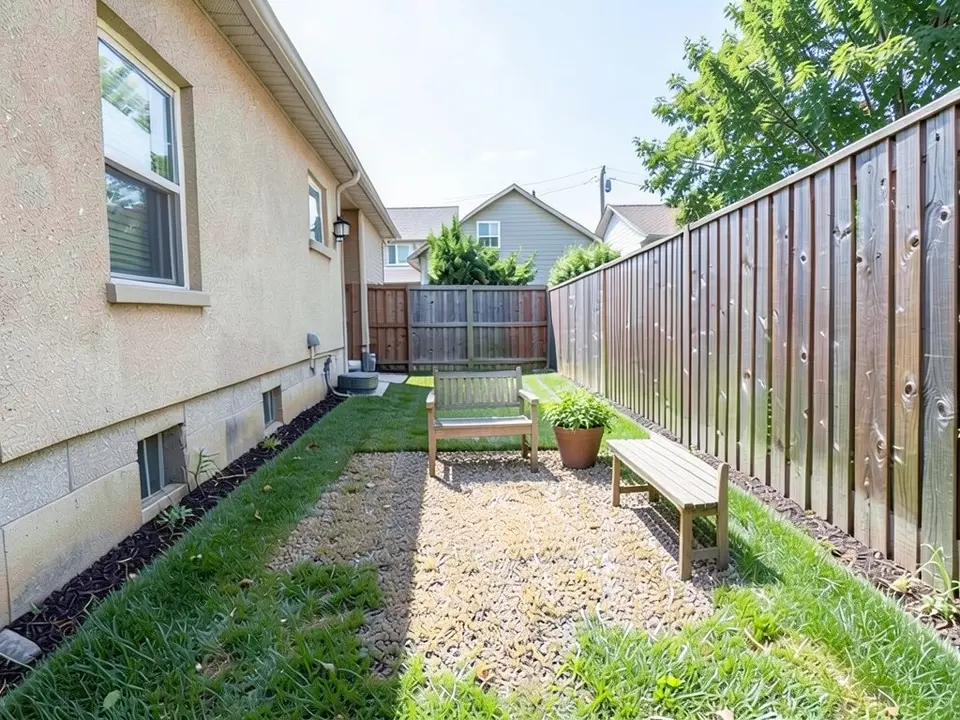
Our third example is the nook.
- A relaxation area: Livingetc says to treat the side yard as its own room for privacy and calm, and to keep furniture and planting sparse and streamlined so a narrow space does not feel crowded.
- One chair: Landscaping Network says a side yard roughly 6 to 10 feet wide can hold a single lounge chair as a private retreat, with privacy from an arbor or roll-up shades, and to check homeowners association and building rules and talk with the neighbor first.
- A reading nook: ShrubHub suggests weather-resistant seating surrounded by greenery, soft lighting and low-care plants such as ferns or hostas.
- Benches and water: LawnStarter says a small water garden, a bench, a hammock or a small dining table can make the space restful. ShrubHub suggests a wall-mounted fountain, a pondless waterfall or a birdbath with a bubbler near seating.
- Connect it to the backyard: Livingetc says to link the side yard to the back garden with sightlines and purposeful use so people want to spend time there.
Other uses the pages suggest
LawnStarter lists a playspace for kids, a dog run, storage, a container garden and a horseshoe pit or putting green. Landscaping Network says limited light suits leafy greens such as kale, lettuce and arugula, and some root crops like radishes and carrots, but not flowering vegetables. Landscaping Network also shows a lattice gateway screening a side yard from the street. If an air conditioner stands in your side yard, see our landscaping around an AC unit page.
What these pages do not cover
None of the pages give a minimum path width, fire-access or utility clearance, or a setback from the fence. LawnStarter and Landscaping Network only say to check local rules, permits and homeowners association rules. Gas and electric meters, vents and hose bibs often sit along a side yard, so leave them reachable and ask your city or utility before you build over anything, and treat our pictures as the look only.
How to try an idea on your own side yard photo
Use Custom mode for this. The Yard Redesign styles have no text box, so you cannot ask for a particular path, trellis or bench there. Custom lets you name the strip, the feature and what must stay the same.
- Take the photo in daylight from one end of the side yard, with the house wall, the ground and the fence in frame.
- Open the landscape tool and sign in with Google or an email code. You get 1 free render with a free account.
- Under Select Landscape Mode, pick Custom.
- In the Custom Design Requirements box, name what to change (the ground, the fence or one spot), what to put there, and what must stay the same, such as the house wall, the window and the camera angle.
- Upload your photo under Upload Your Garden Image and click Generate Custom Design.
- Compare the result with your photo and change one thing at a time, such as the plants or the number of benches, and run it again.
What the AI can and cannot do
The AI shows a look: roughly how a path, a trellis or a seat would sit in your own side yard. That helps you choose and explain what you want to a landscaper.
It does not measure the width, check drainage or light, pick plants for your climate, or price the job. It also does not always follow the instruction, as the missing ferns, the replaced fence and the second bench show. Treat the result as a picture of an idea and get the plan from a local professional.
Side yard instructions to paste into Custom mode
These are the exact instructions we used for the three examples above, in the same order. In the landscape tool, choose Custom, paste one into the Custom Design Requirements box, then upload your photo. Swap in your own feature, the part of the side yard you want changed and what must stay.
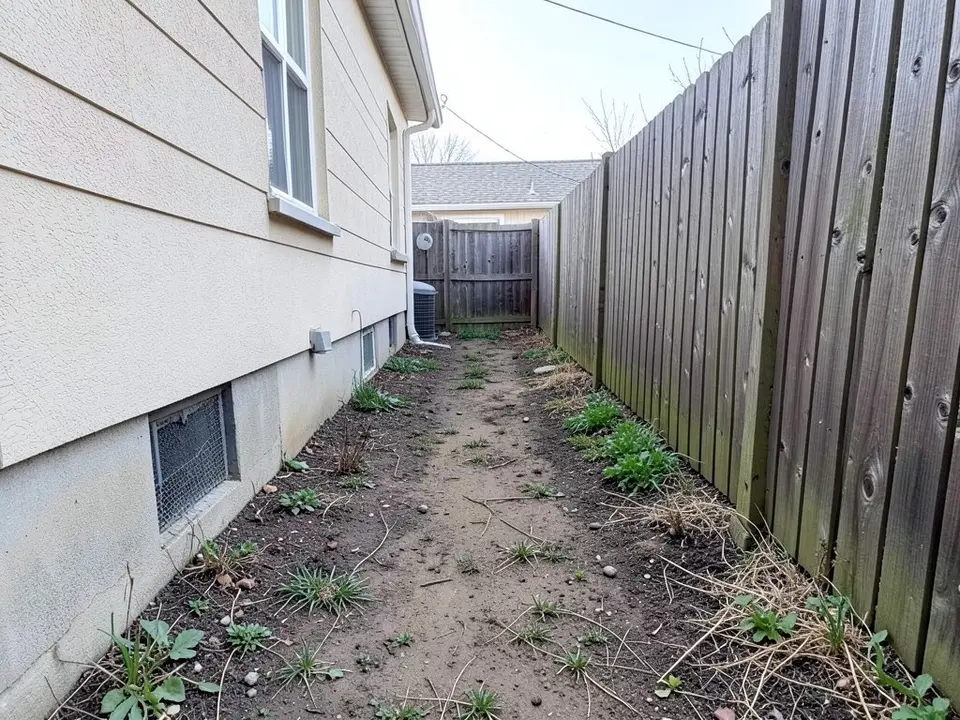
- Change ONLY the ground: replace the bare dirt with a pea gravel path with flat stepping stones, and add green ferns and hostas in narrow beds along the fence. Keep the house wall, the fence and the camera angle exactly the same.
- Change ONLY the fence: add wooden trellis panels on it with climbing green vines and white flowers, with a narrow bed of green plants below. Keep the house wall, the window, the grass and the camera angle exactly the same.
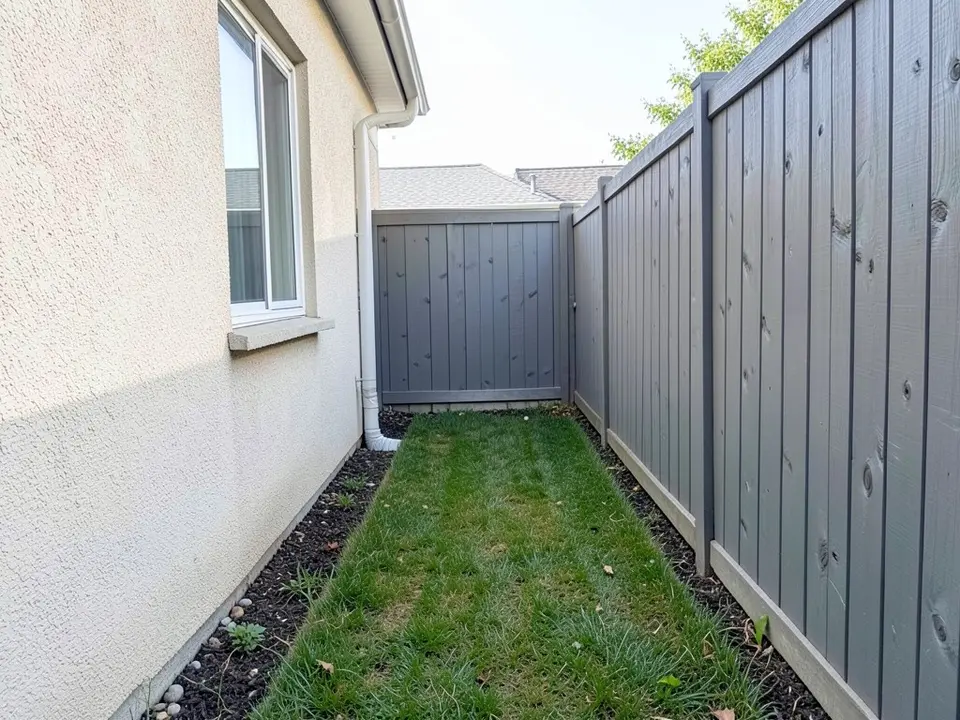
- Change ONLY the open area near the end of the yard: replace the grass there with a small square of pea gravel with a wooden bench and one potted plant. Keep the house wall, the window, the fence, the rest of the grass and the camera angle exactly the same.
Frequently asked questions
What are good side yard landscaping ideas?
The pages we read suggest a path of stepping stones, pavers or gravel, vines and panels on the fence, a small seating nook, a water feature, lighting and, with enough sun, a few food plants. The examples above show a gravel path, a trellis with vines and a bench nook on a photo.
What grows in a shady side yard?
Livingetc suggests compact, shade-tolerant, drought-tolerant plants such as camellias, star jasmine, clematis and ferns, and Landscaping Network says shaded north-facing areas suit hostas, ferns, columbine and primroses. Check your own light and zone.
What if my side yard stays wet?
YardShare says to fix a wet strip first with gravel, stepping stones, a crossing or a narrow dry creek bed, then plant around it. Ask a local professional about your own ground.
Can the tool draw ferns along my fence?
Not reliably. In our gravel path example we asked for ferns and hostas and none were drawn. Name a different plant or run it again.
Is this the same as your corner lot page?
No. This page is about the narrow strip beside the house. For a house on a corner lot see our corner lot landscaping ideas.
Do I need an account, and is it free?
You need an account, and it is free: 1 free render with a free account, and free renders carry a watermark. More renders and no watermark come with a paid plan.
Sources
The facts above come from these pages, which we read in October 2026. We are not affiliated with any of them.
- LawnStarter: 15 side yard landscaping ideas (Andréa Butler, updated December 11, 2024)
- YardShare: 6 side yard landscaping ideas from real yards (April 10, 2026)
- Livingetc: side yard ideas, 10 ways landscape designers create magic (Hebe Hatton, June 22, 2023; we read the first four of its ten ideas)
- Landscaping Network: side yard landscaping ideas (Maureen Gilmer, undated)
- ShrubHub: the best ways to transform your side yard (Terrie Gal, published January 25, 2023, updated January 21, 2025)