
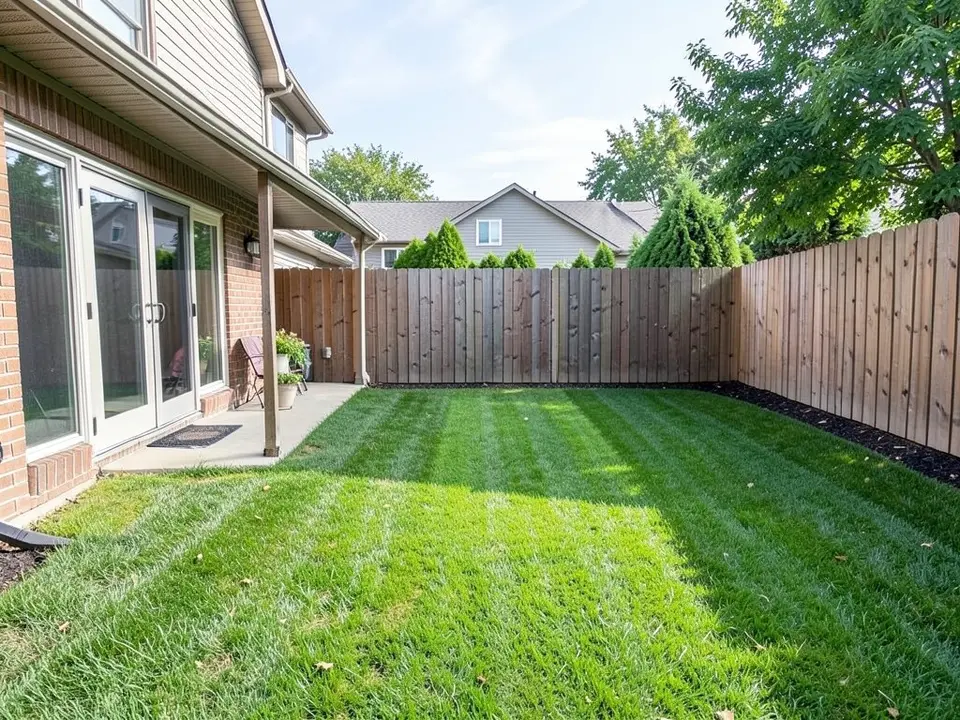
What the pages suggest for gravel
These ideas come from Gardenista (Izabella Simmons, May 13, 2019, an update of an August 10, 2015 post), Livingetc (Luke Arthur Wells, July 21, 2023), Gardeningetc (Holly Crossley, last updated April 19, 2022) and Gardening Beyond (October 26, 2025). None of it is tested in your yard.
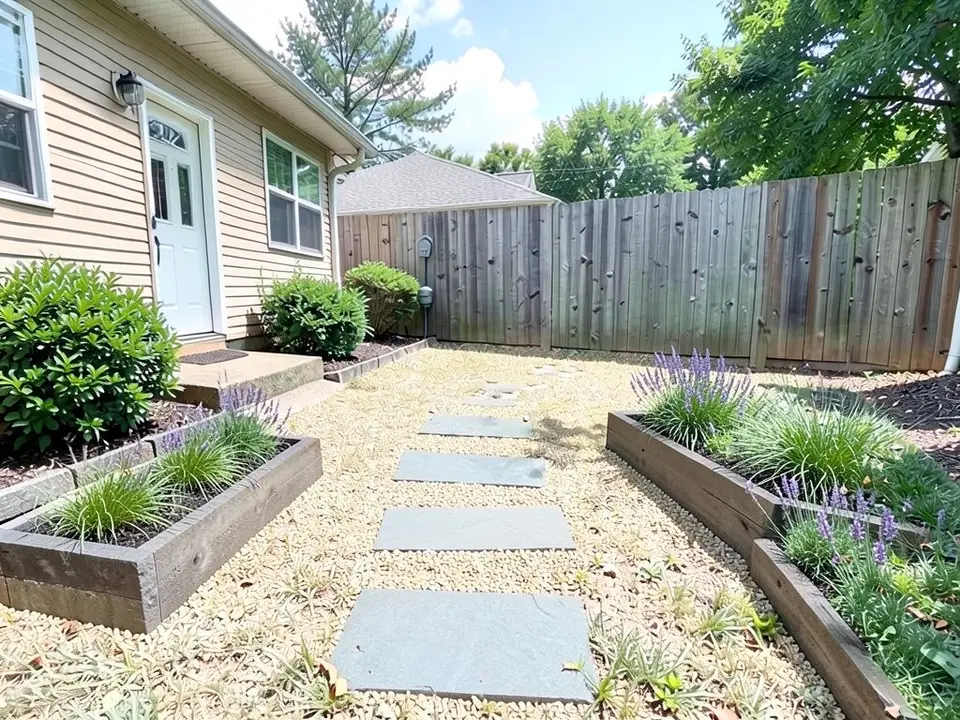
- Pavers in gravel: Gardenista shows gravel edged with tightly clipped box, contrasting grey stone with green, and Livingetc says gravel between evenly spaced pavers highlights the route through a yard, and quotes Devon Brown of Charter Oak Landscape Development on letting gravel flow between planting areas and pathways. Our third example is this idea.
- A gravel lawn: Gardenista shows a gravel lawn framed by ferns that looks airy and green.
- A gravel patio: Gardenista shows a gravel patio in a walled garden in Austin, Texas, and a gravel patio paired with bluestone pavers and boxwood balls in straight rows inside a wood fence.
- Gravel and grass: Gardenista shows a small turf lawn bordered by straight planting beds, with hydrangeas lining a gravel path.
- A fire pit circle: Gardenista shows a gravel seating circle around a fire pit in a woodland setting, where the gravel buffers sparks from the garden.
- Squares: Gardenista shows a geometric garden with bluestone pavers, pea gravel and square flower beds.
Balance, colour and flow
Our first example has plenty of gravel and little planting, which Livingetc warns against.
- More planting than gravel: Livingetc quotes landscape designer Christian Douglas saying the goal is a higher share of planting to gravel, because too much gravel looks flat.
- Plant straight through: Livingetc says gravel lets you plant directly through it without dedicated beds, and describes a limited palette arranged in a uniform layout, with taller plants at the back and smaller ones in front.
- One gravel throughout: Livingetc quotes Brown saying to use the same gravel type to flow between planting areas, paths and driveways, and says gravel blends well with lawn and concrete.
- Colour: Livingetc says solid colours look more formal and variegated shades look more organic, and that the gravel should coordinate with the hardscaping nearby. Brown likes tan gravel between concrete pavers and plants.
- Easier than a lawn: Livingetc says gravel is easier to maintain than a lawn and more water-wise than concrete or stone, because rainwater can infiltrate it.
Seating, planting and light
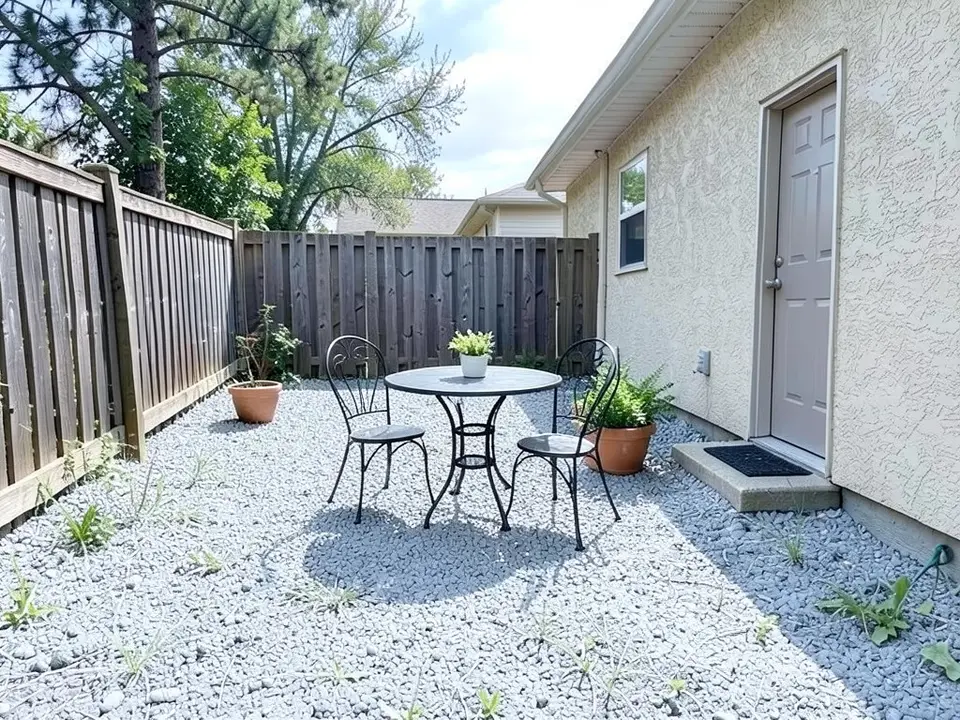
Our second example is the seating idea.
- Budget seating: Gardeningetc suggests pea gravel with a bistro set, a painted storage unit and potted blooms, and says gravel is cheaper than pavers or decking.
- Plants in the gravel: Gardeningetc suggests drought-tolerant plants set directly in the gravel, such as lavender, euphorbias and cistus. Our first example has lavender and grasses in beds.
- Mixed surfaces: Gardeningetc suggests adding pavers or bricks, garden edging or stripes to break up the gravel.
- Light after dark: Gardeningetc suggests string lights, solar stake lights and lanterns, and quotes Lynsey Abbott of Dobbies Garden Centres saying clever lighting gives extra use of the space once the sun goes down.
- A small space: Gardeningetc suggests a streamlined bench on grey stones beside a lawn.
Stone size, edging and underfoot
The pictures show one gravel size at a time. The pages say size matters.
- Bigger or smaller stones: Gardeningetc says larger stones are less likely to scatter onto lawns or indoors but feel less comfortable to walk on.
- Edging: Gardeningetc says smaller gravel can be contained to some extent with good edging. Gardening Beyond says to install edging before the stone, so it sets the final profile, with metal, timber, brick or setts, and to set the top of the edge slightly below grass height where a path meets a lawn.
- Drainage: Gardeningetc says gravel aids drainage, which helps in rainy areas.
- Busy areas: Livingetc says gravel can be displaced, embedded in the ground or washed away, and quotes Brown specifying a base layer of decomposed granite or gravel stabilising grids in high foot traffic areas or driveways to keep it in place.
Weeds, membrane and depth
Our pictures cannot show what is under the gravel, and this is where the pages are most specific. Gardening Beyond is a gardening blog that names no seller. It says:
- Prepare the ground: Remove turf and loose soil to the full build-up depth, and lift roots and runners so you start clean.
- Membrane, used selectively: Use a breathable geotextile, not a plastic sheet, under paths and low-planting areas, and skip it where you want self-seeding or deep-rooted plants. If you lay it, overlap seams by 150 mm and pin it every 30 to 50 cm. A breathable fabric helps on paths, yet many gardeners skip it under planting to let the soil breathe and seedlings appear.
- Depth: The page gives 4 to 6 cm of gravel in its intro, 40 to 50 mm for garden paths and 50 to 60 mm for seating pads. For a foot-traffic path it says the sub-base should be 50 to 75 mm once compacted, laid in two thin layers, with a fall of about 1 in 60 to 1 in 80 so water drains away from buildings.
- Upkeep: Sweep monthly in the first year, then spend about five minutes a month pulling young weeds, raking and topping up thin spots.
What these pages do not cover
None of the pages we read says how gravel suits dogs, gives a price for it, or says how to lay it on a sloped yard. Check drainage, local rules and your own ground with a local installer before you build, and treat our pictures as the look only.
How to try gravel on your own yard photo
Use Custom mode for this. The Yard Redesign styles have no text box, so you cannot ask for a particular gravel, path or plant there. Custom lets you name the surface, what goes in it and what must stay the same.
- Take the photo in daylight from the spot where you would stand to look at the yard, with the lawn or dirt, the fence and the house in frame.
- Open the landscape tool and sign in with Google or an email code. You get 1 free render with a free account.
- Under Select Landscape Mode, pick Custom.
- In the Custom Design Requirements box, name what to change (the lawn or the dirt), the gravel colour and size, what goes in it such as pavers, pots or plants, and what must stay the same, such as the house, the fence and the camera angle.
- Upload your photo under Upload Your Garden Image and click Generate Custom Design.
- Compare the result with your photo and change one thing at a time, such as the gravel colour or the number of pavers, and run it again.
What the AI can and cannot do
The AI shows a look: roughly how a gravel surface of a given colour would sit with your fence, your house and your furniture. That helps you choose and explain what you want to an installer.
It does not measure your yard, check drainage or the ground under the stones, or price the job. It also does not always follow the instruction, as the extra paver and the added shrubs show, and two of our three pictures needed a second run. Treat the result as a picture of an idea and get the plan from a local professional.
Gravel backyard instructions to paste into Custom mode
These are the exact instructions we used for the three examples above, in the same order. In the landscape tool, choose Custom, paste one into the Custom Design Requirements box, then upload your photo. Swap in the gravel colour, what goes in it and what must stay.
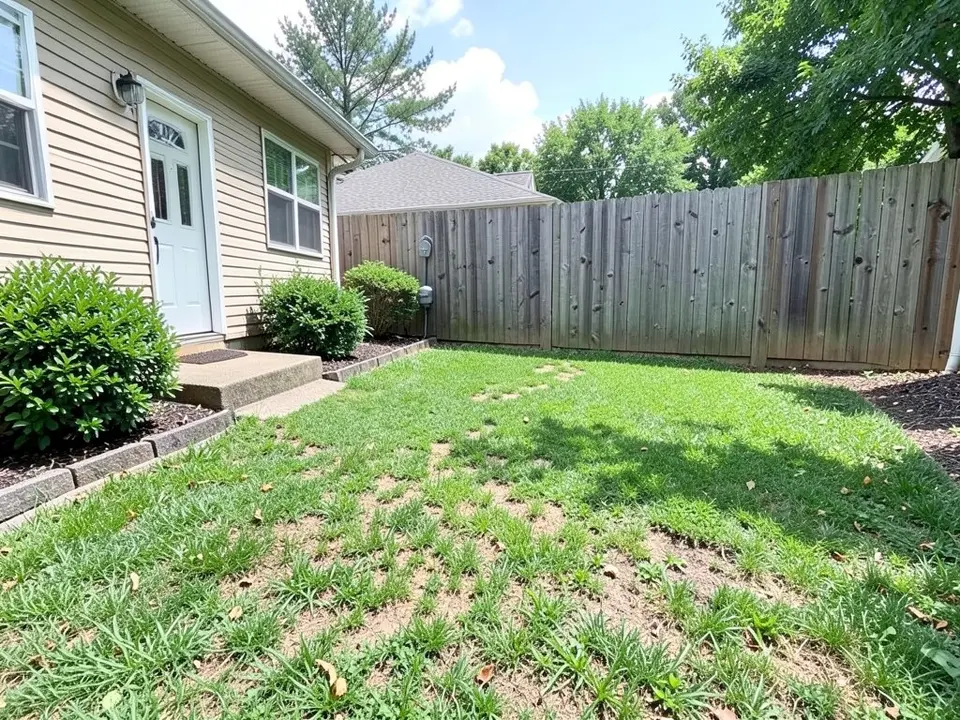
- Change ONLY the lawn: replace it with light tan gravel, with a path of large flat grey stepping stones across the middle, and add two raised-edge planting beds with ornamental grasses and lavender along the fence. Keep the house, the fence, the shrubs and the camera angle exactly the same.
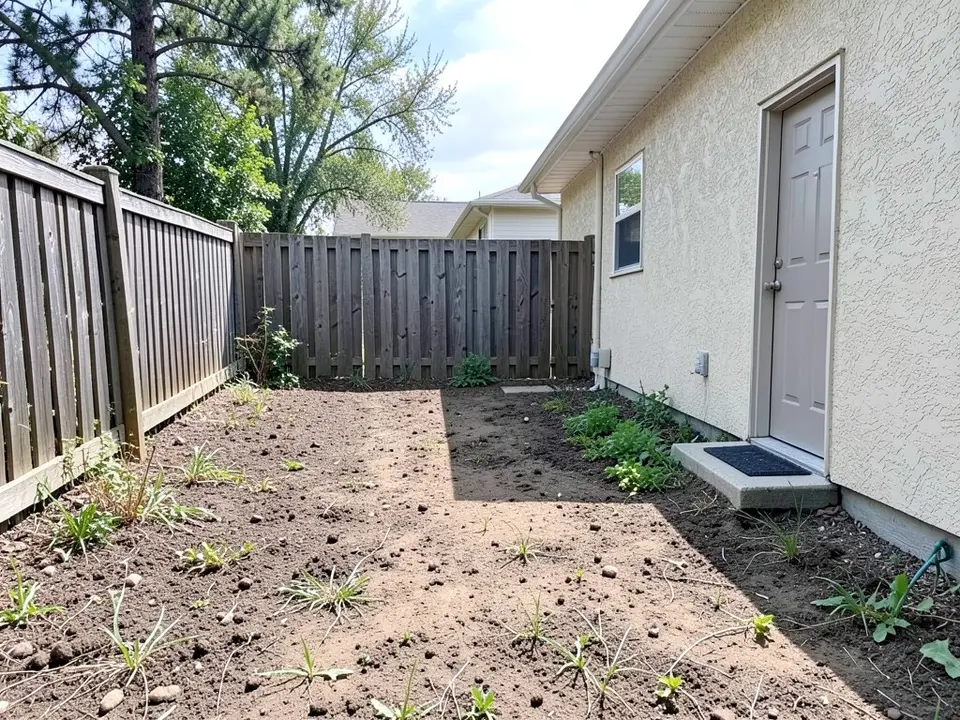
- Change ONLY the dirt: cover the whole ground with clean light grey pea gravel made of small round stones, and add a round metal bistro table with two chairs in the middle and two terracotta pots with green plants beside the fence. Keep the house wall, the door, the fence and the camera angle exactly the same.
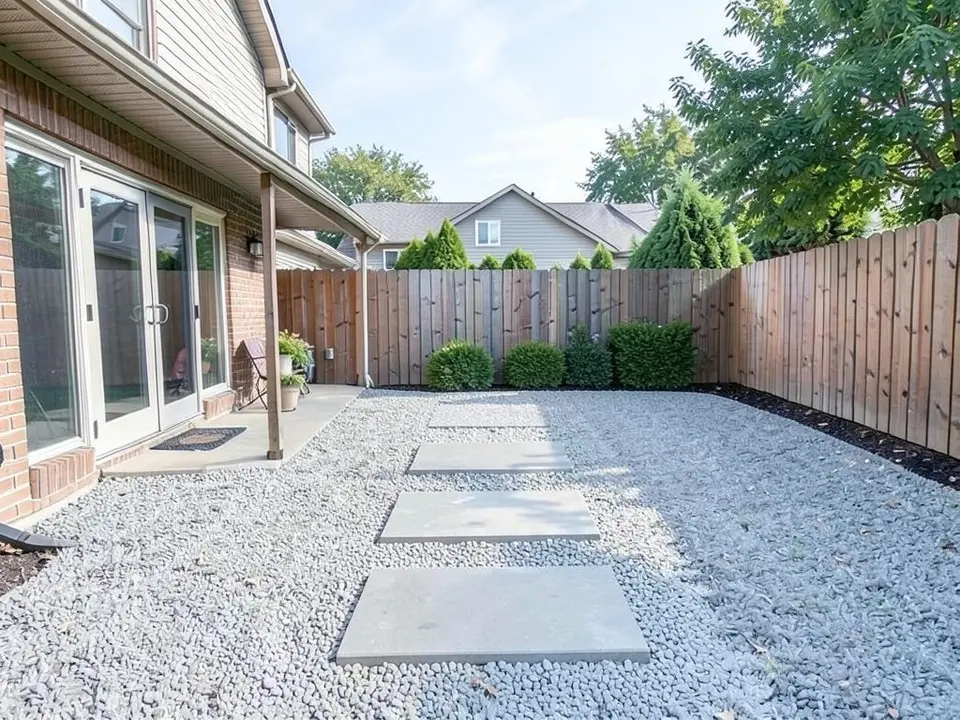
- Change ONLY the grass: replace the whole lawn with light grey crushed stone gravel made of clearly visible small stones, and set three large square grey concrete pavers in a row in the gravel leading from the patio doors toward the back fence. Keep the house, the patio doors, the fence, the hedges, the trees and the camera angle exactly the same.
Frequently asked questions
What are good gravel backyard ideas?
The pages we read suggest pavers or stepping stones set in gravel, more planting than gravel, drought-tolerant plants set directly in it, a bistro-set seating area, a gravel patio, a fire pit circle and string or solar lighting. The examples above show a path with beds, a seating area and pavers on a photo.
How deep should backyard gravel be?
Gardening Beyond gives 4 to 6 cm in its intro, 40 to 50 mm for garden paths and 50 to 60 mm for seating pads, over a compacted sub-base of 50 to 75 mm for a foot-traffic path. Our pictures do not show depth.
Do I need weed membrane under gravel?
Gardening Beyond says to use a breathable geotextile selectively, under paths and low-planting areas, and to skip it where you want self-seeding or deep-rooted plants. It adds that many gardeners skip it under planting so seedlings can appear, and that gravel needs a monthly routine of sweeping and pulling young weeds.
Is gravel easier than a lawn?
Livingetc says gravel is easier to maintain than a lawn and more water-wise than concrete or stone. Gardening Beyond describes a monthly routine of pulling young weeds, raking and topping up, so it is not maintenance-free.
What size gravel is best?
Gardeningetc says larger stones are less likely to scatter onto lawns or indoors but feel less comfortable to walk on, and that smaller gravel can be contained to some extent with good edging. Our pictures show pea gravel and crushed stone.
Is gravel good for dogs?
The pages we read do not cover dogs on gravel, so we do not give an answer. Ask a vet or an installer.
Do I need an account, and is it free?
You need an account, and it is free: 1 free render with a free account, and free renders carry a watermark. More renders and no watermark come with a paid plan.
Sources
The facts above come from these pages, which we read in October 2026. We are not affiliated with any of them.
- Gardenista: the new gravel backyard, 10 landscape designs that inspired me (Izabella Simmons, May 13, 2019; an update of an August 10, 2015 post)
- Livingetc: 10 gravel landscaping ideas (Luke Arthur Wells, July 21, 2023; designers Christian Douglas and Devon Brown quoted)
- Gardeningetc: gravel patio ideas, 12 chic ways to style stony outdoor living spaces (Holly Crossley, last updated April 19, 2022)
- Gardening Beyond: how to lay a gravel garden (author credited as Mo, October 26, 2025; a gardening blog that names no seller)