
Plan a small backyard around how you will use it
A small backyard can rarely do everything, so pick one or two main uses first: eating outside, a quiet place to sit, growing herbs and vegetables, space for kids or a dog, or a green view from the kitchen window. Give each use its own zone. A yard planned around one good seating area usually feels bigger than one that squeezes in a dining set, a lounge set, a grill, a play area and a lawn.
Before choosing a style, note where the sun falls, where water collects after rain, which neighbors' windows look in, and where the hose, trash bins and AC unit have to stay. These fixed things decide more of the layout than any style does.
12 small backyard landscaping ideas
- Size the patio to the furniture: Set out the table and chairs you own and leave room to pull the chairs out and walk around them. Too small feels crowded; too big leaves no room for plants.
- Replace a thin lawn: Grass in a small, shaded or busy yard often wears out. Pavers, gravel, mulch or a low groundcover can take its place, or keep one simple lawn shape with a clean edge.
- Plant the fence: Climbers on a trellis, wall planters or an espaliered shrub add green without taking floor space. Use separate supports rather than hanging heavy pots on old boards.
- Deep borders instead of thin strips: One bed two to three feet deep, shrubs at the back and lower plants in front, looks fuller than a thin strip of flowers along every side.
- One small tree: A small multi-stem or ornamental tree gives height, shade and a focal point. Check its mature width, and keep it clear of the foundation and utility lines.
- Raised beds for growing food: Raised beds keep herbs and vegetables tidy and easy to reach. Put them in the sunniest spot and leave a path between them.
- Curves to lengthen the view: A lawn or path with a soft curve, or a seating area at the far end of the yard, draws the eye across the whole space and makes a short yard feel longer.
- Fewer materials: Two hard surfaces, such as pavers and gravel, and a short plant list repeated in groups look calm. Many materials look busy.
- Light it in layers: String lights over the seating area, a few low path lights and one uplight on the tree make the yard usable after dark without glare.
- Screen the views you don't want: A tall planter, a slatted screen or an evergreen shrub can hide a neighbor's window or the AC unit without closing in the yard.
- A compact fire pit or water feature: A small fire bowl on gravel or pavers, or a bubbling urn, gives a seating area a center. Follow the product's clearance from fences and the house, and check local fire rules first.
- Hidden storage: A storage bench or a slim shed along a side fence keeps cushions, tools and toys out of sight.
Ideas by the kind of small backyard you have
- Townhouse or row-house yard: Pave the area by the door for seating, plant along one fence and keep the other side simple, so the yard does not feel boxed in.
- Long, narrow yard: Split it into two or three rooms, such as a patio, a lawn or garden and a seating spot at the far end, joined by a path that changes direction once.
- Shady yard: Grass struggles in shade. Gravel or mulch with ferns, hostas and other shade-tolerant plants usually looks better (hostas are toxic to dogs and cats, so skip them if you have pets). Ask a local nursery what suits your area.
- Yard with kids or a dog: Keep an open, durable area to run on, avoid thorny or toxic plants near play space, and use sturdy edging so beds survive.
- Sloped yard: Low terraces and a few steps can turn a slope into usable flat space. Taller retaining walls may need an engineer or a permit, so ask a local contractor or your building department.
Before you dig or build
In the US, call 811 a few days before digging for posts, trees or new beds, so buried lines are marked. Check HOA rules and local codes for fences, pergolas, sheds and fire pits. Slope new paving away from the house and away from a neighbor's yard. And plant for the mature size of each tree and shrub, not the size in the pot.
On a budget, work in phases: hard surfaces and bed outlines first, then plants, then lighting.
Three sample layouts for a small backyard
These are starting points, not plans to scale. Measure your yard, mark the door, gate, windows and any fixed equipment on a rough sketch, then adapt the layout that is closest to your shape. Lay a hose or string on the ground to try out bed lines and the patio edge before you build anything.
- Square yard: Put the patio against the house, where the door opens, and plant a deep bed along the back fence and one side. Place a small tree in the back corner opposite the door so it is the first thing you see. Leave the middle open, as lawn, gravel or groundcover, so the yard does not feel cut into small pieces. A diagonal path or a patio set at an angle makes a square yard look less boxy.
- Long, narrow yard: Run the main walking route along one side, not straight down the middle, and plant the other side deeply. Break the length with a cross-feature, such as an arch, a pair of shrubs or a change from paving to gravel, about halfway down. Put a second, smaller seat or bench at the far end so there is a reason to walk to it.
- L-shaped yard: Treat the two arms as two rooms. Use the wider arm for seating and dining, and the narrow arm for a side path, storage, bins or raised beds. Place a tall plant or a screen at the corner where the arms meet, so you cannot see everything from one spot. That makes the yard feel larger and gives the hidden arm a sense of discovery.
A small backyard plant palette by role
In a small yard every plant is on show, so choose plants for the job they do rather than one of everything. Read the tag for mature height and spread, sun or shade needs, and hardiness for your area, and ask a local nursery which plants do well near you. Native plants adapted to your region are often easier to keep healthy and support local pollinators.
- One tree: A single small tree, often multi-stem or with a narrow or upright shape, gives height and shade. One is usually enough. Plant it where its mature canopy will not crowd the house, the fence or the patio.
- Structure shrubs: A few evergreen shrubs give the yard shape in winter and hide fences and equipment. Pick compact or dwarf varieties so you are not cutting them back every few weeks to keep paths clear.
- Fillers: Perennials, ornamental grasses and low groundcovers fill the space in front of the shrubs. Plant them in groups of three or five of the same plant and repeat those groups around the yard, so the planting looks planned.
- Climbers: Vines on a trellis, wires or an arch add green at eye level using almost no ground. Check how vigorous a climber is before you plant it; some spread fast and need regular cutting back.
- Containers: Pots let you add color by the door, grow herbs near the kitchen and move plants to follow the sun. A few large pots look better and dry out more slowly than many small ones. Make sure every pot has a drainage hole.
Small backyard mistakes to avoid
- Buying before planning: Plants and furniture bought on impulse rarely fit together. Decide the layout and the main uses first, then buy for them.
- Furniture that is too big: A large sectional or a six-seat table can take up the whole patio. Measure, and choose pieces sized for how many people use the yard most days.
- Planting for the pot size: Shrubs and trees planted close together look good in the first year and crowded a few years later. Space them for their mature size and fill the gaps with cheap annuals or mulch while they grow.
- Too many small features: A birdbath, a gnome, three styles of pot and a dozen solar lights make a small space look cluttered. Choose one or two focal points and let the rest stay simple.
- Ignoring maintenance: Weeds, overgrown shrubs and a worn lawn show more in a small yard. Pick plants and surfaces you have time to look after, and plan a few minutes of tidying each week.
More ideas to explore
For the seating area, see our patio design ideas and deck design ideas. If the lawn is the problem, try no grass backyard ideas or gravel backyard ideas. For a yard overlooked by neighbors, read privacy landscaping ideas, and if trees or buildings shade it, see shade garden ideas. Working to a tight budget? Start with backyard ideas on a budget, and for row houses see townhouse backyard ideas.
Try these ideas on a photo of your own backyard
Idea photos show someone else's yard. Our landscape tool edits a photo of yours, so you can compare a patio against a lawn, or a tree in a different corner, before you spend anything. Yard Redesign mode offers styles such as Modern, Cottage Garden, Japanese and Low Maintenance, and there are separate modes for a child-safe yard and a pet-safe garden.
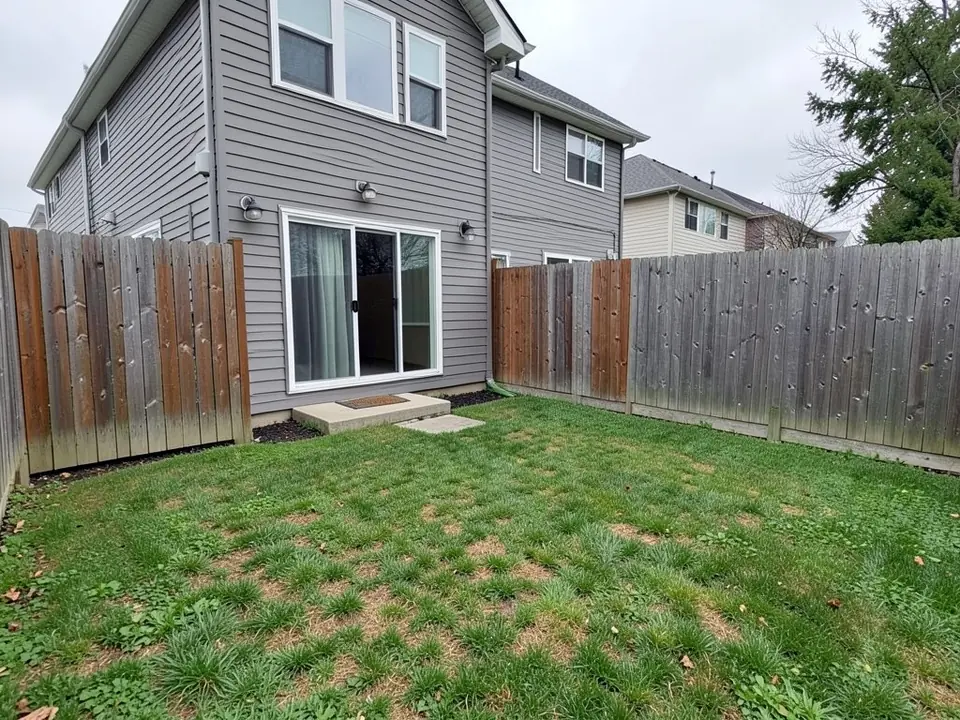
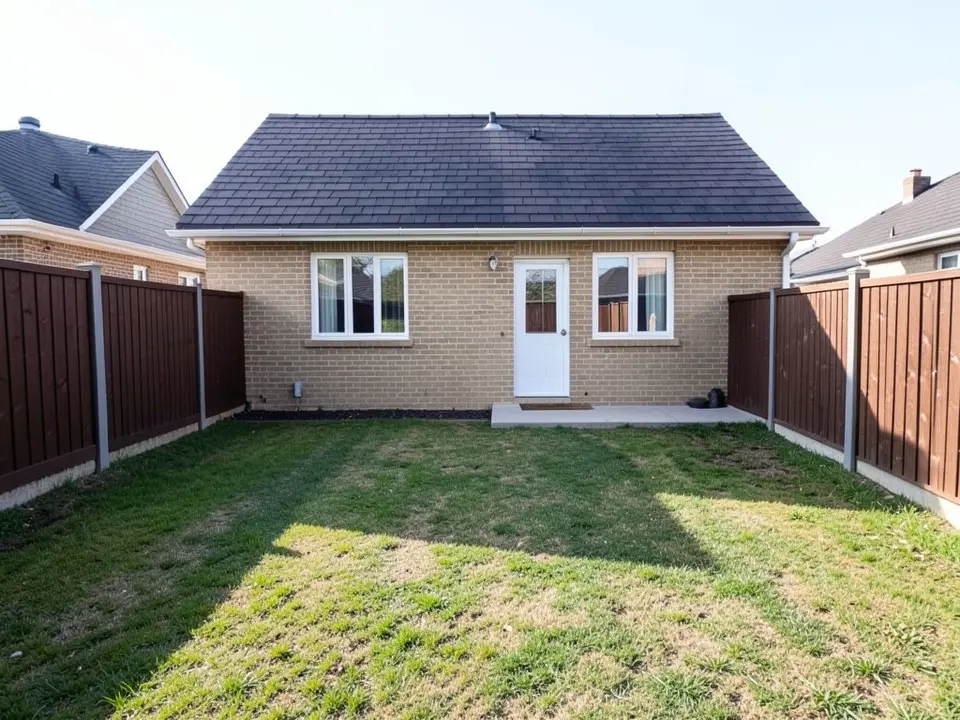
- Take a level photo in daylight from the far corner of the backyard, with as much of the yard as possible and the back of the house in the frame (JPG or PNG).
- Open the landscape tool and sign in with Google or an email code. You get 1 free render with a free account.
- Upload the photo, then choose Yard Redesign and pick a style, or choose Custom and describe the design. You can start from one of the instructions below.
- Generate, compare, then change one thing at a time in your description and run it again.
What the AI can and cannot do
It gives you a realistic picture of a design idea in your own backyard. It does not measure the yard, draw a plan to scale, list plants, design drainage or estimate costs. Plants in the image are AI-drawn and may not match a real species, so treat the result as a mood board and confirm plant choices with a local nursery or extension service. Details of the house can shift slightly between versions.
Instructions you can paste into Custom mode
Open the landscape tool, pick Custom, upload your photo and use one of these as a starting point. Edit the plant names to suit your area.
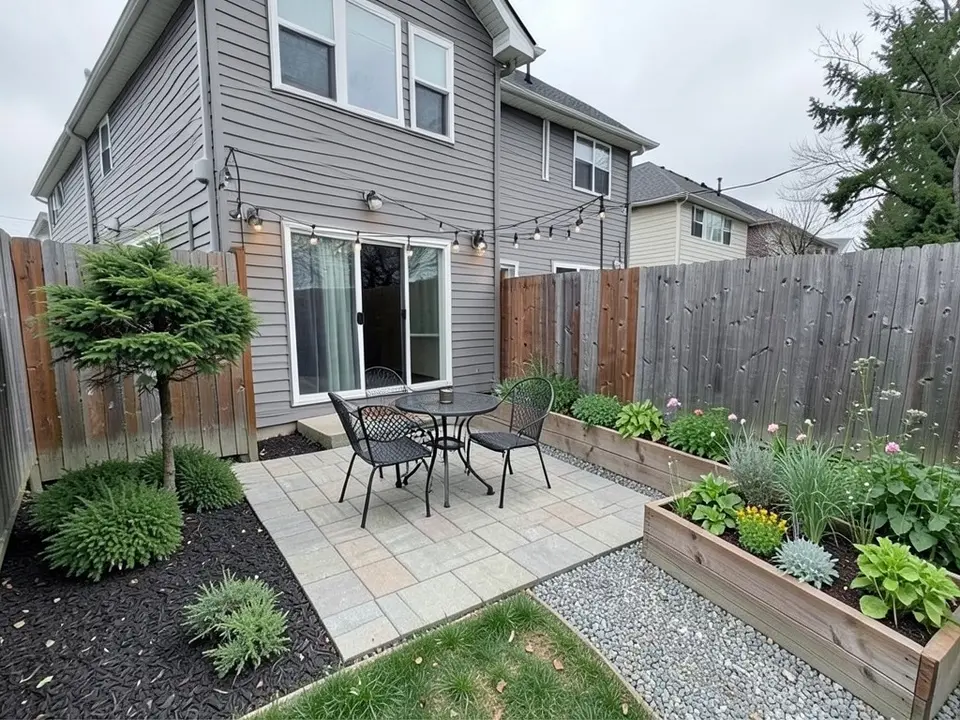
- Turn this small backyard into an outdoor dining space: a square paver patio by the door with a bistro table and two chairs, raised wooden planter beds with herbs along the right fence, a narrow gravel path and string lights above the patio. Keep the house, fence and camera angle the same.
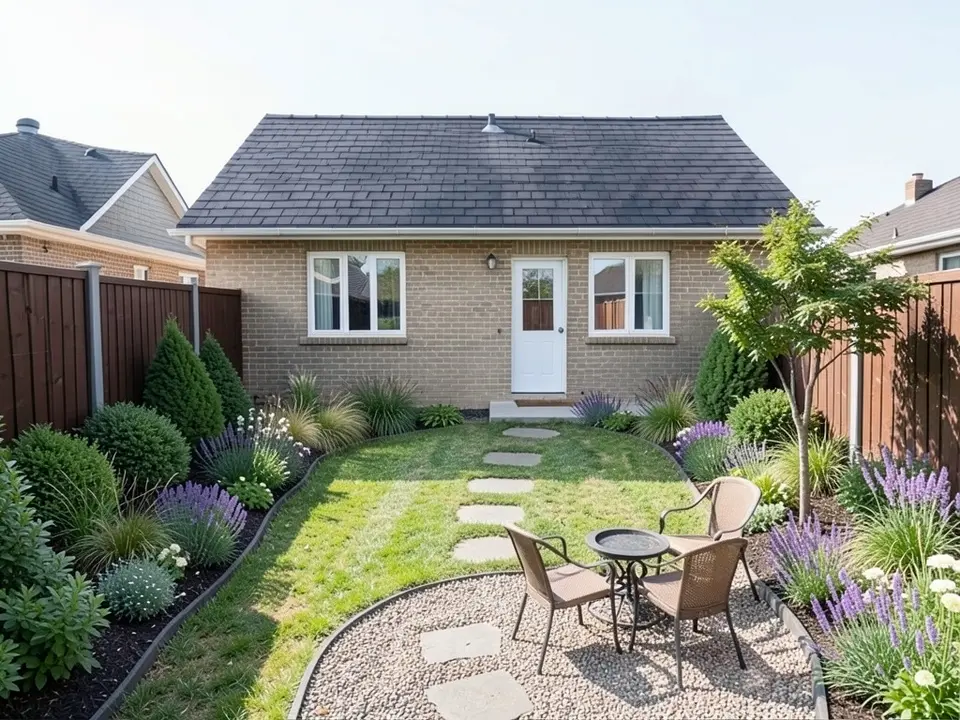
- Keep a small curved lawn in the middle, add deep planting borders along both fences with evergreen shrubs, ornamental grasses and flowering perennials, a small tree in one corner and stepping stones to a gravel seating area at the back. Keep the house the same.
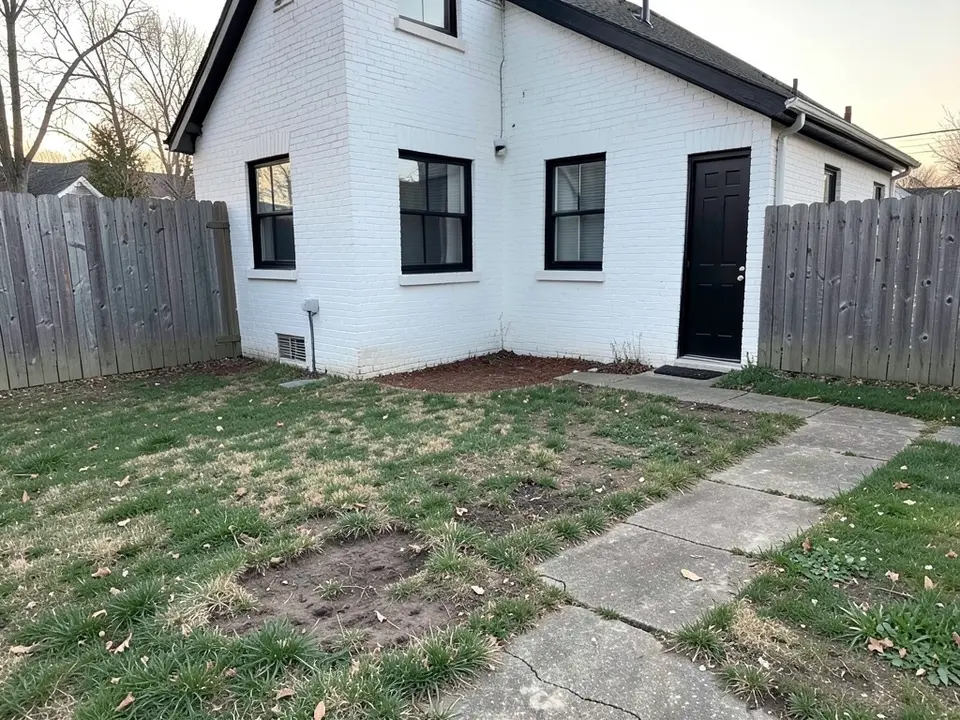
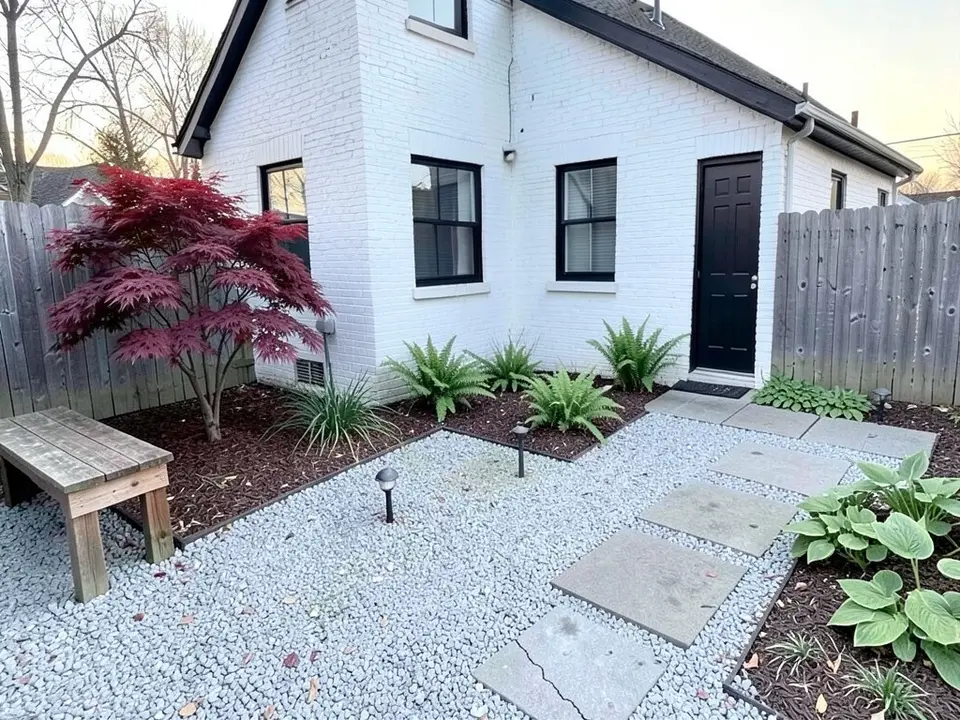
- Make this shady backyard lawn-free: pale gravel, large square stepping pavers from the door, a Japanese maple, a wooden bench, ferns and hostas in mulched beds along the house and a few low path lights. Keep the house and fence the same.
Frequently asked questions
How do I make a small backyard look bigger?
Use fewer materials and a short plant list, put a seating area or focal point at the far end, use curves rather than many straight strips, plant up the fence, and keep furniture in scale with the space.
Should I keep grass in a small backyard?
Only if you use it. A small lawn still needs regular mowing and wears out quickly in shade or under heavy foot traffic. Pavers, gravel, mulch or a low groundcover often work better, or keep one simple lawn shape with a clear edge.
What is a cheap way to landscape a small backyard?
Work in phases, use gravel or mulch instead of large paved areas, buy smaller plants that fill in over time, and reuse stone or pavers you already have. Costs vary by area, so get local quotes for paving or walls.
Can I see these ideas on a photo of my backyard?
Yes. Upload a photo of your backyard to our landscape tool, pick Yard Redesign with a style or Custom mode with your own description, and the AI returns an edited image of the same view.
Is the AI landscape tool free?
Yes, to start: 1 free render with a free account, and free renders carry a watermark. More renders and no watermark come with a paid plan.
Will the AI give me a plan, plant list or cost estimate?
No. It produces an edited photo of a design idea. It does not draw a measured plan, list plant species or quantities, or estimate costs. Use the image to decide on a direction, then confirm the details with a local nursery or contractor.
How do I lay out a long, narrow backyard?
Run the path along one side rather than down the middle, plant the other side deeply, and break the length into two or three areas with an arch, a pair of shrubs or a change of surface. A seat at the far end gives a reason to walk the whole yard.
What kind of tree suits a small backyard?
A small tree with a compact, narrow or multi-stem shape usually works best. Check the mature height and spread on the plant tag, keep it well away from the foundation and utility lines, and ask a local nursery what grows well in your area.
Can I grow plants in a small backyard with no soil, only paving?
Yes. Use large containers and raised beds filled with fresh potting mix or soil, and add climbers in pots against the fence. Containers dry out faster than beds, so they need more regular watering, and every pot needs a drainage hole.