
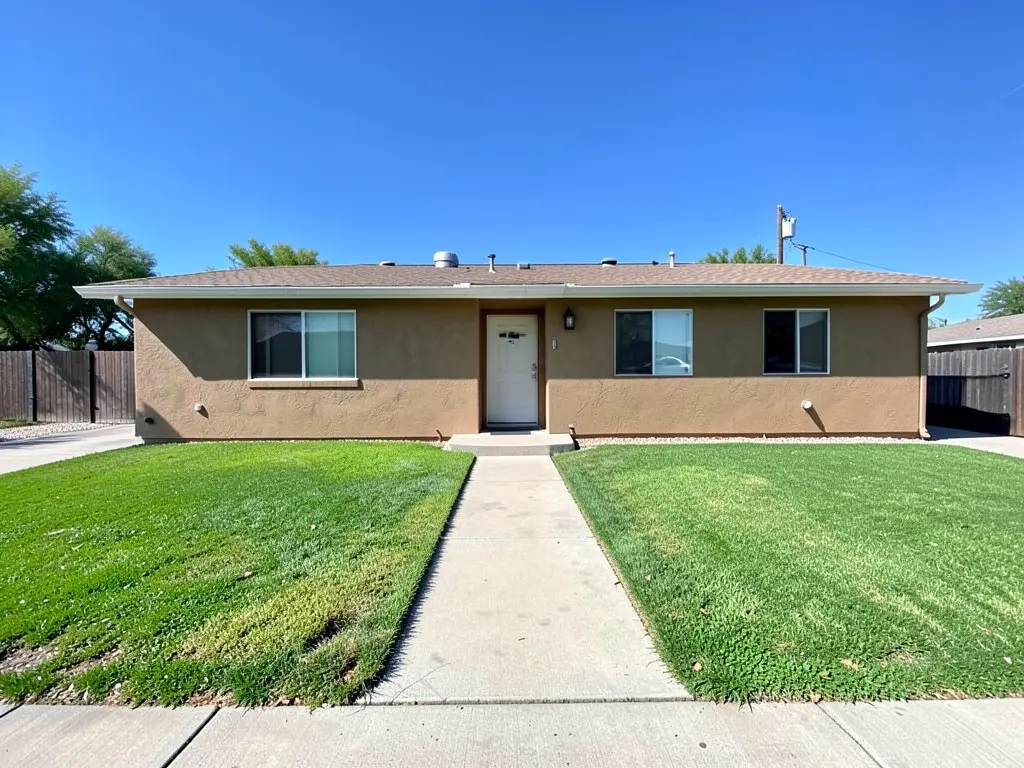
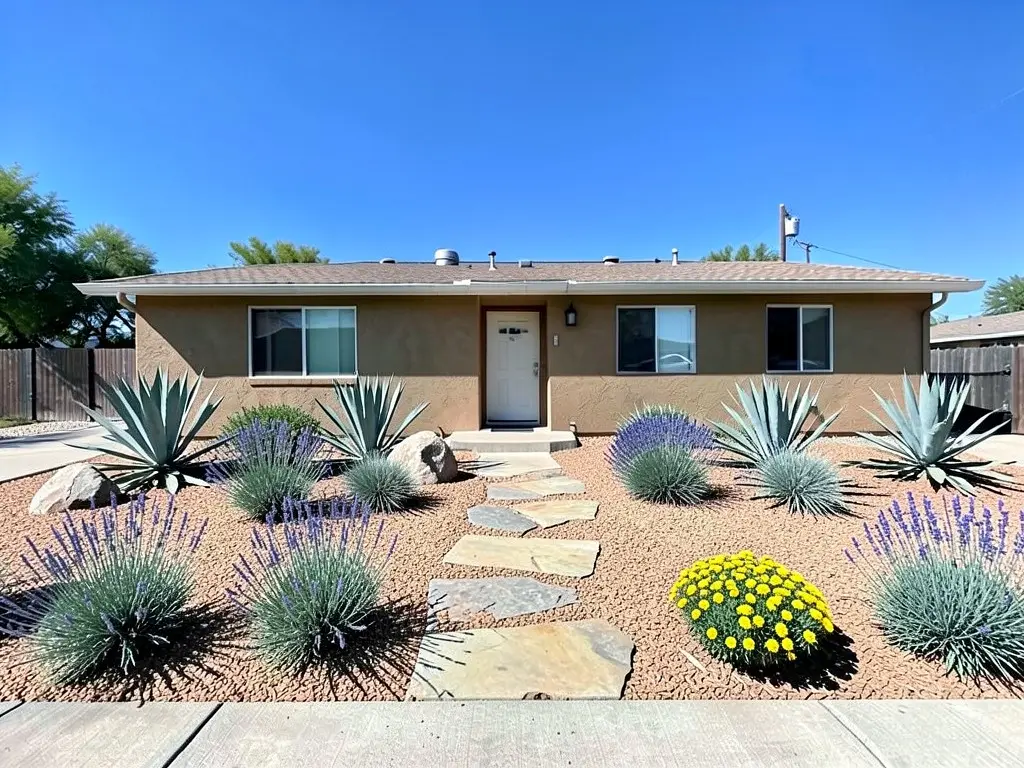
Start with your kind of desert
"Desert" covers very different climates. Low deserts have long, hot summers and mild winters, so frost-tender plants and big shade trees do well. High deserts are dry too, but winters bring hard freezes and sometimes snow, and plants that thrive in a low-desert yard can die there. Before you copy a photo you like, check that its plants are hardy in your area and how large they get when mature.
Copying a style without checking the climate is a common mistake, and the problems (root rot from overwatering, sunburned plants, shrubs outgrowing the space) tend to show up a season or two later.
12 desert landscaping ideas for a front yard
- One or two gravel colors, not five: A single ground cover color, plus a contrasting rock for borders or a creek bed, looks calm and deliberate. Many mixed colors look busy.
- Decomposed granite where you walk: It packs down firmly, so it works for paths and seating areas; loose gravel is better for planting beds.
- A shade tree as the anchor: In low deserts, palo verde, desert willow, mesquite and ironwood are common choices. A tree cools the walls behind it and gives the yard a center.
- Sculptural accents: Agave, yucca, ocotillo and golden barrel cactus read well from the street. Keep spiny plants a few feet back from walkways and the driveway.
- Boulders that look natural: Bury a third of each rock, group them in threes or fives and pair a boulder with a plant so it looks placed by nature, not dropped by a truck.
- A dry creek bed: River rock along the natural drainage line handles monsoon runoff from the roof and adds shape all year.
- Layer by height: Ground covers in front, grasses and small shrubs in the middle, tall accents and trees at the back or corners.
- Color from flowering natives: Desert marigold, globe mallow, penstemon, red yucca and lantana add color without heavy watering. Check which suit your area.
- A real path to the door: Flagstone, pavers or a wider walkway edged with rock gives the yard structure and replaces a lawn that only frames a strip of concrete.
- Don't make it all rock: A yard of bare gravel holds and reflects heat. Leave room for plants and shade so the front of the house stays cooler.
- Low-voltage lighting: Uplighting a tree or a large agave makes the yard look finished at night.
- Drip irrigation from day one: Even drought-tolerant plants need regular water while they establish. Drip lines under the mulch deliver it to the roots.
Front yard details people forget
Keep sight lines open at the driveway and the street corner, so tall plants don't block drivers. Check HOA rules for rock colors, plant height and how much lawn has to stay. Ask your water utility whether it offers a lawn replacement program before you remove any grass; some require approval first. And plan for the mature size of every plant: a small palo verde from the nursery can spread wide within a few years.
Desert front yard curb appeal: what makes it work
Curb appeal in a desert front yard comes from contrast and order. Pale gravel against dark boulders, a sculptural plant against a plain wall, a clear path leading to the door. The yard should look planned from the street, not like a pile of rock with a few plants dropped in.
- Ground cover: Use decomposed granite for the main surface and a larger rock, such as river rock, for borders and drainage lines. Edge the beds with steel or stone so the gravel stays where you put it.
- Entry focal point: Put your strongest feature near the front door: a large agave in a low bed, a pair of matching pots, or a single tree beside the walkway. The eye should land on the entrance.
- Boulders as structure: Two or three large boulders near a corner or the end of the driveway give the yard weight. Match the rock color to the gravel and to the house.
- Path lighting: Low-voltage path lights and one or two uplights on a tree or tall yucca make the yard look finished after dark and make the walkway safer.
- Drip irrigation: Run drip lines to each plant instead of using sprinklers. Water goes to the roots, less is lost to heat, and you can switch the lines off once plants are established.
A low-water plant palette for a desert front yard
Pick a small palette and repeat it, rather than one of everything. A simple combination for a hot, dry climate is one shade tree, two or three sculptural plants and a few flowering shrubs. Always confirm hardiness for your area before buying, since a plant that is fine in a low desert can freeze in a high desert.
- Tree: Palo verde gives light, filtered shade and green bark. Place it where it will shade a west-facing wall.
- Sculptural plants: Agave and yucca give strong shapes year round. Desert spoon (sotol) adds a rounded, grassy form with no sharp tip to catch passers-by as much as an agave does, though the leaf edges are still toothed.
- Color: Red yucca sends up coral flower spikes, and lantana covers the ground in bright blooms in warm areas. Both ask for little water once settled.
- Fillers: Low groundcovers and ornamental grasses soften the edges of the gravel and keep weeds down between larger plants.
Small front yard vs large front yard
In a small front yard, keep it simple: one tree or one large accent plant, a narrow gravel bed along the house, a clean path and a border of river rock. Fewer elements make a small space look larger. Avoid placing spiny plants close to a short walkway.
A large front yard can hold several zones. Use a curved path or dry creek bed to lead the eye through the space, group boulders and plants in clusters of three or five, and leave open gravel between the groups so the yard has room to breathe. Add a seating spot or a feature planting at the far corner to give the space a second focus.
Desert landscaping mistakes to avoid
- Laying plastic under the gravel: It blocks air and water to tree roots and weeds still grow on top of it. Use a breathable landscape fabric or skip it.
- Planting too close: A small agave or palo verde grows much bigger than the nursery pot. Check mature size and leave space.
- Overwatering: Desert plants die from wet roots more often than from drought. Water deeply but rarely once established.
- Too many different rocks: Mixed colors and sizes look cluttered. Stick to one main gravel and one accent rock.
- No shade: A yard with no trees reflects heat onto the house. Even one tree makes a difference.
More ideas to explore
If you want a broader look at the front of the house, see our front yard landscaping ideas and low maintenance landscaping ideas. For the stone and gravel details, take a look at river rock landscaping ideas and rock garden ideas. Planning the back as well? Try desert backyard ideas, and for nighttime effects see landscape lighting design ideas.
Try these ideas on a photo of your yard
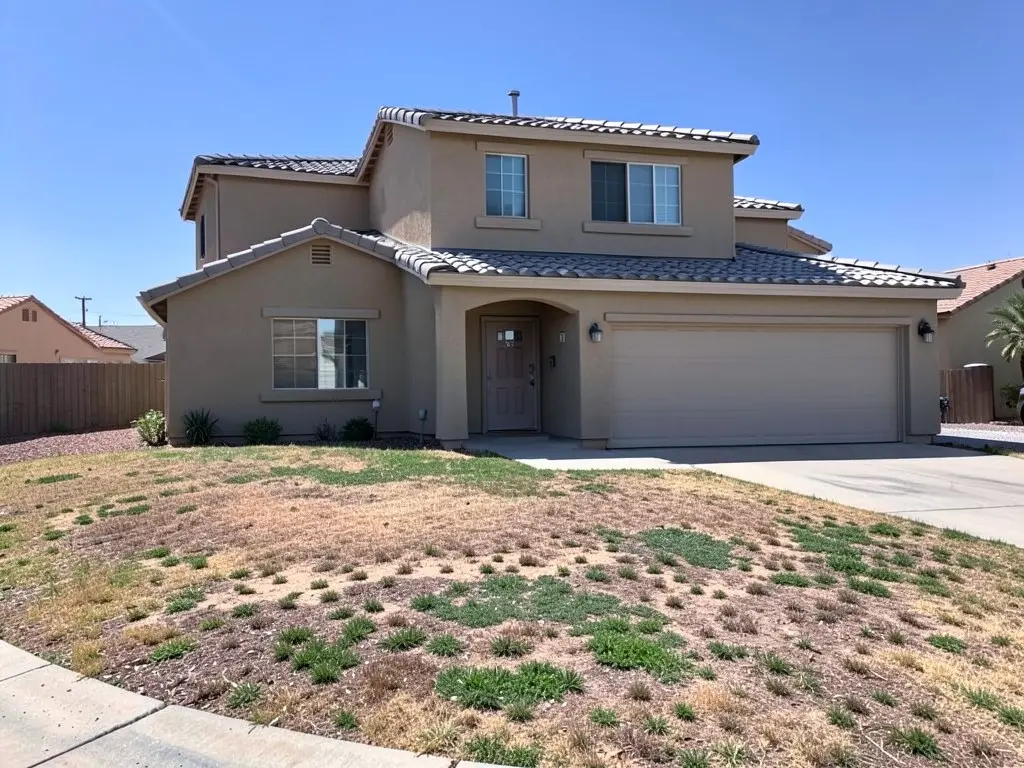
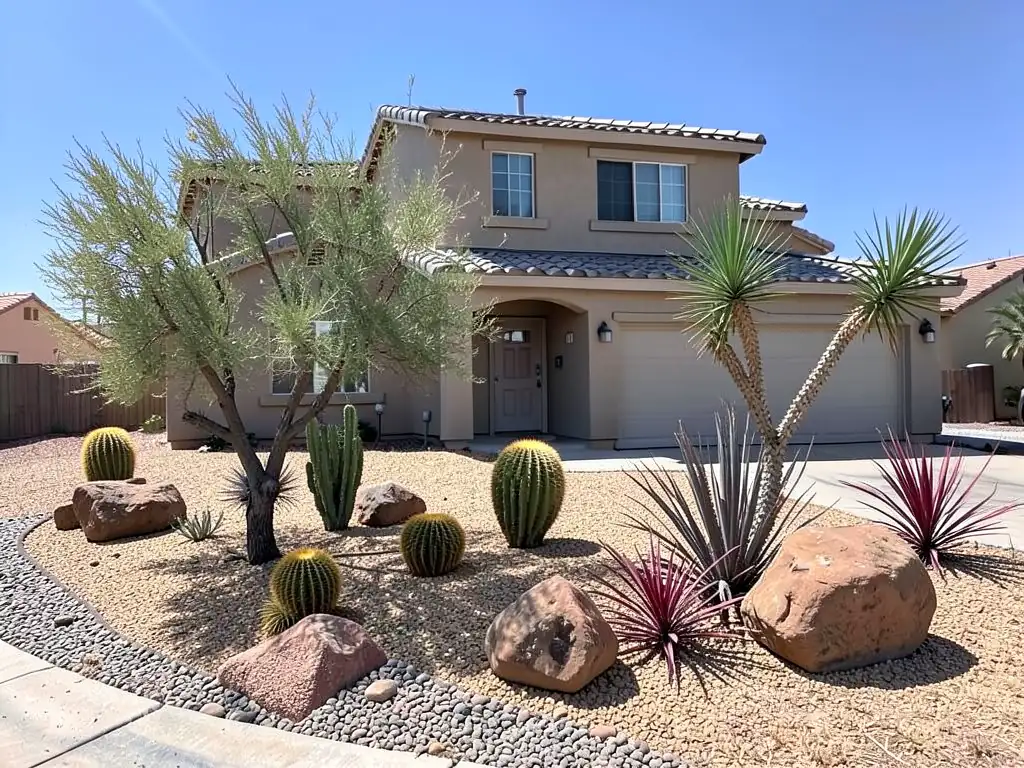
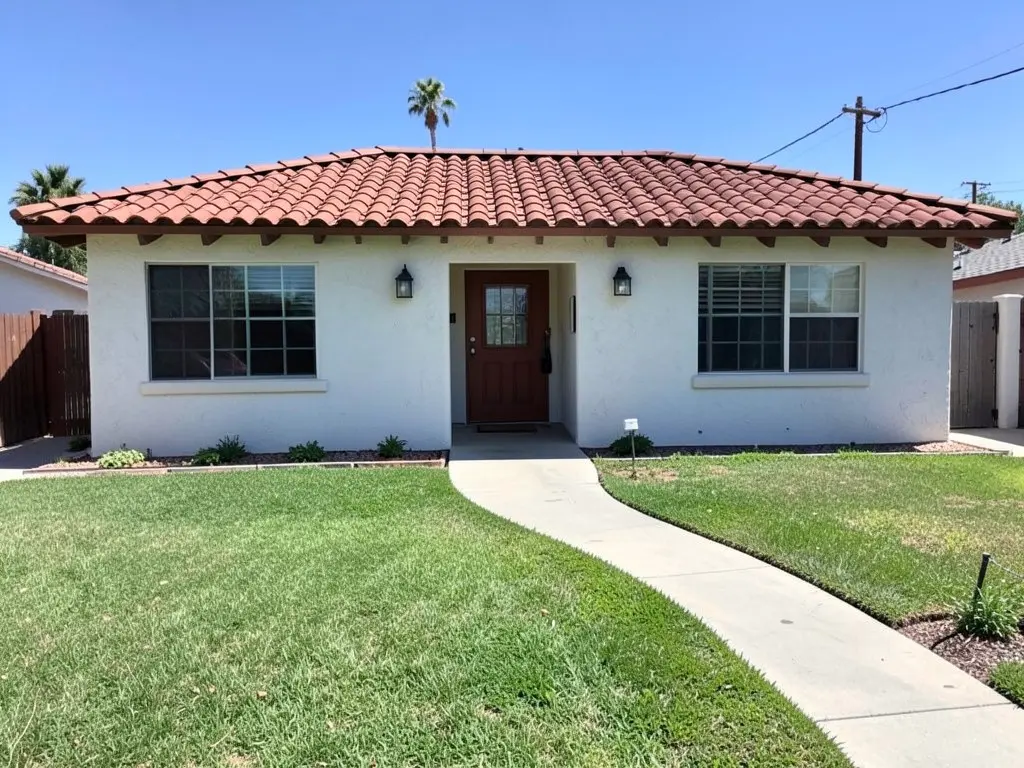
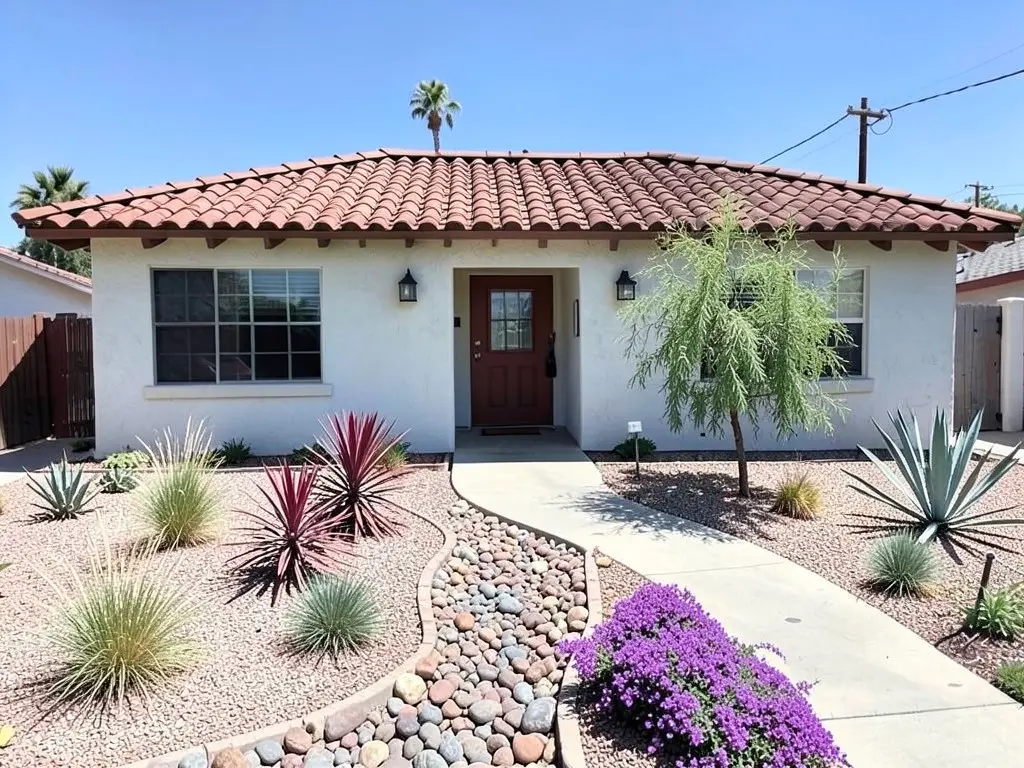
Idea photos show someone else's house. Our landscape tool edits a photo of yours. You upload a picture of your front yard, describe the desert look you want and get back an AI-edited image of the same view, so you can compare gravel colors, more or fewer cactus, or a tree in a different corner before anyone digs.
- Take a level photo in daylight from the street or sidewalk, with the whole yard and the front of the house in the frame (JPG or PNG).
- Open the landscape tool and sign in with Google or an email code. You get 1 free render with a free account.
- Choose Custom mode, upload the photo and describe the design, or start from one of the instructions below.
- Generate, compare, then change one thing at a time in your description and run it again.
What the AI can and cannot do
It gives you a realistic picture of a design idea on your own house. It does not draw a measured plan, count plants, design irrigation, estimate costs or check plants against your climate. Plants in the image are AI-drawn and may not match a real species exactly, so treat the result as a mood board and confirm plant choices with a local nursery. Details of the house can shift slightly between versions.
Instructions you can paste into Custom mode
Open the landscape tool, pick Custom, upload your photo and use one of these as a starting point. Edit the plant names to suit your area.
- Turn the lawn into desert landscaping: tan crushed gravel, a palo verde tree on the left, golden barrel cactus, a tall yucca, an ocotillo and a few large brown boulders. Keep the house, garage and camera angle the same.
- Replace the grass with decomposed granite, a flagstone path to the front door, agave, desert marigold and globe mallow, and a river rock dry creek bed along the edge. Keep the house the same.
- Make a low-water desert front yard with a desert willow tree for shade, ornamental grasses, red yucca and lantana for color, and dark rock edging along the sidewalk. Keep the house and walkway the same.
Frequently asked questions
What plants are used in desert landscaping?
Common choices include palo verde, desert willow and mesquite trees, agave, yucca, ocotillo and barrel cactus for structure, and desert marigold, globe mallow, penstemon, red yucca and lantana for color. What survives depends on your area, especially winter lows, so check with a local nursery.
Is desert landscaping the same as xeriscaping?
They overlap. Xeriscaping is any landscaping planned to need little supplemental water, in any climate. Desert landscaping is a style built around desert plants, rock and gravel. A desert front yard is usually a xeriscape, but a xeriscape does not have to look like a desert.
Can I see desert landscaping on a photo of my house?
Yes. Upload a photo of your front yard to our landscape tool, choose Custom mode and describe the desert design you want. The AI returns an edited image of the same view.
Is the AI landscape tool free?
Yes, to start: 1 free render with a free account, and free renders carry a watermark. More renders and no watermark come with a paid plan.
Will the AI give me a plant list or cost estimate?
No. It produces an edited photo of a design idea. It does not list plant species or quantities, design irrigation or estimate costs.
Should a desert front yard be all rock?
Usually not. Large areas of bare gravel hold and reflect heat toward the house. Mixing in trees, shrubs and groundcovers keeps the yard cooler and looks more natural.
How do I get curb appeal with a desert front yard?
Use a clear layout: a defined path to the door, one focal point near the entry such as a large agave or a tree, boulders for structure, and a single main gravel color with a contrasting rock border. Add path lighting and drip irrigation to finish it.
What is the best ground cover for a desert front yard?
Decomposed granite is popular because it packs down for paths and gives a clean look. Larger gravel or river rock suits borders and drainage lines. Keep to one or two colors and edge the beds so the rock stays in place.
What plants suit a hot, dry front yard?
Palo verde for shade, agave, yucca and desert spoon for shape, and red yucca and lantana for color are common low-water choices. Check winter hardiness for your area and the mature size of each plant before buying.
How do I design a small desert front yard?
Keep it simple: one tree or large accent plant, a narrow gravel bed, a clean path and a river rock border. Using fewer elements makes a small yard look larger and easier to maintain.