


Start with the color of your brick
Brick is not one color, and the sources agree that the plants should be picked against the shade you actually have. The iScape blog, from a landscape design app, says to name the brick's main color first, which may be white, grey, tan, pink, orange or red, or a mix, and then decide whether you want the planting to calm that color or to play off it. eHow suggests holding a paint chip or a piece of the brick next to plants when you shop, because people see color differently.
Our examples show a red brick colonial, a red brick one-story house and a tan brick house, so you can see how the same kind of planting reads against different brick.
- Red brick: iScape and brick&batten, an exterior design service, both point to green: it sits opposite red on the color wheel, so strong greens complement it. iScape names violet flowers or white as calmer choices. eHow says medium and dark green foliage suits any shade of red brick for foundation and background planting.
- Orange, tan or brown brick: eHow says brick with a yellow cast suits yellow, gold, cream, orange or lime foliage and flowers. iScape says blue-grey foliage stands out against orange brick, and that yellow flowers make a warm, calm pairing.
- Pink, burgundy or purplish brick: eHow says brick with a blue cast suits pink, violet, purple or magenta flowers with grey, blue, silver or white foliage.
- Cool colors against warm brick: Rivers Run Living, a home blog, recommends blues, silvers and purples against brick, with dark greens to ground the planting, and white or cream flowers used sparingly because too much looks stark. It warns that hot-pink or coral astilbe can clash with brick.
Plants that suit a brick front
These are the plants the sources name, not a list we picked. Check each one for your own climate and sun with a local nursery before you buy.
- Evergreen structure: brick&batten suggests boxwoods, ornamental grasses and arborvitae to play up the warmth of red brick. Rivers Run Living names boxwood, dwarf Alberta spruce and blue star juniper for structure in winter. Our first example puts round boxwoods along a red brick colonial.
- Deeper tones: brick&batten suggests loropetalum and Japanese maple to pick up the darker undertones in red brick.
- Cool-toned perennials: Rivers Run Living names purple salvia, Russian sage and blue fescue, with blue-green hostas in shade. Fernlea Flowers, a plant brand, pairs warm red brick with cool purples, crisp whites and silvery foliage, and suggests keeping the palette to purple, white, silver and soft green.
- Hydrangeas and tall evergreens: iScape suggests large flowering hydrangeas or evergreen shrubs at the corners of the house, and conifers or other tall evergreens on both sides of the entry, in the ground or in matching pots.
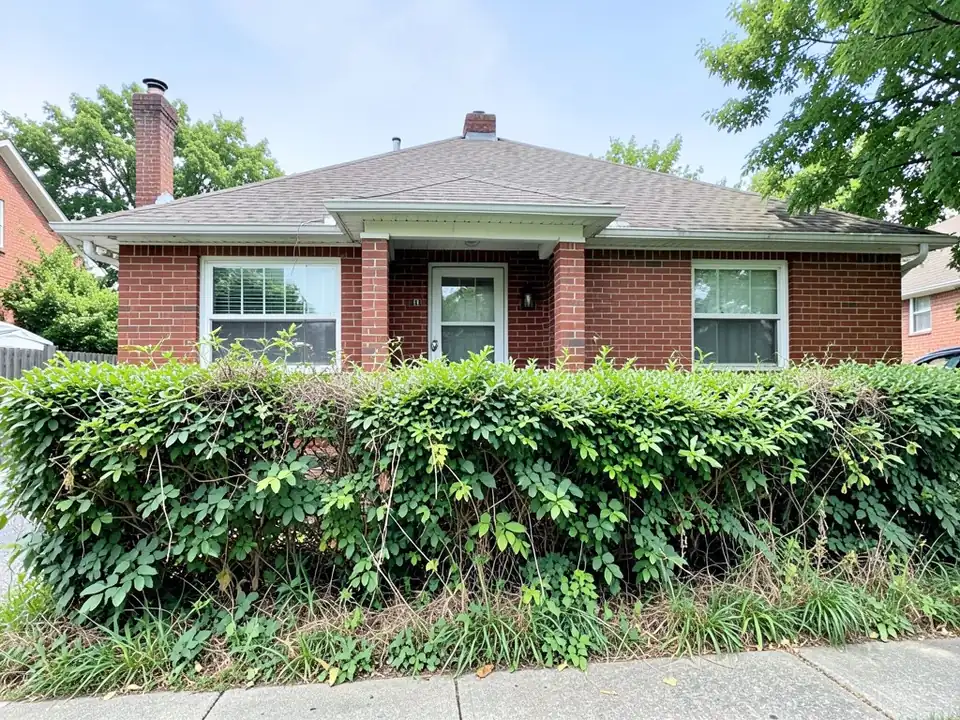
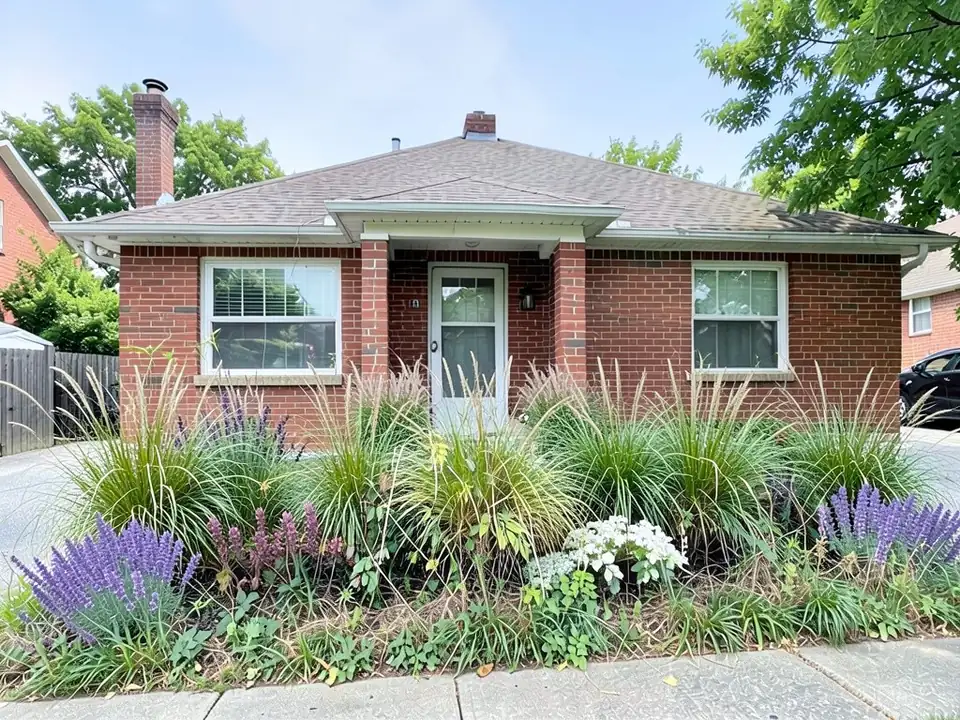
- Swapping an old hedge: If an overgrown hedge hides a brick front, our second example shows what a bed of grasses and flowering perennials might look like in its place. The sources do not cover removing a hedge, so ask a local pro about the roots and the soil.
Layout: corners, the entry and the walkway
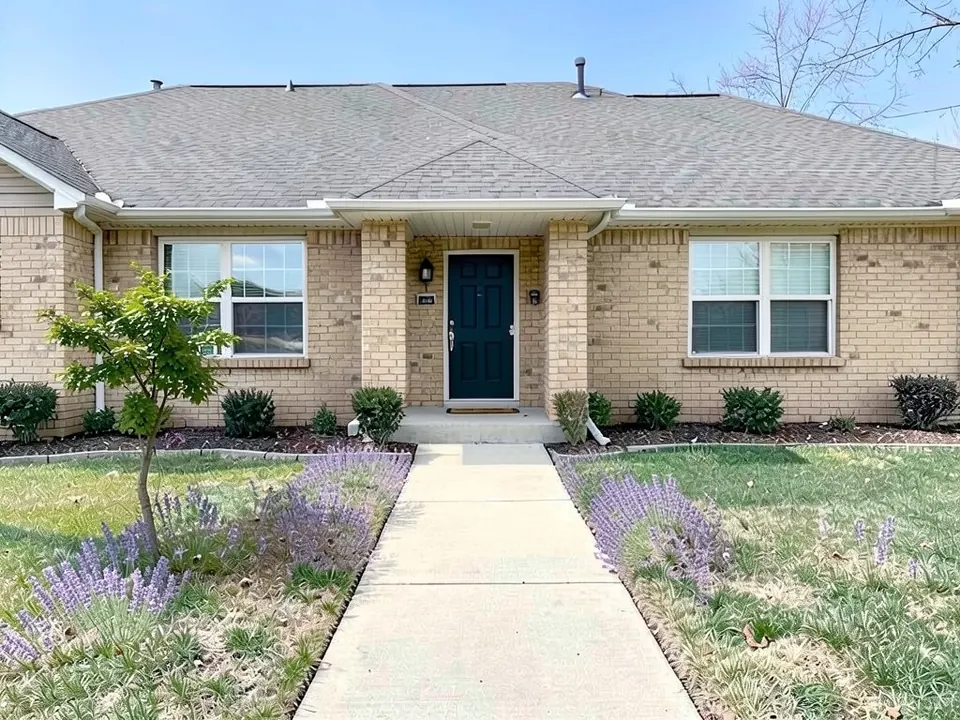
Brick fronts often look flat and angular, and the sources use planting to break that up. iScape says to plant the corners and edges of the house, to make the entry the focal point, and to plant on both sides of the walkway so the planting frames the path to the door. eHow says to frame the entry with paired trees or shrubs, put short to medium-tall accent trees at the corners, and border the walk with colorful flowers to lead the eye to the door. Our third example tries lavender along a walk.
eHow and Rivers Run Living both tie the layout to the style of the house. eHow says formal homes suit symmetrical, evenly spaced evergreens with restrained color, cottage-style homes suit casual groupings with more color, and modern homes need planting that does not compete with the lines of the house. Rivers Run Living suggests symmetry for Colonial or Georgian homes and asymmetry for ranch or cottage styles.
Rivers Run Living gives height targets that step down toward the street: 4 to 6 feet at corners and downspouts, 2 to 3 feet between windows, and under 12 inches along walkways. It says to keep trees at least 10 feet from the foundation, and iScape says to keep trees far enough from the corners that they do not interfere with underground systems. Fernlea Flowers says to layer tall plants at the back, medium fillers in the middle and low growers at the edge. Treat these as one blog's and one brand's guidance and check them with a local pro for your plants.
Paving, edging and mulch next to brick
brick&batten says natural stone walkways or driveways in neutral tones add texture without competing with red brick. Rivers Run Living names blue-grey bluestone as its top pick next to brick, buff or tan pavers as a neutral choice, and pea gravel for cottage or modern homes. It advises against red pavers that match the house and against bright white concrete, prefers steel or aluminum edging over plastic, and suggests dark brown hardwood mulch.
If you are planning a new path, see our front walkway landscaping ideas page. For lights that pick out the brick and the planting after dark, see landscape lighting design ideas.
How to try brick house landscaping on your own photo
The tool above is already in Custom mode. The Yard Redesign styles have no text box, so you cannot name the plants, the bed shape or the mulch there. Custom lets you name them, say where they go, and say what must stay the same, such as the brick.
- Take the photo in daylight from the street or the end of the walk, with the whole front of the house and the ground in front of it in frame.
- Describe the change in the Custom Design Requirements box: the bed shape, the plants and their colors, the mulch or edging, and what must stay the same, such as the house, the brick, the windows, the lawn and the camera angle.
- Upload your photo under Upload Your Garden Image and click Generate Custom Design. You sign in with an email code or Google when you generate.
- Compare the result with your photo, change one thing at a time, such as the flower color or the bed shape, and run it again. Short, specific instructions work better than long ones.
What the AI can and cannot do
The AI shows a look: roughly how a bed, a shrub, a flower color or a small tree would sit against your brick on your own photo. That helps you choose and explain what you want to a nursery or a landscaper.
It does not know your climate, your soil or your sun, does not measure distances from the foundation, does not price anything and does not pick plants that will grow where you live. It also does not always follow the instruction, as the nearly straight bed, the missing grey mulch, the tall spikes and the missing shrubs in the examples above show, and it can draw things that would not happen together, such as hydrangeas blooming beside bare winter trees. Treat the result as a picture of an idea, and get plant choices and spacing from a local nursery or landscaper.
Brick house landscaping instructions to paste into Custom mode
These are the exact instructions we used for the three examples above, in the same order. In the tool above, Custom is already selected: paste one into the Custom Design Requirements box, then upload your photo. Swap in your own plants, flower colors, mulch and what must stay.
- Change ONLY the area along the front of the house: add a curved planting bed with dark mulch, round boxwood shrubs and white hydrangeas. Keep the house, the brick, the windows, the lawn and the camera angle exactly the same.
- Change ONLY the overgrown hedge: replace it with a layered bed of ornamental grasses, low purple and white flowering perennials and grey mulch. Keep the house, the brick, the windows, the roof and the camera angle exactly the same.
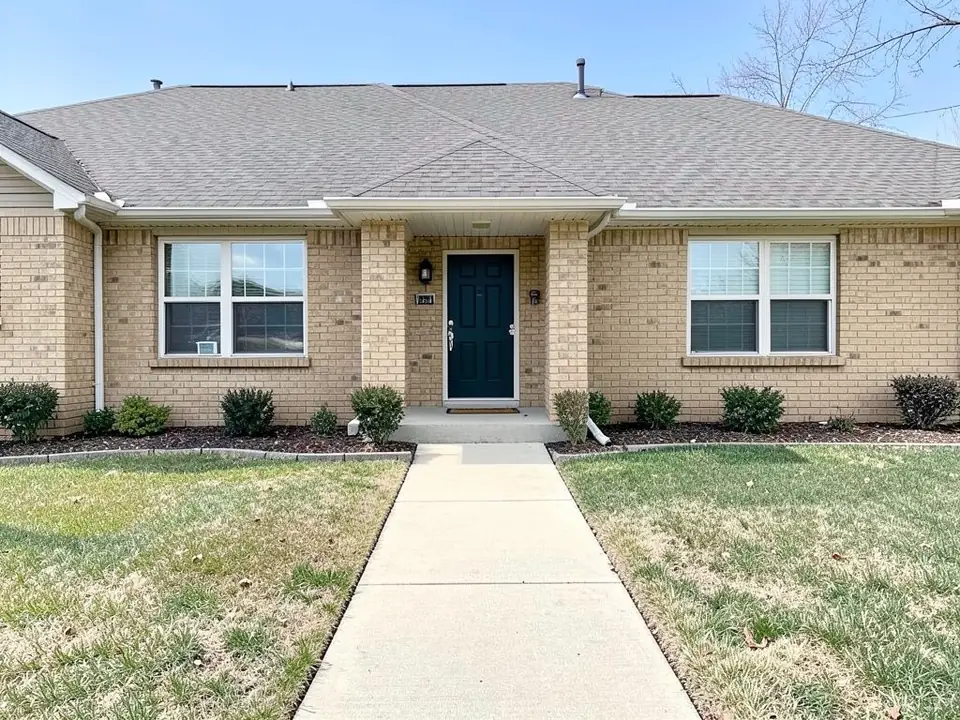
- Change ONLY the lawn on both sides of the walkway: add flower borders of lavender and low shrubs along both sides of the walk and one small ornamental tree in the lawn. Keep the house, the walkway, the door and the camera angle exactly the same.
Frequently asked questions
What plants look good with a red brick house?
The pages we read name boxwoods, ornamental grasses, arborvitae, loropetalum and Japanese maple (brick&batten), boxwood, dwarf Alberta spruce, blue star juniper, purple salvia, Russian sage and blue fescue (Rivers Run Living), and large hydrangeas or evergreen shrubs at the corners (iScape). Check each with a local nursery for your climate.
What color flowers go with red brick?
iScape and brick&batten say green complements red brick, and iScape names violet or white as calmer choices. Rivers Run Living suggests blues, silvers and purples, white used sparingly, and warns that hot-pink or coral astilbe can clash. eHow says the answer depends on whether your brick leans yellow or blue, and suggests taking a paint chip or a piece of brick to the nursery.
What about tan, orange or brown brick?
eHow says brick with a yellow cast, such as orange, tan or brown, suits yellow, gold, cream, orange or lime foliage and flowers. iScape says blue-grey foliage stands out against orange brick. Our third example shows lavender and a small tree in front of tan brick.
Should the planting in front of a brick house be symmetrical?
It depends on the house. eHow says formal homes suit symmetrical, evenly spaced evergreens and cottage-style homes suit casual groupings. Rivers Run Living suggests symmetry for Colonial or Georgian homes and asymmetry for ranch or cottage styles.
How far from a brick house should I plant a tree?
Rivers Run Living says at least 10 feet from the foundation, and iScape says far enough from the corners that the tree does not interfere with underground systems. The right distance depends on the tree, so ask a local arborist or nursery.
Can the AI tell me which plants will grow at my house?
No. It draws the look you describe on your photo. It does not know your climate, soil or sun, does not measure or price anything, and does not always follow the instruction exactly, as the captions above show.
Do I need an account, and is it free?
Create a free account with an email code or Google to generate. You get 1 free render, and free renders carry a watermark. More renders and no watermark come with a paid plan.