
What the pages suggest for pond landscaping
These ideas come from Gardeningetc (Stefanie Waldek, last updated 7 September 2021), YardShare (April 10, 2026; no individual byline; an ideas blog that does not appear to sell anything), Yardzen (Kendra Poppy; no article date shown; the site sells landscape design, and the text we could read was cut off) and Stone Center (a blog by its owner, Jon Smiley, with two dates on the page; the company is a stone supplier). Two of the four are sellers, and none of it is tested in your yard.
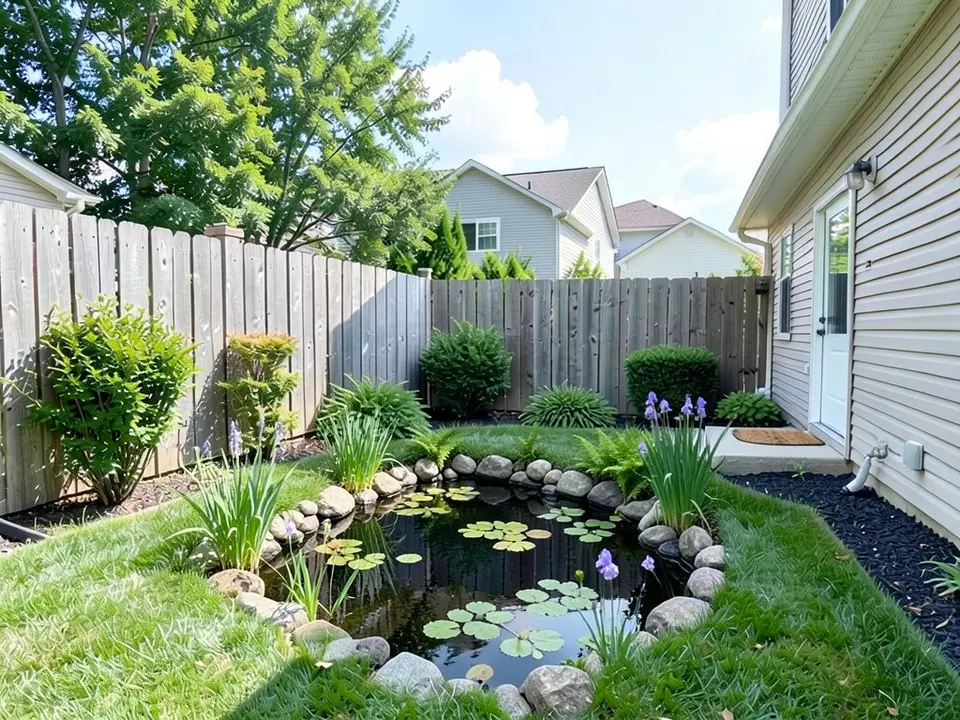
- Natural: Gardeningetc suggests a natural pond planted with pond plants and smooth river rocks so it blends in, and says it attracts wildlife such as frogs and turtles but still needs careful planning. Yardzen suggests native plants, rocks and driftwood as shelter. Our first example is this idea.
- Geometric: Gardeningetc says geometric ponds suit formal, hardscaped or terraced yards, and a cascade or fountain softens the look. Yardzen suggests a smooth-surfaced reflecting pool ringed with ornamental grasses or low shrubs.
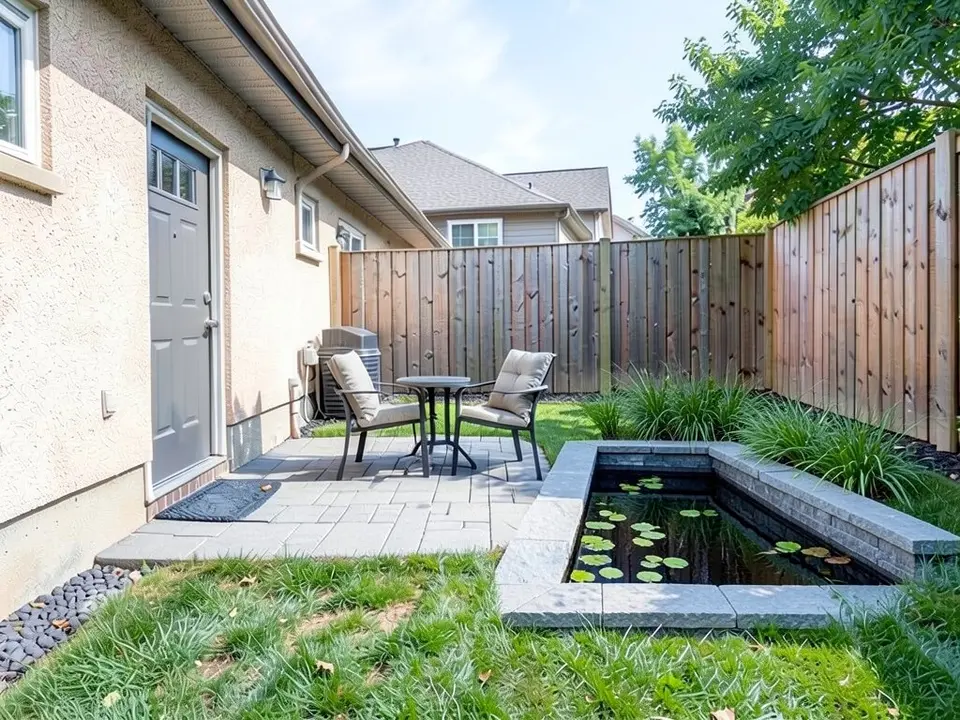
- Raised: Gardeningetc says a raised pond needs no digging, drains easily and is easier to reach. It says one built from pallets is not watertight, so it needs a liner. Our second example is this idea.
- Small and container ponds: Gardeningetc suggests a mini pond in a bowl or trough for a tiny patio, and a barrel, stock tank or old bathtub as a recycled pond. It says to line a wooden barrel before adding fish.
- Cottage and Japanese: Gardeningetc suggests a small brick pond in a corner with climbing plants and foxgloves. Yardzen suggests a Japanese pond with river rocks, bamboo and a small bridge or stepping stones.
- Waterfalls and streams: YardShare suggests waterfalls as supporting elements that reinforce a pond rather than dominate it, and a stream-style layout that stretches through the yard. Gardeningetc says waterfalls work best in shallower ponds and need another aerator for stronger circulation.
Edges, rocks and plants
YardShare says getting the edges right matters more than the pumps or boulders. The pages say:
- Edges: YardShare suggests natural stone, planting pockets and clean transitions. Stone Center, a stone supplier, says flat stones around the edge hold the liner in place, that mixing stone sizes and letting some stones extend into the water looks natural, and that on a raised pond the liner is folded over the frame and covered with stones, bricks or plants.
- Mixed water plants: Stone Center suggests a mix of aquatic plants, including oxygenating plants and water lilies or floating plants. Yardzen suggests floating plants for fish cover and less algae.
- Plants around the rim: Yardzen suggests pollinator-attracting perennials, ornamental grasses, and ferns and hostas beside a boulder and gravel waterfall. Gardeningetc suggests raised-bed planting to soften hard edges.
- Let it grow in: YardShare says a pond does not need to arrive all at once and that paths, beds and planting can fill in over time.
- Ornaments: Gardeningetc suggests an animal sculpture, art piece, weathervane or stone lantern in weatherproof materials.
Where to put it, how deep and how safe
Our pictures show a look. They do not show digging, depth or fencing. The pages say:
- Placement: YardShare suggests putting the pond where it rewards a walk, such as at the end of a winding path, and thinking about who will view it and from where, such as from a patio. Stone Center suggests a spot that gets both sun and shade during the day, since too much direct sun encourages algae and too much shade keeps plants from growing.
- Depth and slopes: Stone Center says to dig in-ground ponds about 18 to 24 inches deep depending on the design, with raised pond walls also at least 18 to 24 inches high, and to slope the edges so animals can get in and out. Our raised example's wall looks lower than that.
- Fish: YardShare says to decide on fish early because they affect depth, water clarity, plant choice, shade and maintenance access. Gardeningetc says koi need regular water testing and working pumps, filters and UV lights.
- Child and dog safety: Gardeningetc says a raised pond with a surrounding retaining wall makes it harder for a child or dog to fall in and calls it safer than an in-ground pond. It suggests a low barrier along the path to the edge and lights near seating to prevent trips at night.
- Slippery stones: Gardeningetc says algae makes stepping stones slippery and suggests rough, textured stones in natural ponds for grip.
- Liner and setup: Stone Center suggests underlay fabric to protect the liner from rocks and roots, filling gradually and leaving the water to settle for several days to a week before adding plants or fish, and an optional small pump or fountain to oxygenate the water and reduce algae.
What these pages do not cover
None of the pages we read gives a usable price for a backyard pond (Stone Center mentions a price list we could not read and a figure for a swimming pond, which we do not use) and none says how big a pond should be for your yard. Gardeningetc does not discuss fencing requirements or supervising children near water, YardShare does not mention stepping stones or raised ponds, and none of the pages covers permits or rules about water features. Ask a local professional and your local authority before you dig, and treat our pictures as the look only.
How to try pond landscaping on your own yard photo
Use Custom mode for this. The Yard Redesign styles have no text box, so you cannot ask for a pond, a stone wall or stepping stones there. Custom lets you name what to add and what must stay the same.
- Take the photo in daylight from the spot where you would look at the pond, with the lawn or patio, the fence and the house in frame.
- Open the landscape tool and sign in with Google or an email code. You get 1 free render with a free account.
- Under Select Landscape Mode, pick Custom.
- In the Custom Design Requirements box, name where the pond goes, its shape and edging, the plants around it, and what must stay the same, such as the house, the fence and the camera angle.
- Upload your photo under Upload Your Garden Image and click Generate Custom Design.
- Compare the result with your photo and change one thing at a time, such as the position or the wall height, and run it again.
What the AI can and cannot do
The AI shows a look: roughly how a pond with rocks and plants would sit in your yard. That helps you choose and explain what you want to an installer.
It does not measure your yard, check the slope or soil, plan the liner, pump or depth, or price the job. It also does not always follow the instruction, as the pond placed at the back, the low wall and the split pool show. Treat the result as a picture of an idea and get the plan from a local professional.
Pond landscaping instructions to paste into Custom mode
These are the exact instructions we used for the three examples above, in the same order. In the landscape tool, choose Custom, paste one into the Custom Design Requirements box, then upload your photo. Swap in the pond size, edging, plants and what must stay.
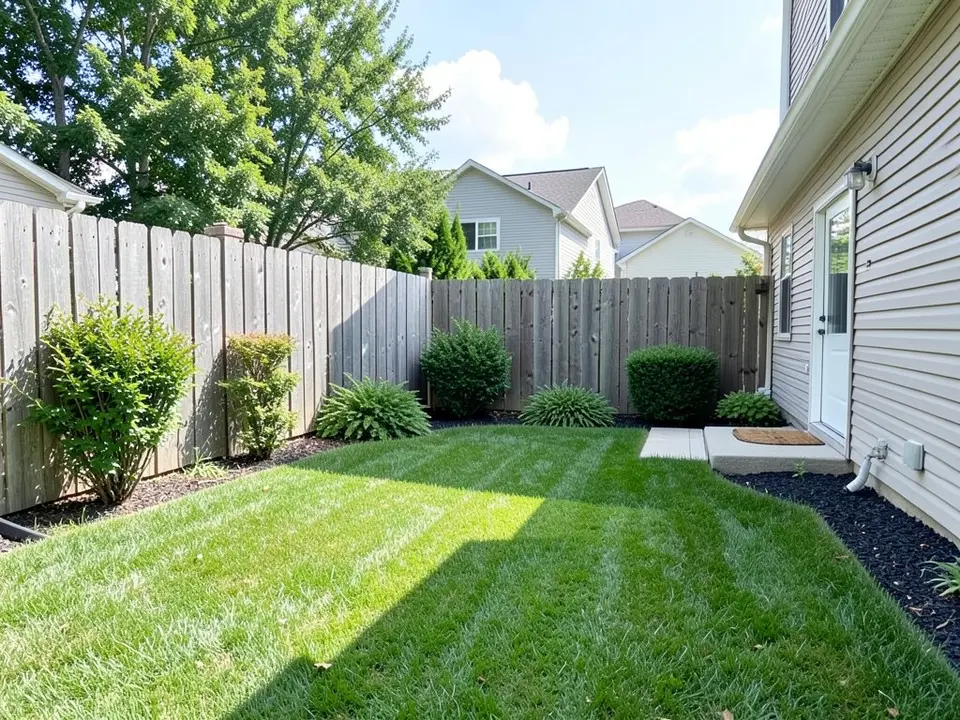
- Change ONLY the middle of the lawn: dig in a small natural-looking pond with dark water, edged with river rocks and boulders, with water lilies on the surface and tall green irises and ferns planted around the edge. Keep the house, fence, shrubs, the rest of the lawn and the camera angle exactly the same.
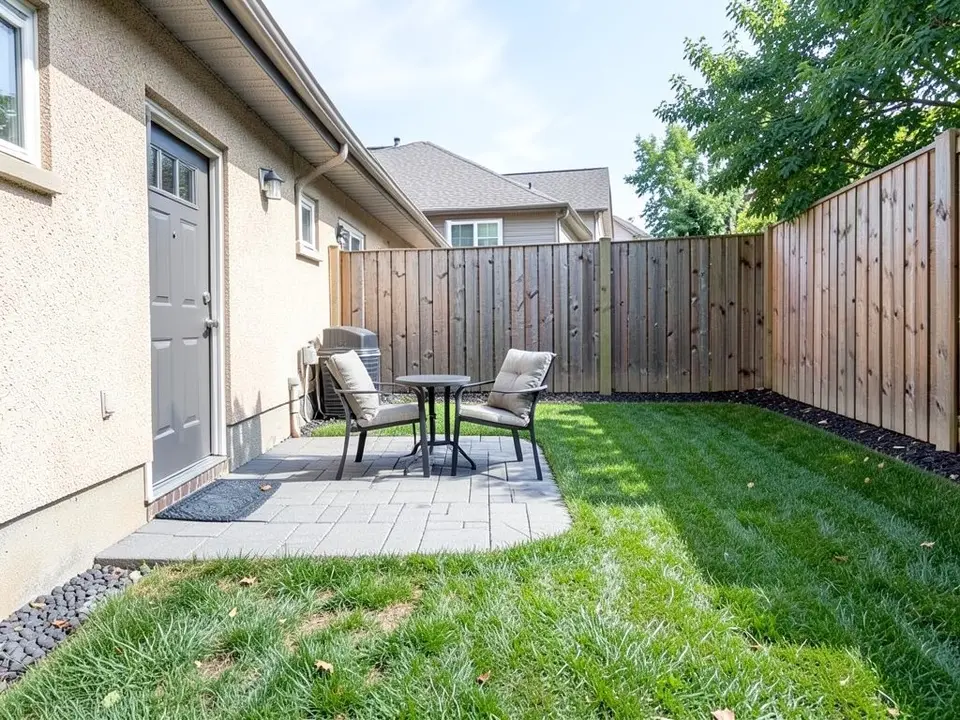
- Change ONLY the corner of the patio near the lawn: add a raised rectangular pond with a low wall of grey stone about half a metre high and dark water inside, with a few water lilies and a row of ornamental grasses behind it. Keep the patio, the chairs, the lawn, the fence, the house and the camera angle exactly the same.
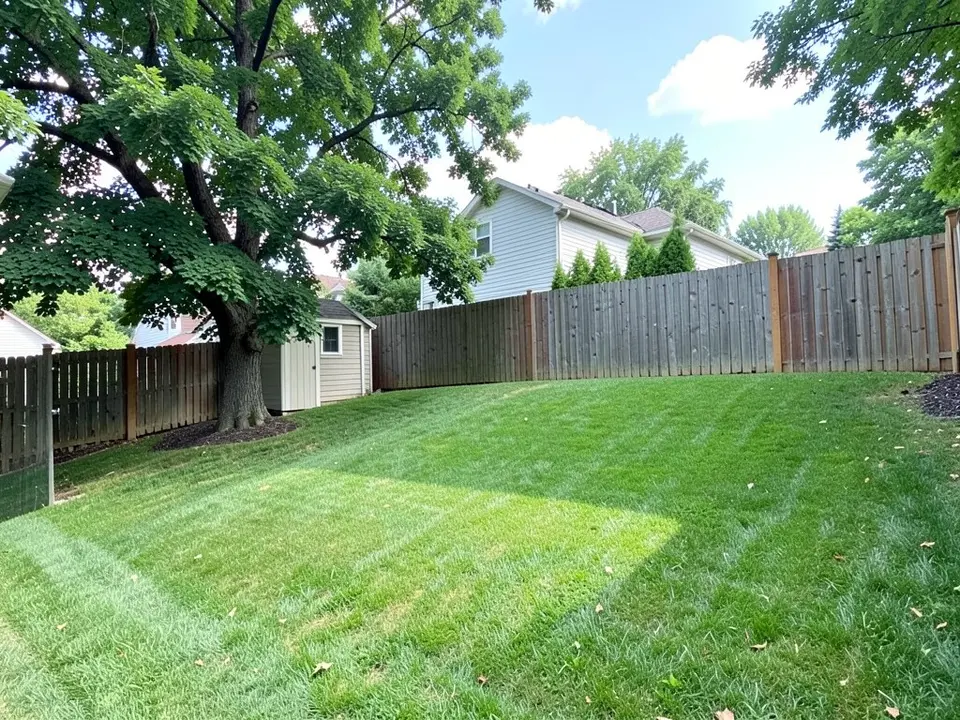
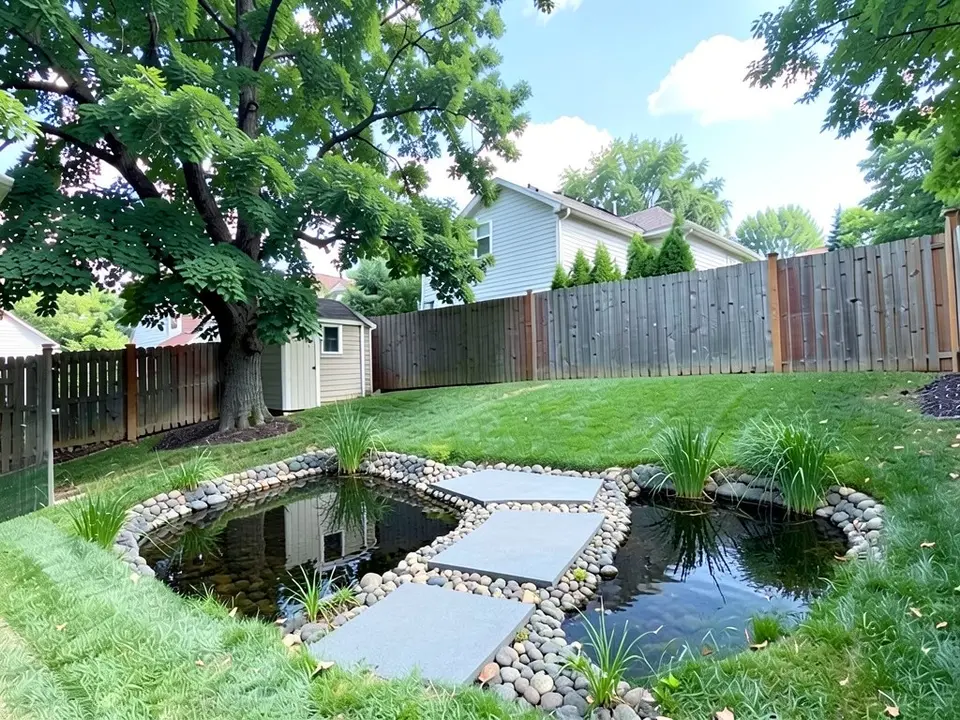
- Change ONLY the lawn: add a pond with clear dark water and a line of flat grey stepping stones crossing it, edged with river rocks, with pond plants and grasses around the edge. Keep the fence, the tree, the shed, the rest of the lawn and the camera angle exactly the same.
Frequently asked questions
What are good pond landscaping ideas?
The pages we read suggest a natural pond with river rocks and pond plants, a geometric pond for a formal yard, a raised pond, a mini pond in a bowl or trough, a cottage pond in a corner, a Japanese pond with stepping stones or a small bridge, and waterfalls as a supporting feature. The examples above show a natural pond, a raised pond and a pond with stepping stones.
What do you plant around a pond?
Stone Center suggests a mix of aquatic plants, including oxygenating plants and water lilies or floating plants. Yardzen suggests pollinator-attracting perennials, ornamental grasses, and ferns and hostas by a rock waterfall. Gardeningetc suggests pond plants with smooth river rocks for a natural look and raised-bed planting to soften hard edges.
How deep should a backyard pond be?
Stone Center, a stone supplier, says to dig in-ground ponds about 18 to 24 inches deep depending on the design, and says raised pond walls should be at least 18 to 24 inches high. It says fish need similar depth for protection from predators and temperature swings. The other pages we read give no depth, so check with a local professional.
Is a raised pond safer for children and pets?
Gardeningetc says a raised pond with a surrounding retaining wall makes it harder for a child or dog to fall in and calls it safer than an in-ground pond. It does not discuss fencing requirements or supervision, so ask a local professional and your local authority.
Where should a pond go in the yard?
Stone Center suggests a spot with both sun and shade during the day, because too much direct sun encourages algae and too much shade stops plants growing. YardShare suggests a place that rewards a walk, such as the end of a winding path, and thinking about who will see it, for example from a patio.
Is this a plan I can build from?
No. The AI draws a look from your photo. It does not measure your yard, plan depth, liner or pump, or price the work, and it can miss parts of the instruction, as our captions show.
Do I need an account, and is it free?
You need an account, and it is free: 1 free render with a free account, and free renders carry a watermark. More renders and no watermark come with a paid plan.
Sources
The facts above come from these pages, which we read in October 2026. We are not affiliated with any of them.
- Gardeningetc: backyard pond ideas, 14 ways to create a water-filled feature (Stefanie Waldek, last updated 7 September 2021)
- YardShare: pond landscaping ideas from real yards (April 10, 2026; no individual byline; an ideas blog that does not appear to sell anything)
- Yardzen: backyard pond ideas (Kendra Poppy; no article date shown; the company sells landscape design, and the text we could read was cut off)
- Stone Center: 9 ideas to make your backyard pond dream into reality (Jon Smiley, owner; two dates shown, 11/1/2025 and 10/18/2024; the company is a stone supplier)