
What the pages suggest for landscaping around a fire pit
These ideas come from Yardzen (Kendra Poppy; published August 13, 2022, updated June 8, 2023; the company sells landscape design; 61 ideas), Fresh Patio (60 ideas; published April 24, 2025, last modified May 4, 2025; Joe Hats; an ideas site with an Amazon affiliate disclaimer in its menu), Bower & Branch (Sarah Finazzo, October 2, 2024; an online shop, and its page shows a free-shipping banner) and Horticulture (Meghan Shinn, October 4, 2011). Two of the four sell things, and none of it is tested in your yard.
Yardzen says fire pits are among the most commonly requested features in its designs, and says they extend the outdoor season, work as focal points in an evening landscape and anchor gathering spaces.
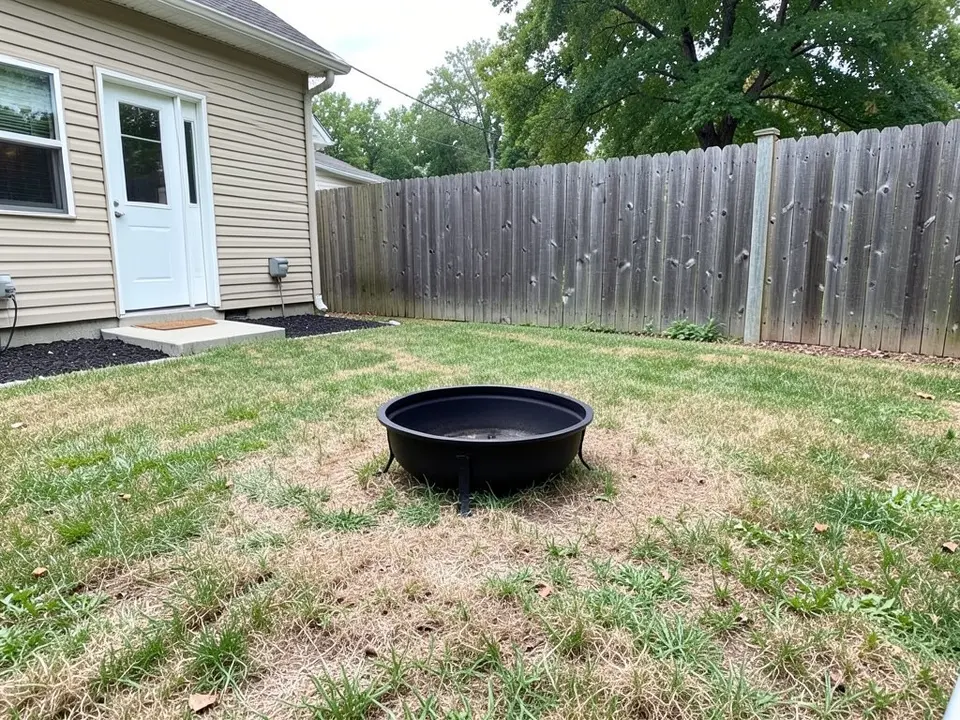
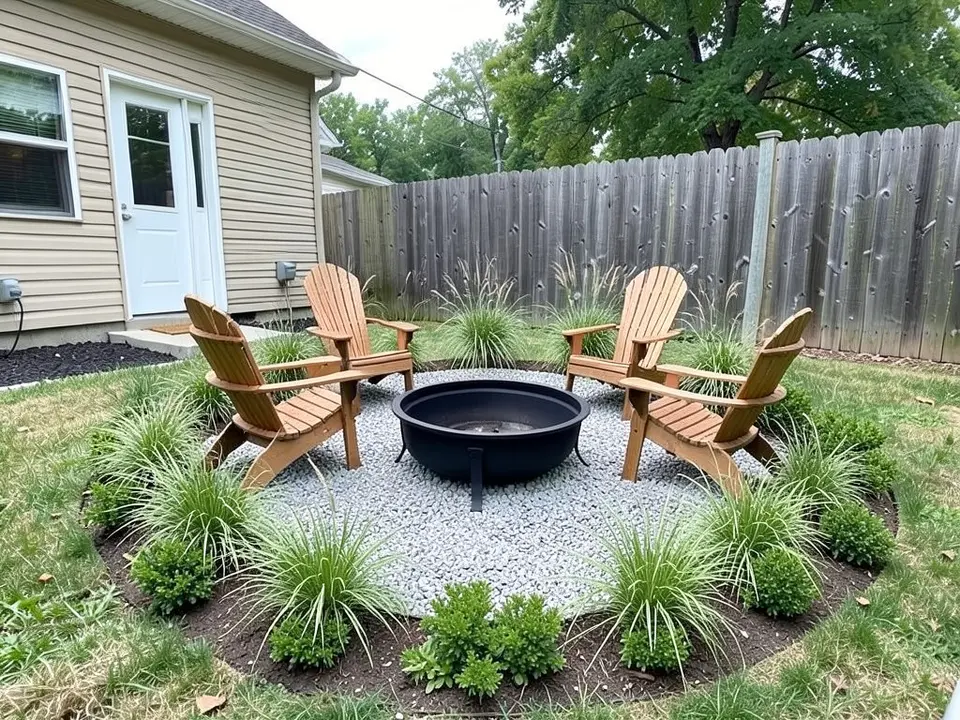
- Gravel with planting around: One of Yardzen's examples is described as planting above, gravel below and a fire bowl in the middle, which Yardzen calls space-efficient and simple. Our first example is this idea.
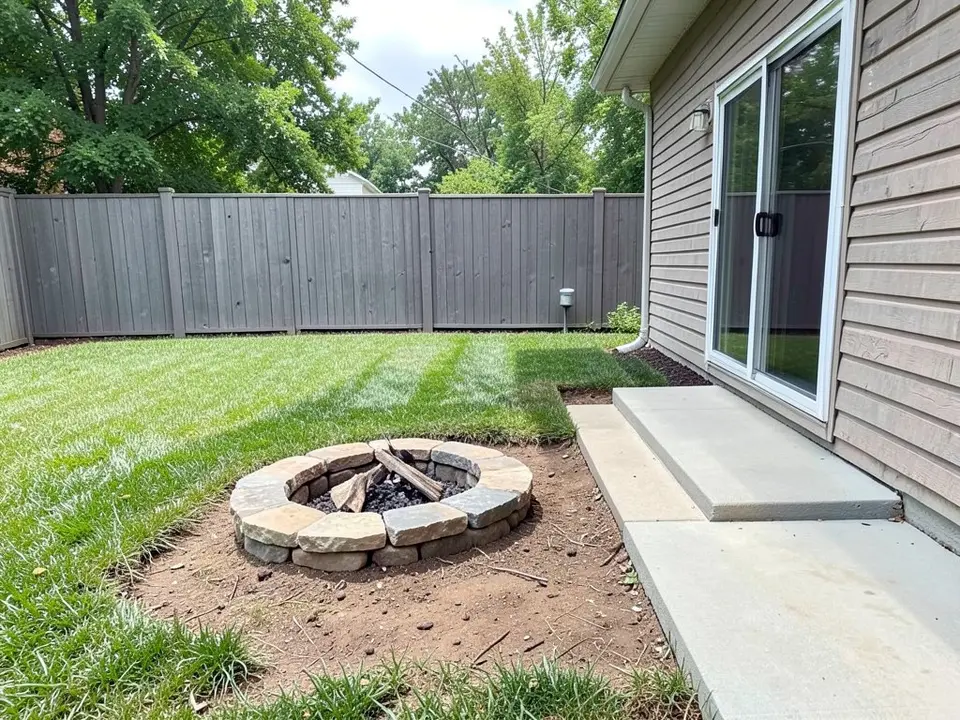
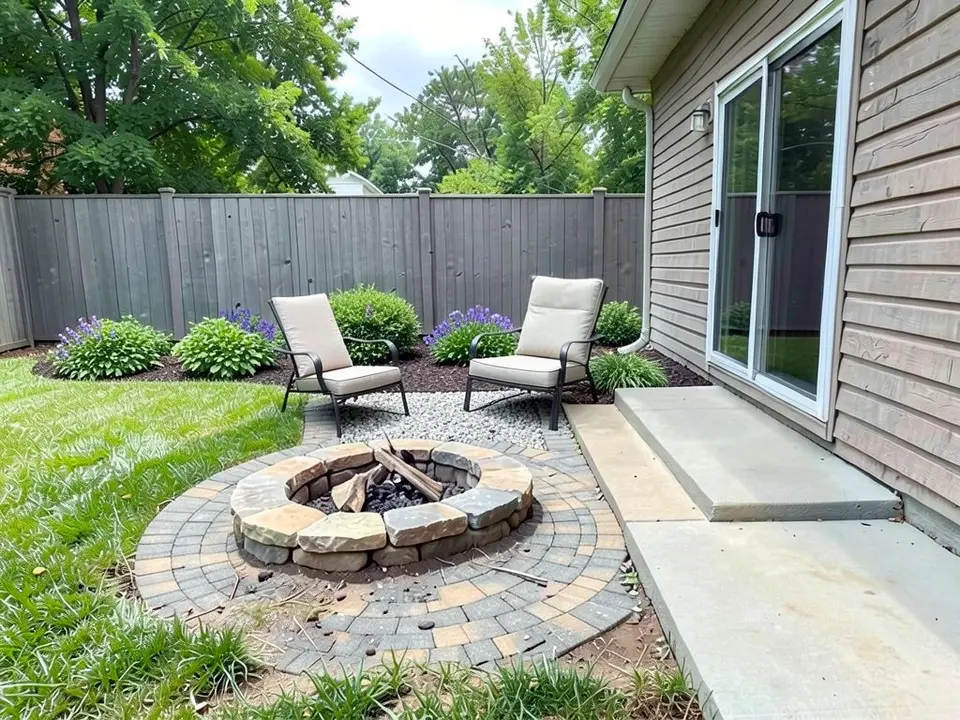
- Pavers or gravel as the ground: Horticulture suggests surrounding the pit with a non-flammable material such as pavers or gravel, for a level seating area and to protect plantings from catching fire. Our second example is a paver version. Bower & Branch likes layering materials so the space is not one-toned, and likes the fire pit itself to be a different material from the ground.
- Gravel island and gravel river: Fresh Patio suggests a circular fire pit zone like an island in a field of pea gravel, reached on pavers or timber stepping stones, and a dry river of gravel or river rock leading to the fire pit area.
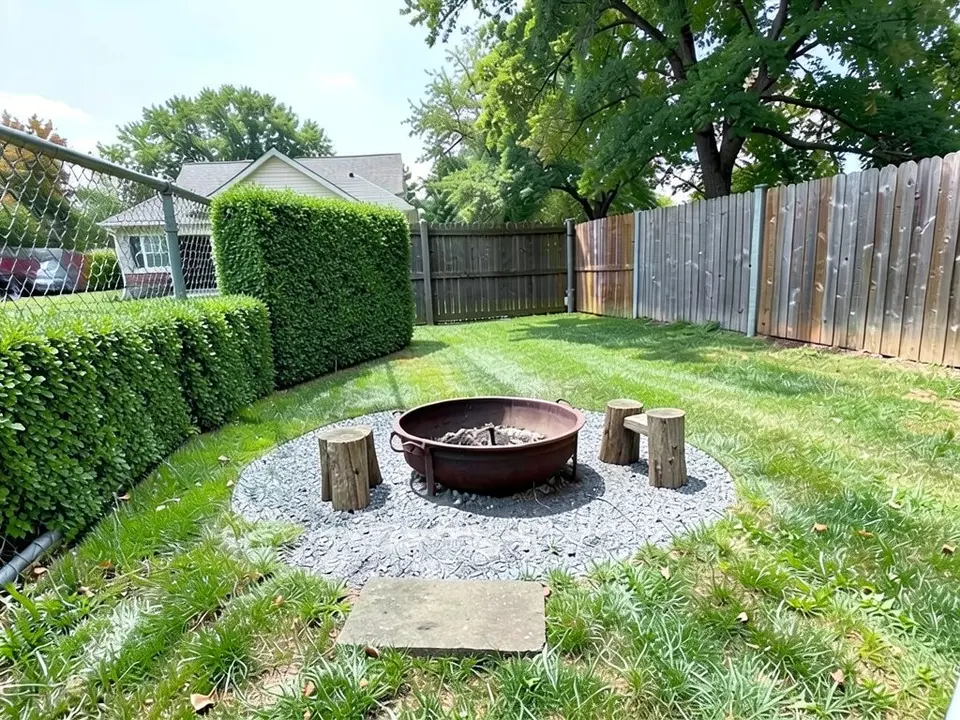
- Enclosing the corner: Fresh Patio suggests tall clipped hedges or bamboo screens to enclose the area for privacy. Horticulture suggests a ring of shrubs to make a cozy spot, with a clear exit left somewhere in the ring. Bower & Branch describes one design that gets privacy from tall evergreens and grasses. Our third example is a hedge corner.
- Tall grasses and fall color: Fresh Patio lists a fire pit in a circle of tall ornamental grasses. Horticulture suggests ornamental grasses and late-blooming native perennials such as ironweeds and black-eyed Susans for fall.
- Plants that show at night: Horticulture suggests plants with variegated or light foliage, or light or white flowers, because they show up best when the fire pit is used in the evening.
- Trees at the corners: One Yardzen example places trees at the corners of a paver pad, kept compact so there is open space for kids and dogs, with the space growing more enclosed as the canopies fill in.
- Sunken pits: Fresh Patio suggests digging the fire pit area below grade with built-in seating. Bower & Branch says a sunken pit retains heat well and can block the wind, and recommends keeping plantings low so they do not block the views out.
Seating, paths and lighting
The pages also say:
- Seating: Yardzen describes flexible seating that can be moved or removed to suit group size, and a circular layout with a few Adirondack chairs. Fresh Patio suggests wraparound benches with open cubbies beneath for firewood.
- A clear way in: Bower & Branch says a clear path to and from the fire pit makes it more usable. Horticulture suggests safe, smooth walkways to and from the fire pit.
- Lighting: Horticulture suggests lining the path with lighting or keeping flashlights handy. Fresh Patio suggests low-voltage LED lighting set flush with the perimeter of the fire pit. Bower & Branch says string lights hung above or near an outdoor fireplace set an intimate atmosphere, and one Yardzen example uses string lights overhead.
- Keep it simple: Yardzen describes its gravel-and-planting example as minimizing clutter and maximizing openness.
Where it can go: what the safety pages say
Our pictures show a look. They do not show clearances, and we cannot judge distances from a picture. The chairs and plants in our examples sit close to the bowl compared with the figures below, so do not copy their layout. The two safety pages we read give different figures, so neither is a rule for your yard:
- Surface: This Old House (published April 10, 2009, last modified June 6, 2026; Natalie Rodriguez) says to put the pit on a level stone, concrete or brick surface and, unless the owner's manual allows it, not on grass, a wood deck or an enclosed porch.
- Distance from things that burn: This Old House quotes its mason Mark McCullough: make sure the spot is at least 10 feet from anything combustible, including overhead tree branches. The same page says to keep at least 10 feet between the pit and any buildings, including the house and wooden decking, and to allow at least 21 feet of clearance above the pit.
- Calgary's rules: The City of Calgary's fire pit page (undated) says fire pits must be at least two metres from the property line, house, garage or fence, not under trees, branches or other things that can catch fire, and that fires must be kept to 1 metre high and wide, with a spark-guard mesh whose openings are no larger than 1.24 centimetres. These are one city's rules, shown here only to illustrate that local rules differ.
- Plants near the fire: Horticulture says to take the mature size of plants into account and to site them well back from the fire.
- Fuel and extinguishing: This Old House says to burn dry seasoned wood cut at least six months earlier, with logs shorter than three-quarters of the pit's diameter, to never use lighter fluid, gasoline or kerosene, to use a screen cover, and to keep a hose with a spray nozzle, or a bucket of dry sand where the pit should not get wet, close by. Horticulture suggests a bucket of water or sand, a hose and/or a fire extinguisher nearby.
- Children and pets: This Old House says to set a supervised area for children and pets away from the fire pit and to never leave them unattended near it. The City of Calgary says all fires must be continually supervised.
- Local rules: This Old House suggests checking with your local fire department about what is allowed, and Horticulture says to check with local authorities about regulations on outdoor flames. Calgary's page also sets hours when fires may not be lit, which is a local bylaw.
What this page does not do
We do not quote any prices, and we do not give clearances or fire-safety advice of our own: the figures above are what those pages say, and they differ. This page does not cover permits, burn bans or insurance. Ask your local fire department and your local authority before you build or light a fire pit, and treat our pictures as the look only.
How to try fire pit landscaping on your own yard photo
Use Custom mode for this. The Yard Redesign styles have no text box, so you cannot ask for gravel, a hedge or log stools there. Custom lets you name what to add and what must stay the same.
- Take the photo in daylight from where you would sit, with the fire pit, the ground around it and the fence or house behind it in frame.
- Open the landscape tool and sign in with Google or an email code. You get 1 free render with a free account.
- Under Select Landscape Mode, pick Custom.
- In the Custom Design Requirements box, name the ground material, the plants, the seating and what must stay the same, such as the fire pit, the fence and the camera angle.
- Upload your photo under Upload Your Garden Image and click Generate Custom Design.
- Compare the result with your photo and change one thing at a time, such as the ground or the plants, and run it again. If part of the instruction is ignored, say it more directly: our first example needed a rewritten instruction and a different seed.
What the AI can and cannot do
The AI shows a look: roughly how gravel, pavers, plants and chairs would sit around a fire pit in your yard. That helps you choose and explain what you want to an installer.
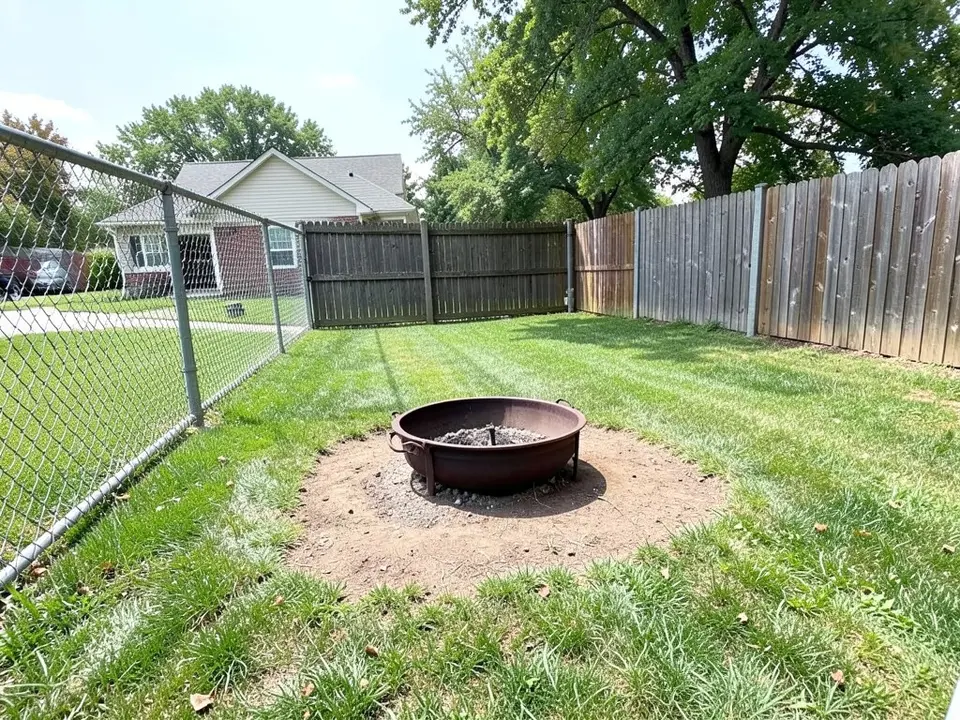
It does not measure your yard, check distances to the house, fence or trees, or price the job. It also does not always follow the instruction, as the broken pavers, the single stepping stone and the partly enclosed corner show. Treat the result as a picture of an idea and get the plan from a local professional.
Fire pit landscaping instructions to paste into Custom mode
These are the exact instructions we used for the three examples above, in the same order. In the landscape tool, choose Custom, paste one into the Custom Design Requirements box, then upload your photo. Swap in the ground material, plants, seating and what must stay.
- Cover the bare grass and dirt in a large circle around the fire bowl with light grey crushed gravel so that no grass is left inside the circle. Place four wooden Adirondack chairs on the gravel facing the fire bowl. Plant a ring of tall ornamental grasses and low green shrubs around the edge of the gravel circle. Keep the fire bowl, the lawn outside the circle, the fence, the house and the camera angle exactly the same.
- Change ONLY the ground around the fire pit: lay a round patio of grey and tan concrete pavers around the stone fire pit, add a narrow gravel path from the concrete step to the patio, plant flower beds with green shrubs and purple flowers along the fence behind the patio, and put two outdoor lounge chairs with cushions on the pavers. Keep the fire pit, the lawn, the fence, the house, the sliding door and the camera angle exactly the same.
- Change ONLY the area around the fire bowl: cover the dirt with a circle of crushed grey gravel, plant a tall clipped green hedge along the back and left sides to enclose the corner, add two flat stepping stones leading in from the lawn, and set two wooden log stools beside the fire bowl. Keep the fire bowl, the lawn, the fences, the neighbor's house and the camera angle exactly the same.
Frequently asked questions
What are good fire pit landscaping ideas?
The pages we read suggest gravel or pavers around the pit with planting beyond, a gravel island or gravel river, a ring of tall ornamental grasses, a ring of shrubs or tall clipped hedges for a cozy enclosed corner, a sunken pit with seating, and lighting such as string lights or low LED lights. The examples above show a gravel circle with grasses, a paver patio with flower beds and a hedge corner with log stools.
What can you put around a fire pit instead of grass?
Horticulture suggests a non-flammable material such as pavers or gravel, for a level seating area and to protect plantings. This Old House says to put the pit on a level stone, concrete or brick surface, and not on grass unless the owner's manual allows it. Fresh Patio suggests a field of pea gravel with the pit as an island, and Bower & Branch likes layering different materials.
What plants go around a fire pit?
Horticulture suggests ornamental grasses and late-blooming native perennials such as ironweeds and black-eyed Susans for fall, plants with light or variegated foliage or white flowers to show in the evening, and a ring of shrubs with a clear exit. It says to consider mature size and site plants well back from the fire. Yardzen's examples include trees kept compact at the corners of a paver pad.
How far should a fire pit be from the house and trees?
The pages we read disagree. This Old House says at least 10 feet from anything combustible, including overhead branches, at least 10 feet from buildings, and at least 21 feet of clearance above the pit. The City of Calgary says at least two metres from the property line, house, garage or fence, and not under trees. Local rules differ, so ask your local fire department.
Do I need to check local rules before building a fire pit?
This Old House suggests checking with your local fire department about what is allowed, and Horticulture says to check with local authorities about regulations on outdoor flames. The City of Calgary's page, for example, sets hours when fires may not be lit. Our pictures do not show any of this.
Is this a plan I can build from?
No. The AI draws a look from your photo. It does not measure your yard, check clearances or price the work, and it can miss parts of the instruction, as our captions show.
Do I need an account, and is it free?
You need an account, and it is free: 1 free render with a free account, and free renders carry a watermark. More renders and no watermark come with a paid plan.
Sources
The facts above come from these pages, which we read in October 2026. We are not affiliated with any of them.
- Yardzen: 61 fire pit landscaping ideas our designers love (Kendra Poppy; published August 13, 2022, updated June 8, 2023; the company sells landscape design)
- Fresh Patio: 60 unique fire pit landscaping ideas (published April 24, 2025, last modified May 4, 2025; by Joe Hats; an ideas site with an Amazon affiliate disclaimer in its menu)
- Bower & Branch: favorite backyard fire pit landscaping ideas (Sarah Finazzo, October 2, 2024; an online shop)
- Horticulture: fire pit plantings and safety (Meghan Shinn, published October 4, 2011)
- This Old House: fire pit safety, essential rules for backyard enjoyment (published April 10, 2009, last modified June 6, 2026; by Natalie Rodriguez)
- City of Calgary: fire pit safety (undated; one city's rules, shown only as an example of local rules)