
What xeriscape actually means
Xeriscape is landscaping designed to need little or no supplemental water. The word was coined by Denver Water in the early 1980s from the Greek xeros, meaning dry. It is often confused with "zeroscape", a yard of bare rock and nothing else. A good xeriscape front yard still has plants, shade, color and texture. It simply swaps thirsty lawn for plants and surfaces that suit your climate.
That matters most in the front yard, because it is the part of the property everyone sees and the part most often planted with turf that nobody walks on.
The 7 xeriscape principles, applied to a front yard
- Plan the layout: Sketch where people walk, where cars park, where the sun hits in the afternoon and where water runs when it rains. Design around those, not around the old lawn edges.
- Improve the soil: Most drought-tolerant plants want soil that drains. In heavy clay, loosen planting areas and mix in compost; in sandy soil, compost helps hold moisture.
- Keep turf only where it works: If kids or dogs use a patch of grass, keep a small, regular-shaped area of it. Remove the strips and corners that only get mowed.
- Choose plants for your region: Native and climate-adapted plants are the core of xeriscape. Check what your local extension service or water utility recommends for your zone.
- Water efficiently: Drip irrigation puts water at the roots instead of on the sidewalk. Group plants with similar water needs on the same line (hydrozoning).
- Mulch: Gravel, decomposed granite or shredded bark cuts evaporation and weeds. Use rock mulch around succulents and bark around shrubs that like richer soil.
- Maintain lightly: Expect weeding and drip checks in the first year while plants establish, then far less mowing and watering.
Xeriscape front yard ideas that work
Before you remove any grass, check your HOA rules and ask your water utility whether it offers a lawn replacement program. Many western utilities do, and some require approval before work starts.
- Decomposed granite with planting pockets: A firm, natural-looking ground cover that you can walk on, broken up by clusters of plants rather than a single row along the house.
- A wider, softer path: Replace a narrow concrete strip with flagstone or pavers set in gravel. It reads as a design choice, not a leftover.
- Boulders set into the ground: Bury the bottom third of each rock so it looks like it has always been there. Group them in odd numbers.
- A dry creek bed: River rock laid along a natural low line carries roof runoff and gives the yard a shape even when nothing is in bloom.
- Layered planting: Low groundcovers at the front, mid-height grasses and perennials in the middle, larger shrubs or a small tree near the house.
- Color from flowering perennials: Salvia, penstemon, lavender and similar drought-tolerant bloomers keep the yard from looking gray. Pick the ones suited to your area.
- Clean edges: Steel or stone edging keeps gravel off the sidewalk and makes the whole design look finished.
See a xeriscape version of your own yard first
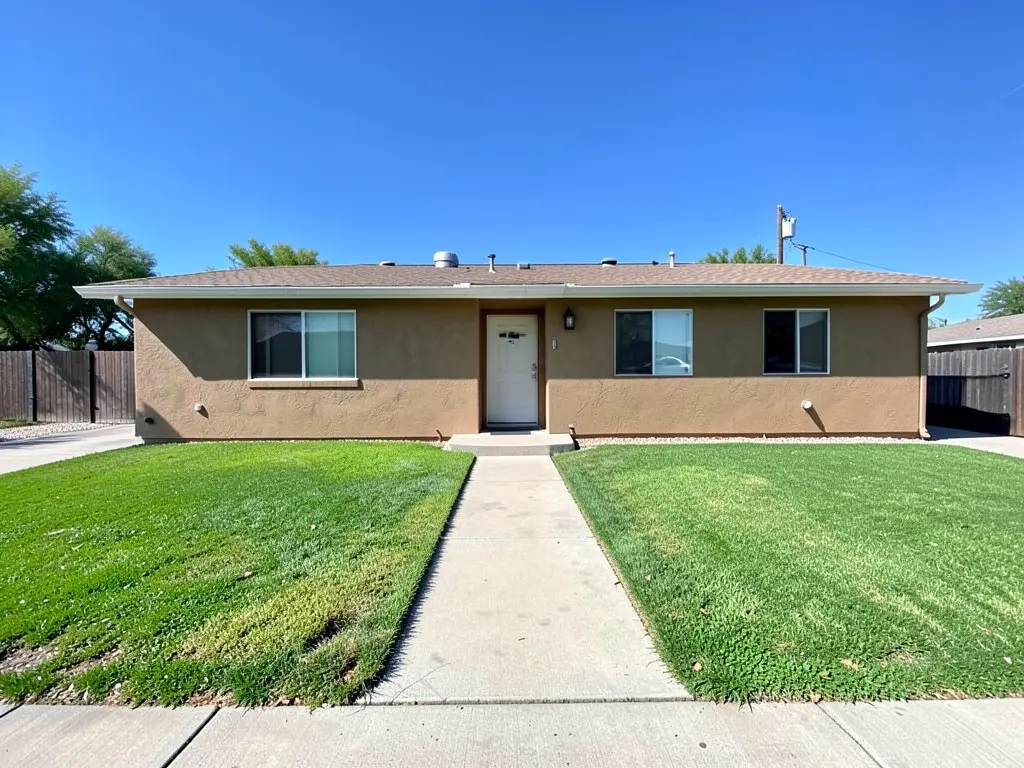
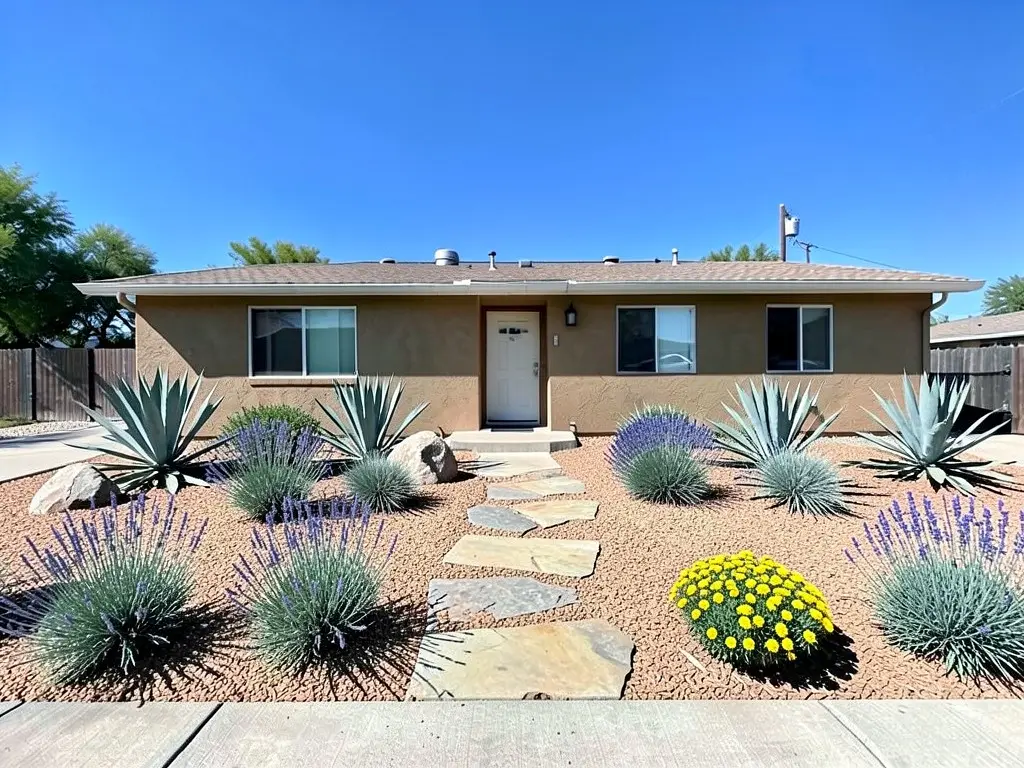
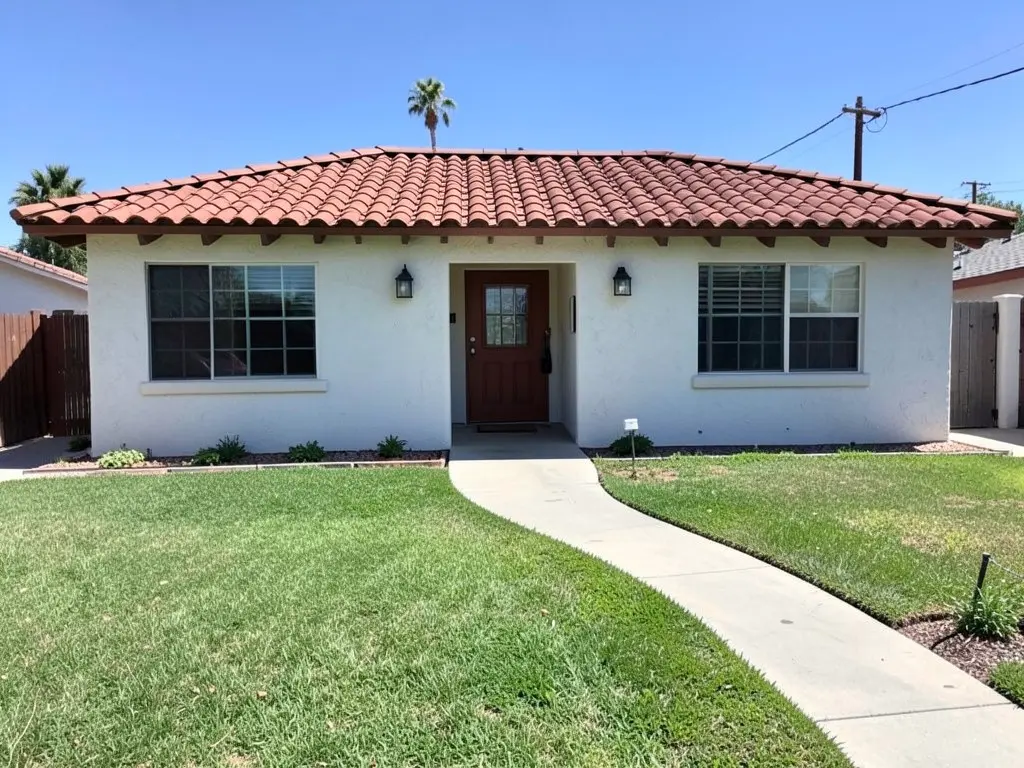
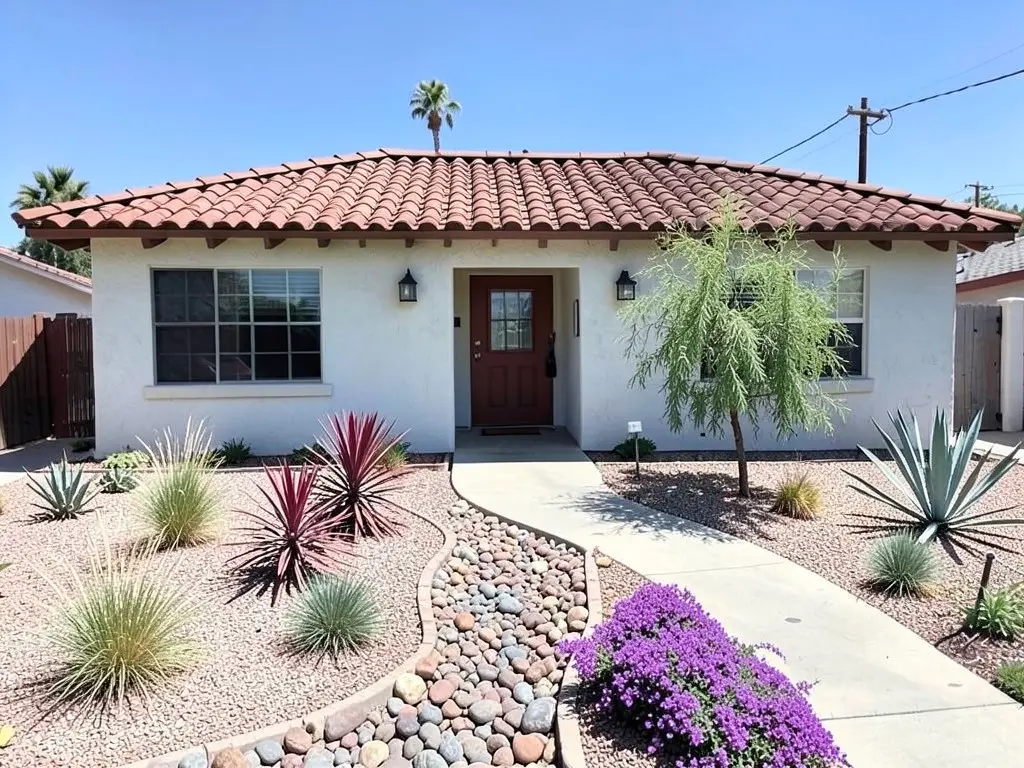
It is hard to picture gravel and agave where the lawn is now, and it is expensive to find out you don't like it after the sod is gone. Our landscape tool lets you upload a photo of your front yard and get back an AI-edited image of the same view with your instructions applied.
- Take a photo from the sidewalk or street in daylight, holding the phone level, with the whole yard and the front of the house in the frame. JPG or PNG files work.
- Open the landscape tool and sign in with Google or an email code. You get 1 free render with a free account.
- Choose the Custom mode, upload your photo and describe what you want, for example the instructions further down this page.
- Generate, compare it with your photo, then adjust the wording (more boulders, less gravel, a small lawn kept) and try again.
What the AI can and cannot do
It redraws your photo as a new image. It is useful for comparing looks and agreeing on a direction with your family or a contractor.
It does not produce a measured plan, a plant list with quantities, an irrigation layout or a cost estimate, and it does not know your local climate zone. Plants in the image are AI-drawn approximations, so confirm every species with a local nursery before you buy. Small details of the house can shift between versions, and results depend on the photo you upload.
Instructions you can paste into Custom mode
Open the landscape tool, pick Custom, upload your photo and use one of these as a starting point. Edit the plant names to suit your area.
- Replace the grass lawn with a xeriscape front yard: decomposed granite ground cover, a flagstone path to the front door, clusters of agave, lavender, salvia and blue fescue, a few natural boulders. Keep the house, windows and camera angle the same.
- Keep a small rectangle of lawn near the house and replace the rest with gravel, ornamental grasses and flowering drought-tolerant perennials, with steel edging. Keep the house the same.
- Add a river rock dry creek bed across the yard, light gravel mulch, deer grass and red yucca, and a small desert willow tree near the corner. Keep the walkway and house the same.
Frequently asked questions
What is a xeriscape front yard?
It is a front yard designed to need little or no supplemental water: climate-adapted plants, mulch or gravel instead of most of the lawn, and efficient drip irrigation. It still has plants and color, so it is not the same as an all-rock yard.
Can I see a xeriscape design on a photo of my own house?
Yes. Upload a photo of your front yard to our landscape tool, choose Custom mode and describe the xeriscape you want. The AI returns an edited image of the same view.
Is the AI landscape tool free?
Yes, to start: 1 free render with a free account, and free renders carry a watermark. More renders and no watermark come with a paid plan.
Will the AI tell me which plants to buy?
No. The image shows a design idea, and the plants in it are AI-drawn approximations. Use it to choose a look, then confirm species for your climate with a local nursery or extension service.
Does the tool give me measurements or a cost estimate?
No. It produces an edited photo, not a scaled plan, plant count or price. A landscaper or your own measurements are still needed for quantities and costs.
What kind of photo works best?
A level, daylight photo taken from the street or sidewalk that shows the whole yard and the front of the house. JPG and PNG files are accepted.