
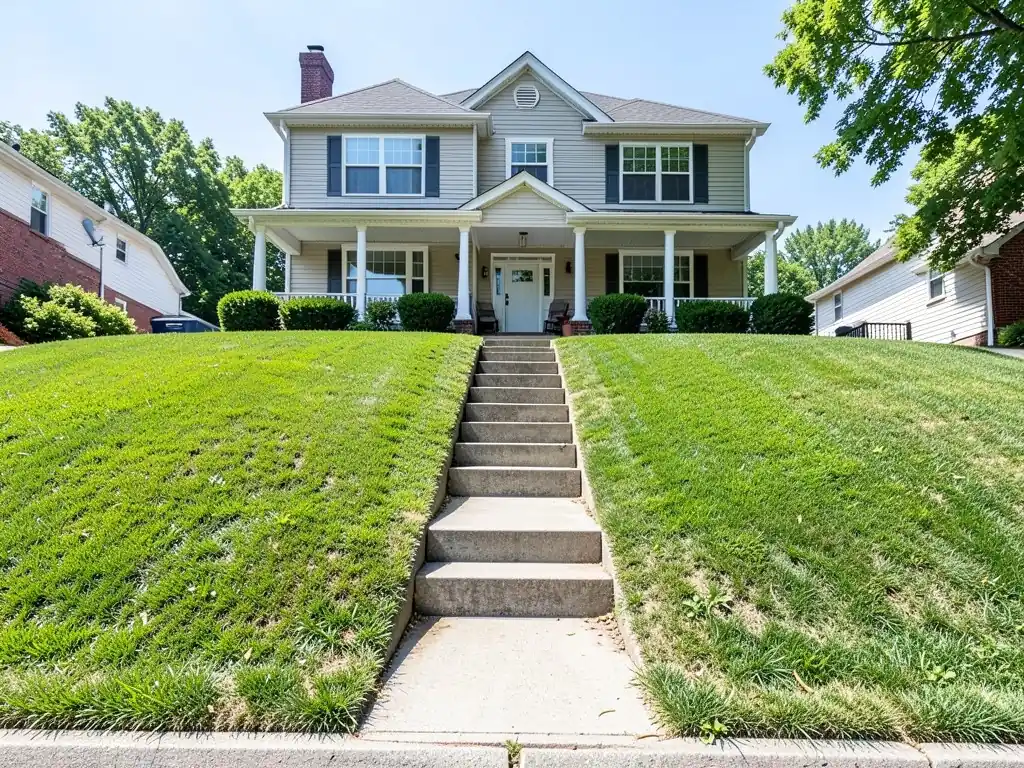
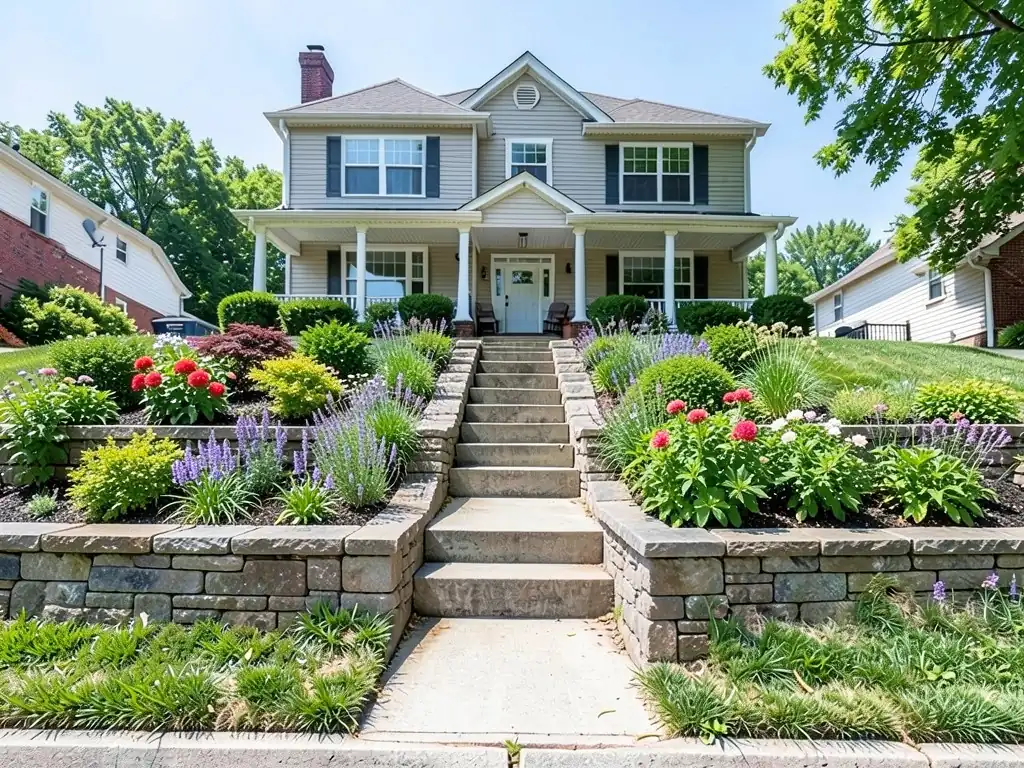
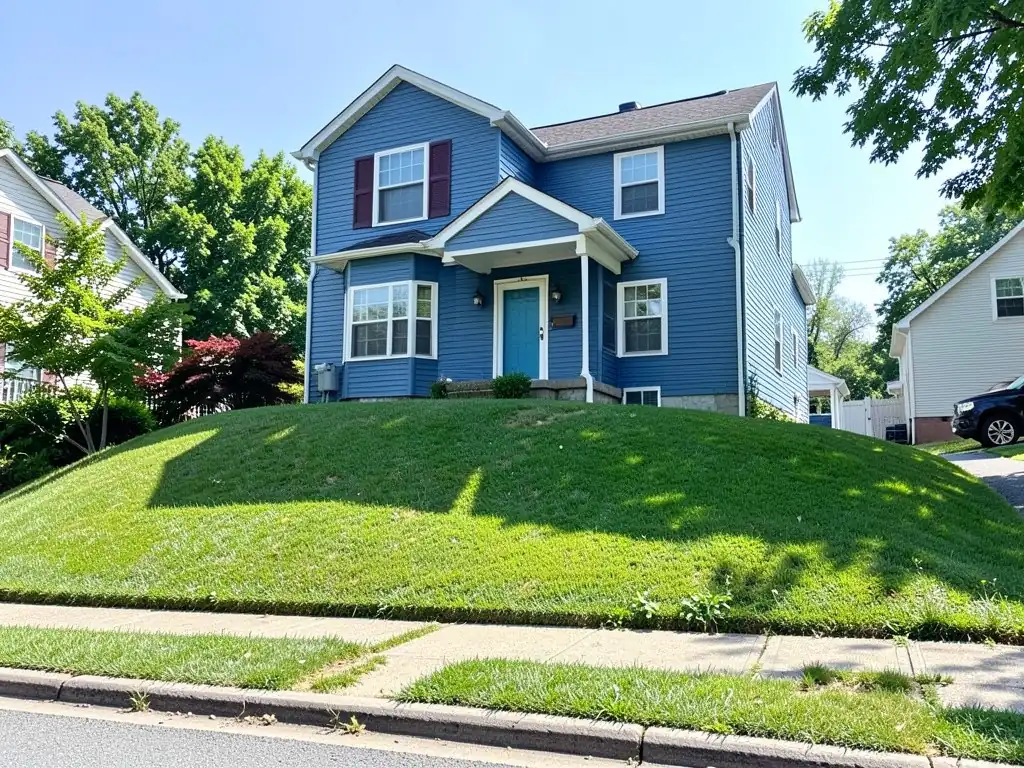
Terraces with low retaining walls
Wildyards calls a terrace one of the best ways to landscape a sloped front yard, with walls spaced at regular intervals up the slope, and ShrubHub shows walls in tiers with a planting bed on each level. Landscaping Network notes that a front yard is mostly about looks, so the terraces do not have to give you flat space to use.
ShrubHub says short retaining walls could be built by keen do-it-yourselfers, while a tall retaining wall calls for professional engineering. Our first example asked for two low stone walls on each side of the steps and the AI built two tiers only on the left, so check the count in your result.
Groundcover in place of mown grass
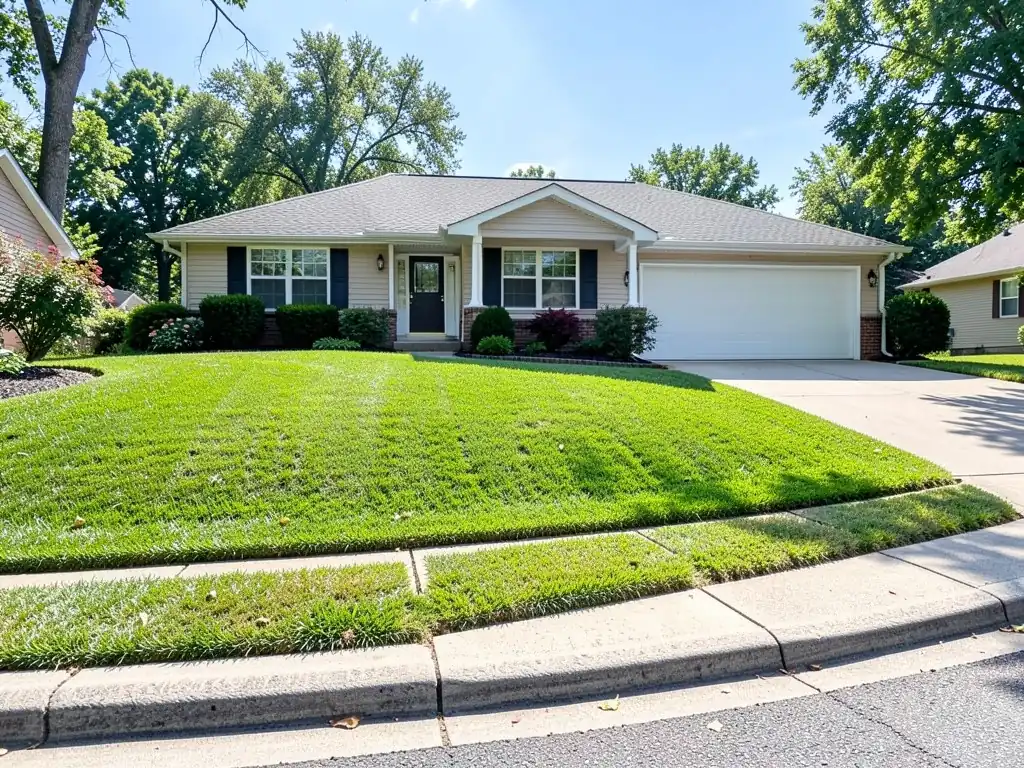
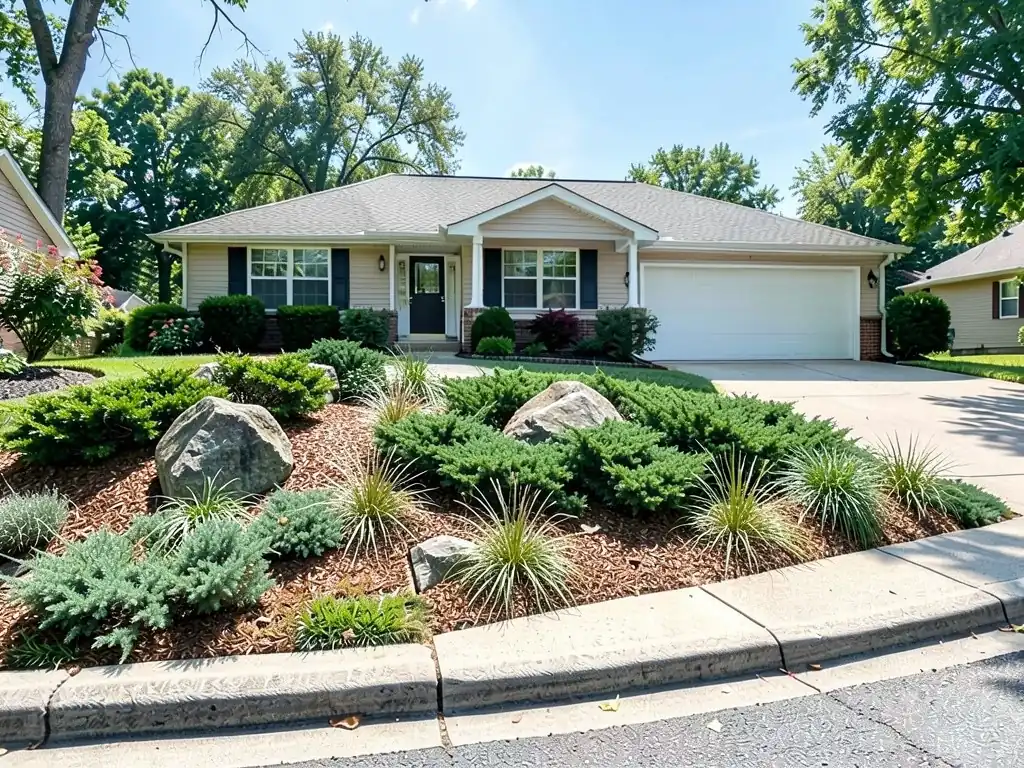
Mowing a slope is hard work. Wildyards warns that a riding mower on a steep incline can get you seriously hurt, and suggests Irish moss, which it says grows to at most 2 inches and never needs mowing, or carpet sedum and creeping phlox for sunny spots. Fresh Patio suggests skipping grass on a steep hill where it will not grow.
Landscaping Network says groundcover is often the default for a hill but may not look as good and can become invasive, and shows grasses, perennials and boulders that hold the soil instead. Our second example swaps the lawn for creeping juniper, ornamental grasses and boulders in mulch.
Steps up to the door
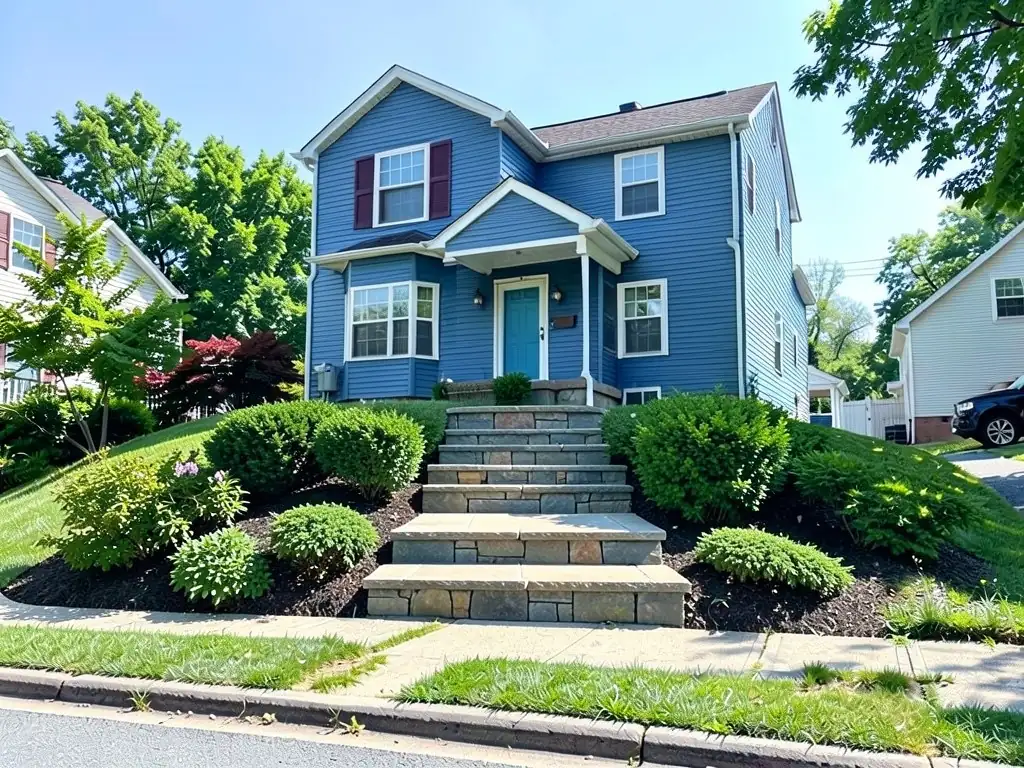
Landscaping Network recommends a paved path so visitors can reach the door safely, and shows granite steps climbing a hillside, which it says make the slope look less steep. Fresh Patio shows a stepping-stone path that turns into full stairs as the grade rises, a tiered walkway with a series of landings, and railings for extra safety on steeper slopes.
Our third example adds wide stone steps with shrub beds on both sides. We asked for a landing halfway up and the AI still drew one straight flight, so if you want a resting point, check for it in your result and try again. For more on steps, see our garden steps ideas page.
Plants and erosion on a front slope
ShrubHub says retaining walls help keep soil in place and cut surface runoff, and Fresh Patio says boulders help manage runoff and erosion and break up mulch beds.
- In terraces: Wildyards suggests low plants such as lavender, rosemary and salvia in staggered terraces, and ShrubHub suggests shrubs and colorful blooms in tiered beds.
- Low water: Fresh Patio suggests agave, yucca and columnar evergreens, and low-water grasses such as blue fescue or mondo grass.
- On a gentle slope: Landscaping Network says a slight slope may need only light grading and grass, whose roots help hold the soil, but mowing it is harder than mowing flat ground.
How to try a sloped front yard idea on your own photo
The tool above is already in Custom mode. The Yard Redesign styles have no text box, so you cannot ask for two stone terrace walls, juniper in place of the lawn or steps up to the door there. Custom lets you name the change, the plants, where they go and what must stay the same.
- Take the photo in daylight from the street or the sidewalk, with the whole slope and the front door in frame.
- Describe the change in the Custom Design Requirements box: what may change (the grass slope), what to add, how many walls or steps and where, and what must stay the same, such as the house, the front door, the driveway, the sidewalk and the camera angle.
- Upload your photo under Upload Your Garden Image and click Generate Custom Design. You sign in with an email code or Google when you generate.
- Compare the result with your photo. If it built one wall instead of two or removed the sidewalk, say exactly how many walls and that the sidewalk must stay, and try again.
What the AI can and cannot do
The AI shows a look: roughly how terraces, groundcover or new steps would sit on your own front slope. That helps you choose between ideas and talk them through with a landscaper or a wall builder.
It does not measure the slope, design a wall, plan drainage or check permit rules. It also does not always follow the instruction: in the examples above it built two tiers on one side only, drew no landing on the steps and removed the sidewalk in the groundcover example, even after we reworded that instruction twice. Treat the result as a picture of an idea.
Sloped front yard instructions to paste into Custom mode
These are the exact instructions we used for the three examples above, in the same order. In the tool above, Custom is already selected: paste one into the Custom Design Requirements box, then upload your photo. Swap in your own plants, walls, steps and what must stay.
- Change ONLY the grass slope: on each side of the steps, build two low stone retaining walls, one above the other, to make two level terraces, and plant both terraces with shrubs and flowering perennials. Keep the house, the walkway, the steps and the camera angle exactly the same.
- Replace ONLY the sloping lawn above the sidewalk with low groundcover planting of creeping juniper, ornamental grasses and a few boulders in bark mulch. The flat concrete sidewalk, the narrow grass strip between the sidewalk and the curb, and the curb stay exactly as they are. Keep the house, the driveway and the camera angle exactly the same.
- Add ONLY a set of wide stone steps from the sidewalk up the slope to the front door, split halfway up by one flat stone landing as wide as the steps, so there are two short flights of steps with the landing between them, with planting beds of shrubs on both sides of the steps. Keep the house, the front door, the sidewalk and the camera angle exactly the same.
Frequently asked questions
How do I landscape a steep front yard?
The sources we read suggest terraces held by retaining walls, planting or groundcover in place of grass, boulders, and a paved path or steps to the door. Our three examples show one of each.
What can I plant instead of grass on a front slope?
Wildyards suggests Irish moss, carpet sedum or creeping phlox, and Fresh Patio suggests low-water grasses such as blue fescue or mondo grass. Landscaping Network shows grasses and perennials with boulders. Our second example uses creeping juniper and ornamental grasses.
Do I need an engineer for a retaining wall?
ShrubHub says short retaining walls could be built by do-it-yourselfers, while a tall retaining wall calls for professional engineering. None of the sources we read gave permit rules or heights, so ask your city or county.
How do I make steps up a sloped front yard?
Landscaping Network recommends a paved path so visitors reach the door safely, and Fresh Patio shows stone steps, landings and railings on steeper slopes. Our third example adds wide stone steps with shrub beds on both sides.
How do I stop erosion on a front slope?
ShrubHub says retaining walls help keep soil in place and cut runoff, and Fresh Patio says boulders help manage runoff and erosion. Landscaping Network says grass roots also help hold the soil on a gentle slope.
Can the AI tell me whether my slope needs a wall?
No. It draws the look you describe on your photo. It does not measure the slope, design a wall or plan drainage, and it does not always follow the instruction, as the captions above show.
Do I need an account, and is it free?
Create a free account with an email code or Google to generate. You get 1 free render, and free renders carry a watermark. More renders and no watermark come with a paid plan.