
Start by reading your shade
Not every shady spot is the same, and the plants that fail in one may do well in another. Garden Design sorts shade into three kinds, and it helps to know which one you have before you choose plants or write an instruction for the AI.
- Partial shade: A building, wall or slope blocks the sun for part of the day. Garden Design notes that east-facing spots get the cooler morning sun, while west-facing spots get hot afternoon sun that can burn or stress the leaves.
- Full shade: Little or no direct sun, as on the north side of a house, in a courtyard or under a roof overhang.
- Dappled shade: The moving pattern of light and shade under a tree canopy. How much light gets through depends on the tree and the size of its crown.
Shade garden ideas by spot
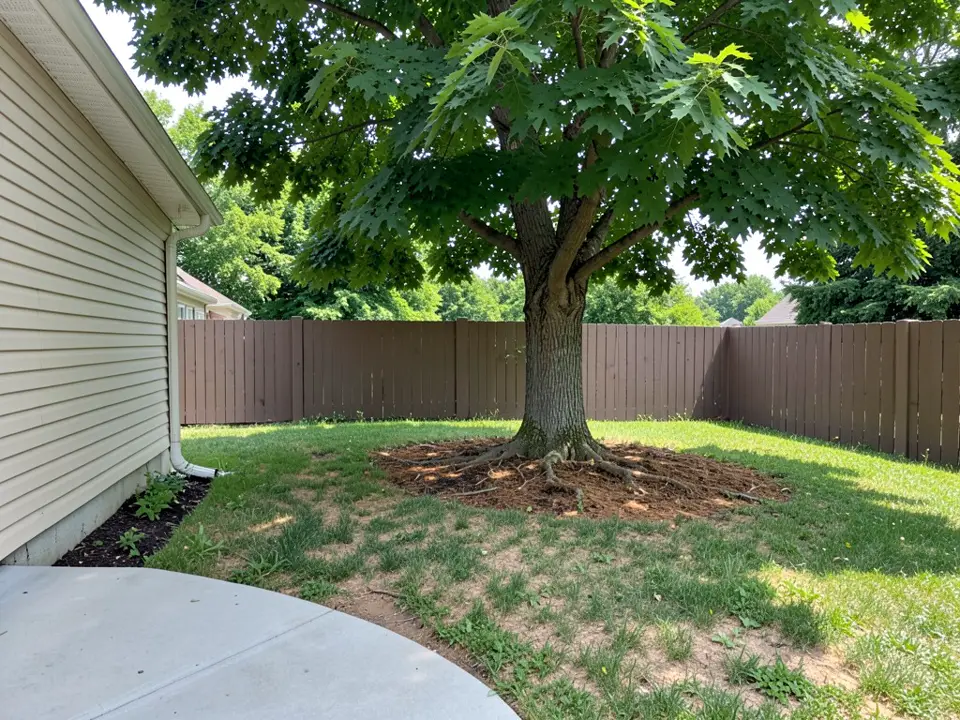
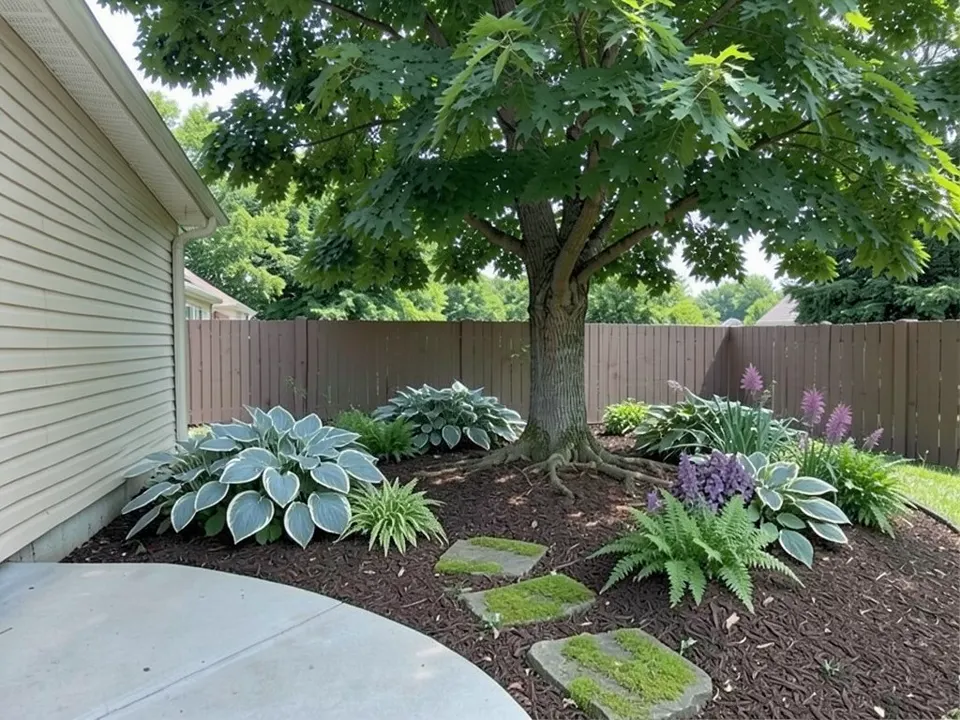
- 1. Under a big tree: Swap the thin lawn for a mulched bed of hostas, ferns and groundcovers, with a few stepping stones so you can walk through it (our first example). Read the section on planting under a tree below before you dig.
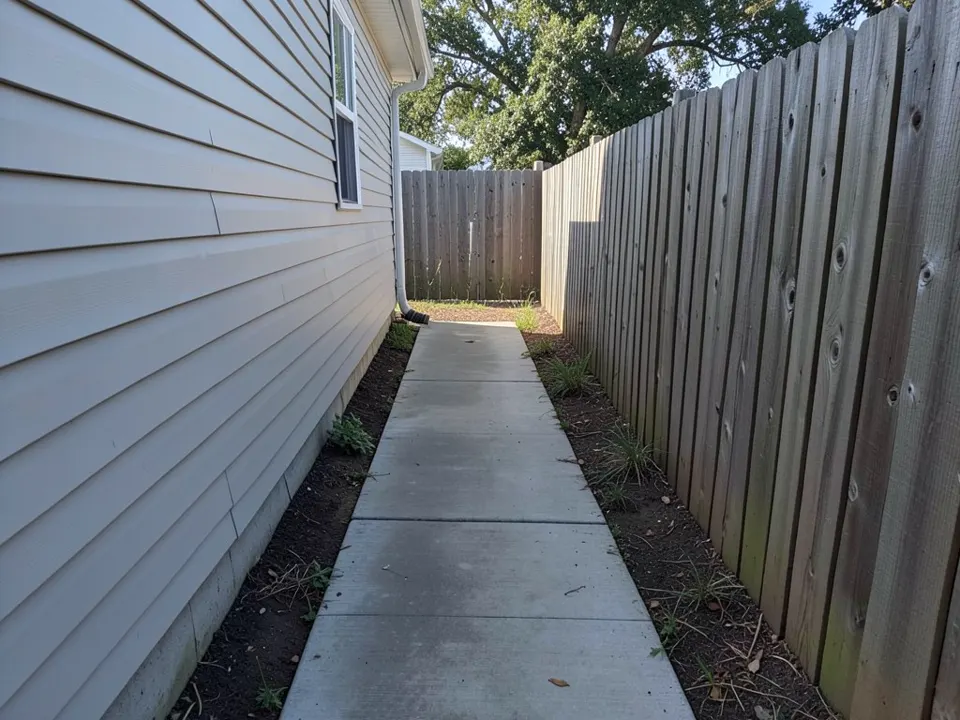
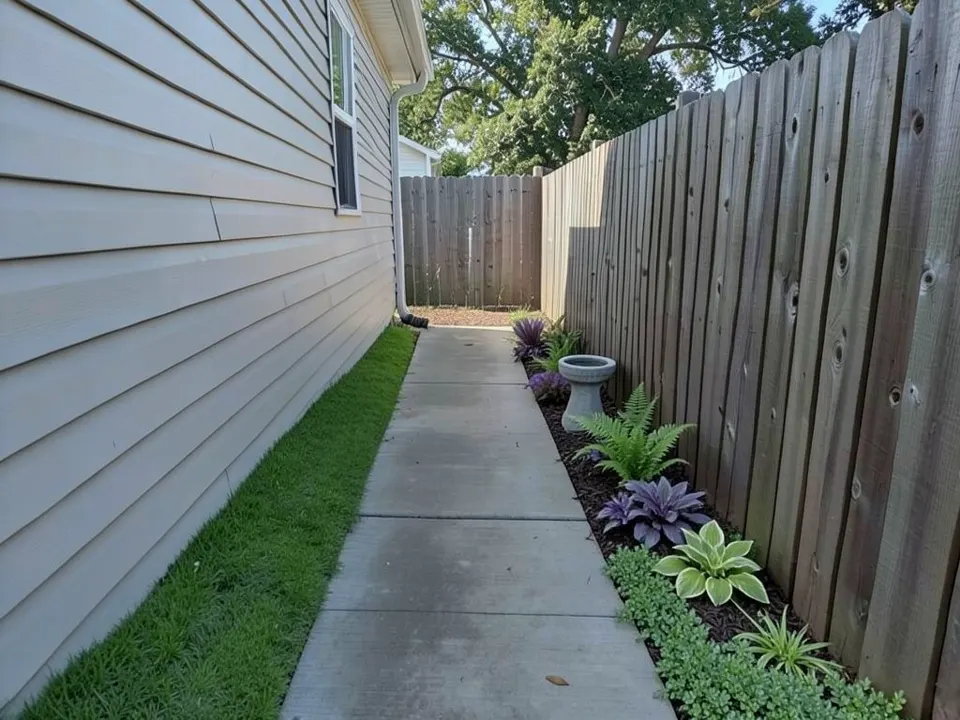
- 2. A narrow side yard: Plant a slim woodland border along the fence and leave the path clear. Garden Design warns that the biggest hostas can grow 4 to 6 feet wide, too big for a narrow side yard, so look for small or dwarf kinds (our second example).
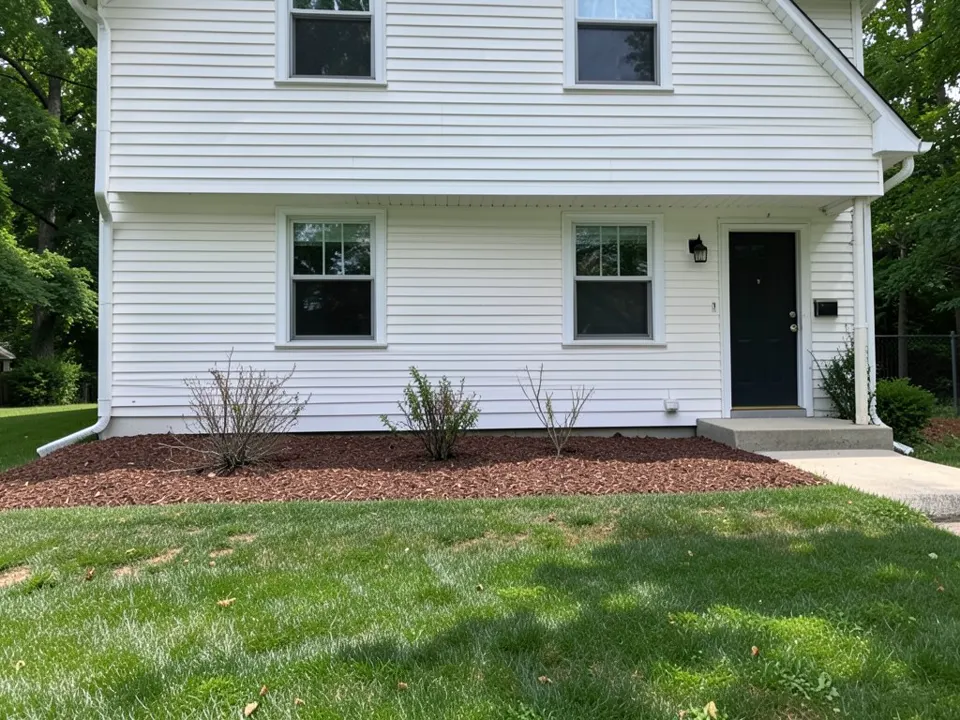
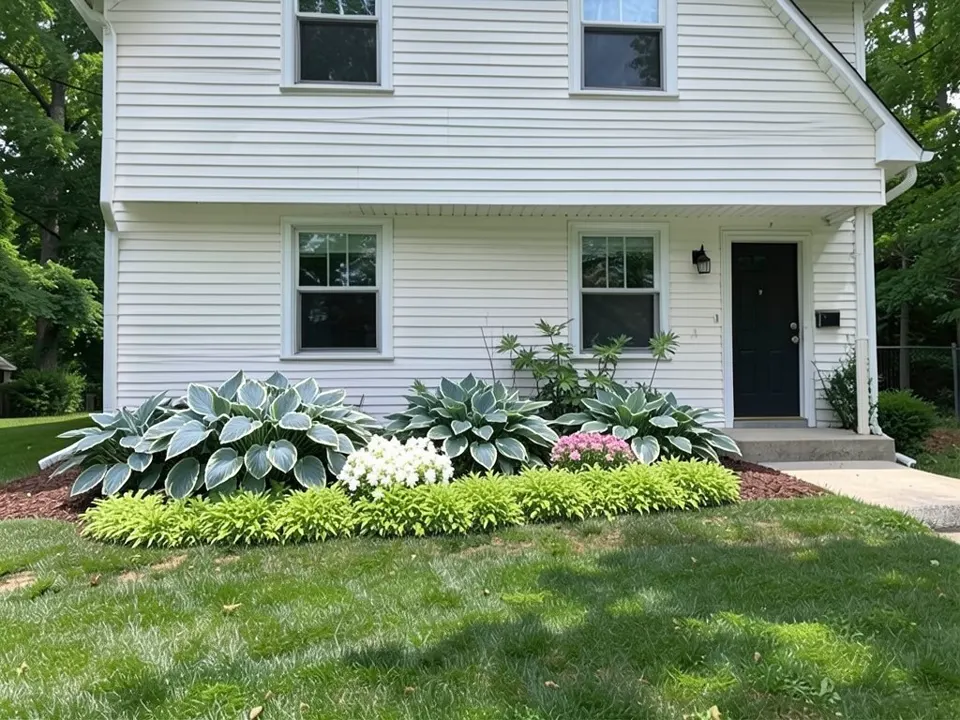
- 3. A north-facing foundation bed: Layer the bed: larger leaves near the wall, flowers in the middle, a low edging at the front (our third example).
- 4. Lawn that will not grow: Garden Design says ordinary turf grass struggles in shade and suggests swapping it for hardscape such as a patio, or for a shade-tolerant groundcover.
- 5. A dark corner of the patio: Pots let you add shade plants where there is no soil, and Garden Design suggests containers where tree or shrub roots are too dense to plant in the ground.
Design ideas that work in shade
- Lean on leaves: Flowers are fewer in shade, so leaf shape and color carry the design. Garden Design names hostas, Japanese forest grass, lungwort and coleus as foliage plants that give color through the season.
- Brighten it: Chartreuse, gold, silver or variegated leaves and white or yellow flowers make a dark spot look lighter, according to Garden Design, as do colorful pots, statues, water features and mirrors.
- Plant in drifts: Larger groups of the same plant read better than one of everything; Garden Design suggests this to keep a shady bed from looking busy.
- Add a path and a focal point: Flat stepping stones, a bench or a birdbath give the eye somewhere to land. Pale stone shows up well against dark mulch.
- Go up: Garden Design suggests vines that cope with shade, such as clematis, climbing hydrangea or Virginia creeper, to soften a wall or fence.
Woodland garden ideas
A woodland garden is a shade garden planted to look like the edge of a forest: trees, shrubs, perennials, bulbs and annuals in layers. Garden Design describes this kind of layering as one that mimics a natural woodland, and says an informal woodland garden suits a cottage-style home.
To get the look, keep the edges soft and curved, mix fine ferns with broad leaves, and let a path of flat stones wander through. Garden Design also suggests ephemerals, small woodland plants such as trillium and Virginia bluebells that flower before the trees leaf out and then die back underground. Our second example, a side-yard border with ferns, heuchera, hostas and a birdbath, is a small take on this style.
Planting under a tree without harming it
- Do not bury the roots: Iowa State University Extension says most of a tree's roots lie within 12 to 18 inches of the surface, and that piling 4 inches of soil or more around a tree can harm or even kill it by cutting off oxygen to some of its roots. Plant into the soil you have, between the roots.
- Mulch, lightly: The same source calls wood chip or shredded bark mulch good for trees and gives 2 to 4 inches as a suitable depth around them.
- Pick tough plants: Iowa State suggests wild ginger, barrenwort, woodland phlox, hostas and ferns as shade-tolerant perennials to plant around a tree. Garden Design adds that plants under large trees compete for water and nutrients, and suggests bigroot geranium, bugleweed and bishop's hat for that dry shade.
- Water in dry spells: Garden Design notes that shady areas under large trees need more frequent watering during dry spells, because the trees take most of the moisture.
A note on hostas and pets
Hostas are a common choice for shade, and they appear in all three of our examples. The ASPCA lists hosta as toxic to dogs, cats and horses. If your pets use the yard, ask a local nursery about other shade plants and leave hostas out of your instruction.
How to try a shade garden on your own photo
Use Custom mode for this. None of the Yard Redesign styles is a shade style, and that mode has no text box, so you cannot name shade plants or say where they go. Custom lets you name the plants, the spot and what must stay the same.
- Take the photo in daylight from where you usually see the shady spot, with the area you want to plant and some of its surroundings in frame.
- Open the landscape tool and sign in with Google or an email code. You get 1 free render with a free account.
- Under Select Landscape Mode, pick Custom.
- In the Custom Design Requirements box, name the plants and where they go (under the tree, along the fence, in front of the wall), any path, stones or birdbath, and what must stay the same, such as the house, the tree trunks, the fence and the patio.
- Upload your photo under Upload Your Garden Image and click Generate Custom Design.
- Compare the result with your photo, change one thing at a time and run it again.
What the AI can and cannot do
The AI shows a look: roughly how a bed of hostas and ferns, a woodland border or a stone path would sit in your own shady spot, which helps you choose and explain what you want to a nursery or landscaper.
The tool draws the plants you name, but it does not check light, shade level or hardiness zone, and it can add plants you did not ask for: in our first example it drew purple flowers we cannot identify. It also does not always follow the instruction, as the short path, the misplaced birdbath and the missing astilbe plumes above show. It usually keeps the house and the tree as they are, but it also changed things nobody asked for, such as the size of the bed in our first example and a slight shift of the house in our third. Check every plant against its tag or with a local nursery, and check the result against your photo.
Shade garden instructions to paste into Custom mode
These are the exact instructions we used for the three examples above, in the same order. In the landscape tool, choose Custom, paste one into the Custom Design Requirements box, then upload your photo. Swap in your own plants, the spot and what must stay.
- Replace the thin patchy grass and bare dirt under the maple tree with one wide curved planting bed in dark brown mulch that circles the tree: clumps of large blue-green and white-edged hostas, green ferns and purple heuchera, set in small groups between the roots without piling soil against the trunk, and a curving path of mossy flat stepping stones that runs from the concrete patio through the bed toward the back fence. Keep the house wall, the downspout, the concrete patio, the maple tree and its trunk, the wooden fence, the sky and the camera angle exactly the same.
- Along the wooden fence on the right, turn the strip of bare dirt into a narrow woodland border in dark mulch with ferns, purple and lime-green heuchera and small hostas, and a low creeping groundcover at its front edge. Halfway along that border, standing in the mulch beside the fence, add one gray stone pedestal birdbath about knee high with a shallow bowl on top. Along the house wall on the left, replace the bare dirt with a low, flat green groundcover only. Keep the house siding, the window, the downspout, the whole concrete walkway clear and unchanged, the wooden fence and the gate at the far end, the tree, the sky and the camera angle exactly the same.
- Remove the scraggly shrubs from the mulch bed along the front of the house and fill the same bed with layered shade plants: large hostas with blue-green and white-edged leaves at the back near the wall, white and pink astilbe between them, and a low lime-green groundcover edging along the front of the bed by the lawn. Keep the house, the windows, the front door, the wall lamp, the step, the concrete walkway, the lawn, the trees, the sky and the camera angle exactly the same.
Frequently asked questions
What grows in a shade garden?
Leafy plants do most of the work. Iowa State University Extension suggests wild ginger, barrenwort, woodland phlox, hostas and ferns as shade-tolerant perennials to plant around a tree, and Garden Design names hostas, Japanese forest grass, lungwort and coleus for foliage color. Check each plant's tag or ask a local nursery whether it suits your spot, then name it in your instruction.
What kinds of shade are there?
Garden Design describes three: partial shade, where a building, wall or slope blocks the sun for part of the day; full shade, with little or no direct sun, as on the north side of a house; and dappled shade, the shifting light under a tree canopy.
How do I make a shade garden under a tree?
Plant between the roots instead of adding soil on top. Iowa State University Extension says 4 inches of soil or more around a tree can harm or kill it, gives 2 to 4 inches of wood chip or bark mulch as a suitable depth, and suggests wild ginger, barrenwort, woodland phlox, hostas and ferns for planting around a tree. Garden Design notes that these spots need more frequent watering in dry spells.
How do I brighten a dark corner of the yard?
Garden Design suggests leaves in chartreuse, gold, silver or variegated patterns, white or yellow flowers, and accents such as colorful containers, statues, water features or mirrors.
What is a woodland garden?
A shade garden planted to look like a natural woodland. Garden Design suggests layering trees, shrubs, perennials, bulbs and annuals to get that effect. Curved beds, ferns and a stone path help the look.
Are hostas safe if I have pets?
The ASPCA lists hosta as toxic to dogs, cats and horses. If pets use the yard, ask a nursery about other shade plants and leave hostas out of your instruction.
Can the AI tell me which plants suit my shade or my zone?
No. It draws the plants you describe and does not check light, shade level or hardiness zone. It can also add plants you did not ask for, as in our first example. Check real plants' needs on their tags or with a local nursery.
Do I need an account, and is it free?
You need an account, and it is free: 1 free render with a free account, and free renders carry a watermark. More renders and no watermark come with a paid plan.