
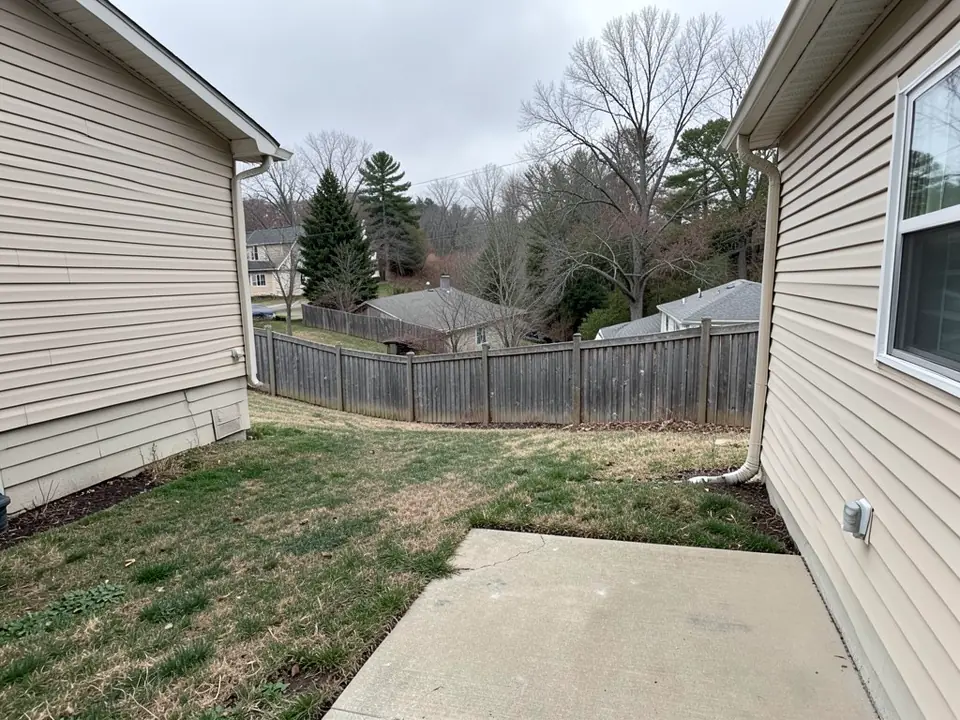
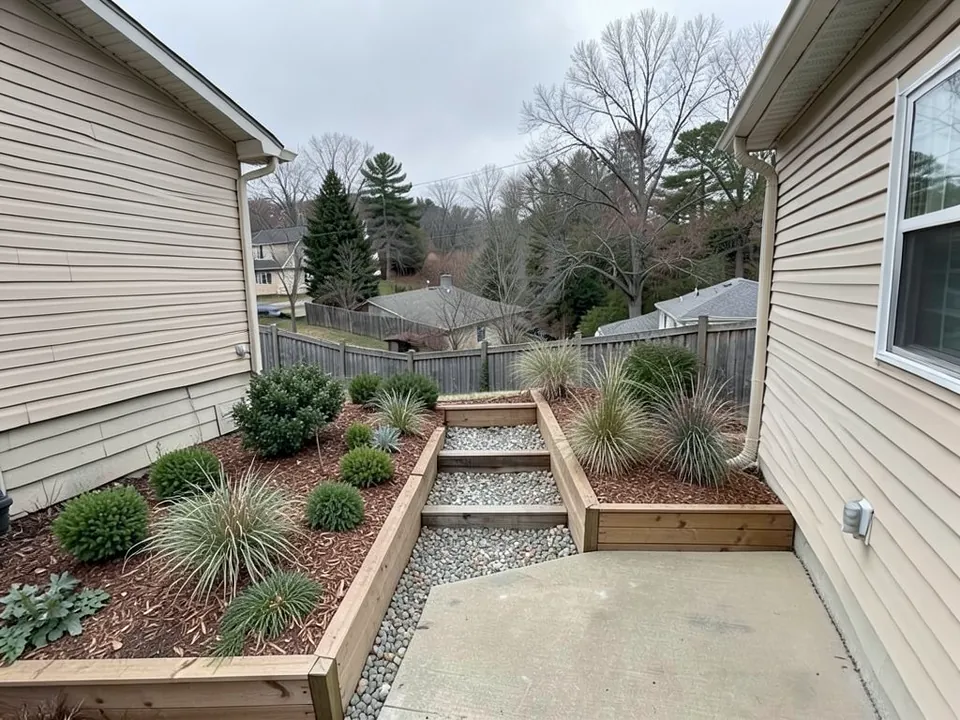
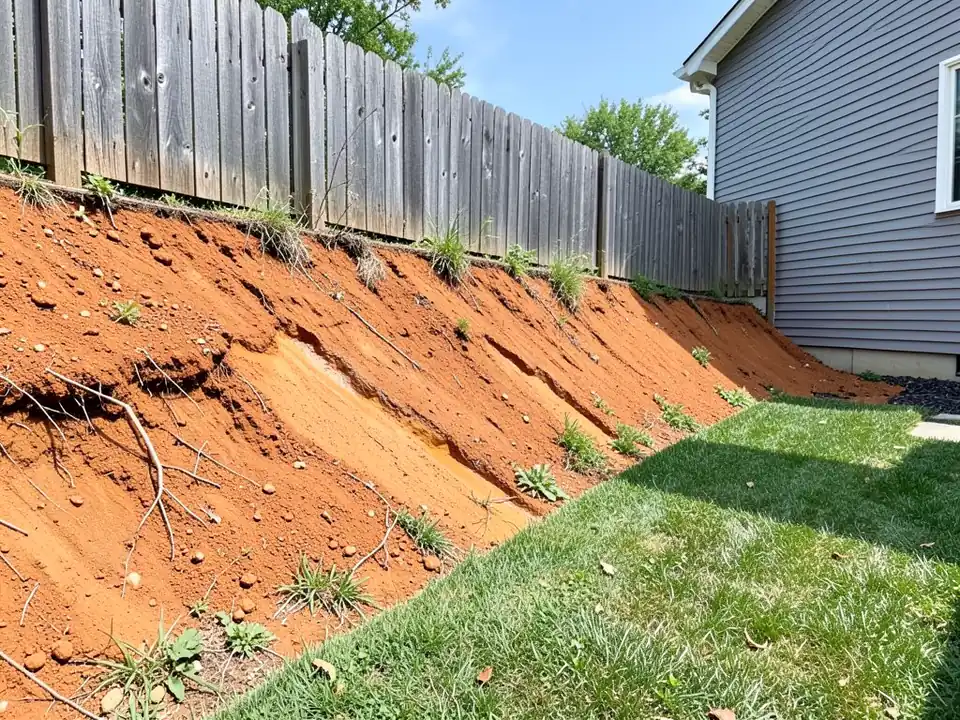
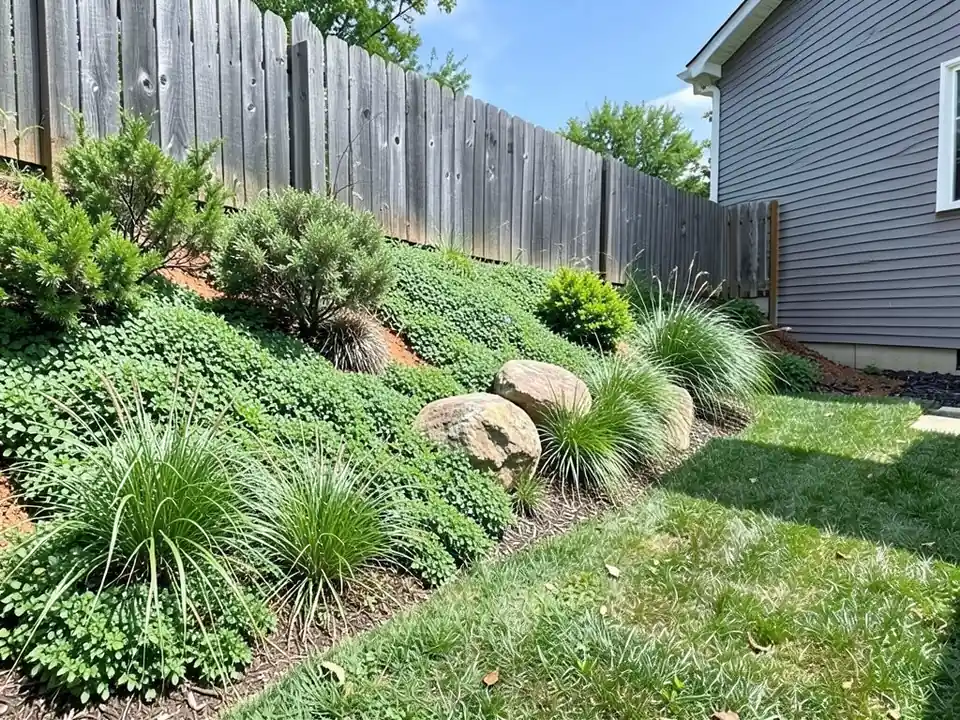
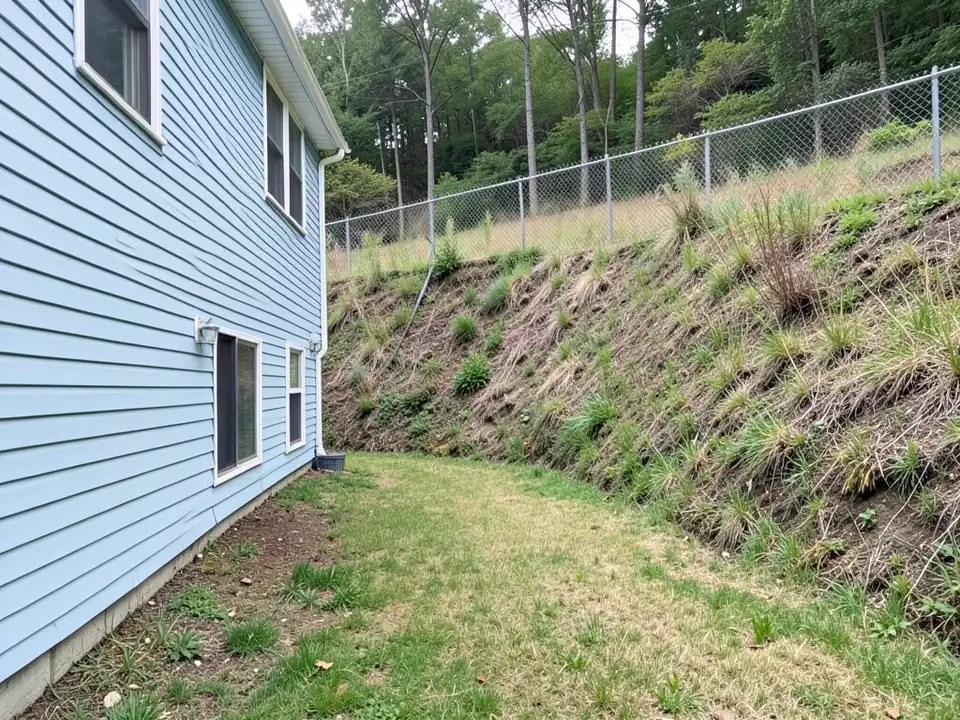
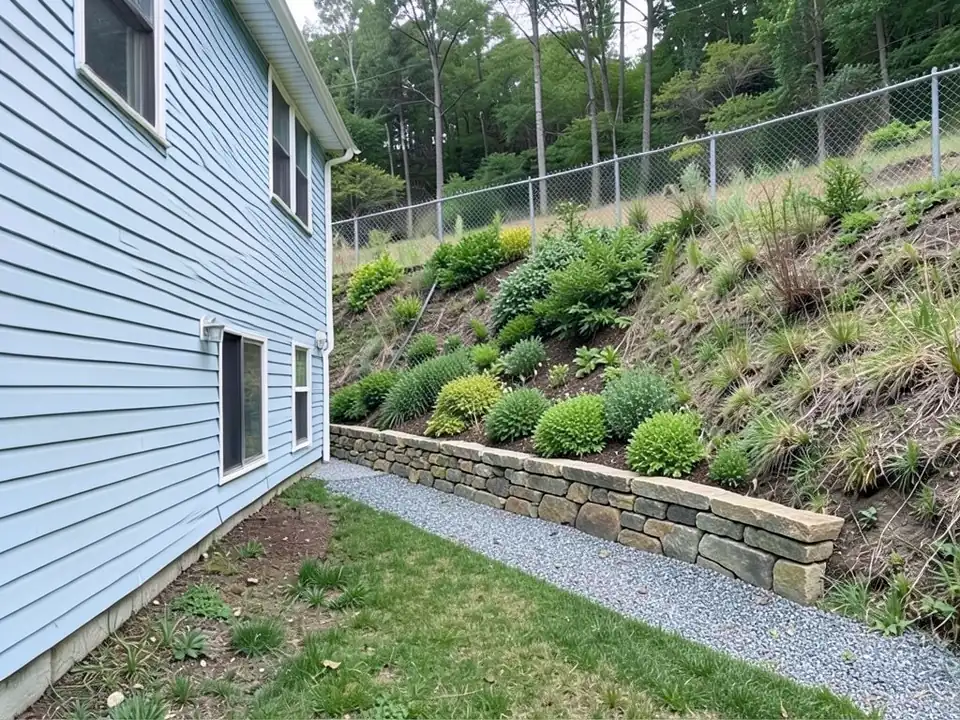
First, look at your slope
The right idea depends on how steep the slope is, which way it runs and whether the soil is moving. Mississippi State University Extension treats a slope as steep when it rises more than 20 percent, which it describes as about two feet of rise for every ten feet you walk, and notes that turfgrass on steep slopes is difficult and dangerous to mow.
Look at it after heavy rain too. Bare soil, gullies and soil washed onto the lawn mean erosion comes first.
Ideas for a gentle slope
- 1. Swap the hardest-to-mow strip for planting: Keep grass where the ground is nearly flat and plant the steepest band with groundcover and low shrubs.
- 2. One level terrace by the house: A single low terrace by the patio or back door gives you a flat spot for a table or a bed.
- 3. A curving path across the slope: A gravel or stepping-stone path across the slope, not straight down it, is easier to walk.
Ideas for a steep slope
- 4. Terraces: Terraces break a long slope into shorter, flatter steps, which Mississippi State Extension says reduces erosion and creates usable space. Soil is cut from the high part and used to fill the low part. UGA Extension adds that the level strips can hold lawn bordered by plants.
- 5. Low walls instead of one tall one: Several low walls with planting between them are easier for a homeowner than one tall wall. Timber, stone, brick and concrete block all work.
- 6. Steps that follow the hill: Timber or stone steps with gravel treads, as in the first example, turn a slope you avoid into a route you use. Keep every step the same height.
- 7. A planted slope with no lawn at all: On a slope too steep to mow, replace the grass with shrubs and groundcover. On a sunny slope, Mississippi State Extension also suggests a wildflower meadow, which it says controls erosion better than turf.
Ideas for an eroding bank
- 8. Groundcover and shrubs that root in: Where grass struggles, use groundcover and shrubs whose roots hold the soil. The plant FAQ below lists the ones extension services suggest; check with a local nursery which suit your area, since some, like ivies, spread aggressively.
- 9. The right mulch: UGA Extension says that on steep slopes pine straw or finely shredded wood mulch stays in place best, while wood chips and pine bark nuggets tend to wash away in heavy rain.
- 10. Erosion fabric while plants establish: Mississippi State Extension suggests erosion fabric or netting on newly planted slopes, with a binding mulch such as pine needles or hay.
- 11. Boulders where water cuts in: Mississippi State Extension advises boulders, stones or small check dams in gullies to stop further erosion. Set partly into the bank, as in the second example, they also look natural.
Sloped backyard ideas on a budget
- 12. Plant before you build: Groundcover, shrubs and mulch cost far less than walls. UGA Extension says fall or winter is the best planting time in Georgia; check the season where you live.
- 13. Build in stages: Start with the terrace or steps nearest the house and add the rest later.
- 14. Choose materials with their lifespan in mind: Timber is the usual budget choice for low terraces. Stone and masonry cost more but, as Mississippi State Extension notes, last longer.
Sloped backyard ideas for kids and play space
- 15. One flat lawn terrace for play: Children need a level patch most. Put it where you can see it from the house and plant the rest of the slope.
- 16. Safe edges and soft ground: Add planting or a fence where a terrace drops off, and soft surfaces where children play. The tool's Child-Safe Yard mode lets you tick Soft Surfaces and Fenced Area and preview them on your photo.
Down-slope vs up-slope yards
- Yard slopes down, away from the house: The view is the bonus. Terraced beds below the patio, steps down to a lower lawn and planting that frames the view all work, as in the first example. Watch where runoff ends up, often at the fence or a neighbor's yard.
- Yard slopes up, toward the house: Rain runs toward your foundation, so drainage comes first. Mississippi State Extension notes that water follows the easiest path and recommends permanent drainage channels on steep slopes.
Before you start: what to check
- Call 811 first (US): 811 is the free national before-you-dig service. Call or use your state 811 center's website a few business days before digging, even for planting shrubs, because some utility lines are buried only inches deep.
- Wall height and help: Mississippi State and UGA Extension both say homeowners should keep their own retaining walls to about a foot or two high, because soil and water push hard on a wall. Bigger walls need a professional, equipment and proper drainage.
- Local codes and permits: Mississippi State Extension advises checking local ordinances and building codes before building any wall or terrace. Ask your building department.
- Sun and soil: UGA Extension says grass struggles where a spot gets less than four hours of sun a day. Note which parts are wet, dry, sunny or shaded before choosing plants.
- Safety: Do not mow or dig a steep, wet slope. If it is very steep, has moved before or sits against the house, have a professional look at it.
How to try a sloped backyard idea on your own photo
There is no slope preset, so Custom mode works best: you describe exactly what should change on the slope and what must stay the same.
- Photograph the slope in daylight from the patio or back door, with the whole slope in frame.
- Open the landscape tool and sign in with Google or an email code. You get 1 free render with a free account.
- Pick Custom and, in the Custom Design Requirements box, describe the change you want and what must stay the same. You can start from one of the instructions below.
- Upload your photo under Upload Your Garden Image and click Generate Custom Design.
- For a whole-yard restyle instead, keep Yard Redesign mode, choose a look such as Low Maintenance or Xeriscape (Drought-Tolerant) under Choose a Landscape Style and click Redesign My Yard.
- Compare the result, change one thing at a time and run it again.
What the AI can and cannot do
The AI shows a look: where terraces, steps, a low wall and plants could go on your slope. That helps you choose between ideas and show a landscaper what you mean.
It cannot judge your grade, drainage, soil or wall engineering. It does not measure the slope, does not know where water goes in a storm, and cannot tell whether a wall it draws would stand or needs a permit. It also does not always follow the instruction, as the captions above show. Treat the result as a picture of an idea, and have a landscaper or engineer check anything structural.
Sloped backyard instructions to paste into Custom mode
These are the exact instructions we used for the three examples above, in the same order. In the landscape tool, choose Custom, paste one into the Custom Design Requirements box, then upload your photo. Swap in your own slope, materials and plants.
- Turn the grass slope below the patio into two terraced planting beds held by low timber retaining edges, with simple timber-and-gravel steps running down between them, planted with low shrubs, perennials and ornamental grasses in bark mulch. Keep the house, patio, fence, trees, sky and camera angle exactly the same.
- Cover the bare eroding clay bank with plants that hold the soil: dense creeping groundcover, clumps of ornamental grasses and a few low shrubs, with three or four natural boulders set partly into the slope and mulch between the plants. Keep the lawn strip, fence, house, sky and camera angle exactly the same.
- Rework the slope behind the house: build one low natural stone retaining wall across the bottom of the slope, a level strip of lawn in front of it and a gravel path along the lawn, and plant the slope above the wall with groundcover and shrubs. Add no other structures. Keep the house, fence, trees, sky and camera angle exactly the same.
Frequently asked questions
How do I stop erosion on a sloped yard?
Cover the bare soil with plants whose roots hold it, mulch with pine straw or finely shredded wood, use erosion fabric while plants establish, and give runoff a channel so it does not cut gullies. On steep ground, terraces shorten the slope and slow the water.
What plants are best for a slope?
Spreading groundcovers and shrubs. UGA Extension names junipers, liriope, mondo grass and rosemary. Mississippi State Extension suggests prostrate junipers, rugosa rose and sedums for sunny slopes, and wood fern, phlox and Asian jasmine for shady ones. Ask a local nursery what suits your area.
How do terraced beds work on a sloped yard?
Each terrace is a level step held by a low wall or edge, so a long slope becomes a few short, flat beds. Water slows at each level instead of running straight down, and flat ground is easier to plant and walk.
What is the best drainage solution for a sloped backyard?
Make sure runoff moves away from the house, give it a permanent channel rather than letting it cut its own path, and slow it with plants and terraces. If water runs toward the foundation or pools against a wall, get a drainage contractor.
Do I need a permit for a retaining wall?
It depends on your local codes and the height and type of wall, so ask your town's building department before you build. We cannot give a height that applies everywhere.
When should I hire a professional for a sloped yard?
For any wall above a foot or two, a slope that is very steep, has moved or drains toward the house, and work that needs a permit. A contractor or engineer can judge soil and drainage; no photo or AI can.
Do I need an account, and is it free?
You need an account, and it is free: 1 free render with a free account, and free renders carry a watermark. More renders and no watermark come with a paid plan.