
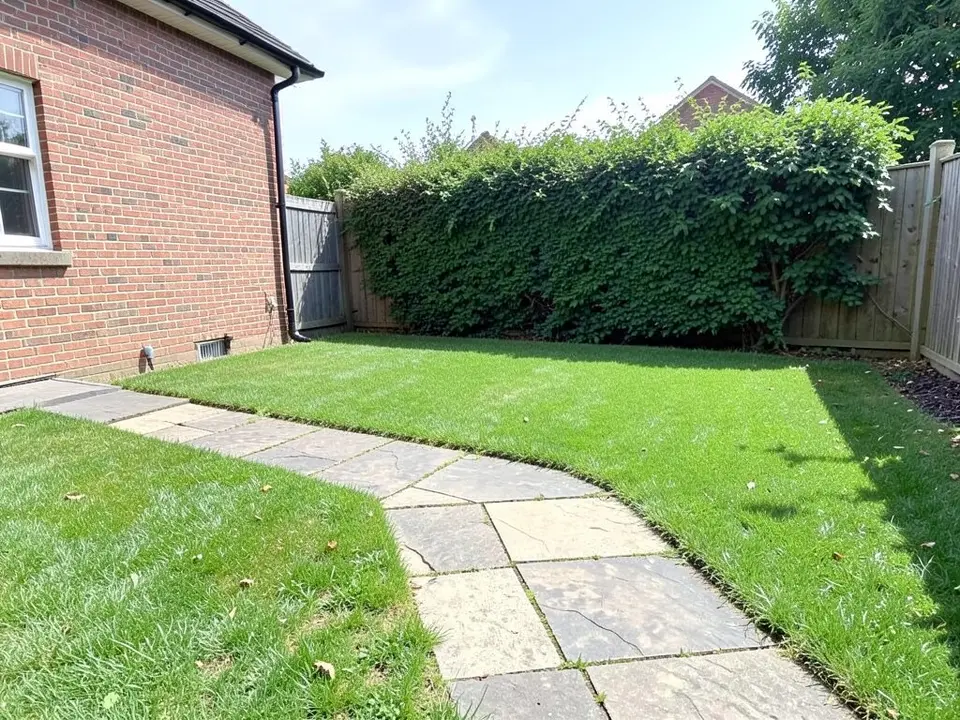
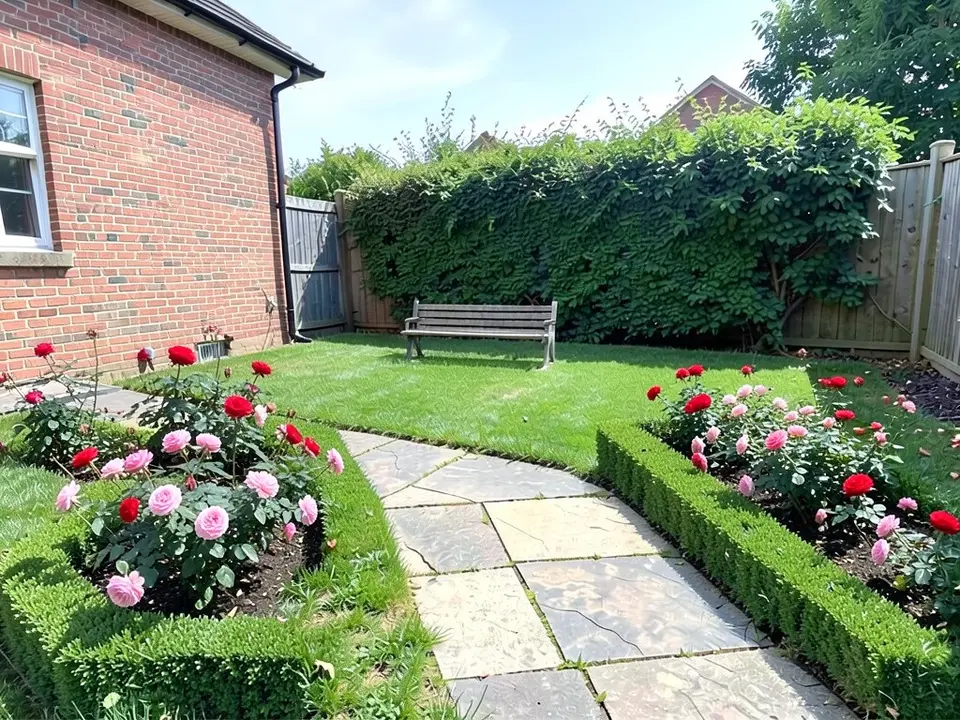
Rose garden ideas, one by one
gardendesign.com's page on roses lists these layout ideas.
- Formal beds: The page describes a formal rose garden as having distinct lines, clipped hedging and structures such as pergolas and arbors. Our third example has clipped hedges around rose beds.
- Natural and mixed: Roses can be combined with other plants for a more natural look, and the style should suit the home's exterior.
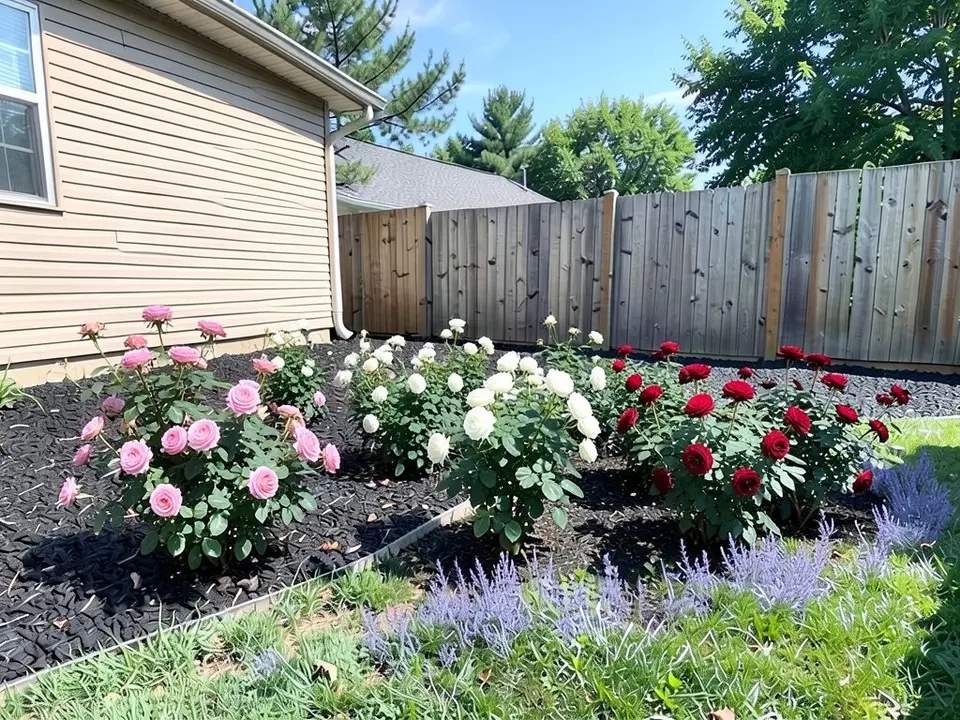
- Groups of one color: It suggests planting in drifts of 3 to 5 of the same variety for visual impact and using the same flower color in larger groupings for a unified look. Our first example groups by color.
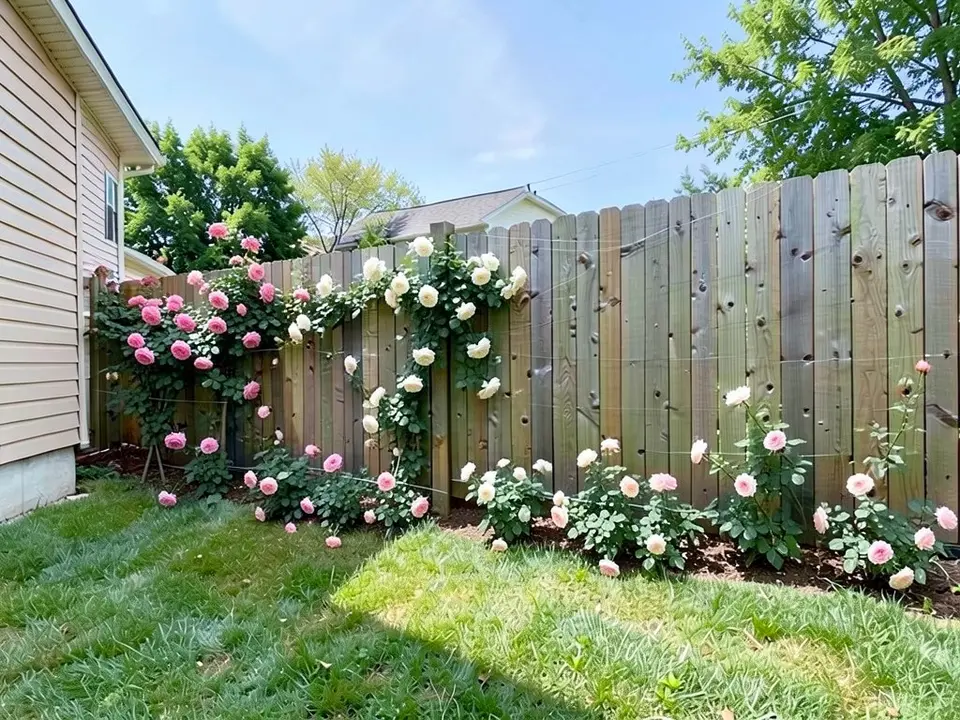
- Climbers on fences and arbors: Climbing roses maximize space. It suggests training climbers along a fence to define garden rooms or screen privacy, planting them along a tall wooden fence to break up the expanse of wood, and using a rose-covered arbor to create an entrance. Our second example has climbers on a fence.
- A focal point at the far end: It suggests placing a bench, a water feature or statuary at the far end of the rose garden to draw the eye. Our third example has a bench.
- Companion plants: It lists alliums, lavender, catmint, salvia and phlox among perennial companions, and says hybrid teas, grandifloras, floribundas, climbers and miniatures need regular pruning, so companions should go in front or behind rather than between. Our first example has lavender in front.
- Small spaces: Choose smaller varieties, use climbers and trellises, pick a few key specimens and limit the palette to one or two colors. It says white or yellow roses can make a small area look larger and brighter.
Sun and spacing: the two pages differ a little
gardendesign.com says to give the site at least 6 to 8 hours of sun a day, with good air circulation. Jackson & Perkins says roses need 5 to 6 hours of full sun a day, and that if a rose gets only 5 to 6 hours, the sun should come in the morning. Its general guidelines section says at least 4 to 6 hours. So the pages do not agree exactly; if your yard is shady, ask a local nursery which figure fits your roses.
Jackson & Perkins gives these spacings: 30 to 36 inches for hybrid teas and grandifloras, 24 to 30 inches for floribundas, 36 inches for English roses, 4 to 5 feet for climbers, and 12 to 18 inches for miniatures. gardendesign.com adds that beds should be small enough for pruning, with pathways for access, and that thorny plants should be kept away from entrances and doors. The AI pictures above are not drawn to these spacings.
How to try a rose garden on your own photo
The tool above is already in Custom mode. The Yard Redesign styles have no text box, so you cannot name the roses, the hedges or the layout there. Custom lets you name what to add, where it goes, and what must stay the same.
- Take the photo in daylight, showing the whole bed, fence or lawn where roses would go, from a straight-on angle.
- Describe the change in the Custom Design Requirements box: the kind of planting (bed, climbers on the fence, hedged beds), the colors, the edging, and what must stay the same, such as the house, the fence and the camera angle.
- Upload your photo under Upload Your Garden Image and click Generate Custom Design. You sign in with an email code or Google when you generate.
- Compare the result with your photo. Change one thing at a time, such as the color groups or the edging, and run it again.
What the AI can and cannot do
The AI shows a look: roughly how a rose bed, a fence of climbers or hedged beds might sit on your own photo. That helps you compare layouts and explain what you want to a nursery or landscaper.
It does not know your sun hours, soil or climate, it does not draw roses to the right spacing, and it does not always follow the instruction, as the bare left side of the bed, the half-covered fence and the rounded left bed in the examples above show. It does not tell you which varieties will grow where you live. Check the plants and the spacing with a local nursery.
The exact instructions behind the rose examples
These are the exact instructions we used for the three examples above, in the same order. In the tool above, Custom is already selected: paste one into the Custom Design Requirements box, then upload your photo. Swap in the colors, the edging and the place you want the roses.
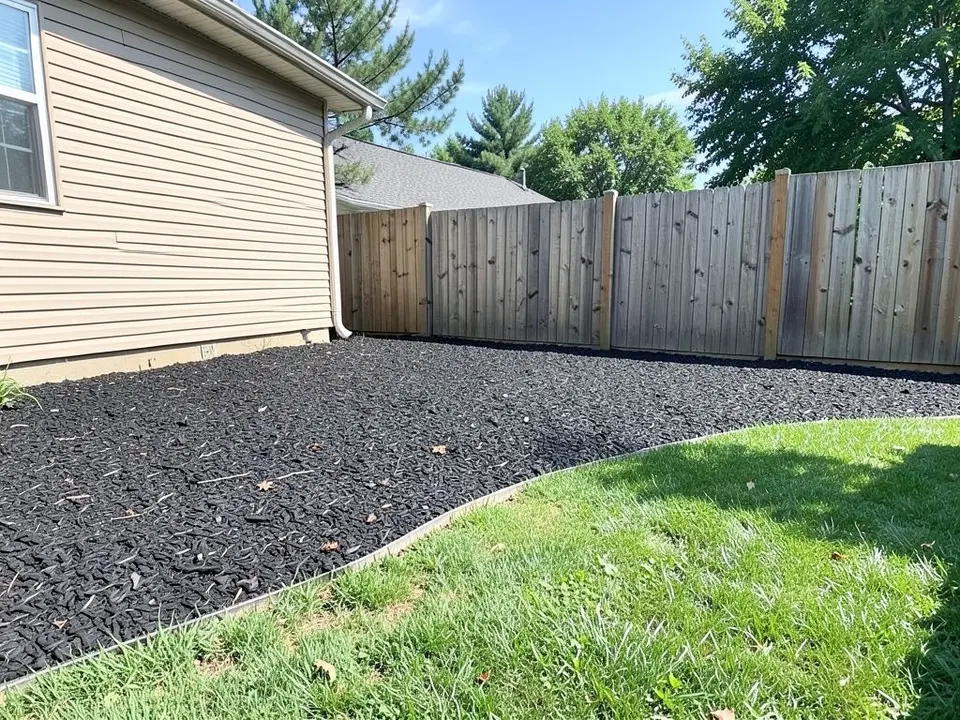
- Change ONLY the mulch bed: plant a rose garden of bush roses in groups of three, pink, white and deep red, in full bloom with green foliage, with a low lavender edge in front. Keep the house, the fence, the camera angle, the lighting and everything else exactly the same.
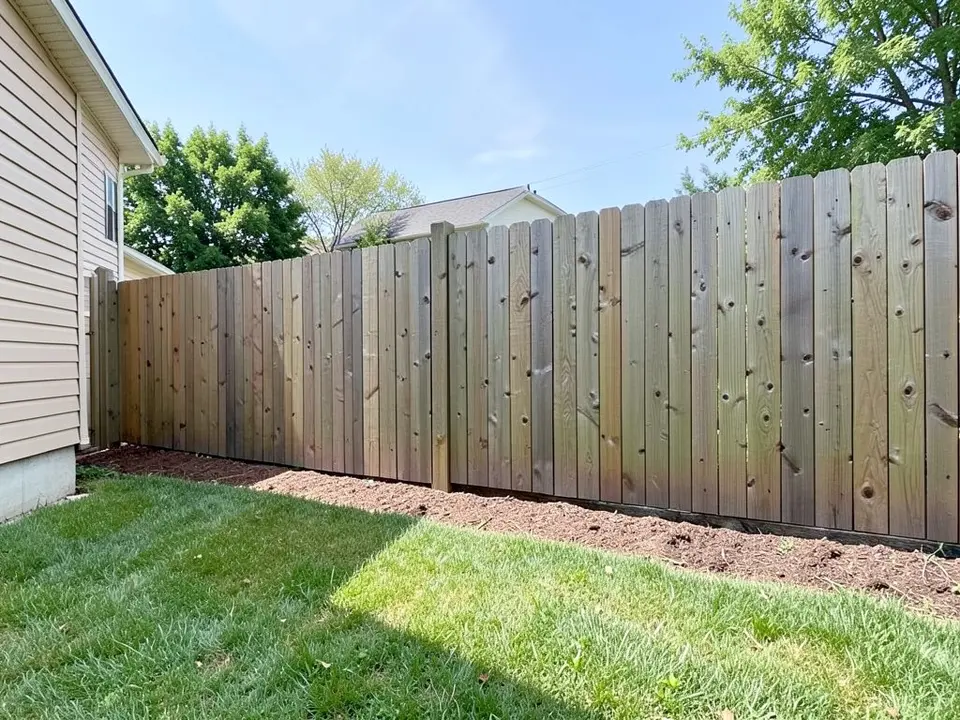
- Change ONLY the fence and the soil strip: train pink and white climbing roses in bloom along the fence on wires, and plant a row of bush roses along its base. Keep the house, the fence, the camera angle, the lighting and everything else exactly the same.
- Change ONLY the lawn on both sides of the path: add two rectangular rose beds edged with low clipped boxwood hedges, full of pink and red roses in bloom, and a simple wooden bench at the far end of the path. Keep the house, the fence, the camera angle, the lighting and everything else exactly the same.
Frequently asked questions
How much sun do roses need?
The two pages we read differ. gardendesign.com says at least 6 to 8 hours a day. Jackson & Perkins says 5 to 6 hours of full sun a day, ideally morning sun, and gives at least 4 to 6 hours in its general guidelines. Ask a local nursery about your roses.
How far apart should I plant roses?
Jackson & Perkins gives 30 to 36 inches for hybrid teas and grandifloras, 24 to 30 inches for floribundas, 36 inches for English roses, 4 to 5 feet for climbers and 12 to 18 inches for miniatures.
What goes well with roses?
gardendesign.com lists alliums, lavender, catmint, salvia and phlox among perennials, boxwood and spirea among shrubs, and clematis among vines. It says hybrid teas and climbers need regular pruning, so put companions in front or behind, not between.
Can I grow roses on a fence?
The page suggests training climbers along a fence to define garden rooms or screen privacy, and planting them along a tall wooden fence to break up the expanse of wood. Climbers need 4 to 5 feet between plants according to Jackson & Perkins.
What roses suit a small garden?
gardendesign.com suggests smaller varieties, climbers and trellises, a few key specimens, and one or two colors. It says white or yellow roses can make a small space look larger and brighter.
Can the AI tell me which roses will grow in my yard?
No. It draws the roses you describe and does not know your climate, soil or sun. It also does not always follow the instruction, as the captions above show.
Do I need an account, and is it free?
Create a free account with an email code or Google to generate. You get 1 free render, and free renders carry a watermark. More renders and no watermark come with a paid plan.