
Stamped concrete
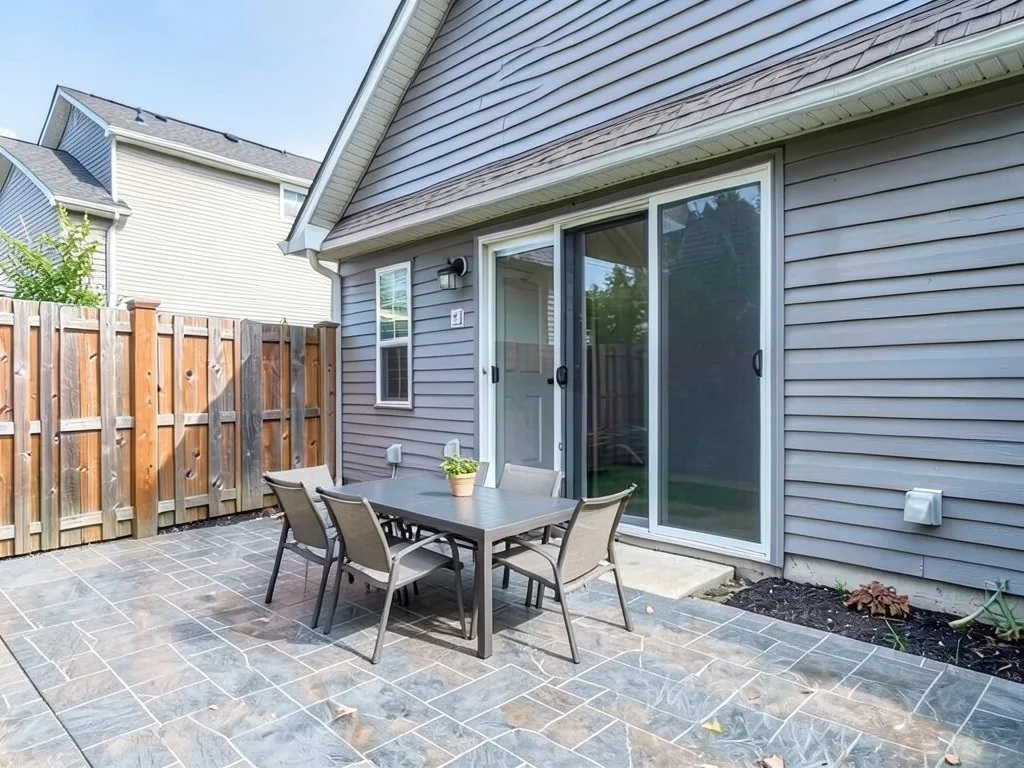
Stamped concrete is pressed with a pattern before it sets, so a plain slab can look like something else. This Old House says it can imitate flagstone, bluestone or slate, and Garden Gate calls it a cost-effective way to mimic brick, stone or pavers. Concrete Network also shows concrete made to look like wood planks and tile.
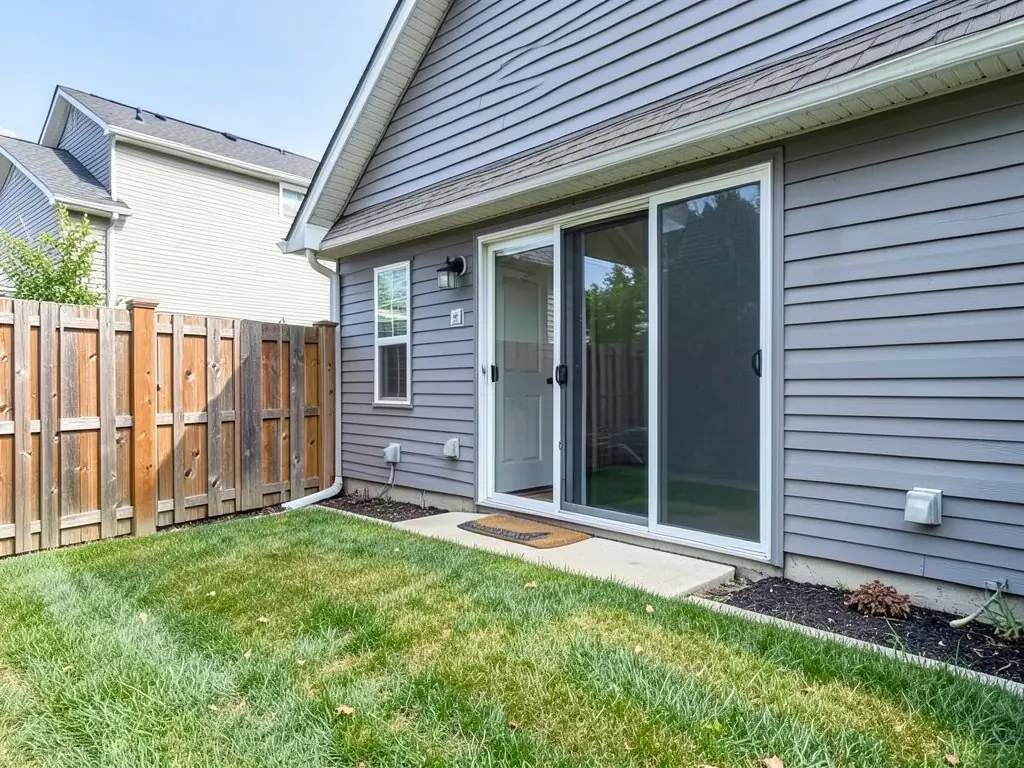
Our first example stamps a stone pattern where the lawn was and sets a dining table on it. The AI drew a cooler blue-grey than the warm grey we asked for, so name the color you want and check it in the result.
Stained and colored concrete
Garden Gate says concrete stains penetrate the surface and give a varied look that resembles natural stone or marble, and names acid, water-based and acrylic stains. Concrete Network suggests acid or water-based stains to change the look of a plain grey patio, and shows a decorative border as a way to frame it.
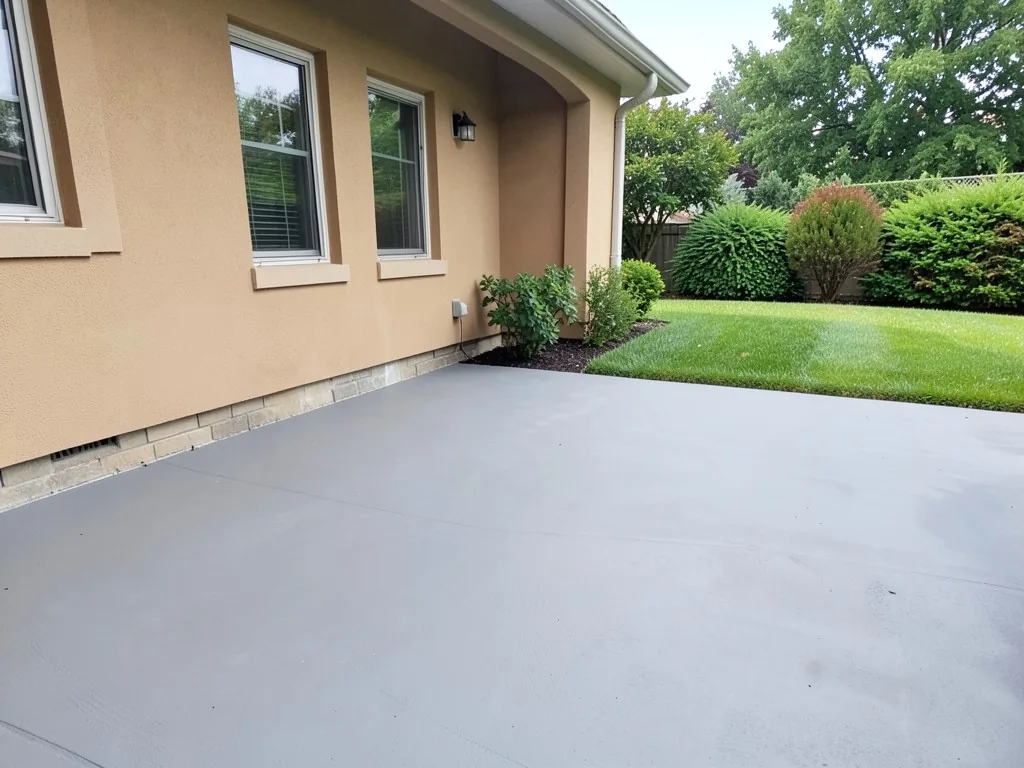
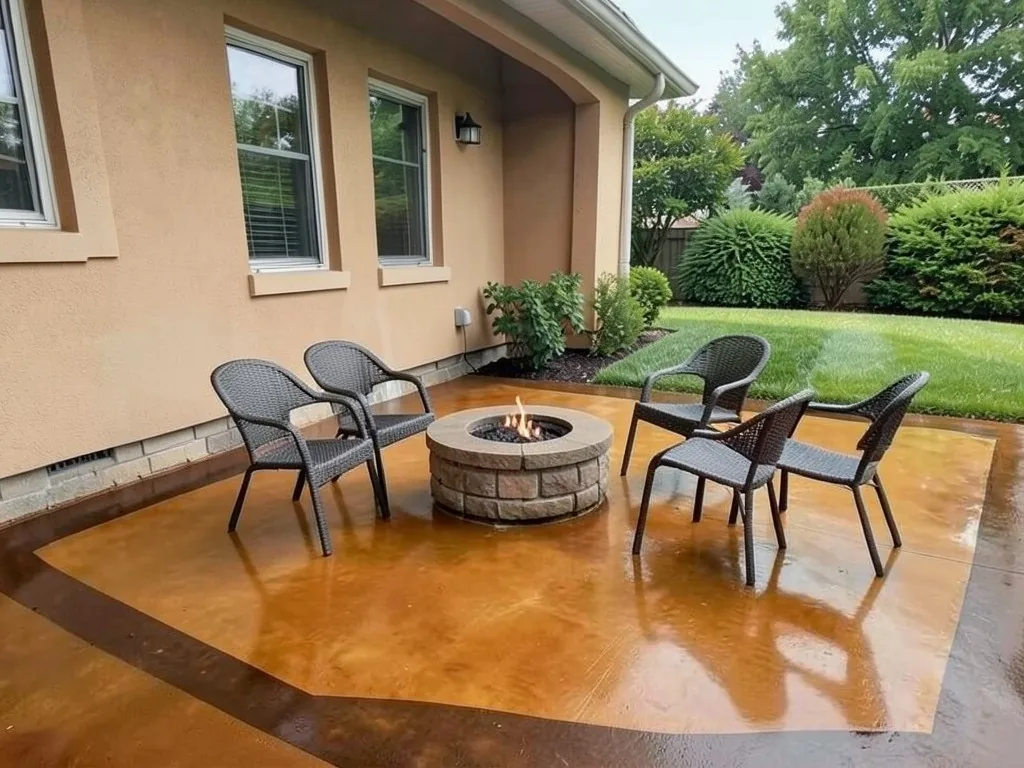
Our third example stains a plain broom-finish slab warm brown with a darker border and adds a fire pit. Yardzen and This Old House also show color mixed into the concrete itself, and two colors used together.
Polished and smooth finishes
Gardeningetc shows polished concrete carrying the look of an indoor floor out onto the patio, and says you have to wait around three weeks between laying and polishing so the concrete can cure. Garden Gate says a polished finish is easy to clean and maintain, and Yardzen calls a smooth concrete patio low-maintenance.
Large slabs with grass or gravel joints
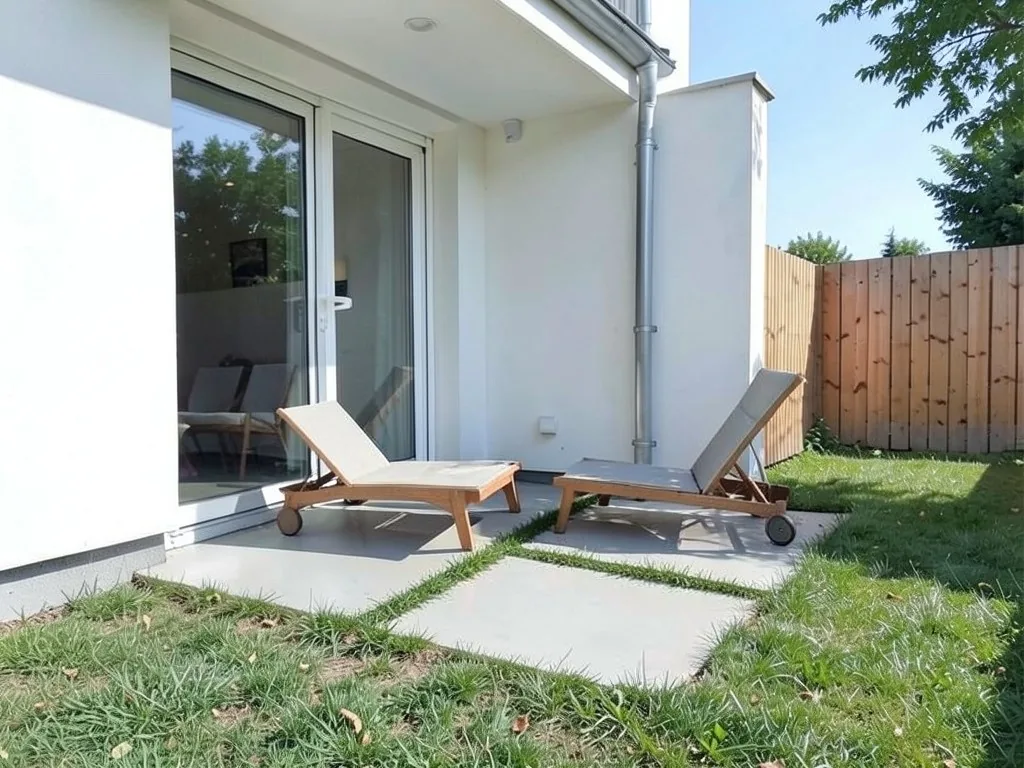
Instead of one big pour, you can lay separate slabs or large pavers with gaps between them. Gardeningetc shows square pavers laid in geometric blocks with the gaps filled by gravel or low plants, and says pavers can be less likely to crack than large stretches of poured concrete.
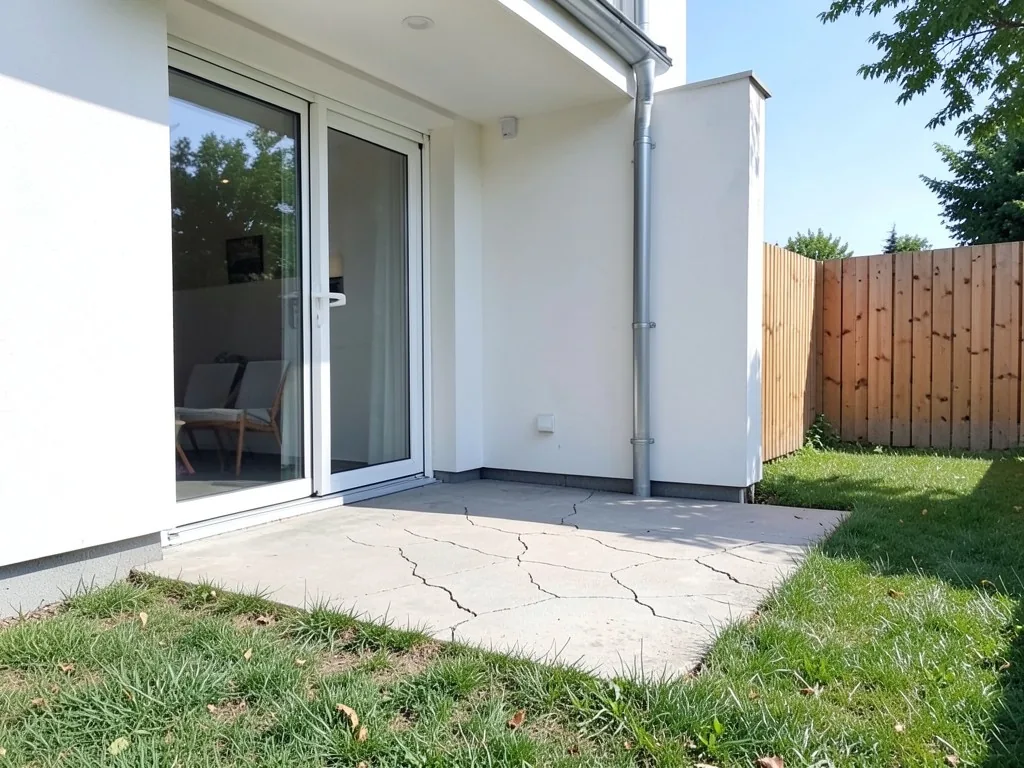
Our second example replaces a cracked slab with smooth slabs and strips of grass. The AI made the slabs mixed rectangles rather than equal squares, so if you want a regular grid, say how many slabs and what size.
Cracking, sealing and cost
The sources agree that concrete is low on upkeep, but they also say what can go wrong.
- Cracking: This Old House says concrete is prone to cracking in freezing weather, and quotes Tom Silva that poor drainage holds water in the soil, which expands when it freezes and makes the slab heave and crack.
- Sealing and cleaning: Gardeningetc says a scrub now and then and a fresh coat of sealant every few years help it last longer, and that non-slip sealants are available.
- Cost: This Old House puts the average poured concrete patio at $6 to $17 per square foot and says stamped concrete or concrete pavers can cost more. Ask local contractors for your own price.
How to try a concrete patio idea on your own photo
The tool above is already in Custom mode. The Yard Redesign styles have no text box, so you cannot ask for stamped concrete, an acid stain or slabs with grass joints there. Custom lets you name the finish, the color, the furniture and what must stay the same.
- Take the photo in daylight from the back door or a corner of the yard, with the slab or lawn you want to change in frame.
- Describe the change in the Custom Design Requirements box: what may change (the lawn, the old slab), the finish and color, what to add, where it goes, and what must stay the same, such as the house, the doors, the fence and the camera angle.
- Upload your photo under Upload Your Garden Image and click Generate Custom Design. You sign in with an email code or Google when you generate.
- Compare the result with your photo. If it got the color wrong or made the slabs uneven sizes, say exactly which color, how many slabs and what size, and try again.
What the AI can and cannot do
The AI shows a look: roughly how a stamped, stained or slab patio would sit next to your own house. That helps you choose a finish and talk it through with a concrete contractor.
It does not test your soil or drainage, check permits, plan joints or measure the yard. It also does not always follow the instruction: in the examples above it drew a cooler grey than we asked for, made mixed rectangles instead of square slabs and added a plant and a lit fire we did not ask for. Treat the result as a picture of an idea.
Concrete patio instructions to paste into Custom mode
These are the exact instructions we used for the three examples above, in the same order. In the tool above, Custom is already selected: paste one into the Custom Design Requirements box, then upload your photo. Swap in your own finish, color, furniture and what must stay.
- Replace ONLY the lawn next to the house with a stamped concrete patio in a warm grey stone pattern, with a dining table and six chairs on it. Keep the house, the fence and the camera angle exactly the same.
- Replace ONLY the cracked slab with large square smooth concrete slabs separated by strips of grass, extending the slabs a little onto the lawn, and put two lounge chairs on the slabs. Keep the house, the glass door, the white wall, the fence and the camera angle exactly the same.
- Change ONLY the patio surface to a polished concrete in a warm brown acid stain finish with a border of darker stain, and add a round fire pit and four chairs on it. Keep the house, the lawn, the shrubs and the camera angle exactly the same.
Frequently asked questions
What finishes can a concrete patio have?
The sources we read show stamped concrete, color mixed into the concrete, stains, polished and smooth finishes, exposed aggregate and separate slabs or pavers with gaps. Our three examples show stamped, slabs with grass joints and a stained, polished slab.
Is stamped concrete cheaper than real stone?
Garden Gate calls stamped concrete a cost-effective way to mimic brick, stone or pavers, and Concrete Network says it gives a stone look at a much lower price. This Old House says stamped concrete costs more than a plain poured patio.
Can I change the look of an existing concrete patio?
Concrete Network suggests acid or water-based stains to change a plain grey patio, and This Old House shows existing patios brushed with tints. Our third example shows a plain slab stained brown with a darker border.
Why do concrete patios crack?
This Old House says concrete is prone to cracking in freezing weather and quotes Tom Silva that poor drainage holds water in the soil, which expands when it freezes and makes the slab heave and crack. Gardeningetc says pavers can be less likely to crack than large poured areas.
How much does a concrete patio cost?
This Old House puts the average poured concrete patio at $6 to $17 per square foot and says stamped concrete or pavers can raise the cost. Prices vary, so ask local contractors.
Can the AI tell me which finish will last in my climate?
No. It draws the look you describe on your photo. It does not test soil or drainage, check permits or measure the yard, and it does not always follow the instruction, as the captions above show.
Do I need an account, and is it free?
Create a free account with an email code or Google to generate. You get 1 free render, and free renders carry a watermark. More renders and no watermark come with a paid plan.