
Start with zones, not with plants
Most of the pages we read make the same point about a big yard: split it up. Landscaping Network suggests dividing very large yards into outdoor rooms for dining, relaxing and entertaining. Home Beautiful quotes Sanjiv Jassal of Bunnings, who compares zoning to dividing a house into rooms, and landscaper Dennis Scott, who says zones should change as the family does: play, sitting, vegetable and grass areas while children are small, then a fire pit, games, a pool or a covered area later.
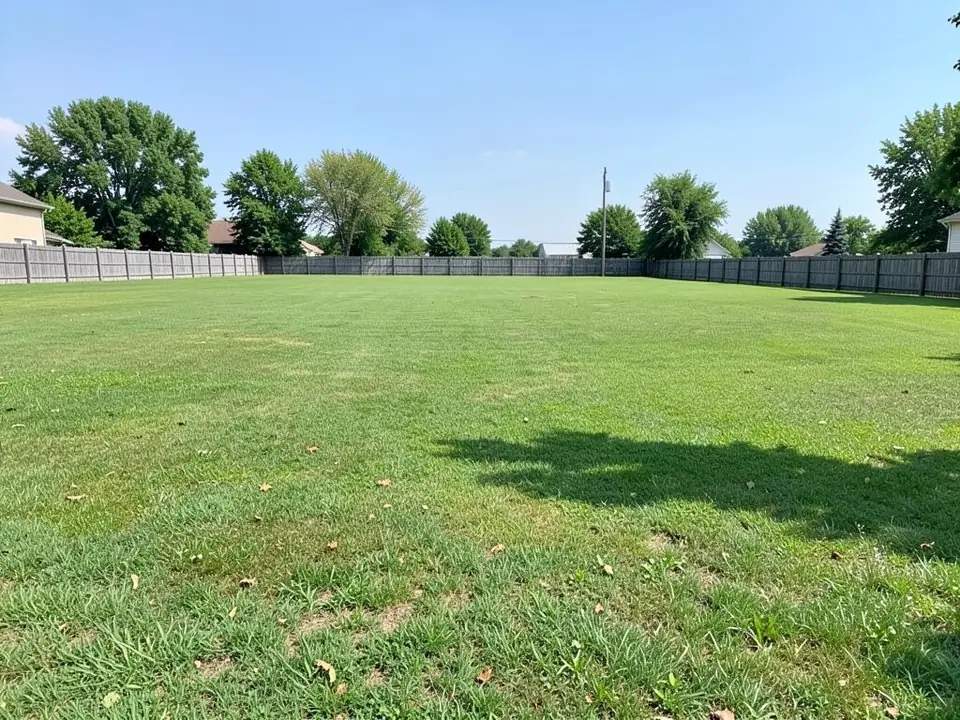
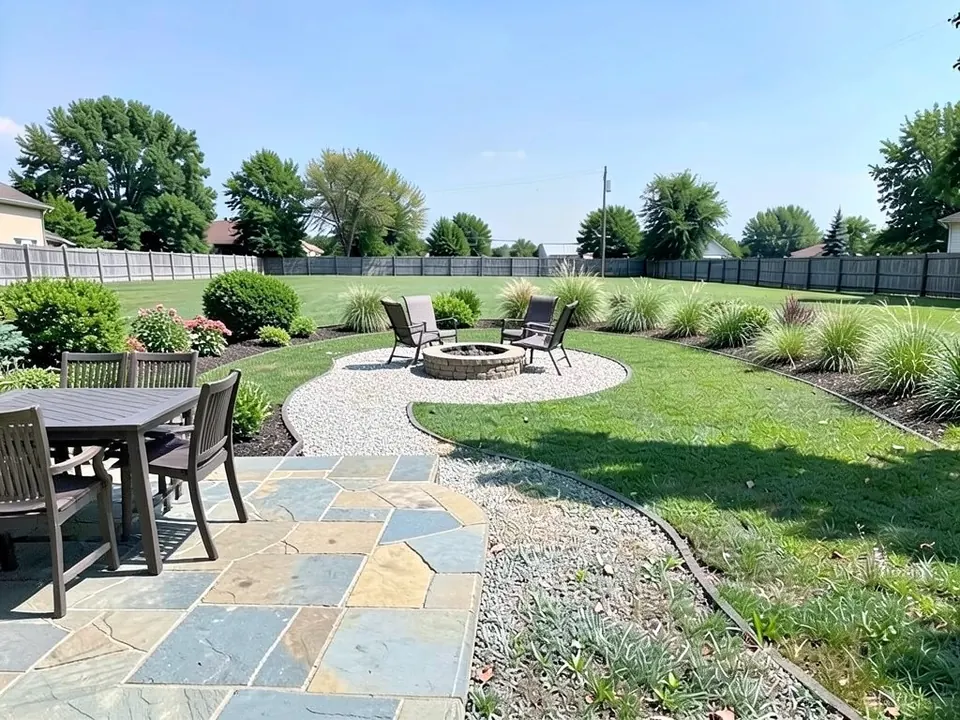
The RE/MAX Quebec blog says to keep the dining area near the house but spread the other zones across the whole yard instead of clustering them by the back door, and to keep one style and matching colours throughout. Lawn Love quotes a remodeler, Chase Briga, who warns against splitting a big property into more areas than you will use: each zone should earn its space. Our first example splits an open lawn into a dining patio and a fire pit area.
- Dining: RE/MAX Quebec suggests a large table sized for guests, since small furniture gets lost in a big space, and a second, cozier spot at one side screened by shrubs.
- Fire and lounging: ShrubHub suggests a fire pit or outdoor fireplace with chairs or built-in seating. Home Beautiful says to set a fire pit on tiles, sand, stone or gravel with seating at a safe distance, and quotes designer Mark Bell, who sees a move toward relaxed lounging areas.
- Play: Home Beautiful lists play equipment, a basketball half-court, a sandpit, a swing or a cubby house.
- Food: ShrubHub and Home Beautiful both suggest a vegetable and herb garden in raised beds, in the ground or in pots.
- Water: ShrubHub lists a pool, a hot tub, a pond or a large fountain as features for a big yard.
Paths that tie the zones together
Home Beautiful quotes Sanjiv Jassal saying paths create flow between zones, in paving or pebbles, and Dennis Scott saying gravel is quick to lay and can be held in place with edging. The same article says to choose stone small enough to be comfortable underfoot but not so fine that it shows footprints. Lawn Love quotes landscaper BJ Hamilton, who recommends a hard border, such as a paver edge or steel edging, wherever the mower runs. Our first example uses a curved gravel path to link a patio and a fire pit.
Landscaping Network adds that a big yard needs long views that end in something worth looking at, such as a large sculpture or a flowering tree, so the eye has a reason to travel across the lawn.
Planting in layers along the edges
Landscaping Network describes a tiered planting: large trees and shrubs at the back, shorter shrubs and bold grasses in the middle, and dwarf shrubs and larger perennials at the front. Home Beautiful quotes Dennis Scott with the same idea, low plants in front and tall ones behind, plus using one kind of plant to mark paths and fence lines and grouping plants that need similar amounts of water.
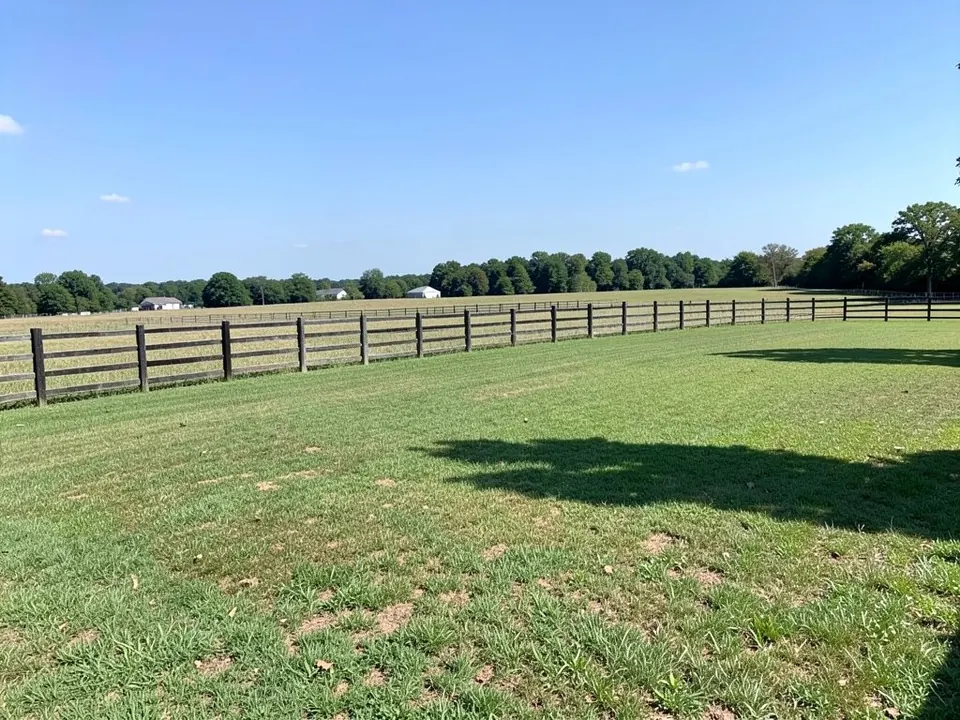
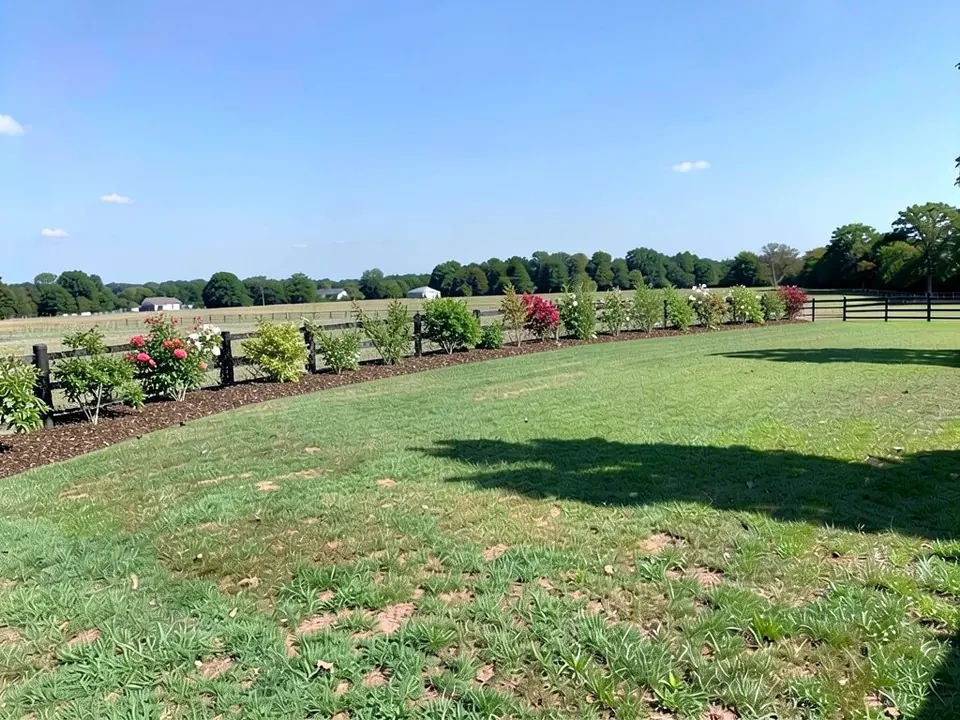
For a long, plain fence, Home Beautiful quotes Luke Woods of ModularWalls, who suggests treating it like an inside wall: dark paint makes it recede, light paint makes it stand out, and shrubs and trees of different heights in front make the yard feel cozier. Landscaping Network also suggests planning the planting so the yard changes through the seasons. Our second example draws a long shrub border along a rail fence; note that it skipped the trees we asked for.
Plan the big yard before you build
These points are the sources' advice, not our own. Landscaping Network says to get the site plan right first and balance paved areas, planting and lawn, because money cannot fix a poorly planned site, and to hire a designer with experience on large properties. Home Beautiful quotes Dennis Scott saying a large garden is in some ways easier than a small one, because you can design a view that changes as you walk through it.
Upkeep is the catch. Home Beautiful says to think about how much time you have, suggests a loose, low-maintenance native garden may suit better than a formal one, and quotes Dennis Scott recommending irrigation, which saves time and water but costs more at the start. Lawn Love quotes BJ Hamilton, who suggests spending a weekend noting where the sun stays longest, where water sits after rain and where snow melts last, and it reminds US readers to call 811 before digging. RE/MAX Quebec adds that open yards often need shade, from large umbrellas, canopies or a pergola, and shelter from wind, from trees or low walls. None of the pages we read gives costs or sizes we can pass on, so get those from a local designer or landscaper.
How to try a large backyard layout on your own photo
The tool above is already in Custom mode. The Yard Redesign styles have no text box, so you cannot ask for a patio here and a fire pit there. Custom lets you name each zone, where it goes, what it is made of and what must stay the same.
- Take the photo in daylight from where you usually look at the yard, ideally from the house or patio, with as much of the lawn in frame as you can.
- Describe the layout in the Custom Design Requirements box: one or two zones at a time (a patio with a table in the foreground, a fire pit in the middle, a border along the back fence), the materials, and what must stay the same, such as the fence, the trees and the camera angle.
- Upload your photo under Upload Your Garden Image and click Generate Custom Design. You sign in with an email code or Google when you generate.
- Compare the result with your photo. In a big yard the AI tends to place things where it likes, as all three examples show, so name the position plainly, change one thing at a time and run it again.
What the AI can and cannot do
The AI shows a look: roughly how a patio, a path, a border or a pergola would sit in your own yard. That helps you decide on zones and explain them to a designer or a landscaper.
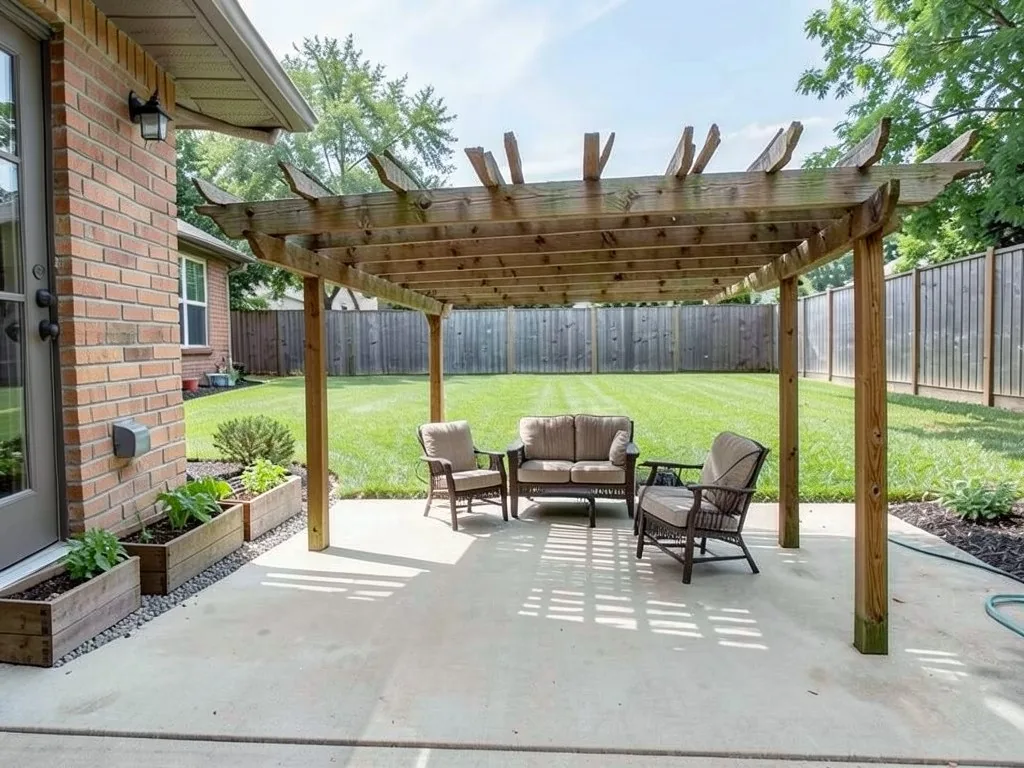
It does not measure the yard, plan drainage, irrigation or electrics, price the job, check local rules or know what grows where you live. It also does not always follow the instruction: in the examples above it put the beds in the wrong place, skipped the trees and the grass path, and drew three beds instead of four. Treat the result as a picture of an idea and get the plan from a local professional.
Large backyard instructions to paste into Custom mode
These are the exact instructions we used for the three examples above, in the same order. In the tool above, Custom is already selected: paste one into the Custom Design Requirements box, then upload your photo. Swap in your own zones, materials and what must stay.
- Change ONLY the lawn: divide it into zones, with a stone patio and a dining table in the foreground, a curved gravel path leading to a round fire pit area with four chairs in the middle distance, and planting beds with shrubs and ornamental grasses along the far fence. Keep the fence, the trees, the sky and the camera angle exactly the same.
- Change ONLY the area along the split rail fence: add a long curved border of mixed shrubs with a row of small flowering trees behind it, edged with mulch, and a mown grass path curving through the lawn. Keep the fence, the field, the sky and the camera angle exactly the same.
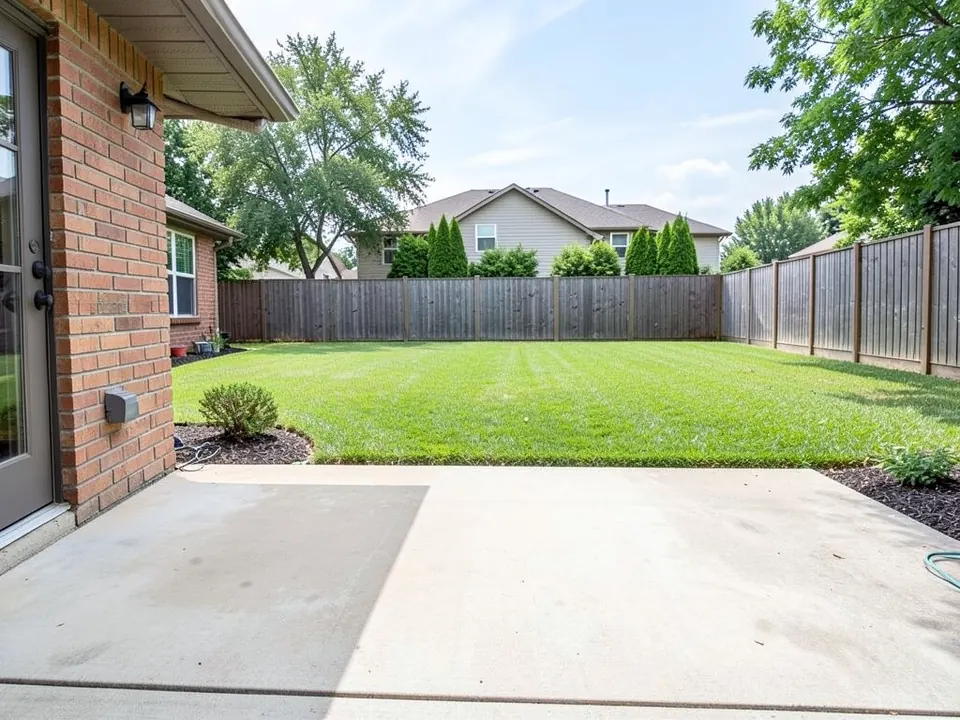
- Build a large wooden pergola that covers the whole concrete patio in the foreground, with four thick wooden posts standing on the patio and wooden beams overhead, and put an outdoor sofa and two armchairs under it. In the far left corner of the lawn, add four raised wooden vegetable beds in a row with a gravel path between them. Keep the lawn, the fence, the trees, the house wall and the camera angle exactly the same.
Frequently asked questions
How do I landscape a large backyard?
Most of the pages we read start with zones. Landscaping Network suggests outdoor rooms for dining, relaxing and entertaining, Home Beautiful compares zoning to the rooms of a house, and RE/MAX Quebec suggests keeping dining near the house and spreading the other areas across the yard. Paths link the zones, and layered planting fills the edges.
What can I put in a big empty yard?
The sources list a large patio, a pergola, a fire pit or outdoor fireplace, an outdoor kitchen, a vegetable garden in raised beds, play equipment or a half-court, a pool, a pond or a fountain, and long planted borders. The examples on this page show a patio with a fire pit area, a shrub border along a fence, and a pergola with a raised bed.
How do I keep a large yard from being too much work?
Home Beautiful says to plan for the time you have and suggests a loose, low-maintenance native garden over a formal one, plus irrigation, which costs more at the start but saves time and water. Lawn Love quotes a remodeler who warns against more zones than you will use. Ask a local landscaper what suits your climate.
How should I plant along a long fence?
Landscaping Network and Home Beautiful both describe layers: tall trees and shrubs at the back, shorter shrubs and grasses in the middle and low plants in front. Home Beautiful also quotes a fence maker who suggests dark paint to make a fence recede. The second example on this page shows a shrub border along a rail fence.
Is a large backyard harder to design than a small one?
Home Beautiful quotes landscaper Dennis Scott saying a large garden is in some ways easier, because you can design a view that changes as you walk through it. Landscaping Network says the site plan matters most and suggests a designer with experience on large properties.
Can the AI plan my yard or tell me what it will cost?
No. It draws the look you describe on your photo. It does not measure, price, plan drainage or irrigation, or check local rules, and it does not always follow the instruction, as the captions above show.
Do I need an account, and is it free?
Create a free account with an email code or Google to generate. You get 1 free render, and free renders carry a watermark. More renders and no watermark come with a paid plan.