
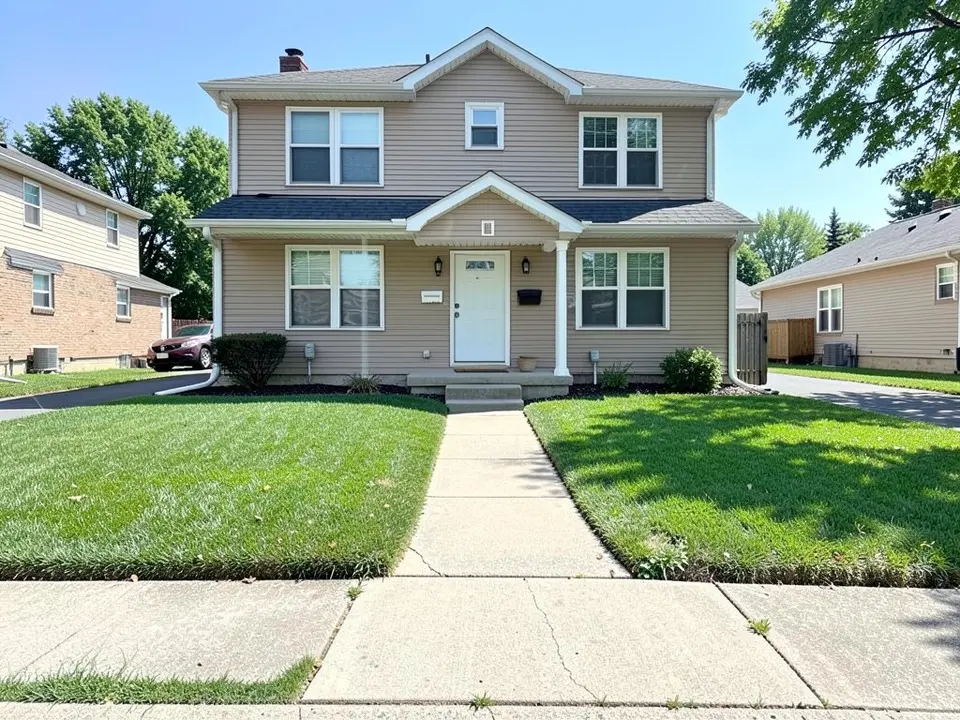
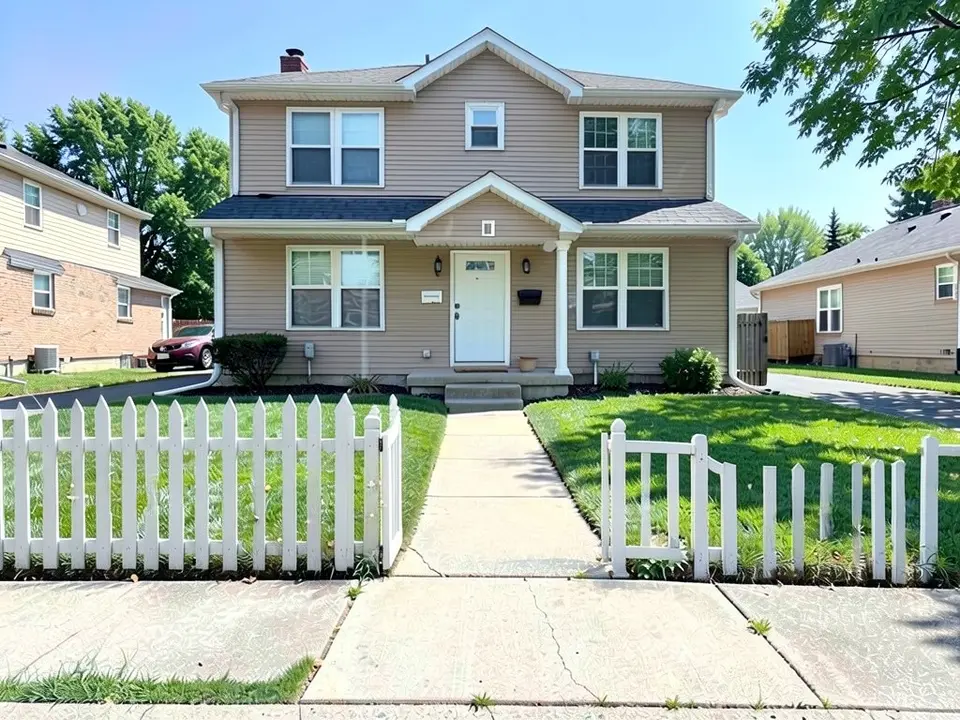
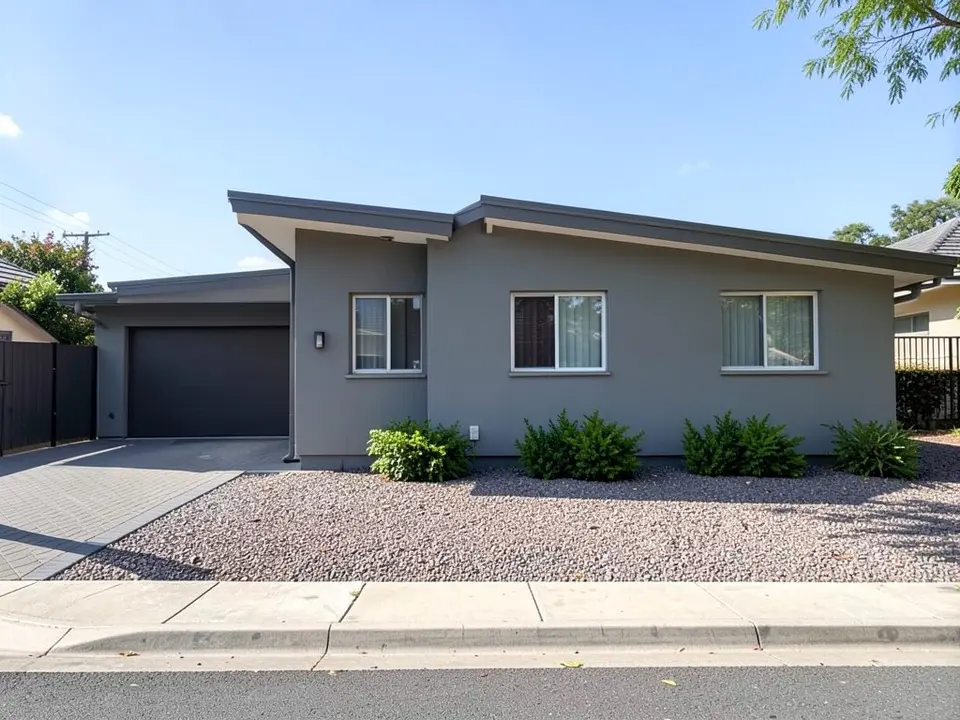
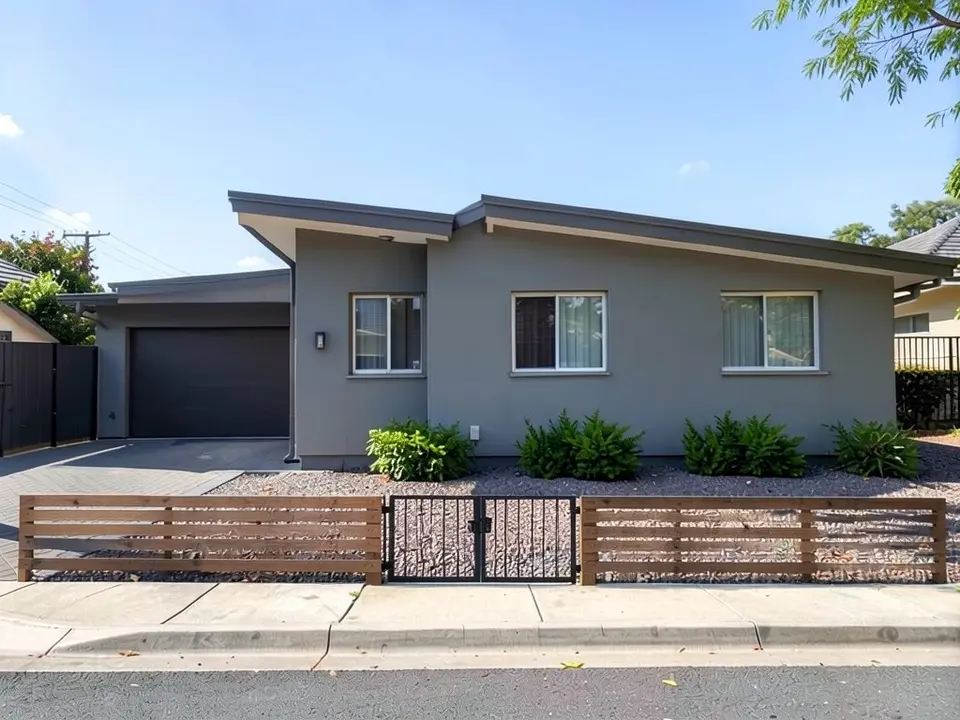
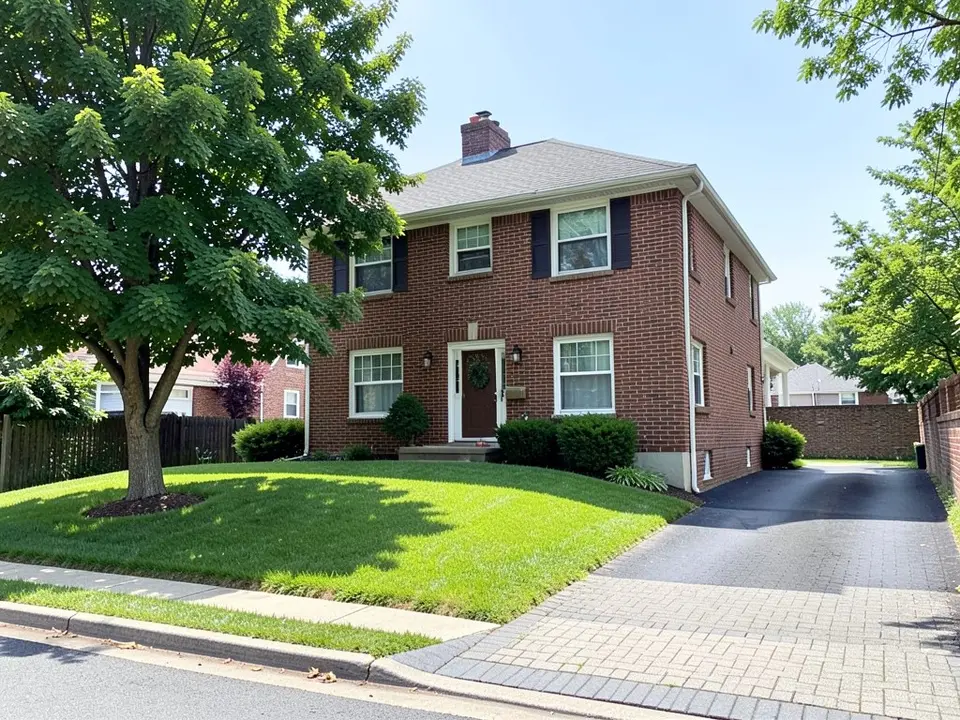
Front yard fence styles, one by one
Gardeningetc, Making Home Base and Brick & Batten each list front yard fence styles. These are the main ones, with what each page says about them.
- White picket: Making Home Base calls it the classic look and notes it may need more regular upkeep. Gardeningetc shows a picket fence with a matching gate and says the fence helps keep small children and pets safe from nearby roads, and suggests an arch over a picket gate for climbers such as roses, clematis or honeysuckle. Our first example is a white picket fence.
- Horizontal wood slats: Making Home Base lists a low horizontal wood fence with no gate that is built for style and curb appeal rather than privacy. Brick & Batten shows long runs of horizontal wood planks as a sleek look for modern exteriors. Our second example is a low slat fence with a metal gate.
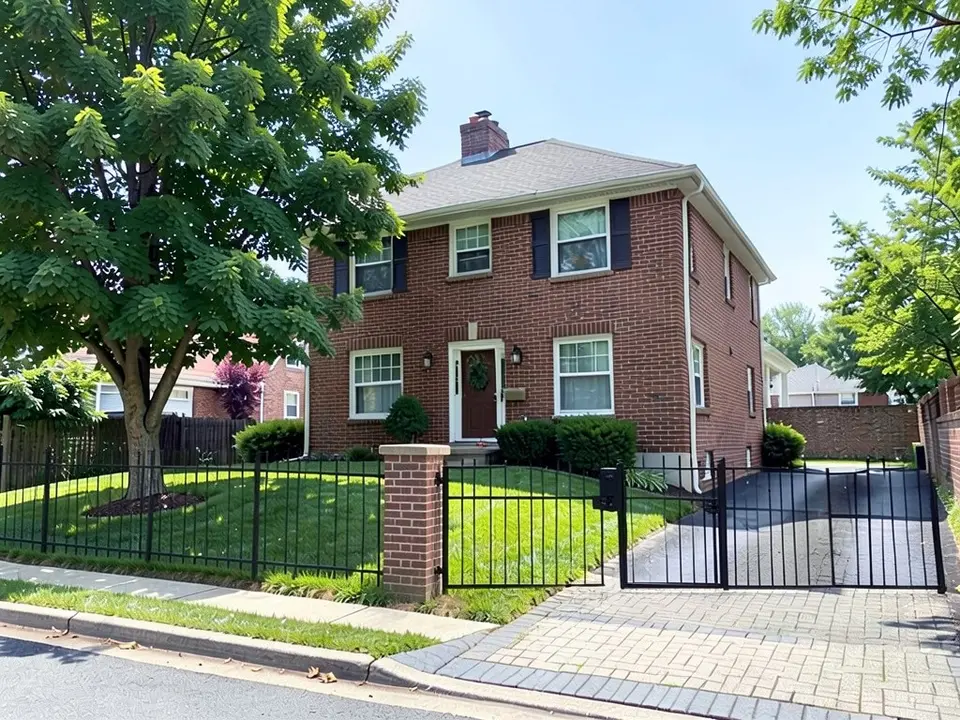
- Metal or wrought iron: Making Home Base says wrought iron offers security and weather resistance with low maintenance, but costs more up front and gives little privacy. Gardeningetc says modern powder-coated, galvanized steel tubular railings are preferred over traditional wrought iron, which rusts and needs yearly repainting, and shows white metal between red brick pillars. Our third example is a black metal fence with a brick pillar.
- Stone, brick or concrete: Making Home Base lists natural stone as one of the most expensive options and says mixing stone with other materials can lower the cost; it says concrete is good for privacy and noise, and for containing pets or blocking a pool. Brick & Batten shows a concrete fence with horizontal wood detail and a gate to break up the solid surface.
- Timber with a trellis top: Gardeningetc shows a tall wooden fence with a trellised top that can carry climbing plants, and says timber can be left natural, stained or painted. It says pre-treated timber can last 25 years or more with minimal maintenance.
- Breeze blocks and open screens: Brick & Batten says breeze block walls let air and light through while giving privacy, and suit contemporary homes as well as mid-century ones. Gardeningetc shows composite panels set in brick that let sunlight through, and says composite does not splinter or rot.
- A fence on a retaining wall: Brick & Batten shows a fence on top of a short wall by the sidewalk to keep children or pets away from the drop, and a fence on a short concrete wall that helps with water runoff and erosion.
- Cable, chain link and vine-covered wire: Making Home Base lists steel cable as nearly invisible from a distance, and chain link as inexpensive for containing pets or kids, though not very attractive, with ivy growing through it for privacy once it is established.
Front yard fence height, permits and HOA rules
Gardeningetc, a UK page, says the usual maximum for a front fence is 4 ft (1.2 m) there, that fence height should fit the neighborhood, and that conservation areas can have their own rules. That is a UK figure. In the US the limit depends on your town, so do not take 4 ft as your answer.
Making Home Base says to check with your county or city building code office, because permit requirements vary, and to read your HOA bylaws if you have an HOA, to avoid fines. Do both before you pay for a fence. The AI image on this page does not know any of these rules, so a fence you see drawn may be taller, closer to the street or a different material than your town allows.
This page is about the fence along the street side. If you want a privacy fence at the back, see our backyard fence ideas page. If you are redesigning the whole front yard, see our front yard landscaping ideas page.
How to try front yard fence ideas on your own photo
The tool above is already in Custom mode. The Yard Redesign styles keep an existing fence as it is and have no text box, so they are not the right place to add a new fence. Custom lets you name what to add, where it goes, and what must stay the same.
- Take the photo in daylight from the sidewalk or the middle of the street, with the whole front of the yard, the house and the path in frame.
- Describe the change in the Custom Design Requirements box: the fence style and material, where it runs (for example along the sidewalk edge), whether there is a gate, and what must stay the same, such as the house, the path and the camera angle.
- Upload your photo under Upload Your Garden Image and click Generate Custom Design. You sign in with an email code or Google when you generate.
- Compare the result with your photo, change one thing at a time, such as the style or the gate, and run it again.
What the AI can and cannot do
The AI shows a look: roughly how a picket, slat or metal fence would sit along your own front yard. That helps you compare styles and explain what you want to a fence installer or your HOA.
It does not know your property line, setback, HOA rules or fence height limit, and it does not always follow the instruction, as the missing gate, the single pillar and the extra driveway gate in the examples above show. Treat the result as a picture of an idea, and check the rules and a quote with your town and a local fence company.
Front yard fence instructions to paste into Custom mode
These are the exact instructions we used for the three examples above, in the same order. In the tool above, Custom is already selected: paste one into the Custom Design Requirements box, then upload your photo. Swap in your own fence style and what must stay.
- Change ONLY the front boundary: add a white wooden picket fence about four feet high along the edge of the lawn next to the sidewalk, with a gate where the path meets the sidewalk. Keep the house, the camera angle, the lighting and everything else exactly the same.
- Change ONLY the front boundary: add a low horizontal wooden slat fence about waist high along the front of the yard beside the sidewalk, with a narrow black metal gate in the middle. Keep the house, the camera angle, the lighting and everything else exactly the same.
- Change ONLY the street edge: add a black metal fence with thin vertical bars and square brick pillars every few metres along the front of the lawn beside the sidewalk, with a matching gate across the front path. Keep the house, the camera angle, the lighting and everything else exactly the same.
Frequently asked questions
What are some good front yard fence ideas?
Gardeningetc, Making Home Base and Brick & Batten show white picket, horizontal wood slats, metal or wrought iron, stone, brick or concrete, timber with a trellis top, breeze blocks, and fences on a retaining wall. The three examples on this page show a picket fence, a low slat fence with a metal gate, and a black metal fence with a brick pillar.
How tall can a front yard fence be?
It depends on where you live. Gardeningetc, a UK page, gives 4 ft (1.2 m) as the usual maximum there. Making Home Base says permit requirements vary, so ask your county or city building code office. The AI image does not check any limit.
Do I need a permit or HOA approval for a front yard fence?
Making Home Base says to check with your county or city building code office, because permit requirements vary, and to review your HOA bylaws if you have an HOA, to avoid fines. Ask before you buy.
Which front yard fence style gives privacy?
Making Home Base says a low horizontal wood fence is for style, not privacy, and wrought iron gives little privacy. It lists white lattice, concrete and ivy on chain link as ways to get more privacy. Gardeningetc shows a tall timber fence with a trellis top and says solid timber panels give more security for small children or pets than open metal railings.
Which fence material needs the least upkeep?
Making Home Base says vinyl needs no staining or painting, just a wash about once a year, and says concrete and wrought iron are low maintenance. Gardeningetc says composite does not splinter or rot, and that a plain white wooden fence needs regular cleaning and repainting.
Can the AI tell me if a fence is allowed on my street?
No. It draws the look you describe. It does not know your property line, setback, HOA rules or height limit, and it does not always follow the instruction exactly, as the captions above show. Ask your town and your HOA.
Do I need an account, and is it free?
Create a free account with an email code or Google to generate. You get 1 free render, and free renders carry a watermark. More renders and no watermark come with a paid plan.