
Start with the sunniest spot
Bob Vila suggests a spot that gets at least 6 hours of bright light a day. The Old Farmer's Almanac notes that leafy greens, root vegetables and many herbs do well with 4 to 6 hours, so a part-shade yard can still grow those. A UC Master Gardener handout on the three sisters method asks for a minimum of 8 hours for corn, beans and squash.
Lee Reich, writing in the Christian Science Monitor, suggests keeping a kitchen garden close to the house, with at least six hours of full sun a day.
Layouts: rows, beds, potager or vertical
The Almanac groups layouts into in-ground rows for moderate to large open areas, raised beds for rocky or poor soil, square-foot gardening in 1 by 1 foot squares, containers for patios, and the kitchen garden or potager. It recommends a 4 by 8 foot layout for beginners. Bob Vila suggests starting with a 75 to 100 square foot plot in the ground and calls 10 by 10 feet a good size for most beginners.
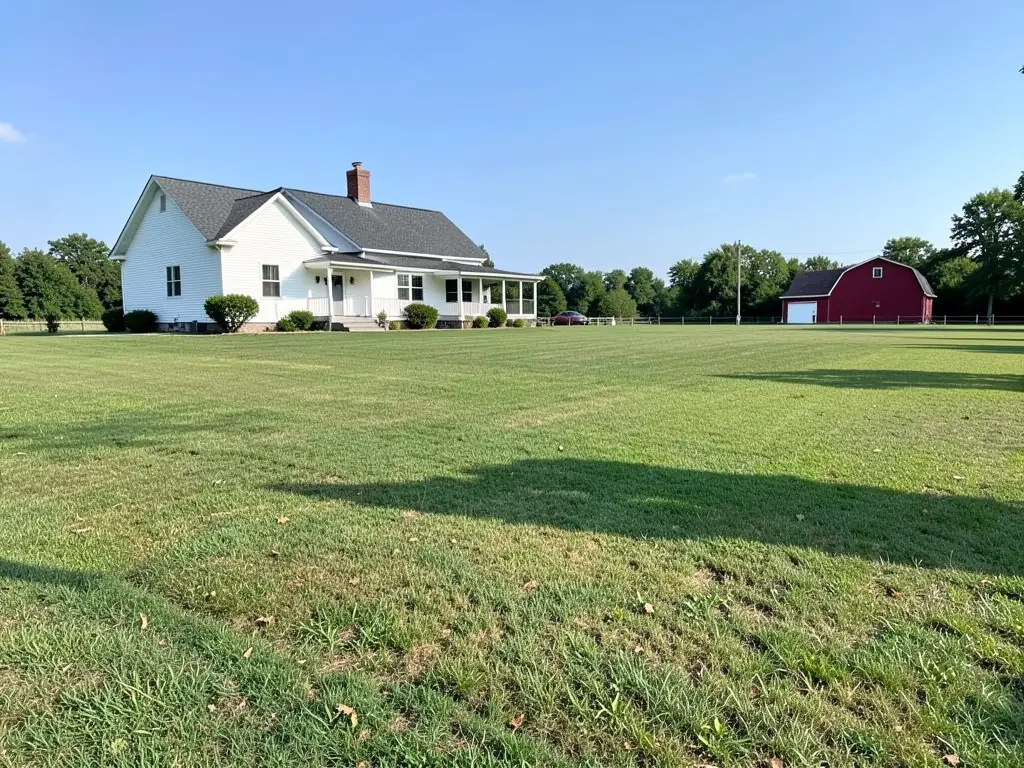
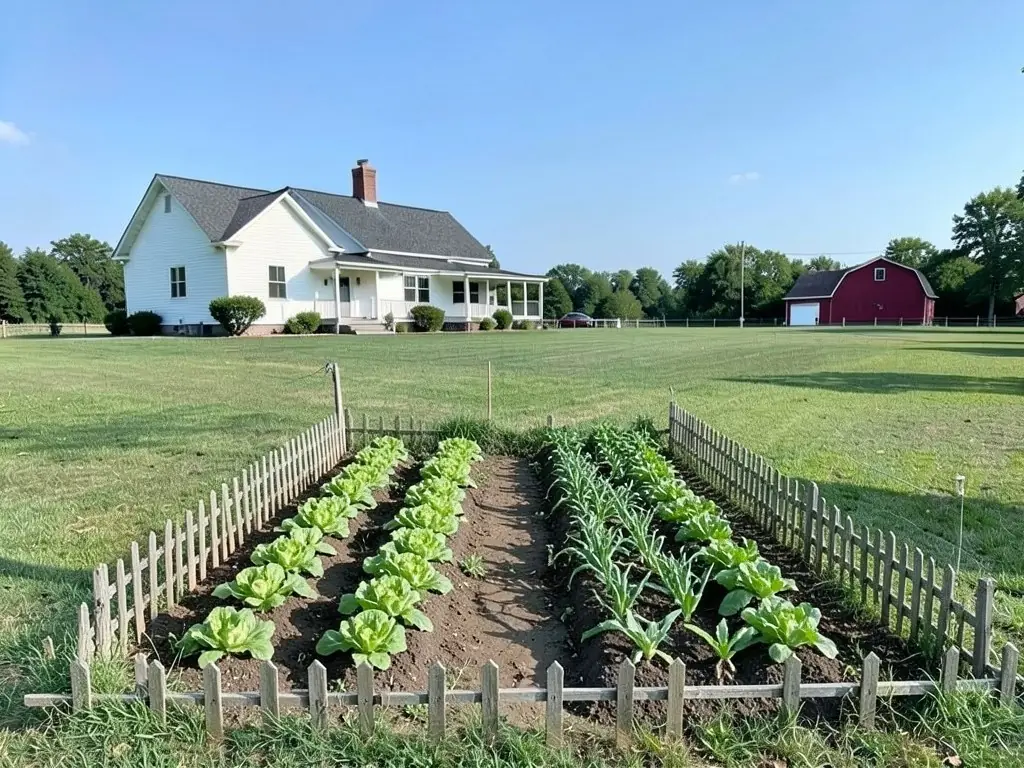
Bob Vila also suggests running square or rectangular beds north to south to get the most sun. Our first example uses straight in-ground rows on a large lawn. If you are building raised beds first, our raised garden bed ideas page covers materials, sizes and paths.
The potager: a vegetable garden to look at
Lee Reich points to Villandry, the French potager near Tours, with geometric vegetable beds, low boxwood edging and white gravel paths. He suggests hedges, fencing and paving to give the garden shape, since otherwise it can look like bare dirt in winter, and notes that straight paths feel formal while curved ones feel informal.
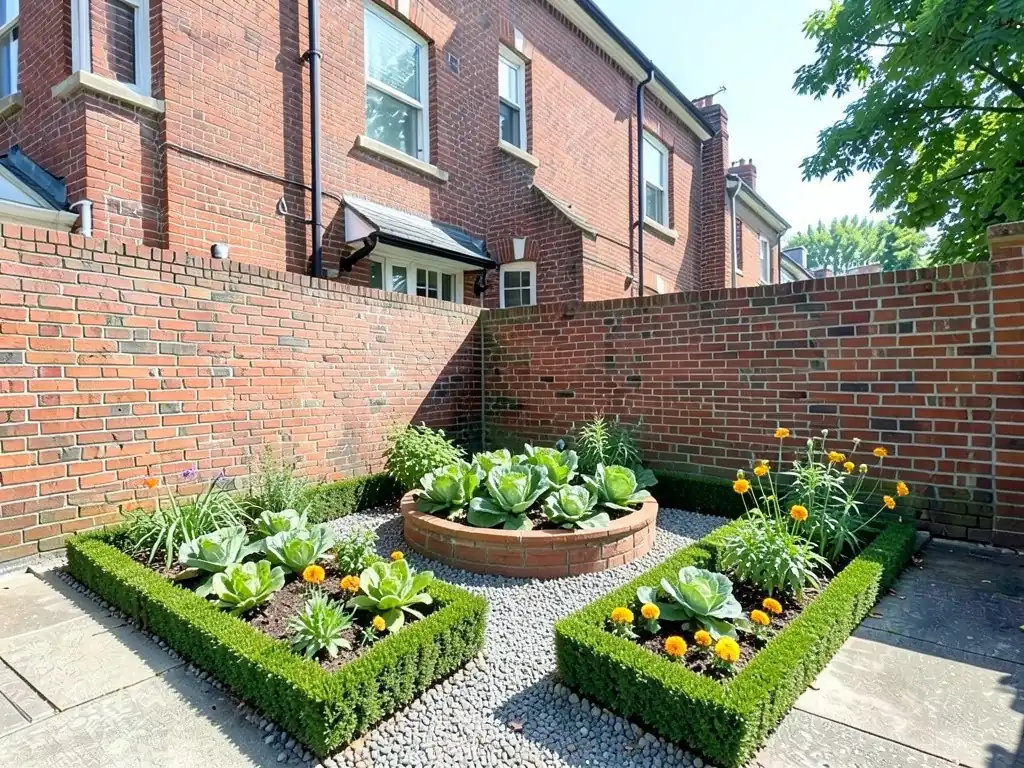
He adds that vegetables themselves bring design interest, naming frilly lettuces and blue-green kale, and that flowers can fill the bare spots after harvest. Our second example draws boxwood-edged beds around a round center bed with marigolds among the cabbages.
Growing up: trellises, stakes and cages
Virginia Tech Extension names pole beans, peas, cucumbers, melons and tomatoes as good crops to grow upward. It suggests setting trellis posts at least 18 to 24 inches into the ground, climbing surfaces with openings no wider than four inches, and tomato cages rolled from livestock fencing or chicken wire with mesh wide enough to reach through.
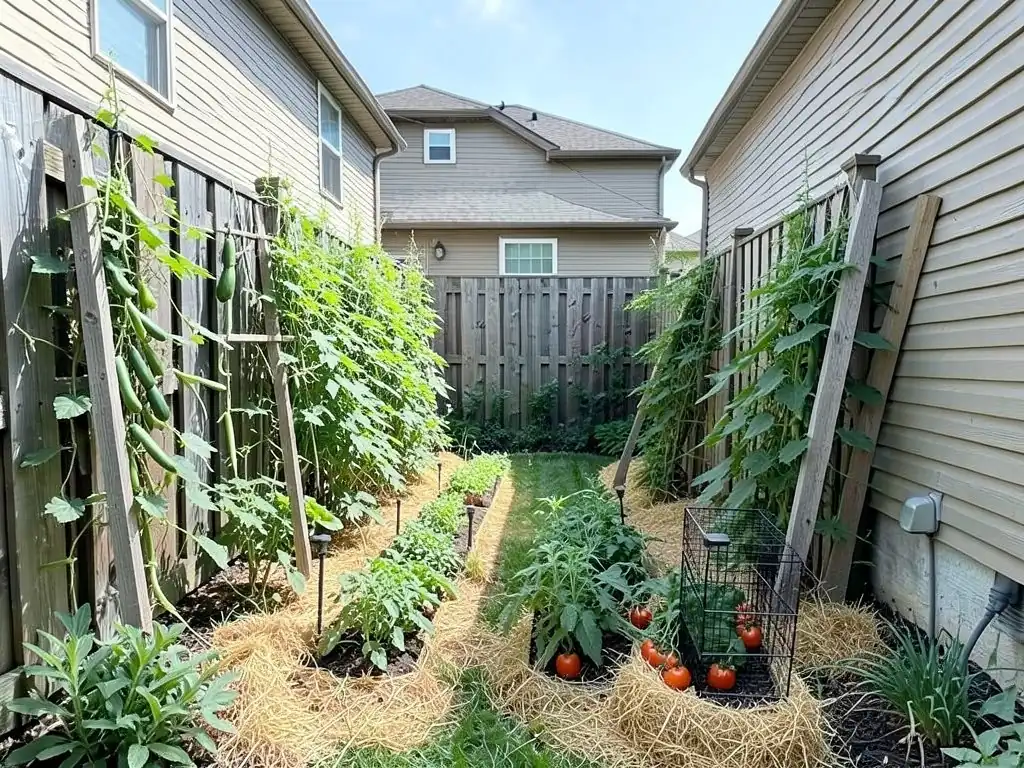
Bob Vila puts tall crops such as corn and trellised climbers on the north side so they do not shade shorter crops, and Virginia Tech suggests small sun-loving crops such as bush beans, eggplant and peppers on the south side of taller ones. Virginia Tech also notes that lettuce can benefit from the shade of taller neighbors. Our third example puts trellises along a fence in a narrow side strip.
What to grow together
The best-known pairing is the three sisters. The UC Master Gardener handout by Jenny Redfern describes corn as tall support for climbing beans, beans adding nitrogen to the soil for the corn and squash, and broad squash leaves that shade the soil, hold moisture and keep weeds down. It suggests sunflowers as a possible fourth sister for pollinators.
- Herbs among the vegetables: Bob Vila suggests strongly scented herbs such as oregano, basil, chives and dill alongside vegetables, especially when they are allowed to flower.
- A border of flowers: Bob Vila suggests ringing the garden with marigolds, onions or chives. Our potager example uses marigolds among the cabbages.
- Rotate each year: Bob Vila suggests three or more beds with plant families moved to a different bed each year, and a 4-year rotation to help control soil pests and disease.
How to try a vegetable garden idea on your own photo
The tool above is already in Custom mode. The Yard Redesign styles have no text box, so you cannot ask for rows of lettuce inside a picket fence there. Custom lets you name the layout, the crops, where they go and what must stay the same.
- Take the photo in daylight from the back door or a corner of the yard, with the lawn or bed you want to plant in frame.
- Describe the change in the Custom Design Requirements box: the layout (rows, edged beds or trellises), the crops, where each goes, what covers the paths, and what must stay the same, such as the house, the fence, the wall and the camera angle.
- Upload your photo under Upload Your Garden Image and click Generate Custom Design. You sign in with an email code or Google when you generate.
- Compare the result with your photo. If it drew two beds instead of four or left out a crop, say exactly how many beds and which crop goes where, and try again.
What the AI can and cannot do
The AI shows a look: roughly how rows, a potager or a trellised bed would sit in your own yard. That helps you choose a layout and see how much of the lawn it takes before you dig.
It does not know how much sun your yard gets, plan spacing or rotation, or tell you what grows in your area. It also does not always follow the instruction: in the examples above it drew two square beds instead of four, left out the beans and squash and caged only one of the tomatoes. Treat the result as a picture of an idea.
Vegetable garden instructions to paste into Custom mode
These are the exact instructions we used for the three examples above, in the same order. In the tool above, Custom is already selected: paste one into the Custom Design Requirements box, then upload your photo. Swap in your own crops, layout, positions and what must stay.
- Add ONLY an in-ground vegetable garden on the grass: straight planted rows of lettuce, corn, beans and squash with dirt paths between them, enclosed by a low wooden picket fence. Keep the farmhouse, the barn and the camera angle exactly the same.
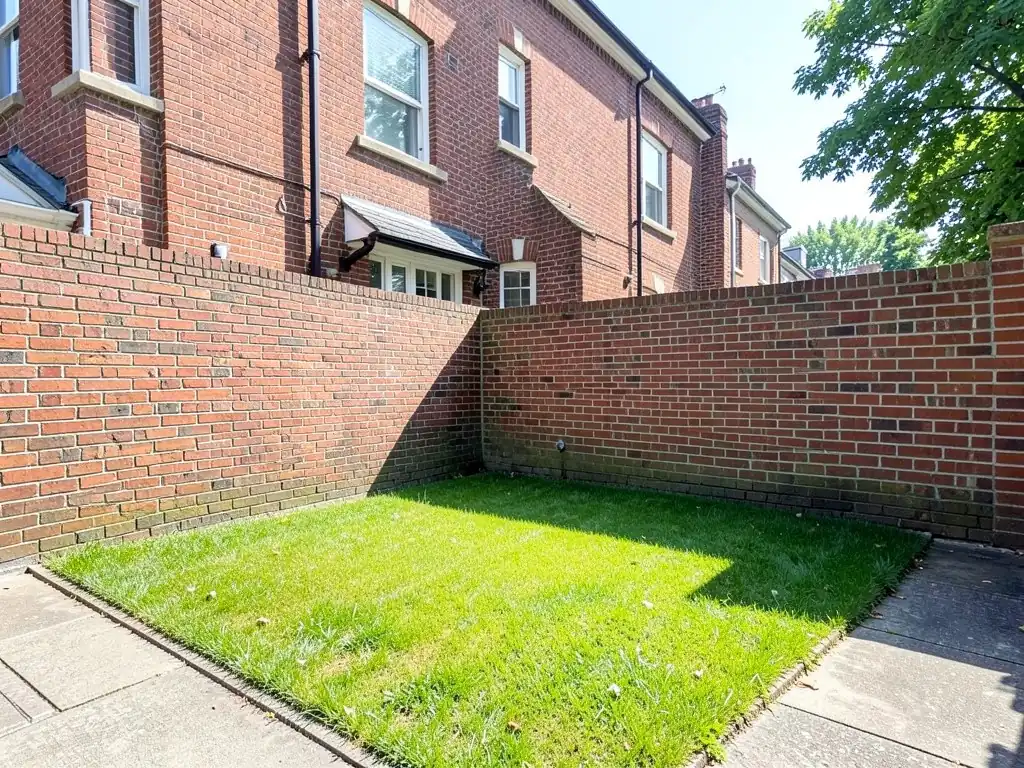
- Turn ONLY the lawn into a potager kitchen garden: four square beds with low boxwood edging around a central round bed, planted with lettuces, cabbages, herbs and marigolds, with gravel paths between. Keep the house, the wall and the camera angle exactly the same.
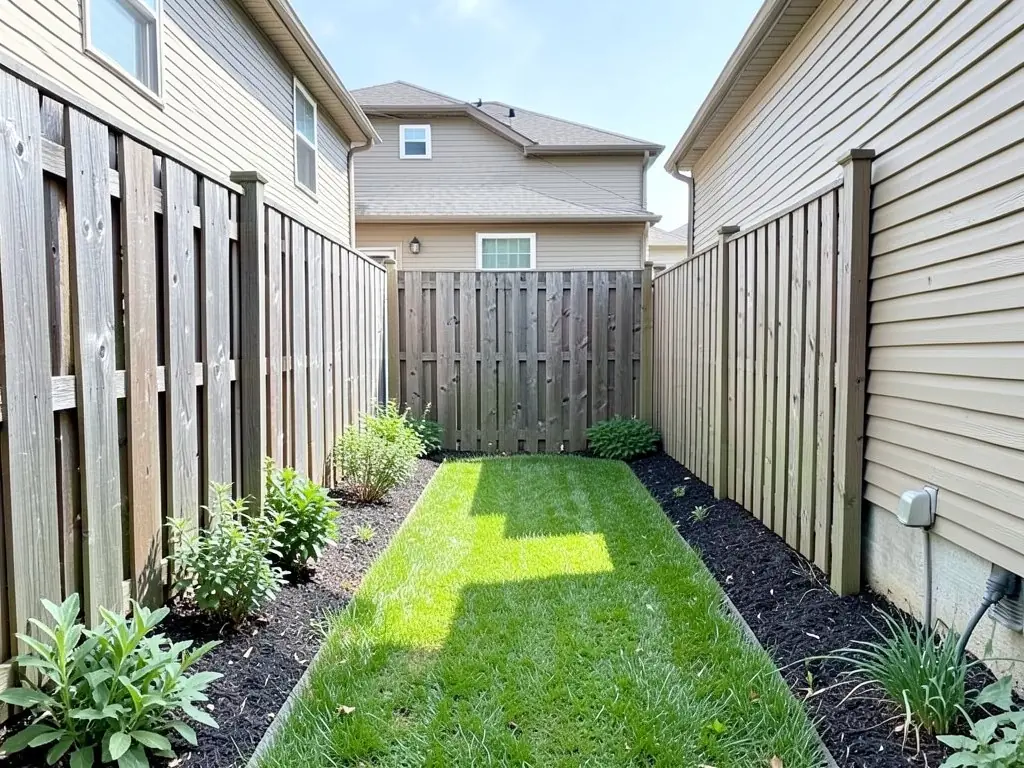
- Add ONLY a vegetable bed along the fence with tall wooden trellises covered in climbing beans and cucumbers, and tomato plants in cages in front, with straw mulch. Keep the house, the fence and the camera angle exactly the same.
Frequently asked questions
How much sun does a vegetable garden need?
Bob Vila suggests at least 6 hours of bright light a day. The Old Farmer's Almanac notes that leafy greens, root vegetables and many herbs do well with 4 to 6 hours, so a part-shade spot can still grow those.
What is the best layout for a vegetable garden?
It depends on the space. The Almanac suggests in-ground rows for larger open areas, raised beds for poor soil, square-foot gardening or a 4 by 8 foot bed for beginners, and containers for patios. Bob Vila suggests running beds north to south.
What is a potager?
A kitchen garden laid out to look good as well as feed you. Lee Reich points to Villandry in France, with geometric beds, low boxwood edging and gravel paths, and suggests mixing in flowers. Our second example shows one.
Where should trellises go in a vegetable garden?
Bob Vila puts tall crops and trellised climbers on the north side so they do not shade shorter crops. Virginia Tech Extension suggests small sun-loving crops on the south side of taller ones.
What vegetables grow well together?
The three sisters are the classic example: a UC Master Gardener handout describes corn supporting climbing beans, beans adding nitrogen and squash leaves shading the soil. Bob Vila also suggests scented herbs such as basil, chives and dill alongside vegetables.
Can the AI plan my vegetable garden for me?
No. It draws the look you describe on your photo. It does not know your sun, soil or climate, plan spacing or rotation, and it does not always follow the instruction, as the captions above show.
Do I need an account, and is it free?
Create a free account with an email code or Google to generate. You get 1 free render, and free renders carry a watermark. More renders and no watermark come with a paid plan.