
Low maintenance landscaping ideas
Lawn Love's list of low maintenance ideas is a good starting point, and these are the ones that show up most in the sources we read, with our examples where they apply.
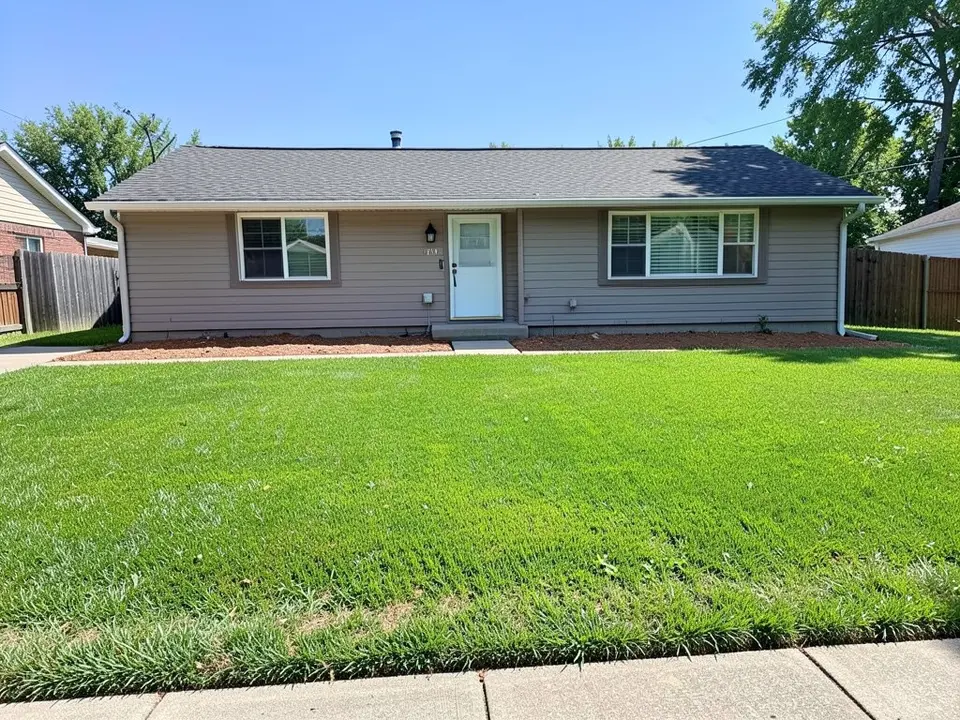
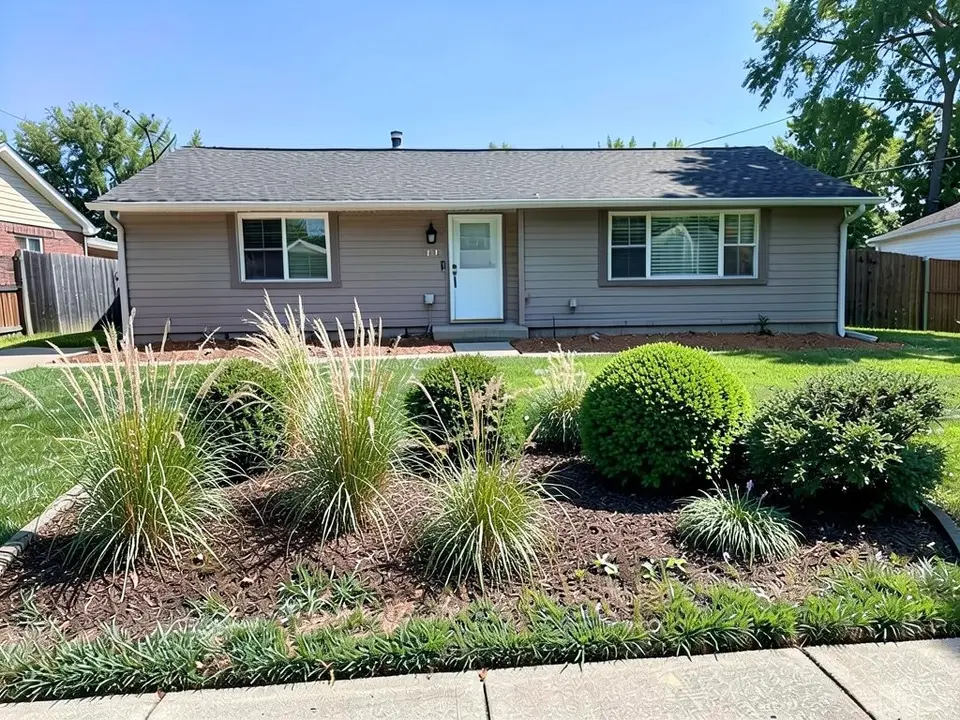
- 1. Shrink the lawn: Lawn Love recommends reducing the mowed area with hardscaping, decks, ground covers and rock gardens. Our first example turns part of a very large front lawn into a planted, mulched bed.
- 2. Mulch the beds: Lawn Love says a 2 to 3 inch layer of mulch suppresses weeds, holds moisture, moderates soil temperature and reduces erosion. Wood chips, bark and pine straw are common choices. Our first and second examples use dark mulch.
- 3. Choose low-care plants: Lawn Love names succulents, lavender, daylilies and knock-out roses as examples of plants that need little water, fertilizer or pruning, and advises checking plant toxicity if you have pets or children.
- 4. Pick perennials over annuals: Perennials cost more up front but come back each year, so you skip replanting, according to Lawn Love. Mixing bloom times gives color across the seasons.
- 5. Use native plants: Lawn Love says plants native to your area generally need less water and fertilizer, and support pollinators, but can take a few years to settle in. Your local extension service can name them.
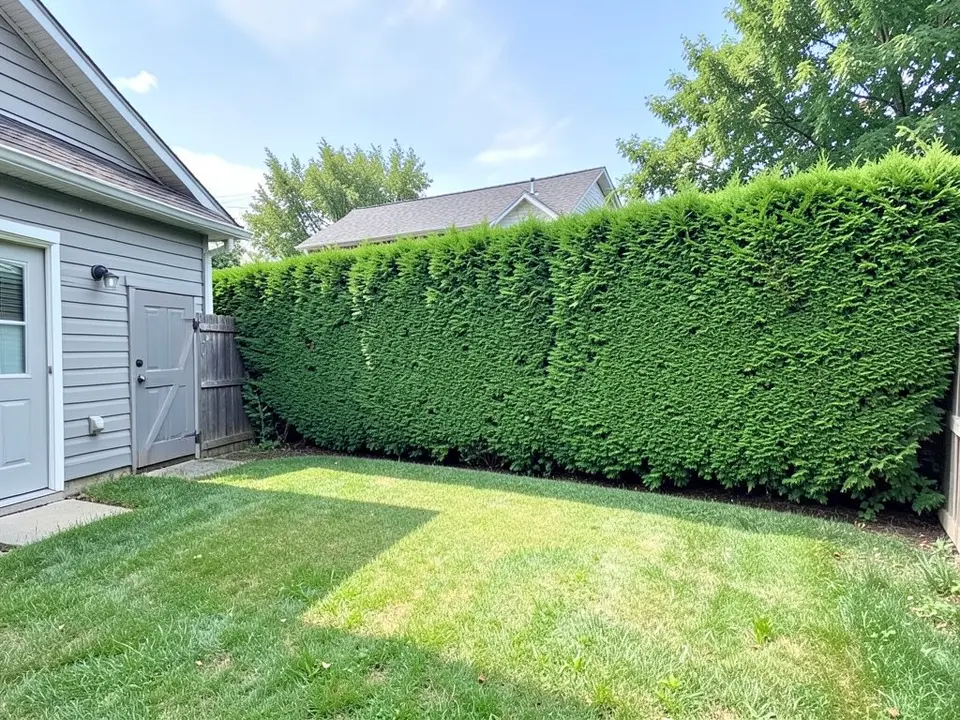
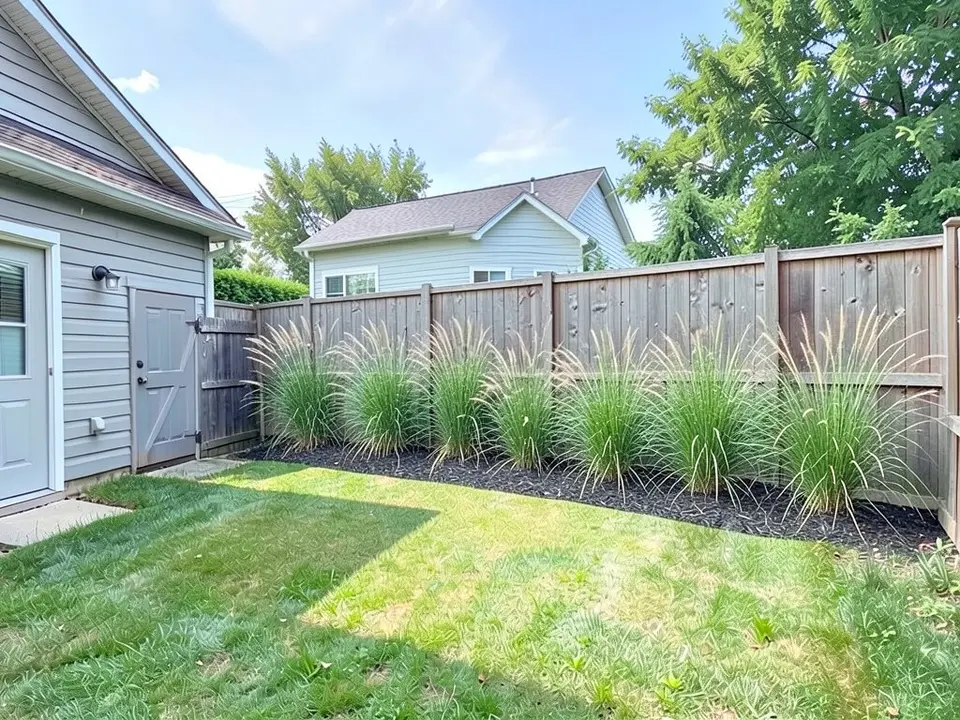
- 6. Swap a hedge for ornamental grasses: Lawn Love suggests replacing high-upkeep hedges such as laurel, arborvitae or red cedar with ornamental grasses like fountain grass, which hold their shape with less pruning and water. Our second example makes that swap.
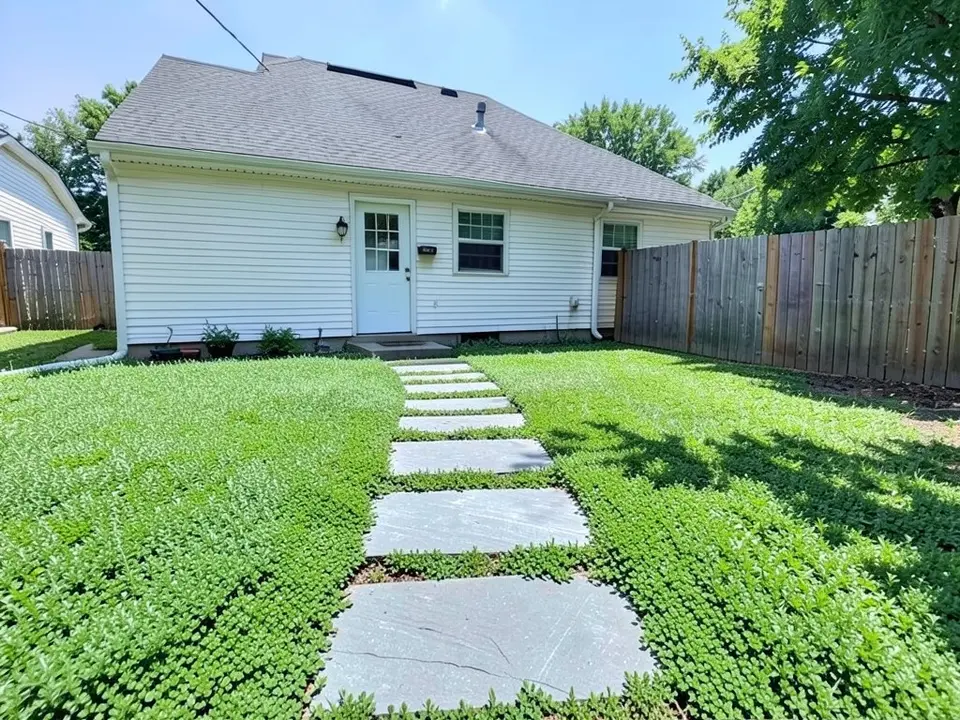
- 7. Try a grass alternative: Lawn Love lists gravel, artificial turf, wildflower meadows, ground covers such as clover, bugle or thyme, decks and rock gardens. For turf, see our artificial turf visualizer. Our third example uses a groundcover carpet.
- 8. Or choose a low-care lawn grass: Lawn Love says warm-season grasses such as zoysia, buffalograss and bahiagrass are more drought-tolerant and need less mowing than many lawn grasses.
- 9. Plant closer together: Lawn Love says close spacing shades the soil, which limits weeds and holds moisture.
- 10. Water efficiently: Lawn Love says drip systems and timed sprinklers water on a schedule, and that drip delivers water to the roots, reducing waste from evaporation and runoff.
- 11. Use pots and hard surfaces: Lawn Love adds containers for patios and small spaces, and gravel or paver paths and raised beds in place of planting and mowing. Bob Vila notes that gravel needs less upkeep than grass.
Front yard or backyard?
The same ideas work in both, but the aim differs. In a front yard the goal is usually a tidy look all year with less lawn to mow, as in our first example. In a backyard, the high-upkeep parts are usually the hedge, the lawn and the beds, as in our second and third examples. If you have a small yard, our small backyard landscaping ideas page covers layout in tight spaces.
Low maintenance is not no maintenance
Plants still need care while they settle in: native plants can take a few years to establish, and mulch, grasses and groundcover still need some weeding and trimming. Ask a local nursery or your extension service what suits your soil, sun and climate.
How to try low maintenance ideas on your own photo
Use Custom mode for this. The landscape tool also has a Low Maintenance style in its Yard Redesign mode, which applies a general low maintenance look in one click. Custom lets you name the exact change, such as the plant, the mulch, the size of the lawn and what must stay the same.
- Take the photo in daylight from where you would usually see the yard, with the lawn, the beds or the hedge you want to change and some of the house in frame.
- Open the landscape tool and sign in with Google or an email code. You get 1 free render with a free account.
- Under Select Landscape Mode, pick Custom.
- In the Custom Design Requirements box, name what to change (for example the hedge, the lawn or the bed), the plants or surface to use, the mulch color, and what must stay the same, such as the house, the doors and windows, the fence and the sidewalk.
- Upload your photo under Upload Your Garden Image and click Generate Custom Design.
- Compare the result with your photo, change one thing at a time, such as the amount of lawn or the plants, and run it again.
What the AI can and cannot do
The AI shows a look: roughly how a smaller lawn, a mulched bed with grasses or a groundcover carpet would sit in your own photo. That helps you decide how much lawn to keep and explain what you want to a gardener or landscaper.
It does not measure anything, price anything, check your soil, sun or climate, or tell you which plants will grow where you live, and it cannot tell you how much upkeep a design will save. It also does not always follow the instruction, as the single island bed, the near-black mulch and our first attempt at the groundcover show, and it can change things nobody asked for, such as the neighbour's house behind the fence in our second example. Treat the result as a picture of an idea, and check plant choices with a local nursery or your extension service.
Low maintenance instructions to paste into Custom mode
These are the exact instructions we used for the three examples above, in the same order. In the landscape tool, choose Custom, paste one into the Custom Design Requirements box, then upload your photo. Swap in your own plants, mulch, the spot and what must stay.
- Change ONLY the front yard planting: shrink the lawn to a smaller neat rectangle and add a large bed of dark brown mulch along the house and the sidewalk edge, planted with clumps of tall ornamental grasses, a few rounded evergreen shrubs and low groundcover plants. Keep the house, the front door, the windows, the sidewalk and the camera angle exactly the same.
- Change ONLY the hedge: replace the tall clipped hedge with a bed of dark mulch planted with tall feathery ornamental grasses of several heights. Keep the house, the back door, the wooden fence, the lawn and the camera angle exactly the same.
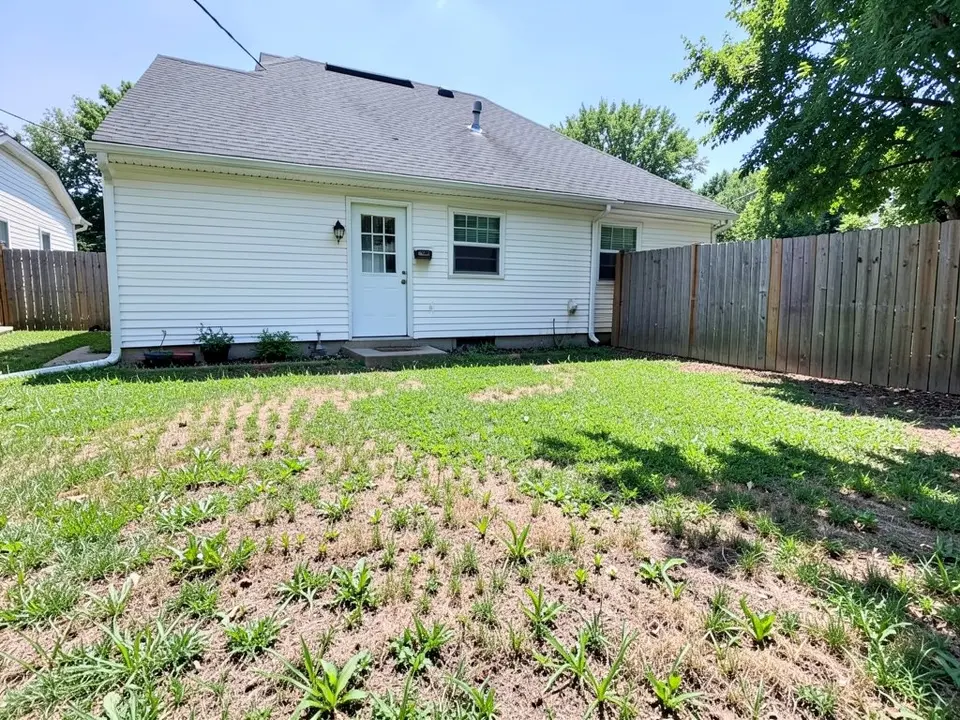
- Change ONLY the lawn: cover the whole lawn with a thick, even carpet of low creeping green groundcover (like creeping thyme) with no bare dirt and no weeds, and add a straight path of large flat grey stepping stones leading from the back door across it toward the camera. Keep the house, the back door, the wooden fence and the camera angle exactly the same.
Frequently asked questions
What are some low maintenance landscaping ideas?
Lawn Love lists reducing the lawn, mulching beds, choosing low-care and native plants, using perennials instead of annuals, replacing hedges with ornamental grasses, grass alternatives such as groundcover or gravel, close plant spacing and drip irrigation. The three examples on this page show a smaller lawn with a mulched bed, a hedge swapped for ornamental grasses and a lawn replaced with groundcover.
What are low maintenance front yard landscaping ideas?
A smaller lawn, a mulched bed of ornamental grasses and shrubs, and a hedge swapped for grasses are common front yard changes. Our first example shows the first of these on a front yard photo. Choose plants that suit your region and ask your extension service what grows well locally.
What does mulch do?
Lawn Love says a 2 to 3 inch layer of mulch suppresses weeds, holds moisture, moderates soil temperature and reduces erosion, and that wood chips, bark and pine straw are common choices.
What can I plant instead of a lawn?
Lawn Love lists gravel, artificial turf, wildflower meadows, ground covers such as clover, bugle and thyme, decks and rock gardens. Which suits you depends on your climate, how much foot traffic the area gets and your budget.
Is a low maintenance yard the same as a xeriscape?
No. Xeriscaping focuses on saving water with drought-tolerant plants, rock and mulch, and Lawn Love lists it as one low maintenance approach. A low maintenance yard can also mean a smaller lawn or fewer hedges in any climate. For a dry-climate design, see our xeriscape front yard page.
Can the AI tell me which plants will grow in my yard or how much time I will save?
No. It draws the look you describe. It does not know your soil, sun or climate, does not measure the time or water a design saves, and does not always follow the instruction exactly, as the captions above show. Ask a local nursery or your extension service for plant advice.
Do I need an account, and is it free?
You need an account, and it is free: 1 free render with a free account, and free renders carry a watermark. More renders and no watermark come with a paid plan.