
What makes landscaping look farmhouse
The pages we read describe a relaxed, practical country look rather than a fixed list of features. Landscaping Network quotes a New York landscape architect who starts with the house and the land before plants, repeats lines from the house in the garden, uses soft colors such as white, light blue and natural foliage tones, frames views of fields and trees, and uses local materials such as boulders, stacked stone walls and irregular flagstone. He advises against plastic or metal edging, preferring a deep cut edge between lawn and beds, and suggests rustic pieces such as Adirondack chairs and oak barrels over sleek modern decor.
Hunker suggests keeping it simple with gravel, vines and wood, unmanicured trees and hedges, and gravel, bark or decomposed granite instead of concrete, since they let water soak in. ShrubHub, a landscape design service, suggests native plants in a loose, informal layout, stonework such as a stacked fieldstone wall, and rocking chairs on a patio or around a stone fire pit. Farmhouse Aesthetic, a home style blog, calls gravel walkways a classic, low-maintenance choice, and suggests brick or flagstone for a more finished look.
Planting along the porch and the front of the house
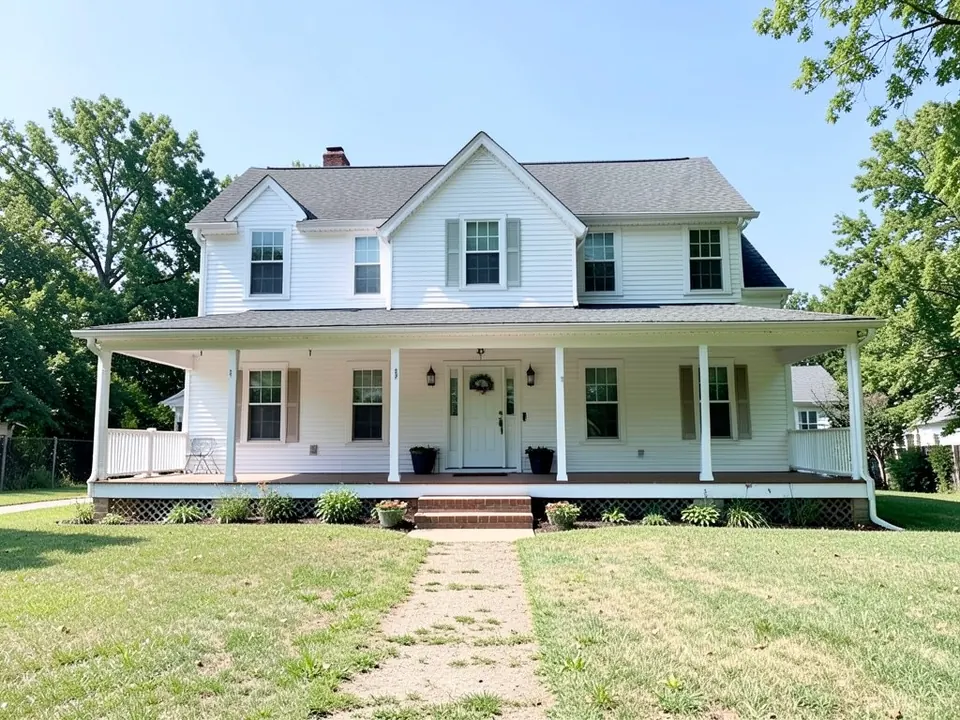
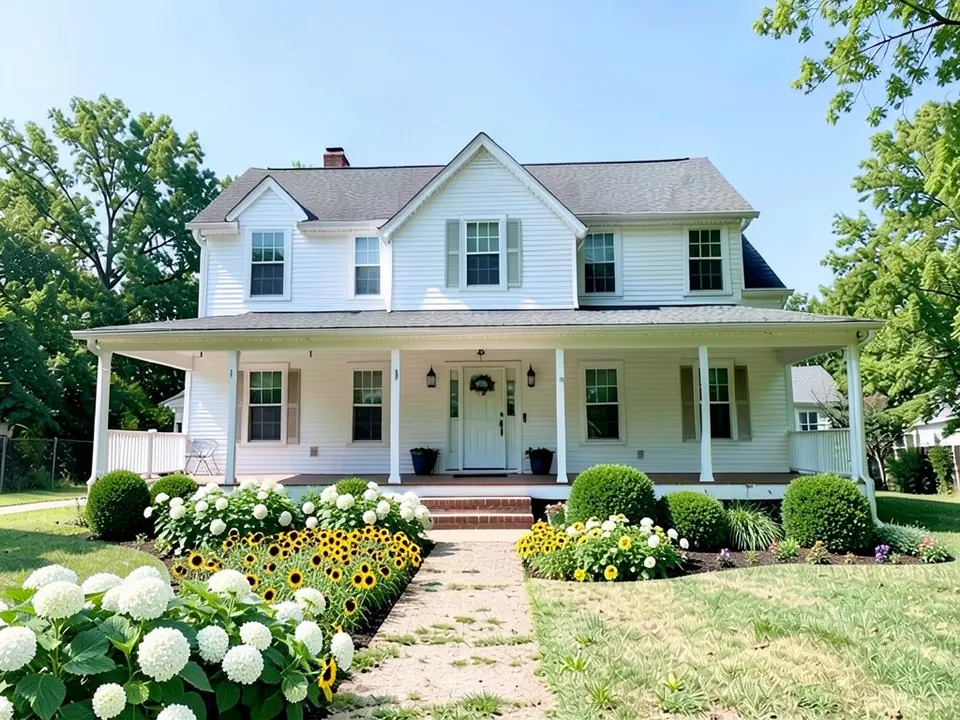
A wide front porch is the face of many farmhouses, and the sources plant along it with a mix of shrubs and old-fashioned flowers. Our first example adds hydrangeas, black-eyed susans and boxwoods along a porch.
- Shrubs and hydrangeas: Landscaping Network's plant list for a country garden includes dogwood, English laurel, Annabelle and Endless Summer hydrangeas, Sensation lilac and spirea. Hunker suggests tightly clipped boxwood and evergreen trees against a white house and a black door, and hydrangeas mixed with ornamental grasses and succulents for texture.
- Perennials: Farmhouse Aesthetic names black-eyed susans, coneflowers and daylilies, with taller phlox, delphinium or hollyhocks at the back. ShrubHub names daisies, lavender, lilac, salvia and native ferns.
- Ground cover and grasses: Landscaping Network suggests fountain grass and catmint, and mass plantings of carex and liriope to keep weeds down.
- One real makeover: The Lehman Lane blog, written by a family restoring an old farmhouse, describes moving boxwoods that blocked the front door, adding a hawthorn tree with hydrangeas under it, planting low hollies at the front of the bed and evergreens against the house, and topping it all with fresh mulch. The blogger says most plants were moved from elsewhere in the yard, so only the tree and a few shrubs were bought.
Picket fences, gates and climbing roses
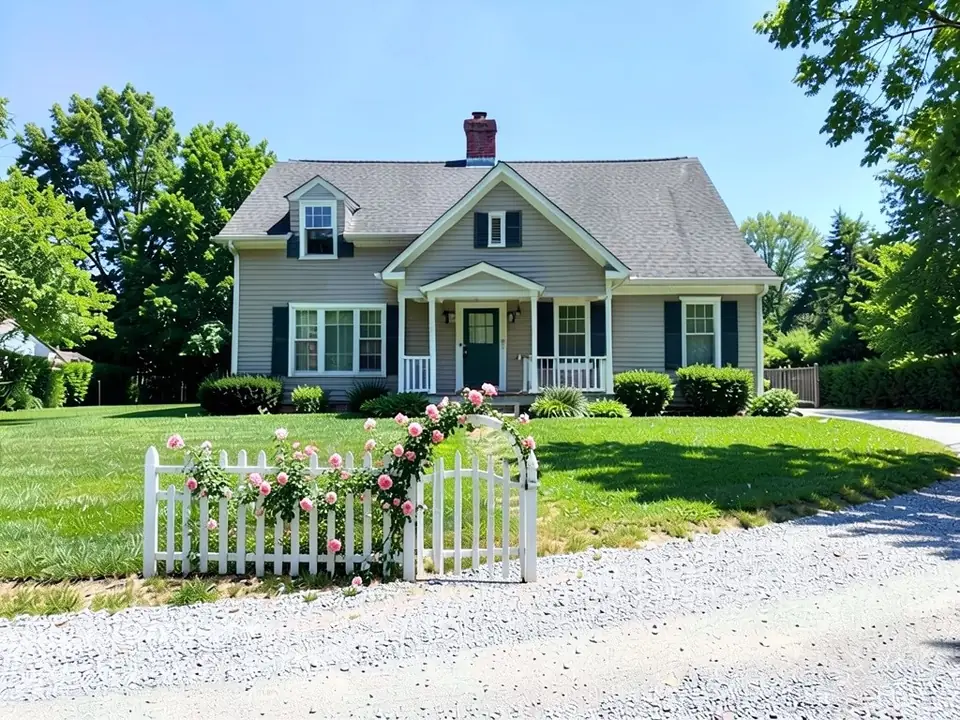
ShrubHub suggests a picket fence painted white or left as weathered wood to mark the edge of the property, with stone-edged beds of colorful flowers and touches such as old watering cans or wagon wheels. Farmhouse Aesthetic also suggests white or unpainted wood left to weather, climbing roses or clematis, and an arched gate, and notes that a painted picket fence needs repainting every few years. It says roses need at least 6 hours of direct sun a day, so check the spot before you plant.
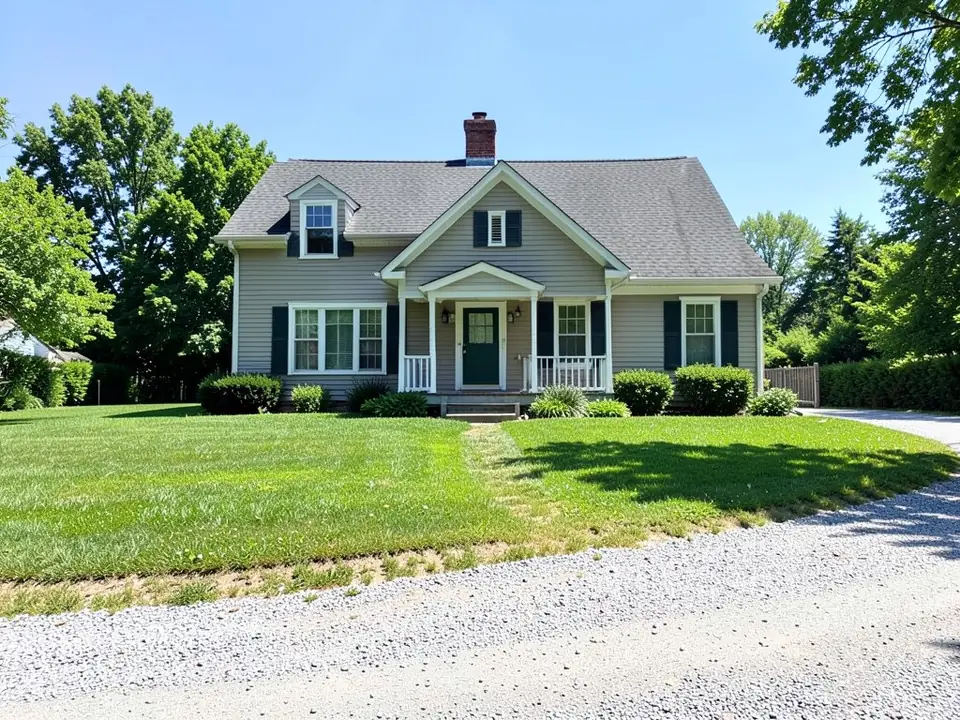
Our second example adds a picket fence with a rose-covered gate. For other fence styles, see our front yard fence ideas page, and for rose planting, see rose garden ideas.
A kitchen garden, raised beds and a potting bench
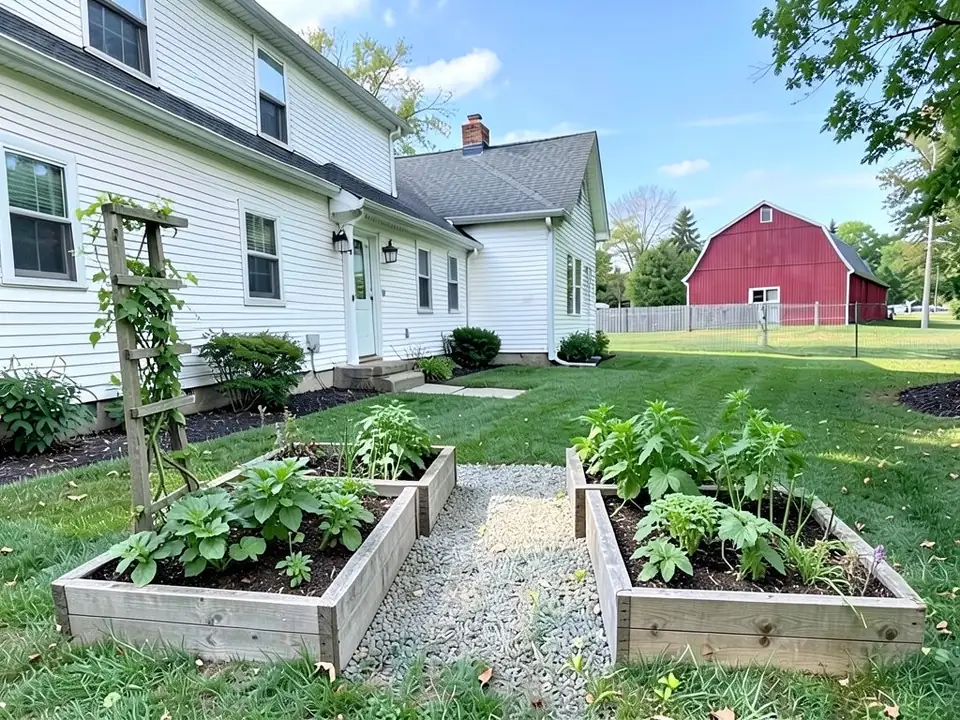
A vegetable or herb patch near the house is part of the farmhouse look in several sources. Hunker suggests raised beds in wood for a rustic look or corten steel for a modern one, filled with fruit, vegetables or flowers. Farmhouse Aesthetic suggests mixing vegetables with flowers, galvanized tubs for vegetables or herbs near the kitchen door, an herb spiral, and wooden crates lined with landscape fabric as small raised beds. Hunker and ShrubHub both suggest a potting bench in reclaimed or weathered wood with shelves for pots and tools.
Our third example adds raised beds, a gravel path and a trellis to a farmhouse side yard. The sources give no bed sizes or spacing, so ask a local garden center what suits your space.
How to try farmhouse landscaping on your own photo
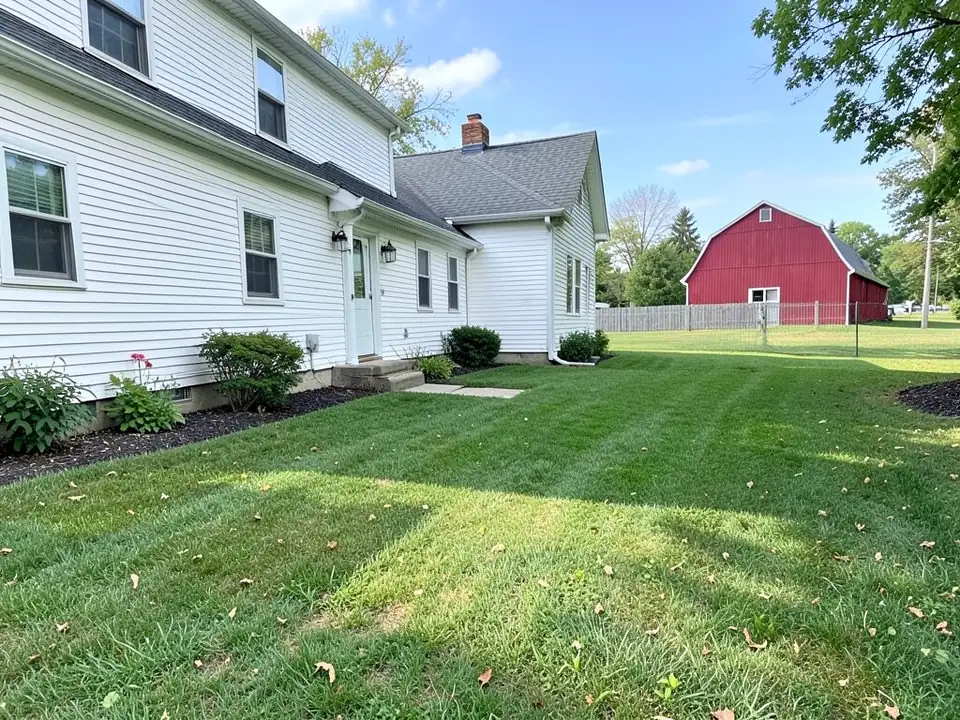
The tool above is already in Custom mode. The Yard Redesign styles have no text box, so you cannot name a picket fence, the porch plants or the raised beds there. Custom lets you name them, say where they go, and say what must stay the same.
- Take the photo in daylight from where you usually see the house or yard, with the porch, the fence line or the spot for the garden in frame.
- Describe the change in the Custom Design Requirements box: the plants and their colors, the fence and gate, the beds and path, and what must stay the same, such as the house, the porch, the barn and the camera angle.
- Upload your photo under Upload Your Garden Image and click Generate Custom Design. You sign in with an email code or Google when you generate.
- Compare the result with your photo, change one thing at a time, such as the fence length or the number of beds, and run it again. Short, specific instructions work better than long ones.
What the AI can and cannot do
The AI shows a look: roughly how porch beds, a picket fence or a kitchen garden would sit on your own photo. That helps you choose and explain what you want to a landscaper, a fence installer or a garden center.
It does not measure the fence line or the beds, does not know your climate, sun or soil, does not price anything and does not check property lines or local rules for fences. It also does not always follow the instruction, as the oversized porch bed, the half-length fence and the missing obelisk in the examples above show. Treat the result as a picture of an idea, and get plant choices, fence placement and any permit questions answered by a local pro.
Farmhouse landscaping instructions to paste into Custom mode
These are the exact instructions we used for the three examples above, in the same order. In the tool above, Custom is already selected: paste one into the Custom Design Requirements box, then upload your photo. Swap in your own plants, fence, beds and what must stay.
- Change ONLY the lawn along the porch: add flower beds of white hydrangeas, black-eyed susans and boxwoods along the front of the porch. Keep the house, the porch and the camera angle exactly the same.
- Change ONLY the front edge of the lawn: add a white picket fence with a small arched gate, and climbing pink roses on the gate arch. Keep the house, the lawn, the road and the camera angle exactly the same.
- Change ONLY the lawn: add four raised wooden vegetable beds with leafy plants, a gravel path between them and a wooden obelisk trellis with climbing beans. Keep the farmhouse, the barn and the camera angle exactly the same.
Frequently asked questions
What are some farmhouse landscaping ideas?
The pages we read suggest beds of hydrangeas, boxwoods and old-fashioned perennials along the porch, a white or weathered picket fence with an arched gate, a kitchen garden in raised beds, gravel paths, local stone, a potting bench and rustic seating such as rocking or Adirondack chairs. The three examples on this page show porch beds, a picket fence with roses and a raised-bed vegetable garden.
What plants suit a farmhouse?
Landscaping Network lists dogwood, English laurel, Annabelle and Endless Summer hydrangeas, Sensation lilac, spirea, fountain grass, carex, liriope and catmint, and advises choosing plants native to your region. Farmhouse Aesthetic names black-eyed susans, coneflowers and daylilies, and ShrubHub names daisies, lavender, lilac, salvia and native ferns.
Should a farmhouse picket fence be white?
Either works, according to ShrubHub and Farmhouse Aesthetic: paint it white for a crisp look or leave the wood unpainted to weather. Farmhouse Aesthetic notes a painted fence needs repainting every few years. Check property lines and any local fence rules with your town before you build.
What path material fits a farmhouse yard?
Farmhouse Aesthetic calls gravel walkways a classic, low-maintenance choice and suggests brick or flagstone for a more finished look. Hunker suggests gravel, bark or decomposed granite instead of concrete, and Landscaping Network suggests irregular flagstone and other local stone.
Can I put a vegetable garden in a farmhouse yard?
Yes, several sources include one. Hunker suggests wooden or corten steel raised beds, and Farmhouse Aesthetic suggests mixing vegetables with flowers, galvanized tubs of herbs near the kitchen door and an herb spiral. The sources give no bed sizes, so ask a local garden center.
Can the AI design my farmhouse garden?
No. It draws the look you describe on your photo. It does not measure, price, choose plants for your climate or check fence rules, and it does not always follow the instruction exactly, as the captions above show.
Do I need an account, and is it free?
Create a free account with an email code or Google to generate. You get 1 free render, and free renders carry a watermark. More renders and no watermark come with a paid plan.