
Shade sail ideas for patios, pools and decks
A shade sail is a piece of tensioned fabric fixed at its corners to a wall, posts or trees. Homebuilding & Renovating presents it as an alternative to a pergola or an awning. Fresh Patio, a home and garden design blog, and Homebuilding & Renovating show sails in a few repeating places, and our three examples follow the same pattern: a patio by the house, a pool and a deck.
- Over patio doors: Homebuilding & Renovating shows a rectangular sail over patio doors, fixed at two points on the house wall and two on poles, trees or walls. Fresh Patio shows a sail fixed to the house and two posts, and a square sail between the roofline and two posts.
- Over a pool: Fresh Patio shows a triangular sail partly covering a pool, anchored to trees with cables. Our second example asks for sails by a pool.
- A covered deck: Fresh Patio shows four rectangular sails on custom posts used to cover a deck. Our third example asks for one square sail on four posts.
- A narrow patio: Fresh Patio shows a narrow patio sail hung between a privacy screen and the house, and suggests placing a sail over the most sun-exposed spot.
- Over seating: Homebuilding & Renovating shows a triangle in a corner over a sofa and a small triangle over part of a table.
Shapes, layering and colors
Homebuilding & Renovating says triangles suit smaller or precise areas, while squares and rectangles cover more but need more space and stronger support. It quotes Claire Maclean, founder of Clara Shade Sails, who says no shape is best because it depends on the space and the fixing points.
Covers & All, which sells custom covers and shade sails, suggests mixing shapes, varying heights and angles, layering or overlapping sails, placing them diagonally and blocking colors. Fresh Patio shows three overlapping triangle sails placed to steer rain away from a table, and says overlapping gives more shade. Covers & All also suggests combining sails with a pergola and hanging string lights under them.
Fixing points, sun and rain
These points are the sources' advice, not our own. Backyard City, which sells shade sails and fixing hardware, lists a pergola, a sturdy tree branch, a fence post, the fascia or a wall as possible fixing points, and says fascia should be reinforced. Homebuilding & Renovating quotes Nadia McCowan Hill of Wayfair, who lists trees, the house, a fence post or a pergola, and suggests ordering a sail slightly smaller than the area so it does not blow around. It also notes that fixings and poles are often sold separately.
Fresh Patio says to fit a sail at a slight angle so rain runs off, that triangles collect less water, and that installers usually lower at least one corner. Homebuilding & Renovating says to keep one corner lower on a waterproof sail, and quotes Claire Maclean saying a loose tie gives a billowy look while wet weather or a permanent setup needs the sail very tight. Fresh Patio adds that strong canvas stretched tight moves less in the wind. Covers & All says to think about the sun's path and to anchor securely against wind and rain.
Before you put up a shade sail
Backyard City says the shade falls directly under the sail mainly at midday in midsummer, so the shade moves through the day; this is why a sail can look right and still leave a table in the sun. It says to keep sails away from grills and fire pits, to use turnbuckles, not to over-tension the sail and to re-tension it from time to time.
Backyard City also says to check local codes and permits, including any HOA rules, to call the utility companies before digging post holes, and to ask a builder or an engineer if you are unsure whether a fixing point can take the load. None of the pages we used gives post heights, footing sizes or load figures we can pass on, so ask the sail maker or a local installer.
How to try a shade sail on your own photo
The tool above is already in Custom mode. The Yard Redesign styles have no text box, so you cannot name a sail, its shape or its posts there. Custom lets you name the sail, its shape and color, where each corner is fixed, and what must stay the same.
- Take the photo in daylight from where you usually sit or look at the area, with the patio, pool or deck and the wall, posts or trees you might fix to in frame.
- Describe the sail in the Custom Design Requirements box: the shape (triangle, square, rectangle), the color, how many sails, what each corner is fixed to (the house wall, a post, a tree), what it should be over, and what must stay the same, such as the house, the furniture and the camera angle.
- Upload your photo under Upload Your Garden Image and click Generate Custom Design. You sign in with an email code or Google when you generate.
- Compare the result with your photo, change one thing at a time, such as the shape or where a corner is fixed, and run it again. Short, specific instructions work better than long ones.
What the AI can and cannot do
The AI shows a look: roughly how a sail of a given shape and color would sit over your own patio, pool or deck. That helps you choose and explain what you want to a supplier or an installer.
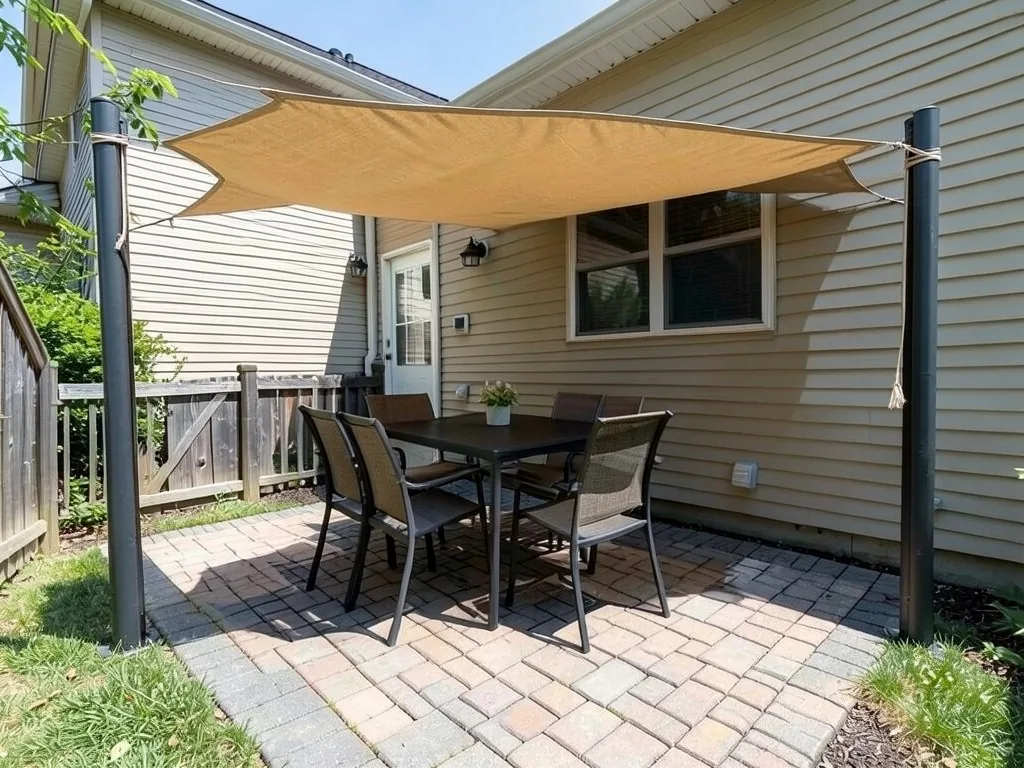
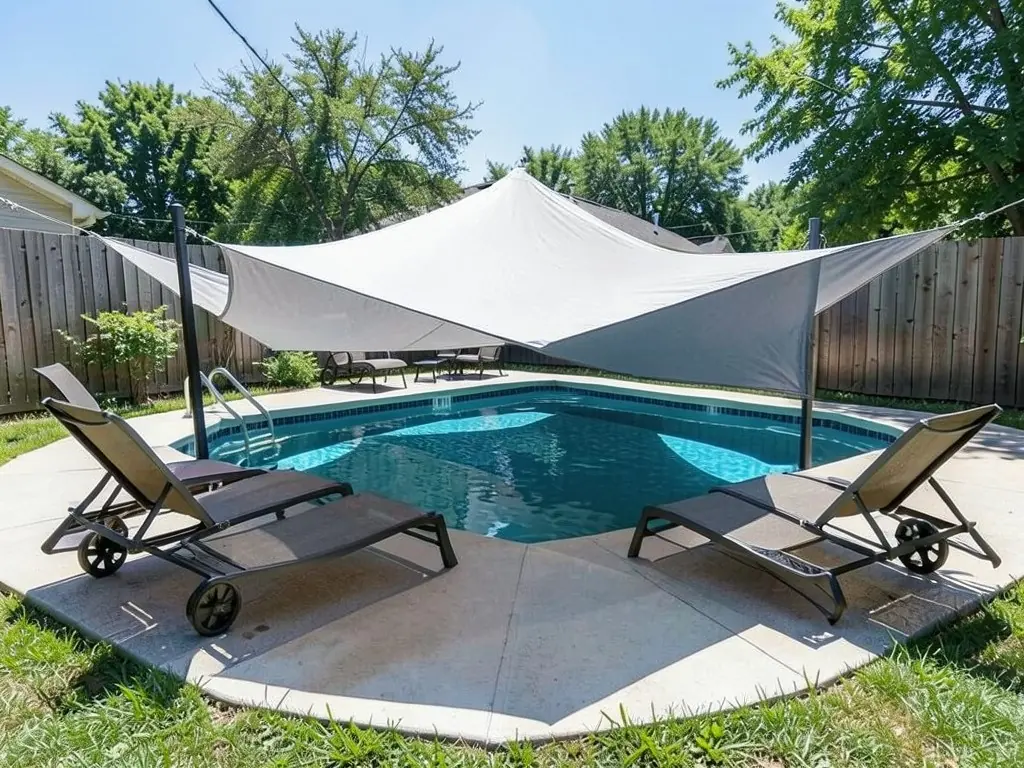
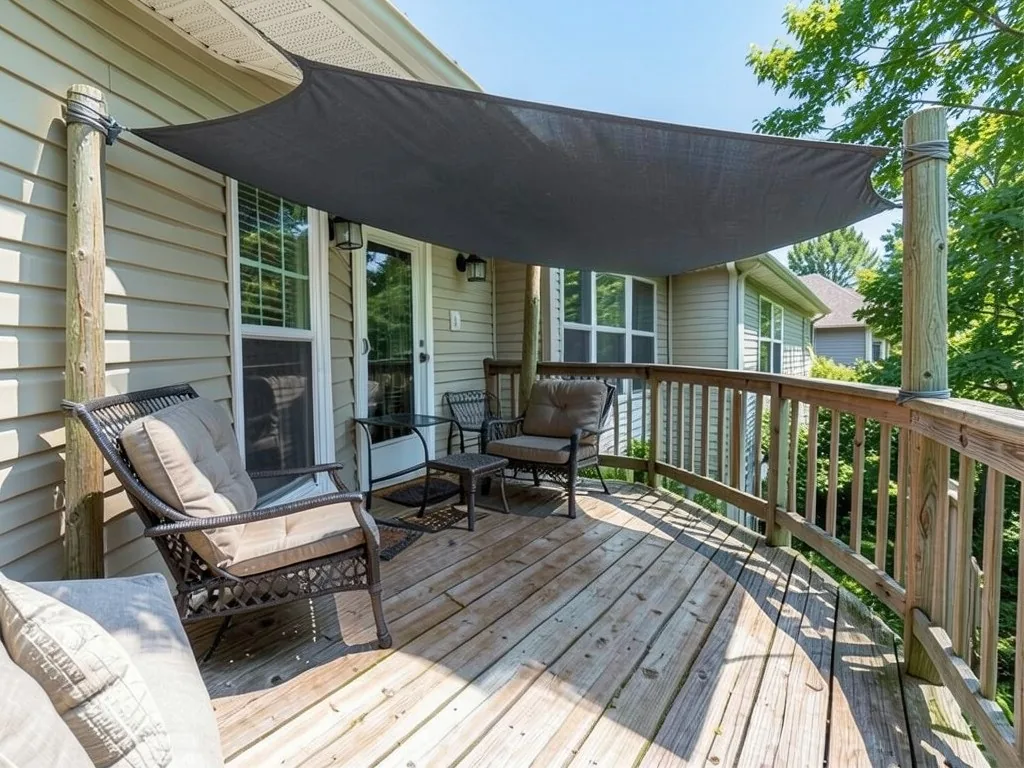
It does not measure anything, work out where the shade will fall at different times of day, check whether a wall or post can hold the load, or check permits, and the pages we read give no such numbers either. It also does not always follow the instruction, as the four-sided sail over the patio, the pool sails that shade the water instead of the chairs and the deck sail that shades only part of the deck show in the examples above. Treat the result as a picture of an idea, and get the fixings and the posts from a qualified installer or builder.
Shade sail instructions to paste into Custom mode
These are the exact instructions we used for the three examples above, in the same order. In the tool above, Custom is already selected: paste one into the Custom Design Requirements box, then upload your photo. Swap in your own shape, color, fixing points and what must stay.
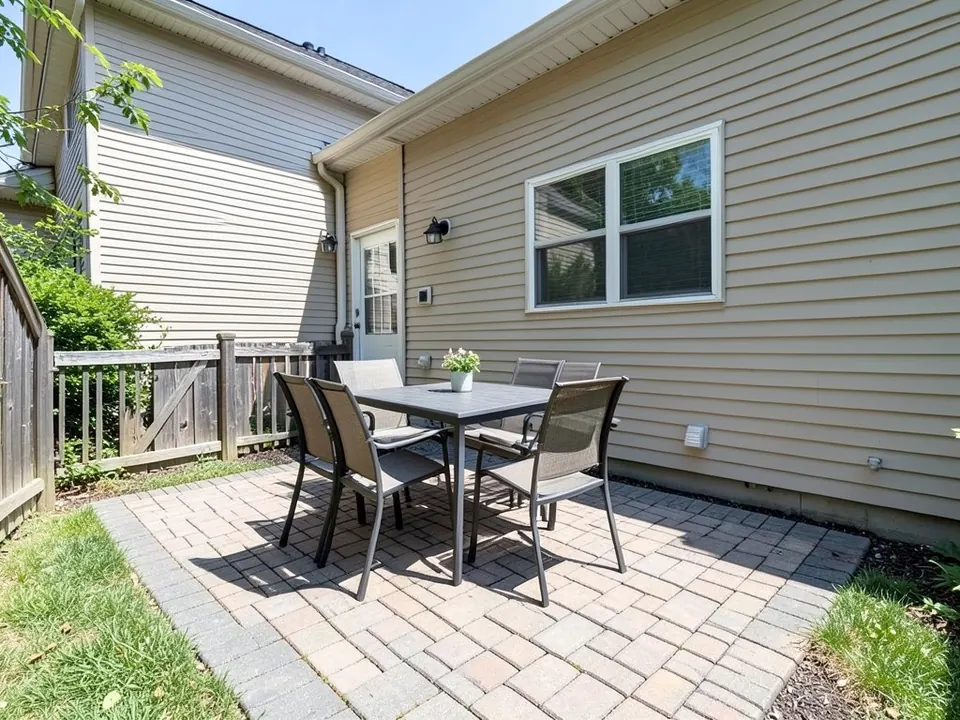
- Add one large tan fabric triangular shade sail stretched flat directly above the dining table and the four chairs, a little above head height, so its dark shadow falls across the table, the chairs and the pavers. One corner is tied to the house wall above the window, and the other two corners are tied to two tall dark steel posts standing at the front corners of the patio. Keep the house, the patio, the table and chairs and the camera angle exactly the same.
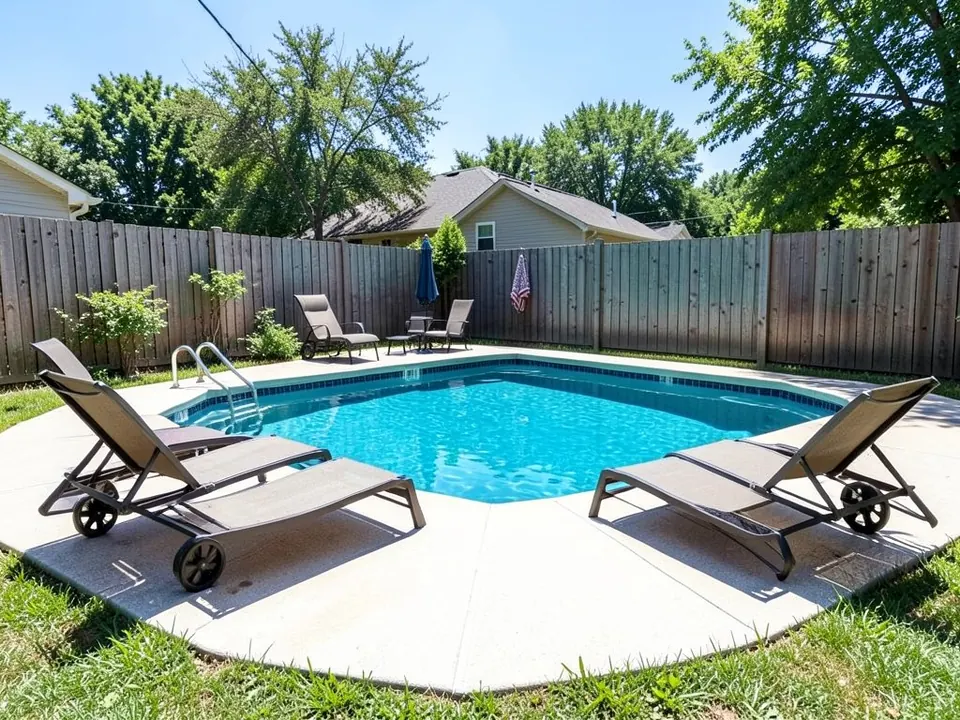
- Add two large overlapping triangular fabric shade sails, one white and one grey, stretched low over the lounge chairs on the concrete deck, held by three tall dark steel posts standing on the deck, so their shadow covers the lounge chairs. Keep the pool, the deck, the chairs, the fence and the camera angle exactly the same.
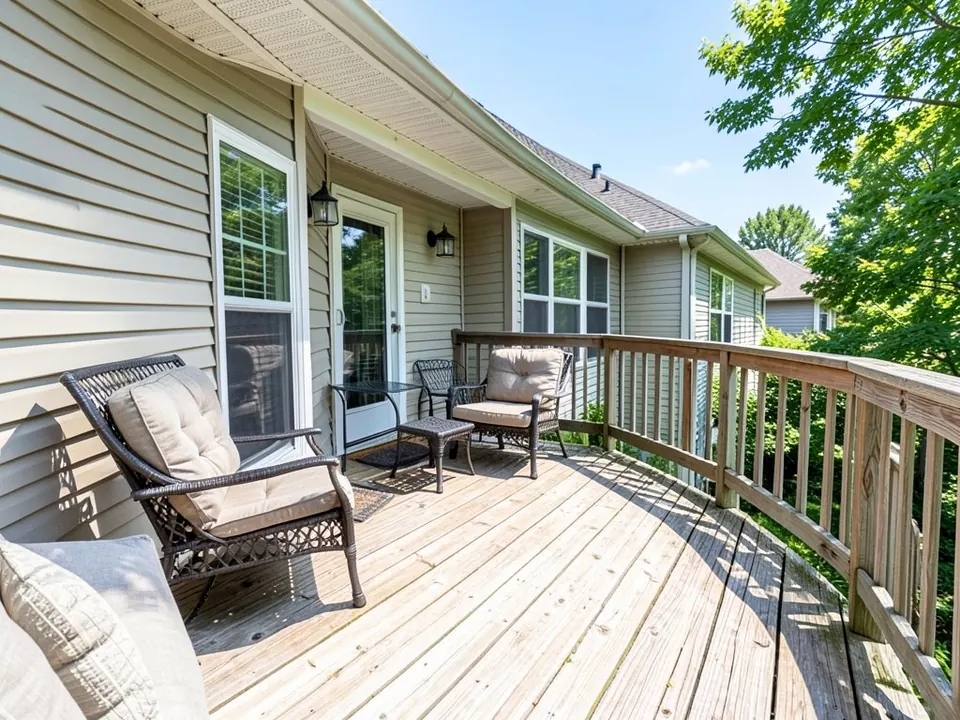
- Add one large square dark grey fabric shade sail stretched flat over the whole deck and all the chairs, just above head height, so the deck and the chairs are in its shade. Its four corners are tied to four tall wooden posts standing at the four corners of the deck. Keep the deck, the furniture, the railing, the house and the camera angle exactly the same.
Frequently asked questions
What are some good shade sail ideas?
The pages we read show sails over patio doors fixed to the house and posts, triangles partly covering a pool, several sails on posts covering a deck, a narrow sail between a privacy screen and the house, and overlapping sails in mixed shapes and colors. The three examples on this page show a sail over a patio, by a pool and over a deck.
Which shade sail shape is best?
The sources do not name one. Homebuilding & Renovating says triangles suit smaller or precise areas and squares and rectangles cover more but need more space and stronger support, and quotes Claire Maclean of Clara Shade Sails saying it depends on the space and the fixing points. Fresh Patio says triangles collect less water.
What can I fix a shade sail to?
Backyard City lists a pergola, a sturdy tree branch, a fence post, the fascia or a wall, and says fascia should be reinforced. Homebuilding & Renovating also lists the house and trees. Ask a builder or an engineer whether your wall, post or tree can take the load.
How do I stop rain pooling on a shade sail?
Fresh Patio says to fit the sail at a slight angle so rain runs off and that installers usually lower at least one corner. Homebuilding & Renovating says to keep one corner lower on a waterproof sail and quotes a sail maker who says wet weather needs the sail very tight.
How high should the posts be?
None of the pages we used gives a post height or footing size we can pass on. Backyard City says the shade falls directly under the sail mainly at midday in midsummer, so height and angle change where the shade lands. Ask the sail maker or a local installer.
Can the AI tell me where the shade will fall or how to fix the sail?
No. It draws the look you describe. It does not measure, track the sun, check loads or permits, and it does not always follow the instruction exactly, as the captions above show.
Do I need an account, and is it free?
Create a free account with an email code or Google to generate. You get 1 free render, and free renders carry a watermark. More renders and no watermark come with a paid plan.