
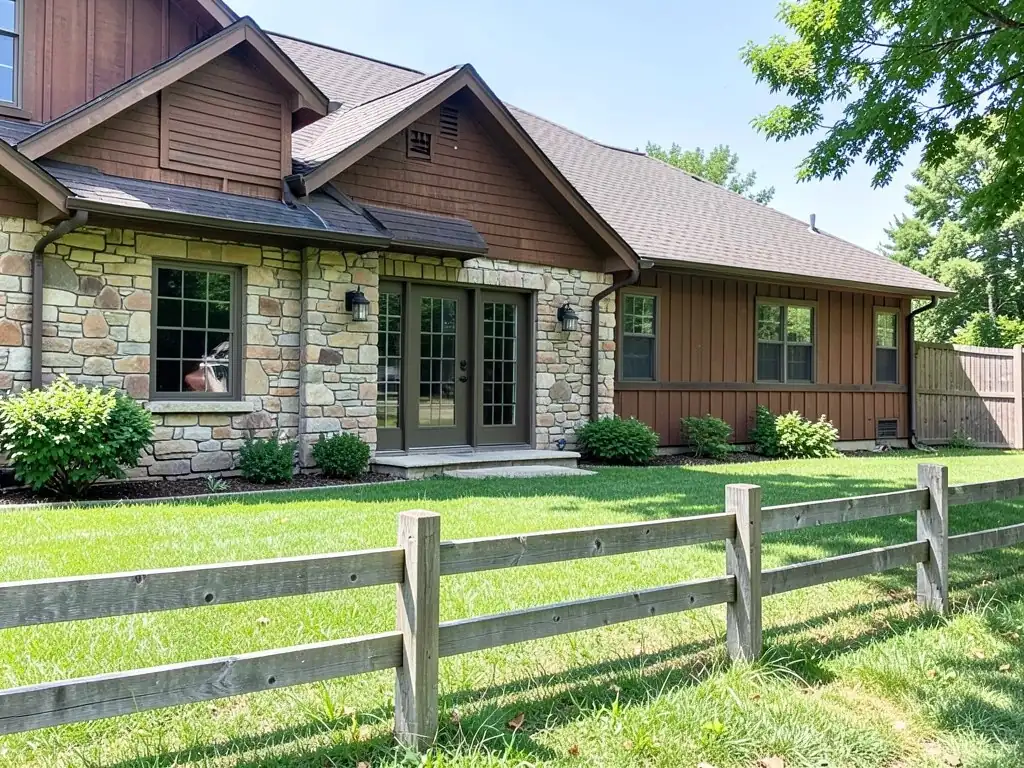
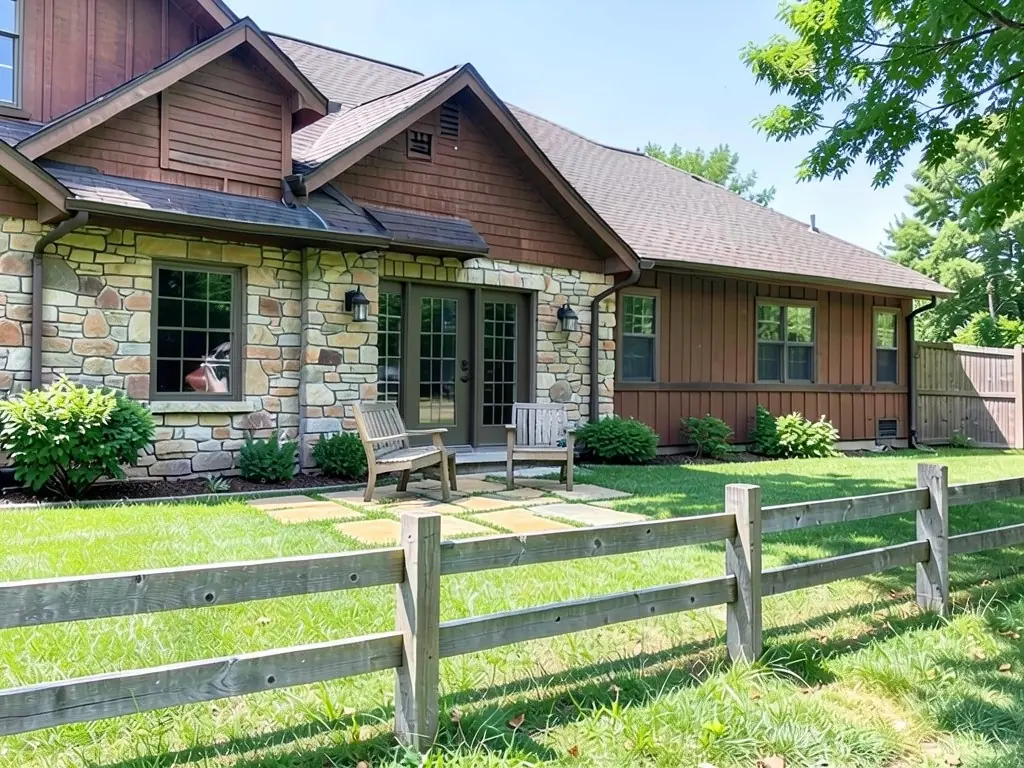
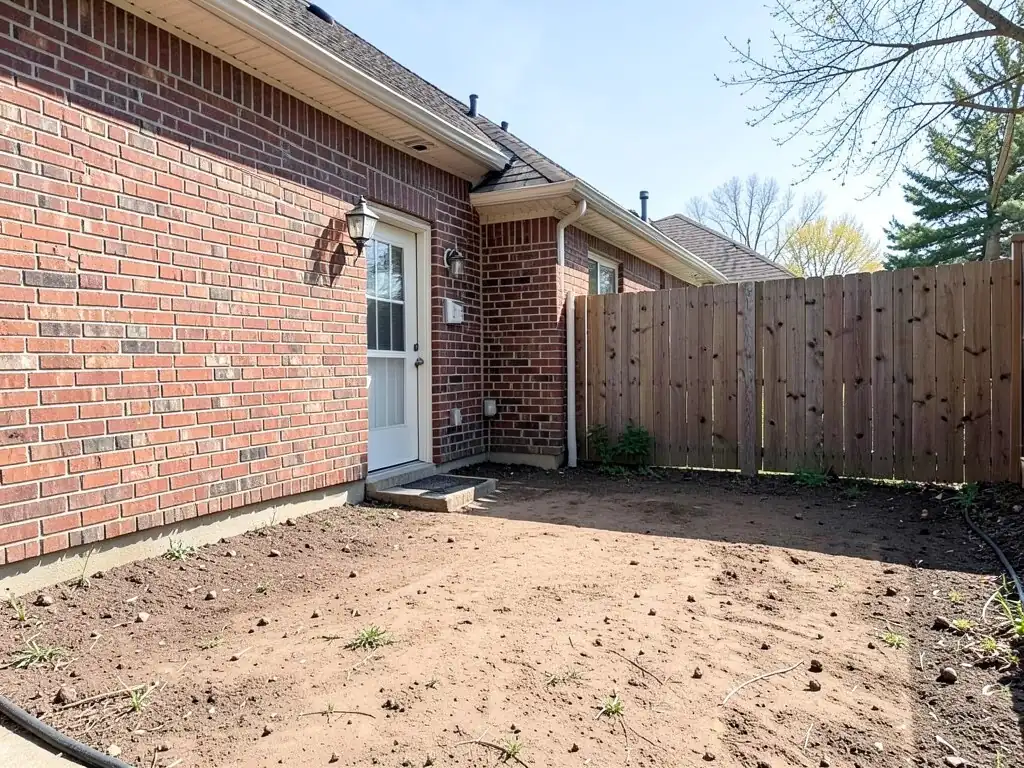
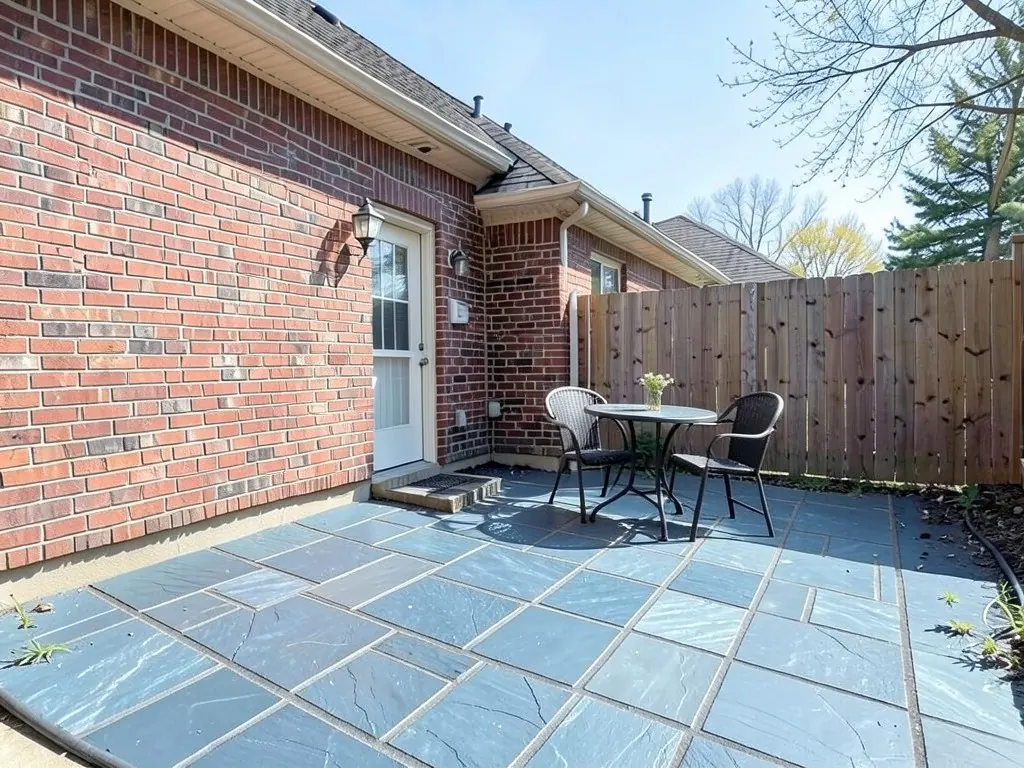
Irregular or cut stones
Flagstone is flat natural stone. Landscaping Network names sandstone, slate and limestone as the most common types, and says irregular pieces laid at random, often called crazy paving, give a casual look. It warns that the rough edges make furniture harder to move and suggests wide, sturdy pieces so chair legs do not catch in the joints.
Gardeningetc says a random layout is probably best kept to small spaces, and that larger flagstones can make a space look bigger and cut down on cutting. Stone Center describes cut stones in a regular pattern for a cleaner look. Our first example uses irregular stones; our second uses cut bluestone.
What goes in the joints
Landscaping Network says moss, grass or a hardy ground cover can be grown between the stones, and names thyme, baby tears, dichondra, mint, sedum and moss. It also notes that plants and gravel in the joints can make a patio laid on the ground uneven over time.
Gardeningetc says gravel in the joints over a porous membrane can help keep weeds down, and that larger slabs mean fewer places for weeds to come through. Stone Center calls grass in wider joints a low-maintenance option. Our first example has grass in the joints; in our third, the AI put the gravel around the edge instead.
Dry-laid or mortared
Landscaping Network says flagstone can be laid dry for a permeable surface, and that mortaring flagstones onto a concrete slab usually costs more than laying them on sand and gravel. A designer it quotes recommends mortaring the stone to a concrete base for a main dining area.
Our second example shows a mortared bluestone patio with tight grey joints. Stone Center lists bluestone among the premium stones that cost more.
A flagstone fire pit patio
Garden Gate calls a flagstone patio a stable surface for a fire pit, and Stone Center suggests pairing a fire pit patio with a stone walkway, pavers or a small enclosing wall. Domino shows a Los Angeles yard with jagged flagstones over gravel, outdoor chairs and an iron fire pit.
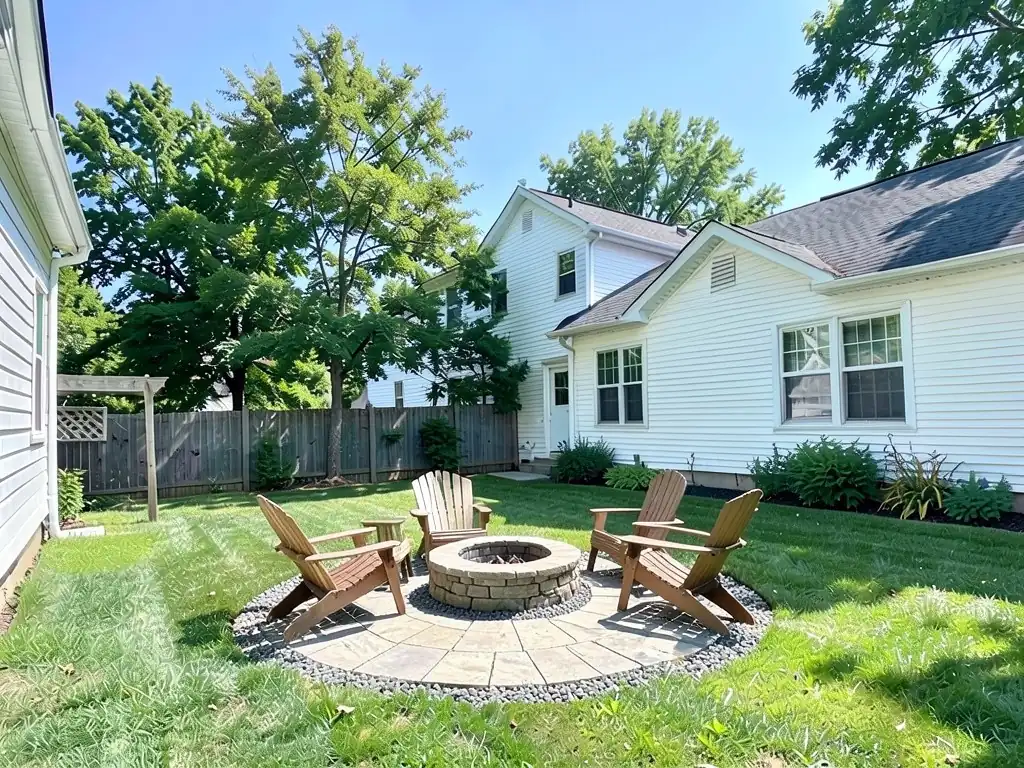
Our third example draws a round flagstone patio with a stone fire pit and four Adirondack chairs. For fire pit areas in other materials, see our fire pit landscaping ideas page.
Cost and upkeep
The sources give different numbers, so treat them as rough and ask local installers.
- Cost: Landscaping Network puts flagstone at about $15 to $30 per square foot and says many homeowners mix it with concrete, brick or pavers to cut costs. Stone Center gives $15 to $40 per square foot.
- Buying stone: Gardeningetc says experts recommend a margin of about 10 percent for cuts and breakage.
- Upkeep: Stone Center says flagstone patios need resealing every few years. Landscaping Network says uneven stones usually come from poor installation or deep freezes, and Gardeningetc says porous sandstone needs ongoing care when things spill on it.
How to try a flagstone patio idea on your own photo
The tool above is already in Custom mode. The Yard Redesign styles have no text box, so you cannot ask for irregular flagstone, grass joints or mortared bluestone there. Custom lets you name the stone, the joints, the shape, the furniture and what must stay the same.
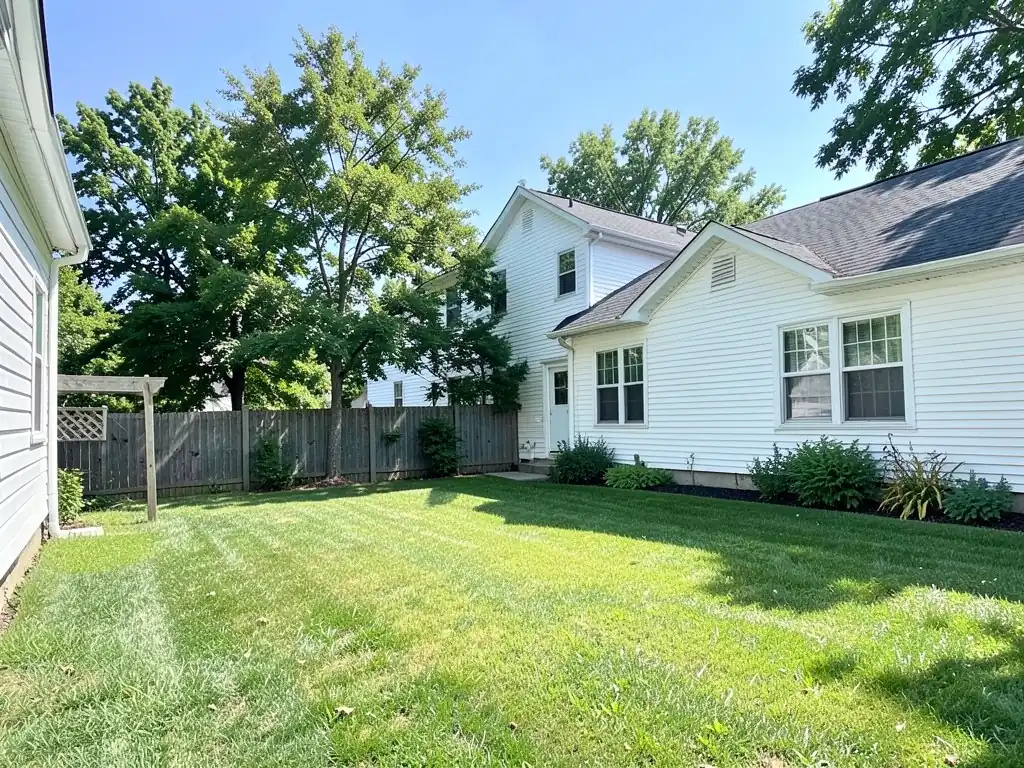
- Take the photo in daylight from the back door or a corner of the yard, with the lawn or dirt you want to pave in frame.
- Describe the change in the Custom Design Requirements box: what may change (the lawn, the dirt), the stone, its color and joints, the shape, what to add, where it goes, and what must stay the same, such as the house, the doors, the fence and the camera angle.
- Upload your photo under Upload Your Garden Image and click Generate Custom Design. You sign in with an email code or Google when you generate.
- Compare the result with your photo. If it drew too few chairs or put the gravel in the wrong place, say exactly how many and where, and try again.
What the AI can and cannot do
The AI shows a look: roughly how irregular flagstone, mortared bluestone or a round fire pit patio would sit in your own yard. That helps you choose a stone and a layout and talk them through with a mason or landscaper.
It does not know your soil, plan a base, check fire or permit rules or measure the yard. It also does not always follow the instruction: in the examples above it drew one chair instead of two, drew small stones instead of large ones, and put the gravel around the edge instead of between the stones; on the first try it also laid a path instead of a patio by the house. Treat the result as a picture of an idea.
Flagstone patio instructions to paste into Custom mode
These are the exact instructions we used for the three examples above, in the same order. In the tool above, Custom is already selected: paste one into the Custom Design Requirements box, then upload your photo. Swap in your own stone, joints, furniture and what must stay.
- Add ONLY a small irregular flagstone patio of large tan and grey stones with grass in the joints, directly in front of the French doors against the house wall, with a wooden bench and two chairs on it. The lawn between the split rail fence and the camera stays plain grass with no stones. Keep the split rail fence, the house and the camera angle exactly the same.
- Replace ONLY the dirt with a mortared bluestone flagstone patio with tight grey joints, and add a small round table with two chairs. Keep the house, the door, the fence and the camera angle exactly the same.
- Add ONLY a round flagstone patio on the lawn with a stone fire pit in the centre and four Adirondack chairs around it, with gravel between the stones. Keep the trees, the house and the camera angle exactly the same.
Frequently asked questions
What stone is used for a flagstone patio?
Landscaping Network names sandstone, slate and limestone as the most common types, in browns, reds, greys and blues. Stone Center and our second example also use bluestone.
What can I put between flagstones?
Landscaping Network lists moss, grass or a hardy ground cover such as thyme or sedum, small stones, or mortar. Gardeningetc says gravel over a porous membrane can help keep weeds down.
Should flagstone be mortared or dry-laid?
Landscaping Network says dry-laid flagstone makes a permeable surface, while mortaring onto a concrete slab usually costs more. A designer it quotes recommends mortar on a concrete base for a main dining area.
Can I put a fire pit on a flagstone patio?
Garden Gate calls a flagstone patio a stable surface for a fire pit, and Stone Center suggests pairing one with a stone walkway, pavers or a small wall. Check your own local fire rules. Our third example shows a round fire pit patio.
How much does a flagstone patio cost?
Landscaping Network gives about $15 to $30 per square foot and Stone Center $15 to $40, depending on the stone and the work. Ask local installers for your own price.
Can the AI tell me how to build the base?
No. It draws the look you describe on your photo. It does not know your soil, plan a base or measure the yard, and it does not always follow the instruction, as the captions above show.
Do I need an account, and is it free?
Create a free account with an email code or Google to generate. You get 1 free render, and free renders carry a watermark. More renders and no watermark come with a paid plan.