
Deck railing styles: metal, glass, cable, wood and composite
Decks.com, a deck supply retailer, lists the railing designs below. It sells these products, so its advice leans toward them; we use it only for what each style is, not for prices.
- Powder-coated aluminum or steel balusters: Decks.com describes metal balusters as a cost-effective way to add style to a railing, and says aluminum balusters need no staining or painting, unlike wood.
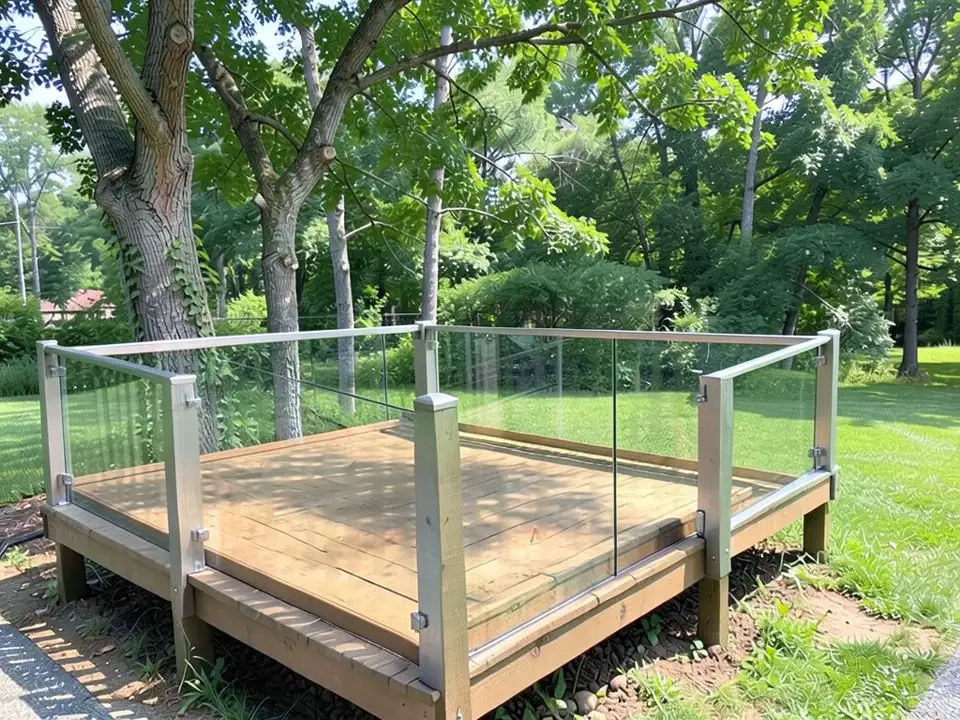
- Glass panels: Shatterproof glass set in an aluminum frame. Decks.com says it shows off the yard and opens up the view, and describes the glass as tempered, with a polished edge.
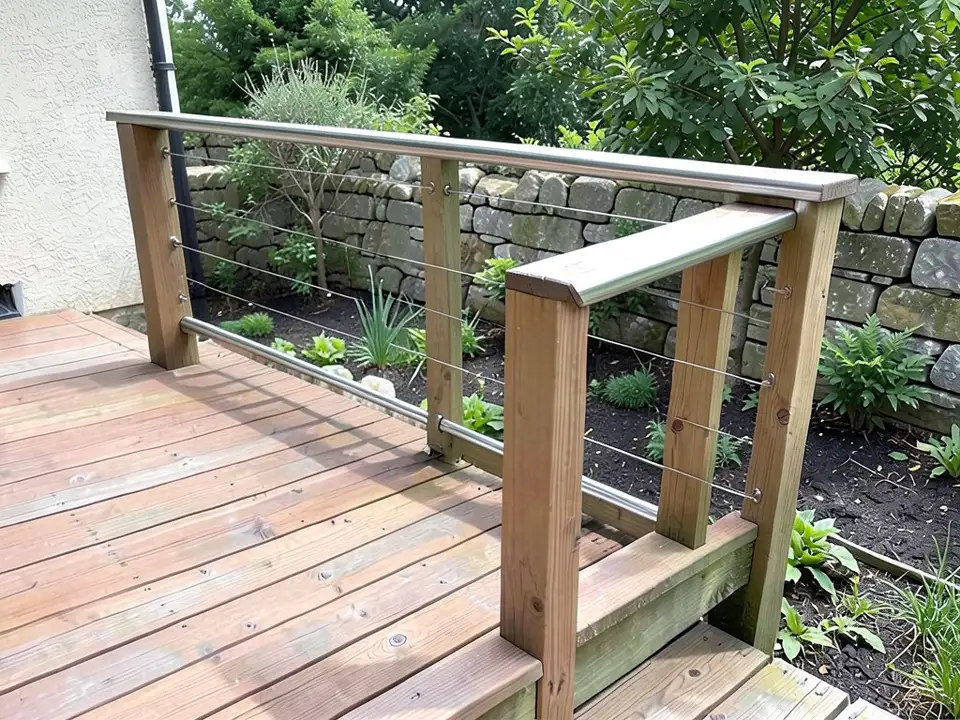
- Cable rail: Stainless steel cables with a modern, industrial look. Decks.com says cable rail preserves views and breezes and describes it as easy to install.
- Composite and aluminum systems: Composite rails, and aluminum systems that Decks.com describes as easy to install and cool to the touch.
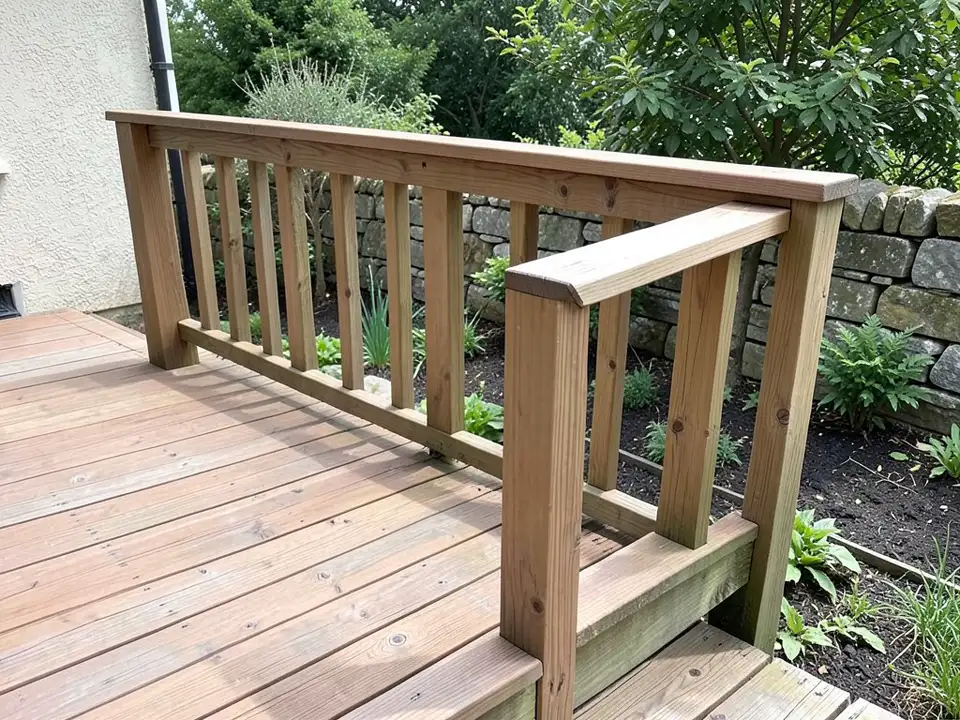
- Wood: The traditional choice. Decks.com mentions the labor of staining wood rails, so budget for upkeep.
Which style fits which deck
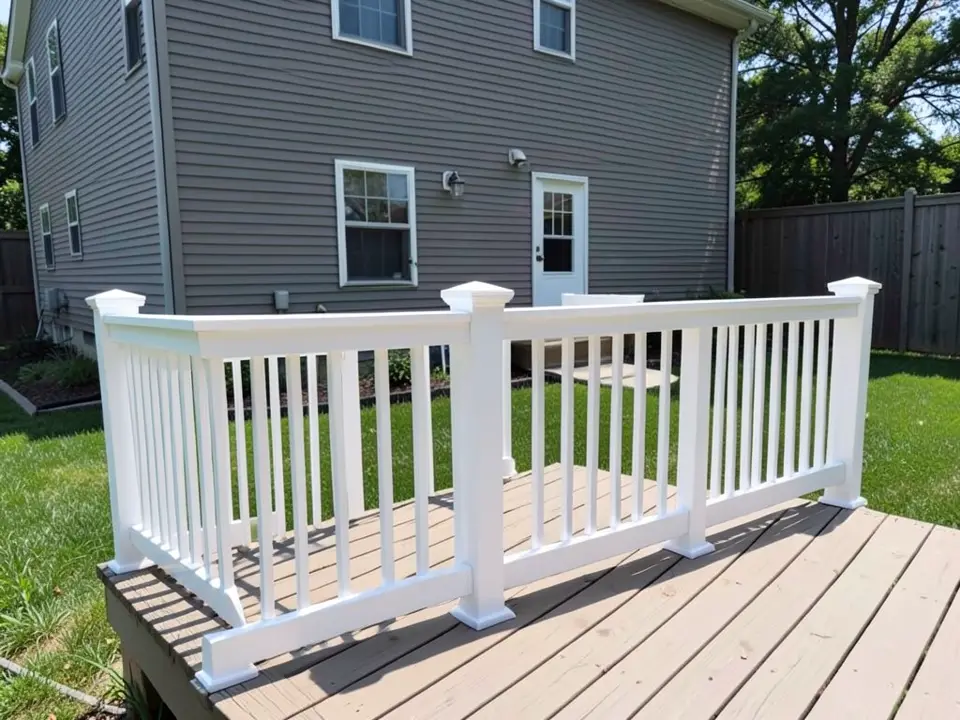
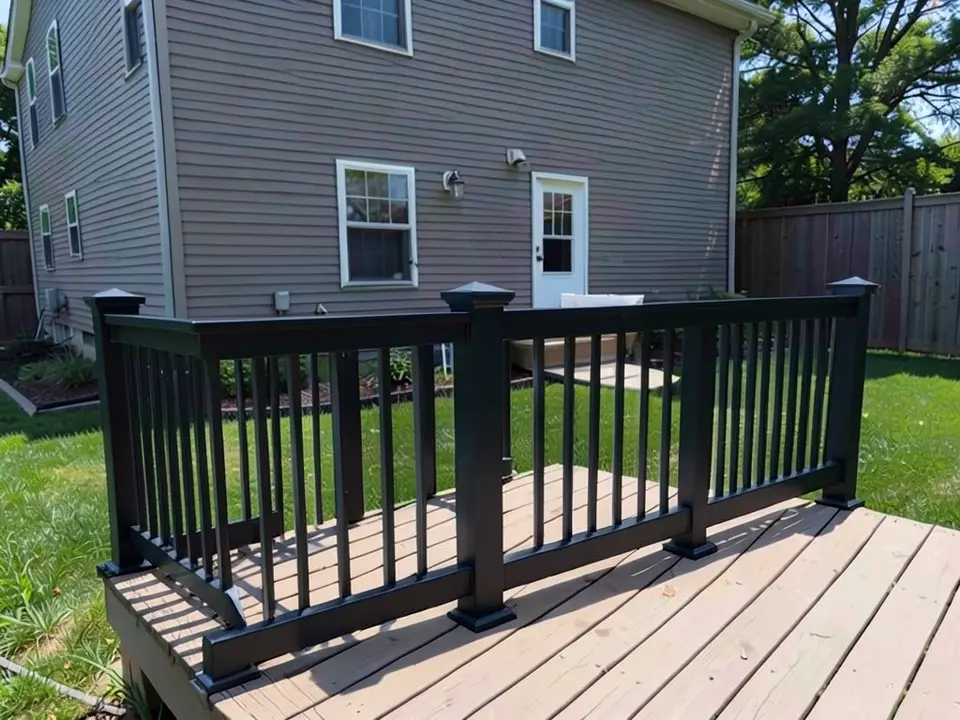
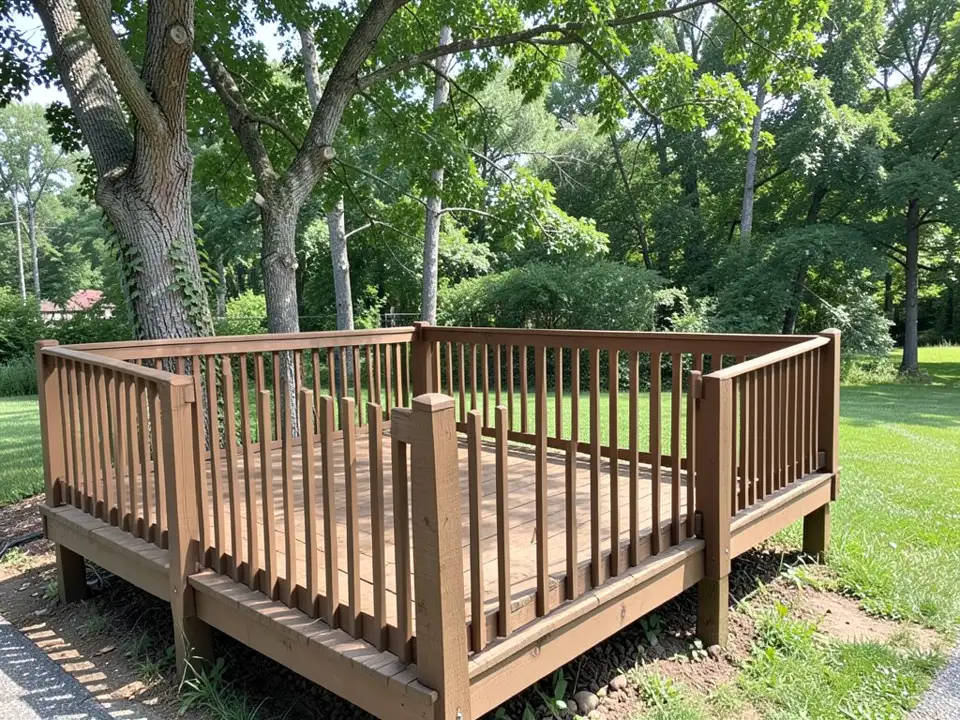
These are our reading of the sources, not a rule. If the view past the deck is the best part of the yard, glass and cable are the styles the sources describe as keeping it open. If you want the railing to disappear against the house or the fence, black metal balusters against a dark post are a quiet choice, and our first example shows how much a color change alone can do. If you like the warmth of wood, keeping wooden posts and swapping only the infill, as in our third example, is one way to mix materials without replacing everything.
Check the height and gap rules before you buy
Rules differ by city and country, so treat this as one example of what the sources say and ask your own building department. Bob Vila says decks higher than 30 inches above grade need guards and cites a 36 inch minimum, measured from the deck surface to the top cap of the guard. TimberTech's guide, dated March 2023, says the same and adds that California is stricter, requiring 42 inches or more. Bob Vila also says some places require 42 inches (TimberTech names California) and that homes not covered by the International Residential Code must have 42 inch guards under the International Building Code.
Both sources give the 4 inch rule: balusters or infill must be spaced so that a 4 inch sphere cannot pass, and the gap between the decking and the bottom rail is held to the same limit. Stairs get a looser limit of 6 inches for the triangular gap, and Bob Vila says a stair handrail should be 34 to 38 inches high. Bob Vila says cable spacing must also stay under 4 inches and that glass or decorative panels follow the same rules. That is why the cable example above is only a picture of a look: its lines are not evenly spaced.
How to try a railing on your own deck photo
Use Custom mode for this. The Yard Redesign styles have no text box, so you cannot ask for a railing there. Custom lets you name the railing material, color and what must stay the same.
- Take the photo in daylight from where you usually see the deck, with the railing, the posts and part of the yard in frame.
- Open the landscape tool and sign in with Google or an email code. You get 1 free render with a free account.
- Under Select Landscape Mode, pick Custom.
- In the Custom Design Requirements box, describe the railing: its material, color, post style and what must stay the same, such as the deck boards, the house and the camera angle.
- Upload your photo under Upload Your Garden Image and click Generate Custom Design.
- Compare the result with your photo and change one thing at a time, such as the color or the infill, and run it again. Short, specific instructions work better than long ones.
What the AI can and cannot do
The AI shows a look: roughly how a metal, glass or cable railing would sit on your own deck, in the colors you name. That helps you choose a style and explain what you want to a builder or a supplier.
It does not measure your deck, set post spacing, check the guard height, count balusters or cable runs, price the job, or tell you whether a design meets your local code. It also does not always follow the instruction, as the repaint instead of a new metal railing, the thick posts and the uneven cable lines in our examples show. Treat the result as a picture of an idea and get the structure and the permit from a qualified builder or your building department.
Railing instructions to paste into Custom mode
These are the exact instructions we used for the three examples above, in the same order. In the landscape tool, choose Custom, paste one into the Custom Design Requirements box, then upload your photo. Swap in your own railing material, color, post style and what must stay.
- Replace the white wooden railing with a black powder-coated metal railing with thin vertical balusters. Keep the deck boards, the house, the lawn and the sky the same.
- Replace the wooden railing with clear glass panels held by thin stainless steel posts and a slim metal top rail. Keep the deck boards, the trees and the lawn the same.
- Replace the wooden railing with horizontal stainless steel cable railing between square wood posts. Keep the deck boards, the garden and the stone wall the same.
Frequently asked questions
What are the main deck railing styles?
Decks.com lists powder-coated aluminum or steel balusters, glass panels, stainless steel cable rail, composite rails and aluminum systems, with wood as the traditional option. Our three examples show black metal, glass and cable on a photo.
How high does a deck railing need to be?
Bob Vila and TimberTech say guards are generally needed on decks more than 30 inches above grade, with a 36 inch minimum measured from the deck surface to the top of the guard, and 42 inches in some places such as California. Check your own local code, because it may differ.
How far apart can deck balusters be?
Both sources give the 4 inch rule: a 4 inch sphere must not pass through the infill, and the gap under the bottom rail is held to the same limit. Stairs allow a 6 inch triangular gap. Confirm the numbers with your building department.
Can cable or glass railing meet code?
Bob Vila says cable spacing must also stay under 4 inches and that glass or decorative panels follow the same opening and strength rules as other guards. Whether a particular system passes is up to the maker's specification and your local inspector, not this page.
Which railing needs the least upkeep?
Decks.com says aluminum balusters need no staining or painting, unlike wood, and mentions the labor of staining wood rails. It makes no maintenance claim for glass or cable, so ask the maker of the system you are considering.
Can your tool give me railing dimensions, a materials list or a permit drawing?
No. It draws a picture. It does not measure, space posts, count balusters or make a drawing for a permit. Use a builder or the railing maker's planning guide for those.
Do I need an account, and is it free?
You need an account, and it is free: 1 free render with a free account, and free renders carry a watermark. More renders and no watermark come with a paid plan.
Sources
The facts above come from these pages, which we read in October 2026. We are not affiliated with any of them.