
What hardscape is
Bob Vila describes hardscape as the non-living elements of a yard, and a landscape as hardscape plus softscape, the living part: lawn, plants, shrubs and trees. The materials it lists include stone, brick, concrete, gravel, asphalt, cinder blocks and wood.
Hardscaping is the work of designing and building those elements. Most yards already have some, such as a driveway, a slab outside the back door or a fence. The ideas below are about adding to it or replacing it.
Hardscape ideas by element
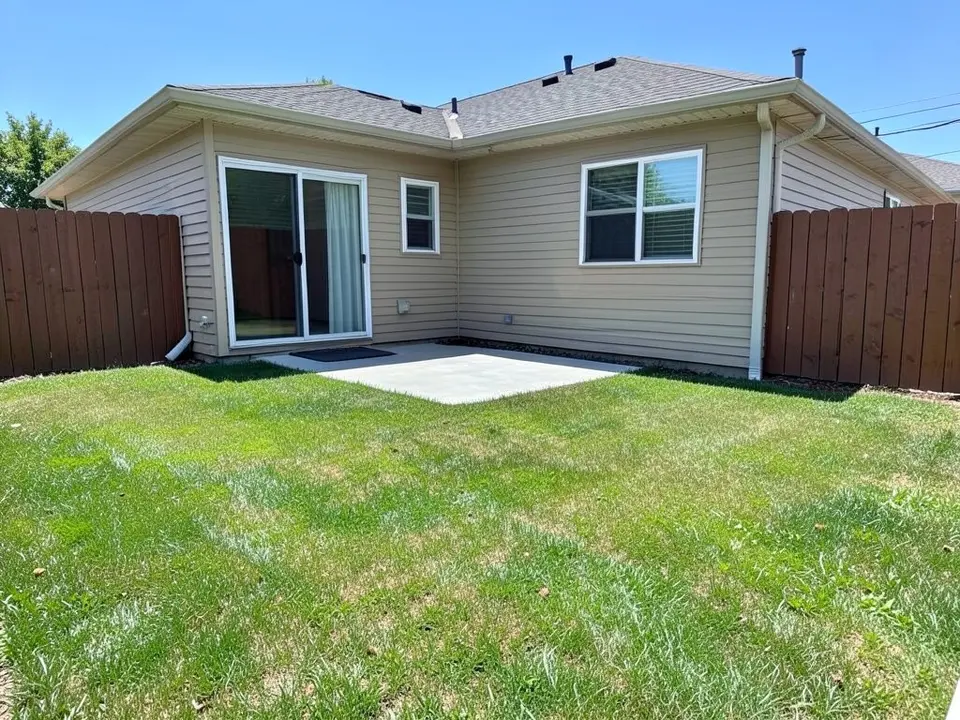
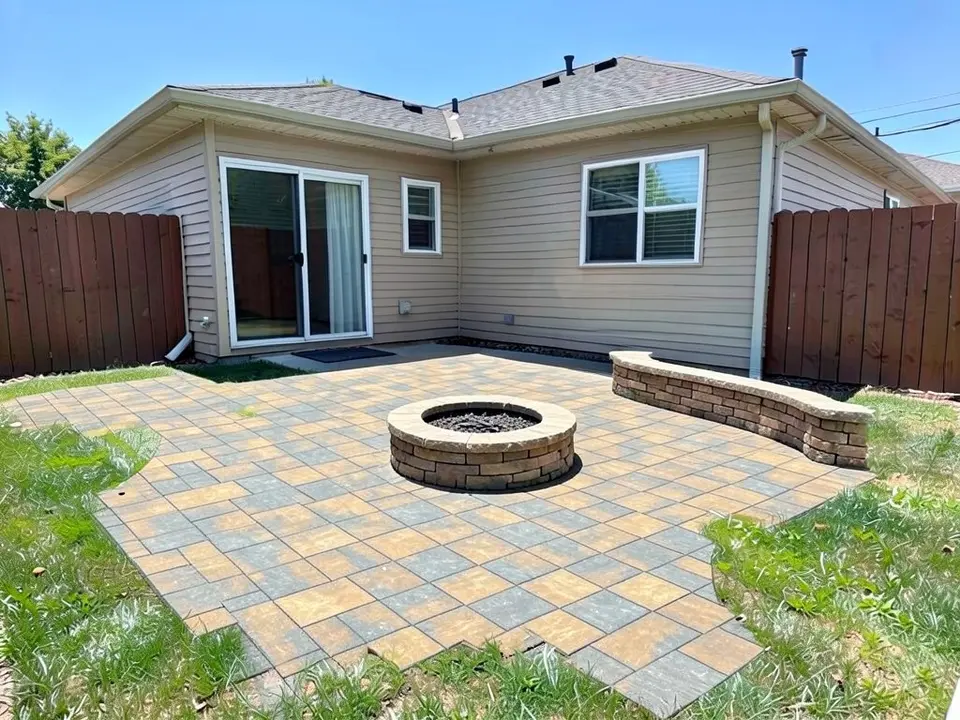
- 1. A patio: The most common hardscape project: a level, paved area for chairs and a table. Pavers, flagstone and poured concrete are all options. Our first example replaces a small slab and part of the lawn with a paver patio.
- 2. A fire pit and seat wall: A round fire pit gives a patio a focal point, and a low wall around part of it doubles as seating. Our first example adds both.
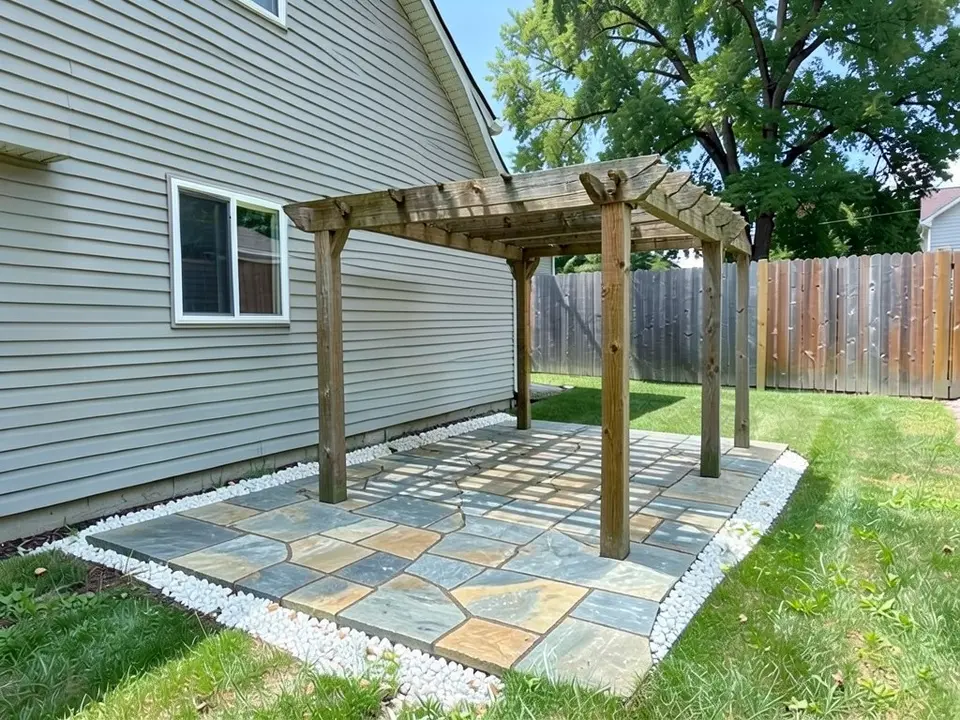
- 3. A pergola: Bob Vila lists pergolas, gazebos, arbors and trellises as hardscape. A pergola over a patio frames the space and gives climbing plants something to grow on (our second example).
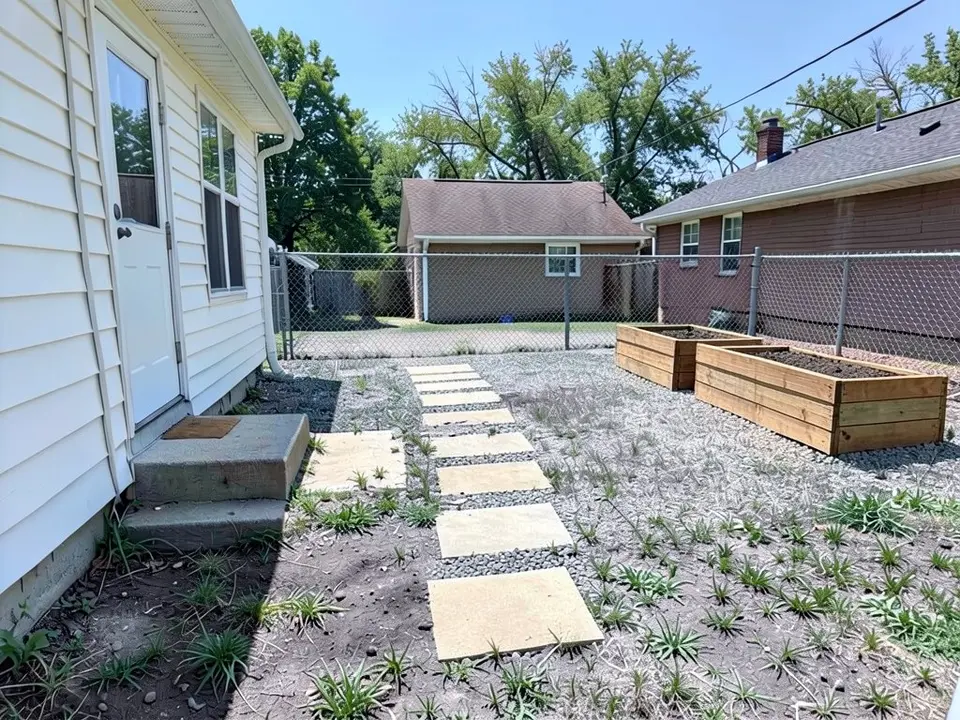
- 4. Walkways and stepping stones: A path ties the patio, the back door and the rest of the yard together. Our third example adds a stepping-stone path through gravel. For front-yard paths, see our front walkway ideas page.
- 5. Gravel and raised beds: Swapping a worn lawn for gravel, with raised beds for planting, is a common low-upkeep layout (our third example). Ferguson lists raised beds among its hardscape ideas.
- 6. Retaining walls, steps and terraces: Bob Vila suggests retaining walls and terraces where erosion is a problem. For a yard that slopes, see our sloped backyard ideas page.
- 7. Bigger projects: Bob Vila and Ferguson both list outdoor kitchens and decks; Bob Vila adds water features, and Ferguson adds ponds and pool decks and suggests a statue or fountain as a focal point.
Common hardscape materials
- Concrete pavers: Shaped blocks laid in a pattern, in many colors. Our first example uses tan and grey square pavers.
- Flagstone: Flat, irregular slabs of natural stone, often in grey, blue-grey and tan tones (our second example).
- Gravel and river rock: Loose stone for paths, patios and borders. Ferguson lists river rock and gravel among the materials that let water drain away instead of pooling.
- Brick: A classic paving and wall material that Bob Vila lists among hardscape materials.
- Poured concrete: Plain or stamped slabs for patios, paths and driveways.
- Wood: Used for decks, pergolas, raised beds and fences.
- Others: Ferguson also lists sand, wood chips, artificial grass and rubber mulch.
Hardscape design tips
- Match the house: Ferguson advises choosing hardscape textures that coordinate with the textures and colors of the house. In a photo of your yard, you can see the house and the new patio side by side.
- Think about where the water goes: Ferguson suggests permeable materials such as gravel and river rock so water drains instead of pooling, and Bob Vila mentions permeable pavers, citing the American Society of Landscape Architects, as a way to reduce water pollution.
- Consider climate, style and budget: Bob Vila suggests weighing your climate, the style of your home and your budget, and deciding early whether you will do the work yourself or hire a contractor.
- Build first, then plant: Bob Vila recommends putting in the hardscape before the planting, and designing the hard and soft parts of the yard together.
- Balance stone with plants: Ferguson advises balancing plants with built spaces, so the yard does not become all paving. Note how our first example left strips of lawn at the sides.
Why people add hardscape
Bob Vila lists the usual reasons: a better-looking yard, more usable outdoor living space, help with drainage and erosion, less upkeep, and, it says, a possible boost to property value. How much any of that applies depends on your yard, your materials and the quality of the work.
Hardscape materials compared
Bob Vila's patio materials guide compares the main paving options. Ask a local installer what works in your climate.
- Poured concrete: Look: any shape, so Bob Vila calls the design options unlimited. Upkeep: it needs proper maintenance to stay durable, and it can crack in freeze-thaw cycles. Drainage: Bob Vila says to control runoff through the shape, depth and slope of the patio. Notes: it calls concrete typically one of the least expensive patios to build.
- Concrete and stone pavers: Look: many sizes, shapes and colors, and some imitate stone or brick, though Bob Vila says concrete pavers look less natural. Upkeep: non-interlocking pavers spread over time, so it suggests a border to hold them. Notes: it praises concrete pavers for easy installation and says denser stone and concrete pavers may last longer and fade less.
- Clay brick: Look: a warm color that Bob Vila says suits both traditional and modern houses. Upkeep: low, because single damaged bricks are easy to replace. Notes: it calls brick DIY-friendly work, and says it can crack in freeze-thaw cycles.
- Flagstone: Look: earthy and natural, in reds, blues and buffs. Upkeep: depends on the stone; Bob Vila says sandstone is porous and bluestone needs a sealer to keep its color. Drainage: it says a good flagstone patio puts drainage first, because the stone can erode and split. Notes: the stones are heavy and hard for a beginner to lay.
- Gravel: Look: at its best, Bob Vila says, it recalls cottage gardens and Tuscan courtyards. Upkeep: it can be high-maintenance, because the stones are hard to keep level and in place. Drainage: excellent compared with the other materials. Notes: it is quick to put in, less comfortable for furniture and bare feet, and Bob Vila advises crushed gravel over round stones for busy areas.
Hardscape ideas by yard
- Front yard: brick&batten shows front yards with a paver walkway, a small patio and a fountain beside the path. One of its examples picks gravel and pebbles that match the color of the trim and garage door, with different textures for interest. Ferguson calls a walkway from the sidewalk to the porch a functional choice. A photo of your front yard lets you see a new path or patio next to the real house.
- Small backyard: brick&batten says a small yard can still have a patio. Garden designer Alice Ferguson, quoted by Gardeningetc, warns that small pavers can look busy and crowd a small patio, and advises keeping the patio in proportion to the plot.
- Sloped yard: brick&batten shows a patio set between two sets of stairs as a smart use of a slope, and Bob Vila suggests retaining walls and terraces where erosion is a problem. Walls and steps on a slope are building work, so ask a contractor what yours needs. See our retaining wall ideas and garden steps ideas pages.
- Low-maintenance yard: Ferguson says a finished patio needs little upkeep beyond regular use, and that the right hardscape can cut down weeds. Bob Vila's patio guide adds a caveat for gravel: it drains well but can be high-maintenance, since the stones move, and it says landscape fabric underneath helps keep weeds down.
Common hardscape mistakes
- Forgetting drainage: Alex Stevenson of Clockhouse Landscaping, quoted by Gardeningetc, calls drainage the most important thing to plan in a new patio and says rainwater should fall away from the house. Lee Miller, in Bob Vila's dos and don'ts, warns that with too much hardscape, water has nowhere to soak into the ground, which adds to stormwater runoff.
- Too many materials: Alice Ferguson, quoted by Gardeningetc, recommends no more than two or three hard landscaping materials across a patio. She also warns that materials can darken a lot when wet, so look at samples wet and dry.
- Getting the scale wrong: She advises keeping a patio in proportion to the plot, and notes that small pavers can look busy on a small patio.
- Ignoring the house and the sun: Garden designer Alexandra Noble, quoted by Gardeningetc, says to pick materials and colors that sit well with the outside of the house, and to think about which spots get morning, midday or evening sun before placing a patio.
- Choosing the wrong stone for the spot: Chris Durnford of London Stone, quoted by Gardeningetc, says porous, light stone such as sawn sandstone absorbs more moisture and dirt than tougher stone, and advises against a light, porous material in a shaded garden.
- Not checking local rules: Bob Vila's dos and don'ts says many towns limit how much of a lot can be covered, and quotes Johnsen saying the cap is often roughly 15 to 30 percent. Check with your town before replacing lawn with paving.
How to try hardscape ideas on your own photo
Use Custom mode for this. The Yard Redesign styles have no text box, so you cannot name a patio, a material or a pergola there. Custom lets you name the element, the material, where it goes and what must stay the same.
- Take the photo in daylight from where you would usually see the area, with the spot for the patio, path or structure and some of the house or fence in frame.
- Open the landscape tool and sign in with Google or an email code. You get 1 free render with a free account.
- Under Select Landscape Mode, pick Custom.
- In the Custom Design Requirements box, name the element (patio, path, fire pit, pergola, gravel, raised beds), the material and color, where it goes, and what must stay the same, such as the house, the doors and windows, the fence and the trees.
- Upload your photo under Upload Your Garden Image and click Generate Custom Design.
- Compare the result with your photo, change one thing at a time and run it again.
What the AI can and cannot do
The AI shows a look: roughly how a paver patio, a flagstone area under a pergola or a gravel yard would sit in your own photo, in the colors you name. That helps you choose a material and explain what you want to a contractor.
It does not measure anything, price anything, check drainage, slopes or soil, or tell you what base, permits or footings a project needs. It also does not always follow the instruction, as the extra pergola post, the gravel on the wrong edges of the patio and the weeds left in the gravel above show, and it can change things nobody asked for, such as the neighbour's lawn behind the fence in our third example. Treat the result as a picture of an idea, and check every detail with a contractor before you build.
Hardscape instructions to paste into Custom mode
These are the exact instructions we used for the three examples above, in the same order. In the landscape tool, choose Custom, paste one into the Custom Design Requirements box, then upload your photo. Swap in your own materials, the spot and what must stay.
- Replace the small concrete slab and the lawn near the house with a large patio of tan and grey square concrete pavers. Put a round stone fire pit in the middle of the patio and a low curved stone seat wall along the far edge of the patio. Keep the house, the sliding glass door, the windows, the wooden fence, the remaining lawn and the camera angle the same.
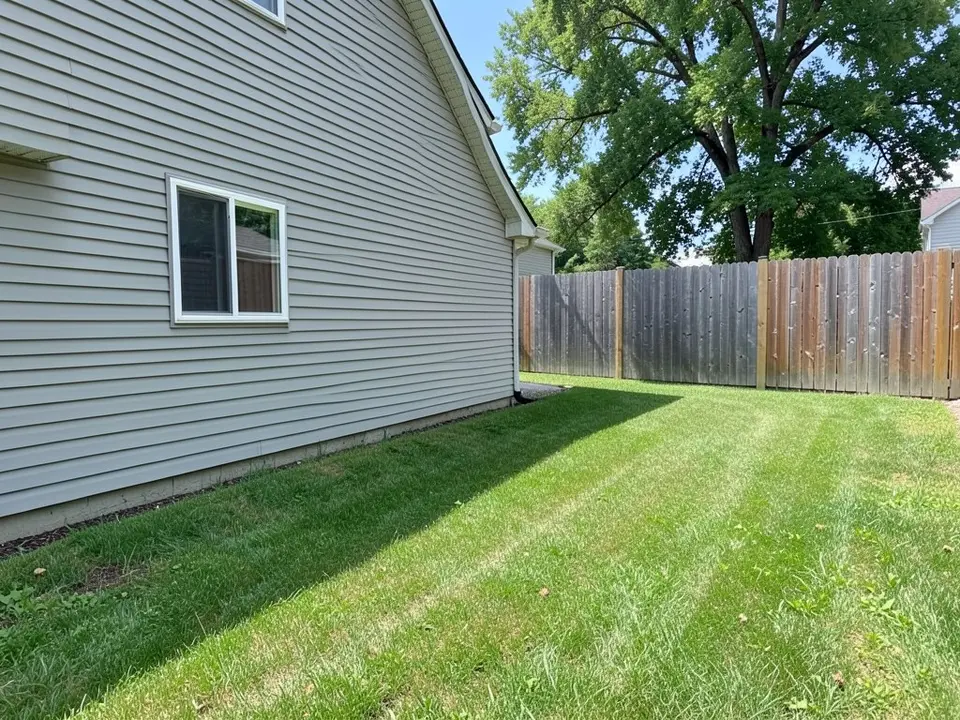
- Turn the lawn into a flagstone patio of irregular grey and tan stones, and build a natural wood pergola with four square posts over the patio. Add a strip of white gravel along the edge between the patio and the fence. Keep the house wall, the window, the fence, the tree and the camera angle the same.
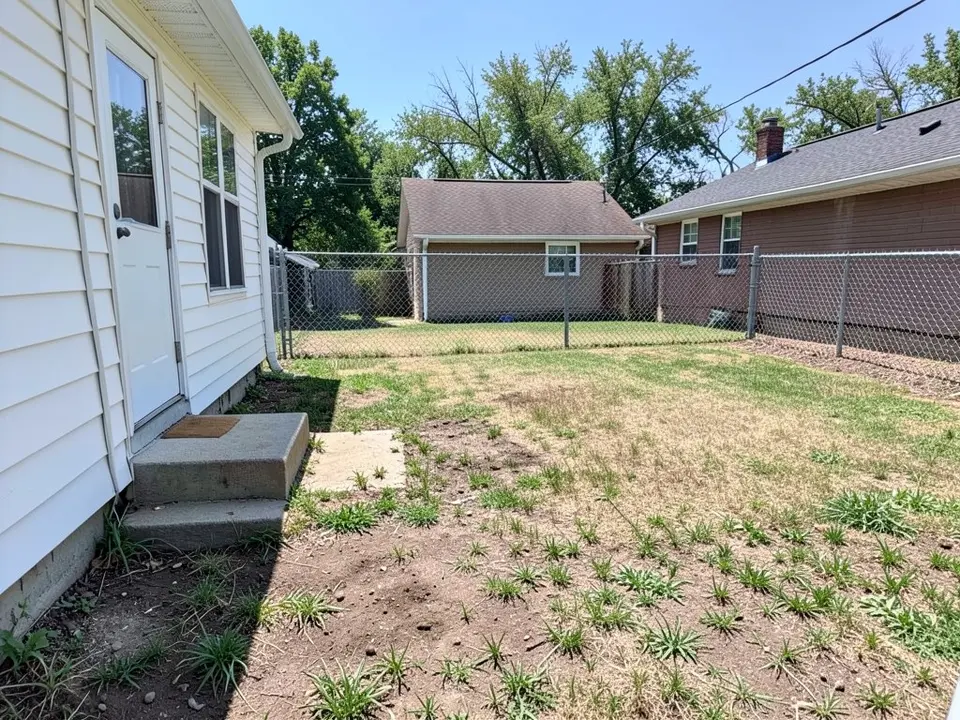
- Replace the patchy lawn with grey pea gravel, add a path of large square concrete stepping stones from the back step to the fence, and add two raised garden beds made of wooden timbers along the fence. Keep the house, the back door step, the chain-link fence, the neighbor's roof, the trees and the camera angle the same.
Frequently asked questions
What is hardscape?
Bob Vila describes hardscape as the non-living elements of a yard, such as patios, walkways, driveways, retaining walls, fire pits and pergolas, built from materials like stone, brick, concrete, gravel and wood. The living part, the lawn, plants and trees, is called softscape.
What are some hardscape ideas for a backyard?
A paver or flagstone patio, a fire pit with a seat wall, a pergola, stepping-stone paths, gravel with raised beds, retaining walls and steps, and bigger projects such as outdoor kitchens and water features. The three examples on this page show a paver patio with a fire pit, a flagstone patio under a pergola, and gravel with a path and raised beds.
Which hardscape materials help with drainage?
Ferguson suggests permeable materials such as gravel and river rock, which let water drain instead of pooling, and Bob Vila mentions permeable pavers. Ask a contractor what suits your soil and slope.
Should I put in hardscape or plants first?
Bob Vila recommends building the hardscape first and planting afterwards, while designing both parts of the yard together.
How do I choose hardscape that suits my house?
Ferguson advises choosing textures that coordinate with the textures and colors of the house. Trying a few materials on a photo of your own yard is a quick way to compare them.
Can the AI tell me what a patio will cost or how to build it?
No. It draws the look you describe. It does not measure, price, check drainage or tell you what base or permits you need, and it does not always follow the instruction exactly, as the captions above show. Get those answers from a contractor.
Do I need an account, and is it free?
You need an account, and it is free: 1 free render with a free account, and free renders carry a watermark. More renders and no watermark come with a paid plan.
Can you have too much hardscape?
Yes. In Bob Vila's hardscaping dos and don'ts, landscape designer Lee Miller warns that with too much hardscape, water has nowhere to soak into the ground, and that a heavily hardscaped area can look sterile and uninviting. The article also says many towns limit how much of a lot can be covered, so check local rules first.
How many hardscape materials should I use?
Garden designer Alice Ferguson, quoted by Gardeningetc, recommends no more than two or three hard landscaping materials across a patio. She also suggests looking at materials wet as well as dry, since they can darken a lot in the rain.
Is gravel a good material for a patio?
It depends on what you want from it. Bob Vila's patio materials guide says gravel drains very well and is quick to put in, but it can be high-maintenance because the stones are hard to keep level, and it is less comfortable for furniture and bare feet. It advises crushed gravel rather than round stones for busy areas.
More yard ideas
- Front walkway landscaping ideas
- Sloped backyard ideas
- Small backyard landscaping ideas
- Artificial turf visualizer
- Deck design ideas
- Driveway landscaping ideas
- Gravel backyard ideas
- Fire pit landscaping ideas
- Courtyard landscaping ideas
- Rock garden ideas
- Backyard fence ideas
- Flagstone patio ideas
- Concrete patio ideas
- Retaining wall ideas
- Garden steps ideas