
Where river rock works
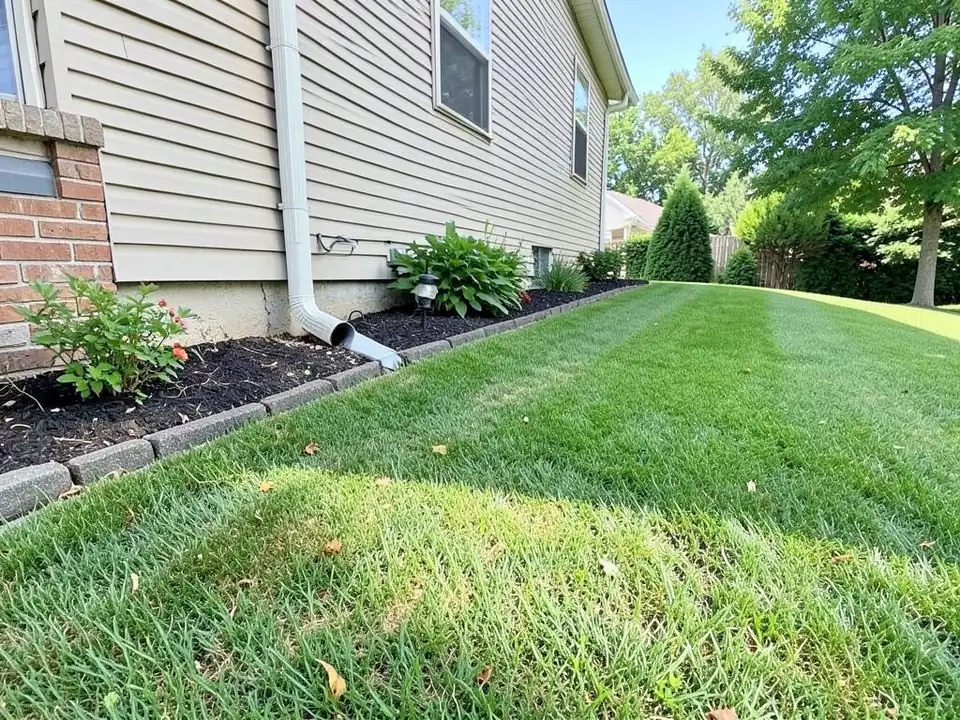
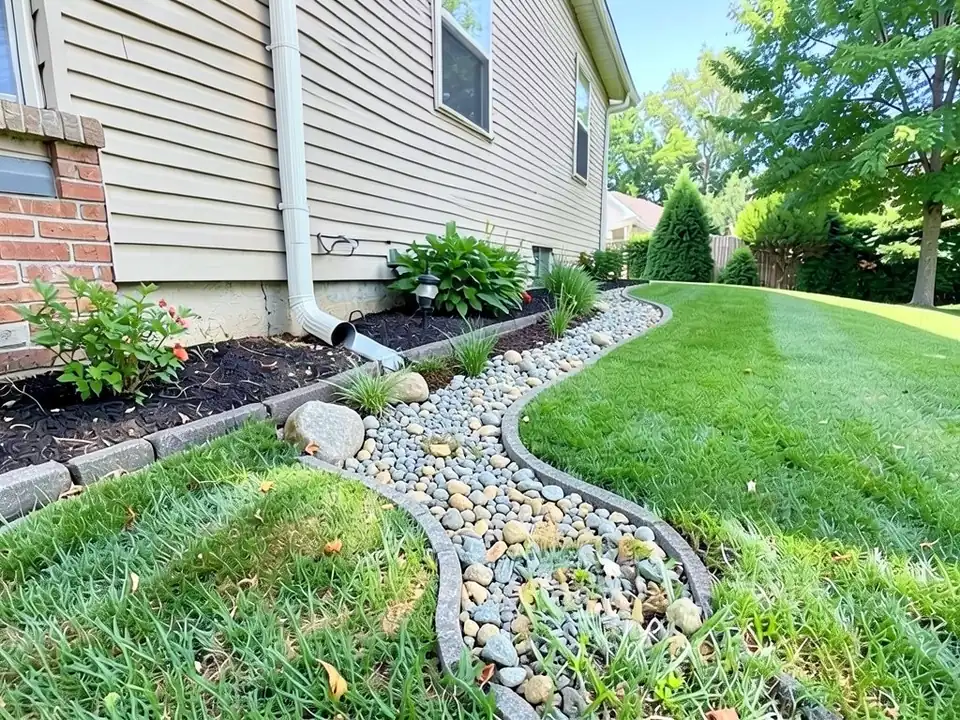
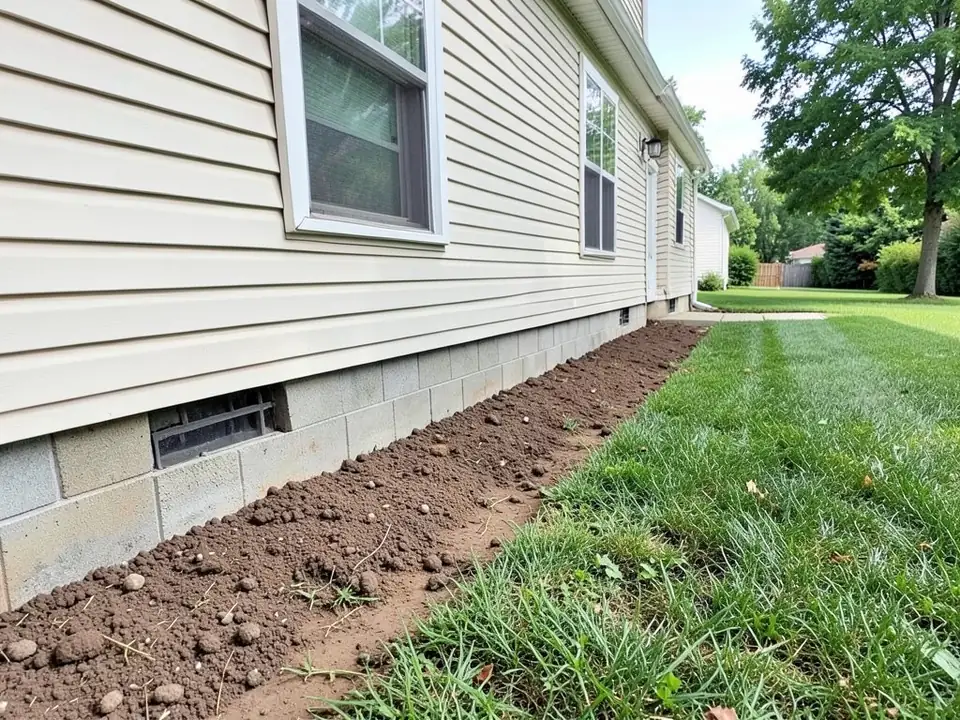
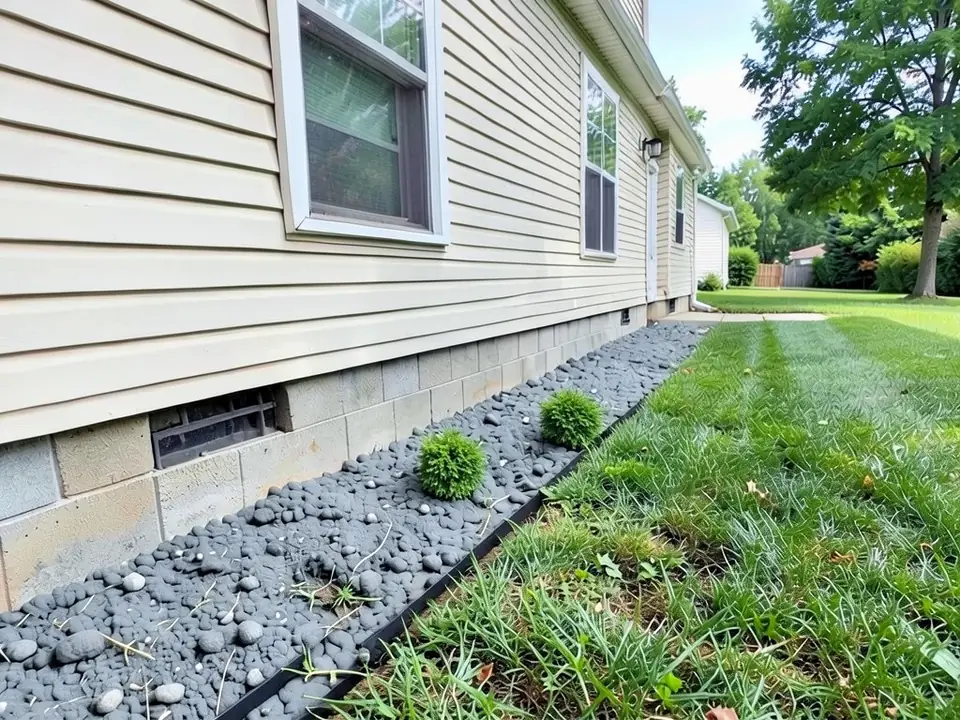
River rock is smooth, rounded stone. The pages we read use it in many parts of a yard. Our three examples cover a dry creek bed, a strip along the foundation and a bed where rock replaces bark mulch.
- Dry creek bed: Lawn Love, LawnStarter and Family Handyman all show winding beds of river rock. Lawn Love says the rocks slow runoff so water soaks in, which helps most on slopes. Family Handyman shows one carrying overflow from heavy rain away from the house toward a rain garden.
- Along the foundation: Fresh Patio lists river rock as a drip edge along the house, and says a pebble-filled trench stops mud splashing onto the walls.
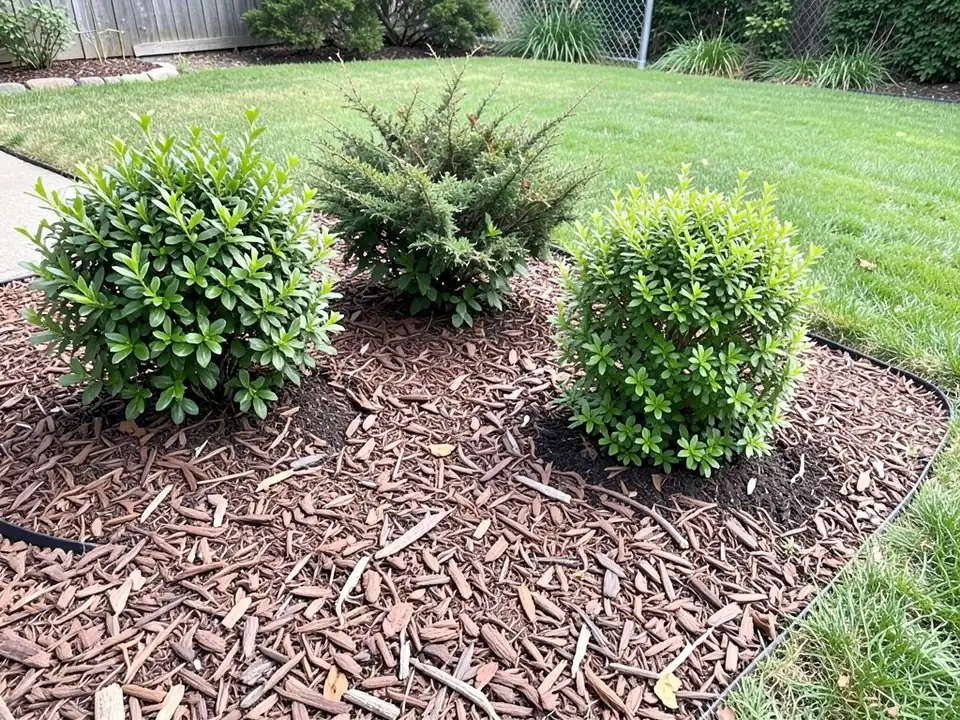
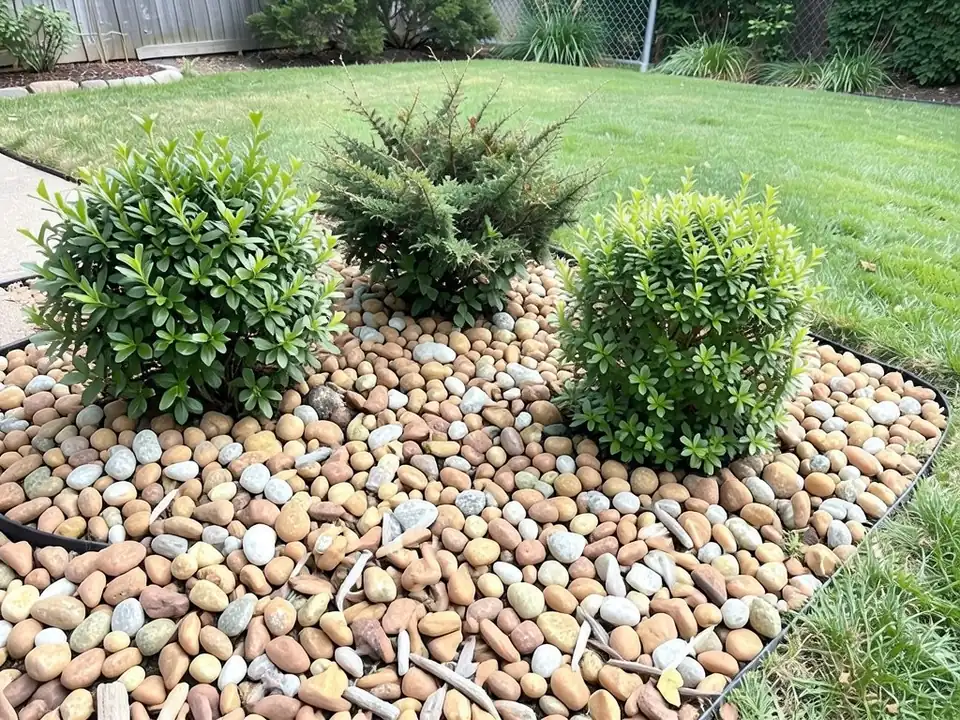
- In place of mulch: LawnStarter, Lawn Love and Family Handyman all describe river rock as a mulch for beds, best with succulents and other plants that like dry soil (see the trade-offs below).
- Paths and stepping stones: Lawn Love suggests a river rock path as a lower-cost do-it-yourself option to concrete, with pea gravel as a good size; LawnStarter suggests stepping stones and filling the gaps between flagstones.
- Edging: Lawn Love and LawnStarter both suggest a band of rock between the lawn and a bed, which they say also helps keep mulch from washing or blowing out.
- Fire pits and pots: Lawn Love and LawnStarter suggest rock around a fire pit because it does not burn. Family Handyman shows a ring of river rock that ties a group of pots together and helps keep them from tipping.
River rock or bark mulch in beds
LawnStarter lists the pros: rock does not need replacing the way wood chips or shredded bark do, it drains well and it helps with erosion and weeds. Its cons: it adds no nutrients to the soil, it absorbs and holds heat and can get too hot to touch, it collects seeds and dirt between the stones, it is hard to remove, and adding new plants to it later is awkward.
Lawn Love adds that rock dries out the soil and is harder to dig through, and suggests pairing it with sun-loving plants and succulents. Family Handyman says it may not suit tender plants because it holds heat. Fresh Patio says white or light rocks absorb less heat from the sun than dark ones. If your bed is full of plants that like moist, rich soil, ask a local nursery before you swap the mulch.
Downspouts, drainage and dry creeks
LawnStarter suggests a pile of rock under a downspout, on steep hills and in areas with heavy runoff, and notes that poor drainage can damage a foundation or basement. Lawn Love says larger river rocks do more for erosion control than smaller ones. Family Handyman's dry creek example moves overflow away from the house.
None of the pages we read explains how to size or slope a creek bed or where the water should end up, so ask a local landscaper or drainage pro before you dig. Our first example also shows a creek that looks right but would not catch the downspout's water as drawn.
Preparing the ground and keeping it tidy
Lawn Love says to remove grass, weeds and debris, level the ground and spread the rocks with a rake; Fresh Patio says the same about spreading with a bow rake. On landscape fabric the pages differ: Lawn Love says it works well under paths and keeps rocks from sinking, but can make beds more work later, while LawnStarter says to lay it under rock mulch for weeds and sinking, though a few medium stones under a downspout may not need it. Family Handyman says installations with fabric under them can last for years.
On size and depth, LawnStarter says the stones are typically one to two inches across and that the depth depends on the size you use; Fresh Patio describes beach pebbles from one to three inches. Family Handyman quotes Rob Howard recommending a depth of six to eight inches for weed control and looks. For upkeep, Lawn Love says weeds can still come through and the rocks may need an occasional rinse; Family Handyman suggests a leaf blower to clear debris and pressure washing in shady spots against algae; LawnStarter warns that mowing too close can fling stones. The pages give prices, but they vary a lot, so ask a local stone supplier for a quote.
How to try river rock on your own photo
The tool above is already in Custom mode. The Yard Redesign styles have no text box, so you cannot name a stone color, a creek bed or an edging there. Custom lets you name the rock, where it goes, what it replaces and what must stay the same.
- Take the photo in daylight from where you usually see the area, with the bed, strip or lawn you want to change and some of the house or fence in frame.
- Describe the change in the Custom Design Requirements box: what the rock replaces (bark, dirt, lawn), its color and size, any edging, boulders or plants, where a creek starts and ends, and what must stay the same, such as the house, the shrubs, the downspout and the camera angle.
- Upload your photo under Upload Your Garden Image and click Generate Custom Design. You sign in with an email code or Google when you generate.
- Compare the result with your photo, change one thing at a time, such as the stone color or where the creek starts, and run it again. If the AI only recolors the old surface, say clearly that it should remove it and cover it with stones, as we did in the third example.
What the AI can and cannot do
The AI shows a look: roughly how a given color and size of river rock would sit with your house, your plants and your lawn. That helps you choose and explain what you want to a supplier or a landscaper.
It does not plan drainage, size a creek bed, measure how much rock you need, check what is under the surface or price the job. It also does not always follow the instruction, as the creek that misses the downspout, the missing third shrub, the lumpy stones and the leftover bark show, and one of our three pictures needed a second run. Treat the result as a picture of an idea, and get the plan from a local professional.
River rock instructions to paste into Custom mode
These are the exact instructions we used for the three examples above, in the same order. In the tool above, Custom is already selected: paste one into the Custom Design Requirements box, then upload your photo. Swap in your own stone color, size, edging and what must stay.
- Change ONLY the lawn below the downspout: add a winding dry creek bed of mixed grey and tan river rock running away from the downspout across the yard, with a few boulders and ornamental grasses along its edges. Keep the house, the downspout and the camera angle exactly the same.
- Change ONLY the strip of dirt: fill it with smooth grey river rock behind a black metal edge, with three small shrubs spaced along it. Keep the house, the lawn and the camera angle exactly the same.
- Change ONLY the brown bark mulch in the bed: remove all of it and cover the whole bed with smooth rounded tan and white river rock stones about fist size, around the same shrubs. Keep the shrubs, the black edging, the lawn, the fence and the camera angle exactly the same.
Frequently asked questions
What are some good river rock landscaping ideas?
The pages we read suggest dry creek beds, a strip along the foundation, river rock in place of bark mulch, paths and stepping stones, edging between lawn and beds, rock around a fire pit and a ring of rock around grouped pots. The three examples on this page show a dry creek bed, a foundation strip and a bed where rock replaces bark.
Is river rock better than mulch?
It depends on the plants. LawnStarter says rock lasts and drains well but adds no nutrients, holds heat, collects debris and is hard to remove. Lawn Love says it dries out the soil and suits sun-loving plants and succulents. Family Handyman says it may not suit tender plants. Ask a local nursery about your beds.
Should I put landscape fabric under river rock?
The sources differ. LawnStarter says to use it under rock mulch against weeds and sinking, though a few stones under a downspout may not need it. Lawn Love says it works well under paths but can make beds more work later. Family Handyman says installs with fabric under them can last for years.
How deep should river rock be?
LawnStarter says the depth depends on the size of the stones and gives no single number. Family Handyman quotes Rob Howard recommending six to eight inches for weed control and looks. Ask your stone supplier what suits the size you buy.
Can river rock help with drainage near the house?
LawnStarter suggests rock under a downspout and in heavy-runoff spots, and Family Handyman shows a dry creek that moves overflow away from the house. Fresh Patio says a pebble trench along the wall stops mud splashing. None of them explains how to size or slope one, so ask a local drainage pro.
Can the AI tell me how much river rock I need or plan my drainage?
No. It draws the look you describe. It does not measure, plan drainage, check the ground or price the job, and it does not always follow the instruction exactly, as the captions above show.
Do I need an account, and is it free?
Create a free account with an email code or Google to generate. You get 1 free render, and free renders carry a watermark. More renders and no watermark come with a paid plan.