
Low-cost backyard ideas the sources suggest
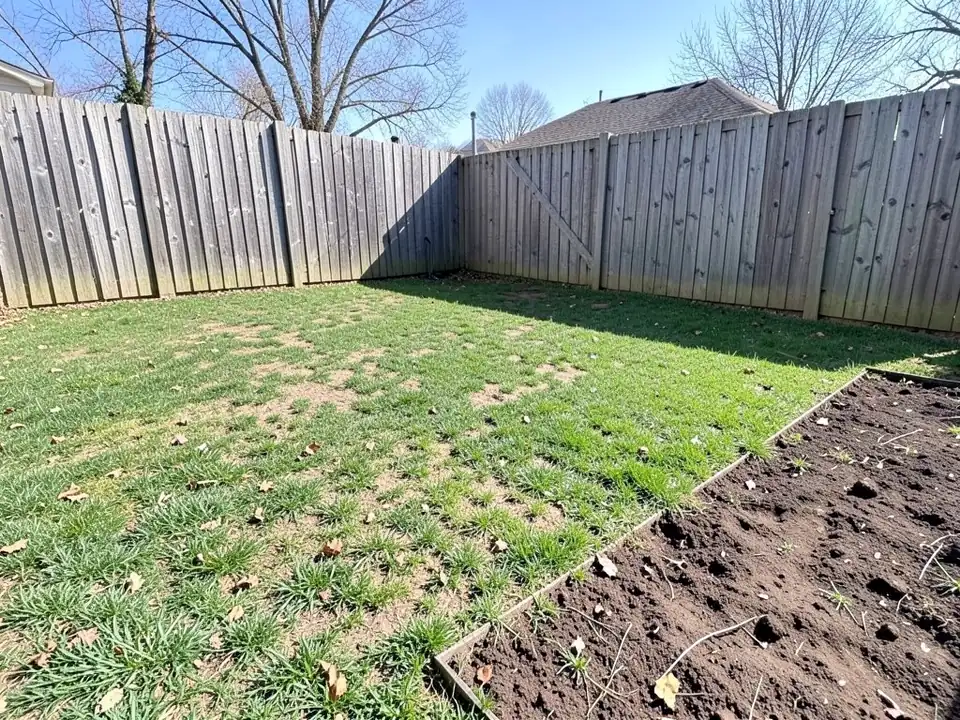
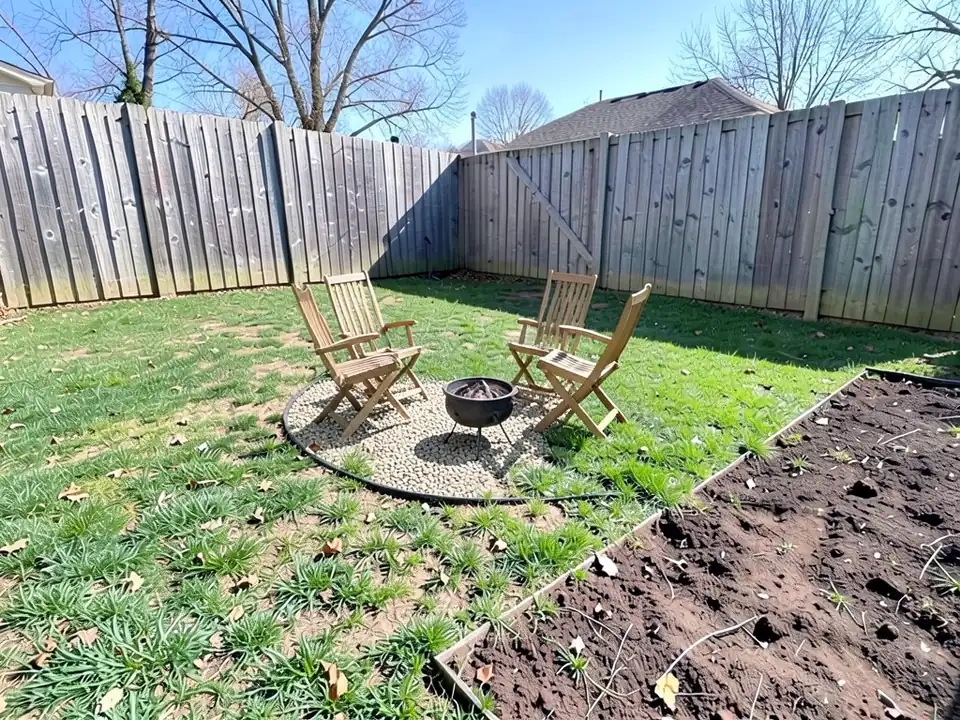
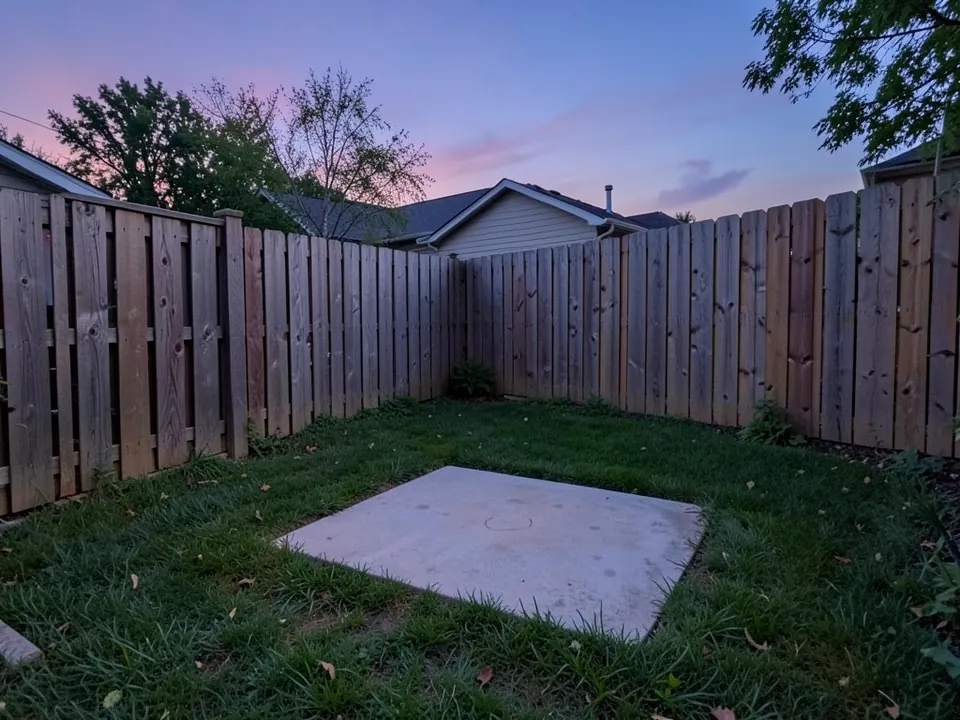
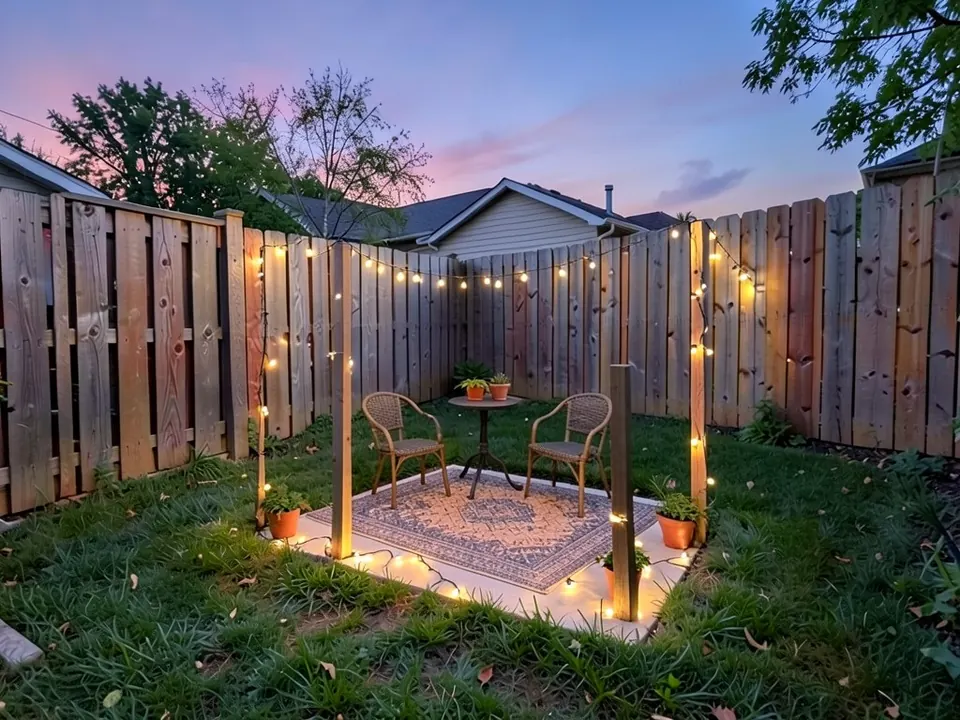
Most of the pages we read share a short list of cheap moves that make a big difference to a plain yard. Most of them are DIY. Our three examples show a gravel fire bowl area, string lights on a bare slab and a mulch bed along a fence.
- Gravel to mark out a space: Yardzen suggests using gravel, pavers or outdoor rugs to separate the yard into dining, lounging and gardening areas. A Blissful Nest suggests gravel paths and landscaping fabric under mulch or gravel to keep weeds down. Lawn Love suggests wood mulch instead of more expensive stone to separate zones.
- A DIY fire pit: Yardzen suggests building one from concrete retaining wall blocks or recycled bricks. Budget Dumpster lists several builds, including wall blocks, cinder block caps, a poured concrete bowl and a simple ring of natural stones. The pages we read do not cover local burn rules, so check those where you live.
- String lights: Yardzen and A Blissful Nest both suggest string lights, and Yardzen adds mason jar luminaries and solar lights to avoid raising the electric bill. Budget Dumpster compares plain twinkle strands with globe lights, which it says last longer and have replaceable bulbs, and suggests running lights from the house to a tree or along bed edges.
- Containers and vertical planting: Yardzen suggests pots, buckets or crates for small or paved spaces, and trellises or hanging planters on walls and fences. Budget Dumpster suggests a ladder with pots, paint cans as herb planters and a waterproofed shoe organizer.
- Secondhand and painted furniture: Yardzen suggests painting or re-covering cheap secondhand pieces. Budget Dumpster suggests used furniture from online marketplaces and a cinder block and lumber bench. A Blissful Nest suggests a pallet bench and restaining old chairs and tables.
Planting on a budget
A Blissful Nest warns that cheap plants can die quickly and that bagged mulch and soil add up, and suggests dividing and moving perennials you already have to fill bare spots. Budget Dumpster suggests free or cheap mulch such as grass clippings, shredded leaves or pine needles, and quotes Gene Caballero of GreenPal, who says pine mulch is cheaper than hardwood mulch and easier to spread.
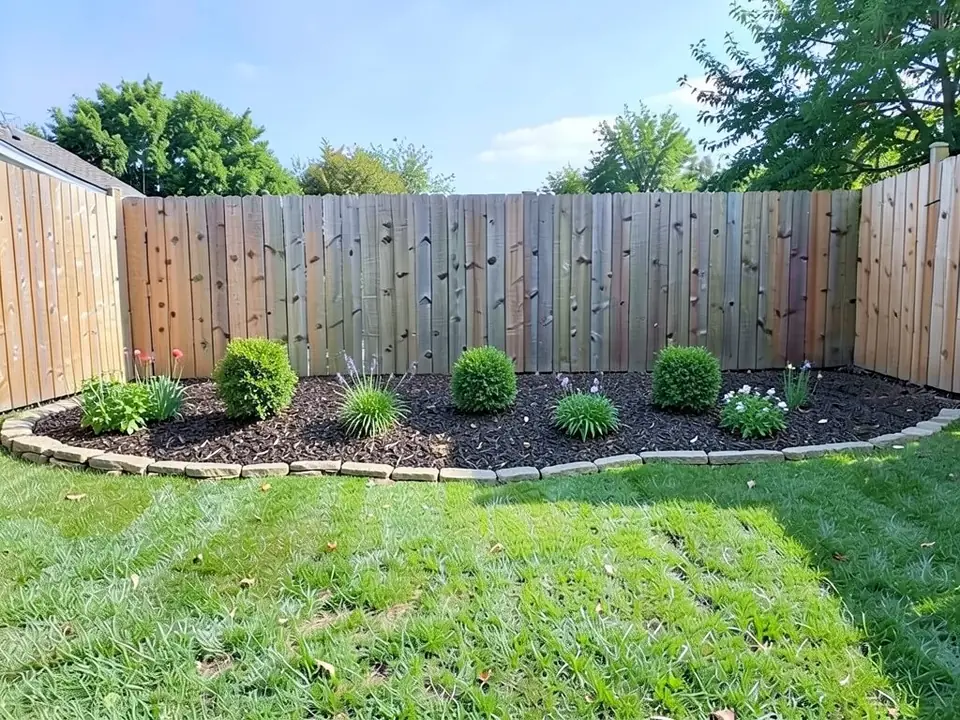
Budget Dumpster also suggests perennial ground covers in place of some lawn, shade-tolerant ones under trees, and quotes Steve Boehme of GoodSeed Farm Landscapes calling shade trees a wise investment. A Blissful Nest suggests native plants and mulched beds for low upkeep, and fast-growing vines on wire trellises for cheap privacy. Our third example shows a simple mulch bed with a few shrubs along a bare fence.
Phase the work so it stays affordable
These points are the sources' advice, not our own. A Blissful Nest suggests working in small phases, choosing durable materials and starting with the change that has the biggest visual effect. It adds that buying or renting special tools can eat the savings, and suggests tool lending libraries and neighborhood sharing apps.
Lawn Love suggests building any hardscape first and planting afterwards, so new plants are not damaged by the work, and spreading the project over several seasons. Budget Dumpster ends the same way: do the simple changes first, then take on bigger jobs such as flower beds, raised beds or a paver patio later. Yardzen's whole list leans on DIY, upcycling and repurposing. None of the pages we read gives prices we can pass on, since they change by store and region, so price your own list locally.
Small projects with a big effect
Yardzen suggests a DIY patio or deck from reclaimed wood, concrete pavers or composite boards, a small pond with a pre-formed liner or an old birdbath turned into a water feature, and an outdoor movie night with a sheet and a projector. A Blissful Nest suggests a tabletop fountain, a simple picnic table and painting a fence. Budget Dumpster suggests painting a chain link fence or growing vines on it, and hanging baskets or adding post caps on a wooden one.
If your yard is big and you are working in stages, our large backyard landscaping ideas page covers zoning; if you want to go further with stone, see our gravel backyard ideas page.
How to try a budget backyard idea on your own photo
The tool above is already in Custom mode. The Yard Redesign styles have no text box, so you cannot ask for one gravel circle and four folding chairs there. Custom lets you name one small change, where it goes and what must stay the same, which suits a phased budget plan.
- Take the photo in daylight (or at dusk if you are trying lights) from where you usually see the yard, with the spot you want to change in frame.
- Describe one change in the Custom Design Requirements box: what it is (a gravel circle, a mulch bed, string lights), what it is made of, where exactly it goes, and what must stay the same, such as the fence, the lawn and the camera angle.
- Upload your photo under Upload Your Garden Image and click Generate Custom Design. You sign in with an email code or Google when you generate.
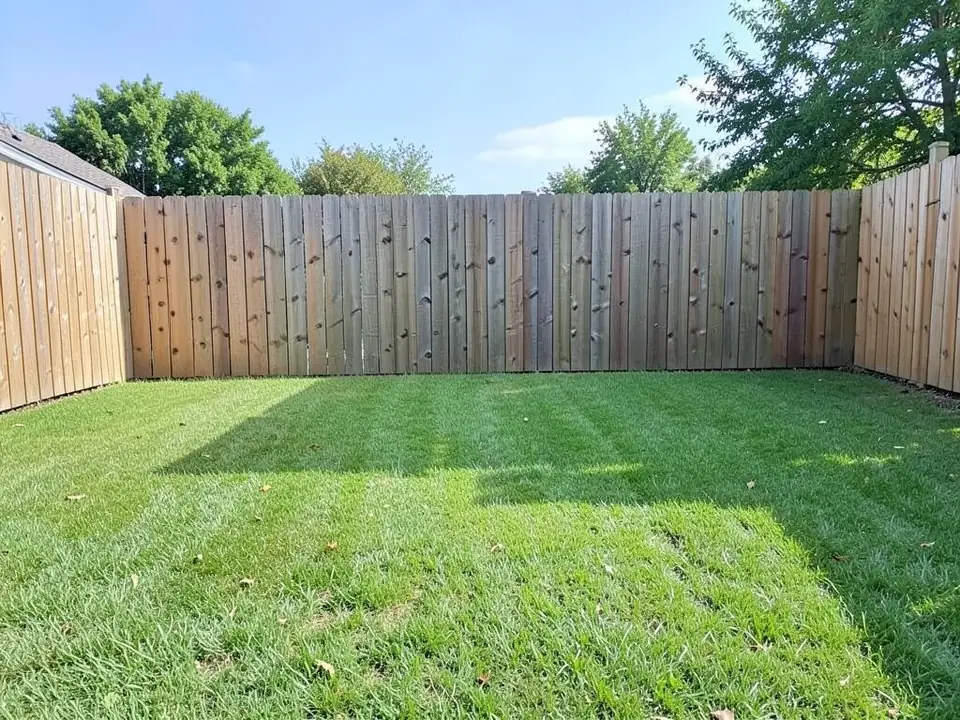
- Compare the result with your photo. If it puts the change in the wrong place, as in the first example, name the spot more plainly and run it again.
What the AI can and cannot do
The AI shows a look: roughly how a gravel area, a bed or a set of lights would sit in your own yard. That helps you choose which cheap project to do first.
It does not price anything, count materials, measure the yard, plan wiring for lights or check burn rules. It also does not always follow the instruction: in the examples above it moved the gravel circle out of the corner, hung no lights over the slab and laid a flat edge instead of a stacked one. Treat the result as a picture of an idea, and price the materials yourself or with a local supplier.
Budget backyard instructions to paste into Custom mode
These are the exact instructions we used for the three examples above, in the same order. In the tool above, Custom is already selected: paste one into the Custom Design Requirements box, then upload your photo. Swap in your own materials, positions and what must stay.
- Change ONLY the bare corner: add a round pea gravel seating area with a black metal edge, four folding wooden chairs and a small steel fire bowl in the middle. Keep the lawn, the fence and the camera angle exactly the same.
- Change ONLY the concrete slab area: add warm string lights zigzagging over the slab on four wooden posts, an outdoor rug, a small table with two chairs, and three potted plants on the slab. Keep the lawn, the fence, the sky and the camera angle exactly the same.
- Change ONLY the strip of lawn along the fence: add a mulched planting bed with a curved edge of stacked flat stones, three small shrubs and some low flowering perennials. Keep the fence, the rest of the lawn and the camera angle exactly the same.
Frequently asked questions
What are some cheap backyard ideas?
The pages we read suggest gravel or mulch to mark out a seating area, a DIY fire pit from blocks, bricks or stones, string lights, containers and vertical planters, secondhand or painted furniture, and dividing perennials you already have. The examples on this page show a gravel fire bowl area, string lights on a slab and a mulch bed along a fence.
How can I make my backyard nice without spending much?
A Blissful Nest suggests starting with the change that has the biggest visual effect and working in small phases. Budget Dumpster suggests simple changes first and bigger projects later, and Lawn Love suggests spreading the work over several seasons.
What is a cheap alternative to a paver patio?
Yardzen suggests gravel, pavers or outdoor rugs to define a seating area, and a DIY patio from reclaimed wood or concrete pavers. A Blissful Nest suggests gravel paths with landscaping fabric underneath. Our first example shows a pea gravel circle with a fire bowl.
Where can I get cheap mulch and plants?
Budget Dumpster suggests grass clippings, shredded leaves or pine needles as mulch, and quotes a lawn care company founder who says pine mulch is cheaper than hardwood. A Blissful Nest suggests dividing and moving perennials you already have, and warns that very cheap plants can die quickly.
How much will my budget backyard cost?
We cannot say. Prices change by store and region, and the pages we read give no figures we can pass on. Price your own list with a local garden center or supplier.
Can the AI tell me what materials to buy?
No. It draws the look you describe on your photo. It does not count or price materials, measure the yard or plan wiring, and it does not always follow the instruction, as the captions above show.
Do I need an account, and is it free?
Create a free account with an email code or Google to generate. You get 1 free render, and free renders carry a watermark. More renders and no watermark come with a paid plan.