
What a pool deck needs to do
Landscaping Network says good pool decking should resist absorbing heat, feel comfortable on bare feet and stay non-slippery when wet, and that light colors reflect heat. Those three points are a useful way to compare materials, along with how much upkeep you want.
Pool deck materials
These are the materials Landscaping Network and Cal Pool describe, and what they say about each. Pool builders sell some of these, so ask a local contractor which suit your climate and pool.
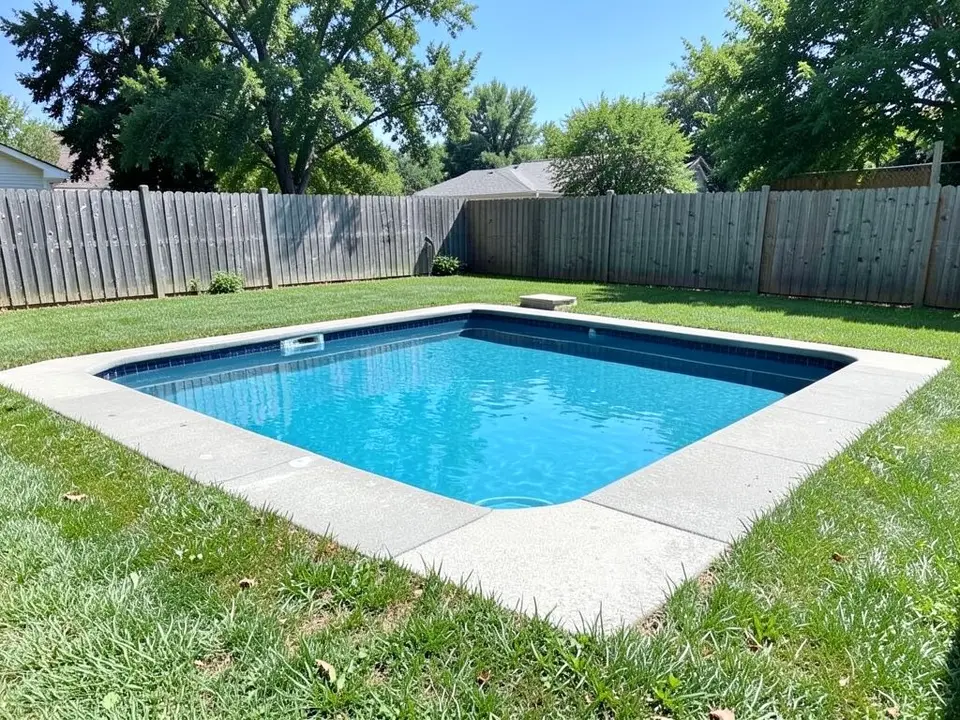
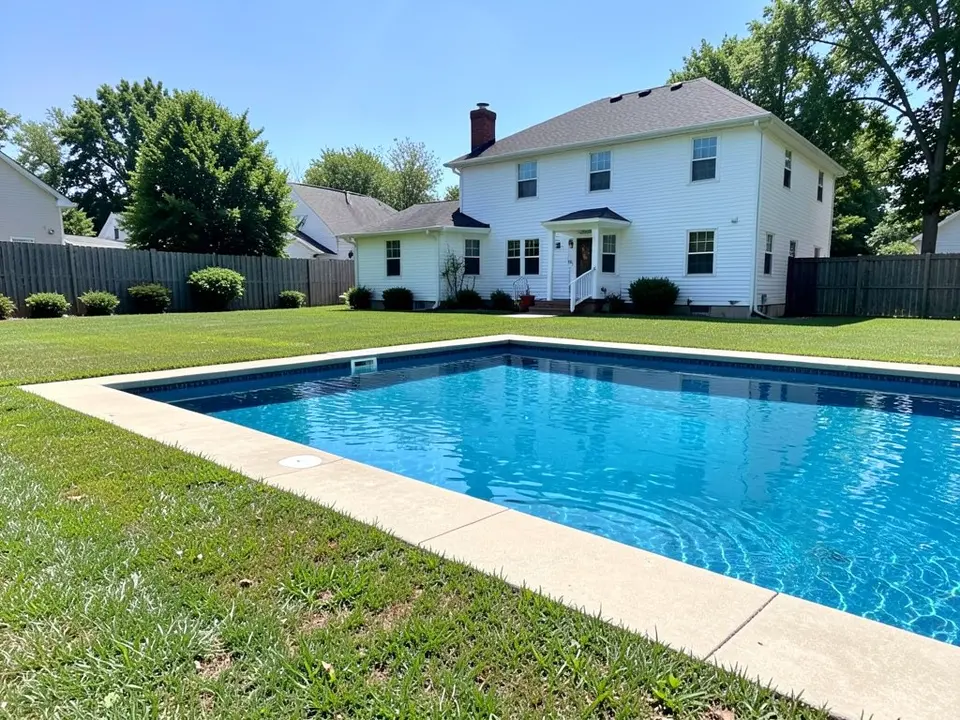
- Poured concrete: The plain edge in our examples. Landscaping Network says poured concrete will crack in colder climates and is complicated to repair. Cal Pool says an acrylic coating on existing concrete makes it more resistant to heat and cracking and gives better wet traction than basic concrete.
- Concrete pavers: Landscaping Network says pavers move with the ground, so they resist cracking and are easy to repair, and that interlocking pavers are permeable. Cal Pool says concrete pavers absorb more heat than the other paver options it lists.
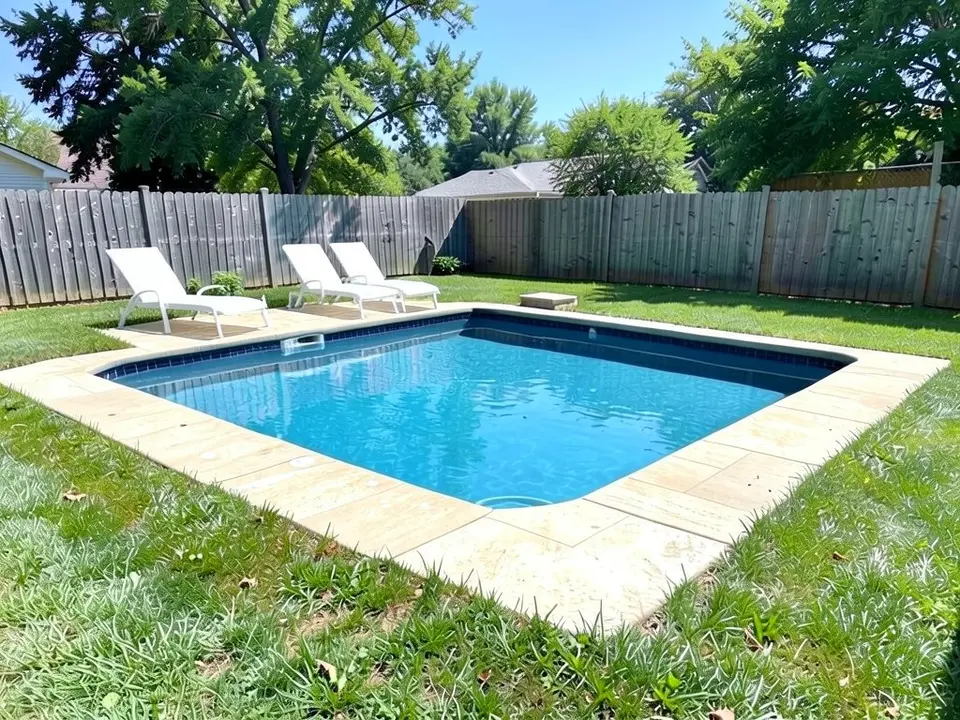
- Travertine: Cal Pool describes travertine pavers as cut from a limestone, in a range of sizes and hues, and says they stay cooler to the touch than many other decking options and are slip-resistant. Our first example shows a cream travertine-style color.
- Natural stone: Landscaping Network says stone offers a wide range of options and is permeable, but stones that absorb excessive heat, or very dark ones, are best avoided.
- Porcelain pavers: Cal Pool describes them as thicker, more durable outdoor versions of porcelain tile, with the highest price of the options it lists, and says their large sizes suit geometric pools better than curvy, freeform ones.
- Brick: Landscaping Network recommends smooth brick because it is easy on bare feet.
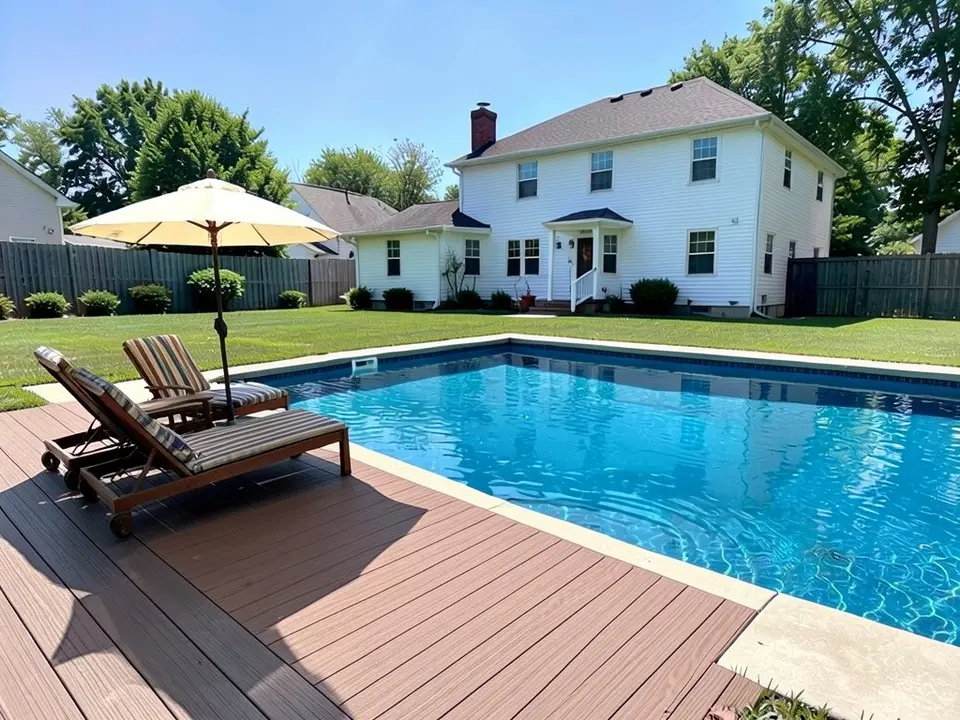
- Wood: Landscaping Network names ipe as an example and says wood needs regular refinishing to keep its color and uniform look. Our second and third examples show wood-colored decks.
- Rubber and spray-on coatings: Landscaping Network says a rubber surface is soft, non-slip, UV-resistant and easy to clean, and that spray-on coatings such as Keystone Kool Deck are, according to the manufacturer, much cooler underfoot and easy to maintain.
Above-ground pool deck ideas
An above-ground pool sits higher than the ground, so the deck decides how people get in and where they sit. Real Homes lists these ideas:
- A wrap-around deck: Real Homes says a deck all round the perimeter makes the pool look built-in, gives easy entry without a ladder and leaves room for furniture such as umbrellas and daybeds.
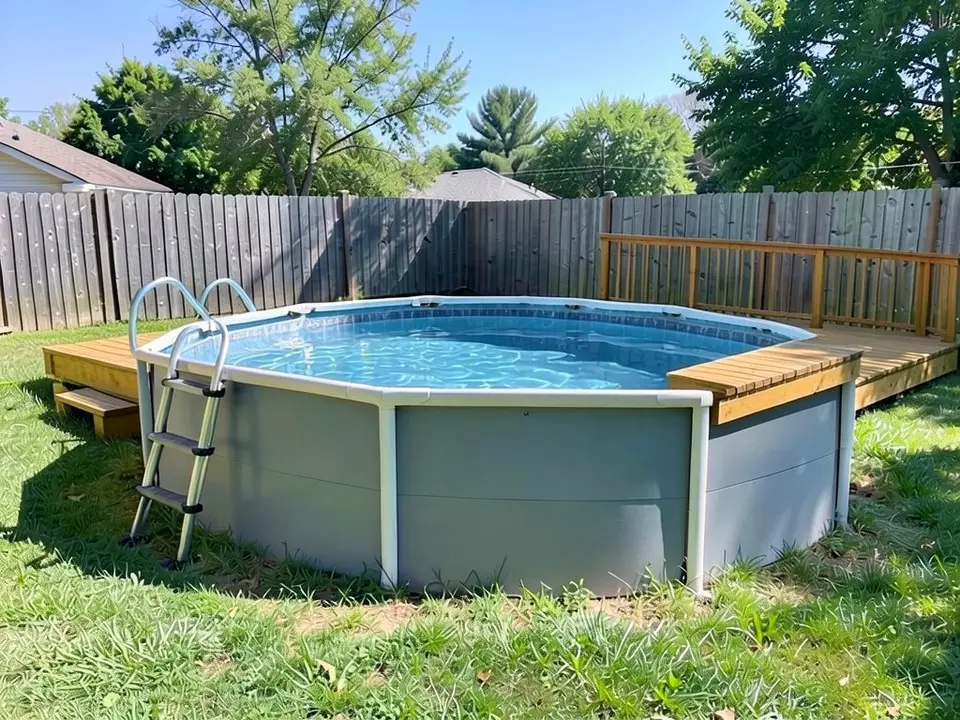
- A deck on one side: A platform at one side, level with the rim, is the smaller version and the one in our second example.
- Steps and levels: Real Homes also shows a stepped deck, and a deck built from wood such as pine or cedar, with matching benches that cost less than buying outdoor furniture.
- A deck with a bench or a railing: Our second example has a railing along the fence. If a deck puts people at the height of the rim, a railing or a barrier matters; see the safety note below.
A safety note before you design a deck
Real Homes says a permit is generally required to build a deck around an above-ground pool, and that the deck must meet local building codes and be inspected before use. Your local building department can tell you the rules where you live.
The US Consumer Product Safety Commission's Safety Barrier Guidelines for Residential Pools says above-ground pools should have barriers, and that the pool wall can serve as the barrier if it is high enough. It says a barrier's top should be at least 48 inches above grade, and some places require 60. It also warns that when a ladder, a table or a chair is close to the pool, children can often use it to get in, and that steps or a ladder should be secured, locked or removed, or surrounded by a barrier. A deck level with the rim changes all of this, so check the barrier rules before you build. The images on this page show a look only and are not a safety design.
In-ground pool deck ideas
For an in-ground pool, the main deck choices are the edge, the width, where people sit and where the shade comes from. Latham Pools, a pool maker, and County Materials, a paver maker, cover these points.
- The coping: Latham Pools describes coping as the frame around the edge or lip of the pool. It says coping gives swimmers an edge to hold, helps direct splashed water away from the pool's edge, and can be styled differently from the deck around it. It lists flat top mount coping, where stone, brick or pavers sit directly on the pool edge or extend slightly past it, and cantilevered forms, where poured concrete is shaped to look like edged stone. County Materials calls the coping the finishing detail that frames the water's edge.
- Deck width: Latham Pools says builders typically recommend decking at least three feet wide, and that this width covers the electrical and filter lines. It says many owners choose more, for example to fit a cookout or a dinner party.
- Slope and grip: Latham Pools says pool decking should be made of slip-resistant materials and have a slight slope so water drains away from the pool. County Materials says pavers offer slip resistance and easy maintenance, and that planning for drainage keeps a pool deck dry and long-lasting.
- A lounge and dining zone: County Materials suggests seat walls for extra seating, and says freestanding walls can create gathering spots and act as dividers between the pool deck and the rest of the backyard. A wider area at one end of the deck, like the one with loungers in our first example, is one way to make room for this.
- Shade: County Materials says a shade structure adds comfort to any pool deck. In our third example we asked for a large umbrella; a pergola or a covered area is another option, and our covered patio ideas page shows more.
Pool deck colors and keeping the surface cool
Color changes how hot a deck feels in the sun. Concrete Network says lighter colors reflect sunlight and are cooler on the feet, and that white and beige decks reflect harsh sunlight so the deck stays cooler. It also says white and light beige suggest a sandy beach, and it covers brown and tan, gray and blue, and multicolored decks as other choices.
Material matters as well as color. County Materials says stone retains heat, which can make a pool deck uncomfortable in full sun; the materials section above gives what Landscaping Network and Cal Pool say about heat.
Concrete Network adds that multicolored concrete finishes take more skill, time and effort to install, and that coloring usually goes together with stamping or stenciling. This is a good place to use the AI: describe the same deck in two or three colors, such as white, light beige and gray, run each one on your photo and compare them side by side. The AI shows the color only. It cannot tell you how hot a surface will get, so test a real sample in the sun before you buy.
Planting around a pool deck
Plants soften a deck, but the wrong ones drop litter into the water, crack paving with their roots or put thorns where people walk barefoot. Epic Gardening's guide Never Grow These 11 Plants Around Your Pool names these, among others:
- Thorny and spiny plants: Epic Gardening says bougainvillea has sharp thorns and that its dropped bracts can clog a filter and stain pavers. It says cactus spines are a hazard near kids, pets and swimmers, and that citrus trees, while less messy than other fruit trees, often have thorns.
- Trees that shed: It says queen palms shed heavy fronds and sticky fruit, pines drop sap, needles and cones, mimosa litters constantly, and willows drop leaves and twigs nonstop.
- Aggressive roots: It says running bamboo spreads fast and its roots can damage pool foundations, that ficus roots crack concrete, and that jacaranda has huge roots and sheds constantly.
- Plants that draw bees: It advises avoiding plants that attract bees, since pools already draw them in.
- What to plant instead: Epic Gardening recommends plants that tolerate salt or chlorine and do not have aggressive roots. It suggests clumping bamboo, boxwood, juniper, ornamental grasses and sun-tolerant perennials, and says succulents without spines, ferns in shaded areas and non-flowering shrubs also work. County Materials shows a deck bordered by gravel planting beds. In Custom mode you can name a planting bed and the plants you want along one side of the deck, and keep the pool and the deck the same, to see how it looks before you plant. Our pool landscaping ideas page covers the wider yard around the pool.
How to try pool deck ideas on your own photo
Use Custom mode for this. The Yard Redesign styles have no text box, so you cannot name a deck material, a platform or a lounger there. Custom lets you name the surface, where it goes and what must stay the same.
- Take the photo in daylight from where you would usually see the pool, with the area for the deck and part of the fence or house in frame.
- Open the landscape tool and sign in with Google or an email code. You get 1 free render with a free account.
- Under Select Landscape Mode, pick Custom.
- In the Custom Design Requirements box, name the surface and color, where it goes, any furniture, and what must stay the same, such as the pool shape, the water, the fence and the house.
- Upload your photo under Upload Your Garden Image and click Generate Custom Design.
- Compare the result with your photo, change one thing at a time, such as the color or the size of the deck, and run it again.
What the AI can and cannot do
The AI shows a look: roughly how a cream stone surround, a wood deck beside an above-ground pool or a lounge area would sit in your own photo, in the colors you name. That helps you choose a color and explain what you want to a pool builder.
It does not measure anything, price anything, check heat, slip resistance or drainage, or tell you what structure, permits or barriers a deck needs. It also does not always follow the instruction, as the extra lounger, the second platform and the stone surround without visible pavers in our examples show, and a material such as composite or travertine shows only as a color. Treat the result as a picture of an idea, and check every detail with a pool builder and your building department.
Pool deck instructions to paste into Custom mode
These are the exact instructions we used for the three examples above, in the same order. In the landscape tool, choose Custom, paste one into the Custom Design Requirements box, then upload your photo. Swap in your own surface, color, furniture and what must stay.
- Change ONLY the surface around the pool: replace the narrow concrete border with a wide deck of light cream travertine-look pavers around the pool, and place two white lounge chairs on it. Keep the pool shape, the blue water, the fence, the lawn beyond the deck and the camera angle exactly the same.
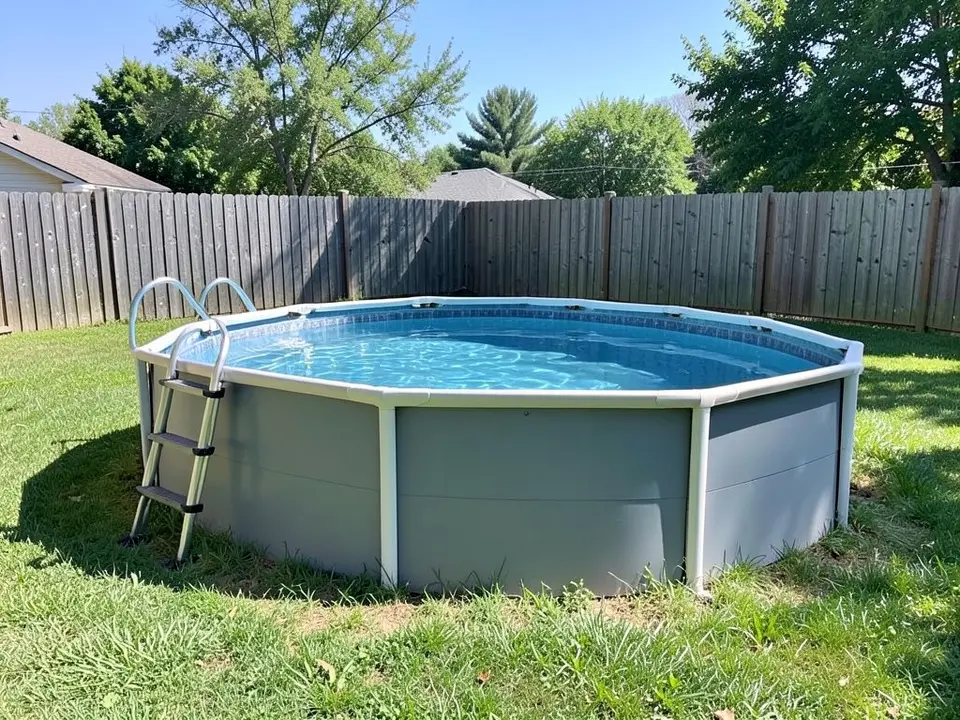
- Change ONLY the area at one side of the pool: add a wooden deck platform built up to the top edge of the pool wall, with a short set of wooden steps leading down to the lawn, and a wooden railing along the deck. Keep the round pool, the water, the ladder, the fence, the lawn and the camera angle exactly the same.
- Change ONLY the lawn beside the pool: replace it with a wide brown wood-look composite deck, with two striped lounge chairs and a large cream patio umbrella on it. Keep the pool, the water, the concrete edge, the house and the camera angle exactly the same.
Frequently asked questions
What are the best pool deck materials?
It depends on your climate, budget and the upkeep you want. Landscaping Network and Cal Pool describe poured concrete, concrete pavers, travertine, natural stone, porcelain pavers, brick, wood and rubber, and stress heat, slip resistance and cracking. For example, Cal Pool says travertine stays cooler to the touch and is slip-resistant, while Landscaping Network says wood needs regular refinishing. Ask a local pool contractor what suits your pool.
What are some above-ground pool deck ideas?
Real Homes lists a wrap-around deck, a stepped deck, wood decking such as pine or cedar and matching built-in benches. Our second example shows a wooden platform level with the pool rim and a railing. Check local permit and barrier rules first.
Do I need a permit to build a deck around a pool?
Real Homes says a permit is generally required for a deck around an above-ground pool and that it must meet local codes and be inspected. Rules differ from place to place, so ask your local building department.
How do I keep a pool deck from getting too hot?
Landscaping Network says light colors reflect heat and advises avoiding stones that absorb excessive heat or are very dark. Cal Pool says travertine stays cooler to the touch and that concrete pavers absorb more heat than the other pavers it lists. Test a sample in the sun before you buy.
Does a deck count as a pool barrier?
Not by itself. The US Consumer Product Safety Commission says above-ground pools should have barriers, that a barrier's top should be at least 48 inches above grade, and that a ladder, a table or a chair near the pool can give a child access. Ask your building department what your deck needs.
Can the AI tell me what a pool deck will cost or how to build it?
No. It draws the look you describe. It does not measure, price, check heat or slip resistance, or tell you what structure, permits or barriers you need, and it does not always follow the instruction exactly, as the captions above show. Get those answers from a pool builder and your building department.
Do I need an account, and is it free?
You need an account, and it is free: 1 free render with a free account, and free renders carry a watermark. More renders and no watermark come with a paid plan.
How wide should a pool deck be?
Latham Pools says builders typically recommend pool decking at least three feet wide, which also covers the electrical and filter lines, and that many owners choose a wider deck to fit furniture or gatherings. It also says the deck should be slip-resistant and slope slightly so water drains away from the pool. Check local rules with your pool builder.
What is pool coping?
Latham Pools describes coping as the frame around the edge or lip of the pool. It says coping gives swimmers an edge to hold, helps direct splashed water away from the edge, and can be a different style from the deck around it, for example stone, brick or pavers on the pool edge, or poured concrete shaped to look like edged stone.
What color pool deck stays coolest?
Concrete Network says lighter colors reflect sunlight and are cooler on the feet, and that white and beige decks stay cooler by reflecting harsh sunlight. County Materials says stone retains heat, which can make a deck uncomfortable in full sun. Our AI can show a color on your photo but cannot measure heat, so test a sample in the sun.
What plants should you not put near a pool deck?
Epic Gardening lists bougainvillea, jacaranda, queen palm, running bamboo, willow, poplar, ficus, mimosa, pine, cacti and fruit trees, for reasons such as thorns, constant litter, sticky fruit and roots that crack concrete. It suggests clumping bamboo, boxwood, juniper, ornamental grasses, sun-tolerant perennials and spineless succulents instead.