
Start with the Florida-Friendly idea
The University of Florida runs a Florida-Friendly Landscaping (FFL) program, and its advice is a good base for any yard in the state. It rests on nine principles, from right plant, right place and watering efficiently to mulching and reducing stormwater runoff. Right plant, right place means picking plants that suit your soil, light, water and climate, and thinking about how big they will grow. Choose the look you like, then choose plants that suit your own spot.
Florida landscaping ideas by style
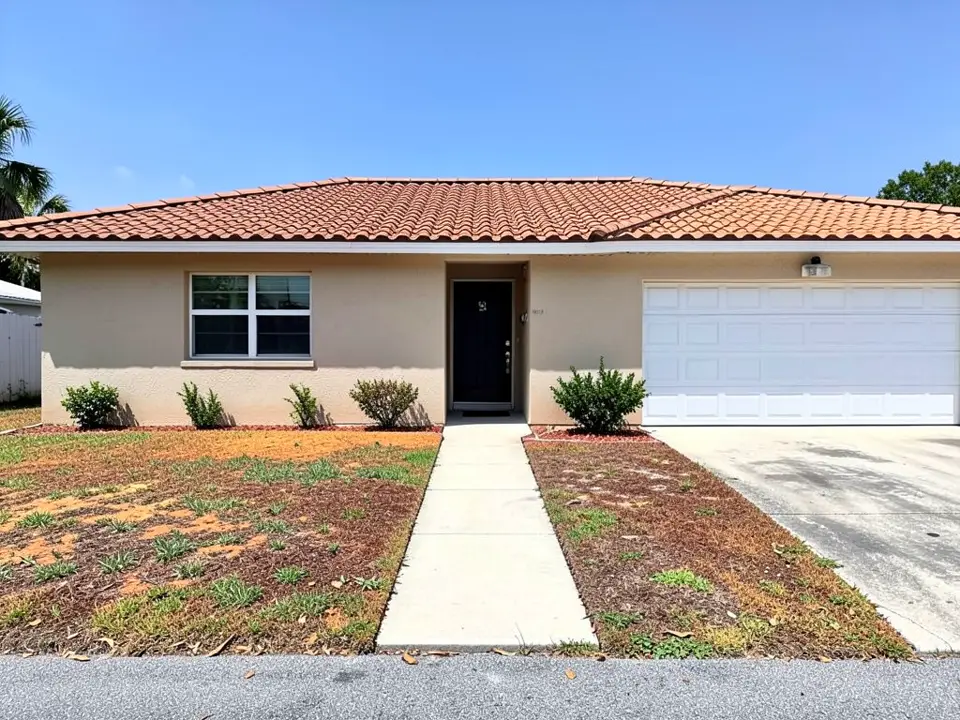
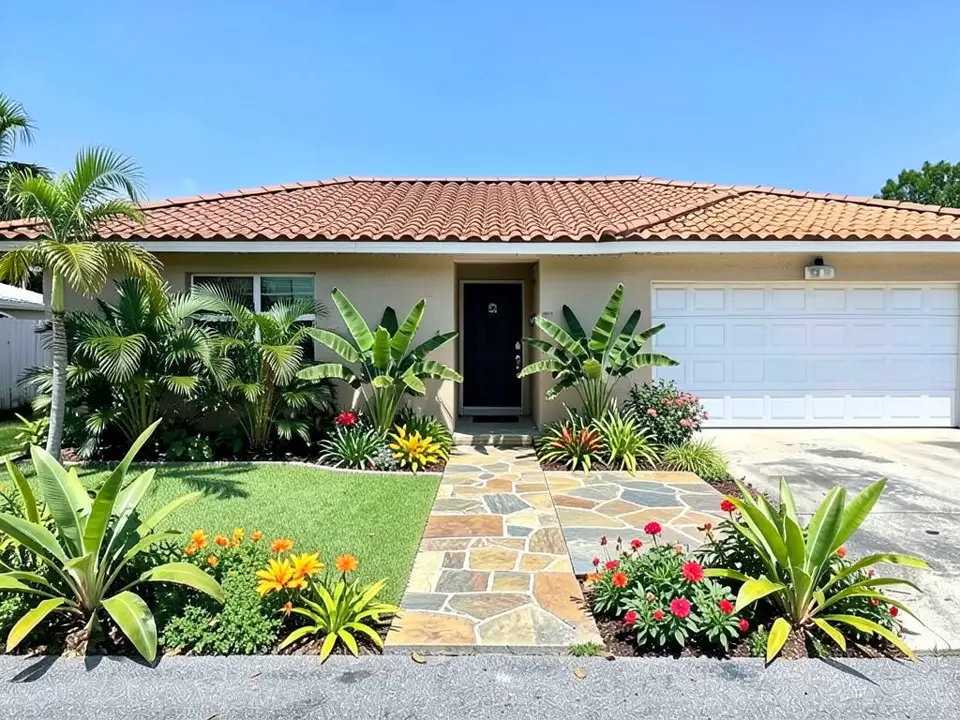
- 1. Lush and tropical: Palms, big leaves and bright flowers, as in our first example. UF/IFAS notes that cold weather may affect tropical plants in the north and center of the state (zones 7 to 9), so check your hardiness zone first.
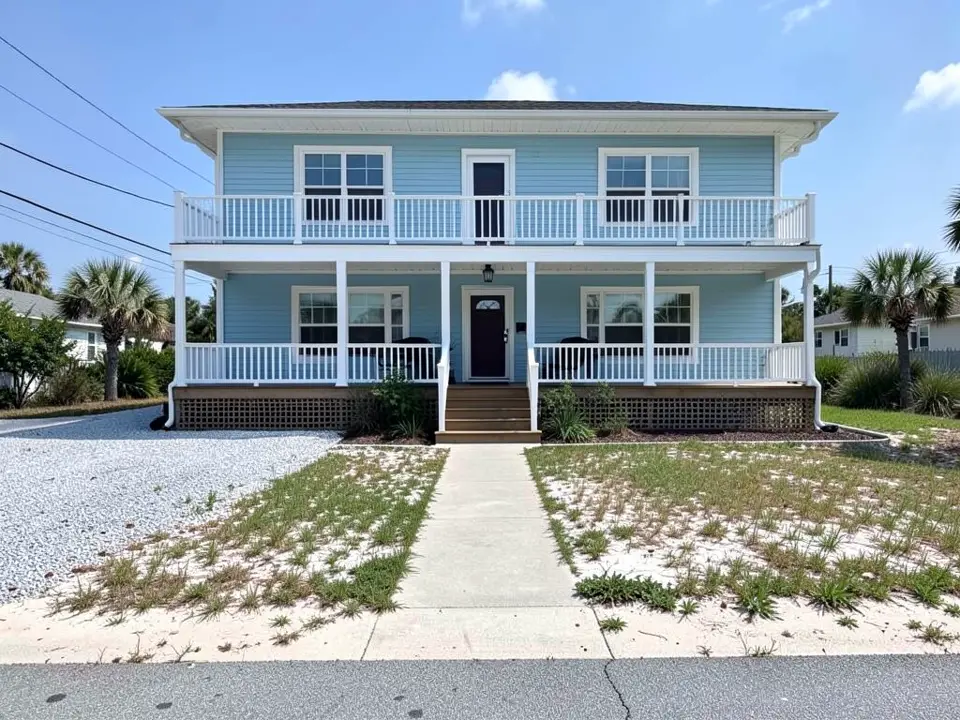
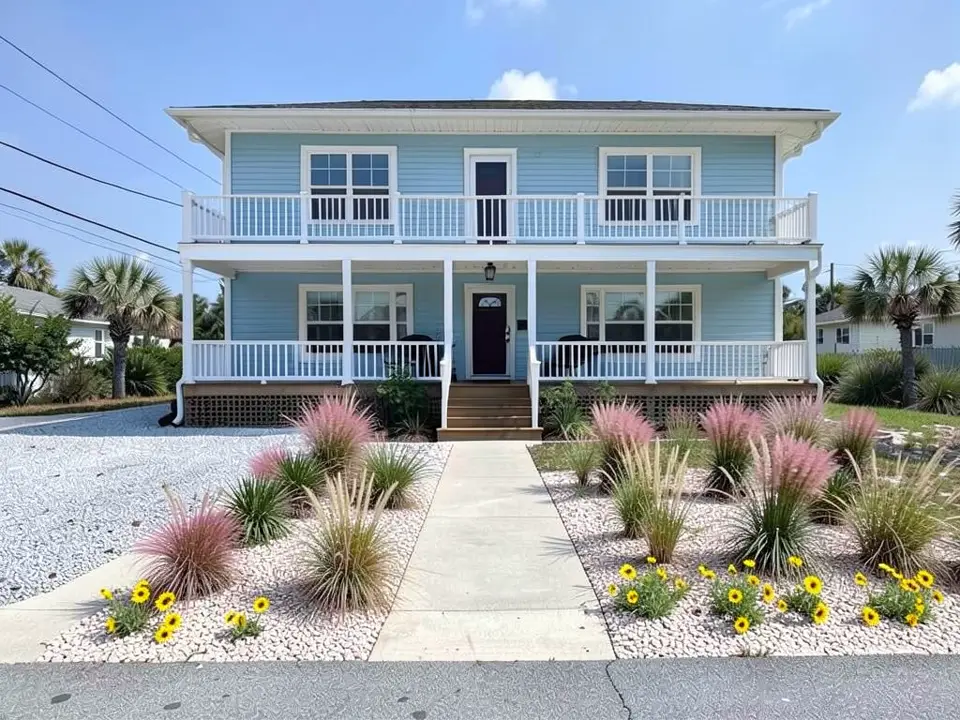
- 2. Coastal: Swaying grasses and low flowers in pale mulch, as in our second example. Near salt water, pick salt-tolerant plants (see the coastal question below).
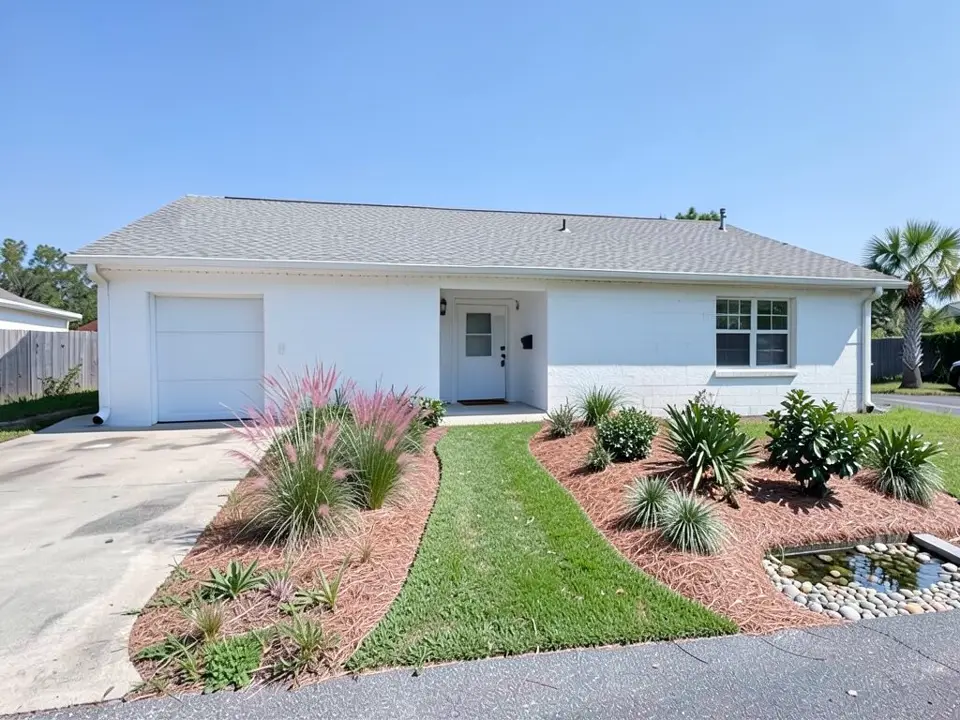
- 3. Native and Florida-Friendly: Native shrubs and grasses in mulched beds, as in our third example. The FFL program points out that being native does not mean a plant will thrive everywhere in Florida, and it allows non-invasive plants from elsewhere too.
- 4. Less lawn, more beds: Swap some lawn for mulched beds (see the low-maintenance question below). Lawn still has a place: the program counts turfgrass as Florida-Friendly when it suits the spot and is cared for properly.
- 5. Rock and shell as accents: The FFL program does not promote yards that are all rock, or artificial turf, which it does not consider Florida-Friendly. It suggests rock in moderation, around heat-tolerant plants, in rain gardens or under roof overhangs.
Palms, shrubs and trees
- Palms: UF/IFAS says all palms are at least moderately salt tolerant, with native cabbage palms and saw palmettos the most tolerant.
- Flowering shrubs: Its salt-tolerant list names hibiscus, firebush, plumeria and sterile lantana, plus natives such as wild coffee, necklace pod and saltbush.
- More shrubs: Waxmyrtle, coontie and Indian hawthorn are on the same list, along with seagrape and cocoplum.
- Trees: UF/IFAS says gumbo limbo, live oak and sea grape have high hurricane survival rates (see the hurricane question below for where to plant them).
Mulch, paths and rain
- Mulch: The FFL program suggests a layer 2 to 3 inches deep on beds, kept at least 2 inches away from tree trunks. It names pine straw, melaleuca and eucalyptus as sustainably harvested choices and does not recommend cypress mulch.
- Paths: The program asks for walkways, driveways and patios that let rain soak into the ground wherever possible, such as a loose path of gravel or crushed shell between beds.
- Rain gardens: UF/IFAS Gardening Solutions says rain gardens work best at the bottom of downspouts or in natural low spots, at least 10 feet from the house and 25 feet from any septic tank or well, and about 4 to 8 inches deep, since deeper water could breed mosquitoes. Muhly grass and Fakahatchee grass are among the plants it lists for them.
How to try Florida landscaping ideas on your own photo
For a lush, planted look, the landscape tool has a Tropical style built into its default Yard Redesign mode, so there is nothing to write. We sent the same style text to our own AI model to make the first example above; the tool’s default model may give different results. For a coastal or native look, use Custom mode and describe the plants.
- Photograph the front yard in daylight from the street, with the phone level and the whole yard and the front of the house in frame. JPG or PNG works.
- Open the landscape tool and sign in with Google or an email code. You get 1 free render with a free account.
- Under Select Landscape Mode, keep Yard Redesign, and under Choose a Landscape Style, pick Tropical. Then upload your photo under Upload Your Garden Image and click Redesign My Yard.
- For a coastal or native look, pick Custom instead. In the Custom Design Requirements box, describe the plants, mulch and paths you want and say what must stay the same, such as the house, driveway, sidewalk and trees. Upload your photo and click Generate Custom Design.
- Compare the result with your photo, change one thing at a time and run it again.
What the AI can and cannot do
The AI shows a look: how a style or planting would sit in front of your house, which helps you choose and explain what you want to a nursery or landscaper. It is not a plan. It does not know your soil, your zone or how far you live from the coast, it cannot tell you whether a plant will survive, and it does not always follow the instruction, as the examples above show. Results vary between the tool’s AI models and from one run to the next, so check the result against your photo.
The style text and instructions behind the examples
When you pick Tropical in Yard Redesign mode, this is the style instruction the tool sends with your photo, word for word (the tool also adds its own instructions on our side); it made the first example:
Redesign the landscaping of this yard in a lush tropical style: palms, banana plants, large-leaf foliage, bright flowers and a natural stone patio. Keep the house, windows, doors, roof, driveway, sidewalk, fences, sky and camera angle exactly the same; only change the lawn, plants, garden beds, garden paths and patio
These are the exact Custom-mode instructions we used for the second and third examples, in the same order. Choose Custom, paste one into the Custom Design Requirements box, then upload your photo. Swap in your own plants and what must stay. If you reuse the second one, move the rain garden at least 10 feet out from the house, as UF/IFAS advises.
- Turn the two thin, sandy lawn strips on either side of the concrete front walk into coastal Florida planting beds: clumps of sea oats and pink muhly grass, a few low saw palmettos and drifts of yellow beach sunflowers in light-colored crushed shell mulch. Keep the concrete front walk, the concrete sidewalk along the street, the gravel parking pad on the left, the house, porches, railings, front stairs, palm trees, neighboring houses, power lines, street, sky and camera angle exactly the same.
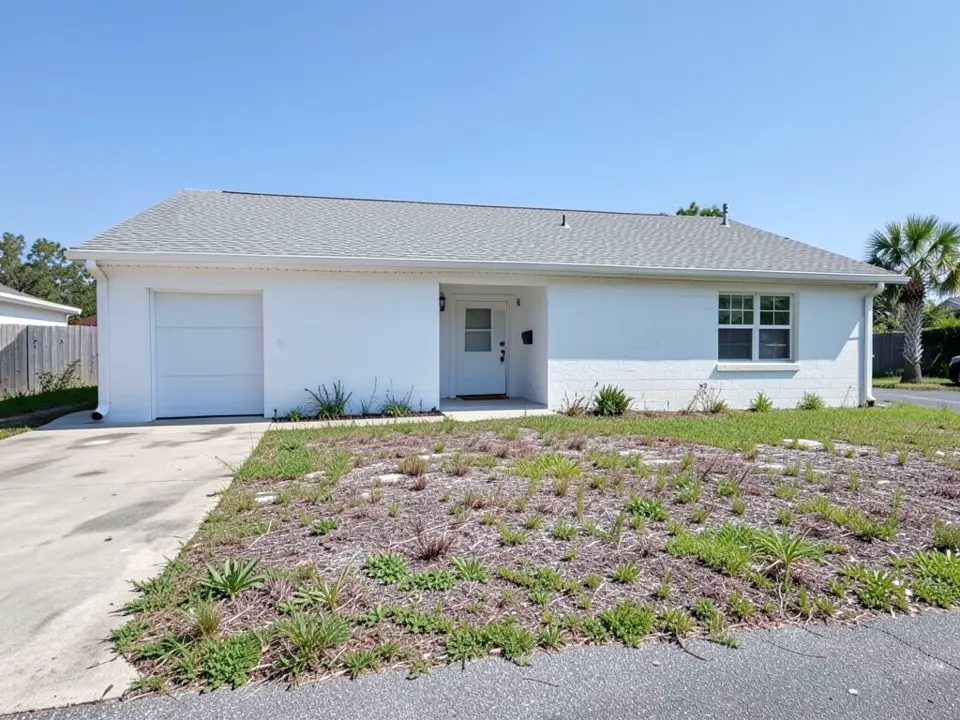
- Turn the patchy lawn into two curved planting beds of Florida native plants mulched with pine straw: clumps of Fakahatchee grass and pink muhly grass, low saw palmettos and wild coffee shrubs. Between the two beds, keep a strip of green lawn that runs from the street to the front entry. Right below the white downspout at the right corner of the house, add a small, shallow rain garden of river rock. Keep the house, garage door, front entry, windows, driveway, the palm tree, fences, street, sky and camera angle exactly the same.
Frequently asked questions
What is Florida-Friendly landscaping?
It is a University of Florida (UF/IFAS) program built on nine principles, such as right plant in the right place, efficient watering, mulch and less stormwater runoff. The program says it is not one particular look; it is about matching plants to the spot and cutting back on routine watering, fertilizer and pesticides.
What are low-maintenance Florida landscaping ideas?
Plants that suit your soil, light and climate, mulched beds instead of some of the lawn, and fewer plants that need constant care. In an FFL program comparison, a yard that was mostly beds took nearly the same yearly upkeep time as a mostly-lawn yard, spent on weeding rather than mowing, and used 84% less irrigation water.
Which plants handle salt near the coast?
UF/IFAS says plants within about an eighth of a mile of salt water should be at least somewhat salt tolerant. Its list includes sea oats, muhly grass, beach sunflower, saw palmetto, cabbage palm, seagrape and wild coffee. It adds that coastal plants still need fresh water to get established.
How do I plan my yard for hurricanes?
UF/IFAS advises planting larger trees away from the house and power lines, planting trees in groups and keeping them pruned, and it names sabal palms and crapemyrtle as wind-resistant choices. When a storm is on its way, it says to move container plants and loose yard items to a sheltered spot and turn off irrigation.
What grows well in sandy Florida soil?
UF/IFAS notes that coastal yards often have sandy, high-pH soil. The FFL program says to match plants to your soil, offers soil testing through county Extension offices, and says organic mulch improves soil structure as it breaks down.
How do I handle heavy summer rain?
The FFL program suggests shallow rain gardens, berms and swales and paths that let water soak in. UF/IFAS Gardening Solutions says to place a rain garden at least 10 feet from the house, keep it about 4 to 8 inches deep and call 811 before you dig.
Can my HOA stop me from replacing lawn with Florida-Friendly beds?
The FFL program says Florida law bars HOA rules from prohibiting Florida-Friendly Landscaping, but the HOA review board can still require approval and upkeep standards. Ask before you start.
Do I need an account, and is it free?
You need an account, and it is free: 1 free render with a free account, and free renders carry a watermark. More renders and no watermark come with a paid plan.
Sources
Plant names and advice on climate, salt, storms, water and HOAs on this page come from these University of Florida pages. Your county UF/IFAS Extension office can tell you what does well where you live.
- UF/IFAS Florida-Friendly Landscaping: the 9 principles
- UF/IFAS Florida-Friendly Landscaping: frequently asked questions
- UF/IFAS Florida-Friendly Landscaping: water efficiently
- UF/IFAS Florida-Friendly Landscaping: fertilize appropriately
- UF/IFAS Florida-Friendly Landscaping: mulch
- UF/IFAS Florida-Friendly Landscaping: reduce stormwater runoff
- UF/IFAS Gardening Solutions: coastal landscapes
- UF/IFAS Gardening Solutions: salt-tolerant plants
- UF/IFAS Gardening Solutions: hurricane landscaping
- UF/IFAS Gardening Solutions: rain gardens