
Backyard pickleball court ideas: the numbers a court builder gives
Legendary Sports Construction, a court builder, lists these figures. Its page gives no fence height, no light specifications and no costs, so we give none.
- Court size: The official playing area is 20 feet wide by 44 feet long, the same for singles and doubles. The kitchen, or non-volley zone, extends 7 feet from the net on each side.
- Footprint: The page says the minimum for most residential projects is about 30 feet by 60 feet, and 34 feet by 64 feet is preferred for more comfortable or competitive play. It says compact layouts smaller than 30 by 60 are best for casual use.
- Run-off and clearance: It says to allow about 5 to 10 feet of clearance around the court when possible, and that fencing should never sit directly against the playing lines. It also says to keep courts away from trees, pools, retaining walls, patio furniture, outdoor kitchens and storage buildings.
- Surface: It lists acrylic-coated concrete (a professional surface that needs a properly installed concrete base), modular interlocking tiles (cushioned and easier to maintain), and synthetic outdoor systems (softer and more joint-friendly).
- Net: The net is 36 inches high at the sidelines and 34 inches at the center.
- Direction: It says a north-south direction is generally recommended to reduce sun glare.
- Lights: It says to consider lighting early in the design if you expect to play in the evening. Our third example shows lit poles.
What our three examples do not show
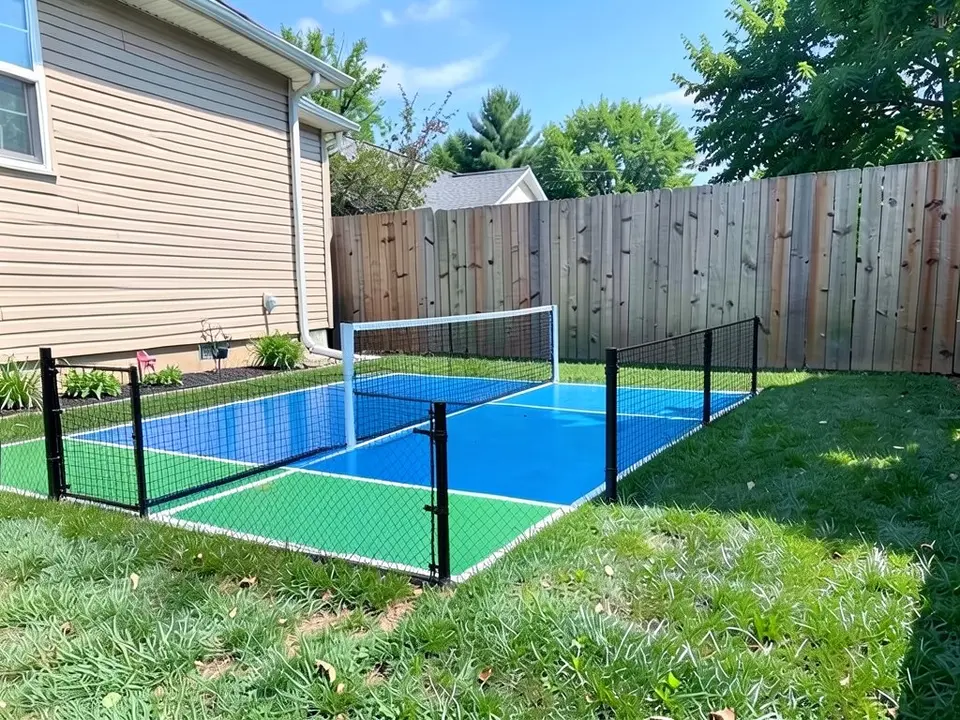
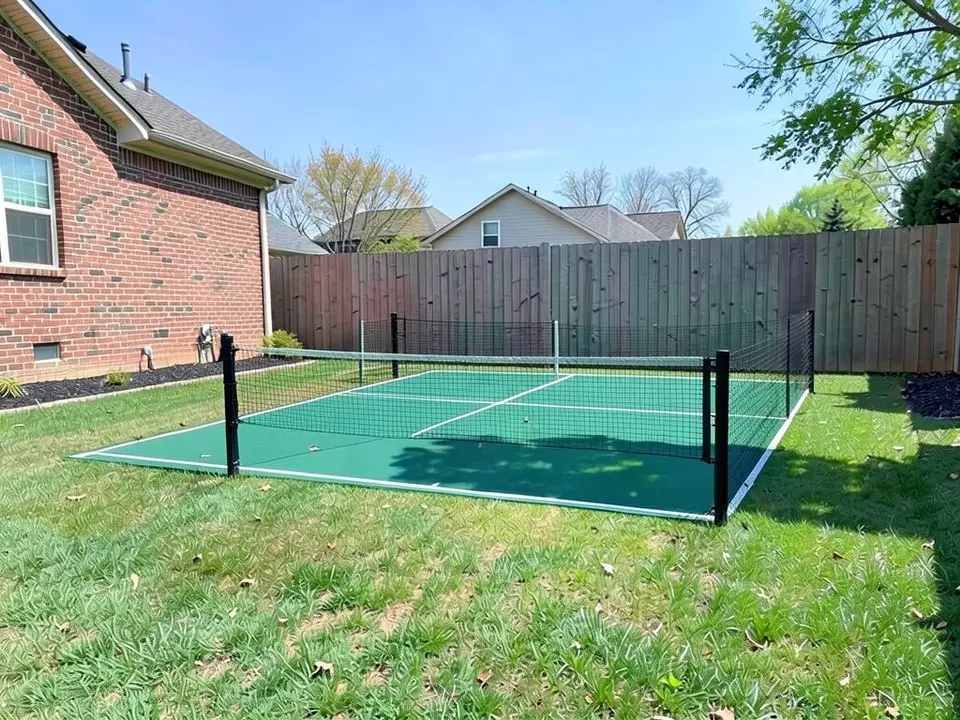
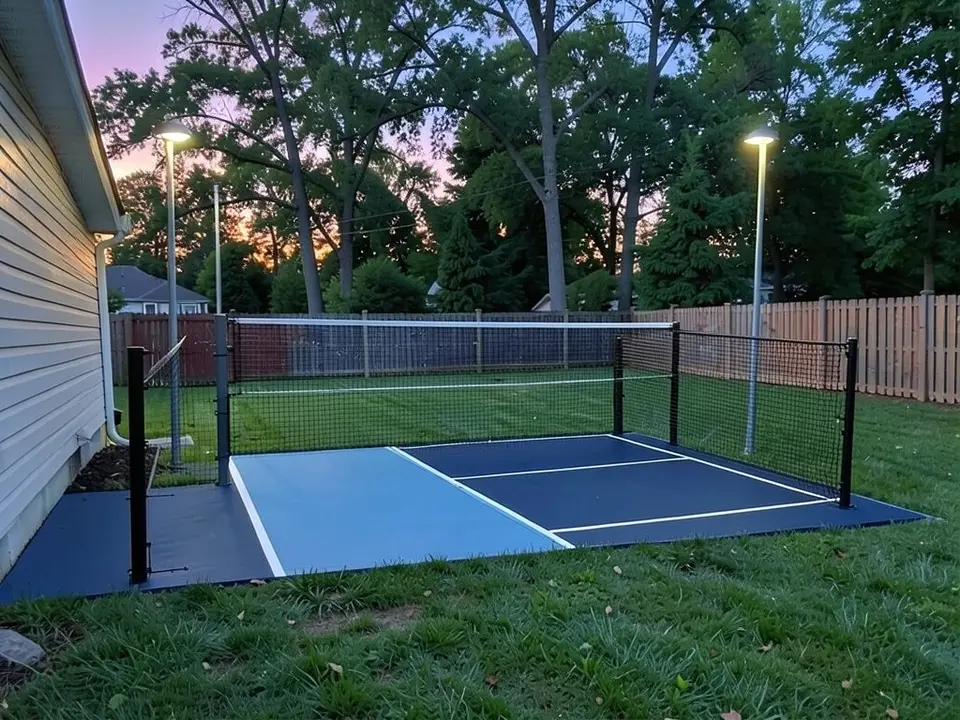
The AI draws a look, not a plan. In the examples above the painted areas were not measured, the clearance around them is not 5 to 10 feet in every direction, and the fences are only partly drawn. A real court needs the footprint above, a proper base and a builder's drawings, so use the images to compare ideas such as surface color and where the court could sit, not to decide whether it fits.
If you have a small yard, the page's own advice is that compact layouts are best for casual use. If a full court will not fit, a putting green or a smaller play area may suit the space better.
How to try pickleball court ideas on your own photo
The tool above is already in Custom mode. The Yard Redesign styles have no text box, so you cannot name the court surface, lines or fence there. Custom lets you name what to add, where it goes, and what must stay the same.
- Take the photo in daylight from where you would stand to look at the space, showing the whole area where a court might go.
- Describe the court in the Custom Design Requirements box: the surface color, the line color, the net, the fence and, if you want them, light poles. Say what must stay the same, such as the house and the fence.
- Upload your photo under Upload Your Garden Image and click Generate Custom Design. You sign in with an email code or Google when you generate.
- Compare the result with your photo. If the court looks too small or too big, measure the real space before you decide anything.
What the AI can and cannot do
The AI shows a look: roughly how a painted court, a net and a fence might sit on your own photo. That helps you compare surface colors and explain what you want to a court builder.
It does not know your site, your soil, local rules or your budget, and it does not always follow the instruction, as the partial fences, the missing darker border and the two light poles in the examples above show. It does not draw a court to the right size. Check the size, the base, the fence height and any permit with a builder and your local planning office.
The exact instructions behind the court examples
These are the exact instructions we used for the three examples above, in the same order. In the tool above, Custom is already selected: paste one into the Custom Design Requirements box, then upload your photo. Swap in your own surface color, fence and lights.
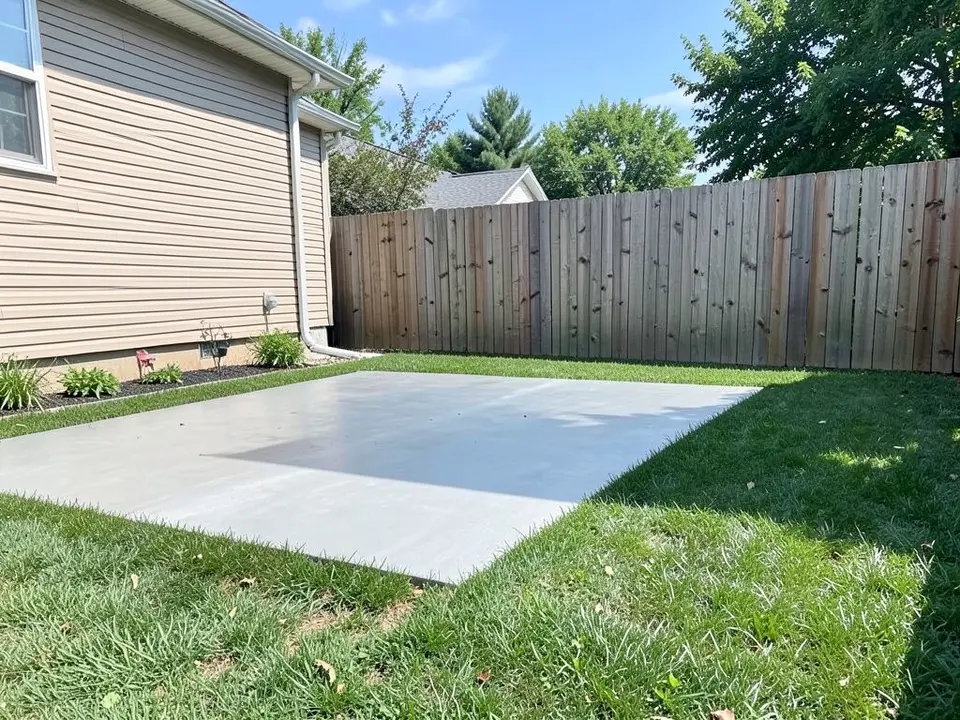
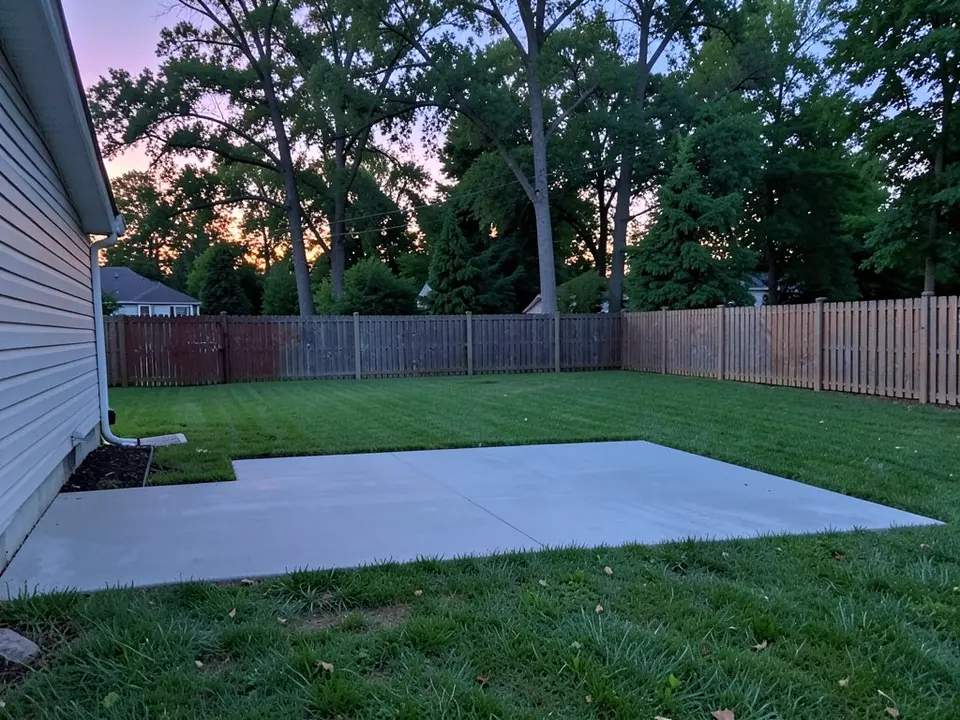
- Change ONLY the concrete slab: turn it into a pickleball court with a blue and green painted acrylic surface, white boundary lines, a net across the middle on posts, and a black wire mesh fence around the court. Keep the house, the fence, the camera angle, the lighting and everything else exactly the same.
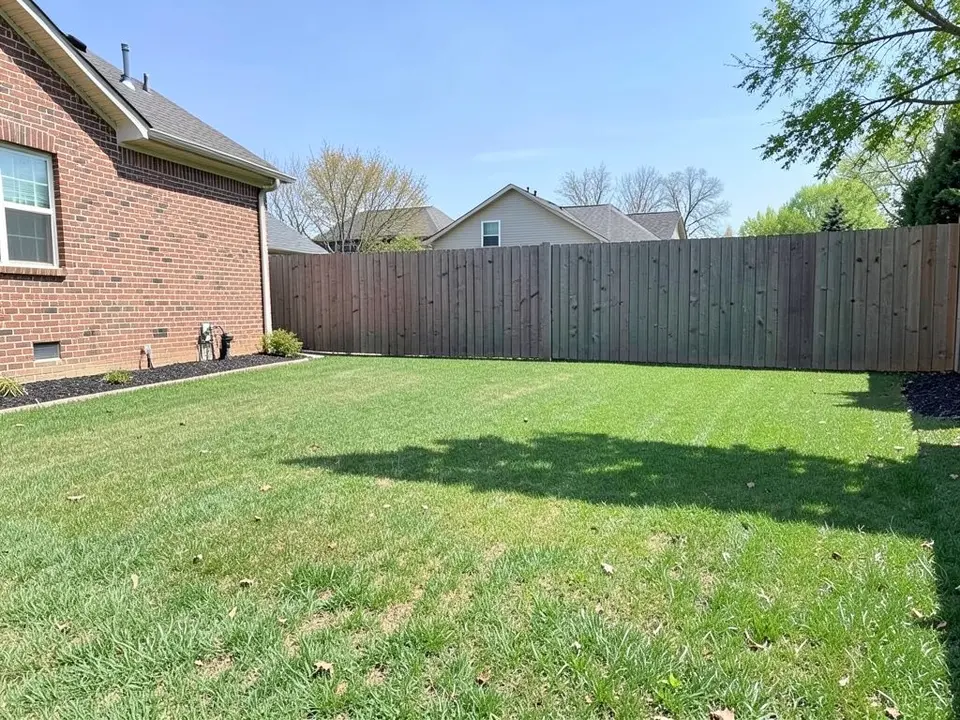
- Change ONLY the middle of the lawn: replace the grass there with a rectangular pickleball court of green surface with a darker green border, white lines, a net across the middle, and tall black fence posts with mesh at each end. Leave a strip of lawn around the court. Keep the house, the fence, the camera angle, the lighting and everything else exactly the same.
- Change ONLY the concrete pad: paint it as a pickleball court in dark blue with a lighter blue kitchen zone near the net, white lines, a net on posts, and four tall light poles at the corners with a low black mesh fence. Keep the house, the fence, the camera angle, the lighting and everything else exactly the same.
Frequently asked questions
How big is a pickleball court?
Legendary Sports Construction gives the official playing area as 20 feet wide by 44 feet long, for both singles and doubles. It says the kitchen extends 7 feet from the net on each side.
How much yard space do I need for a pickleball court?
The same page says about 30 feet by 60 feet is the minimum for most residential projects and 34 by 64 feet is preferred for more comfortable or competitive play. It adds that compact layouts smaller than 30 by 60 are best for casual use.
What surface is used for a backyard pickleball court?
The page lists acrylic-coated concrete, modular interlocking tiles and synthetic outdoor systems. It says the concrete option needs a properly installed concrete base.
How high is a pickleball net?
The page gives 36 inches at the sidelines and 34 inches at the center.
Does the page say how high the fence should be, or what lights to use?
No. It says fencing should not sit directly against the playing lines and to consider lighting early if you expect evening play, but it gives no fence height, light specifications or costs. Ask a court builder.
Can the AI tell me whether a court will fit in my yard?
No. It draws the look you describe, not a court to scale, and it does not always follow the instruction, as the captions above show. Measure your yard and compare it with the footprint above.
Do I need an account, and is it free?
Create a free account with an email code or Google to generate. You get 1 free render, and free renders carry a watermark. More renders and no watermark come with a paid plan.