
What makes Colorado yards different
Cold is rarely the main problem. CSU Extension (fact sheet 7.220) lists what limits plants more in Colorado: dry air, sudden temperature swings, alkaline clay soils and drying winds. The state averages about 6,800 feet in elevation, where strong sun and low humidity make plants lose water faster. A warm spell followed by a sudden drop below zero can split trunks and kill borderline-hardy plants, and wet late-spring or early-fall snow breaks limbs on trees in leaf.
The soil is often the other half of the story. CSU notes that many Colorado towns sit on heavy clay that drains poorly, and that alkaline soils, up to about pH 8.5, tie up iron and turn leaves yellow. Pin oak and silver maple struggle here, and adding too much organic matter at once can build up salts.
Hardiness zones run roughly from 3 to 7, colder at high sites. Check your ZIP code on the USDA plant hardiness map before you buy plants.
Colorado landscaping ideas
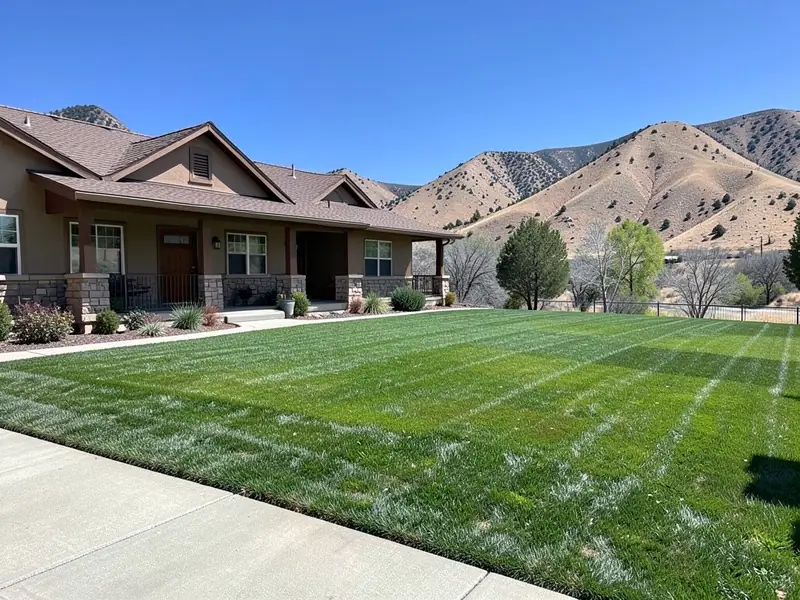
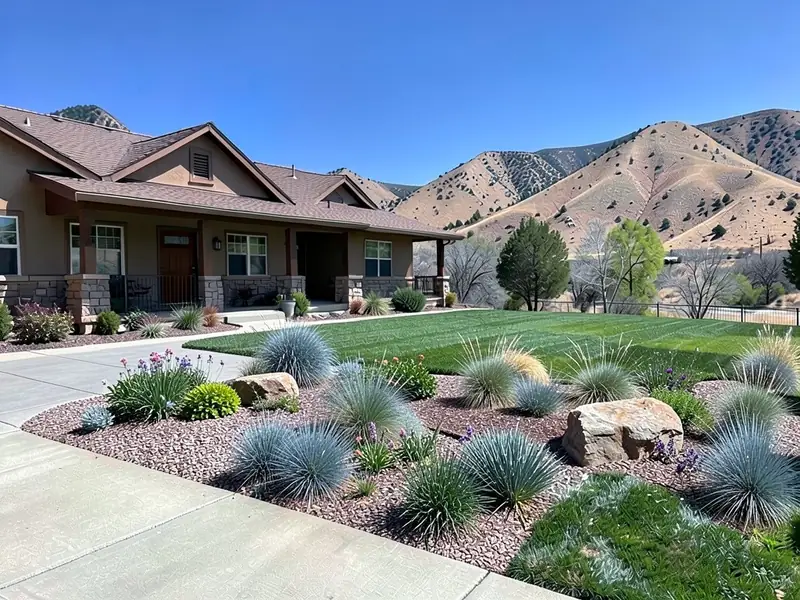
- 1. A xeriscape or ColoradoScape front yard: Swap most of a thirsty front lawn for low-water plants, rock mulch and a few boulders, and keep a small lawn where you use it, as in our first example. Denver Water, which coined the word xeriscape in 1981, now promotes ColoradoScape: native or adapted plants that also support pollinators.
- 2. A rock and native garden with Plant Select picks: Plant Select, a nonprofit started in 1997 by Colorado State University and Denver Botanic Gardens with horticulturists, trials plants for several years and recommends ones that do well with less water in the high plains and intermountain West. Its picks include plants such as sunset hyssop; its website lists plants by water need and elevation.
- 3. A low-water lawn swap: CSU lists buffalograss and blue grama among the lawn grasses for Colorado, next to Kentucky bluegrass and turf-type tall fescue. Buffalograss is limited to about 6,500 feet or lower, and some low-water lawns go brown and dormant for long spells, so expect that look in summer.
- 4. A pollinator and hummingbird border: A border of low-water flowering perennials along a fence or walk adds color and feeds pollinators, in line with Denver Water's ColoradoScape idea. Group plants by water need, as CSU's xeriscape guide advises.
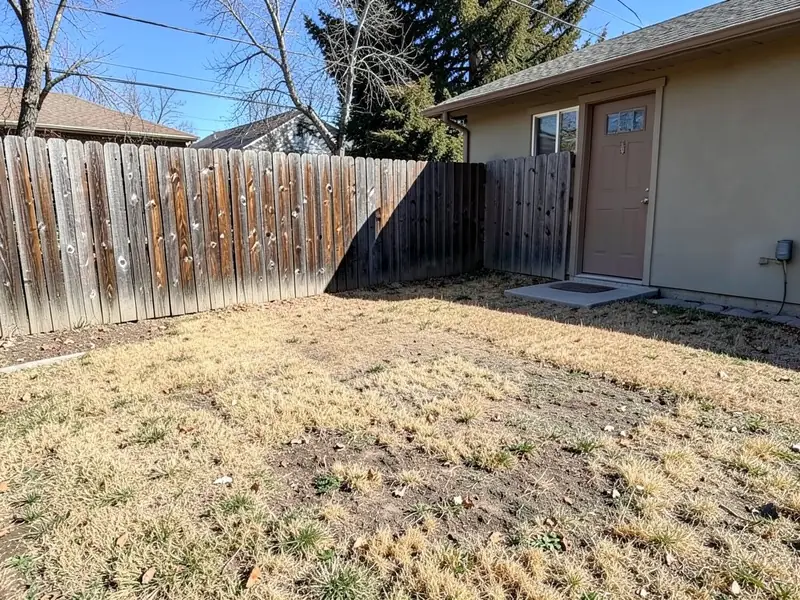
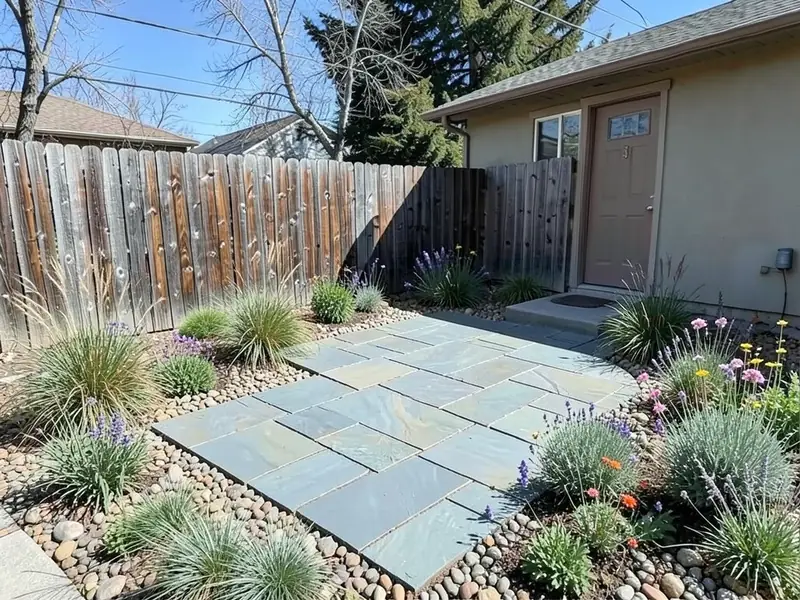
- 5. A flagstone patio with rock-mulch beds: Replace a worn dry lawn with a flagstone patio and beds of grasses and perennials in rock mulch, as in our second example. Less lawn means less watering.
- 6. A mountain or high-altitude yard: At high elevation the season is short: CSU gives frost-free seasons from about 9 days in Fraser to 183 days in Grand Junction. Choose hardy natives, and Plant Select keeps a separate list for high-altitude gardens.
Xeriscape basics for Colorado
The Front Range gets less than about 15 inches of precipitation a year, and more than half of household water goes to landscapes, according to CSU's xeriscape guide. Xeriscape does not mean only rocks. CSU's principles are: plan and design, improve the soil, choose suitable plants and group them by water need, use mulch, water efficiently and keep up maintenance.
Watering rules
There is no single statewide rule: each water provider sets its own. As an example, Denver Water's summer rules (in its 2021 notice) run from May 1 to October 1, with no daytime watering and no more than three days a week. Rules change from year to year, so check your own water provider before you plan an irrigation schedule.
How to try a Colorado idea on your own photo
The tool above is already in Custom mode. Custom lets you describe the plants, rock and lawn you want and what must stay the same.
- Take the photo in daylight from the sidewalk or the back door, with the whole lawn area you want to change in frame.
- Describe the change in the Custom Design Requirements box: how much lawn stays, the rock mulch and boulders, any patio or path, the kind of plants, and what must stay the same, such as the house, the driveway and the camera angle.
- Upload your photo under Upload Your Garden Image and click Generate Custom Design. You sign in with an email code or Google when you generate.
- Compare the result with your photo. If a path or a lawn strip is missing, as in our examples, ask for it again with its exact place.
What the AI can and cannot do
The AI shows a look: how a waterwise front yard or a flagstone patio would sit around your own house, and how much lawn you could give up.
It does not know which plants grow at your elevation, and the plants it draws may not be the ones you named: above, it drew grasses that look more like blue fescue than blue grama, and left out a buffalograss strip. Pick real plants from CSU Extension and Plant Select, and use the picture to settle the layout.
Colorado instructions to paste into Custom mode
These are the exact instructions we used for the two examples above, in the same order. In the tool above, Custom is already selected: paste one into the Custom Design Requirements box, then upload your photo. Swap in plants for your elevation and what must stay.
- Replace most of the front lawn with a waterwise Colorado-style garden: clumps of native blue grama grass, low drought-tolerant flowering perennials, a few boulders and a gravel mulch path, keeping a small patch of lawn near the driveway. Change only the front yard planting. Keep the house, the driveway, the hills, the camera angle, the lighting and everything else exactly the same.
- Turn the dry lawn into a low-water Colorado backyard: a clean, level flagstone patio with tight joints area, beds of native grasses and drought-tolerant flowering perennials with rock mulch, and a small strip of buffalograss lawn. Change only the yard surface and planting. Keep the house, the fence, the camera angle, the lighting and everything else exactly the same.
Frequently asked questions
What plants grow best in Colorado yards?
Plants that handle dry air, strong sun, temperature swings and alkaline soil. Plant Select, started by Colorado State University and Denver Botanic Gardens, trials and recommends plants for the region, and CSU Extension publishes plant lists by type. Match plants to your elevation and hardiness zone.
Does xeriscaping mean only rocks?
No. CSU's xeriscape principles include choosing suitable plants and grouping them by water need, improving the soil and mulching. A good xeriscape is full of plants; rock or gravel is just one kind of mulch. Denver Water's ColoradoScape adds native plants that support pollinators.
What grass is best for a low-water lawn in Colorado?
CSU lists buffalograss and blue grama as low-water options, alongside Kentucky bluegrass and turf-type tall fescue. Buffalograss suits elevations of about 6,500 feet or lower, and low-water grasses can go brown and dormant for long spells.
What hardiness zone is Colorado?
Roughly zones 3 to 7, with some high sites colder; higher elevation means a lower zone. Check your ZIP code on the USDA plant hardiness zone map.
How do I deal with Colorado clay soil?
CSU notes that much of Colorado sits on heavy clay that drains poorly and is often alkaline. Choose plants that tolerate it, and add organic matter gradually, since CSU warns that too much at once can build up salts.
Are there watering restrictions in Colorado?
Each water provider sets its own. Denver Water's summer rules, for example, have run May 1 to October 1 with no daytime watering and up to three days a week. Check your own provider for this year's rules.
Do I need an account, and is it free?
Create a free account with an email code or Google to generate. You get 1 free render, and free renders carry a watermark. More renders and no watermark come with a paid plan.