
Stepping stone path ideas by material
The pages we read agree on little except that the material sets the mood. Below are the options they showed. Nicolock, Western Interlock and B&Q sell paving or garden products, and we flag that where it matters.
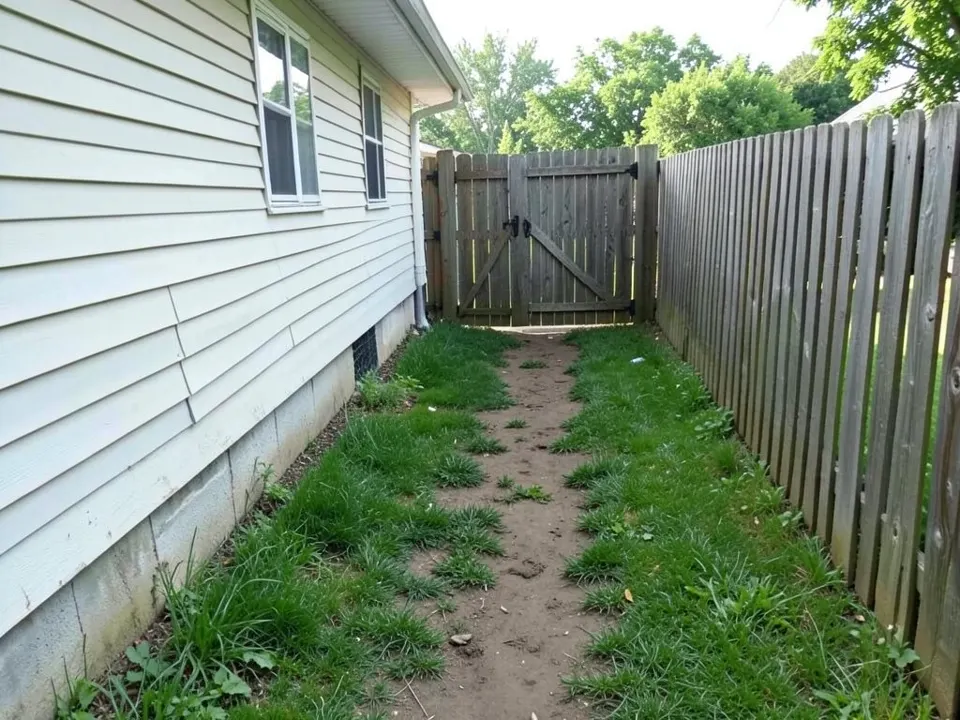
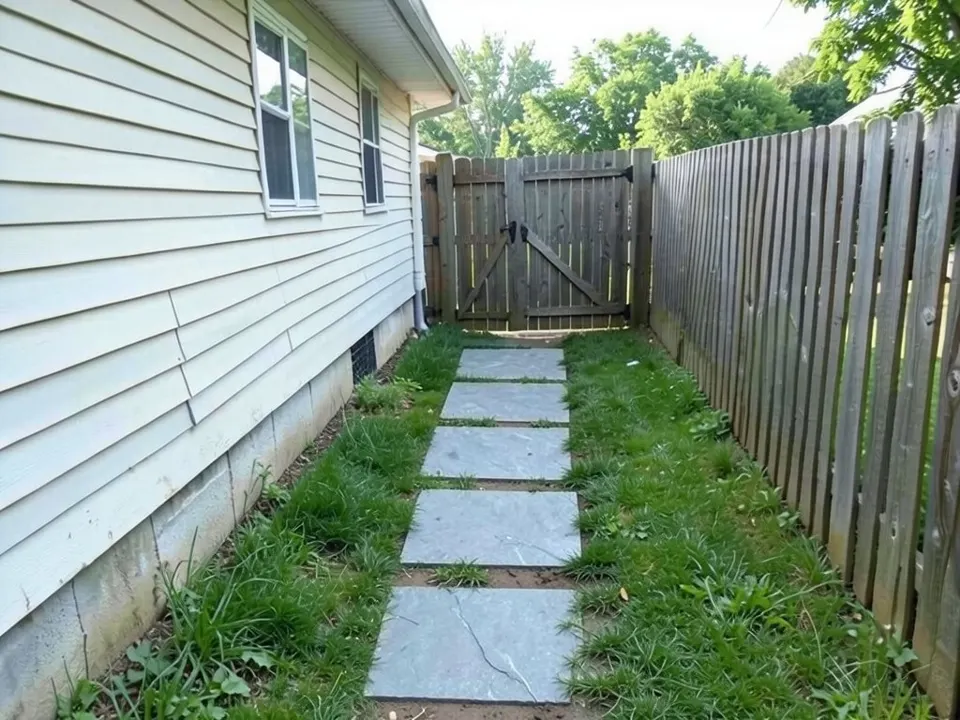
- Natural stone and flagstone: Gardeningetc shows mismatched natural stone slabs set among gravel in a matching tone, softened by hardy geraniums and Alchemilla mollis. Empress of Dirt lists natural stone and flagstone among its materials. Our first example uses large gray flagstone-style slabs.
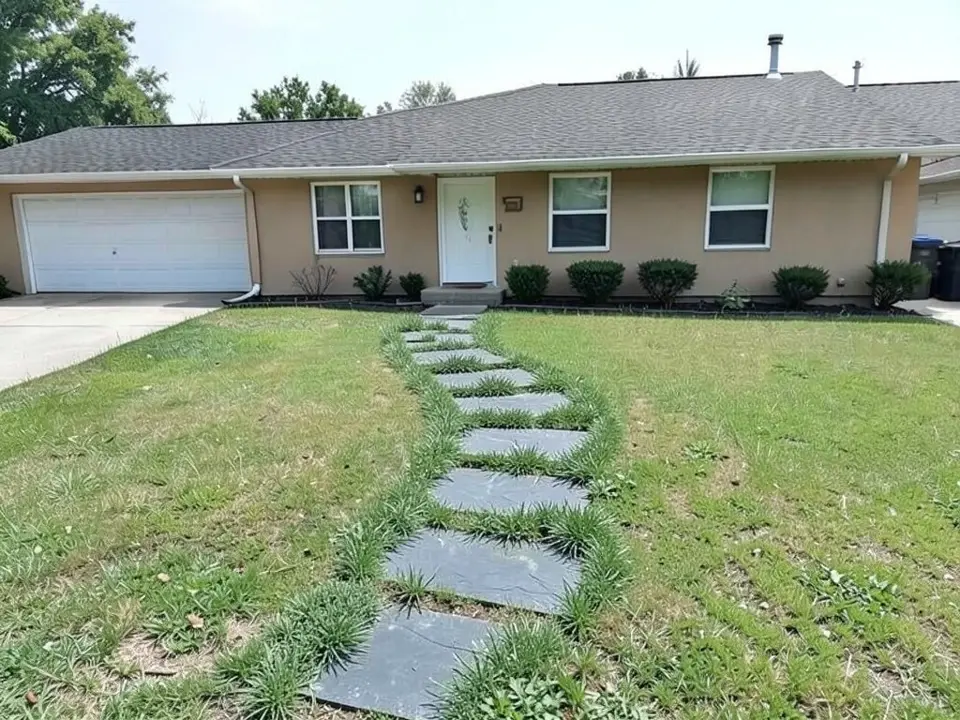
- Slate: B&Q lists slate slabs among its garden path materials. Our third example uses dark gray slate-style slabs.
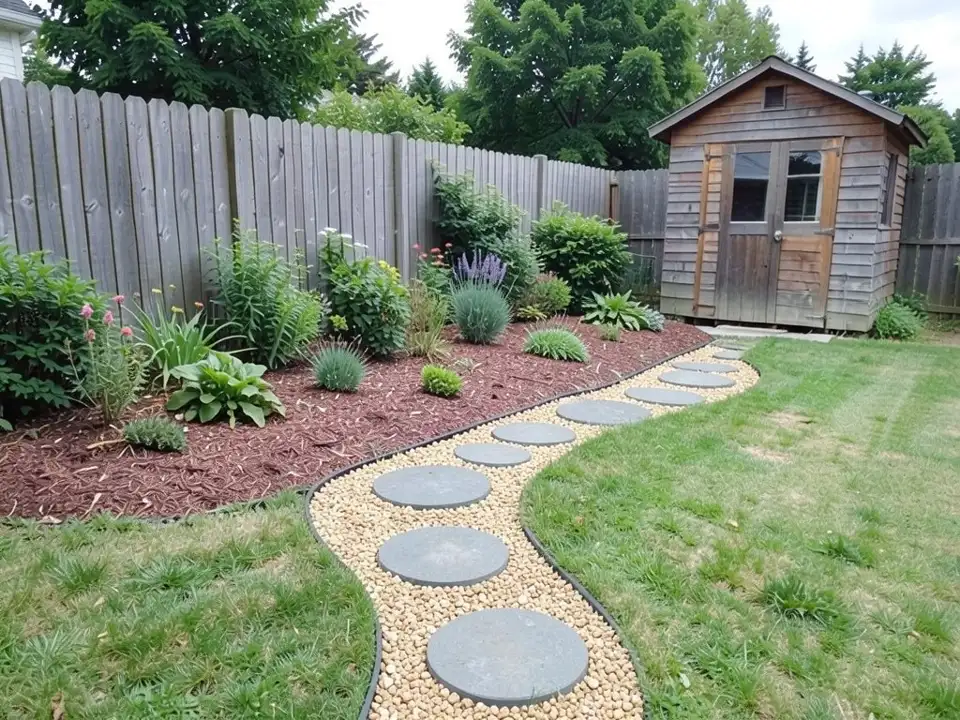
- Concrete pavers and cast concrete: Empress of Dirt includes concrete pavers and concrete poured with decorative or metal inlays. Our second example uses round, concrete-look stones.
- Brick: Empress of Dirt includes brick, and the author notes that bricks and pavers set in sandy soil gradually sank over several years, so a stable base matters.
- Wood tiles: Gardeningetc shows ridged wooden tiles around a hot tub, which gave grip near water and kept bare feet off gravel.
- Mosaic, stamped and handmade stones: Gardeningetc shows mosaic stones leading to steps and a gate for an old-world look, and stones embossed with a vintage coin design for a playful corner. Empress of Dirt adds hypertufa and flower-shaped flagstones.
Shapes and layouts: straight, curved, circular
- Curved: Gardeningetc shows a path winding around small trees for a woodland feel. Our second and third examples use a gentle curve.
- Straight and clean-lined: Gardeningetc shows identical slabs in a row across a lawn from a deck, echoing the lines of the house. Our first example is a straight line along a side yard.
- Large circles: Gardeningetc shows large round stones that shrink as they join a main path to make a secondary route with a sculptural look.
- Mixed sizes in one pattern: Gardeningetc suggests stones of different sizes, ideally in one material and tone, and notes that pale stone contrasts well with green lawn.
- To a destination: Our advice: lead the path somewhere, such as a gate, a bench, a shed or a back door, so it reads as a route and not as decoration. Our first and second examples end at a gate and a shed.
How far apart should stepping stones be?
Gardeningetc, Empress of Dirt and B&Q gave no spacing figures. The one source we found that does is Western Interlock, a paver seller. It describes three methods: a 24-inch rule, with stones 24 inches apart center to center, which it says suits most people's stride; a 2x4 method, where a 2x4 laid on its wide face leaves about 4-inch gaps between stone edges; and a custom method, starting at 3 to 6 inches between stones and adjusting so the last stone fits without cutting.
Western Interlock also suggests testing the layout before you dig: measure the stride of the shortest person in the household, and check they can walk it without stretching or hopping. These are rules of thumb from one seller, so treat them as a starting point and test on your own ground.
What goes between and around the stones
- Gravel: Gardeningetc shows slabs set slightly apart with pale gravel between, which mixes textures and marks different garden zones. Our second example sets round stones in pea gravel.
- Groundcover and herbs: Gardeningetc names Pachysandra terminalis, Herniaria glabra and creeping thyme for the shade under small trees. Empress of Dirt shows checkerboard layouts with herbs or ground covers between pavers. Our third example asked for creeping thyme; see its caption for what we got.
- Mulch and bark: B&Q lists bark chips as a surround, and Empress of Dirt says mulch paths can be dressed up with stepping stones. Nicolock says gaps can be filled with soil, gravel or mulch, which also helps hold the stones in place and drain.
- Moss: B&Q lists moss among its path surrounds. It suits shade and damp ground, and we did not find a source on how to start it.
- Lawn: Gardeningetc notes that pale stone contrasts well against green lawn. Empress of Dirt says pavers set at grass level along flower beds make mowing easier and cut trimming. Our first example keeps the grass and sets slabs along the strip.
- Flowers and shrubs: Gardeningetc suggests hardy geraniums and Alchemilla mollis along the edges to soften the stone. B&Q lists lavender, grasses, hydrangea and foxgloves among the plants it shows beside paths.
Lighting a stepping stone path
The path pages we read did not cover lighting, so this section is our advice. Low path lights or small solar stakes beside the stones are the usual way to light a garden route at night. Unilock, in its paver driveway guide, lists low-profile pathway lights along edges and says to plan lighting early. Keep lights beside the stones and not in the walking line, and aim them down.
For how different lights look on a photo, see our landscape lighting design ideas.
Stepping stone path mistakes
- Stones that sink: Empress of Dirt notes that bricks and pavers in sandy soil sank over several years. Nicolock describes setting each stone in a shallow hole of sand or soil so it sits level with the ground around it.
- Spacing that does not fit the walker: Western Interlock says to test with the shortest person's stride before you lay anything.
- No drainage: Nicolock says small gaps between stones let rain drain into the ground. Our advice: keep gaps open or filled with something that drains, such as gravel.
- Buying stone before the design: Empress of Dirt suggests designing around the materials you have, not buying materials for a fixed design, and says mixing standard and decorative stones can save money.
- A path that goes nowhere: Our advice: end the path at a door, a gate or a seat. If the AI ends the path short, say where it must end.
How to try a stepping stone path idea on your own photo
The tool above is already in Custom mode. Custom lets you name the stone, the shape of the path, what fills the gaps and what must stay the same.
- Take the photo in daylight, standing at the start of the route and looking toward where it ends, so the whole path is in frame.
- Describe the change in the Custom Design Requirements box: the stone and its color, straight or curved, what fills the gaps, where the path starts and ends, and what must stay the same, such as the house, the fence, the beds and the camera angle.
- Upload your photo under Upload Your Garden Image and click Generate Custom Design. You sign in with an email code or Google when you generate.
- Compare the result with your photo. If the stones stop short or the gaps are wrong, say exactly where the path ends and what grows between the stones, and run it again.
What the AI can and cannot do
The AI shows a look: how a stone, a curve and a gap filler would sit against your house and your beds, so you can choose before you buy any stone.
It does not measure your stride or know your soil, and it does not always follow the details: in our examples it left bare soil where we asked for grass, added edging we did not ask for, and drew grass where we asked for thyme. Check every result against your own plan.
Sources we read
We read these pages and put the points above in our own words. Nicolock, Western Interlock and Unilock sell paving products, and B&Q is a retailer.
- Gardeningetc (Holly Crossley): Stepping stone ideas: 11 playful ways to get around your plot, gardeningetc.com/design/stepping-stone-ideas (updated 1 August 2022).
- Empress of Dirt (Melissa J. Will): 12 Stepping Stone & Garden Path Ideas, empressofdirt.net/stepping-stones-garden-paths/ (5 October 2021).
- B&Q (Ellie Reeves): 20 garden path ideas, diy.com/ideas--advice/outdoor--garden/garden-design--planning/garden-path-ideas (6 March 2025; retailer).
- Western Interlock: How Far Apart Should Stepping Stones Be? 3 Simple Spacing Methods, westerninterlock.com/3-ways-to-space-out-stepping-stones-to-fit-your-stride/ (November 2022; seller).
- Nicolock: Stepping Stones For Gardens & Patios, nicolock.com/stepping-stones/ (no date shown; a product page of a seller).
- Unilock: Paver Driveway Design Ideas to Enhance Your Curb Appeal, unilock.com/design/paver-driveway-design-ideas/ (no date shown; seller; used only for the pathway lights point).
Stepping stone instructions to paste into Custom mode
These are the exact instructions we used for the three examples above, in the same order. In the tool above, Custom is already selected: paste one into the Custom Design Requirements box, then upload your photo. Swap in your own stone, shape, gap filler and what must stay.
- Add a straight path of large square gray flagstone stepping stones evenly spaced on the bare dirt strip, from the foreground to the wooden gate, with grass growing between the stones. Change only the ground strip. Keep the house wall, the wooden fence, the gate, the trees and the camera angle exactly the same.
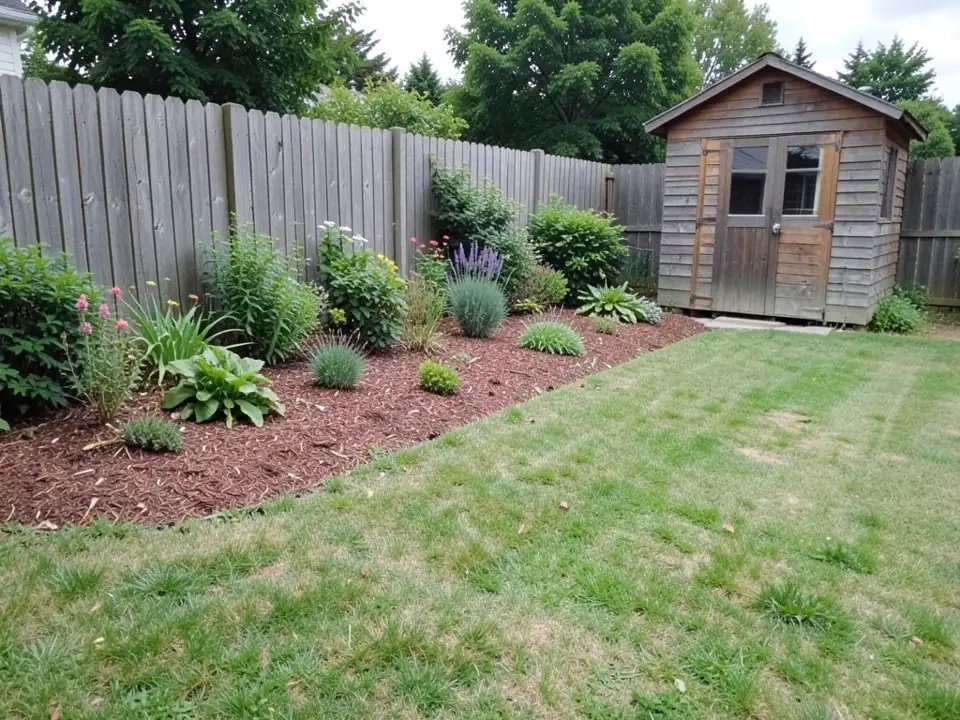
- Add a gently curved path of round gray concrete stepping stones set in the lawn, with light tan pea gravel filling the gaps between the stones, leading from the foreground to the door of the wooden shed. Change only the lawn path. Keep the mulch flower bed and its plants, the fence, the shed and the camera angle exactly the same.
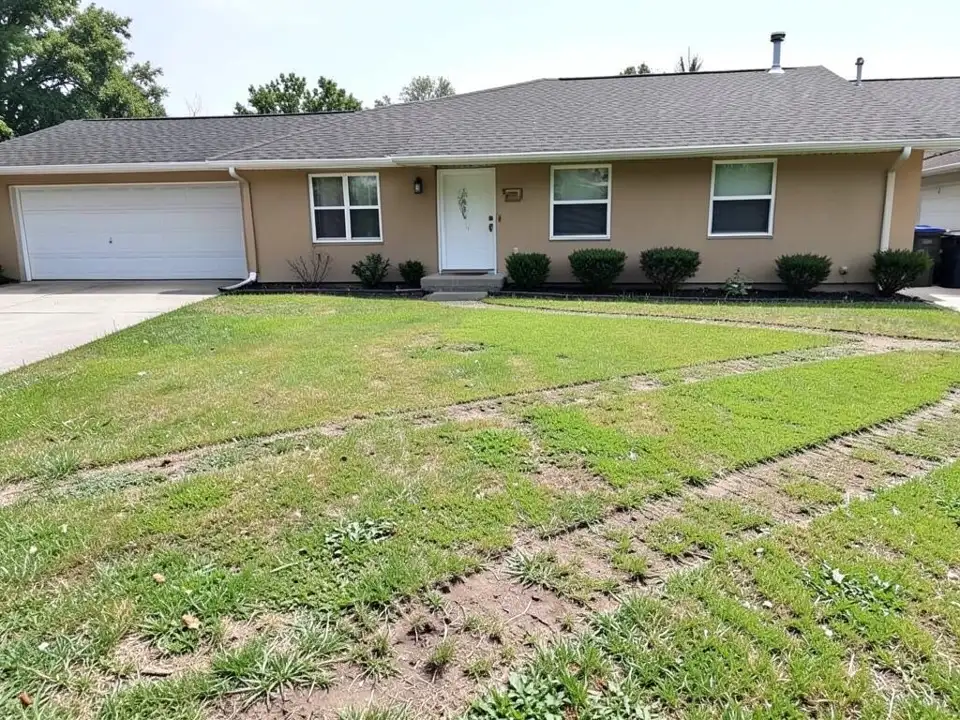
- Replace the worn dirt tracks across the lawn with a gently curved path of flat dark gray slate stepping stones with low green creeping thyme growing between them, leading from the driveway edge to the front door steps. Change only the path across the lawn. Keep the house, the garage door, the shrubs, the driveway, the trees and the camera angle exactly the same.
Frequently asked questions
How far apart should stepping stones be?
Western Interlock, a paver seller, suggests 24 inches center to center for most people's stride, or about 4-inch gaps between stone edges using a 2x4 as a spacer, or 3 to 6 inches to start and adjust. It also says to test with the shortest person's stride before laying. Other pages we read gave no figures.
What can I put between stepping stones?
The pages we read show gravel (Gardeningetc), groundcover such as creeping thyme, herbs or ground covers in a checkerboard layout (Gardeningetc, Empress of Dirt), and soil, gravel or mulch (Nicolock). B&Q also lists moss as a surround.
What is the best material for a stepping stone path?
The sources do not pick one. They show natural stone and flagstone, slate, concrete pavers, brick, wood tiles and decorative stones. Empress of Dirt notes that bricks and pavers in sandy soil sank over several years, so the base matters more than the material.
Should a stepping stone path be curved or straight?
Both are shown. Gardeningetc shows a curved path winding around trees for a woodland feel, and straight identical slabs for clean lines that echo the house. Our advice: choose by where the path is going, and lead it somewhere.
How do I stop stepping stones from sinking?
Empress of Dirt notes that bricks and pavers in sandy soil sank over several years, so a stable base matters; the page does not say how to prepare one. Nicolock describes a stable base of soil, sand or gravel with each stone set in a shallow hole so it sits level with the ground. Ask a local installer about your soil.
How do I light a stepping stone path?
The path pages we read did not cover this, so this is our advice: low path lights or small solar stakes beside the stones, aimed down and out of the walking line. Unilock, a paver seller, lists low-profile pathway lights and says to plan lighting early.
Do stepping stones need a base?
Nicolock, which sells its own stepping stones, says to prepare a stable base of soil, sand or gravel and set each stone in a shallow hole so it sits level. Empress of Dirt notes sinking in sandy soil. Neither gives a depth.
Do I need an account, and is it free?
Create a free account with an email code or Google to generate. You get 1 free render, and free renders carry a watermark. More renders and no watermark come with a paid plan.