Safety first, atmosphere second
Most guides suggest layering the lights. Start with the places a person could trip, then add light to the area where people sit.
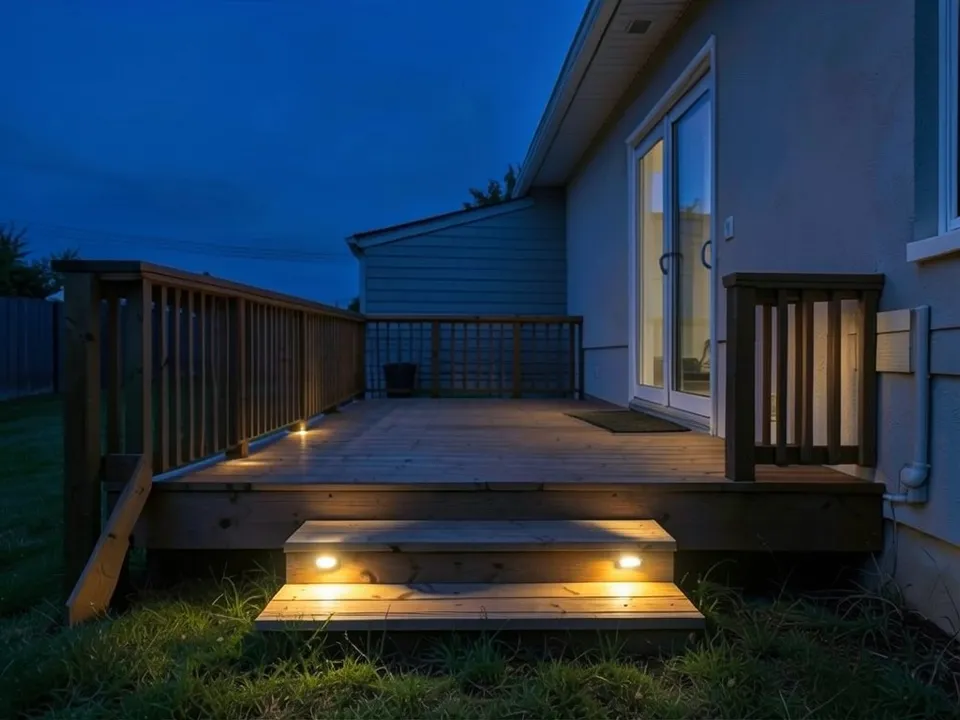
- Steps and level changes: Light each step so the edge is clear. Put them where they show the tread, not where they shine into the eyes.
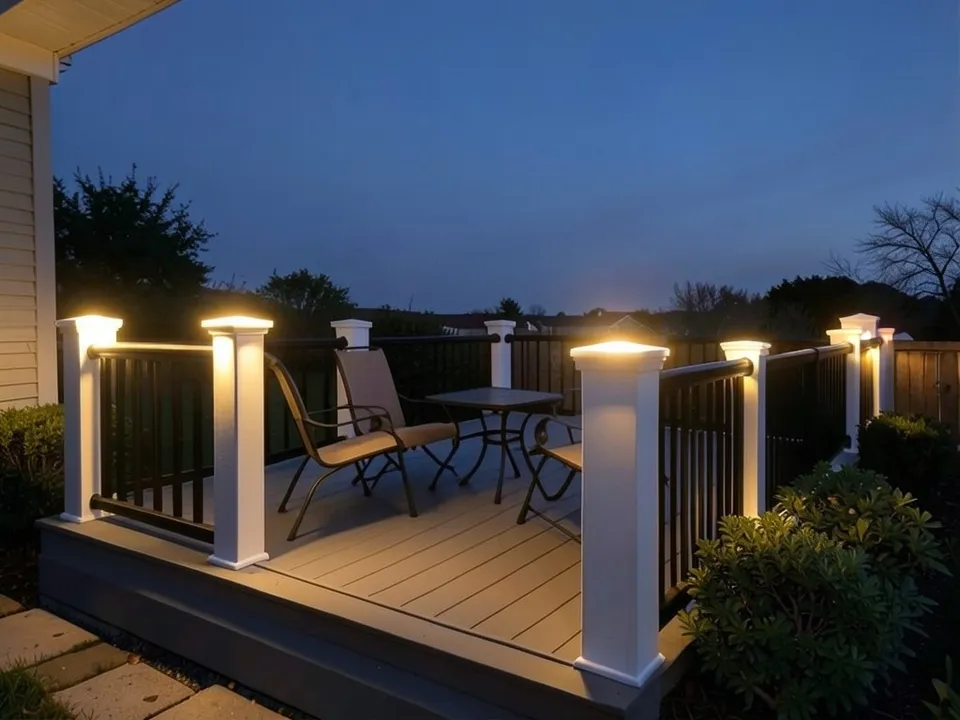
- Edges and rails: Post caps or a strip under the handrail show where the deck ends, which helps at night.
- Seating and dining: String lights, a pendant or a wall light give a softer glow over the table. A brighter task light near the grill makes cooking easier.
- Dimmers and timers: A dimmer lets you turn the level down for the evening, and a timer or sensor saves switching them on by hand.
Choosing the color and brightness
Warm white light, closer to the color of a candle or an old bulb, is what most deck guides suggest for a relaxed evening feel. Cool white looks sharper and clinical on wood. Brightness matters too: a few low lights usually look better than one bright one, and shielded fixtures keep the glare out of your eyes and the neighbours' windows. Try the color on your own photo before you buy anything.
Planning lights for a new or an existing deck
On a deck that is being built, you can run cable under the boards, set recessed lights into the floor and fit lights in the posts and risers. On an existing deck, the simple routes are solar post caps, clip-on or stick-on strips, plug-in strings and a wall light by the door. Our deck design page and deck railing page cover the rest of the deck, and our landscape lighting page covers the yard around it.
How to try deck lighting on your own deck photo
Use Custom mode for this. The Yard Redesign styles change the whole garden, while Custom lets you name the light and say what must stay the same.
- Take a photo of your deck at dusk or in the evening, with the whole area you want to light in the frame. The glow shows best against a darker scene.
- Open the landscape tool and sign in with Google or an email code. You get 1 free render with a free account.
- Under Select Landscape Mode, pick Custom.
- In the Custom Design Requirements box, name the kind of light, where it goes (steps, posts, rail, overhead) and its color, and list what must stay the same (deck, railing, furniture, house).
- Drop your photo into Upload Your Garden Image and press Generate Custom Design.
- Check where the lights landed, change one thing at a time and run it again.
What the AI can and cannot do
The AI shows a look: roughly where a kind of light would sit on your deck and how warm the glow would be. That helps you choose and explain it to an electrician or a supplier.
It does not plan the wiring, size the lights or check the code. It may add a light you did not ask for, draw it brighter or bigger than the real product, and it may put a fixture a little off from where you meant. The glow it draws is a guide to the look, not a measure of how much light will reach the boards.
Deck lighting instructions to paste into Custom mode
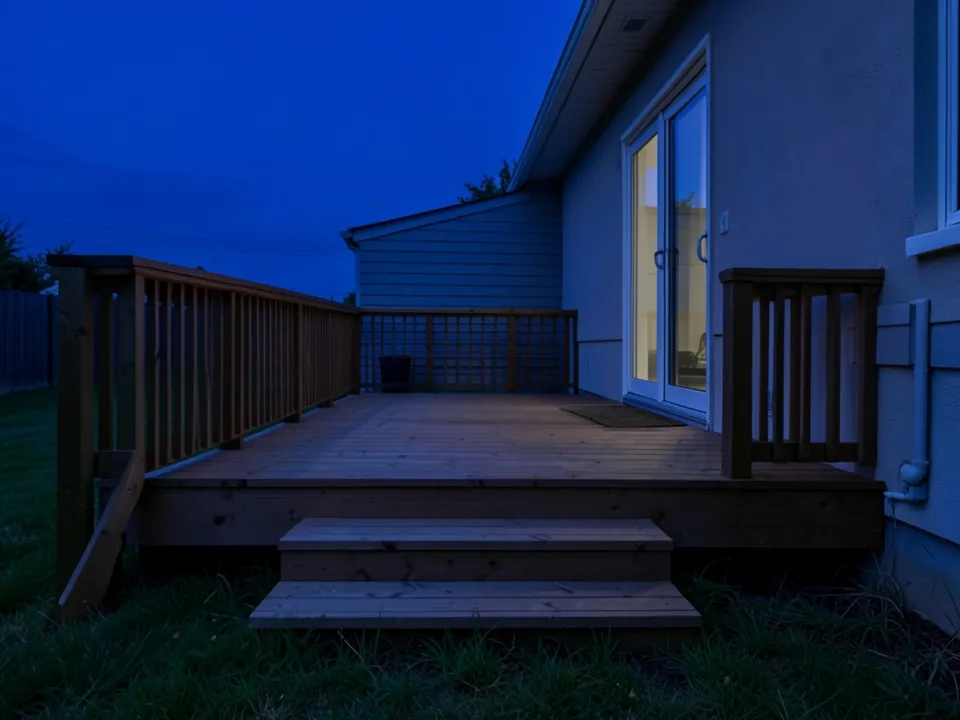
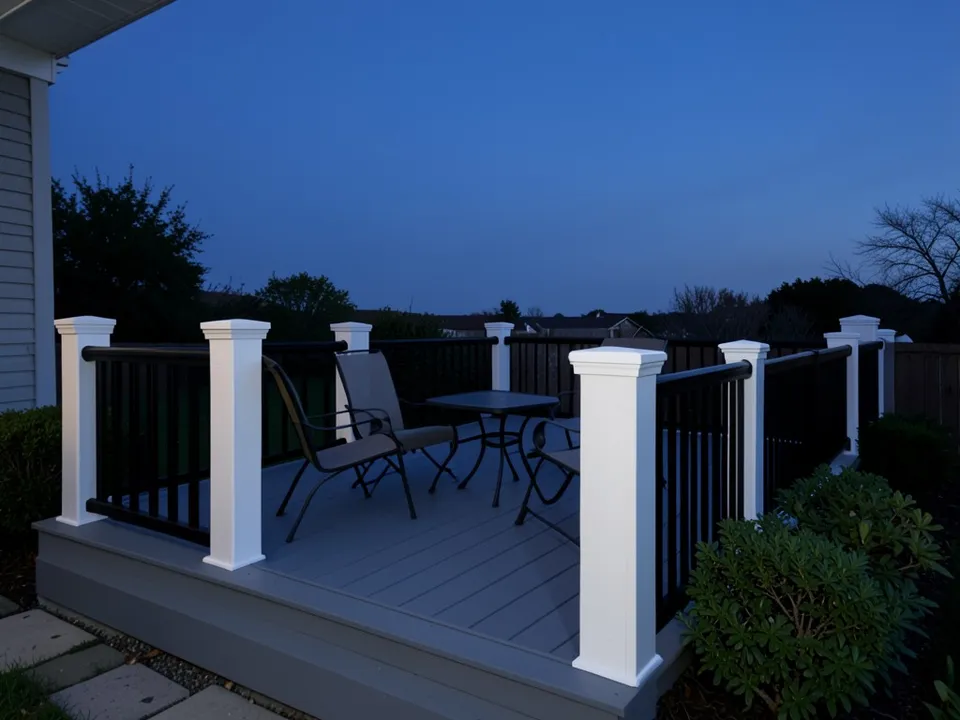
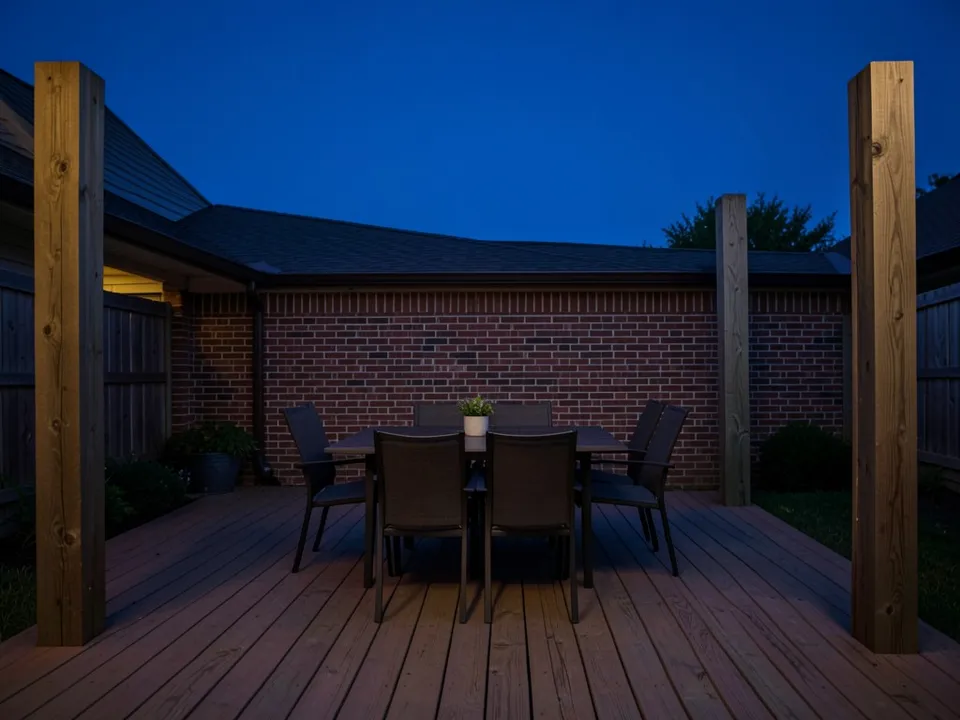
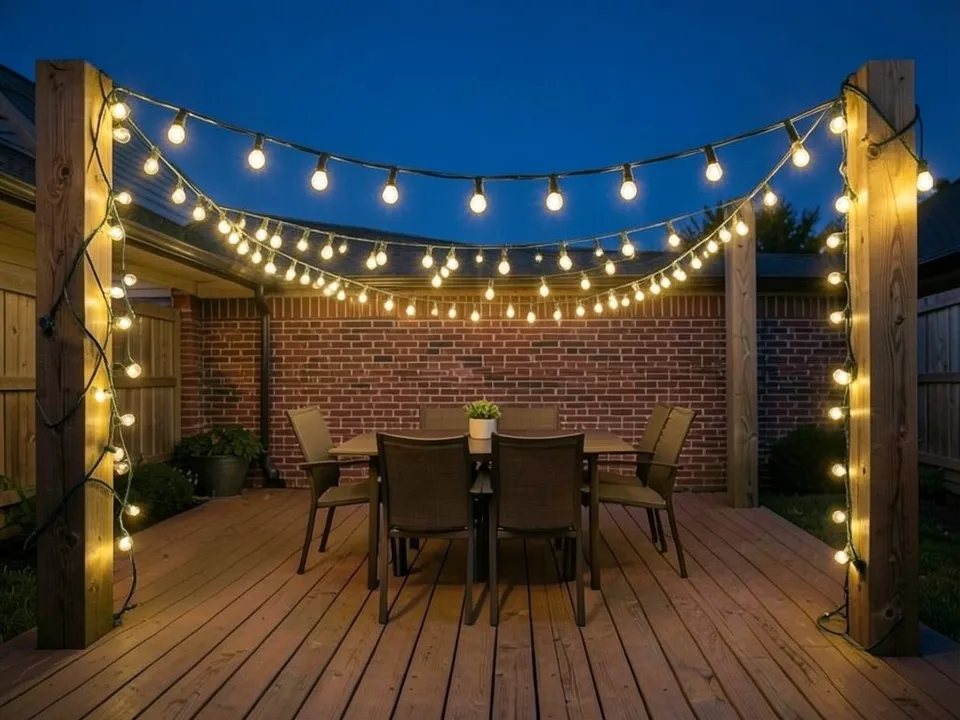
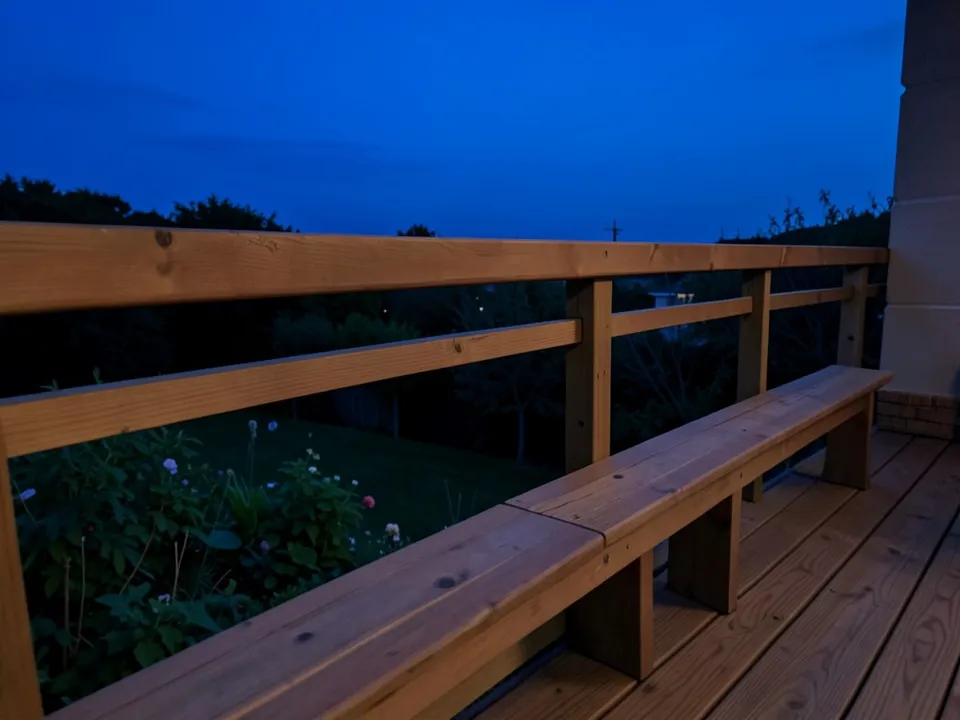
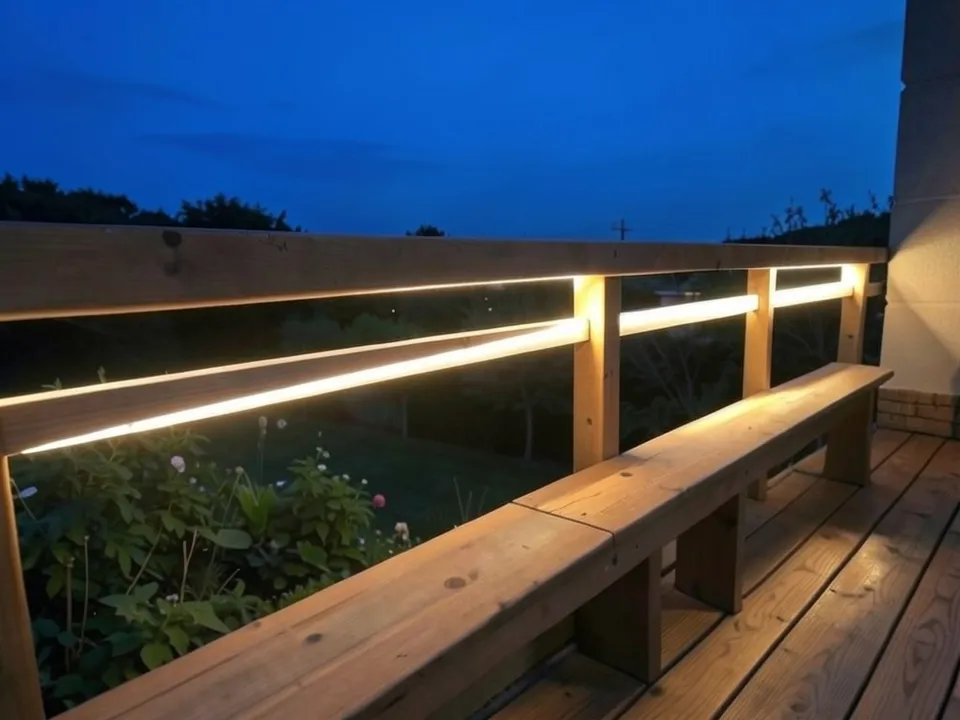
These are the exact instructions we used for the four examples above, in the same order. In the landscape tool, choose Custom, paste one into the Custom Design Requirements box, then upload your photo. Swap in your own feature, plant, spot and what must stay.
- Add small warm white LED stair lights built into the riser of every deck step, glowing softly so each step is lit and the light spills onto the tread below. Keep the deck, railing, house and lawn exactly the same. Keep everything else exactly the same. Same camera angle.
- Add a warm white LED cap light on top of every railing post, each glowing softly and casting a warm light on the deck boards and railing around it. Keep the deck, chairs, table and shrubs exactly the same. Keep everything else exactly the same. Same camera angle.
- Hang a warm white string of round café bulbs in swags across the whole deck from the post at one corner to the post at the other and back across the house wall, all bulbs glowing, lighting the table and the deck. Keep the deck, table, chairs and house exactly the same. Keep everything else exactly the same. Same camera angle.
- Add a thin warm white LED light strip under the handrail along the whole railing, glowing so a soft band of light falls onto the deck boards below. Keep the deck, bench, railing and garden exactly the same. Keep everything else exactly the same. Same camera angle.
Frequently asked questions
What are the best lights for a deck?
It depends on the job. Guides most often name stair riser lights for safety, post cap lights or an under-rail strip for the edge, and string lights or a pendant for the seating area. Most decks use two or three kinds together.
Where should lights go on a deck?
Start with the steps and any level change, then the edge of the deck, then the seating or dining area. Light the tread or the floor, not the eyes.
Are solar deck lights good enough?
They are the easiest to add because they need no wiring, and they suit post caps and step lights. Their brightness depends on the sun they get, so they can be dimmer after a cloudy day. For steady light, low-voltage or mains lights are more reliable.
Do I need an electrician to add deck lights?
Not for solar, plug-in or most low-voltage lights, which guides describe as do-it-yourself. Lights that connect to the house supply, such as wall lights and some recessed ones, are a job for a licensed electrician, and local code may apply.
What color of light is best on a deck?
Warm white is the usual suggestion for a relaxed evening feel, and it looks natural on wood. Cool white is sharper. Try both on a photo of your deck before you choose.
Can I add lights to an existing deck?
Yes. Solar post caps, stick-on or clip-on strips, plug-in string lights and a wall light by the door can all go on a finished deck. Recessed lights in the floor are easier when the deck is built.
How do I keep deck lights from glaring?
Use shielded or low-level fixtures, aim them at the boards or the steps and not at the eyes, and use a dimmer if you can. A few soft lights usually look better than one bright one.
Can the AI show deck lighting on my own deck photo?
Yes. Upload a photo in Custom mode, ideally taken at dusk, and name the kind of light, where it goes and its color, and say what must stay the same. You get 1 free render with a free account. It may add an extra light or draw one brighter than the real thing, so check the result and ask an electrician or a supplier for the details.
More deck and patio ideas
If your photo is dark or soft, run it through the AI photo enhancer first, then bring it back here. The exterior design tool covers the house itself. You can read more about who builds these tools on our about page.
For more, browse all of our landscaping ideas, sorted into front yards, backyards, patios, gardens, pools, styles and regions.