
Why the fence line is a hard spot
The strip along a fence is often narrow, shaded on one side and hard to mow. A solid fence also changes how plants grow next to it. University of Maryland Extension notes that it cuts air movement, so leaves stay wet longer and disease is more likely, and that shrubs along a fence tend to lean away from it toward the light.
Narrow strips of grass are hard to keep looking good, which is why UF/IFAS Gardening Solutions suggests shrubs or groundcover there instead. Most of the ideas below replace the lawn strip with a bed.
Fence line landscaping ideas
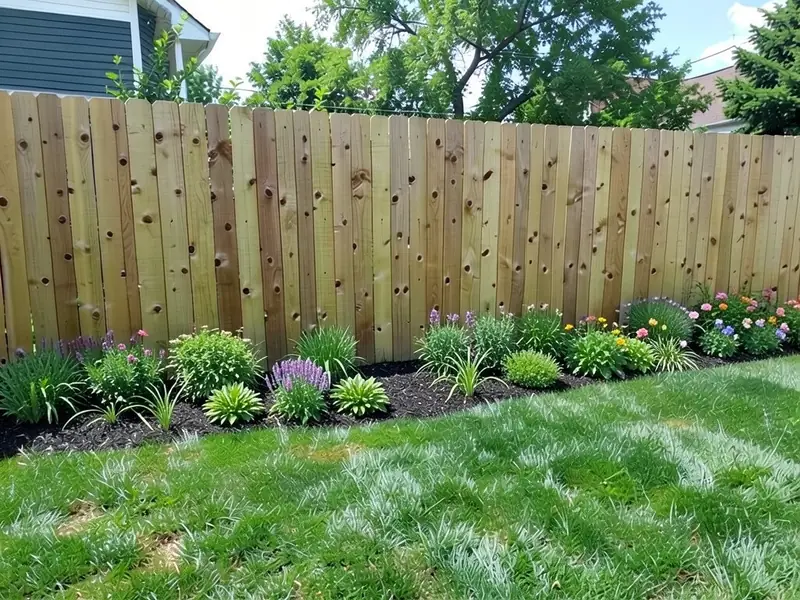
- 1. A layered border: Groundcover and low perennials in front, taller perennials and shrubs at the back, all in mulch, as in our first example. Leave a little room between the back row and the fence so you can reach the boards.
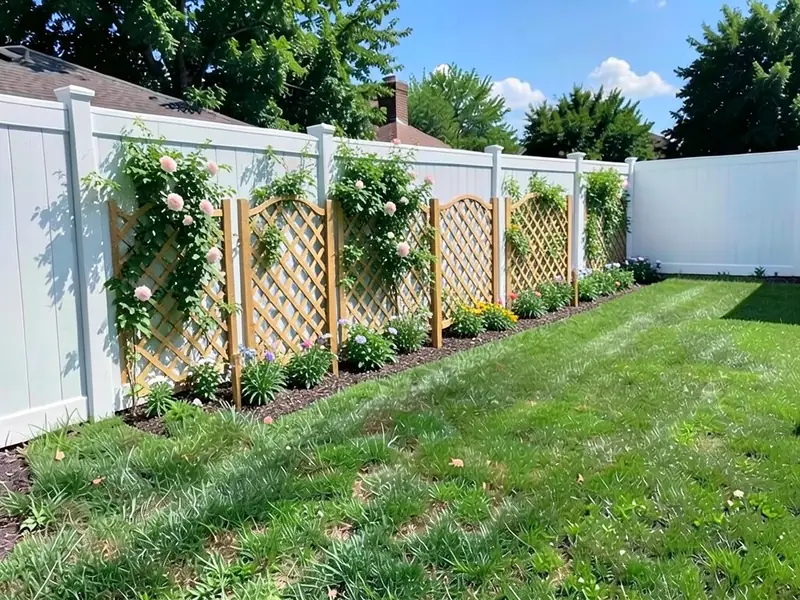
- 2. Climbers on a freestanding trellis: Vines on trellis panels set in front of the fence, as in our second example. UGA Extension warns that clinging vines can damage wood by trapping moisture and cutting airflow, which leads to decay, so give them their own support instead of the fence boards.
- 3. A narrow evergreen screen: A row of upright evergreens in front of a short or see-through fence adds height and privacy all year. WSU Extension suggests mixing species and spacing them two to three feet or more apart.
- 4. Raised beds or a vertical herb wall: A sunny fence line is a good spot for raised vegetable beds or a wall of herb planters, with the fence as a windbreak behind them.
- 5. A gravel and drought-tolerant strip: Where the fence line is hot and dry, gravel mulch with tough, low-water plants needs little care and no mowing.
- 6. A fence-corner nook: A bench, a small fire pit or a few lights in a corner turns the end of the fence line into a place to sit.
Choosing fence-safe climbers
UGA Extension sorts vines by how they climb, and that decides the support they need. Clinging vines, such as English ivy, Virginia creeper, trumpet creeper and climbing fig, attach with rootlets or sticky disks and can harm wood. Twining vines, such as wisteria, Carolina jessamine, mandevilla and morning glory, wrap around a post or wire. Vines with tendrils, such as clematis, cross vine, trumpet honeysuckle and grape, need thin wires or lattice to grab.
Some, like wisteria and common honeysuckle, can smother nearby plants without regular pruning, per UGA. For the support itself, UGA suggests cedar, redwood, cypress or treated lumber, or wrought iron. The City of Rockville, Maryland, warns that English ivy, wild grape and climbing euonymus harm trees by shading them and adding weight, another reason to keep aggressive vines away from a fence next to trees.
Planting tips along a fence
Plan for the full-grown size. UF/IFAS says a plant that needs pruning more than twice a year to fit its space is too crowded. University of Maryland Extension adds that suckering shrubs can spread under the fence to the neighbor's side.
If the fence is a screen, check the height your HOA or city allows for hedges, as WSU Extension advises. And before digging a bed or setting trellis posts, call 811, the national call-before-you-dig line, a few business days ahead.
How to try an idea on your own fence
The tool above is already in Custom mode. Custom lets you describe the bed, the climbers and what must stay the same.
- Take the photo in daylight from the lawn, looking at or along the fence, so the whole strip you want to plant is in frame.
- Describe the change in the Custom Design Requirements box: the plants from back to front, any trellis and how many panels, and what must stay the same, such as the fence, the house and the camera angle.
- Upload your photo under Upload Your Garden Image and click Generate Custom Design. You sign in with an email code or Google when you generate.
- Compare the result with your photo. If the AI leaves out the tall plants or adds extra panels, as it did in our examples, ask for them by name and number and try again.
What the AI can and cannot do
The AI shows a look: how a border, a trellis or a hedge would sit against your own fence and how much of the lawn it takes.
It does not know how much sun the strip gets, how big plants will grow or which vines are safe for your fence, and it does not always follow the instruction: above, it left out the shrubs and drew one more trellis panel than we asked for. Use the picture to choose a look, and the notes above to choose the plants.
Fence line instructions to paste into Custom mode
These are the exact instructions we used for the two examples above, in the same order. In the tool above, Custom is already selected: paste one into the Custom Design Requirements box, then upload your photo. Swap in your own plants and what must stay.
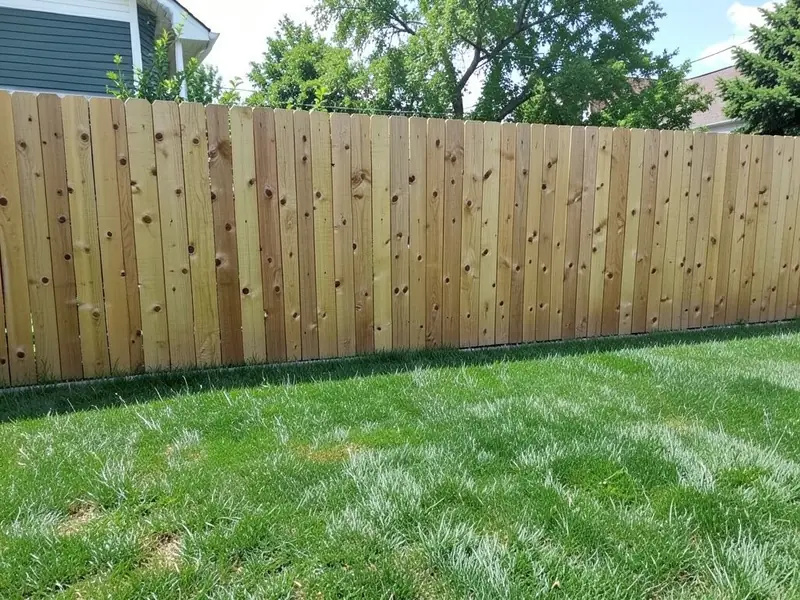
- Add a planting bed along the base of the fence: a layered border with flowering shrubs at the back, perennials and low plants in front, and dark mulch, with a small gap left between the plants and the fence. Change only the strip along the fence. Keep the fence, the camera angle, the lighting and everything else exactly the same.
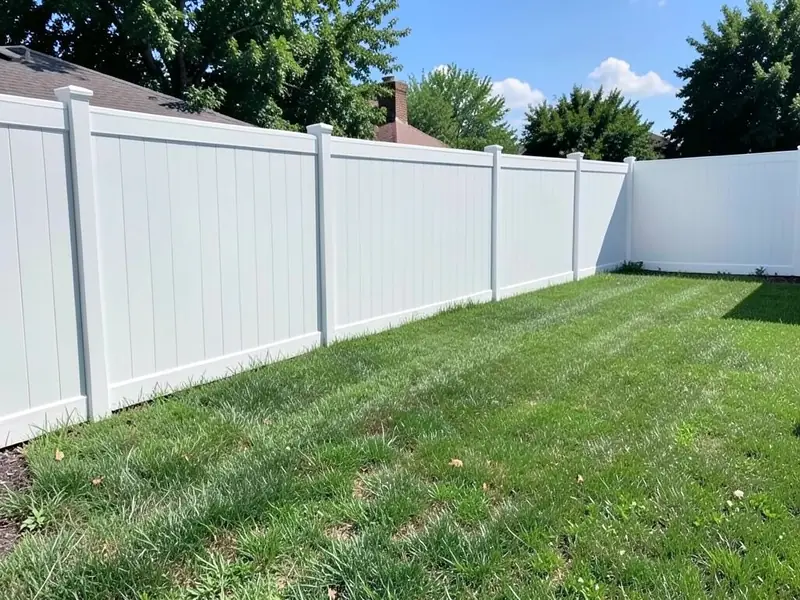
- Add three freestanding wooden trellis panels set a little in front of the fence, each with a flowering climbing vine growing on it, and a narrow mulched bed with low flowers along the fence. The vines grow on the trellis, not on the fence. Change only the strip along the fence. Keep the fence, the camera angle, the lighting and everything else exactly the same.
Frequently asked questions
What can I plant along a fence line?
A layered bed of shrubs at the back and perennials and groundcover in front, climbers on their own trellis, a row of narrow evergreens, or raised vegetable beds on a sunny fence. Pick plants for the sun the strip actually gets and for their full-grown size.
Will climbing vines damage my wood fence?
Clinging vines can. UGA Extension says vines that attach with rootlets or sticky disks, such as English ivy and Virginia creeper, can damage wood by trapping moisture and cutting airflow. Grow climbers on a separate trellis instead.
What grows well along a shady fence?
Shade-tolerant perennials and groundcovers, such as hostas and ferns, chosen for your area. Because a solid fence cuts airflow, University of Maryland Extension notes that leaves stay wet longer there, so give plants room to breathe.
How do I hide an ugly fence with plants?
Put taller shrubs or a narrow evergreen row in front of it, or set trellis panels with climbers just in front of the boards. A mix of species, spaced two to three feet or more apart, is what WSU Extension recommends for screens.
What are low-maintenance plants for along a fence?
Shrubs and groundcover instead of a narrow lawn strip, which UF/IFAS notes is hard to keep. Choose plants that fit their space when full grown, so they need little pruning.
Do I need to call 811 before digging along my fence?
Yes. Digging a bed or setting trellis posts counts. Call 811 a few business days ahead so buried lines are marked first.
Do I need an account, and is it free?
Create a free account with an email code or Google to generate. You get 1 free render, and free renders carry a watermark. More renders and no watermark come with a paid plan.