
How deep a koi pond should be
Koi need a deep section, both to get through winter and to stay cool in summer. SRAC says large koi tend to lose color and become stressed without a cool place to stay in hot weather. The sources do not agree on one number:
| Source | Depth |
|---|---|
| UF/IFAS Extension | At least 3 ft for koi; some koi experts say 6 ft |
| SRAC 435 (1999) | A section 3 to 4 ft deep that does not freeze; 18 to 24 in is enough in the deep south with only a few fish and plenty of plant shade |
| Texas A&M AgriLife (2014) | Most ponds 18 to 24 in, with sections 3 to 5 ft deep |
| Washington Koi & Water Garden Society | Some water at least 4 ft deep (Puget Sound) |
| Penn State Extension | At least 2 ft for most fish, depending on the fish |
So plan on at least 3 feet in the deepest part, more where winters are long. The deep part does not have to be the whole pond: SRAC suggests cutting the sides into 2 or 3 tiers about 12 inches wide, which help hold the liner in place and give ledges for plants, and both SRAC and Texas A&M AgriLife suggest a catch basin 6 to 12 inches deeper than the bottom to gather fish and debris when you drain it.
How many koi a pond can hold
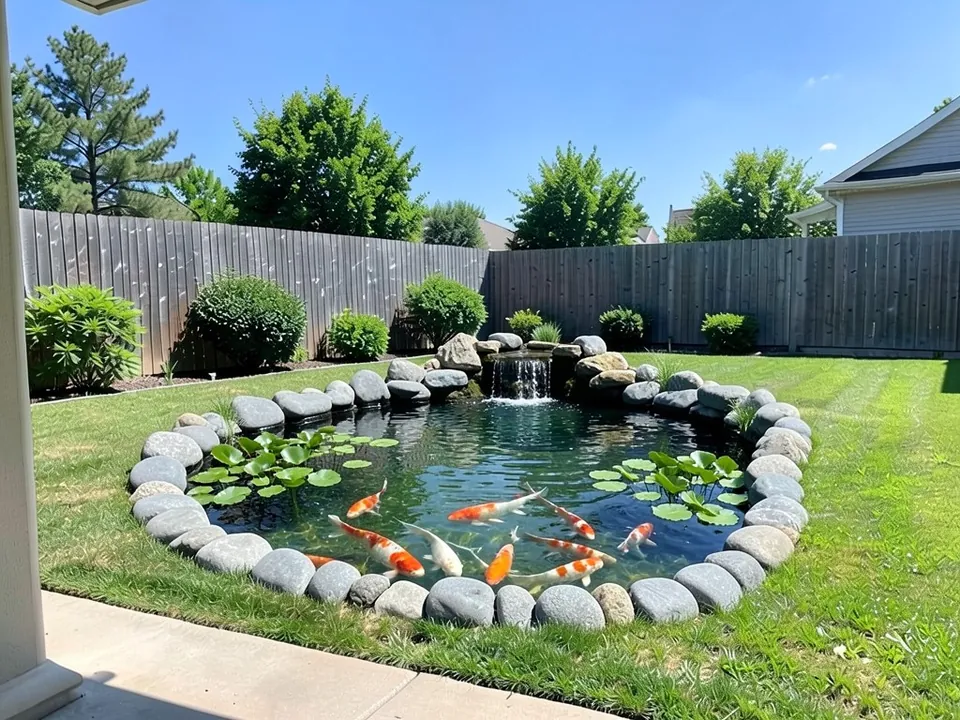
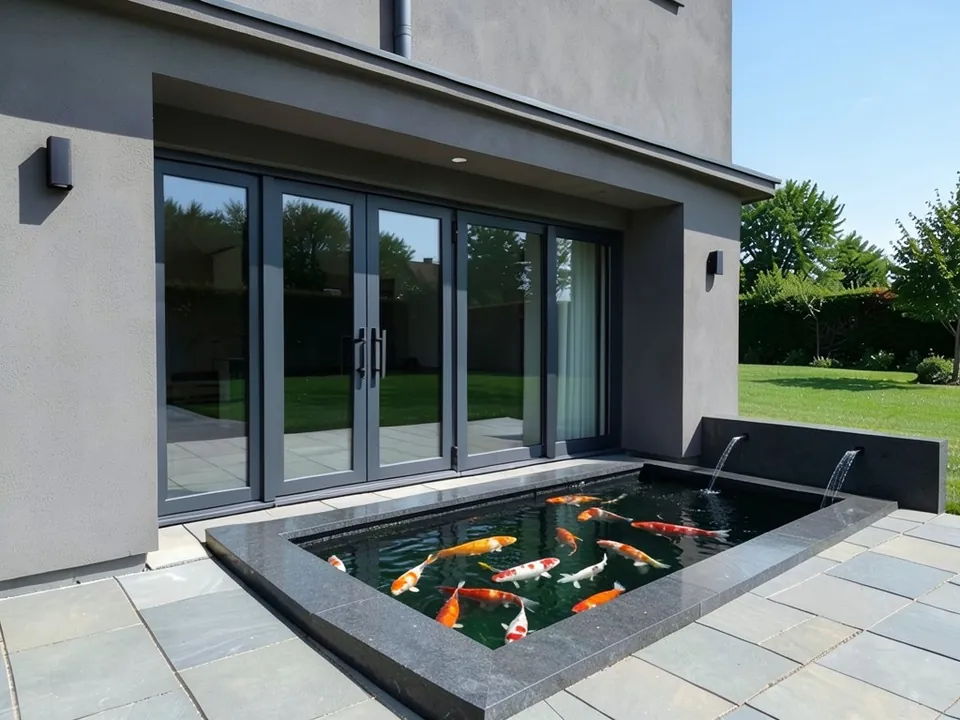
Every one of our AI pictures shows far too many fish. Texas A&M AgriLife's basic rule is no more than 1 pound of adult fish per 100 gallons, or 2 pounds with a bio-filter and strong aeration, and it says adult koi of 4 to 5 pounds are common in small ponds. Here is what that rule gives for four pond sizes:
| Pond | Gallons | No filter | Filter + aeration |
|---|---|---|---|
| 6 ft round, 2 ft avg deep | about 420 | 0–1 | 1–2 |
| 8 × 5 ft, 2.5 ft avg | about 750 | 1 | 2–3 |
| 10 × 6 ft, 3 ft avg | about 1,350 | 2–3 | 5–6 |
| 15 × 9 ft, 3 ft avg | about 3,030 | 6–7 | 12–15 |
Other sources land on either side of that. SRAC's surface-area rule is more generous: one 12-inch fish per 4.5 square feet without aeration, which it works out to 20 adult koi for a 9 by 15 foot pond. The Washington Koi & Water Garden Society says koi in a small, well-filtered pond need at least a couple hundred gallons each and even then may not grow well, and that many koi keepers keep 1,000 gallons per fish, which would mean 3 koi in the largest pond above. SRAC also notes that top exhibitors in Japan stock only 10 to 15 koi even in large ponds. UF/IFAS says a fish pond should be at least 500 gallons. Koi grow: Texas A&M AgriLife says they can live 60 to 70 years, though 20 or less is more common in ponds, so stock for their adult size, not the size at the store.
Filters, pumps and oxygen
- Do you need a filter?: SRAC says water gardens with lots of plants and a modest number of fish should not need one. Penn State says you will need one if you plan to keep a large number of fish, which a koi pond usually means.
- Two kinds of filter: Mechanical filters (leaf skimmers, foam filters, settling basins) trap dirt and debris; biological filters use bacteria to break down fish waste (SRAC, Texas A&M AgriLife). Bio-filters work best at a pH of 7 to 8 and an alkalinity above 50 ppm.
- Plant filter: Texas A&M AgriLife describes a plant basin about 10 percent of the pond's surface area, with the pond water run through it every 2 to 4 hours.
- Pump: Pumps are sized by the gallons per hour they move; put the pump at the bottom but raised slightly so it does not clog (Penn State). Plan where pipes, filters, lights and heaters will be hidden before you dig (Texas A&M AgriLife).
- Oxygen: Fish become severely stressed below 3 ppm of dissolved oxygen and die at about 1 ppm (SRAC). Waterfalls, fountains and air diffusers help keep it up. Fish gulping at the surface is a sign of low oxygen, and Texas A&M AgriLife says more aeration is the best fix.
None of the extension sources we read gives a pump turnover rate, bottom drain or skimmer sizing for a koi pond, so we do not give one here; ask a pond supplier to size the pump and filter to your pond's gallons.
Pond liners: EPDM, PVC, preformed or concrete
- EPDM rubber: The most common liner in ornamental ponds, because it is flexible and resists punctures and UV light (Texas A&M AgriLife); Penn State calls it the most popular with pond builders.
- PVC or polyethylene: Usually the least expensive (Penn State).
- Preformed plastic or fiberglass: Lasts the longest (Penn State), but SRAC says preformed ponds are shallow and not the best habitat for large fish.
- Concrete: Very long life and can be tiled, but expensive, can crack and leak, and must be cured (SRAC); Penn State calls it difficult to work with.
- How long liners last: SRAC (1999) says flexible liners usually last 10 to 20 years; Penn State (2024) says most newer liners are guaranteed for 25 to 50 years or longer.
- Sizing and fitting: Measure the longest length and width including the depth, and add about 2 feet to each (Penn State). Texas A&M AgriLife allows 1 to 3 feet on each side for burying the edge, and says to pack the hole with sand first so roots and rocks do not puncture the liner.
Where to put a koi pond
- Sun and shade: At least 6 hours of sun a day (SRAC, UF/IFAS), but SRAC warns that direct midday sun in the warmest months can overheat a shallow pond, and Penn State says some shade is ideal, especially for a small pond.
- Not under trees: Roots get in the way of digging and may cause damage later (SRAC).
- Away from runoff: Keep lawn and road runoff out (Penn State). Texas A&M AgriLife says to site the pond slightly higher than the ground around it, where the water table stays below the bottom; Penn State says a high water table will make the liner buckle.
- In view of the house: Easier to enjoy, to watch children and pets, and to spot predators, and cheaper to run pipes and power to (Texas A&M AgriLife).
- Power and buried lines: A pump needs an approved outdoor outlet, which may need an electrician (Penn State). Call the utility companies before digging (SRAC).
Keeping herons and raccoons away from koi
Bright koi are easy to spot. Virginia Cooperative Extension says koi and goldfish are extremely vulnerable to predators and need places to hide, and the Washington Koi & Water Garden Society lists herons, raccoons, kingfishers and cats among them.
- Depth: At least 3 feet gives fish a safe retreat from birds and from raccoons (Texas A&M AgriLife). UF/IFAS adds that a deep pond stops wading birds from standing in it to hunt.
- Hiding places: Make the middle deeper and add overhanging rock ledges (UF/IFAS).
- Netting: A net over the pond reduces bird predation (SRAC). Virginia Cooperative Extension warns that birds can get tangled, so keep it taut.
- Steeper edges: Virginia Cooperative Extension suggests a steeper shoreline against herons and egrets.
- Raccoons: Virginia Cooperative Extension says fencing and repellents do not work on raccoons; it suggests netting over the pond.
Koi in winter and summer, and how to feed them
- Winter: The deep section that does not freeze is where koi spend the winter (SRAC). The Washington Koi & Water Garden Society says koi can live in water down to 38°F, and slow down and eat very little until spring. Keep part of the surface open with a surface aerator so gases can escape (Illinois Extension); Penn State mentions a pond heater as another option.
- Summer: The same deep water is the cool retreat koi need in hot weather (SRAC). Texas A&M AgriLife says to feed early in the morning in hot months, since warm water and heavy feeding can lead to low oxygen.
- How much to feed: About 1 percent of the fishes' weight a day keeps adult fish healthy; 3 percent a day in water above 70°F is for fast growth (SRAC, Texas A&M AgriLife). Fish should finish the food in about 5 minutes; remove anything left after 15.
- When to stop: SRAC says fish do not feed in water below 45°F, and to feed less when the water is above 90°F.
Plants in a koi pond
Floating plants and lilies shade the water and hold back algae. SRAC suggests covering 50 to 75 percent of the surface; UF/IFAS says no more than two-thirds, and Penn State no more than 70 percent. Koi root around in pots: SRAC and Texas A&M AgriLife suggest wire or plastic net enclosures to protect plants, while the Washington Koi & Water Garden Society says koi are usually hunting bugs in the plants rather than eating them. Either way, pot the plants and expect some damage. Never release koi or pond plants into the wild: SRAC lists koi and many pond plants as non-native species that should never be allowed to escape.
Safety and permits
SRAC and Texas A&M AgriLife both say insurance companies may treat a pond deeper than 18 inches as an "attractive nuisance", and SRAC says it may need to be fenced. Penn State says even a small pond can be dangerous for small children and to check local rules on water depth and fencing before you dig.
How to try a koi pond on a photo of your yard
- Take a photo of the spot from where you would normally see the pond, in daylight, with the whole area in frame.
- Open the landscape tool, choose Custom, and paste one of the instructions below into the Custom Design Requirements box.
- Change the pond shape, the edging and what must stay, then generate.
- If it misses something, as every one of our examples did in some detail, reword that part and run it again.
The picture shows the look and where the pond would sit. It does not measure depth or volume, and it does not know how many fish fit, so plan those with the tables above.
Koi pond instructions to paste into Custom mode
These are the exact instructions we used for the 8 examples above, in the same order. In the landscape tool, choose Custom, paste one into the Custom Design Requirements box, then upload a photo of your yard or patio. Swap in your own pond shape, edging and what must stay.
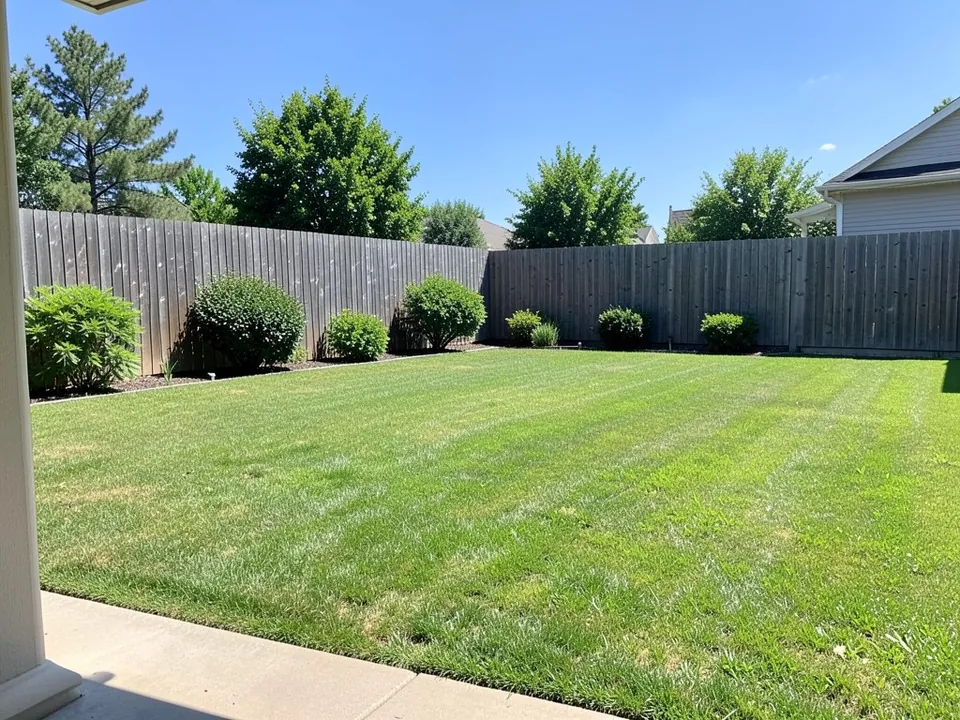
- Add ONLY a natural-looking koi pond in the middle of the lawn: an irregular kidney shape about 12 feet long edged with rounded grey boulders and river rock, a small rock waterfall at the back end, water lilies on one side, with several orange, white and red-and-white koi fish clearly visible swimming in clear water. Keep the house, the fence, the trees and the camera angle exactly the same.
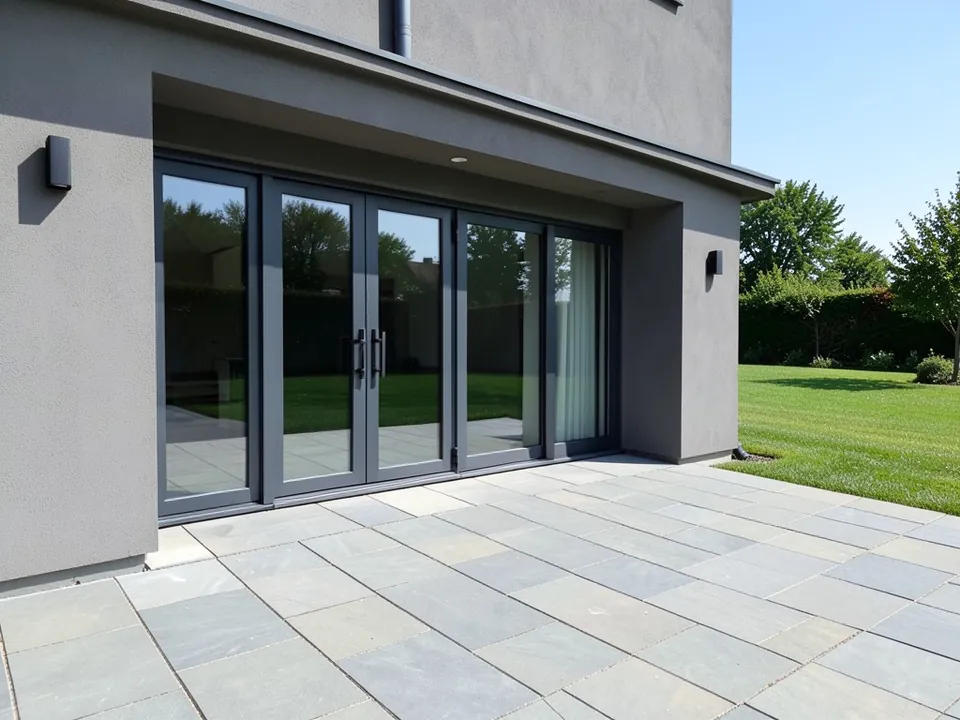
- Add ONLY a formal rectangular koi pond set into the patio, about 10 feet by 5 feet, with a smooth dark stone coping edge flush with the paving and three thin sheet-water spouts falling from a low wall at the far end, with several orange, white and red-and-white koi fish clearly visible swimming in clear water. Keep the house, the glass doors, the paving around it and the camera angle exactly the same.
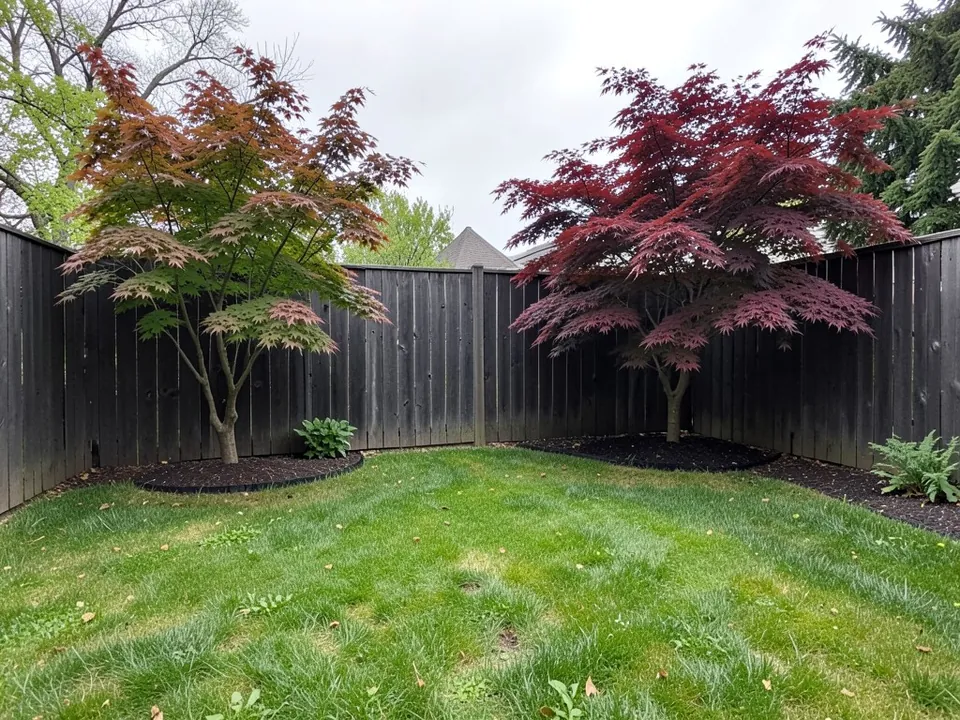
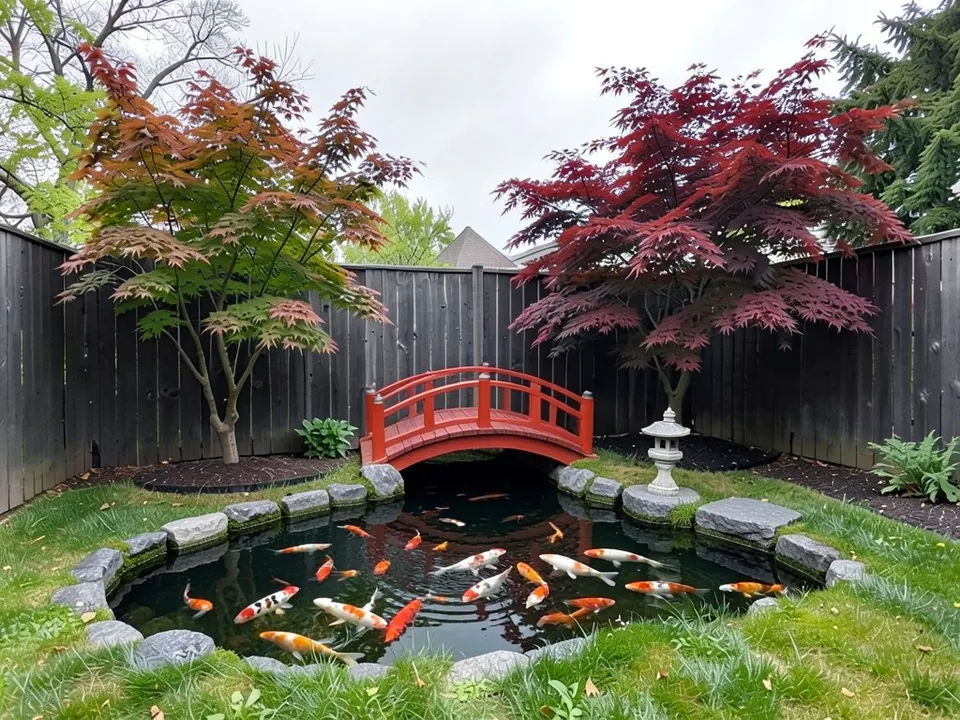
- Add ONLY a Japanese-style koi pond across the lawn: an irregular pond edged with grey stones and moss, a small arched red wooden bridge over the narrow middle, a stone lantern on the bank and a few stepping stones leading to it, with several orange, white and red-and-white koi fish clearly visible swimming in clear water. Keep the maples, the fence and the camera angle exactly the same.
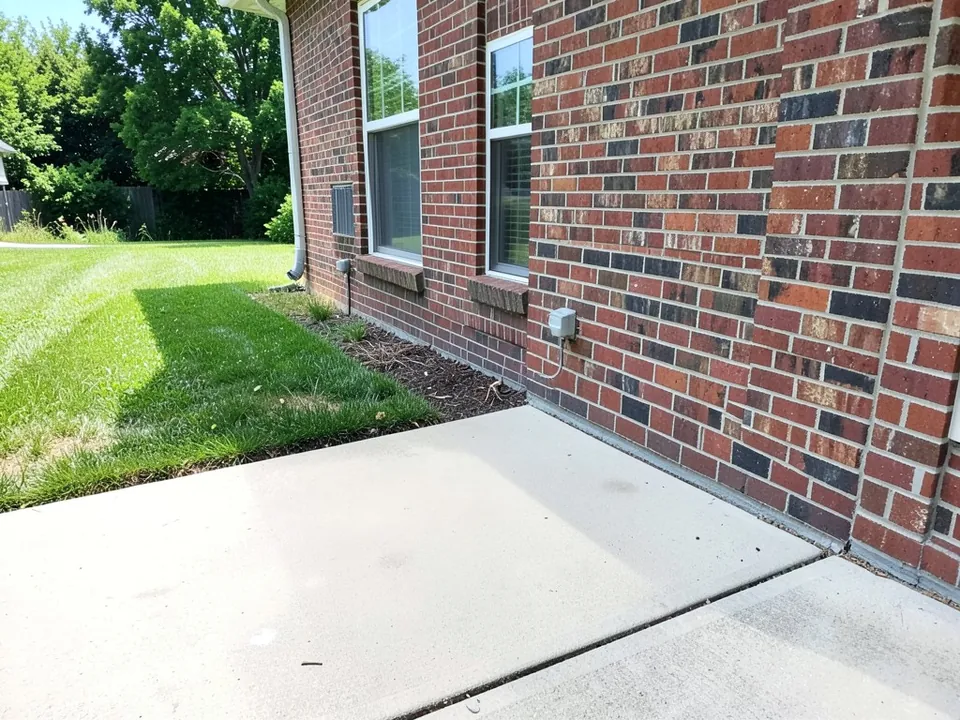
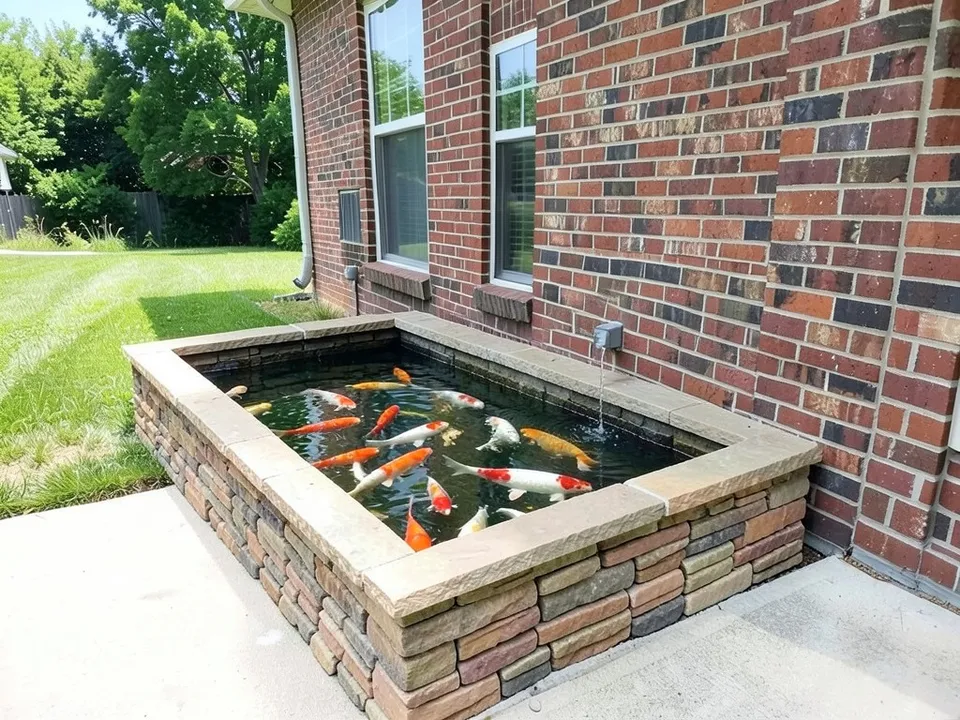
- Add ONLY a raised koi pond built on top of the patio against the house wall. The pond is NOT dug into the ground: it sits entirely above the patio paving, inside a rectangular box of stacked natural stone walls about 8 feet long that rise knee-high, about 2 feet above the patio, so the outer stone faces of the walls are clearly visible standing up from the paving, with a flat stone cap on top you could sit on. A small spout of water falls into it from the house wall. Several orange, white and red-and-white koi swim in clear water inside the raised walls. Keep the brick wall, the windows, the lawn and the camera angle exactly the same.
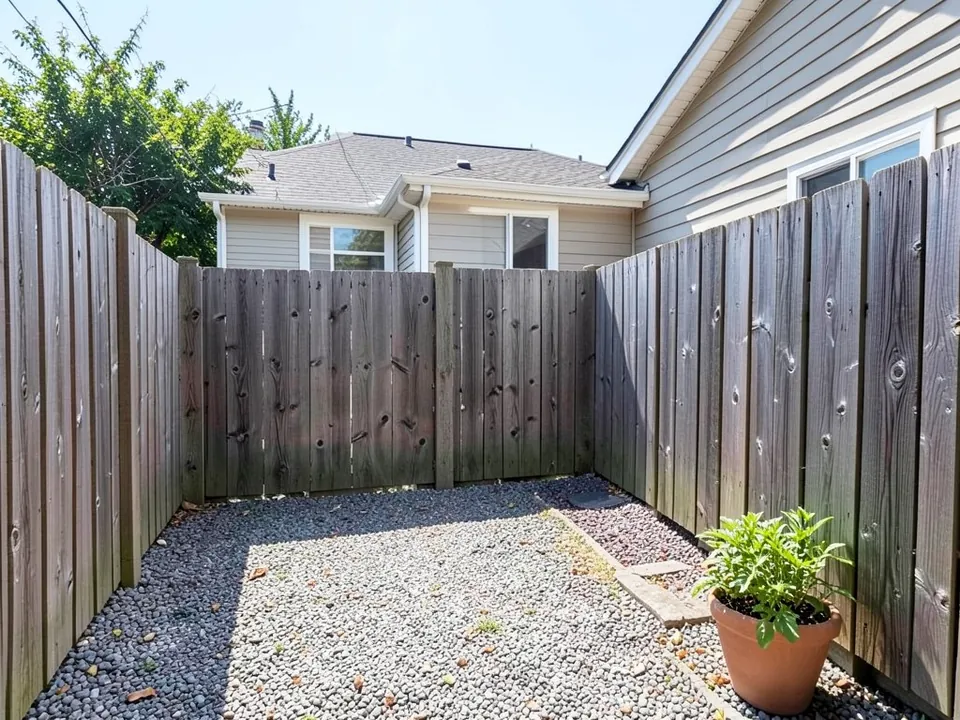
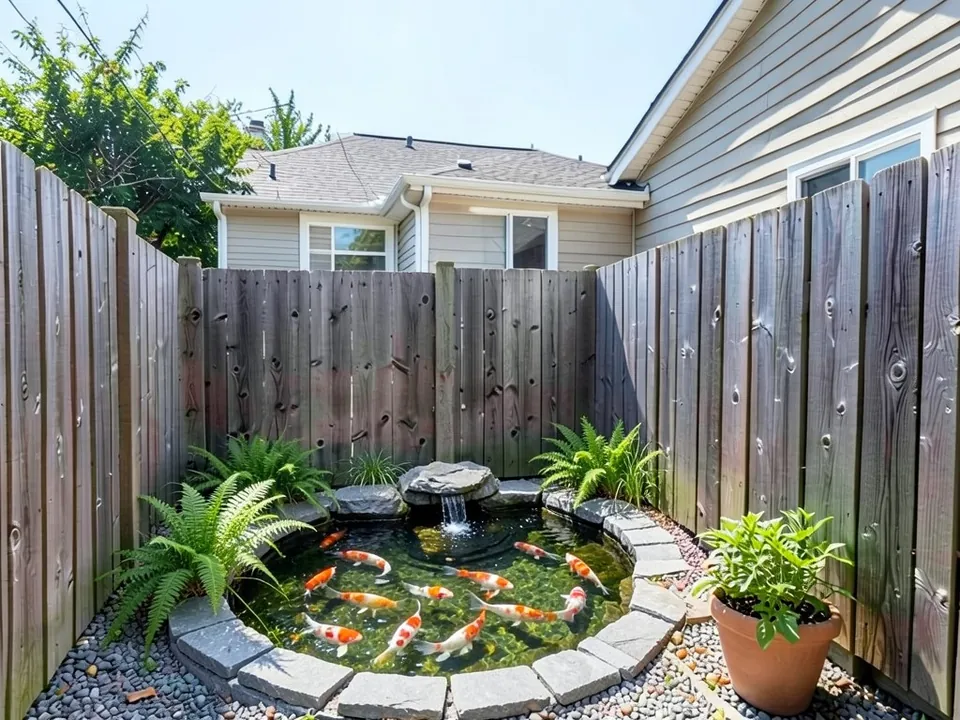
- Change ONLY the gravel corner: make it a small round koi pond about 6 feet across edged with flat grey stones, a short bubbling rock in it, ferns and grasses tucked at the edge, with several orange, white and red-and-white koi fish clearly visible swimming in clear water. Keep the fences, the potted plant and the camera angle exactly the same.
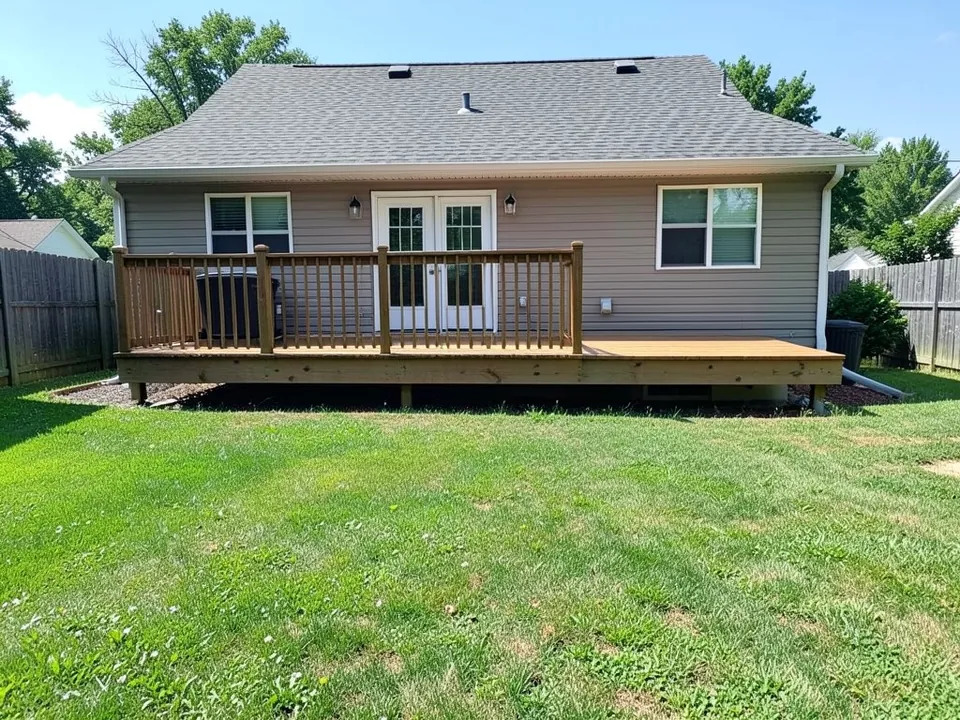
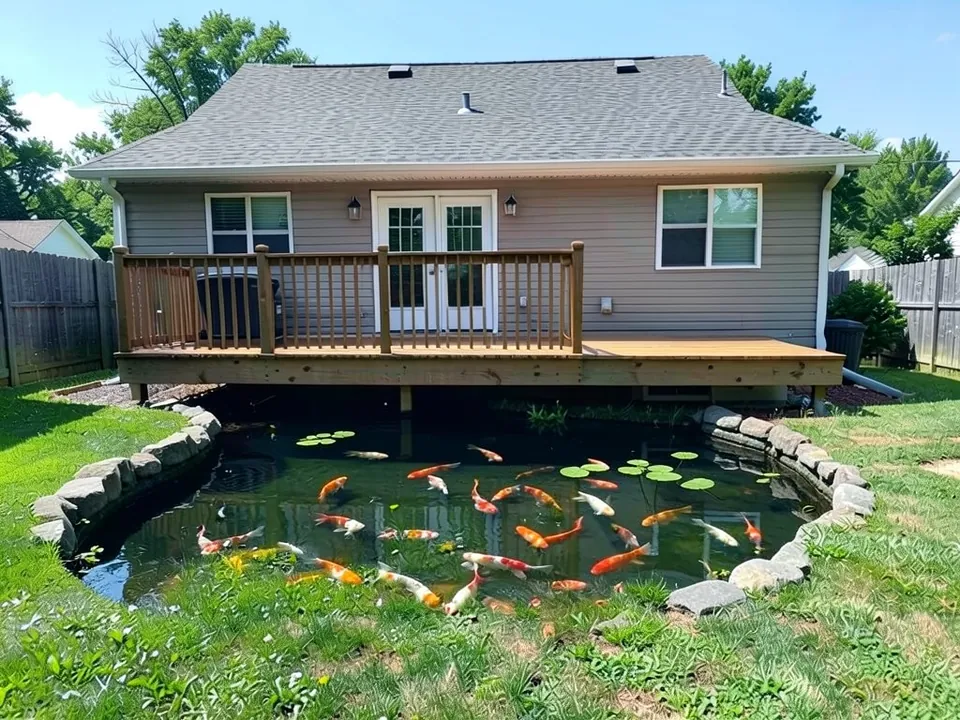
- Add ONLY a koi pond along the front edge of the deck so the deck boards overhang the water by a few inches, the pond curving out into the lawn with rock edging on the lawn side and a few water lilies, with several orange, white and red-and-white koi fish clearly visible swimming in clear water. Keep the deck, the house, the railing and the camera angle exactly the same.
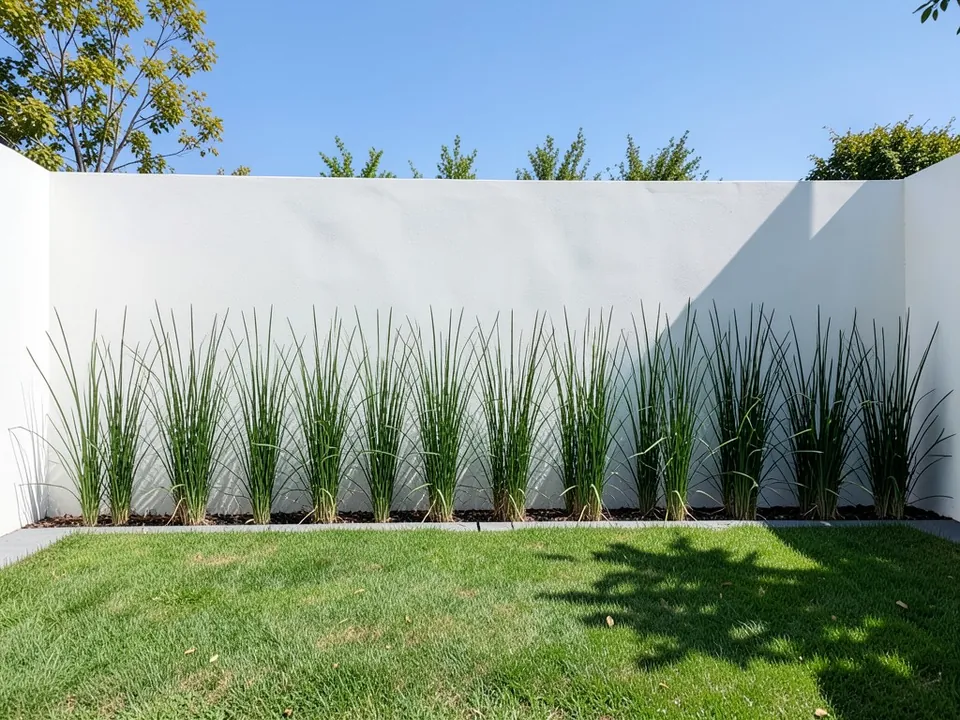
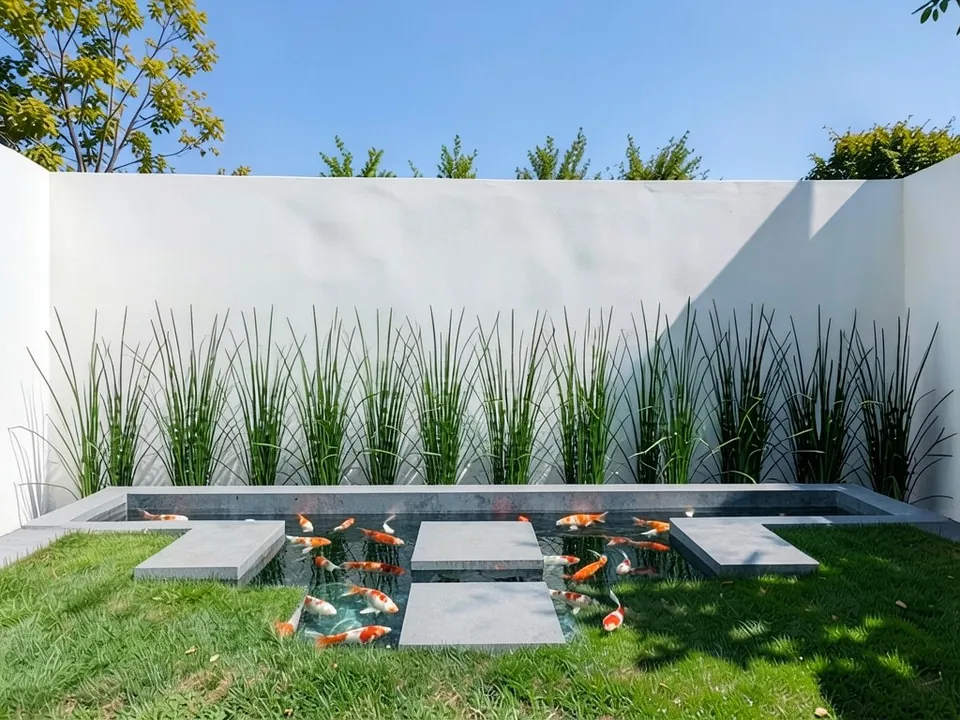
- Add ONLY a modern koi pond in front of the white wall: a long narrow rectangle with smooth grey concrete edges, three square concrete stepping pads crossing the water, with several orange, white and red-and-white koi fish clearly visible swimming in clear water. Keep the white wall, the grasses, the lawn and the camera angle exactly the same.
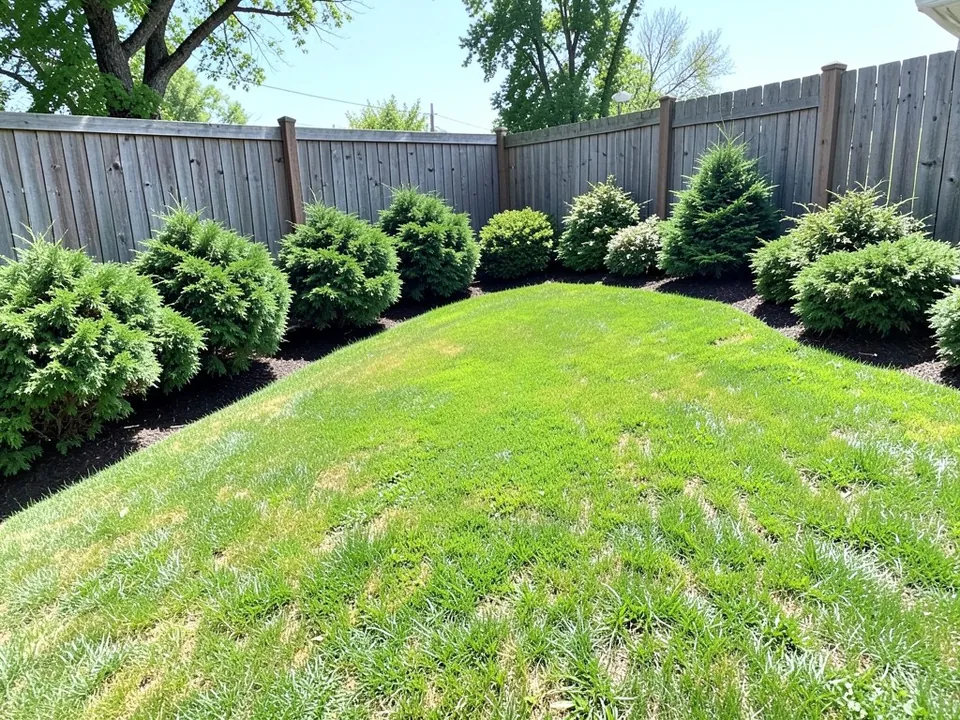
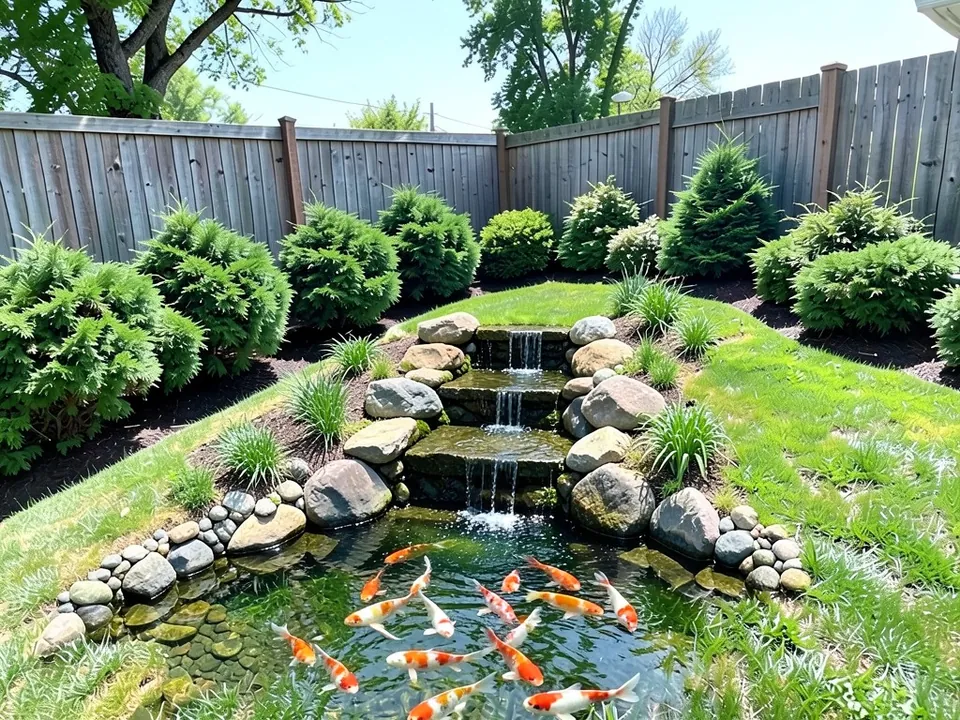
- Add ONLY a koi pond at the bottom of the slope with a stream and a two-step rock waterfall coming down the slope into it, boulders and river rock along the edges, low plants between the rocks, with several orange, white and red-and-white koi fish clearly visible swimming in clear water. Keep the fence, the evergreen shrubs and the camera angle exactly the same.
Koi pond questions
How deep should a koi pond be?
At least 3 feet in the deepest part (UF/IFAS), and some koi experts say 6 feet. SRAC suggests a section 3 to 4 feet deep that does not freeze, and Texas A&M AgriLife sections 3 to 5 feet deep. The rest of the pond can be shallower, on tiers.
How many koi can I put in my pond?
Texas A&M AgriLife's rule is 1 pound of adult fish per 100 gallons, or 2 pounds with a bio-filter and strong aeration. With adult koi at 4 to 5 pounds, a 400 gallon pond holds about 2 adult koi with a filter. Many koi keepers allow 1,000 gallons per fish (Washington Koi & Water Garden Society).
How do I work out how many gallons my pond holds?
Length × width × average depth in feet × 7.48. For a round pond, 3.14 × radius² × average depth × 7.48. A 10 by 6 foot pond with an average depth of 3 feet holds about 1,350 gallons.
Does a koi pond need a filter?
Usually. SRAC says ponds with lots of plants and only a modest number of fish may not, but Penn State says you need one if you keep many fish. Most koi ponds use a mechanical filter for debris and a biological filter for fish waste.
What is the best liner for a koi pond?
EPDM rubber is the most popular with pond builders (Penn State). PVC is cheaper. Preformed ponds last long but are shallow and not the best for large fish (SRAC). Concrete lasts longest but costs more and can crack.
How do I keep herons away from my koi?
Make the pond at least 3 feet deep so birds cannot stand in it (UF/IFAS, Texas A&M AgriLife), add overhanging rock ledges to hide under, and put a taut net over the pond (SRAC, Virginia Cooperative Extension).
Do koi need to be fed in winter?
No. SRAC says fish do not feed in water below 45°F. Koi slow down in cold water and eat very little until spring. Keep part of the surface open with an aerator so gases can escape.
Can I see a koi pond on a photo of my own yard?
Yes. Upload a photo to the landscape tool, choose Custom, and describe the pond: its shape, edging, waterfall and what must stay. The result is a picture for planning, not a measured plan.
Is the koi pond tool free?
You need an account, and it is free: 1 free render with a free account (sign in with Google or an email code). More renders come with a paid plan.
Sources for the koi pond facts
- Southern Regional Aquaculture Center, Water Gardens (SRAC 435, Michael P. Masser, 1999, PDF)
- Texas A&M AgriLife Extension, Ornamental Ponds & Water Gardens in Texas (EWF-014, 2014, PDF)
- UF/IFAS Gardening Solutions, Water gardens
- Penn State Extension, Water for wildlife: bird baths and backyard ponds
- Virginia Cooperative Extension, Wildlife in the home pond garden (426-045)
- University of Illinois Extension, Under the ice: what winter means for your pond
- Washington Koi & Water Garden Society (Monte McQuade), All about koi fact sheet (PDF)
- Pond Informer, Koi pond design ideas
- LawnStarter, Koi pond design ideas
- Gardeningetc, Garden pond ideas