
The one rule: protect the roots
Most of a tree's feeder roots sit in the top 12 to 18 inches of soil, according to Nebraska Extension, which is exactly where planting, digging and piling happen. Every idea below is chosen to leave those roots alone.
Penn State Extension advises against building a raised bed around a tree. Add no more than about two inches of soil or compost, none within about a foot of the trunk, and start planting about a foot out. Nebraska Extension warns that even a few inches of added soil can harm a tree, and that the decline may not show for two to five years.
Landscaping ideas around trees
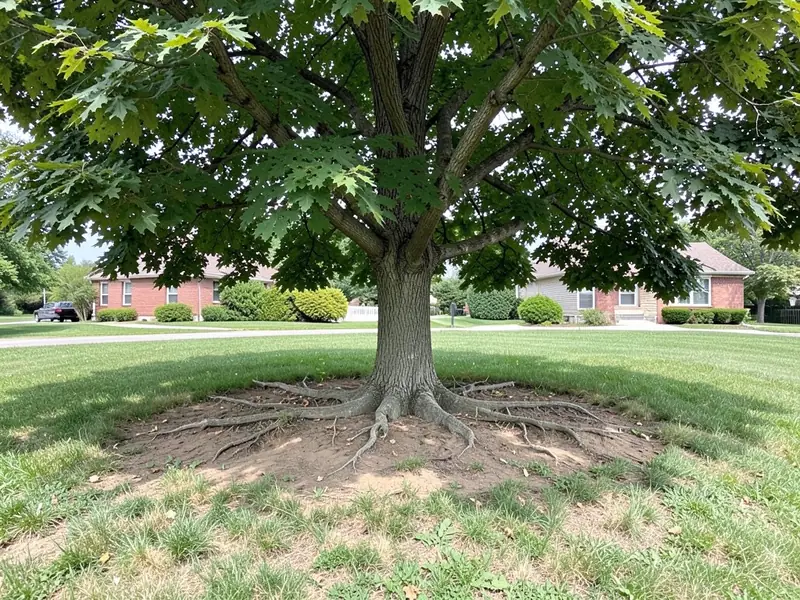
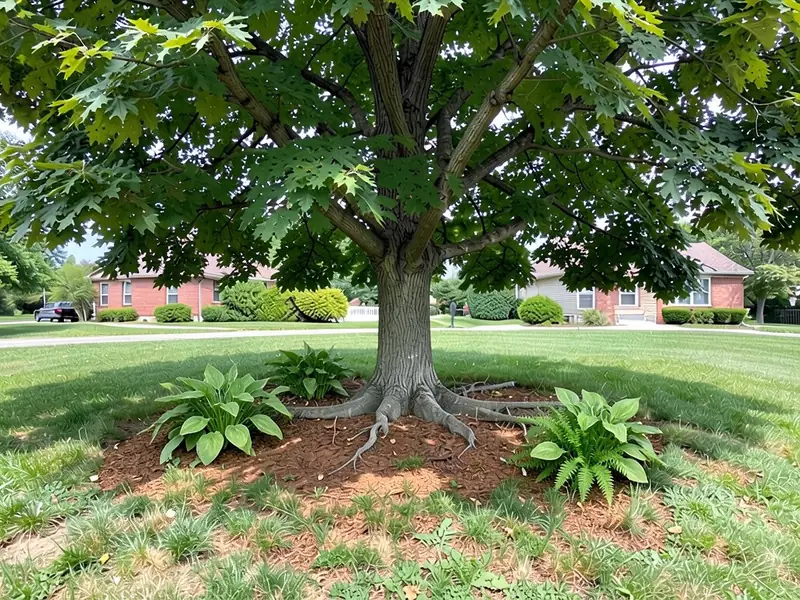
- 1. A mulch ring, done right: A wide, flat ring of wood chips in place of struggling grass, as in our first example. The Morton Arboretum suggests mulching young trees out to the drip line if you can, and older trees in a ring at least four to five feet across. Keep it to two to four inches deep and pulled back from the trunk: a donut, not a volcano.
- 2. A shade garden under the canopy: Shade-tolerant perennials planted in small pockets between roots. Penn State Extension suggests Lenten rose, Christmas fern, spring ephemerals, barrenwort, Japanese forest grass, hosta and coral bells; Nebraska Extension adds astilbe.
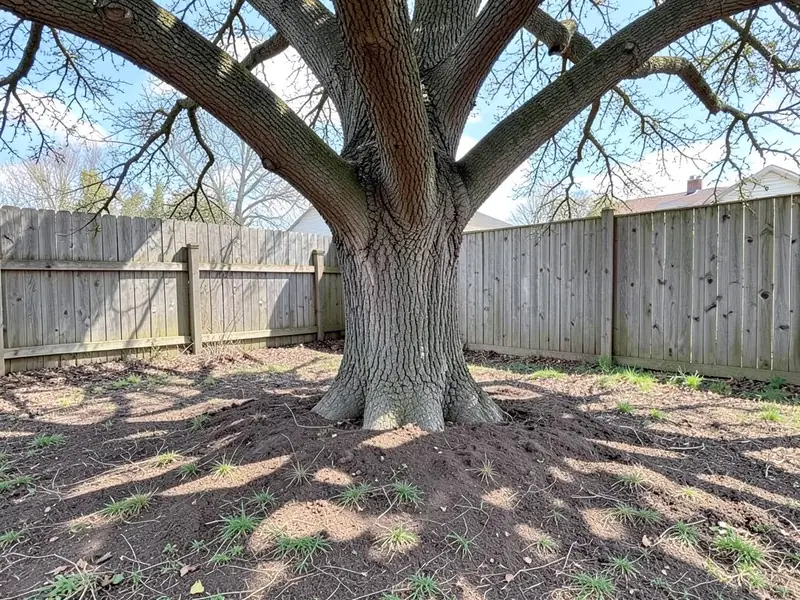
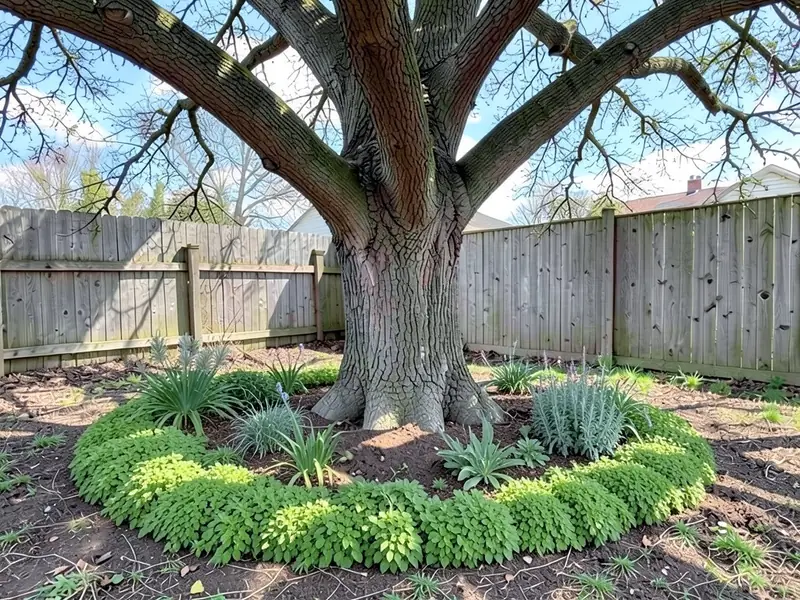
- 3. A groundcover carpet instead of grass: Grass often thins out in the shade and root competition under a tree. A low groundcover in a flat ring, with a thin mulch between plants, gives a finished look with no mowing up to the trunk, as in our second example.
- 4. An edged ring, set at ground level: A border of stones, bricks or steel edging defines the ring and keeps the mower away from the bark. Lay it on the existing grade: a ring of stacked stones filled with soil is the raised bed the extension services warn against.
- 5. Small trees and shrubs at the outer edge: Nebraska Extension mentions small trees such as redbud and serviceberry for planting under larger ones. Place them toward the edge of the canopy, not against the trunk.
- 6. A bench, hammock or reading spot: The shade under a mature tree is a natural seat. A freestanding bench or a hammock needs no digging near the trunk.
Mulch: how much and how close
The sources disagree a little on depth: Illinois Extension says two to three inches, ISA and Nebraska Extension two to four, and the Morton Arboretum three to four of medium-to-coarse material. Two to four inches, never deeper, keeps you within all of them.
Keep mulch off the trunk. The Morton Arboretum explains that mulch piled on the trunk keeps the bark wet and invites pests, disease and decay. Illinois Extension calls these piles mulch volcanoes and says they slowly kill trees: they starve roots of oxygen, rot the bark and encourage roots that circle and girdle the trunk. ISA says to pull mulch back several inches so the flare at the base of the trunk stays visible.
Arborist wood chips make a good mulch, per ISA. The Morton Arboretum warns that cocoa shell mulch is toxic to dogs.
Before you dig under a tree
Plant with a trowel in small holes, not a tiller. Nebraska Extension says tillers cut roots, so work any amendment in by hand. Penn State Extension adds: if you hit a root about two inches thick or more, refill that hole and move over.
Trees differ in how much disturbance they take. Penn State Extension lists red maple, river birch, honeylocust and sycamore among the more tolerant, and sugar maple, beech, oak, dogwood and pine among the sensitive. Black walnut suppresses many plants beneath it.
Any digging, even with a trowel, is a good time to call 811, the national call-before-you-dig line, a few business days ahead.
How to try an idea on your own tree
The tool above is already in Custom mode. Custom lets you describe the ring, the plants and what must stay the same.
- Take the photo in daylight from a few steps back, so the whole trunk base and the ground under the canopy are in frame.
- Describe the change in the Custom Design Requirements box: mulch, groundcover or plants, how wide the ring is, and say that the soil stays level and nothing is piled against the trunk. Name what must stay the same, such as the tree, the house and the camera angle.
- Upload your photo under Upload Your Garden Image and click Generate Custom Design. You sign in with an email code or Google when you generate.
- Compare the result with your photo. If the AI draws a raised bed or a mound, ask again for a flat ring at ground level.
What the AI can and cannot do
The AI shows a look: how a mulch ring, a groundcover or a shade bed would sit under your own tree and how big the ring could be.
It knows nothing about the roots, the species or the soil, and it does not always follow the instruction: in our examples one ring came out smaller and messier than asked, and the other left bare soil where we asked for mulch. Use the picture to choose a look, and follow the root rules above when you plant.
Around-the-tree instructions to paste into Custom mode
These are the exact instructions we used for the two examples above, in the same order. In the tool above, Custom is already selected: paste one into the Custom Design Requirements box, then upload your photo. Swap in your own plants and what must stay, and keep the line about not raising the soil.
- Replace the patchy grass and bare dirt under the tree with a wide flat circle of brown wood-chip mulch that stays a few inches away from the trunk, with a few hostas and ferns planted in the mulch near the edge of the circle. Do not raise the soil or pile mulch against the trunk. Keep the tree, the house, the camera angle, the lighting and everything else exactly the same.
- Plant a low green groundcover of creeping plants and a few shade-loving perennials in a wide flat ring under the tree, with a thin layer of mulch between the plants, keeping the base of the trunk clear. Do not build a raised bed or wall around the tree. Keep the tree, the fence, the camera angle, the lighting and everything else exactly the same.
Frequently asked questions
Can I put a raised flower bed around a tree?
It is not recommended. Penn State Extension advises adding no more than about two inches of soil, none within about a foot of the trunk, and Nebraska Extension warns that even a few inches of added soil can harm a tree, with decline that may not show for two to five years.
How much mulch should go around a tree?
Two to four inches, never deeper, and pulled back from the trunk so the flare at its base stays visible. Sources range from two to three inches (Illinois Extension) to three to four (Morton Arboretum). Never pile it against the bark.
What plants grow well under trees?
Shade-tolerant plants that take root competition. Penn State Extension suggests Lenten rose, Christmas fern, barrenwort, Japanese forest grass, hosta and coral bells; Nebraska Extension adds astilbe, and small trees such as redbud and serviceberry toward the canopy edge.
What can I do about exposed tree roots in the lawn?
Cover the area with a flat ring of mulch, two to four inches deep, instead of trying to grow grass over the roots or burying them in soil. Keep the mulch off the trunk.
Can I till under a tree to plant?
No. Nebraska Extension says tillers cut roots; work amendments in by hand and plant in small holes. If you hit a root about two inches thick or more, refill the hole and try a spot nearby.
How far out should the mulch ring go?
The Morton Arboretum suggests out to the drip line for young trees if possible, and at least a four to five foot ring for older trees. Wider is better for the tree.
Do I need an account, and is it free?
Create a free account with an email code or Google to generate. You get 1 free render, and free renders carry a watermark. More renders and no watermark come with a paid plan.