Best Trees for the Front Yard: Dogwood, Japanese Maple, Crepe Myrtle and Magnolia, Shown on Your Own House

A front yard tree does more for curb appeal than almost any other single plant. The guides that rank for this search split the picks into flowering and ornamental trees, large shade trees, evergreens, and small trees for tight spaces, and they all say the same first thing: the right tree depends on your climate, your space and the look you want.

More renders come with a paid plan (see pricing).

Upload a photo of your house, name the tree you are considering, and our AI returns the same view with it planted. Below are the most-named trees compared, how to choose, and four before and after examples with the exact instructions we used.

Best trees for the front yard compared

TreeKnown forWhat to know
Flowering dogwoodSpring flowers, a classic ornamentalBob Vila calls it one of the most popular front-yard ornamentals; it does best in sunny, sheltered spots with room to spread sideways
MagnoliaLarge pink and white blooms in early springA distinctive change from plain green foliage; check the size of the variety you pick
CrabappleSpring flowers and small fruitGuides describe it as low maintenance, and many varieties stay under about 20 feet tall
Japanese mapleDeep red or burgundy leaf colourColour that lasts for months; it prefers moist, well-drained soil and tolerates some drought
Crepe myrtleSummer flowersNamed by Bob Vila and Gardening Etc among the front-yard picks; best in warm regions
Oak, tulip poplar and other shade treesHeight, width and shadeSuited to larger front yards where a big tree has room to grow
Pine and other evergreensYear-round greenHomeAdvisor describes pine as low maintenance; varieties differ by zone
ArborvitaeA screen that still lets light throughNamed in one guide as the pick for a front-yard privacy screen
OliveA Mediterranean lookLivingetc says it likes a Mediterranean-style climate and a sunny, sheltered spot

These are the trees the front-yard tree guides name most often. The table says what each one is known for and the main thing to know before you plant it.

How to choose a front yard tree

The guides agree on four checks, in this order.

  • Your hardiness zone: Different trees thrive in different climates, so start with your USDA zone. A tree outside its zone will struggle, however good it looks in a photo.
  • Mature size: Ask how tall and wide it will grow, and whether the shape is round or upright. Many photos of trees show them at full size, which a new tree is not.
  • Scale to the house: Small trees lift curb appeal without hiding or dominating the house. A big tree needs a big yard.
  • Sun, soil and space: Check the sun, the soil and the room above and around the spot, including the roof, the walkway, the driveway and anything overhead. If space is tight, a smaller tree or a tree in a pot can do the job.

Front yard trees before and after

In each pair, the left image was generated by AI as a stand-in for an ordinary yard, and the right image is that same picture edited by AI from a written instruction. The exact instructions are listed lower on this page. None of them are photos of real customer homes.

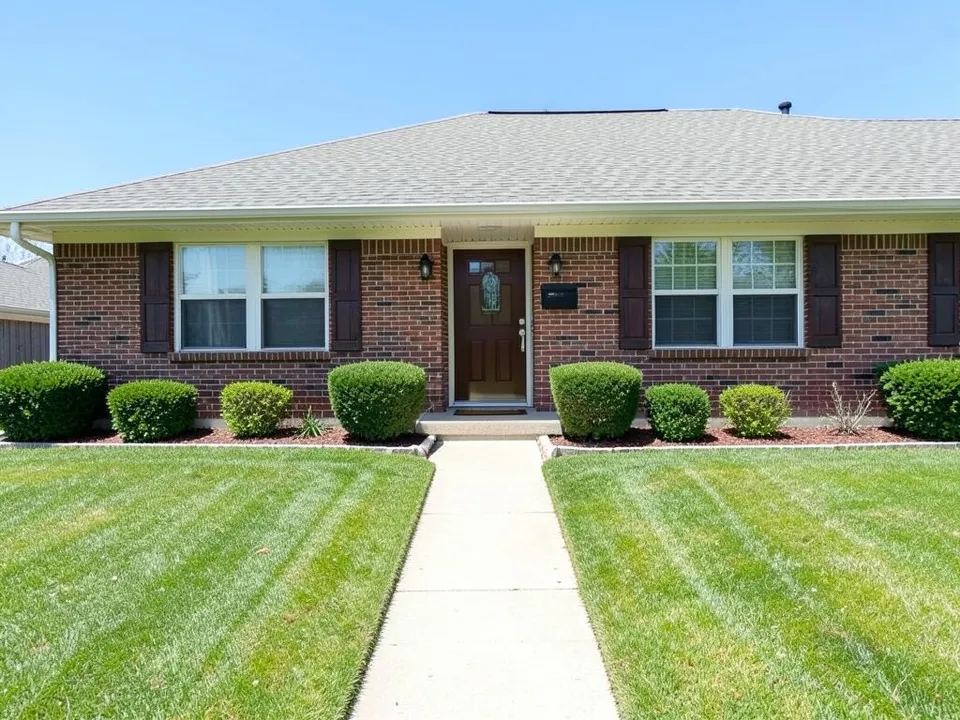
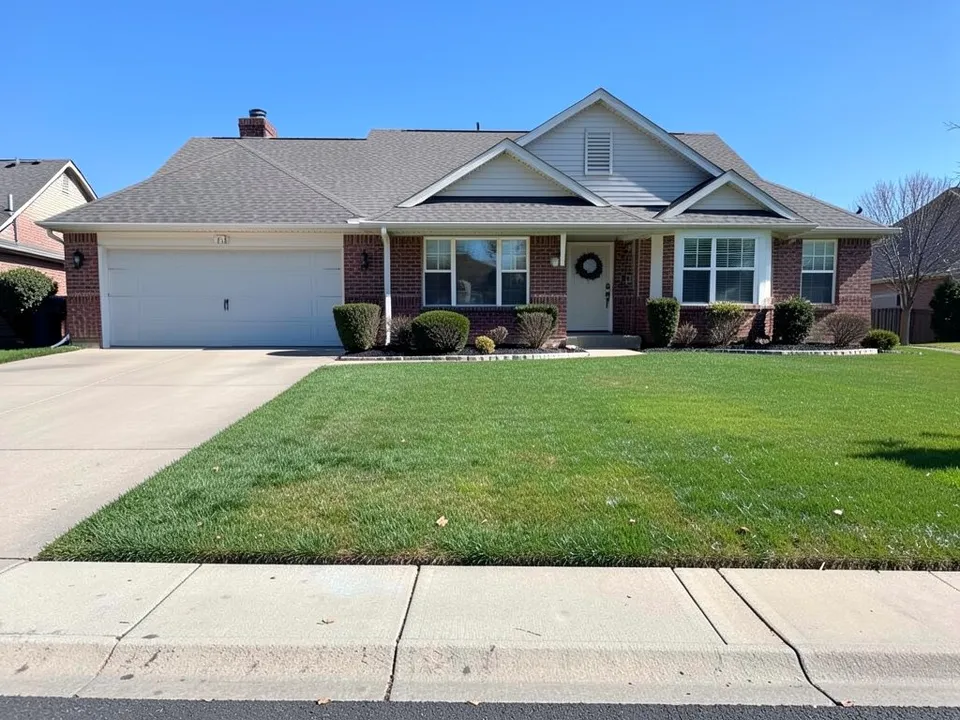
AI-generated example: the front of a single-storey brick ranch house with a plain mown green lawn, a concrete walkway to the front door and clipped shrubs along the wall, with no trees

Before

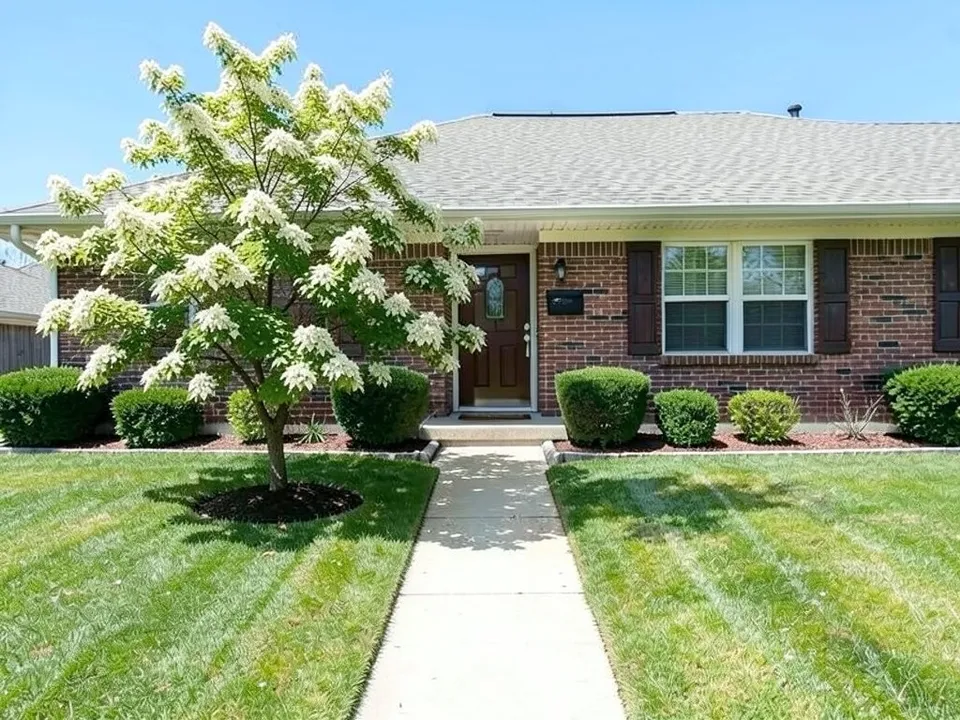
AI-edited version of the same image: a tall tree covered in clusters of white blossoms now stands in the lawn to the left of the front door, with a ring of dark mulch at its base, and the house, walkway and shrubs are the same

After

Flowering dogwood in the lawn (first instruction below). The before image is an AI-drawn stand-in, not a customer photo. What followed the instruction: a flowering tree with white blossoms planted to one side of the walkway, with the house and shrubs unchanged. What it got wrong: the blooms are big fluffy white clusters rather than a dogwood's flat four-petal flowers, so it reads as a generic white-flowering tree, it reaches almost to the roofline, which is far bigger than a young dogwood, and it added a mulch ring we did not ask for. Use it to judge the placement, then look up the real tree's flower and mature height.
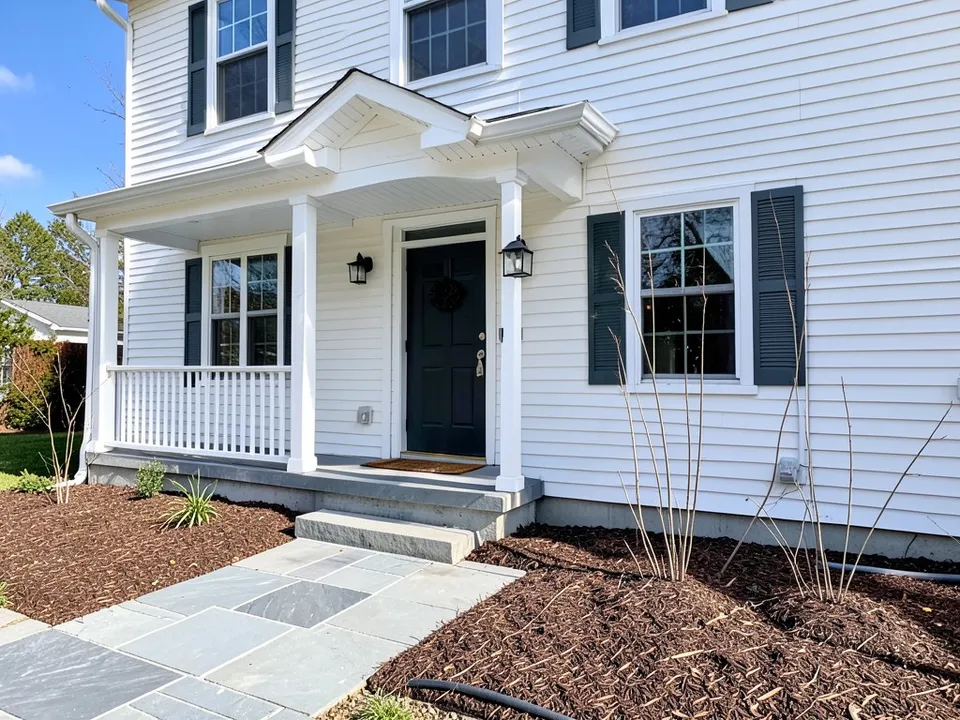
AI-generated example: the front entrance of a white two-storey house with a stone walkway, a small porch and a mulched planting bed beside the steps with nothing tall in it, with no trees

Before

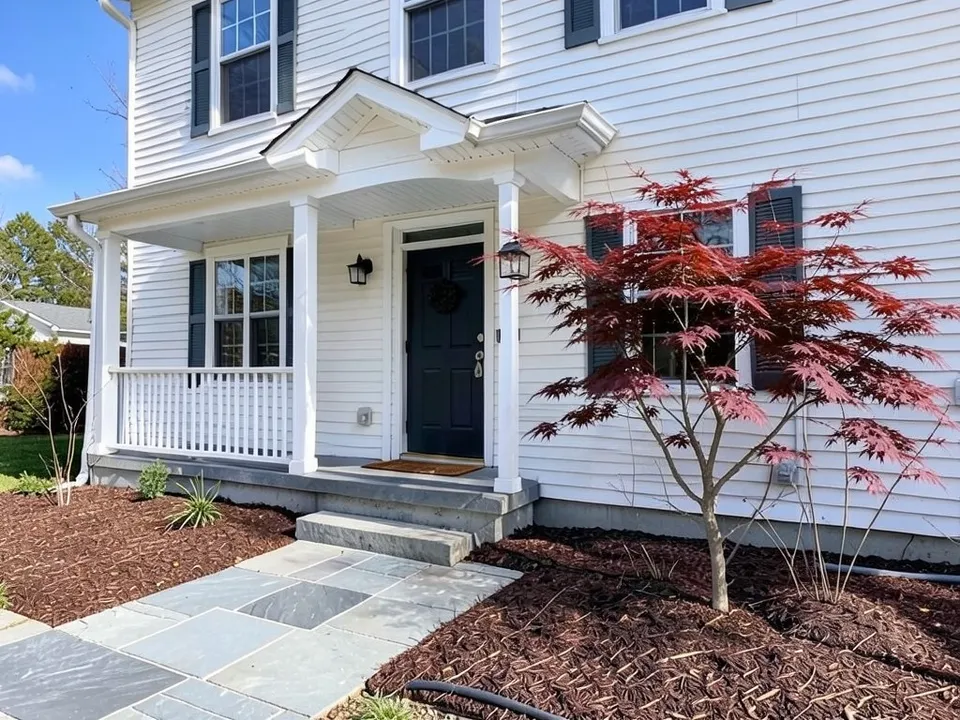
AI-edited version of the same image: a Japanese maple with deep red leaves now stands in the mulched bed beside the entrance, and the porch, walkway and house are the same

After

Japanese maple by the entrance (second instruction below). The before image is an AI-drawn stand-in, not a customer photo. What followed the instruction: a small tree with a thin trunk and deep red, finely cut leaves, set into the existing bed with the porch and stone path unchanged. What it got wrong: it stands very close to the house wall and the branches overlap the window and shutter, so it would need more room in real life, and the red is very even, where real leaf colour changes through the year.
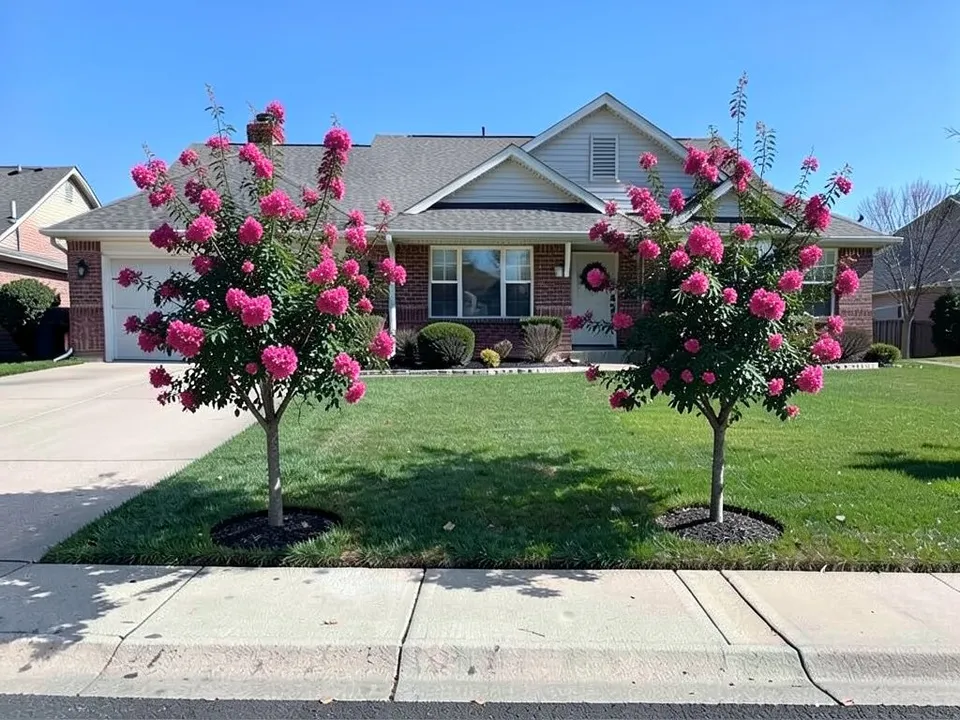
AI-generated example: a suburban house with a driveway and a wide strip of plain green lawn between the driveway and the sidewalk, with no trees and no shrubs

Before

AI-edited version of the same image: two crepe myrtle trees covered in bright pink flowers now stand evenly spaced in the lawn strip in front of the house, and the driveway, sidewalk and house are the same

After

Two crepe myrtles along the lawn strip (third instruction below). The before image is an AI-drawn stand-in, not a customer photo. What followed the instruction: a matching pair of pink-flowering trees, evenly spaced, with the driveway and sidewalk unchanged. What it got wrong: both trees are drawn at full height and in full bloom, rising to the roof and hiding part of the house front, which a new planting would not, and each has a dark mulch ring we did not ask for. Use it for the spacing idea and check the real mature size.
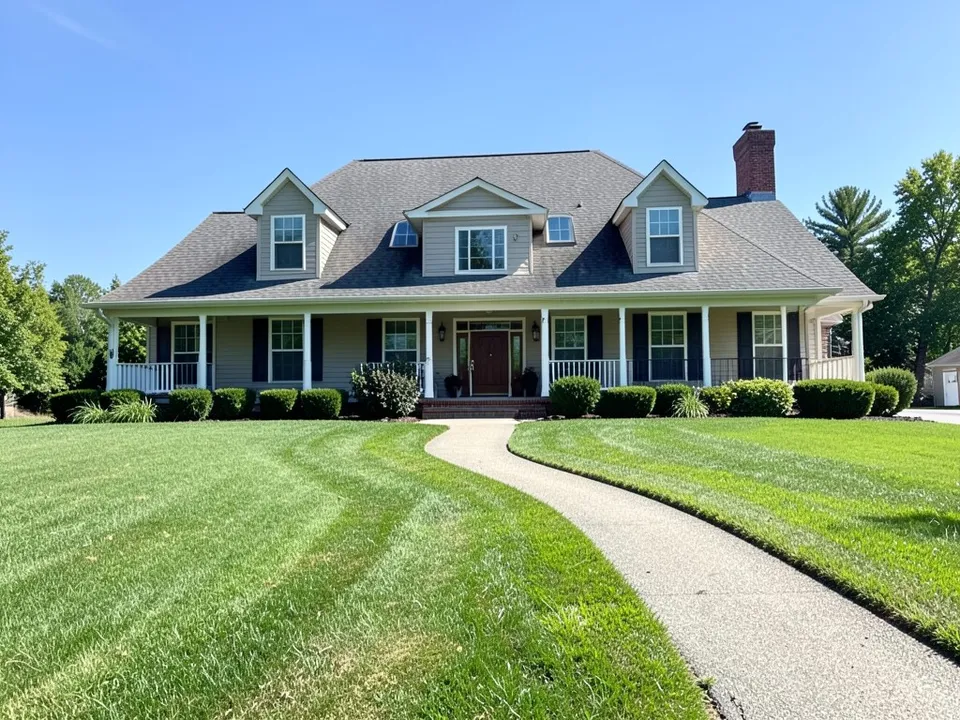
AI-generated example: a large two-storey traditional house with a wide open green front lawn, a curved path to the front door and no trees in the lawn

Before

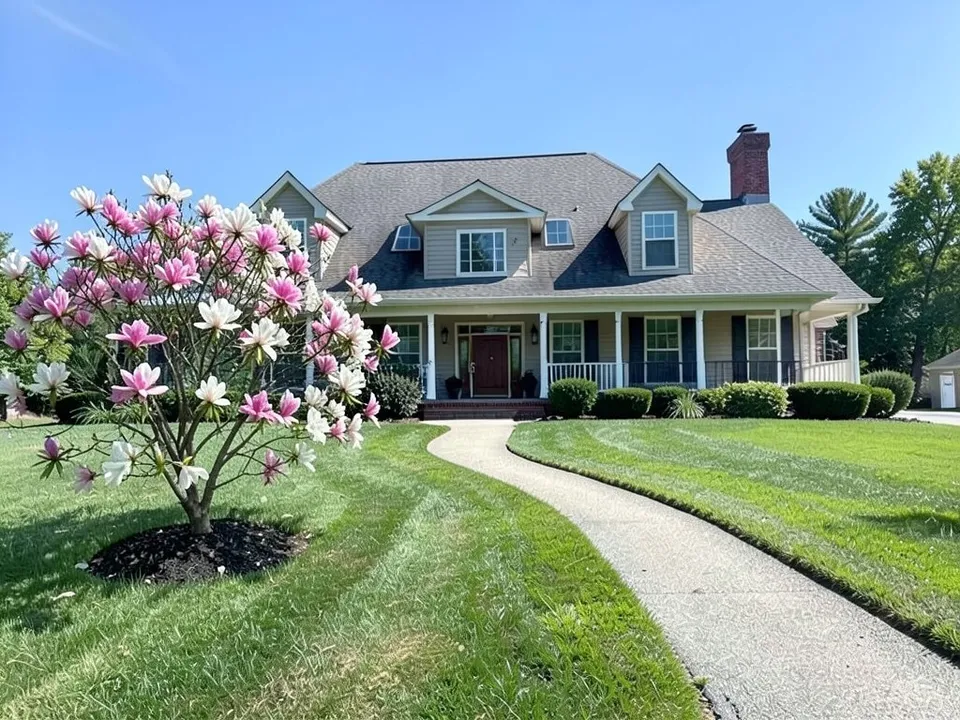
AI-edited version of the same image: a magnolia tree covered in large pink and white blossoms now stands in the front lawn on the left side of the curved path, and the house, path and lawn are the same

After

Magnolia beside the path (fourth instruction below). The before image is an AI-drawn stand-in, not a customer photo. What followed the instruction: a flowering magnolia with pink and white blooms on the left of the curved path, with the house untouched. What it got wrong: the tree is nearly bare of leaves and covered in flowers, as if drawn mid-bloom in early spring, which is not how it looks in summer, and it added a mulch ring and drew the tree larger than the porch it stands in front of. Treat it as a look at spring bloom.

Small trees or shade trees for the front

Small ornamental trees such as dogwood, crabapple, Japanese maple and crepe myrtle suit most front yards, because they frame the house instead of covering it. Large shade trees such as oak give dramatic scale and cool the lawn, but they need a wide yard and a spot away from the house. Evergreens add colour in winter, and a tall narrow evergreen such as arborvitae can screen a front yard without blocking all the light.

Where to place the tree

Guides on front yard tree placement suggest thinking about the view from the street, the view from the windows, and the space the tree will fill in ten years. A single tree to one side of the walkway looks natural, a matched pair frames a path or a driveway, and a tree in a bed by the entrance suits a small tree. Try each spot on your own photo before you dig. Our front yard landscaping page covers the rest of the yard, and our landscaping around trees page covers planting under a tree that is already there.

How to try a tree on your own front yard photo

Use Custom mode for this. The Yard Redesign styles change the whole garden, while Custom lets you name the tree and say where it goes and what must stay the same.

  1. Take a daytime photo of the front of your house from the street or the walkway, with the lawn or bed where the tree would go in view.
  2. Open the landscape tool and sign in with Google or an email code. You get 1 free render with a free account.
  3. Under Select Landscape Mode, pick Custom.
  4. In the Custom Design Requirements box, name the tree, say where it goes (in the lawn, in a bed, beside the path), and list what must stay the same (house, path, driveway, lawn).
  5. Drop your photo into Upload Your Garden Image and press Generate Custom Design.
  6. Check the size and spot, then change one thing at a time (a smaller tree, a different tree, another side) and run it again.

What the AI can and cannot do

The AI shows a look: how a kind of tree would sit in your front yard with the house, the path and the lawn. That helps you choose the tree and the spot and explain it to a nursery or landscaper.

It does not check your zone, soil or the space above and below the ground. It usually draws the tree at full size and in full bloom, so a new tree will look smaller and plainer at first, and it may swap one flowering tree for another that looks similar, as the first example shows. Check the real tree's size, bloom and zone before you buy.

Front yard tree instructions to paste into Custom mode

These are the exact instructions we used for the four examples above, in the same order. In the landscape tool, choose Custom, paste one into the Custom Design Requirements box, then upload your photo. Swap in your own feature, plant, spot and what must stay.

  • Add a flowering dogwood tree with white blossoms planted in the lawn to the left of the walkway, a medium sized tree with a layered branch shape. Keep the house, path, driveway and everything else exactly the same. Same camera angle.
  • Add a small Japanese maple tree with deep red leaves planted in the mulched bed beside the entrance steps, with room between the tree and the house wall. Keep the house, path, driveway and everything else exactly the same. Same camera angle.
  • Add two young crepe myrtle trees with pink flowers planted evenly spaced in the lawn strip between the driveway and the sidewalk, small enough not to cover the house. Keep the house, path, driveway and everything else exactly the same. Same camera angle.
  • Add a magnolia tree with large pink and white blossoms and green leaves planted in the front lawn on one side of the curved path, a medium sized tree. Keep the house, path, driveway and everything else exactly the same. Same camera angle.

Frequently asked questions

What are the best trees for a front yard?

The guides most often name flowering dogwood, magnolia, crabapple, Japanese maple and crepe myrtle for small and medium yards, and oak, tulip poplar or pine for large ones. The best pick depends on your climate, space and the look you want.

What is the best small tree for a front yard?

Dogwood, crabapple, Japanese maple and crepe myrtle are the small trees named most often. Many crabapple varieties stay under about 20 feet, and small trees help curb appeal without dominating the house.

What is the best low-maintenance front yard tree?

Guides describe crabapple and pine as low maintenance. Livingetc also has a list of low-maintenance front yard trees. Check how big the variety gets, since a tree that outgrows its spot needs the most work.

Which front yard tree gives privacy?

Arborvitae is named as a premier choice for a front yard privacy screen that still lets light through. Our privacy trees page covers screening trees in more detail.

How do I know which tree will grow where I live?

Start with your USDA hardiness zone, then check the tree's sun and soil needs. Your local nursery or extension service can confirm what grows well in your area.

How far should a tree be from my house?

It depends on the tree's mature size, so check the real height and spread of the variety and keep it clear of the house, the roof, the driveway and any overhead lines. A local nursery or arborist can give you a distance for your tree.

Do front yard trees add value?

Bob Vila's guide claims that the best front yard trees can raise property value by as much as 15 percent. Treat that as one source's claim, not a promise for your home.

Can the AI show a tree on my own front yard photo?

Yes. Upload a photo in Custom mode, name the tree, say where it goes and what must stay the same. You get 1 free render with a free account. It tends to draw the tree at full size and in full bloom, so check the real tree's size and season before you buy.

More front yard and tree ideas

Planning the house as well? The AI exterior design tool works on a photo of the front of the house, and the AI paint visualizer tries wall colors. You can read more about who builds these tools on our about page.

For more, browse all of our landscaping ideas, sorted into front yards, backyards, patios, gardens, pools, styles and regions.