Which privacy tree fits your yard
Start with the space, not the tree. Auburn University Extension (Dani Caroll and Georgios Arseniou, March 2026) says to look up each plant's mature height and spread before you plant, because crowded plants compete for water, light and nutrients. Match what you find to your situation:
- Narrow side yard or small lot: Look at the slim, upright trees: 'Emerald' arborvitae (10 to 15 feet tall and 3 to 4 feet wide) or sky pencil holly (8 to 10 feet tall and under 2 feet wide). Both are slow growers, so the screen takes longer to fill in.
- A medium yard that needs a screen soon: Skip cherry laurel (10 to 18 feet tall, 5 to 7 feet wide) and 'Nellie Stevens' holly (20 to 30 feet tall, 10 to 12 feet wide) grow up to 2 to 3 feet a year, according to LawnStarter.
- A large lot with room to spare: 'Green Giant' arborvitae, Leyland cypress and eastern white pine are the fast, tall choices (3 feet a year or more), but they get 10 to 40 feet wide and are too big for a small lot.
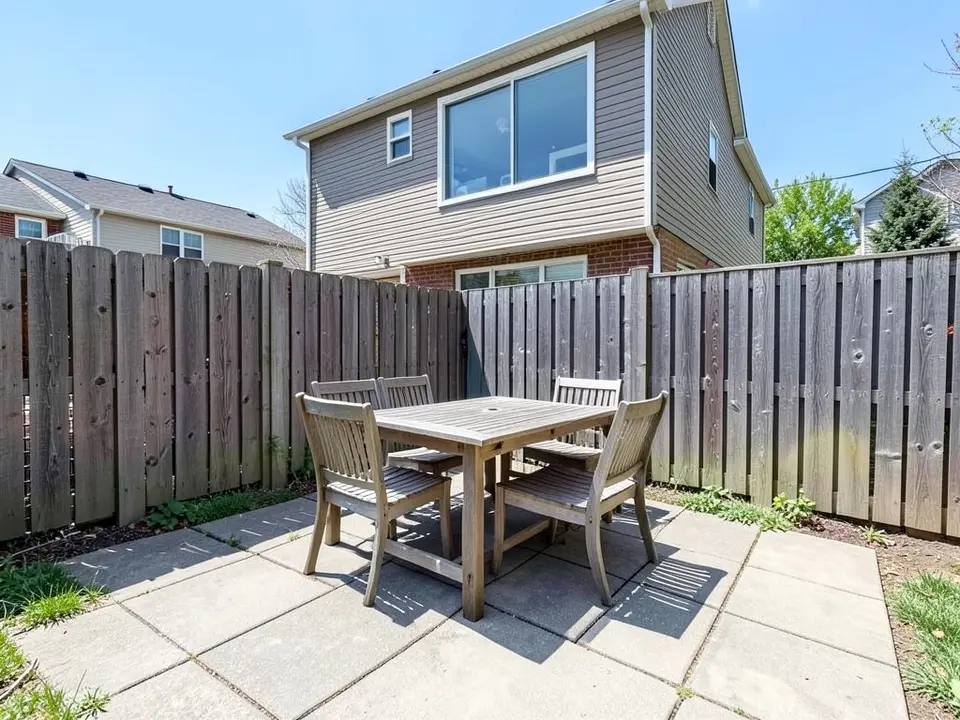
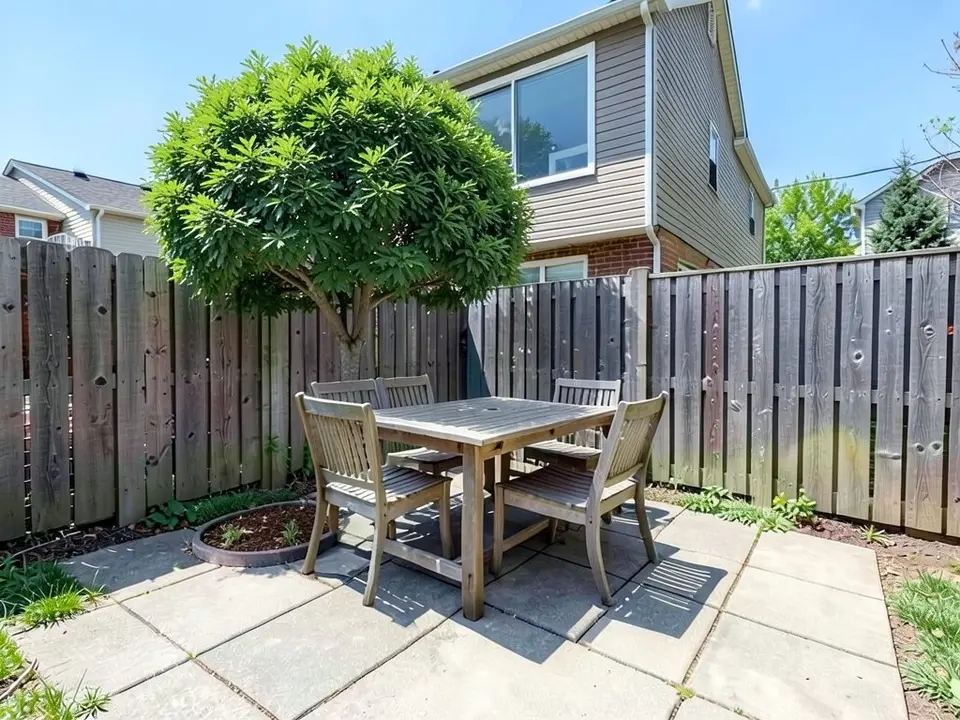
- One neighbor window to block: You may not need a row at all. A single canopy tree placed between the seat and the window covers more than a fence-height hedge does, as our second example shows.
Privacy trees compared: size, growth rate and spacing
| Tree | Mature height | Mature width | Growth rate | USDA zones | Spacing |
|---|
| 'Emerald' arborvitae | 10 to 15 ft | 3 to 4 ft | Slow, under 1 ft a year | 3 to 7 | 2 to 3 ft apart |
|---|
| Sky pencil holly | 8 to 10 ft | Under 2 ft | Slow | 6 to 9 | Plant close together |
|---|
| Skip cherry laurel | 10 to 18 ft | 5 to 7 ft | Moderate to fast, 2 to 3 ft a year | 5b to 9b | Not given |
|---|
| 'Nellie Stevens' holly | 20 to 30 ft | 10 to 12 ft | Moderate to fast, up to 3 ft a year | 6a to 9b | 5 to 6 ft apart in one row |
|---|
| Eastern red cedar | 30 to 40 ft | Not given | Medium, 1 to 1.5 ft a season | 4 to 9 | Not given |
|---|
| 'Green Giant' arborvitae | 50 to 60 ft | 10 to 20 ft | Fast, up to 3 ft a year | 5 to 7 | 5 to 6 ft apart |
|---|
| Leyland cypress | 60 to 70 ft | 15 to 25 ft | Fast, 3 to 4 ft a year | 6 to 10 | 10 to 15 ft apart |
|---|
| Eastern white pine | 50 to 80 ft | 20 to 40 ft | Fast, over 3 ft a year | 3 to 8 | 20 to 30 ft apart |
|---|
| 'Little Gem' magnolia | Not given | Not given | Slow, under 1 ft a year | 7 to 10a | 8 to 12 ft apart, in groups of 3 to 5 |
|---|
The numbers above come from LawnStarter's list of the 15 best trees for privacy (Andrea Butler, updated December 2024). Other sources give different numbers for the same tree, because variety, soil and climate all change them. For 'Green Giant' arborvitae, for example, the University of Maryland Extension Home and Garden Information Center lists 40 to 50 feet tall and 12 to 18 feet wide. Use the table to compare trees with each other, then check the tag and your local nursery or extension office before you buy.
How fast do privacy trees grow?
Growth rate is the trade you make. The fast trees in the table, 'Green Giant' arborvitae, Leyland cypress and eastern white pine, grow roughly 3 feet a year or more, but they end up 10 to 40 feet wide. The slow, narrow ones, such as 'Emerald' arborvitae and sky pencil holly, grow under a foot a year in LawnStarter's figures and take a few seasons longer to reach screening height.
Fast does not mean easy. Auburn Extension says a screen planted as a single species is more vulnerable to pests, diseases and stress, and it uses a row of Leyland cypress as its example. Its advice is to mix tree types, so that if one fails the others keep working.
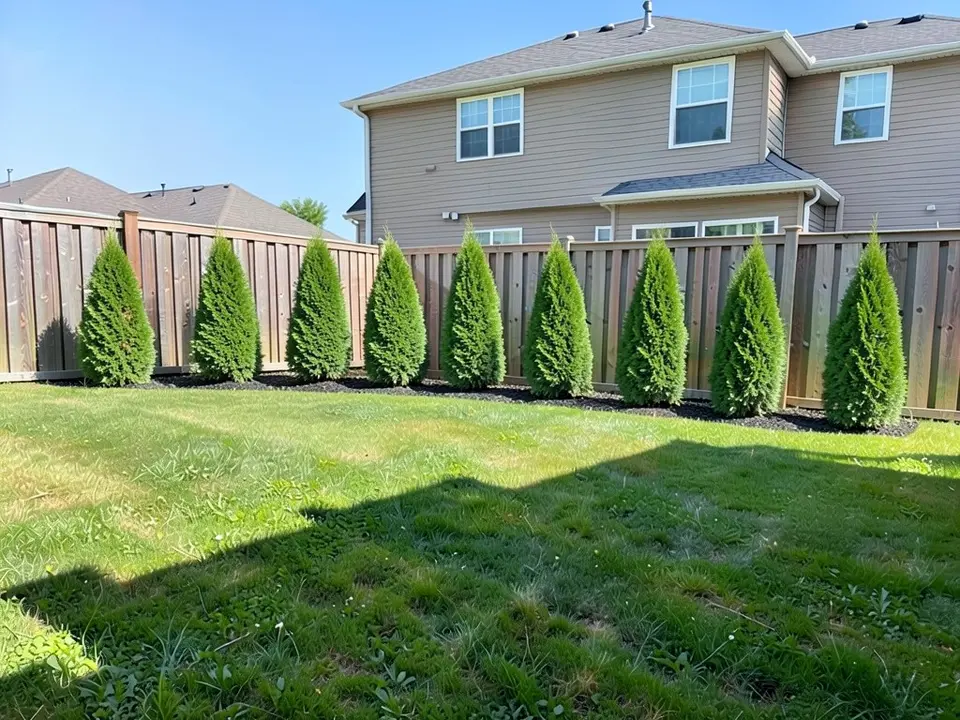
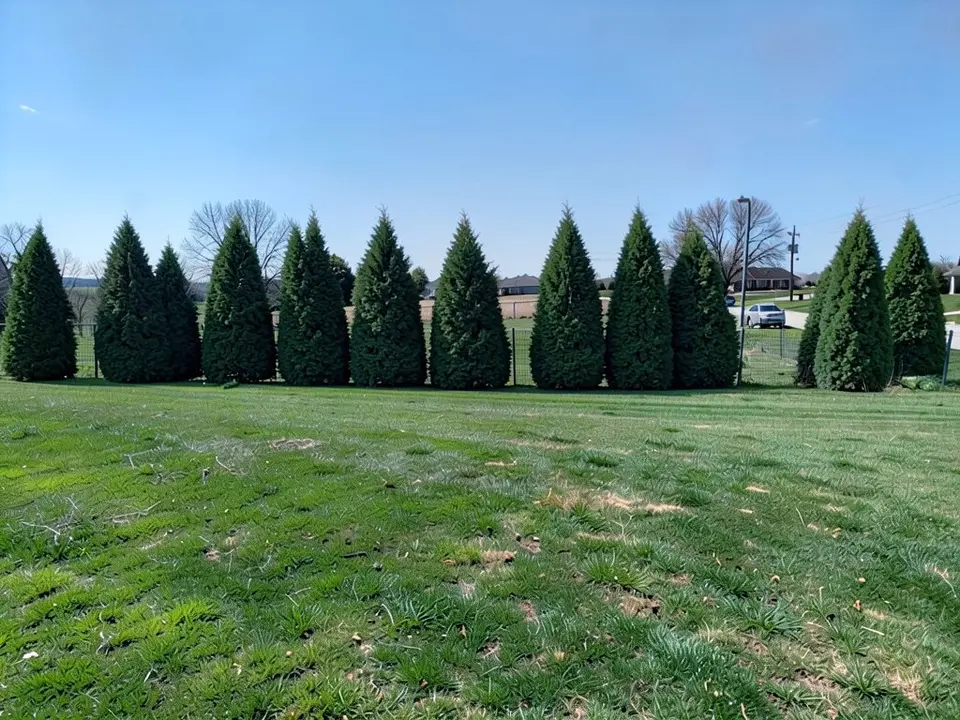
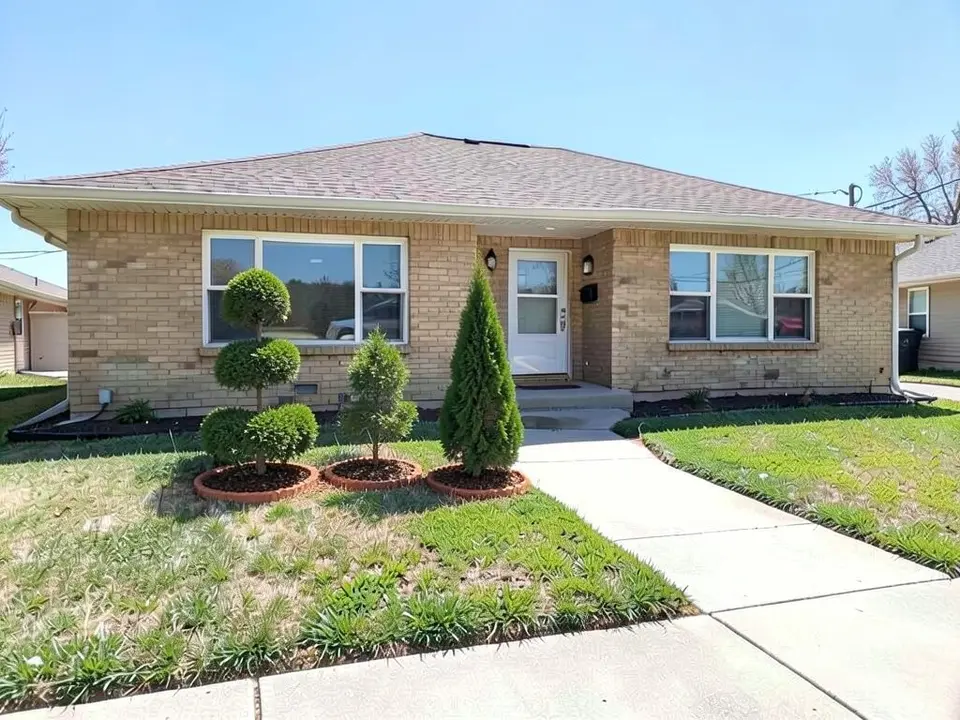
Our AI draws the trees as if they were already grown. Treat the render as the goal you are planting toward, not what you see on planting day.
How far apart to plant privacy trees
Space trees by the width they will reach, not the size of the pot. For a fast screen it is tempting to plant close, but Auburn Extension warns that crowding causes competition for water, light and nutrients. The spacing figures in the table are LawnStarter's, and they range from 2 to 3 feet for narrow 'Emerald' arborvitae to 20 to 30 feet for eastern white pine.
Sources disagree on the big trees. LawnStarter gives 10 to 15 feet for Leyland cypress, while the University of Georgia Extension (Josh Fuder and Sheri Dorn) says it needs at least 15 feet between tree centers and that trees planted 4 to 5 feet apart begin to thin and die back. When in doubt, take the wider number.
If you have the room, Auburn Extension suggests staggering plants in more than one row, with the taller trees at the back, and the University of Maryland Extension suggests larger plants at the back, medium plants in front and grasses or groundcovers along the edge.
- Dig wide: Auburn Extension says to make the planting hole two to three times wider than the root ball.
- Mulch, but not against the trunk: Spread 2 to 3 inches of mulch and keep it away from the base of the trunk (Auburn Extension).
- Water until established: Auburn Extension advises watering a new tree daily for the first 2 weeks, every 2 to 3 days for about 3 months, then weekly until it is established, which takes about a year for each inch of trunk caliper.
Evergreen or deciduous privacy trees
Evergreens screen all year. A deciduous tree, one that drops its leaves, only blocks the view while it is in leaf, but it can be the right call when you want winter sun or a taller canopy. Auburn Extension suggests mixing the two: its examples include eastern redbud (20 to 40 feet tall and 15 to 25 feet wide, deciduous) and loblolly pine (60 to 90 feet tall and 20 to 30 feet wide, evergreen).
For a view that only matters in summer, such as a neighbor's deck, a deciduous tree is enough. For a road or a window you see in winter too, put the evergreens where you look.
Before you plant privacy trees
- Call 811 (US): Have buried utility lines marked before you dig holes for trees.
- Look up before you plant: Auburn Extension says to check that mature trees will not interfere with overhead power lines. Tall trees such as white pine do not belong under them.
- Property line: Plant fully on your side and leave room for the tree to grow without hanging over the line. Our second example shows a tree that would stand too close to it.
- Invasive plants: Some privacy plants are invasive in parts of the US, privet among them. Check your state's invasive plant list or ask your county extension office before you buy.
- HOA and local rules: Some towns and HOAs limit tree or hedge height near corners and sidewalks. Ask before you plant a tall screen.
How to try privacy trees on your own photo
Use Custom mode for this. None of the Yard Redesign styles is aimed at screening a view, and Custom lets you name the tree, the spot and what must stay the same.
- Take the photo from where you sit or stand when you feel watched, in daylight, with the view you want to block in frame.
- Open the landscape tool and sign in with Google or an email code. You get 1 free render with a free account.
- Under Select Landscape Mode, pick Custom.
- In the Custom Design Requirements box, name the tree (for example narrow arborvitae or a rounded canopy tree), how many, where they go and how tall they should look, and say what must stay the same, such as the fence, the lawn and the house.
- Drop your photo into Upload Your Garden Image and press Generate Custom Design.
- Compare the result with your photo, change one thing at a time and run it again.
What the AI can and cannot do
The AI shows a look: roughly how a row of trees or a single tree would sit in your yard and how much of the view it might cover. That helps you pick a tree and explain what you want to a nursery or landscaper.
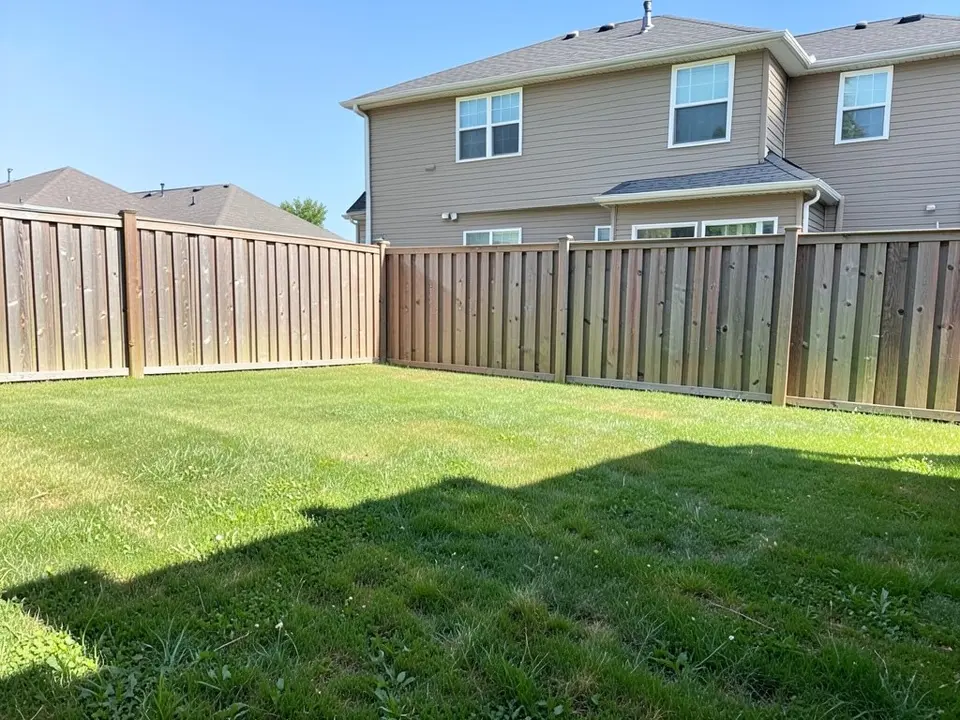
It is not a plan. It does not measure heights or distances, it does not know your climate, and it does not always follow the instruction: in all four examples above, the trees hide less than we asked for. Trees are also drawn full grown, and a young tree would take years to reach that size. Check the result against your photo.
Privacy tree instructions to paste into Custom mode
These are the exact instructions we used for the four examples above, in the same order. In the landscape tool, choose Custom, paste one into the Custom Design Requirements box, then upload your photo. Swap in your own tree, the spot and what must stay.
- Plant a row of eight tall, narrow, columnar evergreen trees (arborvitae type), evenly spaced in a single line just in front of the back fence, each about the height of the neighbor's lower upper-floor windows, with a strip of dark mulch under them. Keep the fence, the lawn, the neighbor's house, the sky and the camera angle exactly the same.
- Plant one medium shade tree with a full rounded green canopy in a round mulched bed on the lawn beside the patio, placed so its leafy crown covers the neighbor's large upstairs window as seen from the table. Keep the patio, the table and chairs, the fence, the neighbor's house, the sky and the camera angle exactly the same.
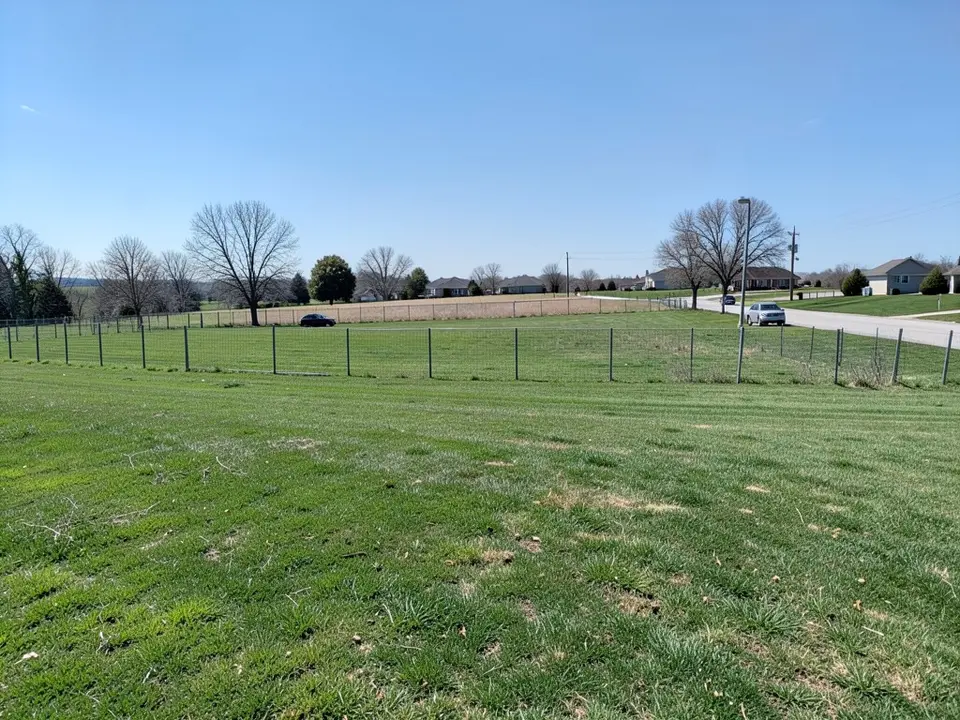
- Plant a staggered double row of tall, dense, dark green evergreen trees (spruce and pine type) along the fence, set in two offset lines so the trunks do not line up, tall enough to hide the road, the parked car and the houses beyond. Keep the lawn, the fence, the sky and the camera angle exactly the same.
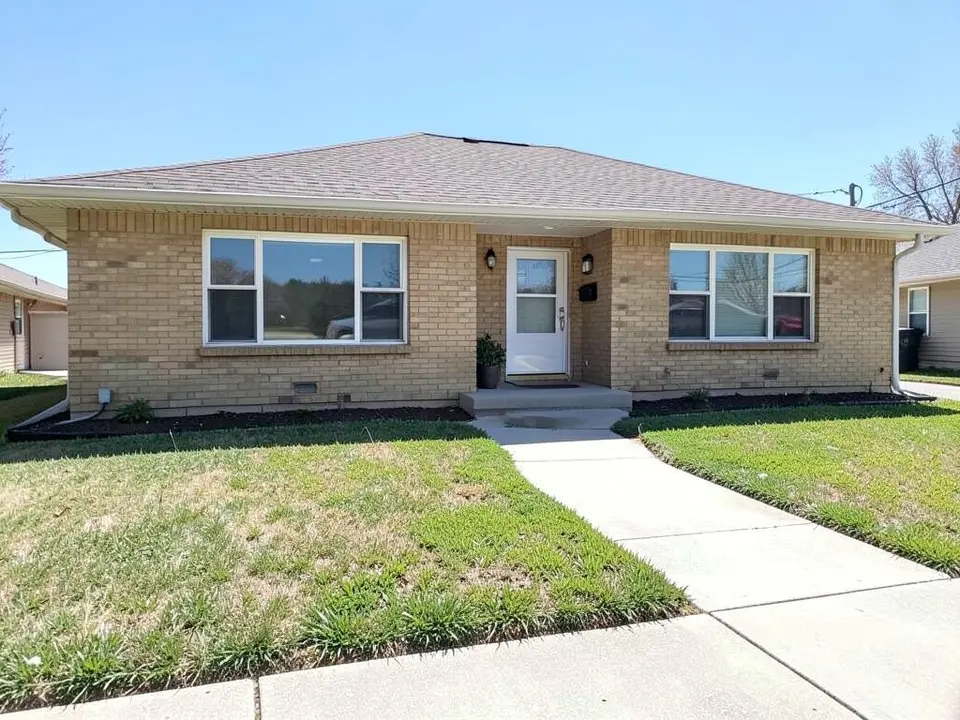
- Plant two small ornamental trees with rounded canopies and one narrow evergreen tree in the front lawn between the sidewalk and the house window so that they partly screen the window from the street, each in its own round mulched circle. Keep the house, the window, the front door, the walkway, the sky and the camera angle exactly the same.
Frequently asked questions
What is the best tree for privacy?
It depends on your space. For a narrow yard, 'Emerald' arborvitae (10 to 15 feet tall, 3 to 4 feet wide) or sky pencil holly (8 to 10 feet tall, under 2 feet wide) fit. For a big lot, 'Green Giant' arborvitae, Leyland cypress or eastern white pine grow fastest (LawnStarter lists roughly 3 feet a year or more) but get 10 to 40 feet wide. Auburn University Extension recommends mixing tree types rather than planting one kind.
What is the fastest growing privacy tree?
LawnStarter lists Southern wax myrtle at about 5 feet a year, Leyland cypress at 3 to 4 feet a year, eastern white pine at over 3 feet a year, and 'Green Giant' arborvitae and 'Nellie Stevens' holly at up to 3 feet a year. Fast growth has costs: Auburn Extension says a single-species row is more vulnerable to pests and disease, and the fastest trees get the widest.
How far apart should I plant privacy trees?
By mature width. LawnStarter gives about 2 to 3 feet for 'Emerald' arborvitae, 5 to 6 feet for 'Green Giant' arborvitae and 'Nellie Stevens' holly, 10 to 15 feet for Leyland cypress and 20 to 30 feet for eastern white pine. University of Georgia Extension says Leyland cypress needs at least 15 feet between tree centers, so for the large trees take the wider number.
How tall will 'Green Giant' arborvitae get?
LawnStarter lists 50 to 60 feet tall and 10 to 20 feet wide, and the University of Maryland Extension lists 40 to 50 feet tall and 12 to 18 feet wide. Either way, it is a big tree, too large for a small lot.
What privacy tree grows in shade?
LawnStarter lists Japanese yew as growing in full sun, partial shade or full shade, and it is a slow grower. Ask your local nursery or county extension office which shade-tolerant trees do well where you live.
How many privacy trees do I need?
Divide the length of the line you want to screen by the spacing for your tree. For example, a 40-foot fence with 'Emerald' arborvitae at 2 to 3 feet apart takes about 14 to 20 trees, while the same fence with 'Green Giant' at 5 to 6 feet apart takes about 7 or 8. Add up the space the trees will need when grown, not the pot.
Evergreen or deciduous trees for privacy?
Evergreens block the view all year, while deciduous trees only do it in leaf. Auburn University Extension suggests mixing both, so that the screen is layered and one failure does not open a gap.
How long does a privacy tree take to reach screening height?
On LawnStarter's growth rates, a fast tree adds about 3 feet a year and a slow one under 1 foot a year, so a slow 'Emerald' arborvitae can take many seasons to reach 10 feet from a small start. Buying larger trees speeds it up, but they cost more and need careful watering.
Can the AI show privacy trees on my own yard photo?
Yes. Upload a photo in Custom mode and describe the trees and where they go. You get 1 free render with a free account. It draws a possible look and may not follow every detail of your instruction, so compare the result with your photo.
Besides the yard, you can try a new paint color on the house, a different exterior, or sharpen a photo with the photo enhancer. You can read more about who builds these tools on our about page.
For more, browse all of our landscaping ideas, sorted into front yards, backyards, patios, gardens, pools, styles and regions.