
Raised garden bed materials compared
Most raised bed idea pages pick a material by looks. The question people ask next is whether it is safe for food, and the sources disagree on some materials. This table puts what each source says side by side. Where they disagree, we say so.
| Material | What the sources say | Watch for |
|---|---|---|
| Cedar or redwood | "More expensive but are a long-lasting, safe choice" (Oregon State). The Old Farmer's Almanac says cedar can last 10 to 15 years; no extension page we read gives a figure. | Price. |
| Untreated pine or fir | Safe for food crops. UF/IFAS says it begins rotting within a year; in an Oregon State trial, untreated boxes showed decay after 6 years. | Shorter life; plan to replace boards. |
| Modern pressure-treated wood (CA, ACQ, MCA) | Oregon State measured copper rising only within 1 inch of the bed edge and no increase in vegetables and herbs (only CA-C on Douglas-fir was tested). UMD calls MCA low in toxicity. Clemson cites a UC4A or higher label for garden use. | Penn State Master Gardeners (York) say not to use wood treated with any preservative. If you are unsure, use cedar or untreated wood. |
| Old CCA lumber (before 2004) | Residential CCA was discontinued in 2004 (UMD). Older treated timber may contain arsenic (UF/IFAS). | Not recommended for gardens (Iowa State). Skip reclaimed lumber of unknown age. |
| Railroad ties (creosote) | Never use them (Illinois, Iowa State). The RHS says creosote sleepers are no longer permitted in the garden. | The Almanac and Missouri say old ties are not harmful; we follow the extension services and the RHS. |
| Galvanized metal | UMD lists galvanized steel as a rust-resistant choice. Iowa State says galvanized metal may leach trace amounts of heavy metals such as lead or cadmium. | Sources disagree; some gardeners line metal beds. |
| Concrete block | Generally safe for food gardening while the blocks stay intact; they may contain fly ash and can be sealed with polymer paint (UMD). | May make the soil more alkaline, an effect that declines over time (UF/IFAS). |
| Brick or stone | Long-lasting and suits a front yard or a slope. | Masonry walls over 20cm (8 in) should be mortared on footings (RHS). |
| New timber sleepers (UK) | Sturdy and easy to stack, offsetting each layer (Homebuilding). | Avoid tar- or creosote-treated sleepers (Gardeners' World, RHS). |
How tall and deep a raised bed should be
Height is about two things: how much soil the roots get, and how far you have to bend. A bed on top of good garden soil can be shallow, because roots grow down into the ground below. A bed on a patio or a hard surface has to hold all the soil the crop needs.
- Most beds: 6 to 12 inches tall (Illinois). 11 inches is common because it is two 2x6 boards (Iowa State).
- Soil depth for crops: Most garden crops need at least 10 inches of soil (UGA). Shallow-rooted crops need about 6 inches; carrots, potatoes, tomatoes and squash need 12 to 18 inches (the Old Farmer's Almanac).
- On a hard surface: At least 8 inches deep for leafy greens, beans and cucumbers, and 12 to 24 inches for peppers, tomatoes and squash (UMD).
- Wheelchair access: About 24 inches tall (Illinois, UGA), or 2 to 3 feet (Iowa State). Forward reach from a wheelchair is about 30 inches (Iowa State).
- No bending: 36 inches off the ground helps avoid bending over (UGA). Tabletop planters on legs are 30 to 33 inches to the top of the bed (Iowa State).
- Tall wooden beds: Beds taller than 12 inches need cross-supports (the Almanac). Oregon State says to reinforce beds longer than 6 feet or taller than about 18 inches.
Raised bed sizes and path widths
Width is set by your reach: you should get to the middle of the bed without stepping on the soil. Length is up to you.
- Reached from both sides: 3 to 4 feet wide (Clemson, Iowa State). UGA gives 3 feet for children and 4 feet for adults.
- Reached from one side: 1.5 to 2 feet wide (Iowa State); 2 to 3 feet against a wall or fence (the Almanac).
- Length: A 4 by 8 foot bed is popular (Penn State Master Gardeners) and is easiest to build with 8-foot lumber; lumber cost rises noticeably past 12 feet (UGA).
- Paths on foot: 12 inches at the very least, 18 to 24 inches is ideal (UGA); 18 inches or more (UF/IFAS).
- Paths for a wheelbarrow: 2 to 3 feet (Missouri); 3 feet between beds (UF/IFAS).
- Paths for a wheelchair or cart: 4 feet between beds (UGA); at least 1m (3.5 ft) for a wheelchair (RHS).
How much soil a raised bed needs
To work out the soil, multiply length by width by depth in feet. That gives cubic feet; divide by 27 for cubic yards. Illinois Extension uses the same formula. The table below is our own arithmetic for common bed sizes, with bag counts rounded up.
| Bed size and depth | Cubic feet | Cubic yards | 1.5 cu ft bags | 2 cu ft bags |
|---|---|---|---|---|
| 4 x 8 ft, 6 in deep | 16 | 0.59 | 11 | 8 |
| 4 x 8 ft, 8 in deep | 21.3 | 0.79 | 15 | 11 |
| 4 x 8 ft, 10 in deep | 26.7 | 0.99 | 18 | 14 |
| 4 x 8 ft, 12 in deep | 32 | 1.19 | 22 | 16 |
| 4 x 8 ft, 18 in deep | 48 | 1.78 | 32 | 24 |
| 4 x 8 ft, 24 in deep | 64 | 2.37 | 43 | 32 |
| 3 x 6 ft, 12 in deep | 18 | 0.67 | 12 | 9 |
| 2 x 8 ft, 12 in deep | 16 | 0.59 | 11 | 8 |
| 4 x 4 ft, 12 in deep | 16 | 0.59 | 11 | 8 |
Our 4 by 4 foot figure matches the 11 bags Scotts gives for that size. Two 2x6 boards make a bed about 11 inches deep, not 12, so it needs a little less. Soil settles: the RHS fills to about 5cm (2 in) below the rim, so keep some back for topping up.
What to fill it with varies by source. A 1:1 mix of compost and topsoil (Illinois), or 1:2 to 1:1 compost to topsoil (UMD). Iowa State gives about 70% topsoil and 30% compost, or equal parts topsoil, organic matter and coarse sand. The Almanac suggests 40% compost, 40% topsoil and 20% material for aeration. Clemson keeps compost to 10 to 20% of the volume.
Raised bed layouts: grid, U-shape, tiered, along a fence and keyhole
The layout decides how much bed you get and how easily you reach it. These are the layouts the top raised bed idea pages show, and where you can see one above.
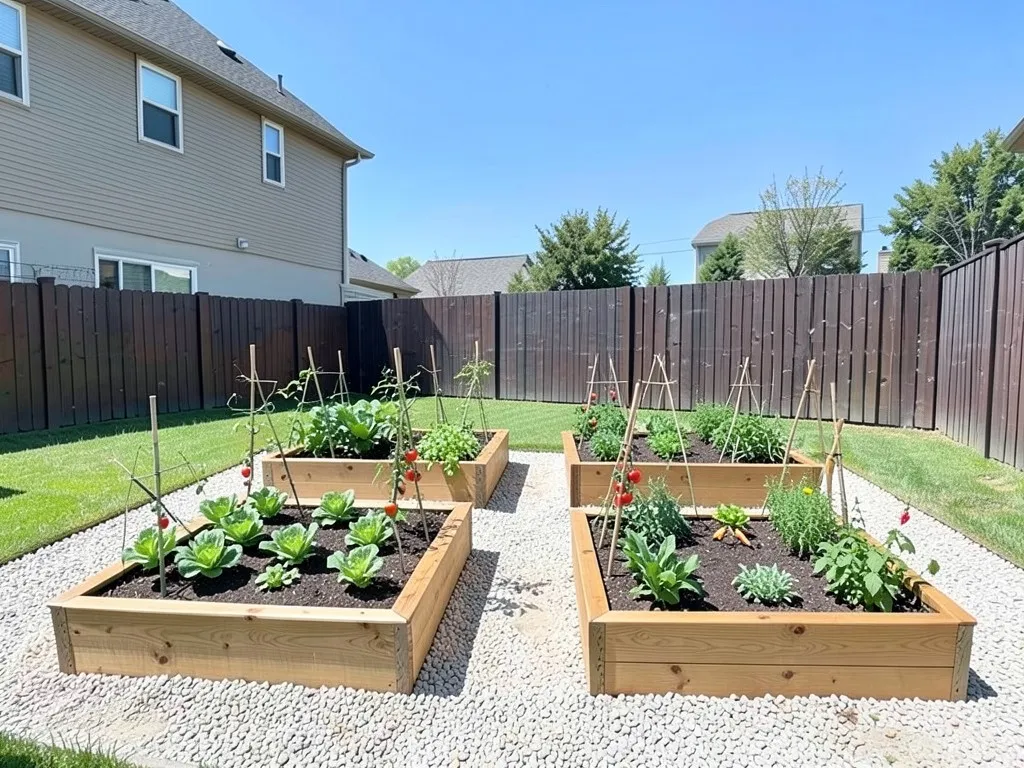
- Grid of separate beds: Several beds of the same size with paths between, like example 1. Easy to reach, easy to rotate crops.
- U-shape: One bed wrapped around a path, like example 5. More growing space in one spot; keep each arm narrow enough to reach.
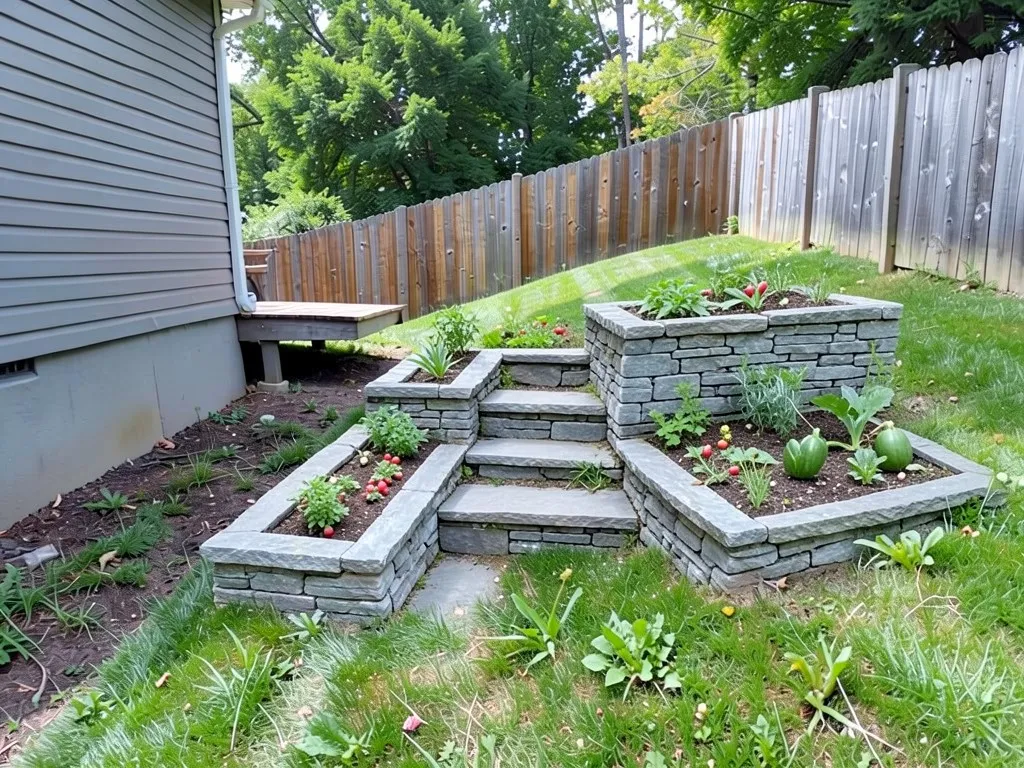
- Tiered on a slope: Beds stepped up a hill, like example 3. Each level is a flat bed, so water does not run straight off.
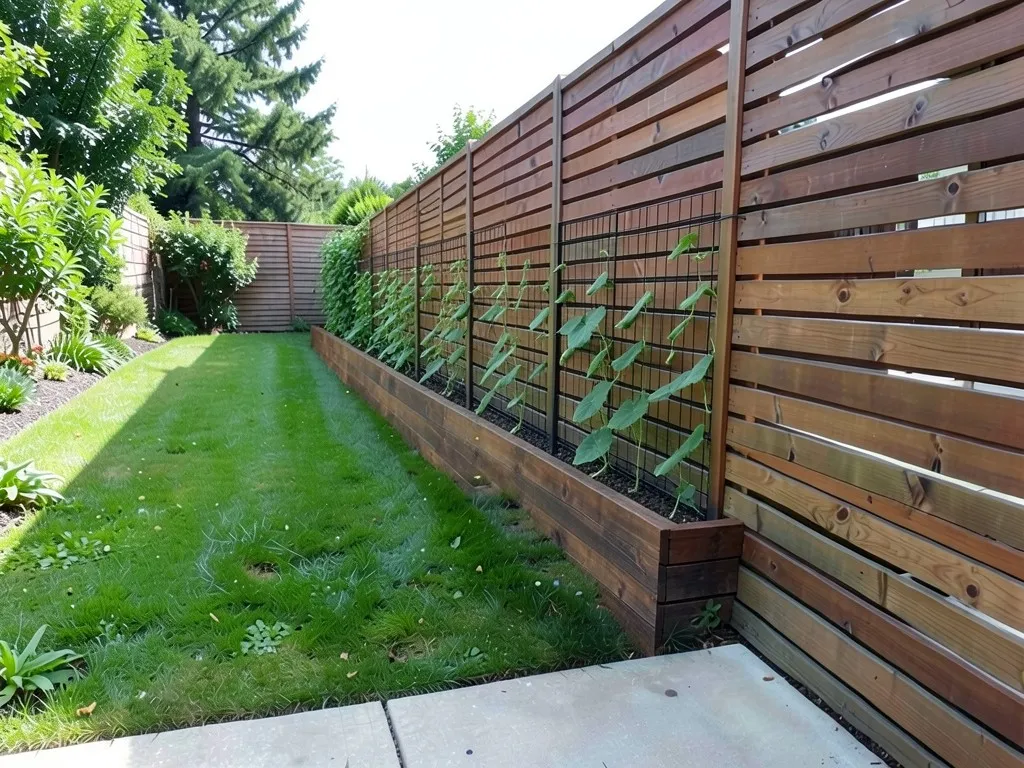
- Along a fence: A narrow bed with a trellis on the fence above it, like example 6. Keep it 1.5 to 3 feet wide, since you reach from one side.
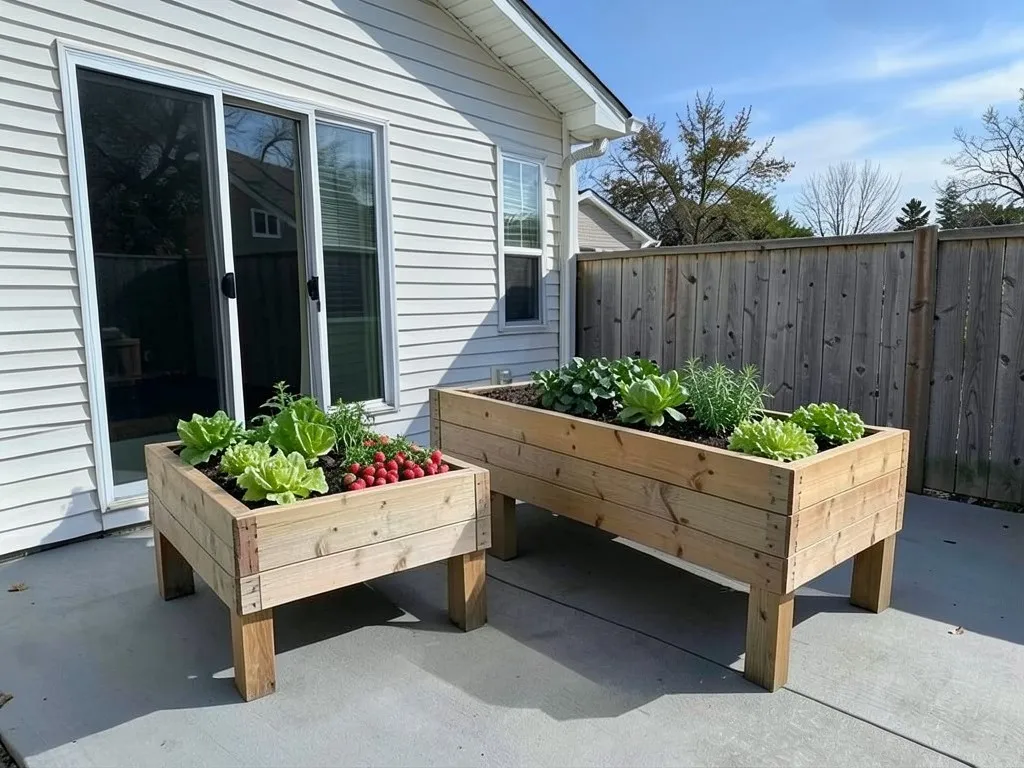
- Elevated on legs: A box on legs for a patio or for no bending, like example 7. Less soil, so best for greens and herbs.
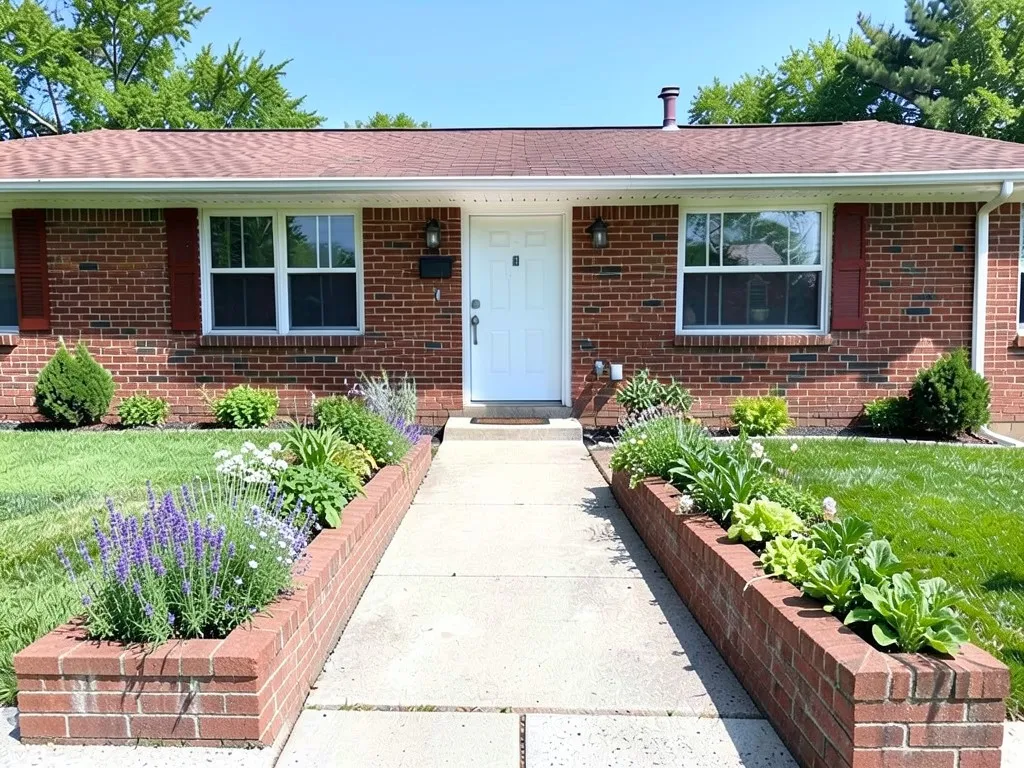
- Front-yard beds: Low beds in brick or stone that match the house, like example 4.
- Keyhole: A round bed with a notch cut in so you can reach the middle, often with a compost basket at the center. We do not show one above; describe it in Custom mode to try it on your yard.
Where to put a raised garden bed
- Sun: At least six hours of direct sun a day (Clemson, Iowa State); the Almanac says 6 to 8.
- Direction: Run long beds north to south so both sides get even light (Iowa State, UGA, RHS).
- Warmth and water: Raised beds warm up earlier in spring and dry out faster than ground beds (Clemson, UMD, Iowa State, RHS), so put them where a hose reaches.
- Next to a fence or wall: Beds there can sit in a rain shadow and get less rain (Gardeners' World).
Raised bed ideas for UK gardens
UK raised bed ideas lean on railway sleepers, scaffold boards, gravel boards and planters on legs, with sizes in metres. The RHS and BBC Gardeners' World give the main numbers.
- Width: Under 1.5m (5ft) lets you reach the centre (RHS); Gardeners' World also gives about 1.5m as the maximum.
- Depth: 30cm (1ft) is deep enough for salad leaves and strawberries; most fruit bushes need 45cm (18in) or more (RHS).
- Paths: At least 45cm (18in) for a wheelbarrow and 1m (3.5ft) for a wheelchair (RHS).
- Sleepers or scaffold boards: Scaffold boards are one of the cheapest options but don't last as long as sleepers (Gardeners' World). Stack sleepers with each layer offset (Homebuilding), and avoid tar- or creosote-treated ones.
- A seat on the edge: Gardeners' World suggests an edge around 40 to 50cm high and 20cm or more wide if you want to sit on it.
- Filling: The RHS mix is three parts organic matter, two parts sharp sand and seven parts topsoil, filled to about 5cm below the rim.
How to try a raised bed on a photo of your yard
- Take a photo of the spot from where you would normally stand, in daylight, with the whole area in frame.
- Open the landscape tool, choose Custom, and paste one of the instructions below into the Custom Design Requirements box.
- Change the material, the number of beds, the height and what must stay, then generate.
- If it misses something, as several of our examples did, reword that part and run it again.
The picture shows the look and the layout. It does not measure your yard, so check widths and heights against the numbers above before you buy lumber.
Raised bed instructions to paste into Custom mode
These are the exact instructions we used for the 10 examples above, in the same order (for examples 1 and 7, the reworded second version). In the landscape tool, choose Custom, paste one into the Custom Design Requirements box, then upload a photo of your yard. Swap in your own material, the number of beds, the height and what must stay.
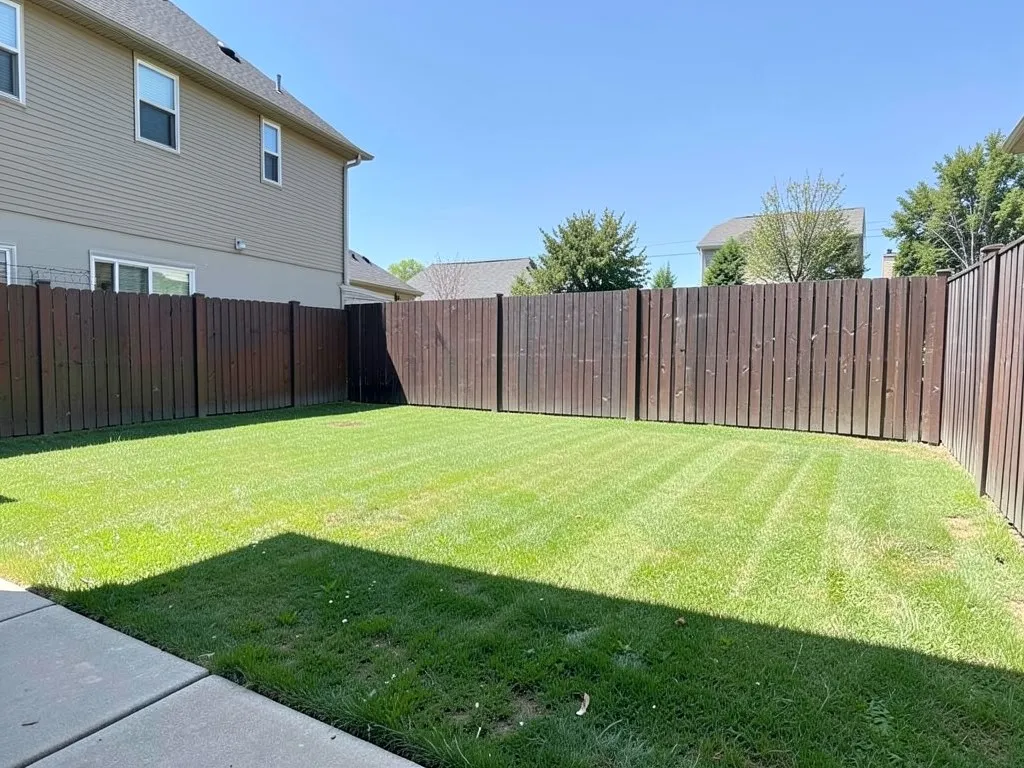
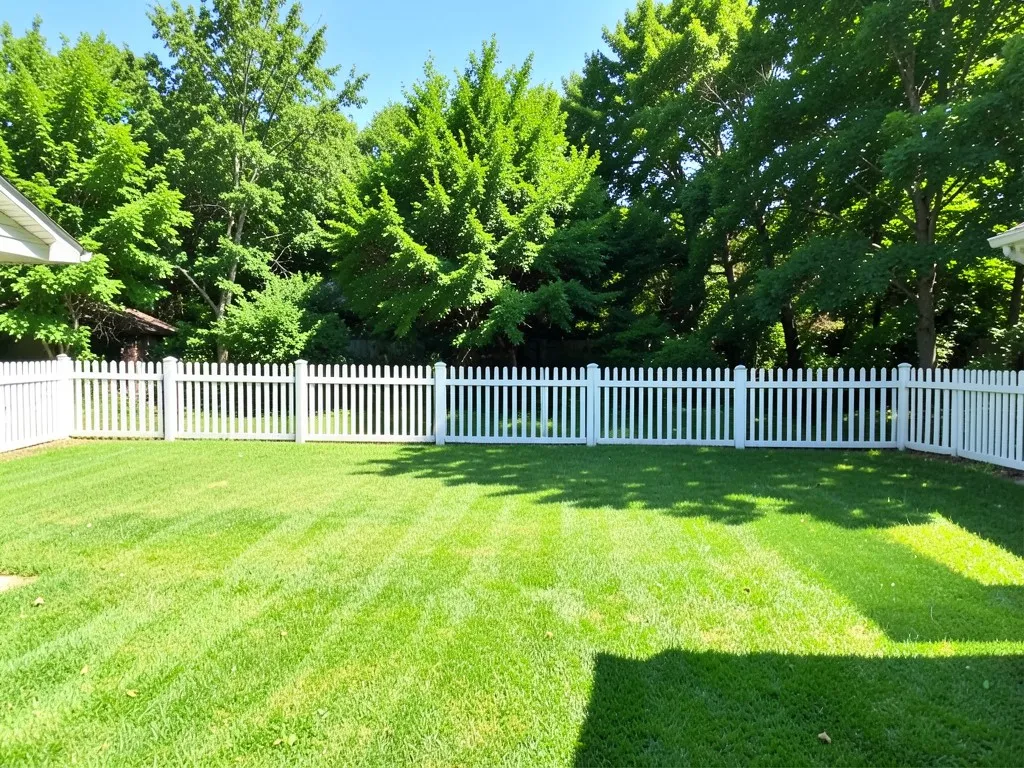
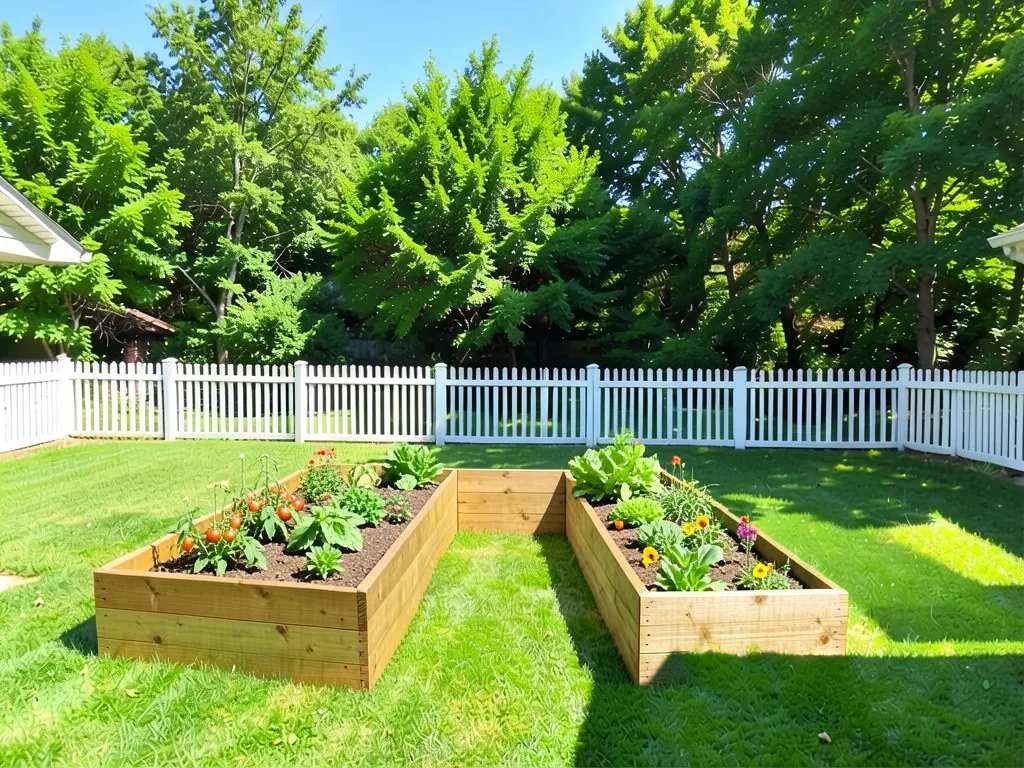
- Change ONLY the lawn: add exactly four separate rectangular raised garden beds made of natural cedar boards, about one foot tall, laid out in a two-by-two grid of two rows of two beds with wide pale gravel paths between and around them, the beds filled with dark soil and planted with lettuces, tomatoes on stakes, peppers and herbs. Keep the fence, the house, the sky and the camera angle exactly the same.
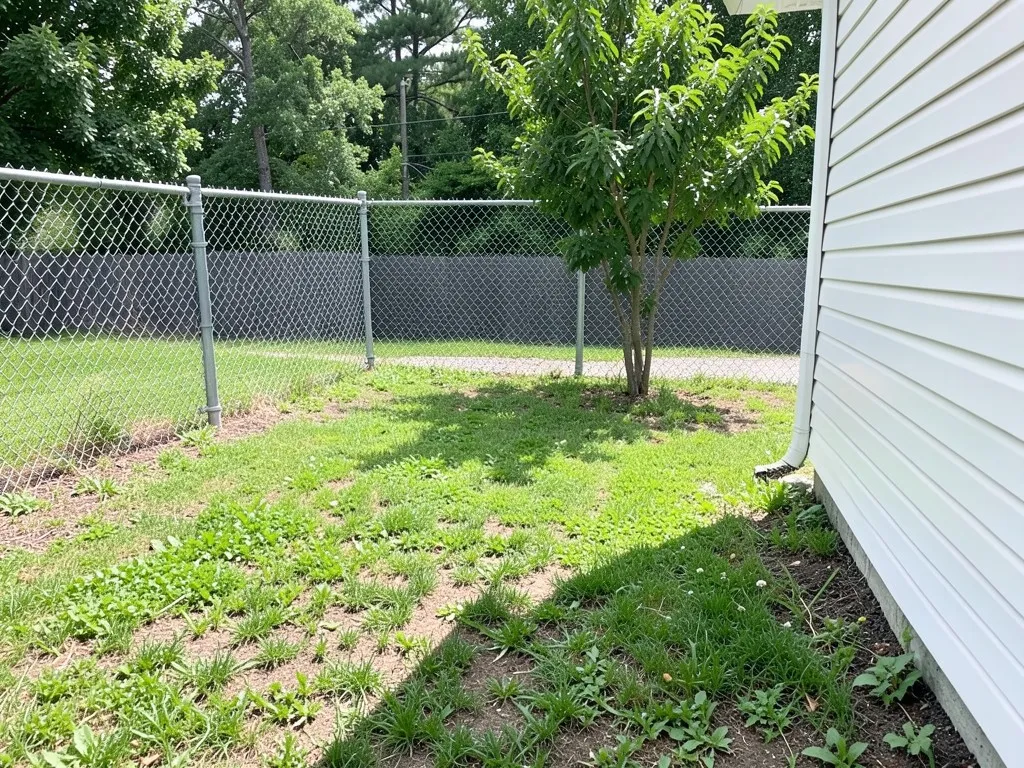
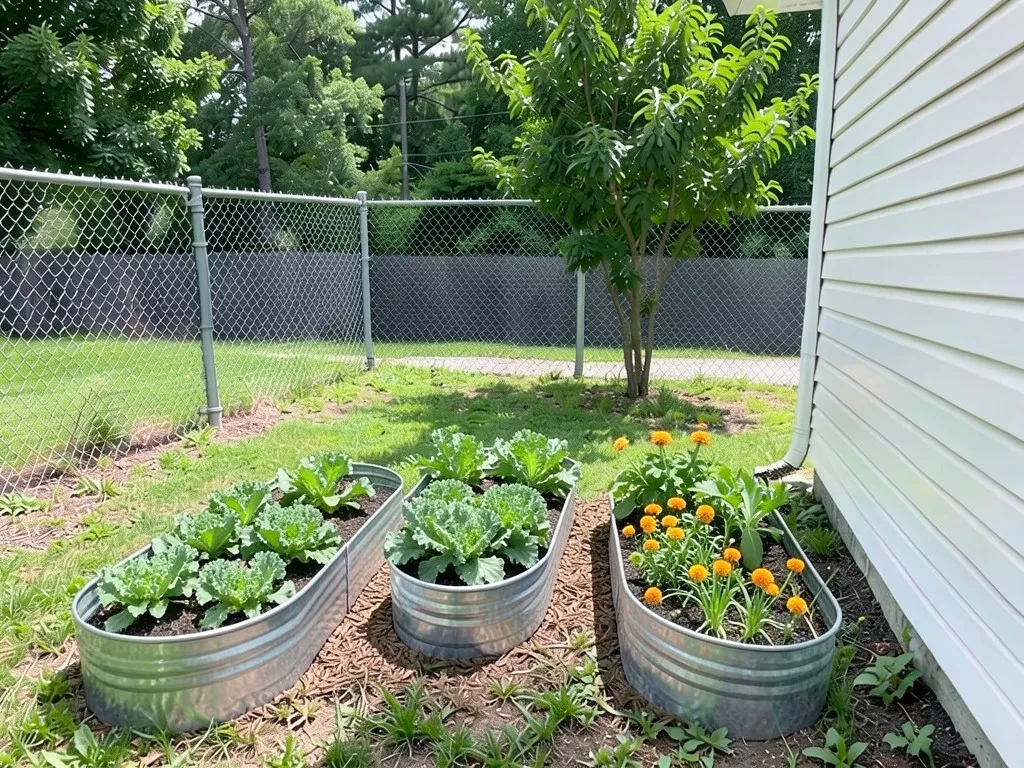
- Change ONLY the lawn: add three long oval raised garden beds made of galvanized corrugated metal, about two feet tall, set side by side with brown wood-chip mulch paths between them, filled with soil and planted with kale, chard, bush beans and orange marigolds. Keep the fence, the tree, the house wall, the sky and the camera angle exactly the same.
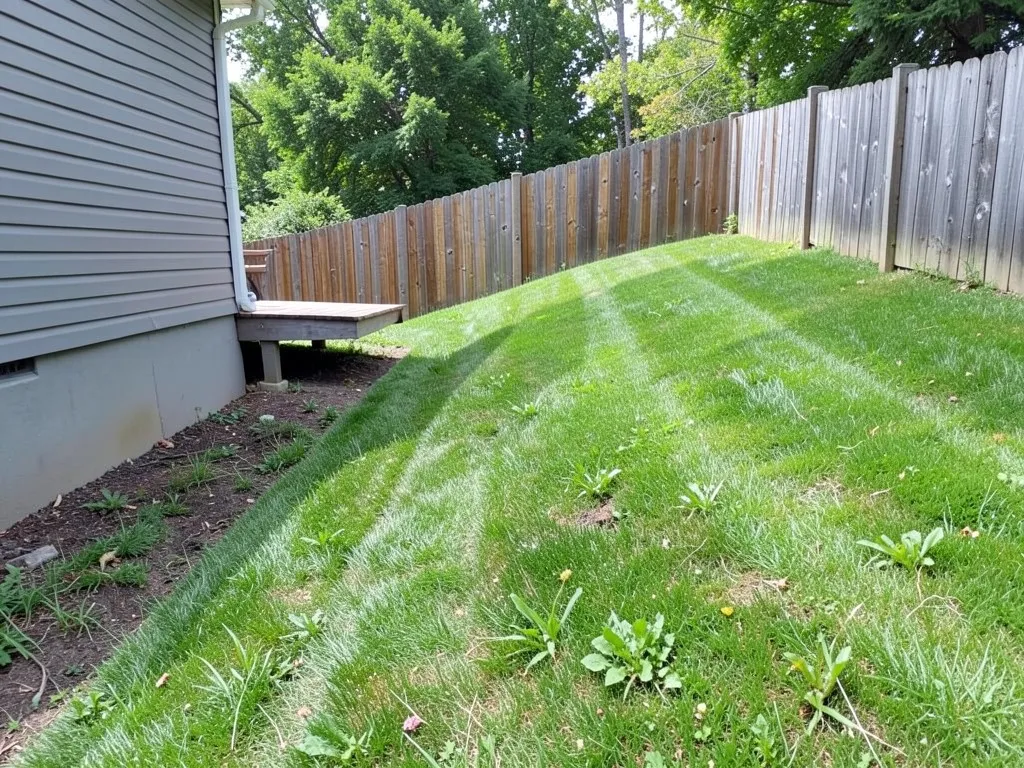
- Change ONLY the sloping lawn: turn it into three stepped terraces of raised beds with low walls of stacked natural grey stone, each terrace about one and a half feet higher than the one below, with stone steps up the middle, the beds planted with strawberries, herbs and squash. Keep the fence, the house, the deck, the sky and the camera angle exactly the same.
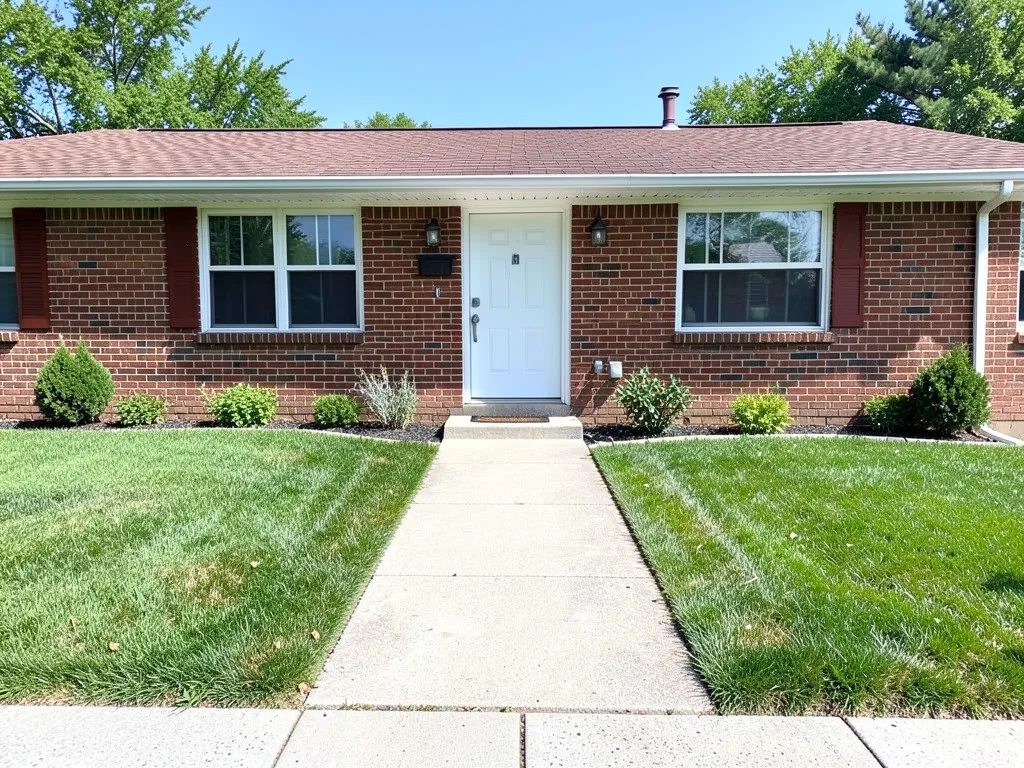
- Change ONLY the lawn on both sides of the walk: add a long low raised bed of red brick on each side of the walk, about eighteen inches tall, planted neatly with herbs, lettuces and low flowers such as purple salvia and white alyssum spilling over the edges. Keep the house, the door, the walk, the sky and the camera angle exactly the same.
- Change ONLY the middle of the lawn: add one U-shaped raised garden bed built from cedar boards, about two feet tall, open toward the camera with a grass path leading into the middle of the U, filled with soil and planted with tomatoes, basil, lettuces and nasturtiums. Keep the fence, the trees, the rest of the lawn, the sky and the camera angle exactly the same.
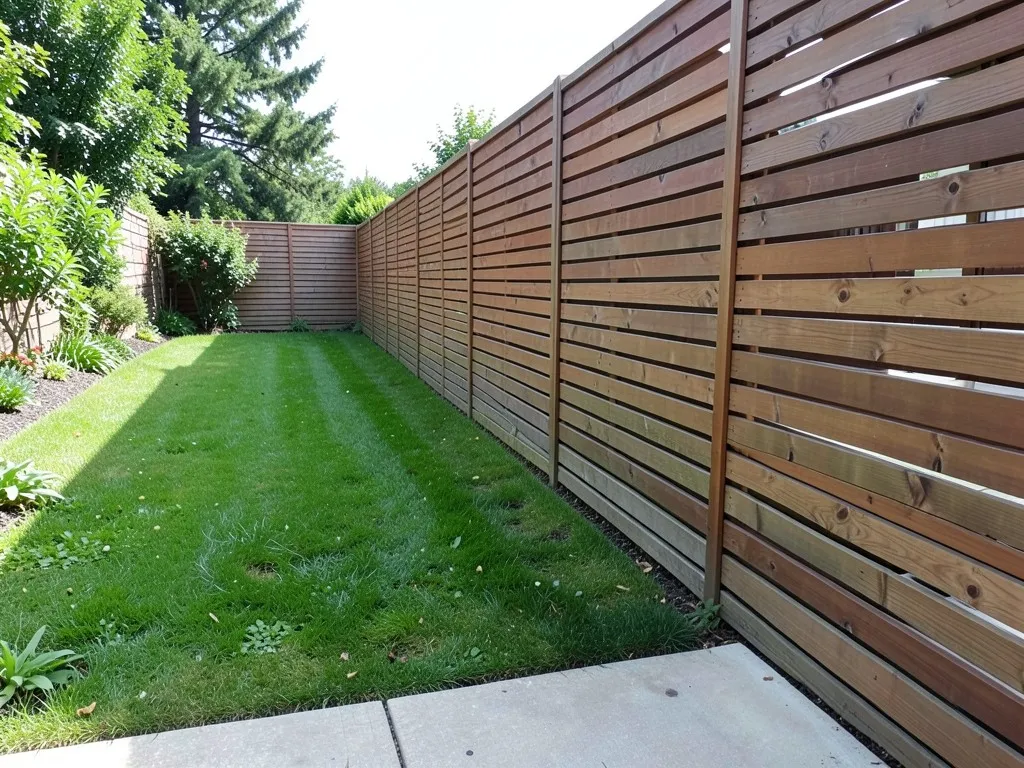
- Change ONLY the strip of lawn along the fence: add a long narrow raised bed made of dark stained wood boards, about two feet wide and one and a half feet tall, running the full length of the fence, with black metal grid trellis panels fixed to the fence above it and climbing cucumbers and pole beans growing up them. Keep the fence, the patio, the rest of the lawn, the sky and the camera angle exactly the same.
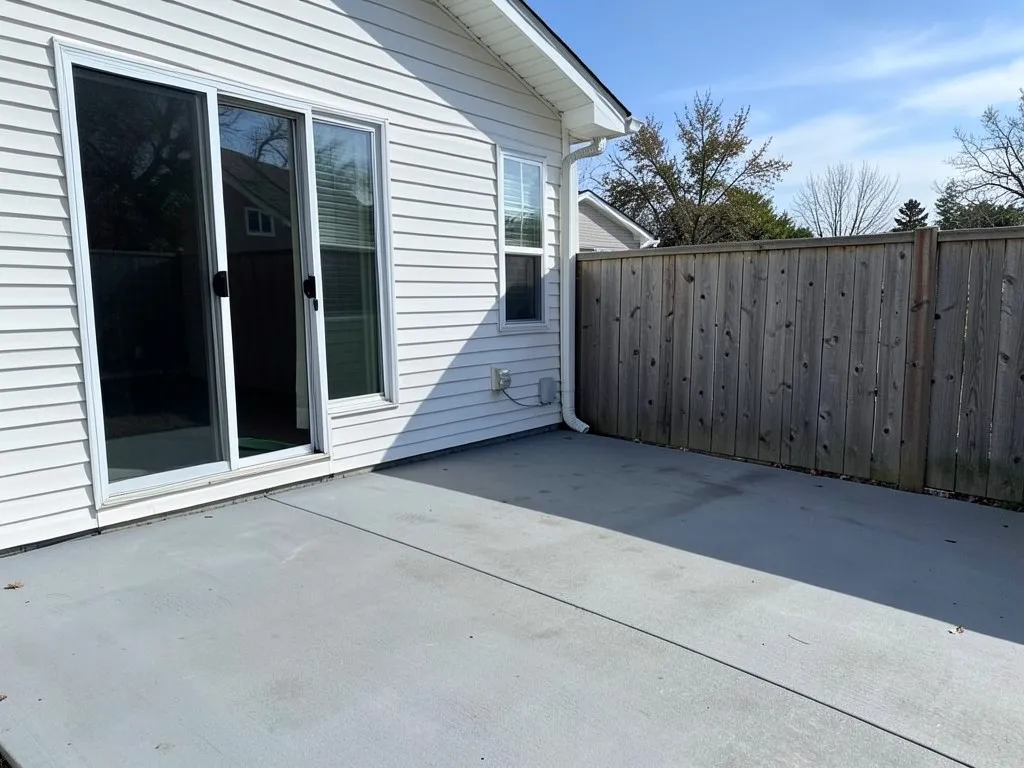
- Change ONLY the empty corner of the patio: add two tall elevated raised garden beds standing on four long wooden legs, the soil box raised to waist height about three feet off the concrete with open space visible underneath each one, built from cedar boards, each about two feet wide and four feet long, planted with lettuces, herbs and strawberries. Keep the house, the sliding door, the patio, the fence, the sky and the camera angle exactly the same.
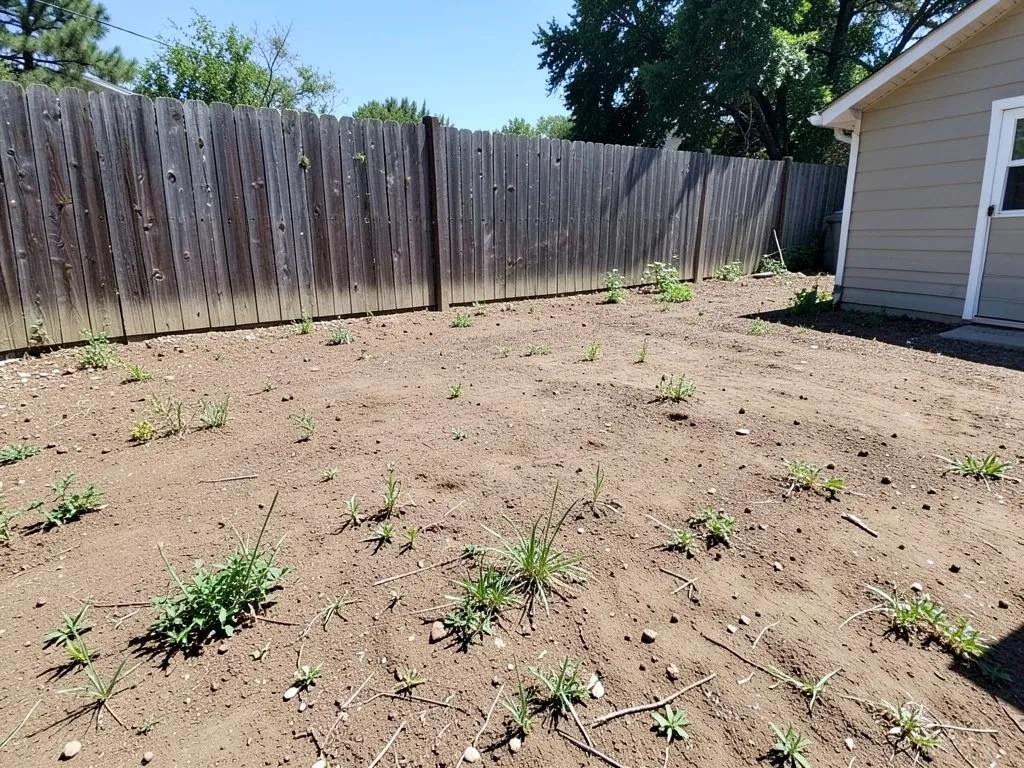
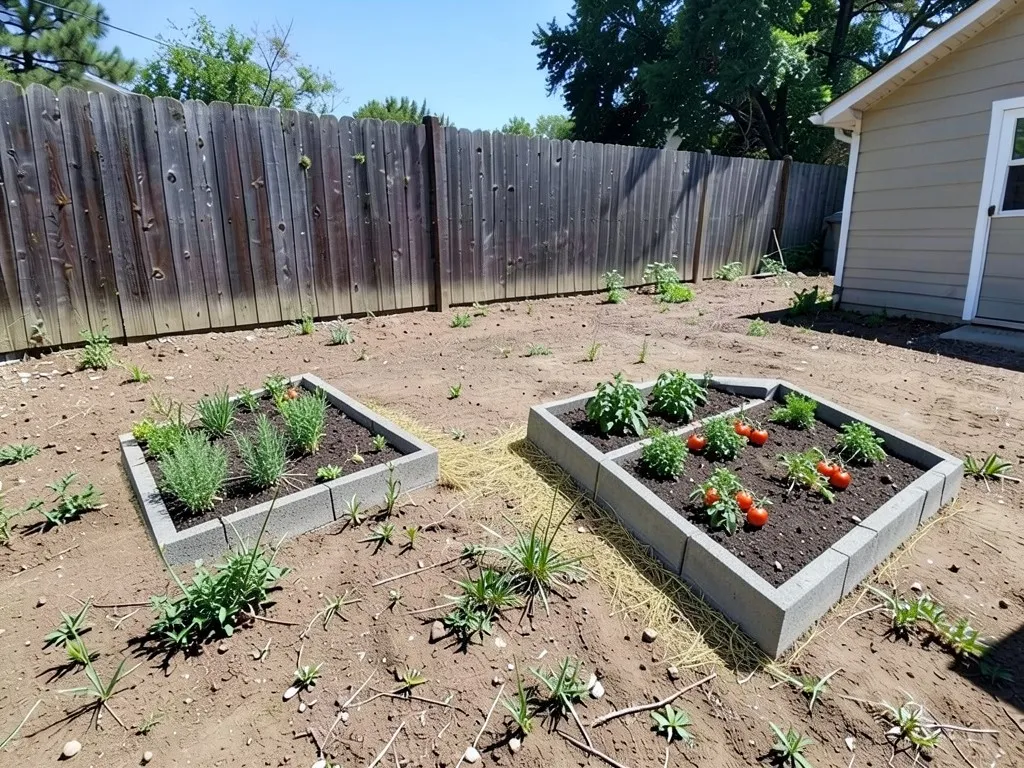
- Change ONLY the bare dirt: add two rectangular raised garden beds built from grey concrete blocks laid in one course, with the open holes of the blocks planted with herbs, the beds filled with dark soil and planted with tomatoes and peppers, and straw mulch paths between the beds. Keep the fence, the shed, the sky and the camera angle exactly the same.
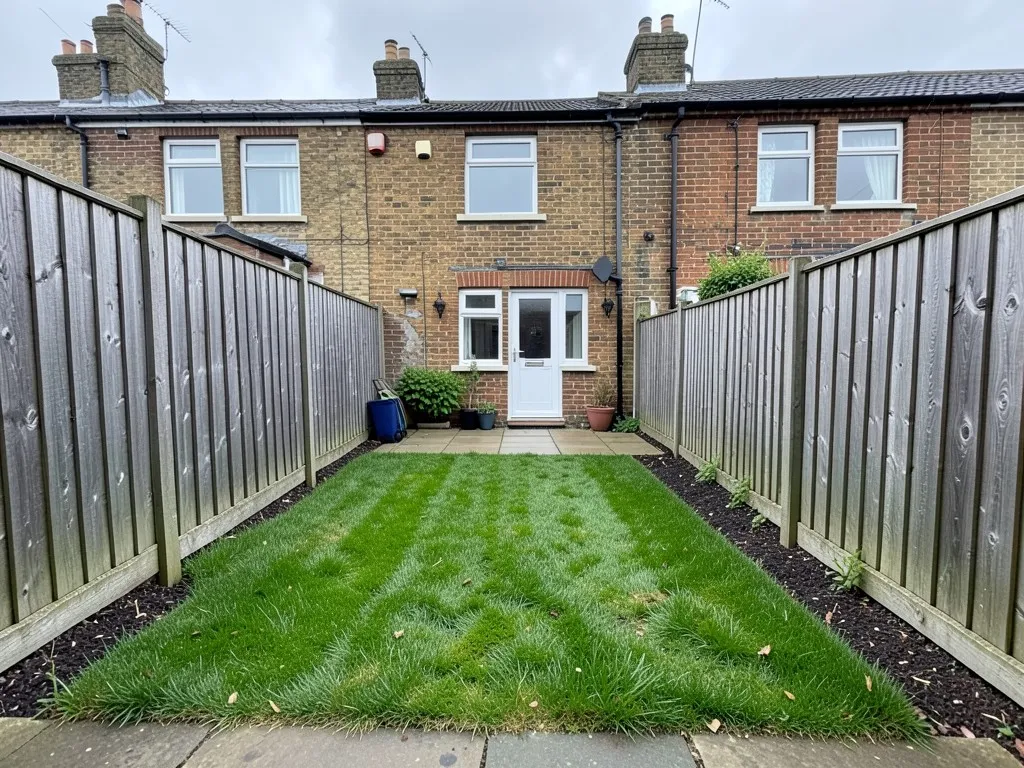
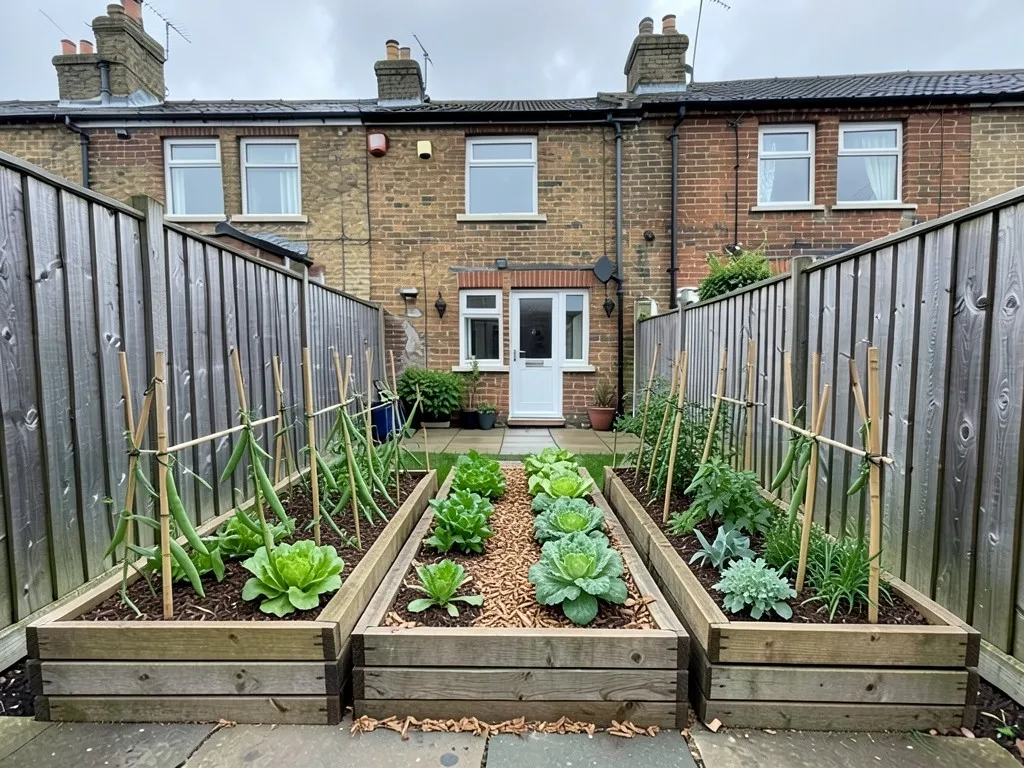
- Change ONLY the lawn: replace it with three raised beds made of oak railway sleepers stacked two high, with a bark chip path between them, planted with runner beans on bamboo canes, lettuces, chard and herbs. Keep the house, the fence panels, the paved area, the sky and the camera angle exactly the same.
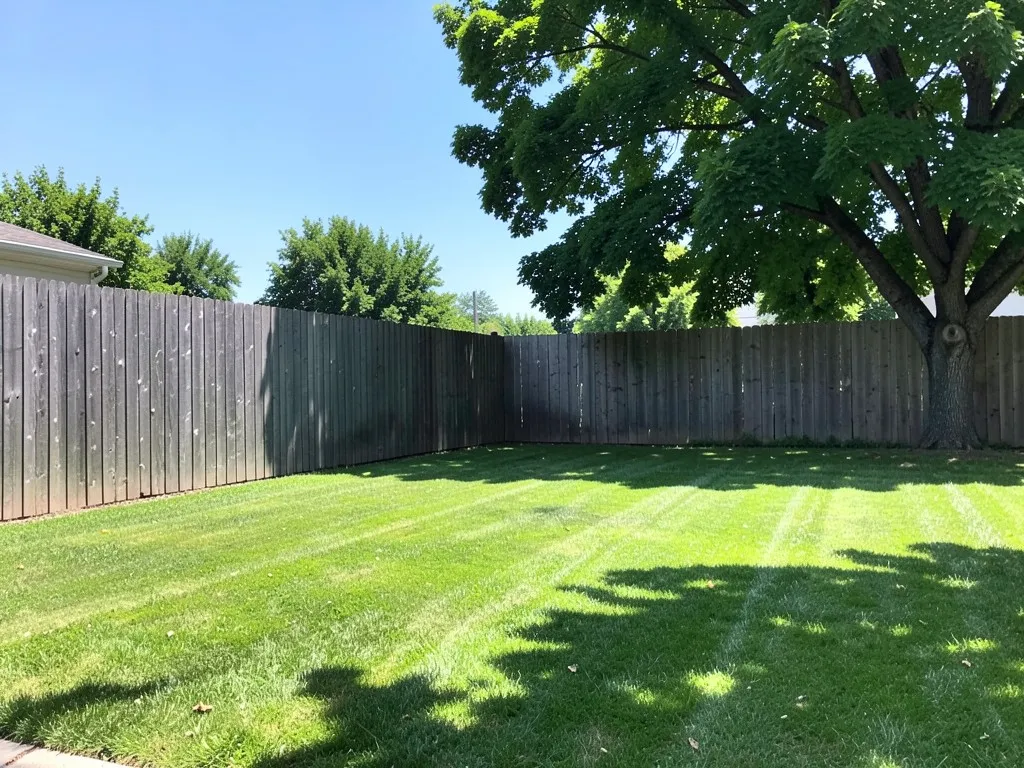
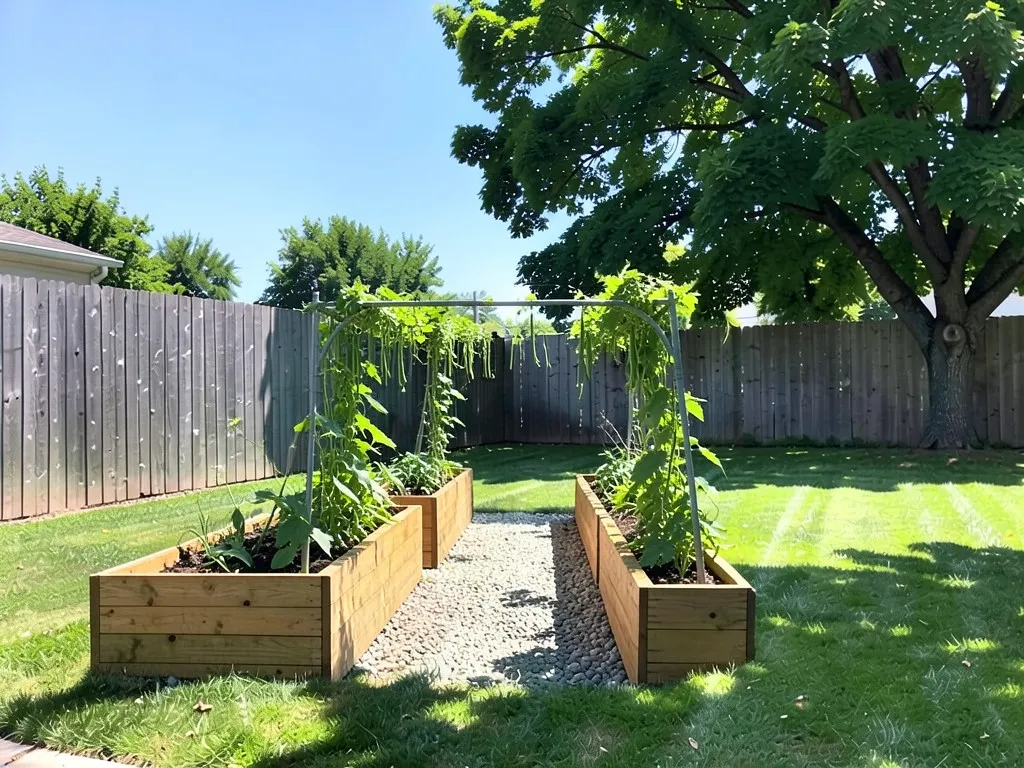
- Change ONLY the middle of the lawn: add two long parallel raised garden beds made of cedar boards with a gravel path between them, and a metal arch trellis spanning the path from one bed to the other, covered with climbing squash vines and hanging green beans. Keep the fence, the tree, the rest of the lawn, the sky and the camera angle exactly the same.
Raised garden bed questions
How wide should a raised garden bed be?
3 to 4 feet wide if you can reach it from both sides (Clemson, Iowa State), and 1.5 to 3 feet if it sits against a fence or wall and you reach from one side (Iowa State, the Old Farmer's Almanac). In the UK, the RHS says under 1.5m.
How deep should a raised garden bed be?
Most crops need at least 10 inches of soil (UGA). Shallow-rooted crops manage with about 6 inches, while carrots, potatoes, tomatoes and squash want 12 to 18 inches (the Almanac). On a patio or other hard surface, UMD gives at least 8 inches for leafy greens and 12 to 24 inches for peppers, tomatoes and squash.
Is pressure-treated wood safe for a raised garden bed?
Modern treated wood is a different product from the old arsenic-based CCA lumber, which was discontinued for home use in 2004. In an Oregon State trial, copper from treated boards rose only within 1 inch of the bed edge, with no increase in the vegetables. Some sources, such as Penn State Master Gardeners in York, still say to use untreated wood. Never use pre-2004 lumber or creosote railroad ties.
What is the best wood for a raised garden bed?
Cedar or redwood: Oregon State calls them more expensive but long-lasting and safe. Untreated pine or fir is safe too but rots sooner.
How much soil do I need for a 4x8 raised bed?
At 12 inches deep, 32 cubic feet, about 1.2 cubic yards, or 22 bags of 1.5 cubic feet. Built from two 2x6 boards (about 11 inches), it is about 29 cubic feet. That is our own arithmetic: length x width x depth in feet.
What should I fill a raised garden bed with?
A mix of topsoil and compost. Illinois Extension uses 1:1; Iowa State gives about 70% topsoil and 30% compost; the RHS uses seven parts topsoil, three parts organic matter and two parts sharp sand.
Which direction should a raised bed face?
Run long beds north to south so both sides get even light (Iowa State, UGA, RHS), in a spot with at least six hours of direct sun.
Can I see a raised garden bed on a photo of my own yard?
Yes. Upload a photo to the landscape tool, choose Custom, and describe the beds: material, how many, how tall and what must stay. The result is a picture for planning, not a measured plan.
Is the raised garden bed tool free?
You need an account, and it is free: 1 free render with a free account, and free renders carry a watermark. A paid plan gives you more renders and removes the watermark.
Sources for the raised bed facts
- Clemson Cooperative Extension, Raised Beds (HGIC 1257)
- Iowa State University Extension, Creating Raised Bed Planters
- University of Georgia Extension, Raised Garden Bed Dimensions (C1027-4)
- University of Maryland Extension, Growing Vegetables in Raised Beds
- University of Illinois Extension, Raised Bed Gardening (PDF)
- Oregon State University Extension, Raised Bed Gardening (FS 270)
- Oregon State University Extension, Pressure-treated wood in raised bed construction (EM 9879)
- UF/IFAS Gardening Solutions, Building Raised Beds
- Penn State Master Gardeners (York County), Raised Bed Gardening
- University of Missouri IPM, Raised Bed Gardening
- RHS, How to make a raised bed
- BBC Gardeners' World, Gardening tips for raised beds
- Homebuilding & Renovating, Raised garden bed ideas
- The Old Farmer's Almanac, Raised Bed Gardening
- Scotts Miracle-Gro, Raised Bed Garden Ideas (bag count for a 4x4 bed)