English garden features compared
| Feature | What it does | What to know |
|---|---|---|
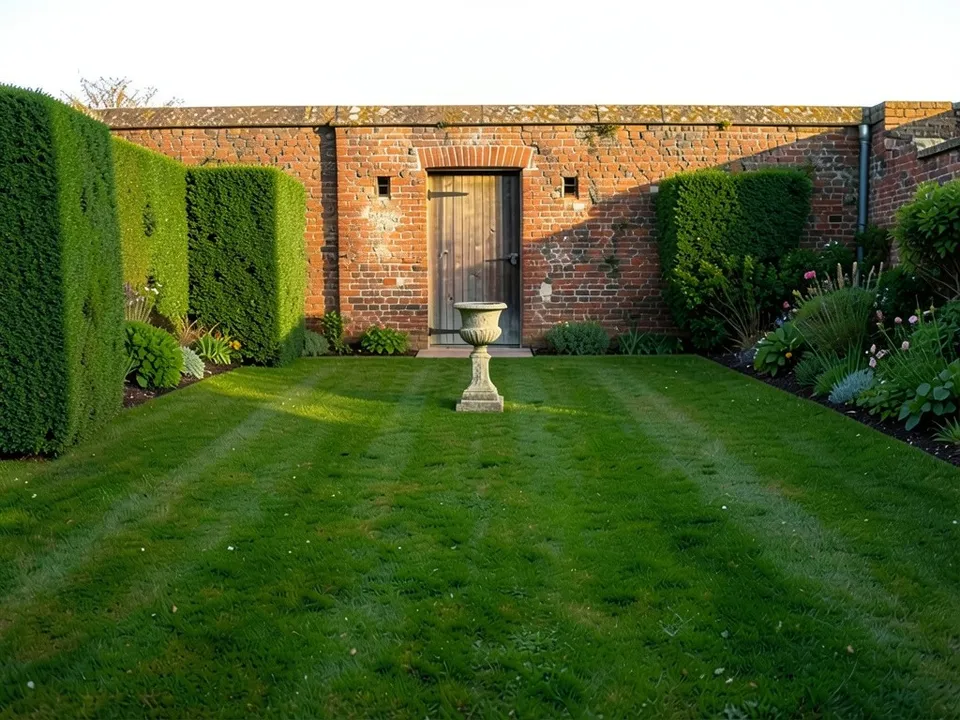
| Clipped hedge (boxwood, yew) | Gives the garden its outline and divides it into rooms | Needs regular clipping to stay crisp; box can be hit by blight or moth in some regions, so ask a local nursery |
| Garden rooms | Splits one yard into several smaller spaces, each with its own look | Walls and hedges both work; leave an opening or arch so you can see through to the next room |
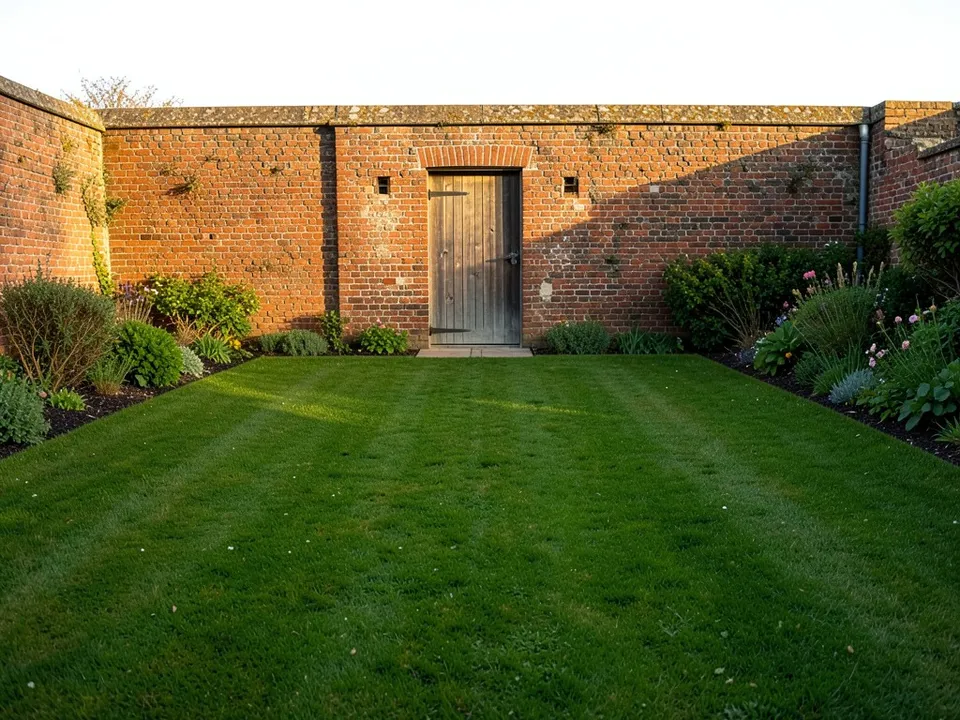
| Lawn | A calm open center that sets off the borders | Traditional designs use a large area of mown grass; a smaller lawn still works in a small yard |
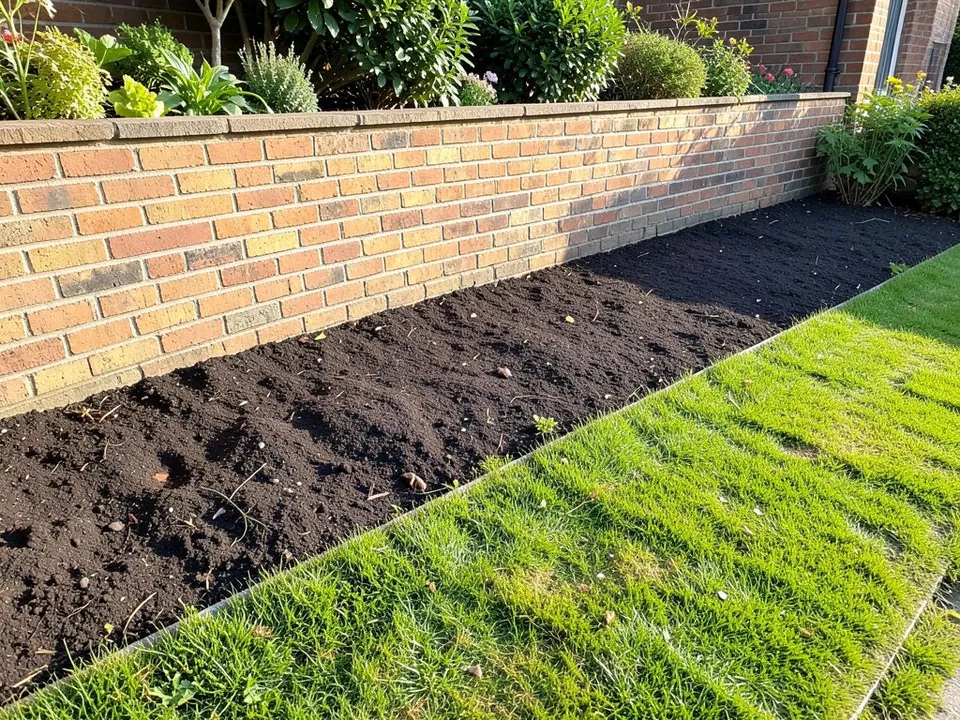
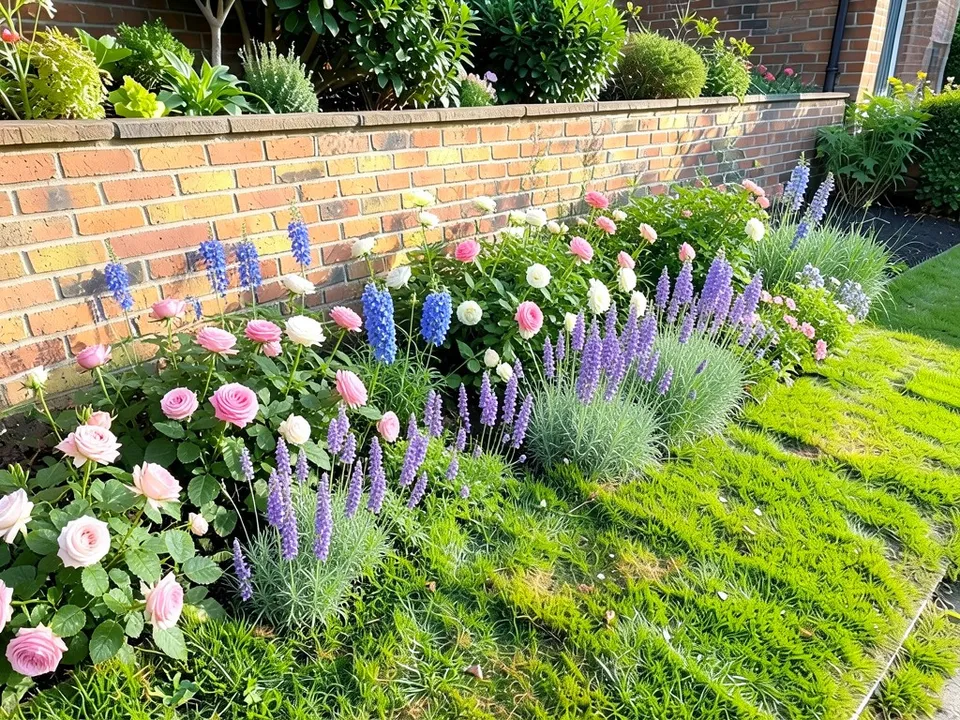
| Mixed flower border | Layers of perennials and shrubs for color from spring to autumn | Tall at the back, low at the front; plant for staggered bloom so something is always in flower |
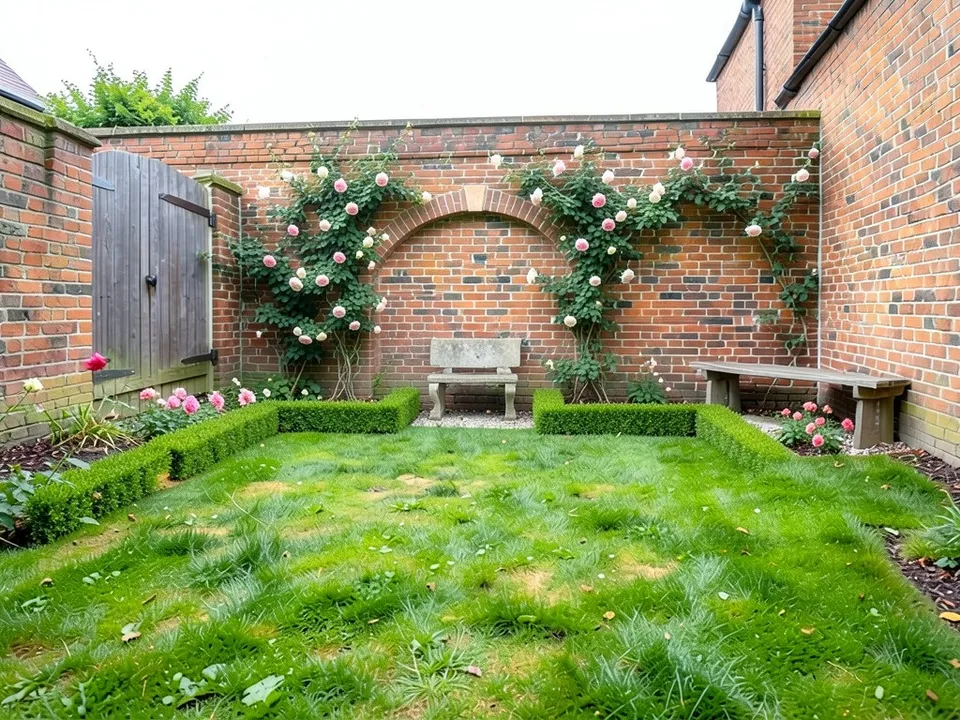
| Roses | The classic English flower, on walls, arches and in borders | Climbers suit walls, arbors and trellis; shrub roses suit the border |
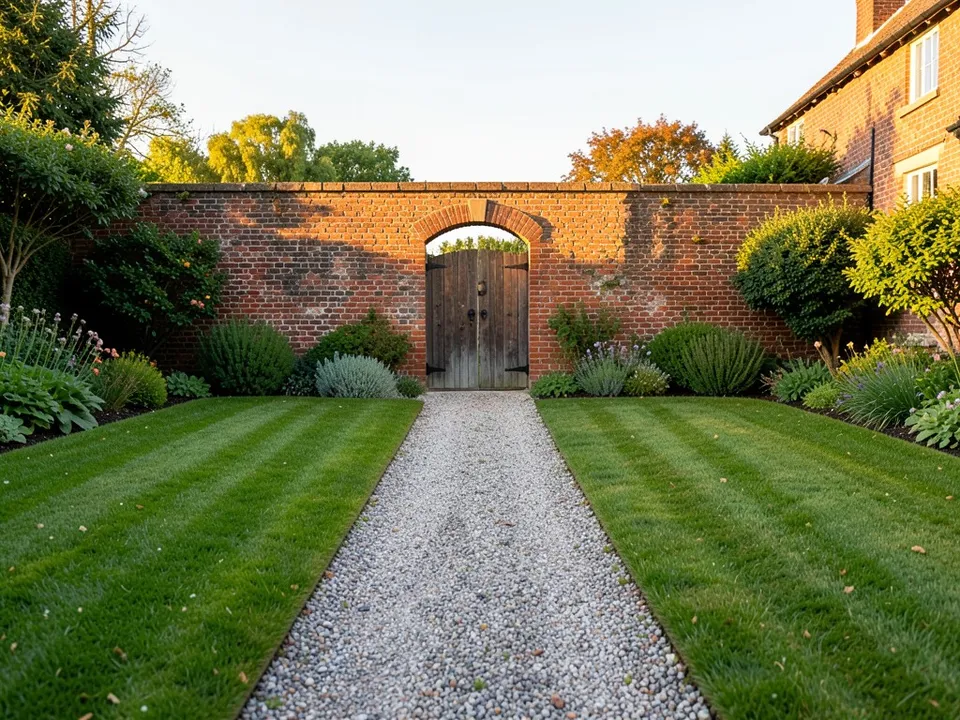
| Gravel path | Soft-sounding, informal path that suits the planting | Needs edging and a firm base so it stays in place; see our garden path page |
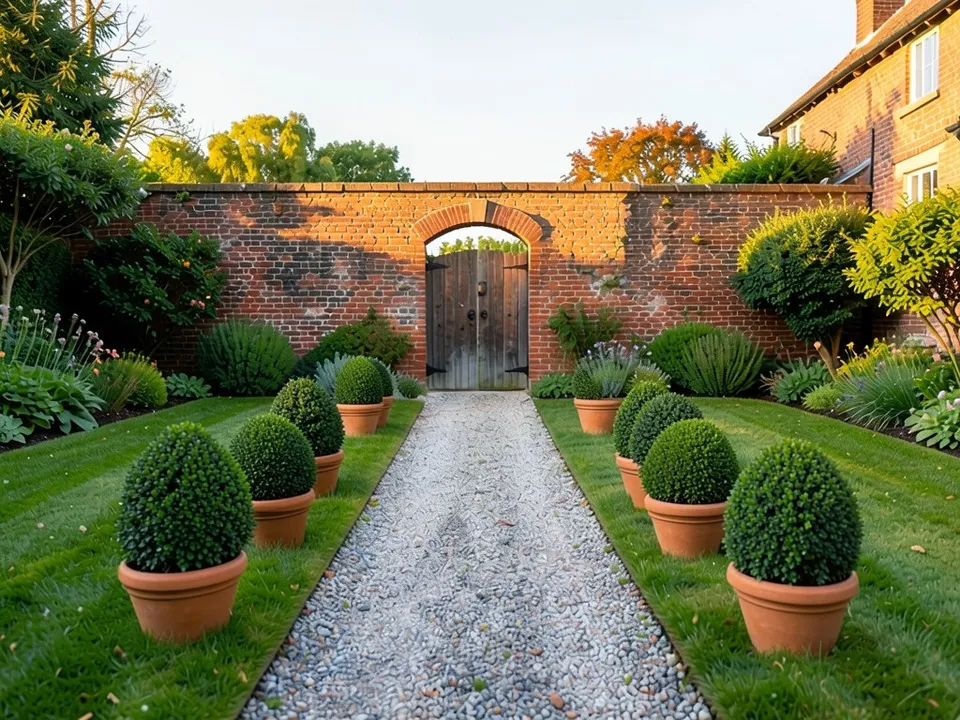
| Topiary | Clipped globes, cones, pyramids and spirals as focal points | Often shown in pots by a door or at path ends; slow to grow, so many people buy it ready-shaped |
| Arbor, arch or obelisk | Adds height and marks the way from one room to the next | Works well with a climbing rose or clematis; helps in a small yard that has little height |
| Pond or fountain | A water feature that sits at the center of a room | A classic accent; needs care over safety and maintenance, see our pond page |
These are the features the guides ranking for this search keep coming back to. The table says what each one does and the main thing to know before you add it. You do not need all of them: pick two or three and let the planting carry the rest.
Formal or informal: which English garden do you want?
The guides we checked, Homes & Gardens, Lawn Love and GardenDesign.com, describe the English garden as a spectrum. At one end it is tidy and symmetrical, at the other it is loose and crowded with flowers. Most yards end up somewhere in between.
- Formal: Clipped hedges, topiary, straight gravel paths, a mown lawn and symmetrical beds. The soft planting sits inside this rigid frame, which is what makes the contrast work.
- Cottage: Beds and borders packed with perennials, roses and herbs, with paths that wander. It is the planting side of the style on its own; our cottage garden page covers it in detail.
- Country or romantic: A middle path: a big lawn, generous mixed borders, roses on walls and arches, and a few clipped shapes for structure. This is the look most people picture first.