Trellis Ideas: Designs for Walls, Screens, Pots and Vegetables, Shown on Your Own Yard

A trellis is a frame that gives a climbing plant something to hold, and it does a second job at the same time: it covers a bare wall, screens a seating spot or splits a yard into areas. Which design is right depends on what you want it to do and what will grow up it.

More renders come with a paid plan (see pricing).

Upload a photo of your yard, say which trellis you want and where, and our AI returns the same view with that trellis drawn in. Below are the main trellis designs compared, what to grow on each, how to choose the material and fix it, and four before and after examples with the exact instructions and an honest note on what the AI got wrong in each.

Trellis designs compared

DesignBest forWhat to know
Wall-mounted panelCovering a bare house or garden wallFix it to the wall; leave a small gap behind it so stems can wrap and air can move
Fence topperAdding height and privacy to a fence you already haveOpen panels let some view through until evergreen climbers fill them
Freestanding screenDividing the yard into rooms or hiding a shed or binsNeeds a post at each end or ground spikes, and it must stand firm in wind
Fan or tower in a potBalconies, patios and courtyards with no soilPick a heavy planter and a plant sized to the frame
A-frame or obeliskPeas, beans, cucumbers and other climbing vegetablesTie it or stake it firmly; bamboo is cheap but may not last as long as wood or metal
Arch or arbor trellisMarking a path or the entrance to a garden roomA frame you walk through is a different job from a flat panel; see the arbor page
Espalier wires or panelTraining fruit trees such as apples and pears flat against a wallSpaced horizontal supports suit trained branches better than a tight grid

These are the trellis designs that come up most often in the guides ranking for this search. The table says what each one is best for and the main thing to know before you choose.

What to grow on a trellis

The plant decides how strong and how tall the trellis has to be, so choose both together. The guides we checked, Gardeners' World and Real Homes, suggest these pairings.

  • Clematis, roses and honeysuckle: Classic scented flowering climbers for a wall or panel. Climbing roses on a metal frame get strong support.
  • Star jasmine: An evergreen, scented climber, so it keeps a fence topper or a screen covered through winter.
  • Wisteria: Gets heavy and vigorous over the years, so it suits a sturdy pergola or arbor more than a light panel. Check how heavy each climber becomes before you pick a support.
  • Sweet peas, morning glory and other annuals: Quick results in one season on a cheap trellis, then you start again next spring.
  • Peas, beans, cucumbers and tomatoes: Vegetables that climb do best on a tied A-frame or obelisk in a sunny spot; our vegetable garden page covers the beds.
  • Apples, pears, plums and peaches: Trained flat against a wall as espaliers, they give spring blossom and autumn fruit.
Trellis ideas before and after

In each pair, the left image was generated by AI as a stand-in for an ordinary yard, and the right image is that same picture edited by AI from a written instruction. The exact instructions are listed lower on this page. None of them are photos of real customer homes.

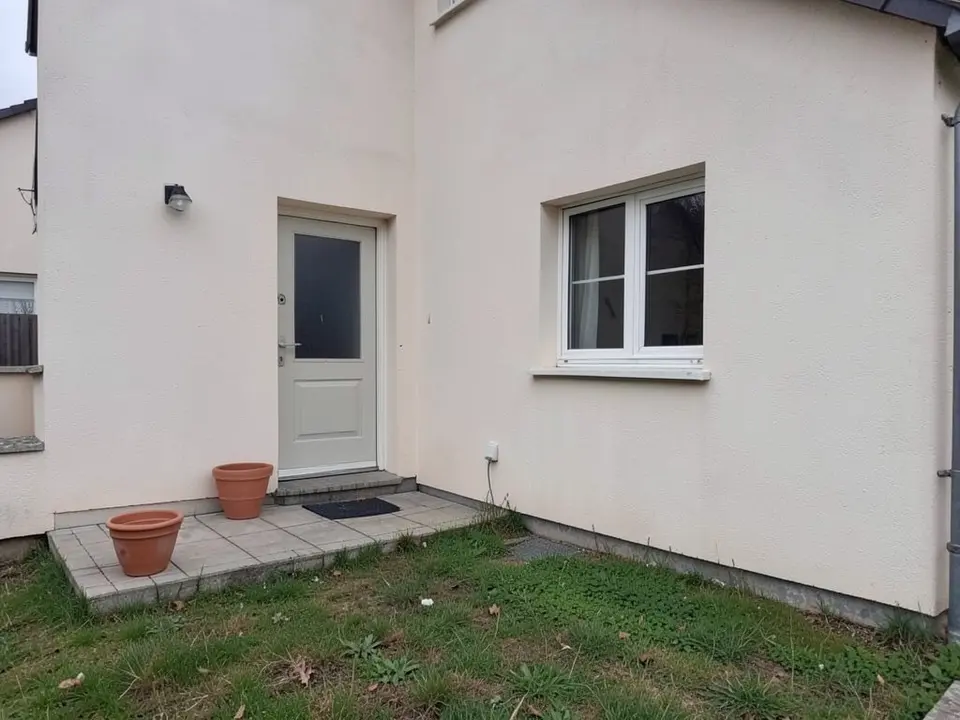
AI-generated example: the back of a suburban house with a plain pale rendered wall, a pale green back door, a white window, two terracotta pots on a small paved step and a strip of lawn

Before

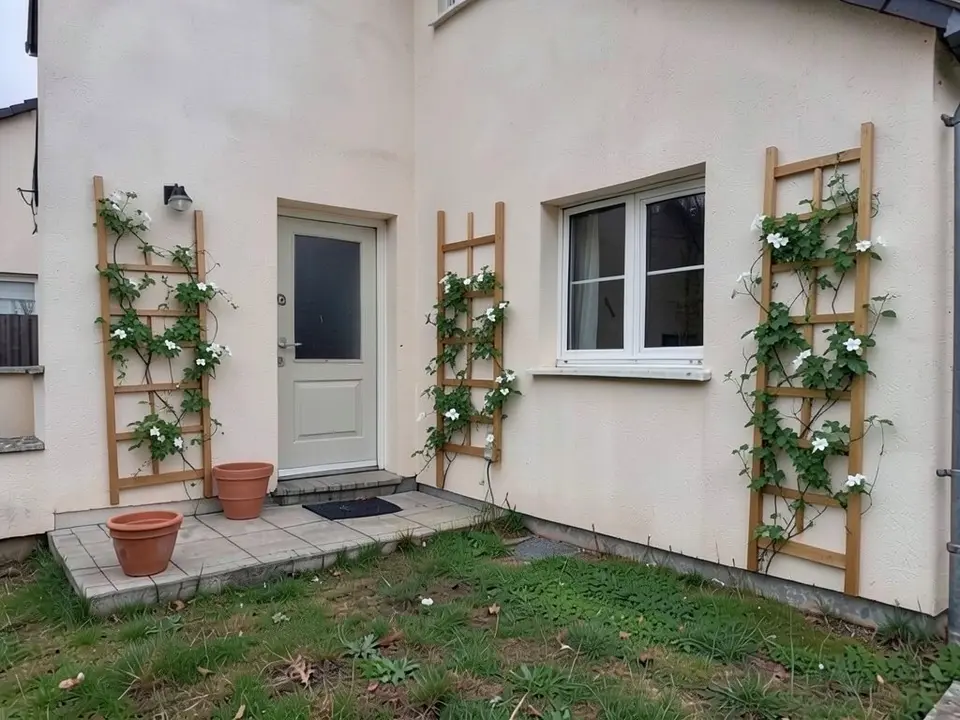
AI-edited version of the same image: three tall wooden trellis panels fixed to the pale wall, two beside the door and one to the right of the window, each with a climbing clematis in white flower; the door, window, pots and lawn unchanged

After

Wall-mounted trellis panels (first instruction below). The before image is an AI-drawn stand-in for a plain rendered wall, not a customer photo. What followed the instruction: three tall wooden panels now stand on the wall with climbers on them, and the door, window, pots and lawn did not change. What did not: we asked for a young clematis starting to climb and the plants are drawn already in flower and well up each panel, which takes a season or more in real life. The panels are also different heights and spacings, which we did not ask for, so check yours against the real wall.
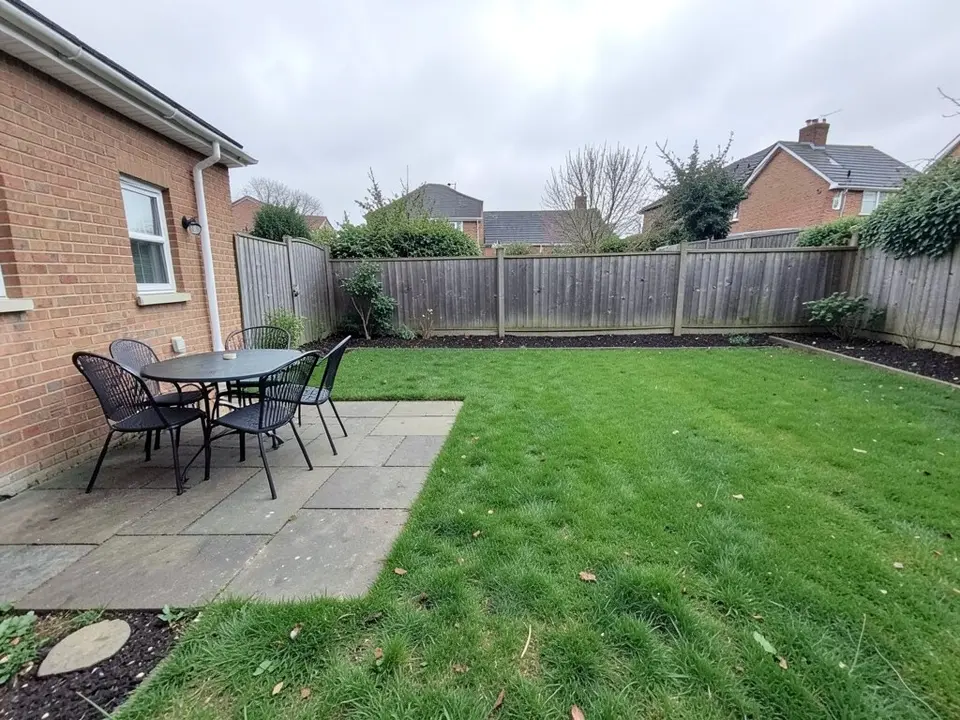
AI-generated example: a brick-sided backyard with a small paved patio with a table and chairs on the left, an open lawn on the right and a weathered wooden fence at the back

Before

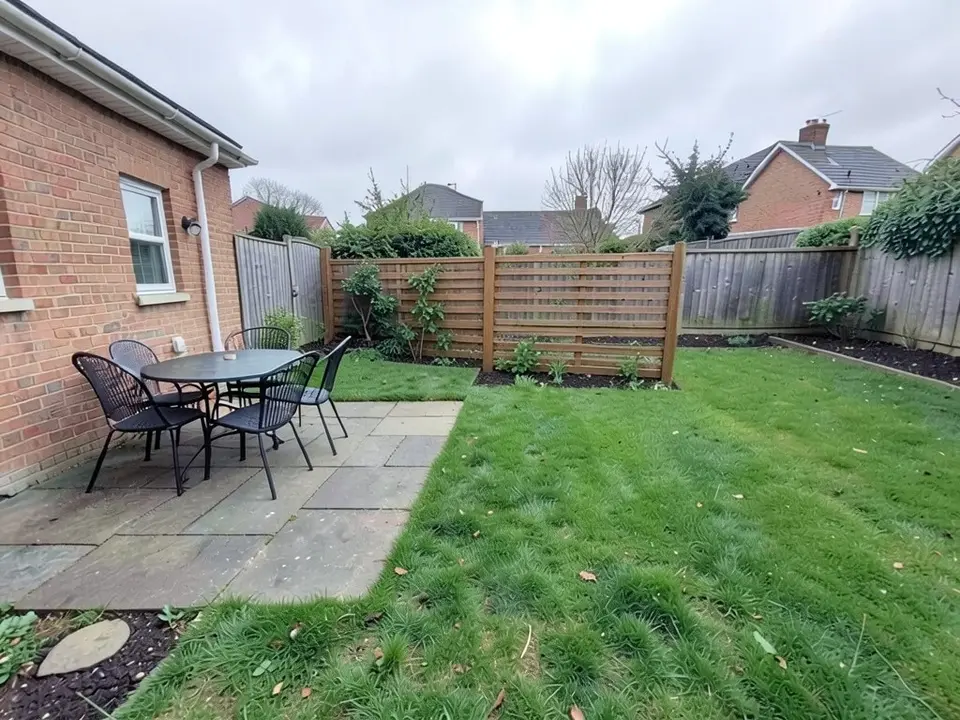
AI-edited version of the same image: a pale horizontal slatted wooden screen set into the back fence line behind the lawn with a few young plants at its base; the patio, table, chairs and lawn unchanged and nothing standing between the patio and the lawn

After

A trellis screen to divide the yard (second instruction below). The before image is an AI-drawn stand-in for an open backyard, not a customer photo. What followed the instruction: a slatted wooden screen with young plants at the foot now stands in the picture, and the patio, table, chairs and lawn are unchanged. What did not: we asked for it between the patio and the lawn and the AI put it against the back fence instead, so the yard is not divided at all. This is the kind of miss to watch for: say where it goes and check where it landed.
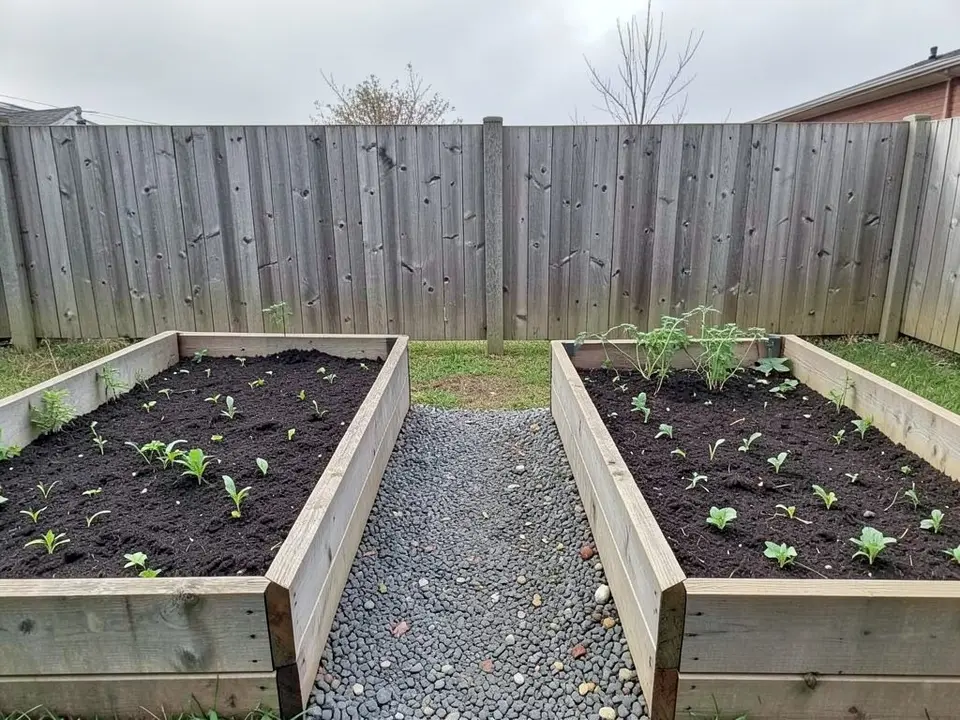
AI-generated example: a vegetable garden with two wooden raised beds of dark soil with small seedlings, a gravel path between them and a plain grey wooden fence behind

Before

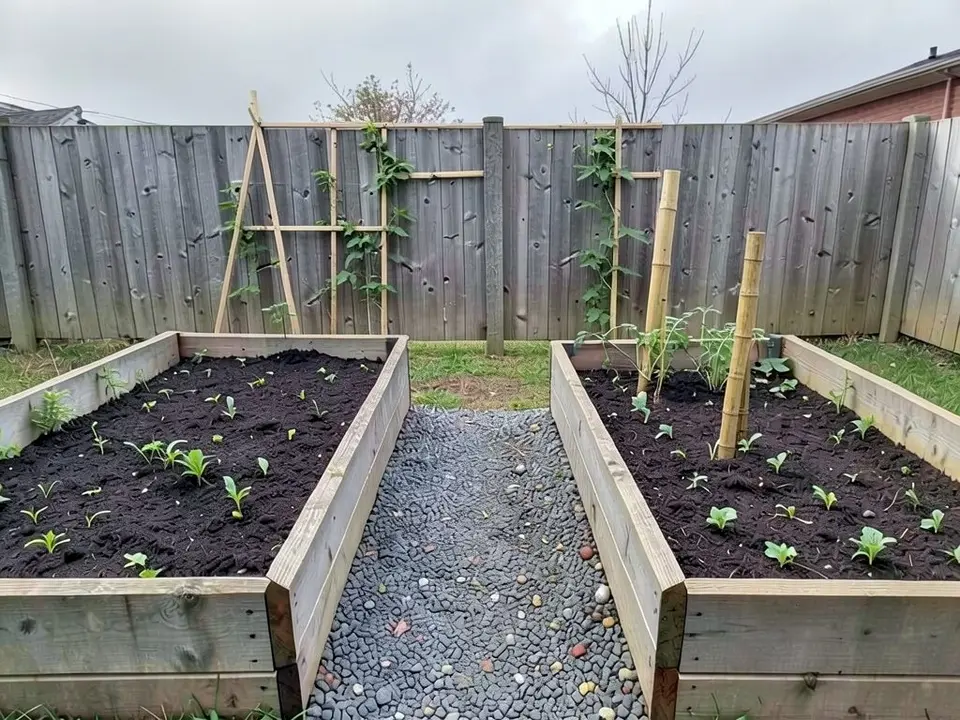
AI-edited version of the same image: a tall bamboo A-frame against the fence over the back of the left bed with climbing pea and bean plants, and a bamboo pole in the right bed; the beds, gravel path and fence unchanged

After

A vegetable trellis (third instruction below). The before image is an AI-drawn stand-in for two bare raised beds, not a customer photo. What followed the instruction: a bamboo A-frame with young climbing plants now rises behind the beds, and the beds, gravel and fence are unchanged. What did not: we asked for a bamboo obelisk in the front bed and got a single plain pole, and the A-frame leans on the fence beside the bed, not over the bed. A real frame has to be tied or staked firmly, because foliage catches the wind.
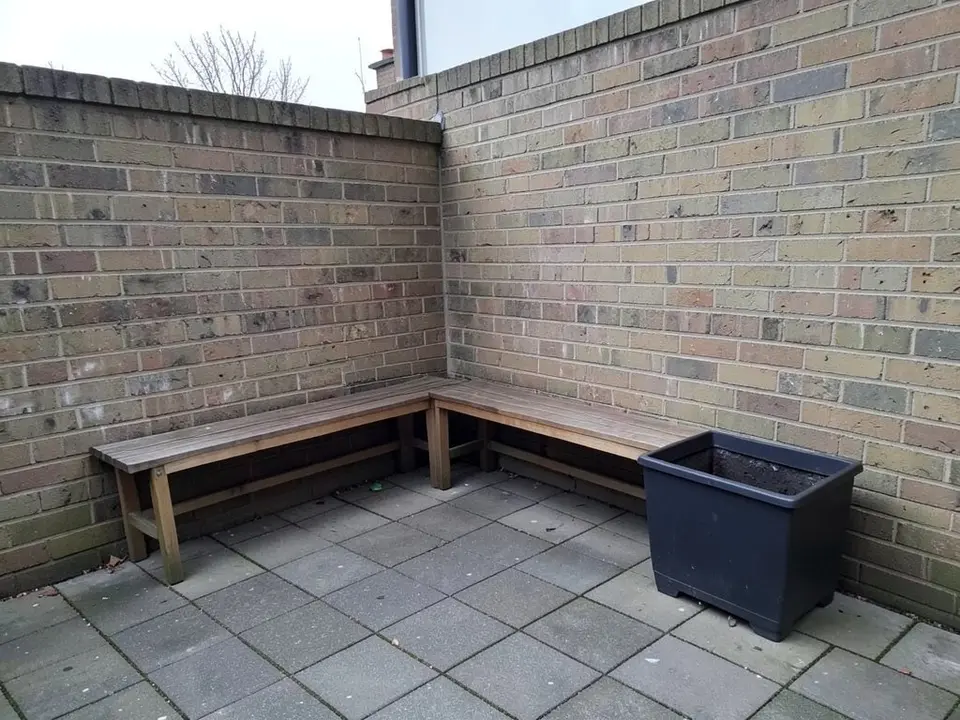
AI-generated example: a small paved patio corner with a plain brick wall, a wooden bench and one empty large dark planter standing against the wall

Before

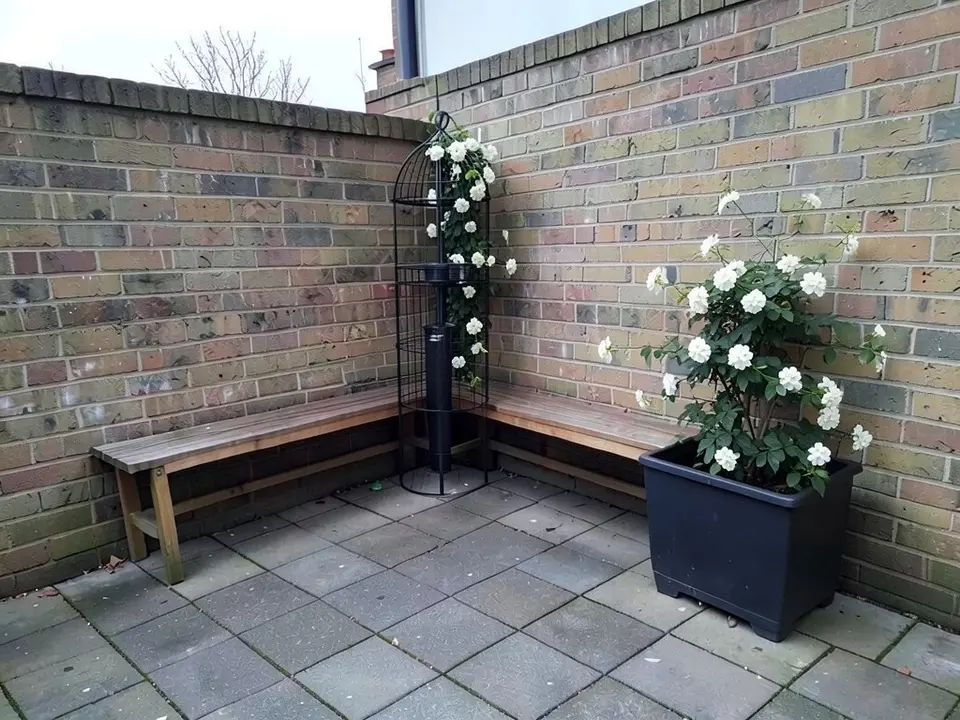
AI-edited version of the same image: a tall black metal trellis tower with white flowers climbing it in the corner by the bench, and a white-flowering shrub in the dark planter; the bench, wall and paving unchanged

After

A trellis in a planter for a small patio (fourth instruction below). The before image is an AI-drawn stand-in for a dull patio corner, not a customer photo. What followed the instruction: a black metal trellis and white flowers now fill the corner and the bench, wall and paving did not change. What did not: we asked for a trellis fan inside the planter with a jasmine on it and got a separate tower in the corner and a different plant in the pot that looks more like a rose than a jasmine, and everything is in full flower at once.

How to choose and fix a trellis

Three choices matter before you pick a design: the material, how open the grid is, and how it is fixed.

  • Wood: The most common material, and treated wood resists rot and insects. It suits light and medium climbers. Paint or stain it in a color that goes with the planting.
  • Metal: Wrought iron or steel is stronger, so it suits heavier climbers and freestanding frames, and it comes in more decorative shapes.
  • Grid size: A small grid gives more support and more privacy. A large grid lets more light through.
  • Fixing: Wall and fence panels are fixed to the structure. A freestanding wooden trellis needs a post at each end or ground spikes. Fix it securely, because a trellis full of leaves behaves like a sail in wind.

How to try a trellis on your own yard photo

Use Custom mode for this. None of the Yard Redesign styles is built to add one trellis, and Custom lets you name the change and say what must stay the same.

  1. Take a photo in daylight that shows the wall, fence or bed you want to change.
  2. Open the landscape tool and sign in with Google or an email code. You get 1 free render with a free account.
  3. Under Select Landscape Mode, pick Custom.
  4. In the Custom Design Requirements box, say you want to add only the trellis, name the design, material, height and where it goes, name the plant, and list what must stay the same.
  5. Drop your photo into Upload Your Garden Image and press Generate Custom Design.
  6. Check where the trellis landed, change one thing at a time and run it again.

What the AI can and cannot do

The AI shows a look: roughly how a trellis, a plant and a color would sit on your wall or in your yard. That helps you pick a design and explain it to an installer or a friend with a drill.

It does not measure, and it does not know what will grow in your climate. It does not always follow the instruction either. In all four examples above something we asked for did not appear or was drawn differently, and in one the trellis was placed in the wrong spot. It also draws the plants fully grown in the first picture, while a real climber needs a season or more.

Trellis instructions to paste into Custom mode

These are the exact instructions we used for the four examples above, in the same order. In the landscape tool, choose Custom, paste one into the Custom Design Requirements box, then upload your photo. Swap in your own design, plant, spot and what must stay.

  • Change ONLY the wall: fix three tall wooden trellis panels to the plain wall, each about 6 feet high, with a young climbing clematis growing up each one. Keep the door, the window, the patio, the pots and the lawn the same. Same camera angle.
  • Add a freestanding slatted wooden trellis screen about 6 feet tall between the patio and the lawn, with a few young climbing plants at its base, so the patio feels like a separate room. Keep the table, the chairs, the paving, the lawn and the back fence the same. Same camera angle.
  • Add a tall wooden A-frame trellis over the back raised bed with young pea and bean plants starting to climb it, and a bamboo obelisk trellis in the front raised bed. Keep the raised beds, the gravel path and the fence the same. Same camera angle.
  • Add a tall black metal trellis fan inside the large planter with a climbing jasmine growing up it, flowering white. Keep the bench, the brick wall and the paving the same. Same camera angle.

Frequently asked questions

What is a trellis used for?

A trellis gives climbing plants a frame to grow up. It also covers a bare wall, adds privacy on top of a fence, divides a yard into areas, hides a shed or bins, and holds climbing vegetables off the ground.

What is the difference between a trellis and an arbor?

A trellis is a flat frame or grid, usually against a wall or fence or standing as a screen. An arbor is a structure you walk through, often with trellis sides and an arched top, that marks a path or entrance. See our garden arbor page for those.

What grows best on a trellis?

Clematis, climbing roses, honeysuckle and star jasmine are the common flowering choices, sweet peas and morning glory give quick annual color, and peas, beans and cucumbers climb well on an A-frame. Wisteria gets heavy, so give it a sturdy pergola or arbor. Choose the plant first, then a trellis strong enough for it.

Should a trellis be wood or metal?

Treated wood is the most common and suits light and medium climbers. Metal is stronger, so it is the better choice for heavy climbers and for freestanding frames. Whichever you choose, fix it securely so wind cannot push it over.

Can I put a trellis on top of a fence?

Yes. A trellis panel on a fence adds height and a place for climbers, and evergreen climbers keep the privacy going through winter. It is open, so it hides less than a solid panel until the plants fill it, and your city or HOA may limit the total fence height.

How do I make a cheap trellis?

Bamboo canes tied into a frame are the simplest support for climbing vegetables. Old ladders, pallets and window frames with wire are other upcycled options. Set a ladder's feet firmly into the ground because foliage catches the wind, and use heat-treated pallets, not chemically treated ones, near food crops.

Can I use a trellis on a balcony or small patio?

Yes. A fan or tower trellis in a large, heavy pot takes up little space, and a trellis on the wall behind it adds height. Pick a plant sized to the frame and a sunny spot for vegetables.

Can the AI show a trellis on my own yard photo?

Yes. Upload a photo in Custom mode and describe the design, material, height and where it goes, and say what must stay the same. You get 1 free render with a free account. It draws a possible look and may not follow every detail or put the trellis in the spot you asked for, so check the result before you build.

More ideas for walls, fences and climbing plants

Planning the house as well? The AI exterior design tool works on a photo of the front of the house, and the AI paint visualizer tries wall colors. You can read more about who builds these tools on our about page.

For more, browse all of our landscaping ideas, sorted into front yards, backyards, patios, gardens, pools, styles and regions.