
Ways to use boxwood in a yard
Low clipped hedges along a walk or a bed edge, a formal parterre of square or knot-shaped beds, clipped balls in pairs by a door or in pots, and an evergreen row in a foundation bed under the windows. Boxwood keeps its leaves all winter, so these shapes hold the garden together when flowers are gone.
We also tried hedges along a front walk, but the model left the walk unchanged in both runs, so that example is not shown.
Sizes, spacing and blight
Pick the variety by its grown size. Typical mature sizes listed by growers: 'Green Gem' about 2 by 2 ft, 'Green Velvet' about 3 ft tall and 4 ft wide, 'Winter Gem' about 4 by 4 ft, and the upright 'Green Mountain' about 5 ft tall and 3 ft wide. For a hedge, a common rule is to space plants about half their mature width apart.
Boxwood blight is a fungal disease that strips the leaves. Clemson HGIC notes that English boxwood ('Suffruticosa') is very susceptible, while many Japanese, littleleaf and Korean types and newer blight-resistant series hold up better. Most boxwood grows in USDA zones 5 to 9, likes a few hours of sun and well-drained soil, and deer usually leave it alone.
How to try boxwood on your own photo
The tool above is in Custom mode, which has a Custom Design Requirements box. Describe the hedge height and where it runs, the shape of any beds, and what stays.
- Take the photo in daylight from where you usually see that part of the yard, with the lawn, walk or bed in frame.
- Describe the change in the Custom Design Requirements box: the hedge or shape, its height (for example knee high), where it goes, and what must stay.
- Add your photo in the Upload Your Garden Image box, then press Generate Custom Design. You sign in with an email code or Google when you generate.
- Compare the result with your photo. If something is in the wrong place or too big, name the spot and the size, and try again.
What the AI can and cannot do
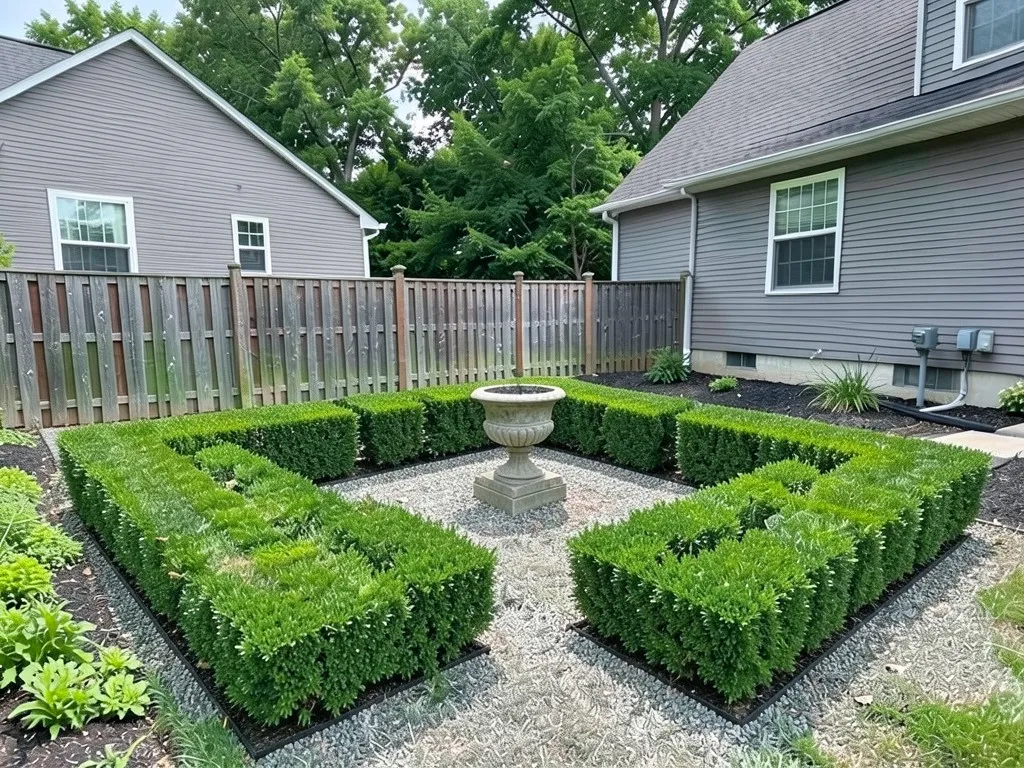
The AI shows the look of hedges and formal beds in your yard. It does not know which variety you will plant, how fast it grows, or whether blight is a problem in your area. In the example above it made the hedges taller and thicker than a typical parterre edge, so say the height you want in feet and check the result.
Boxwood instructions to paste into Custom mode
This is the exact instruction we used for the example above. In the tool above, Custom mode is selected: paste it into the Custom Design Requirements box, then upload your photo.
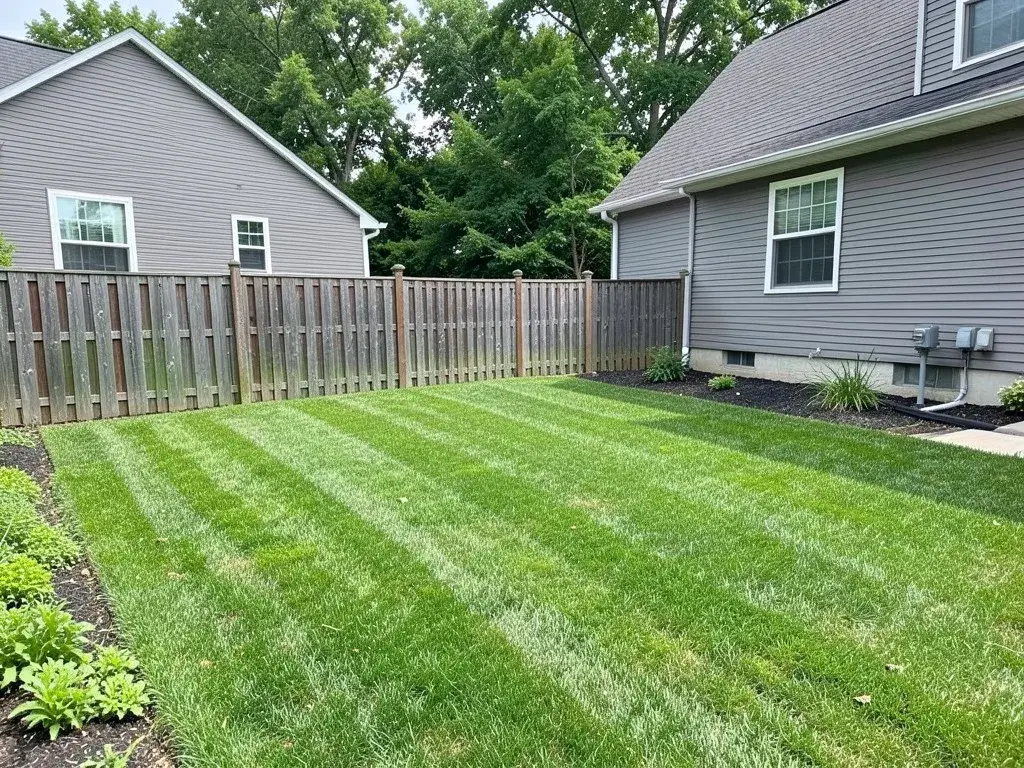
- Turn only the lawn into a formal four-square boxwood parterre: four square beds edged with low clipped boxwood hedges, gravel paths between them, and a stone urn planter in the center. Keep the house, the fence, the trees, the sky and the camera angle exactly the same
Frequently asked questions
How far apart should I plant boxwood for a hedge?
A common rule is about half the plant's mature width. A variety that grows about 4 ft wide goes about 2 ft apart for a solid hedge.
Which boxwood is best against boxwood blight?
Clemson HGIC notes English boxwood ('Suffruticosa') is very susceptible. Japanese, littleleaf and Korean types and newer blight-resistant series usually do better. Ask a local nursery which ones do well in your area.
Is the AI landscape tool free?
Yes, to start: 1 free render with a free account, and free renders carry a watermark. More renders and no watermark come with a paid plan.
More yard ideas
- Foundation planting ideas
- Flower bed ideas
- Mediterranean garden ideas
- Cottage garden ideas
- Front yard landscaping ideas
- Courtyard landscaping ideas
Want to see any of these on your own yard? Open our AI yard design tool, upload a photo and describe the change, or browse all AI design tools.