Privacy Fence Ideas: Styles That Block the View, Shown on Your Own Yard

A privacy fence has one job: stop people seeing in. That depends on three things, how solid the fence is (gaps let sightlines through), how tall it is compared with where the neighbor stands or looks from, and whether it faces a house window, a street or a path.

More renders come with a paid plan (see pricing).

Upload a photo of your yard, say which fence you want and where, and our AI returns the same view with that fence drawn in. Below are the main privacy fence styles compared, a plain guide to height and permits, and four before and after examples with the exact instructions and an honest note on what the AI got wrong in each.

Privacy fence styles compared

StyleHow privateWhat to know
Board-on-board woodFull privacy, no gaps even as the wood shrinksBoards overlap on alternate sides; stain or seal it on a schedule
Shadowbox woodGood from the front, some see-through at an angleAlternating boards let air move, which helps in windy yards
Horizontal slatFull when the gaps are tight, partial when they are wideA modern look that suits narrow side yards and patios
Vinyl panelsFull with solid panelsLow upkeep; check the wind rating and the local height limit
Louvered or metal slatAdjustable: angled slats balance privacy and lightGood beside a patio or deck where you still want some light
Lattice topperPartial, and open until climbers fill itA cheap way to add height to a fence you already have
Hedge or tall plantingFull once grown, none in winter for deciduous plantsSlowest to start; see the plant pages for species and spacing
Reed or bamboo rollFairly full and quick to put upLight and temporary; a common choice for renters

These are the privacy fence styles that come up most often in the guides ranking for this search. The table says how private each one is and the main thing to know before you pick it.

How tall should a privacy fence be?

The usual pattern, in many US towns, is a lower limit in the front yard (often about 3 to 4 feet) and about 6 feet for side and rear yards. It is a local rule, not a national one: some cities allow 7 or 8 feet with a permit or the neighbor's written consent, and some allow less. Your city or county sets the limit and an HOA can be stricter.

Before you buy anything, look up your city's fence ordinance, ask your HOA if you have one, and check whether you need a permit. Fences that double as a pool barrier almost always need one. On a slope or on top of a retaining wall, the height is often measured differently, so ask the planning office.

  • Height: Stand where the person you want to block would stand or look from, such as a second floor window, and see what line a 6 foot fence would cut.
  • Finished side: Some codes and many neighbors expect the finished side of the fence to face outward, toward the neighbor.
  • Corners and driveways: Fences near a corner or driveway often have lower height limits so drivers can see.
  • Boundary and cost: Agree the boundary line and who pays before you build; the rules on shared costs differ by state.
Privacy fence ideas before and after

In each pair, the left image was generated by AI as a stand-in for an ordinary yard, and the right image is that same picture edited by AI from a written instruction. The exact instructions are listed lower on this page. None of them are photos of real customer homes.

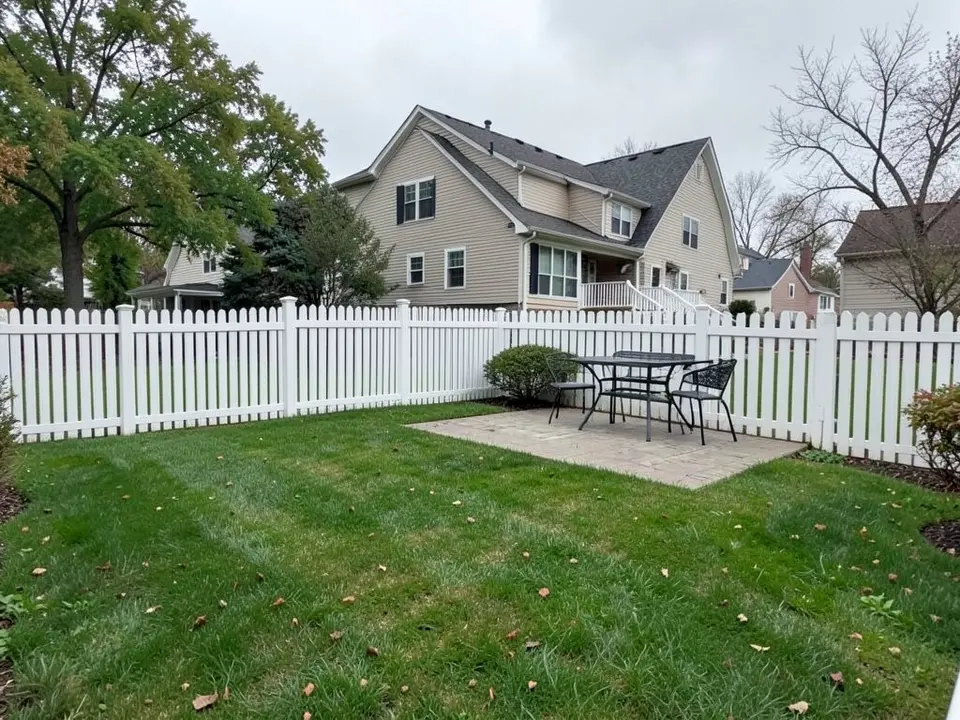
AI-generated example: a suburban backyard with a low white picket fence along the back, a green lawn, a small patio with a metal table and chairs and a neighbor's two storey house clearly visible over the fence

Before

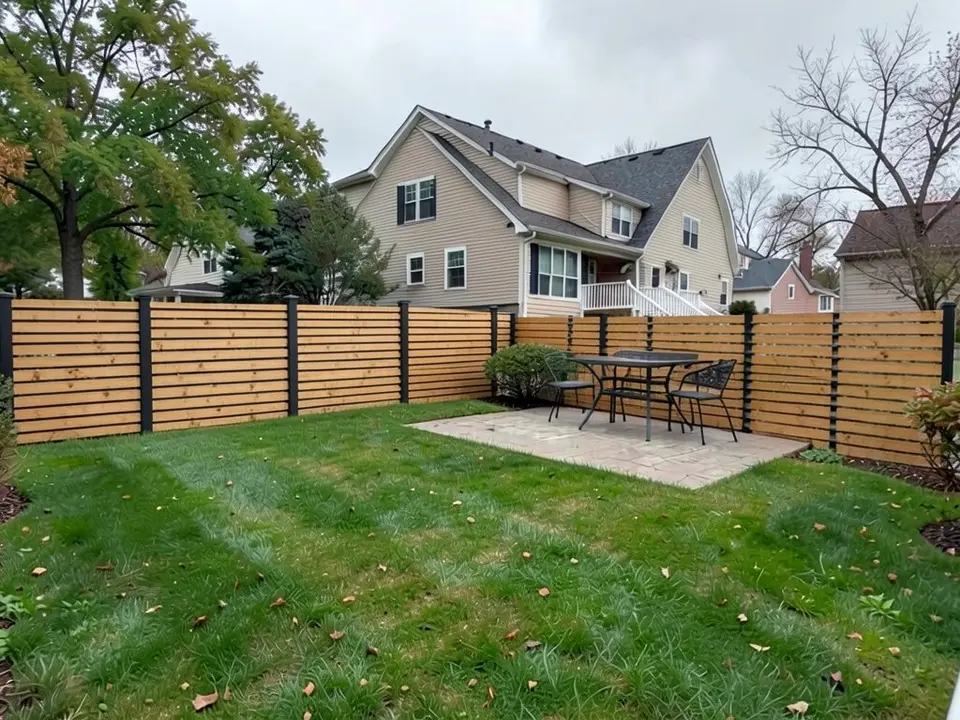
AI-edited version of the same image: the white picket fence replaced by a horizontal slat cedar fence with dark posts and tight gaps along the back and right side; the lawn, patio and table unchanged and the upper floor of the neighbor's house still visible above the fence

After

Low picket fence to horizontal slat fence (first instruction below). The before image is an AI-drawn stand-in for an ordinary backyard, not a customer photo. What followed the instruction: the picket fence is gone, replaced by horizontal cedar-colored slats with dark posts and tight gaps, and the lawn, patio and table did not change. What did not: we asked for a 6 foot fence that hides the neighbor's house and the roof and upper windows still show above it, so a picture like this does not tell you what height is enough on your own plot.
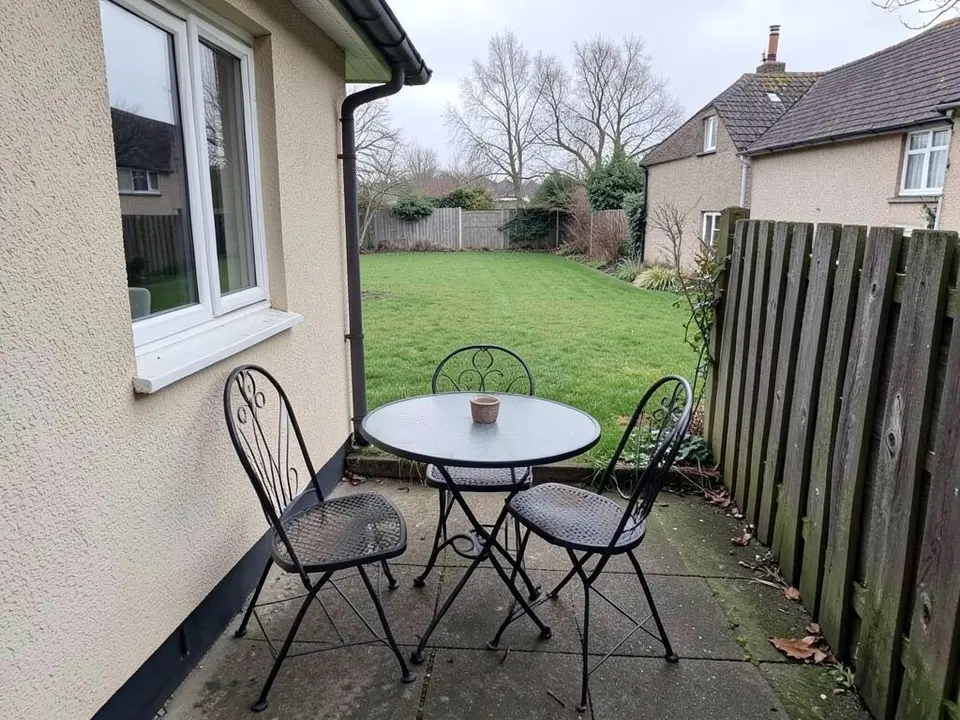
AI-generated example: a small back patio beside a pale rendered house wall with a round table and two chairs, an old dark wooden fence on the right and a neighbor's house and window beyond a lawn

Before

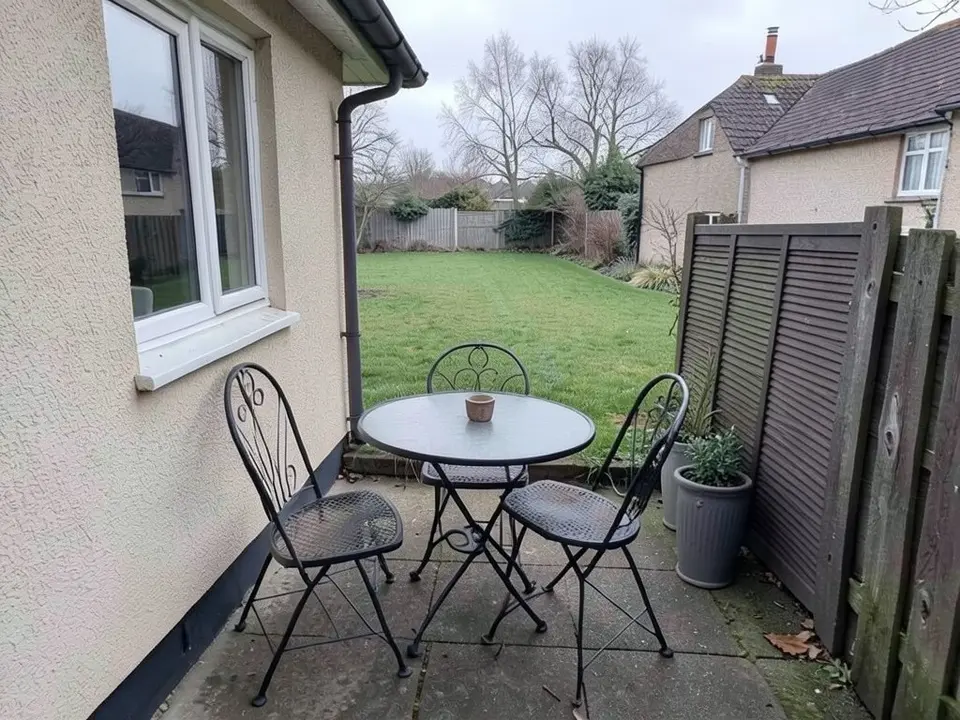
AI-edited version of the same image: a dark louvered privacy screen panel standing against the old fence on the right of the patio with one tall grey planter at its base; the table, chairs, house wall and lawn unchanged

After

A freestanding screen for a patio (second instruction below). The before image is an AI-drawn stand-in for a small patio overlooked from the side, not a customer photo. What followed the instruction: a dark louvered screen now stands on the right of the patio in front of the old fence, and the table, chairs, wall and lawn stayed the same. What did not: we asked for two tall planters and got one, and the screen is a short panel set against the old fence, so the view from the far lawn and the neighbor's window is not blocked.
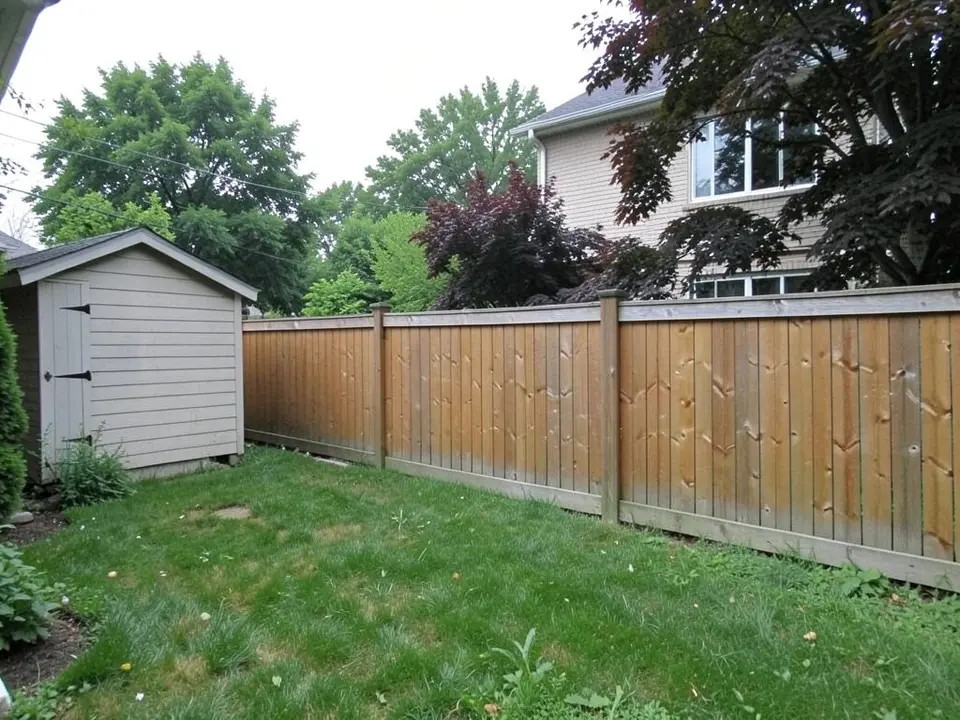
AI-generated example: a backyard with a plain wooden board fence along the back and left, a green lawn, a small grey shed on the left and a neighbor's house with a second storey window above the fence

Before

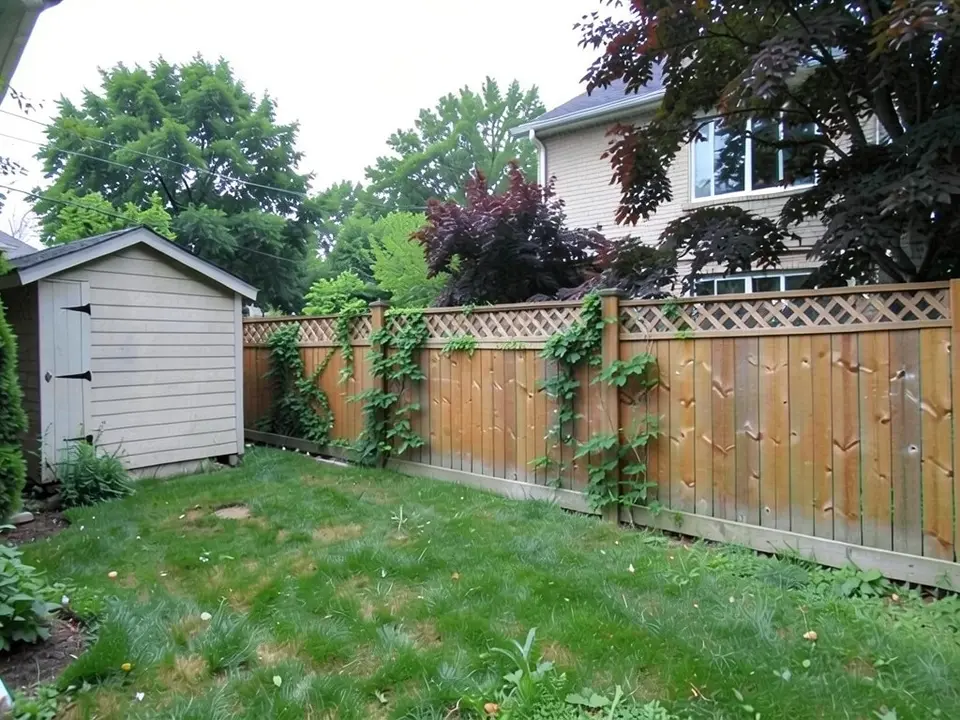
AI-edited version of the same image: a lattice panel along the top of the wooden fence with climbing vines on some of the panels; the fence boards, shed and lawn unchanged and the neighbor's window still visible through and above the lattice

After

Adding a lattice topper to a plain fence (third instruction below). The before image is an AI-drawn stand-in for a plain wooden fence, not a customer photo. What followed the instruction: a lattice strip now runs along the top, a few vines climb it, and the boards, shed and lawn are unchanged. What did not: lattice is open, so the neighbor's window is still visible through it, and the vines are drawn already grown. Real climbers take a season or more to cover it.
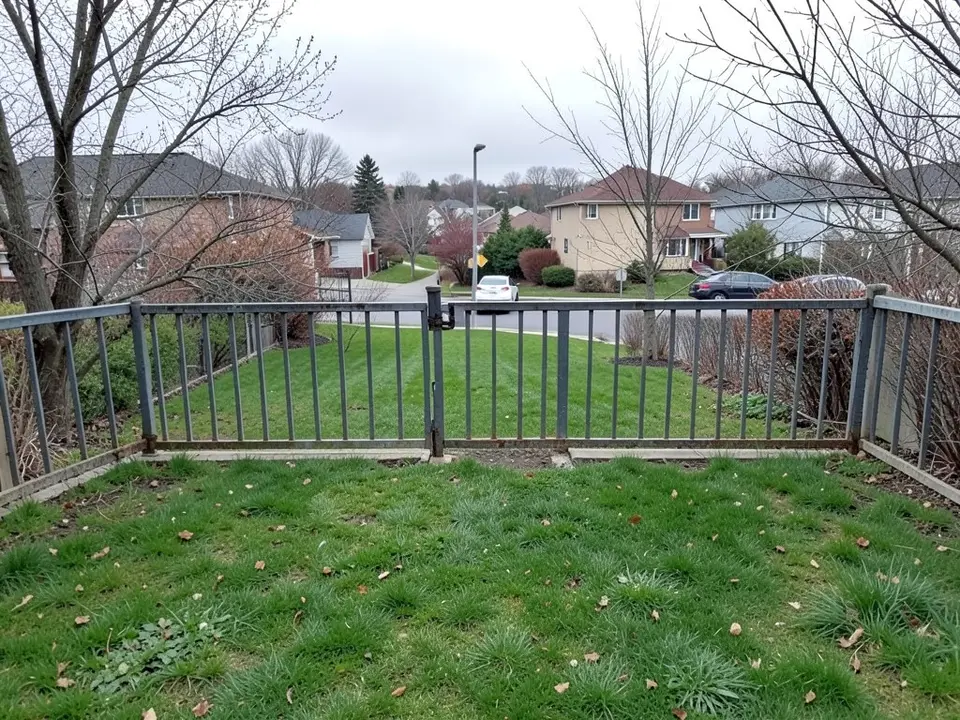
AI-generated example: a backyard with an open dark metal railing fence at the back, a green lawn and a clear view of the street, parked cars and neighbors' houses beyond

Before

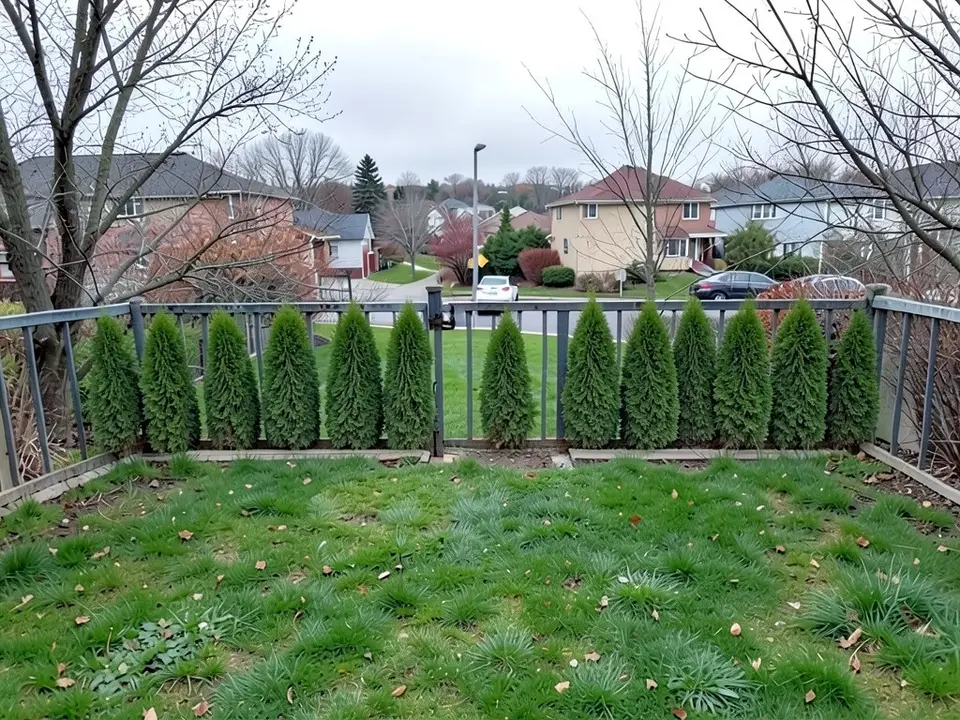
AI-edited version of the same image: a row of tall narrow evergreen shrubs planted in front of the metal fence, evenly spaced with small gaps between them; the lawn unchanged and the street still visible between the shrubs

After

A living screen in front of an open fence (fourth instruction below). The before image is an AI-drawn stand-in for an exposed backyard, not a customer photo. What followed the instruction: a row of narrow evergreens now stands in front of the metal fence and the lawn is unchanged. What did not: we asked for closely spaced shrubs about 7 feet tall and they are about fence height with gaps, so the street still shows between them, and real plants of that size take years to grow.

Pick the privacy fence by the problem

The best privacy fence is the one that answers your actual sightline. Match the problem to the fix.

  • A neighbor's upper window looks in: A taller fence will not always fix it. Add something close to where you sit, such as a freestanding screen, a pergola with a screen or a tall planting, and see the plant pages.
  • A street or a path runs past: A solid fence of board-on-board wood or vinyl, with a gate that has no gaps, cuts the sightline fastest.
  • A narrow side yard: Horizontal slats or a slim louvered panel look tidy in a tight space and keep some light.
  • You rent or cannot build: A reed or bamboo roll, a freestanding screen or tall planters can add privacy without a permanent fence.
  • You already have a fence: A lattice topper adds height to what is there, and climbers or a hedge in front soften it.

How to try a privacy fence on your own yard photo

Use Custom mode for this. None of the Yard Redesign styles is built to swap a fence, and Custom lets you name the change and say what must stay the same.

  1. Take a photo in daylight from where you sit, so the fence and what you want to block are both in frame.
  2. Open the landscape tool and sign in with Google or an email code. You get 1 free render with a free account.
  3. Under Select Landscape Mode, pick Custom.
  4. In the Custom Design Requirements box, say you want to change only the fence, name the style, height and color, and list what must stay the same, such as the lawn, patio and house.
  5. Drop your photo into Upload Your Garden Image and press Generate Custom Design.
  6. Compare the result with your photo, change one thing at a time and run it again.

What the AI can and cannot do

The AI shows a look: roughly how a style, color and layout would sit in your yard. That helps you pick a style and explain it to a fence installer.

It does not measure and it does not know your height limit. It does not always follow the instruction either. In three of the four examples above something we asked for did not appear. In our own tests, when we asked it to replace an old gappy fence with a new solid one, it re-stained the old fence a warmer brown and left the leaning and missing boards. It draws a picture of a result, not a repair plan.

Privacy fence instructions to paste into Custom mode

These are the exact instructions we used for the four examples above, in the same order. In the landscape tool, choose Custom, paste one into the Custom Design Requirements box, then upload your photo. Swap in your own style, height, spot and what must stay.

  • Change ONLY the fence: replace the low picket fence with a tall 6 foot horizontal slat cedar privacy fence with tight gaps and dark posts, so the neighbor's house is mostly hidden. Keep the lawn, the patio and the table exactly the same. Same camera angle.
  • Add a tall dark louvered privacy screen panel about 6 feet high with two tall planters at its base, standing on the right side of the patio in front of the old fence. Keep everything else the same. Same camera angle.
  • Add a lattice panel on top of the existing wooden fence to raise it by about 18 inches, with climbing vines on a few of the panels. Keep the fence boards, the lawn and the shed the same. Same camera angle.
  • Keep the metal fence and add a row of tall evergreen shrubs planted in front of it, about 7 feet tall and closely spaced, so the view beyond is screened. Keep the lawn and everything else the same. Same camera angle.

Frequently asked questions

What is the most private type of fence?

A solid fence with no gaps: board-on-board wood, solid vinyl panels or tight horizontal slats. Board-on-board overlaps its boards so there are no gaps even as the wood shrinks. Louvered, shadowbox and lattice styles let some view or light through.

How tall can a privacy fence be?

It depends on your city or county and on your HOA. A common pattern is about 3 to 4 feet in the front yard and about 6 feet at the side and rear, and some places allow more with a permit. Look up your local fence ordinance before you buy materials.

Do I need a permit for a privacy fence?

Often not for a fence of 6 feet or less, but not always, and zoning rules can still apply even when no building permit is needed. A fence that also works as a pool barrier almost always needs one. Ask your city's planning or building office.

What is the difference between a shadowbox and a board-on-board fence?

Both alternate boards on the two sides of the rails. Board-on-board overlaps the boards so there is no gap and full privacy from any angle. Shadowbox leaves space between boards, so it is private from the front but you can see through it at an angle, and more air passes through.

What is a cheap way to add privacy to a fence I already have?

A lattice topper adds height, a reed or bamboo roll can be fixed to the fence for a quick covering, and climbers or a hedge in front add privacy over time. Prices vary a lot, so check locally. A louvered screen or tall planters also work where you cannot change the fence itself.

Is a hedge better than a privacy fence?

A fence gives privacy straight away and for the whole year. A hedge takes years to reach height and some leaf-dropping plants thin out in winter, but it softens the view and does not need staining. Many yards use both. Our privacy landscaping page has the plants and their spacing.

Which side of the fence should face the neighbor?

Some local codes require the finished side to face outward, toward the neighbor, and many neighbors expect it. Check your own code or HOA, and put the posts and rails on your own side of the boundary.

Can the AI show a privacy fence on my own yard photo?

Yes. Upload a photo in Custom mode and describe the style, height and color, and say what must stay the same. You get 1 free render with a free account. It draws a possible look and may not follow every detail of your instruction, so check it against your local height limit before you build.

More fence and privacy ideas

Our other tools handle interiors, house exteriors and photo cleanup; all of them start from a photo you upload. You can read more about who builds these tools on our about page.

For more, browse all of our landscaping ideas, sorted into front yards, backyards, patios, gardens, pools, styles and regions.