
How big a backyard basketball court needs to be
A regulation half court is 42 by 50 ft for high school and 47 by 50 ft for college and the NBA. Most backyard courts are smaller: a square of about 30 by 30 ft is a common half-court size, and about 30 by 50 ft leaves room for other games too. The rim is 10 ft high and the free-throw line is 15 ft from the backboard at every level, so those two numbers matter more than the court size.
Leave a few feet of run-off space past the lines, and keep the hoop away from windows and the neighbour's fence.
Surfaces, ground and cost
Common surfaces are acrylic-coated concrete, snap-together sport tiles laid over concrete or asphalt, plain asphalt and painted concrete. Tiles drain through and are softer on falls; coated concrete gives a truer bounce.
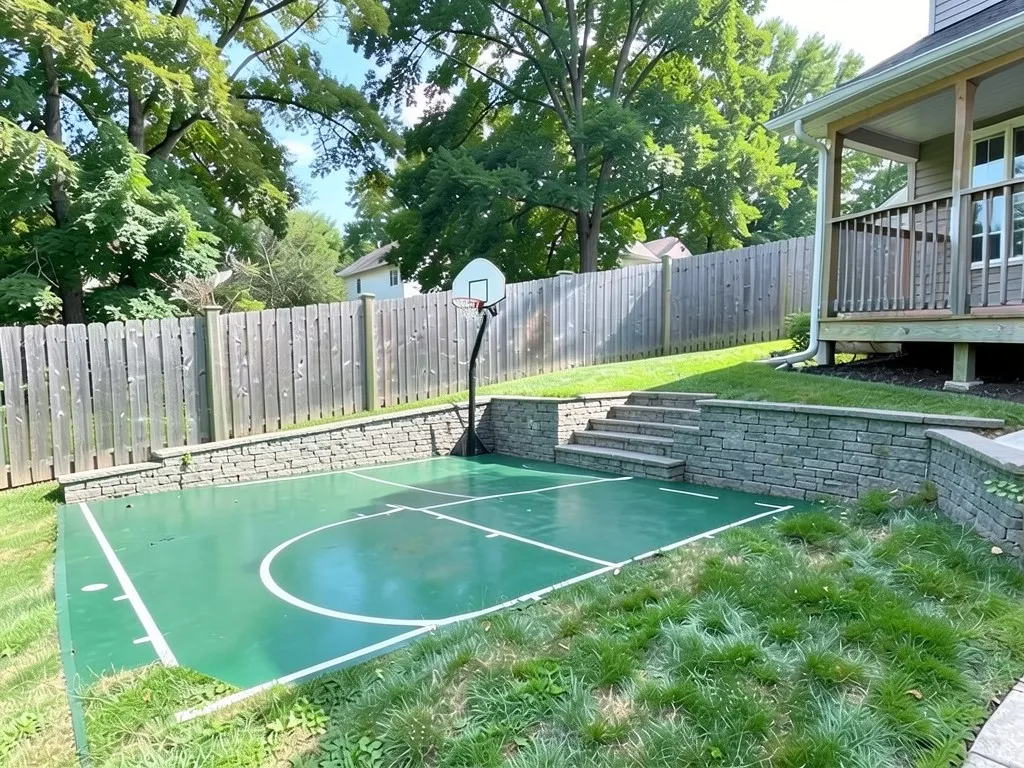
Plan drainage and level ground first. On a slope the court is usually cut in with a retaining wall on the high side, and that wall can double as seating, as in the second example. Cost guides such as Angi put many backyard courts around $10,000 to $25,000, depending mostly on size, surface, the hoop and how much grading is needed. Get local quotes before you plan around a number.
How to try a basketball court on your own photo
The tool above is in Custom mode, which has a Custom Design Requirements box. Describe the court size, the surface and colours, where the hoop goes and what stays.
- Take the photo in daylight from the house or deck, with the whole area you might use in frame.
- Describe the change in the Custom Design Requirements box: the court, the surface colour, the hoop position, and what must stay, such as the house, fence or trees.
- Drop your photo into Upload Your Garden Image and press Generate Custom Design. You sign in with an email code or Google when you generate.
- Compare the result with your photo. If something is in the wrong place or too big, name the spot and the size, and try again.
What the AI can and cannot do
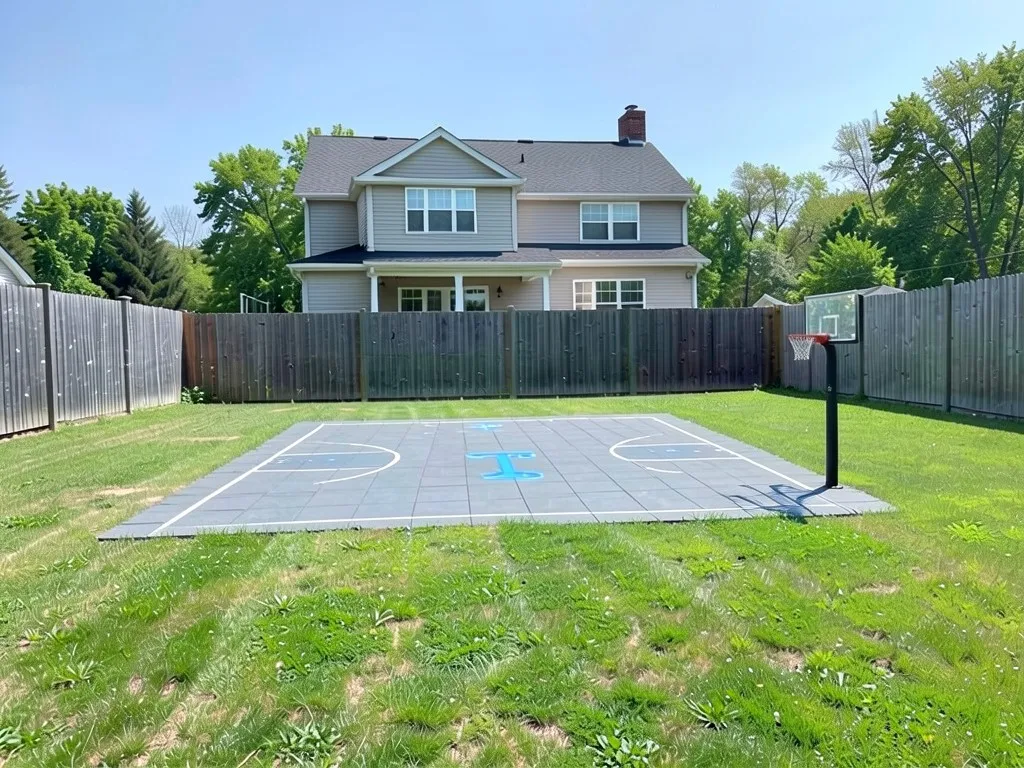
The AI shows the look: how a court of a given colour and surface sits in your yard and how much lawn it takes. It does not measure your yard, draw correct court lines or check slope, drainage, permits or setbacks. In the examples above it drew wrong lines, moved the hoop and added a second one, so use it for the look and measure the real space on the ground.
Basketball court instructions to paste into Custom mode
These are the exact instructions we used for the two examples above, in the same order. In the tool above, Custom mode is selected: paste one into the Custom Design Requirements box, then upload your photo.
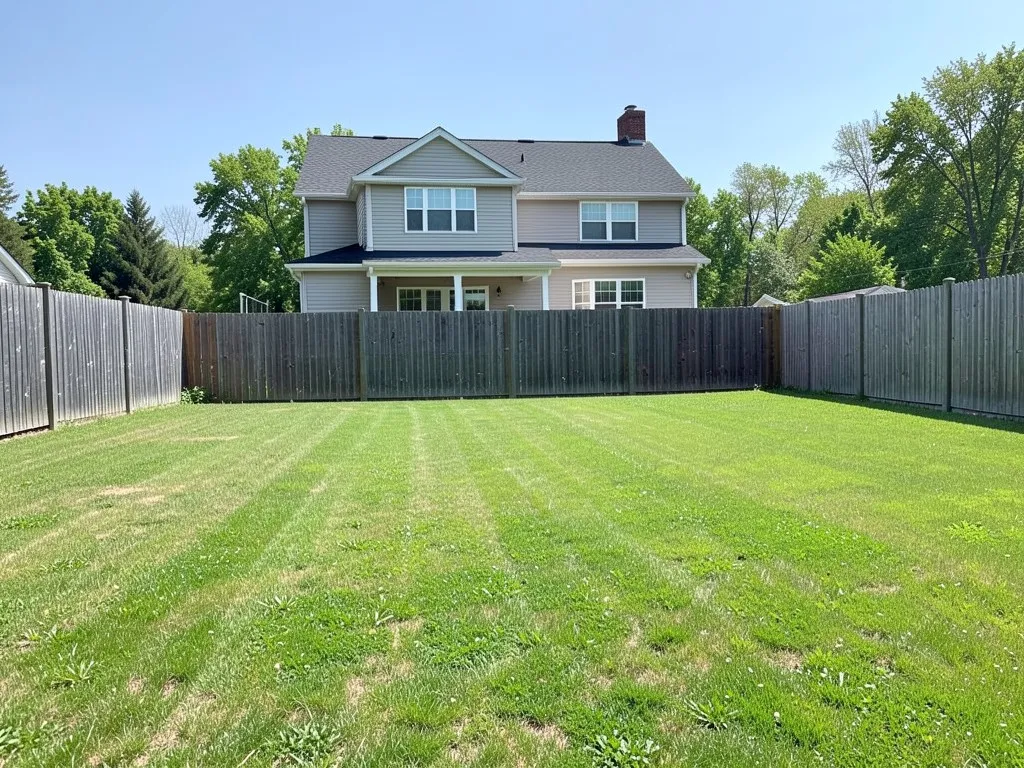
- Build a backyard half basketball court on the lawn: a square court of gray interlocking sport tiles with a blue painted key and white lines, one in-ground basketball hoop with a glass backboard at the far edge, and a strip of grass left around the court. Keep the house, the fence, the trees, the sky and the camera angle exactly the same
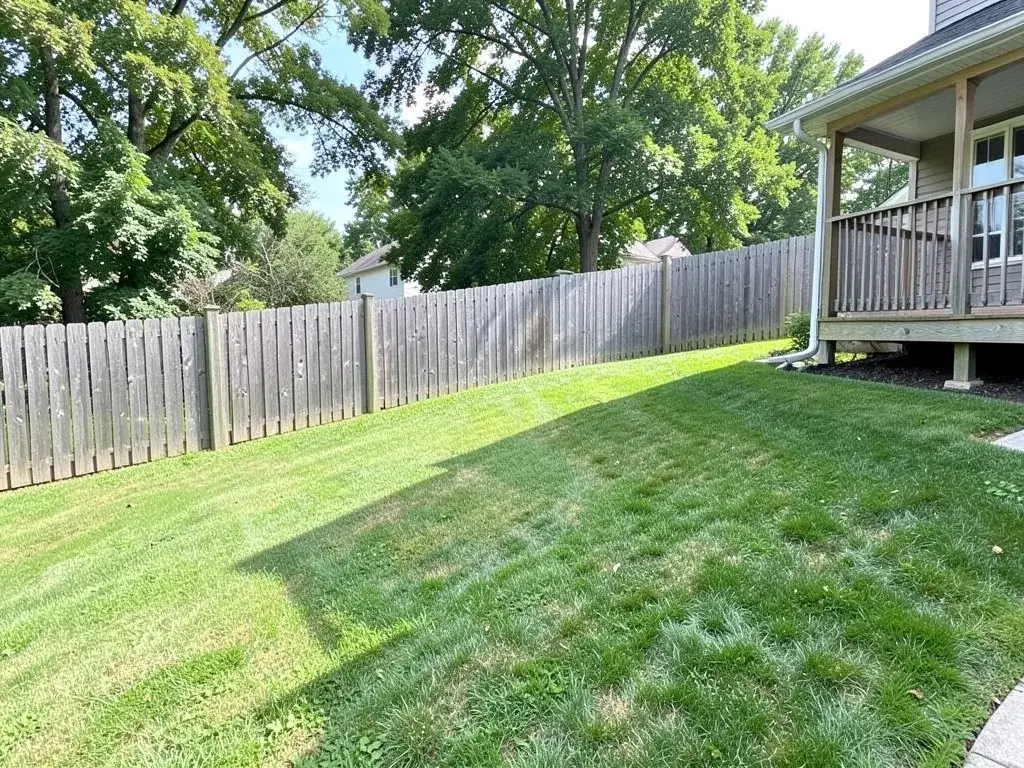
- Build a flat backyard half basketball court of green acrylic-coated concrete with white lines and one basketball hoop, set into the slope with a low gray stone retaining wall along the high side that has wide steps for sitting. Keep the house deck, the fence, the trees, the sky and the camera angle exactly the same
Frequently asked questions
How much space do I need for a backyard basketball court?
A regulation half court is 42 by 50 ft (high school) or 47 by 50 ft (college and NBA), but many backyard half courts are about 30 by 30 ft. The rim height (10 ft) and free-throw distance (15 ft) stay the same.
What is the best surface for a backyard court?
Acrylic-coated concrete and sport tiles over a concrete or asphalt base are the most common. Tiles drain and are softer to fall on; coated concrete bounces more like an indoor court.
Is the AI landscape tool free?
Yes, to start: 1 free render with a free account, and free renders carry a watermark. Paid plans add more renders and remove the watermark.
More yard ideas
- Backyard pickleball court ideas
- Backyard putting green ideas
- Backyard playground ideas
- Sloped backyard ideas
- Hardscape design ideas
- Backyard design ideas
Want to see any of these on your own yard? Open our AI yard design tool, upload a photo and describe the change, or browse all AI design tools.