
Thriller, filler, spiller: how to plant a mixed pot
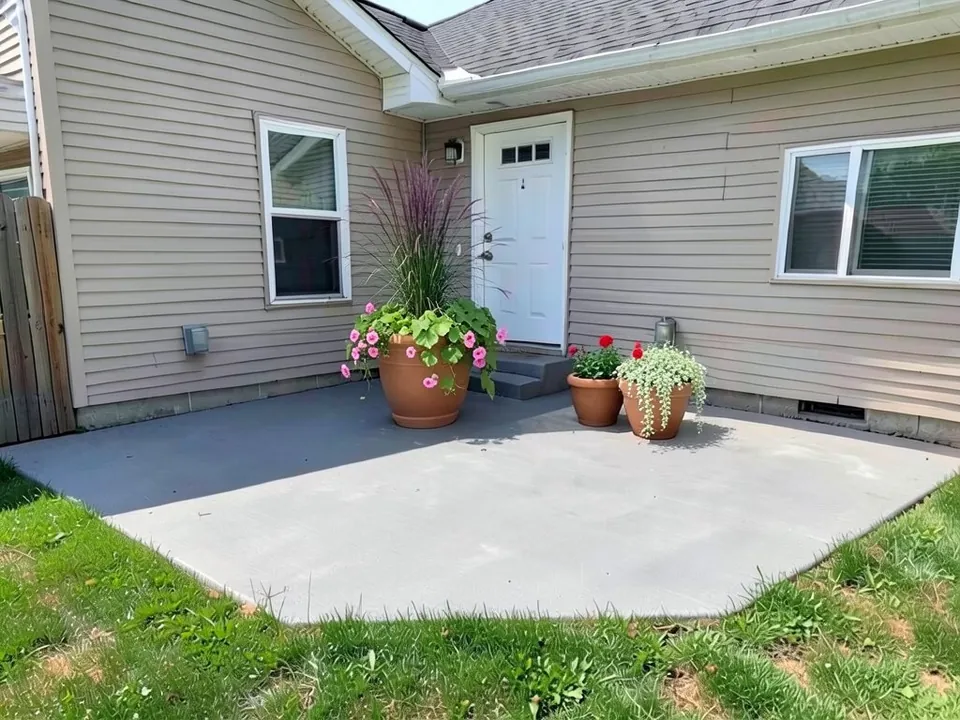
Most mixed container ideas follow one rule, which Mississippi State Extension puts this way: a thriller brings height, fillers make up the body of the pot, and spillers sprawl and tumble over the edge. Example 1 above uses it: fountain grass as the thriller, petunias as the filler.
Where the thriller goes depends on how the pot is seen. Proven Winners puts it in the center of a pot you walk around, and at the back of a pot that sits against a wall and is seen from the front.
- Full sun: Zonal geranium, calibrachoa and sweet potato vine (Mississippi State Extension).
- Full shade: Dianella, impatiens and asparagus fern (Mississippi State Extension).
- Herbs: 'Crimson King' basil, 'Huntington Carpet' rosemary and parsley in one pot (Mississippi State Extension).
- Groups of pots: Group pots in threes, in different sizes and at different levels, and keep the materials or colors related (Home for the Harvest).
Container sizes for vegetables and herbs
Pot size is the fact the idea galleries skip. Oregon State Extension says most vegetables grow in 2 to 5 gallon containers at least 12 inches deep; Garden Design suggests pots at least 12 inches wide for mixed plantings.
| Crop | UMD minimum | Almanac range |
|---|---|---|
| Tomato | 5 gallons (cherry types 2 gallons) | Determinate 5–10 gal; indeterminate 15–25 gal |
| Pepper | 5 gallons | 3–5 gal |
| Leaf lettuce | ½ gallon | 1–2 gal |
| Cucumber | 5 gallons | Not listed |
| Eggplant | 5 gallons | Not listed |
| Summer squash | 10 gallons | Not listed |
| Large herbs (rosemary, sage, parsley, lavender, dill) | 5 gallons or larger | Not listed |
The two sources differ for tomatoes: UMD gives a 5 gallon minimum, while the Almanac says a tall indeterminate tomato wants 15 to 25 gallons. If you are unsure which kind you have, go bigger.
Container garden ideas for sun and for shade
Count the hours of direct sun the spot gets before you buy plants. A balcony that faces north or a porch under a big tree needs different plants from a south-facing patio.
- Fruiting vegetables: Tomatoes, peppers, eggplant and squash need 6 to 8 hours of direct sun (UMD).
- Leafy greens: Lettuce, spinach and Asian greens manage with 3 to 5 hours (UMD), so they suit a part-shade balcony.
- Herbs: Six or more hours of direct sun (University of New Hampshire Extension).
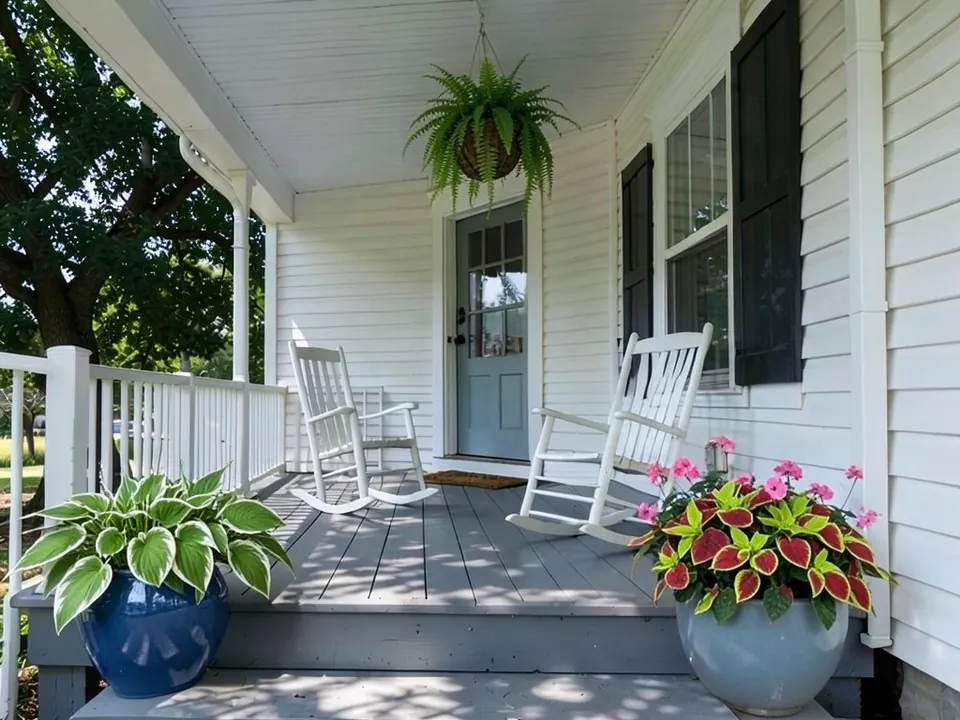
- Shade pots: Begonias, coleus, oxalis and fuchsia (Savvy Gardening); dianella, impatiens and asparagus fern (Mississippi State Extension). Example 5 uses hostas, coleus, impatiens and a fern.
Pot materials compared
The pot material changes how often you water. A porous pot breathes and dries out fast; a sealed one holds water longer.
| Material | What the sources say | Watch for |
|---|---|---|
| Unglazed terracotta (clay) | Wicks moisture out of the soil (UMD, Home for the Harvest). | Dries fast; Gardening Channel says clay pots may need watering every day. Can crack in freezes (Penn State). |
| Plastic | Holds moisture longer (UMD). | Home for the Harvest says it loses its appeal after a few years. |
| Metal | Holds moisture longer (UMD). | Check that it has drainage holes (UMD: all containers need them). |
| Glazed ceramic | Dries out more quickly than plastic (UMD lists ceramic with clay, concrete and wood). | Heavy; can crack if left out in winter (Penn State). |
| Concrete | Dries out more quickly (UMD). | Heavy, and a filled pot is heavier still; on a balcony, use a light potting mix (UMD weights below). |
| Wood | Dries out more quickly (UMD). Often used for long planters and window boxes. | Untreated wood rots over time. |
| Fabric grow bags | Inexpensive, reusable, lightweight, portable (UMD). | Check daily in summer, like every container (UMD). |
| Self-watering pots | Reduce maintenance by conserving water and nutrients; they use an overflow hole instead of bottom holes (UMD). | Cost more than a plain pot. |
Soil, drainage and watering for containers
- Drainage holes: All containers need holes or slits (UMD). Savvy Gardening: drainage holes are always a must.
- No gravel layer: Gravel or broken pot pieces in the bottom will not improve drainage (UMD).
- Potting mix, not garden soil: Use a commercial potting soil rather than soil dug from the ground (Oregon State, Bob Vila). It is also far lighter: about 10 pounds per cubic foot against about 75 for garden soil (UMD).
- Fill line: Leave about 1 inch below the rim (Garden Design).
- How to water: Water until it runs out of the drain holes (Oregon State). Check containers daily, especially in summer (UMD). Push a finger about 2 inches into the mix: if it is dry there, water (Bob Vila).
- Fresh mix: Replace the potting mix every one to two seasons (Garden Design).
Feeding container plants
Container plants depend on you for food. UMD Extension suggests a fertilizer with roughly a 3-1-2 ratio of nitrogen, phosphorus and potassium. Slow-release fertilizer mixed into the potting mix can feed for 2 to 3 months; liquid feeds need to be given more often. For long-season crops such as tomatoes and peppers, UMD says to fertilize lightly every two weeks.
Container gardens in winter
- Roots get colder in pots: Penn State Extension says to go two zones colder when choosing plants that stay in containers over winter.
- Bring in clay and ceramic: Clay, ceramic and glazed pots left outside may crack (Penn State). Empty most containers and store them upside down (Illinois Extension).
- Shelter what stays: Bury the pot in the ground or move it into an unheated garage (Penn State).
- Keep watering evergreens: Evergreens in pots still need water in winter (Illinois Extension).
How to try container plants on a photo of your porch or patio
- Take a photo of the spot from where you would normally stand, in daylight, with the whole area in frame.
- Open the landscape tool, choose Custom, and paste one of the instructions below into the Custom Design Requirements box.
- Change the pots, the plants, how many and what must stay, then generate.
- If it misses something, as every one of our examples did in some detail, reword that part and run it again.
The picture shows the look and the arrangement. It does not measure your space, so check pot sizes against the table above before you buy.
Container garden instructions to paste into Custom mode
These are the exact instructions we used for the 8 examples above, in the same order. In the landscape tool, choose Custom, paste one into the Custom Design Requirements box, then upload a photo of your patio, porch or balcony. Swap in your own pots, plants, how many and what must stay.
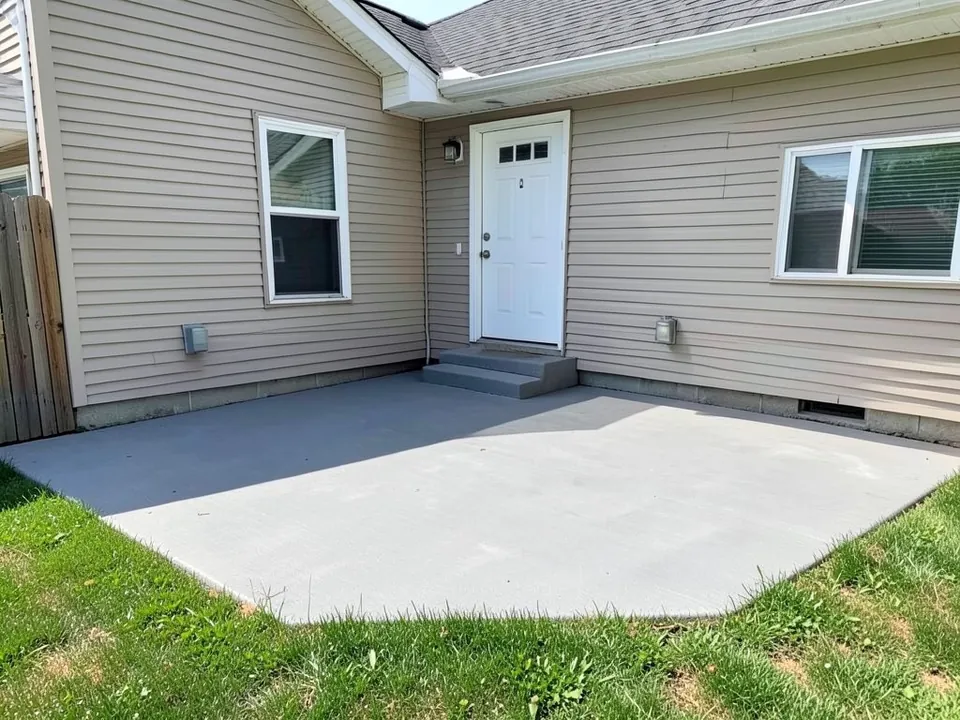
- Add ONLY a group of three round terracotta pots of different heights in the corner of the patio by the door: the tallest pot has a tall purple fountain grass in the centre with pink petunias around it and lime green sweet potato vine trailing over the rim; the two smaller pots have red geraniums and trailing white bacopa. Keep the patio, the house, the door, the steps, the fence, the lawn and the camera angle exactly the same.
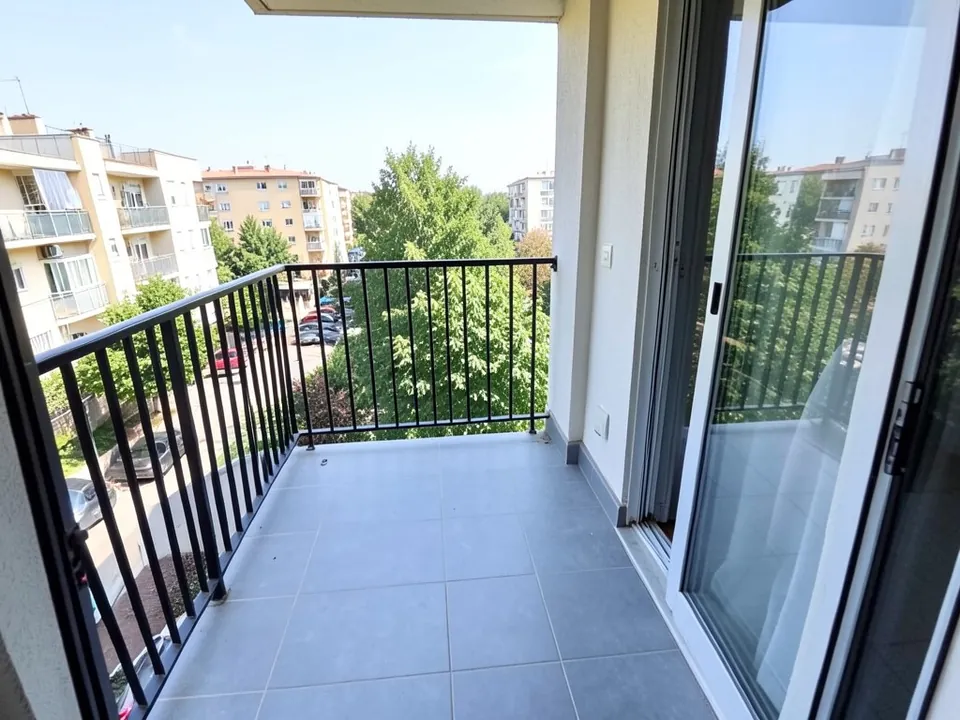
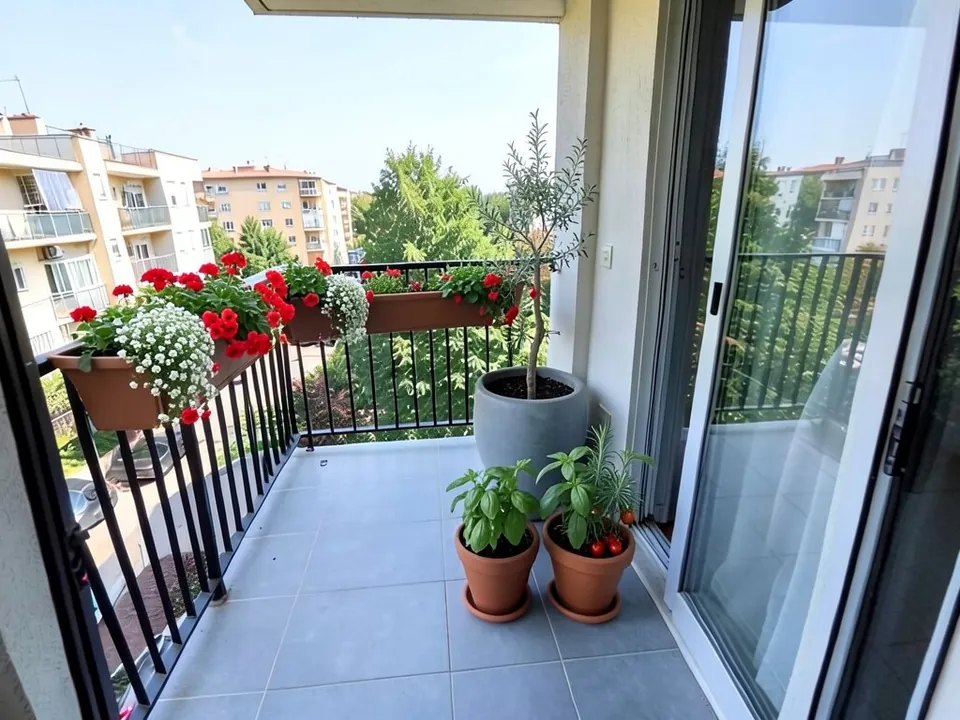
- Add ONLY plants in containers: long rectangular planter boxes hung on the inside of the railing filled with red trailing geraniums and white alyssum spilling over, a large grey pot in the corner with a small olive tree, and three medium pots on the floor with basil, rosemary and cherry tomatoes. Keep the tiled floor, the railings, the door, the view and the camera angle exactly the same.
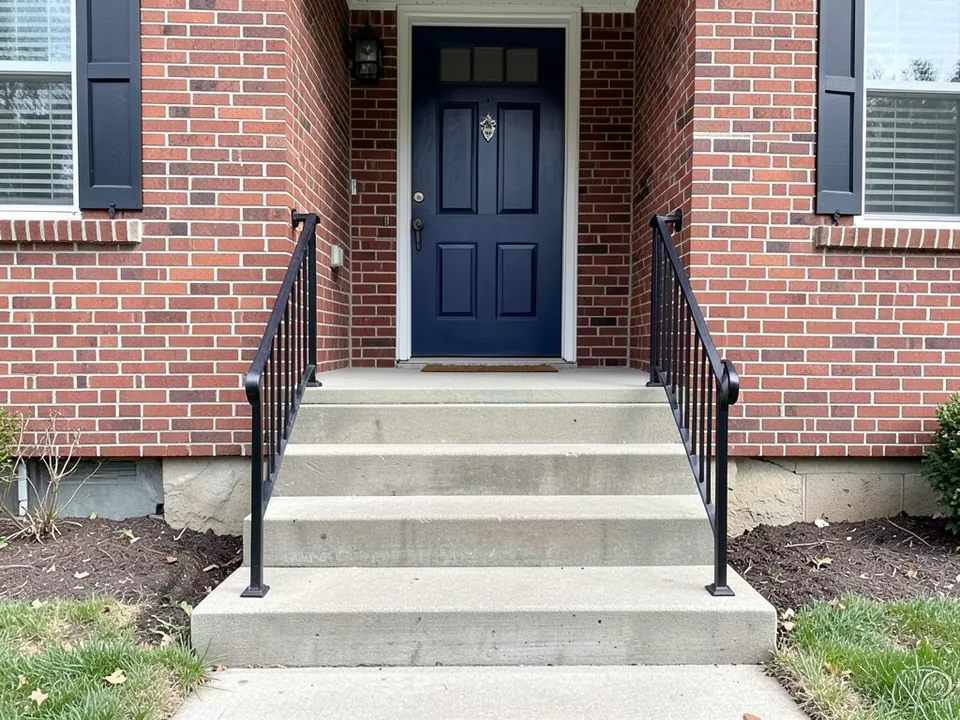
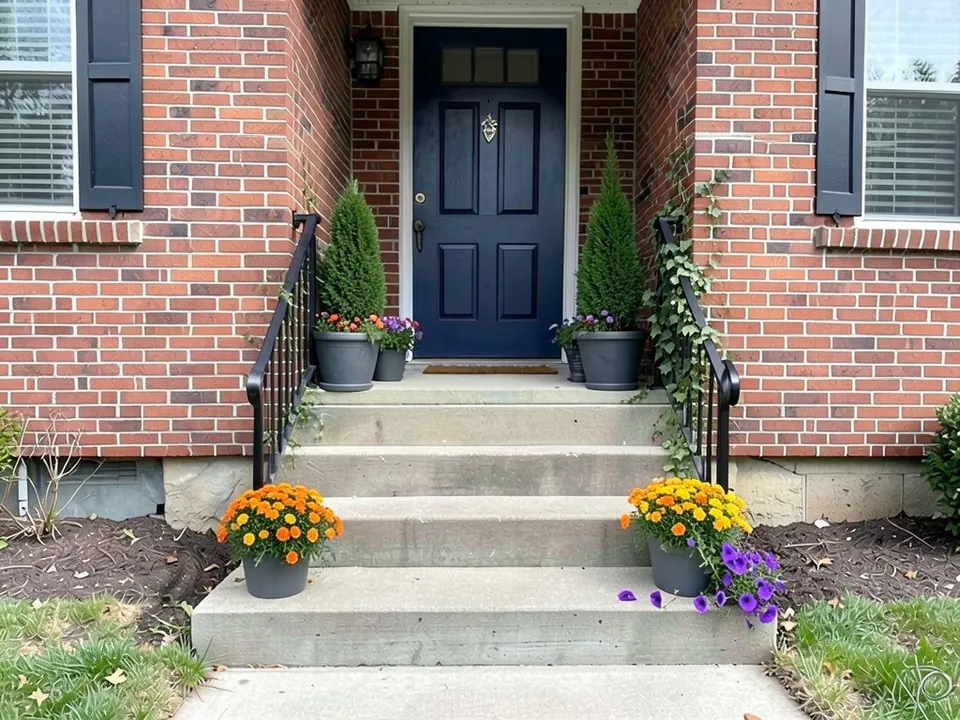
- Add ONLY potted plants on the steps and porch: a pair of large dark grey pots on the porch on each side of the door with tall green boxwood and trailing ivy, and one smaller pot on the side of each step going down, filled with orange and yellow marigolds and purple petunias. Keep the house, the door, the steps, the handrail, the lawn and the camera angle exactly the same.
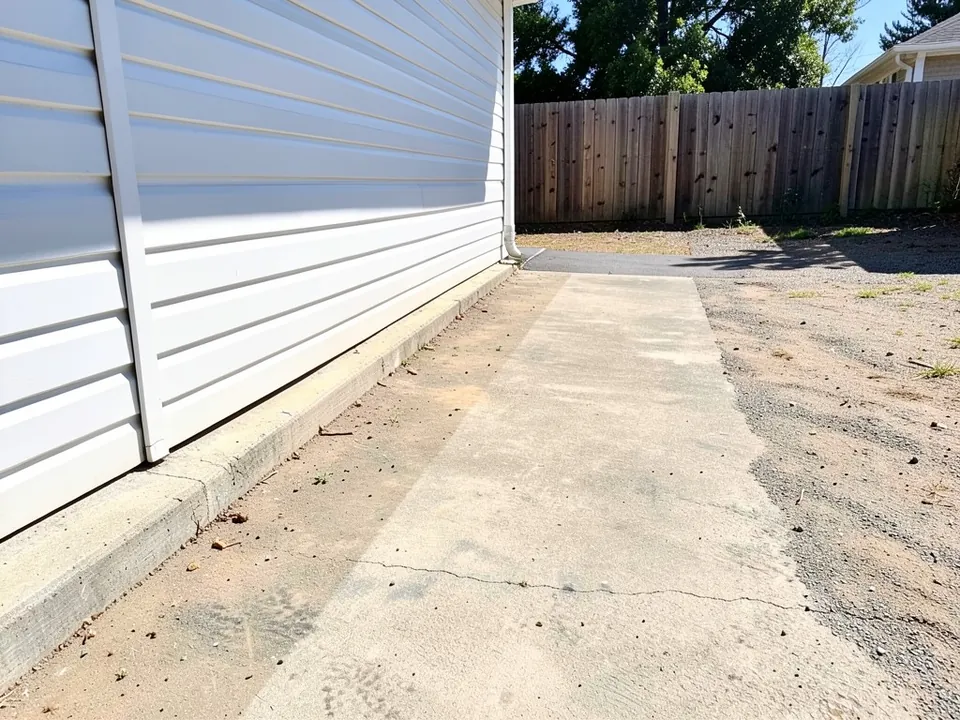
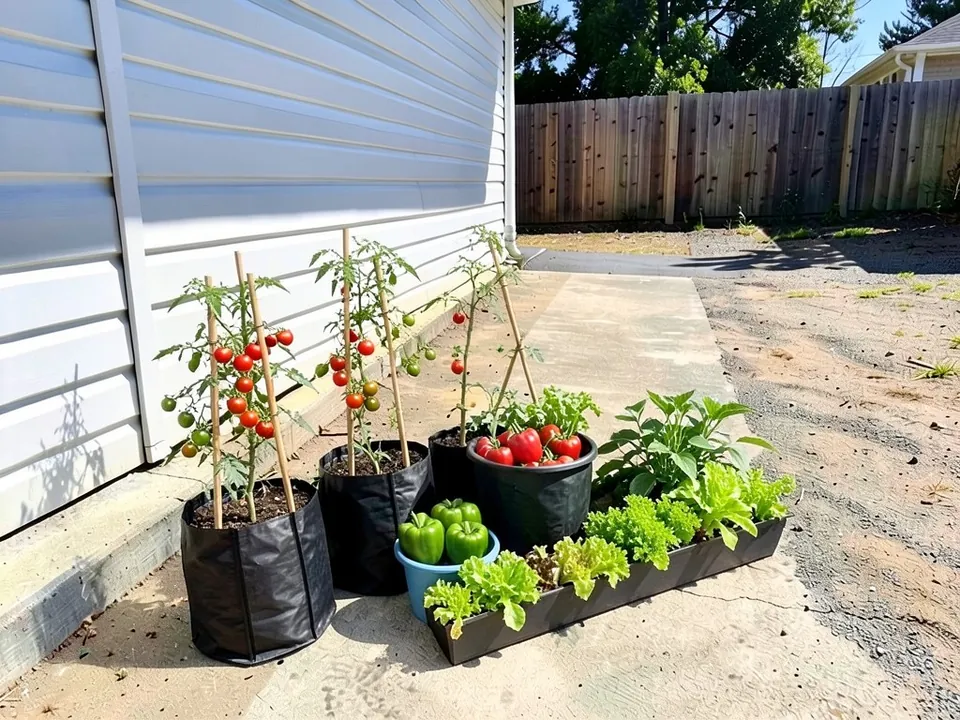
- Add ONLY a row of container vegetables on the concrete: four large black fabric grow bags with tomato plants on tall wooden stakes and red and green tomatoes, two big plastic pots with green and red bell pepper plants, and a long low planter of mixed lettuces. Keep the concrete, the wall, the fence and the camera angle exactly the same.
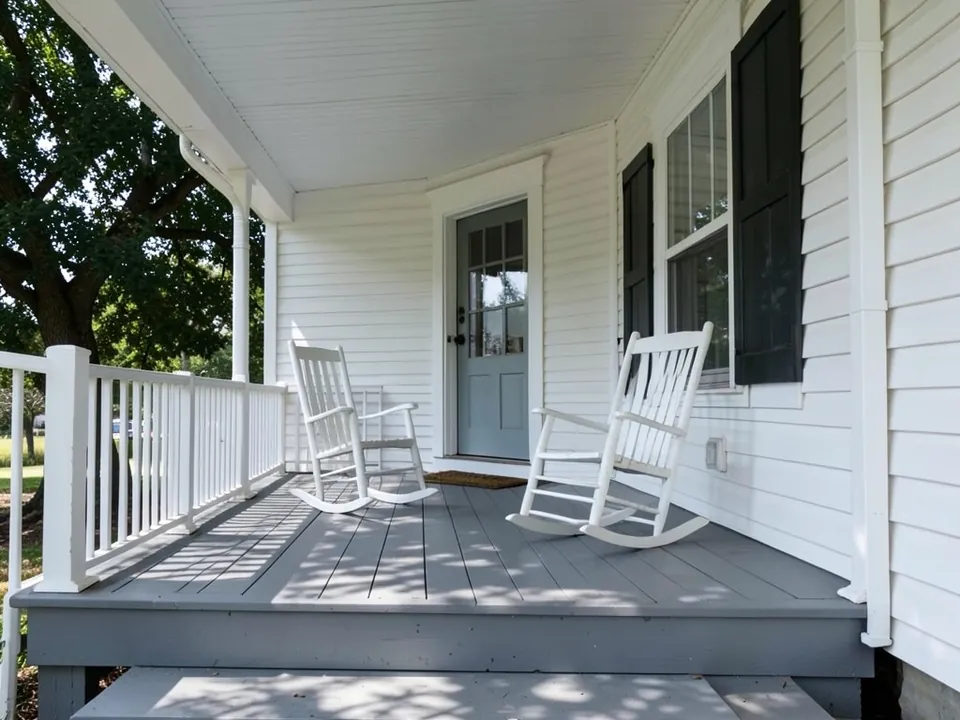
- Add ONLY shade plants in containers on the porch: two large glazed blue pots with big green and white hostas and ferns, a hanging basket of Boston fern from the porch ceiling, and a low wide pot of red and lime coleus with pink impatiens. Keep the house, the porch floor, the rocking chairs, the tree shade and the camera angle exactly the same.
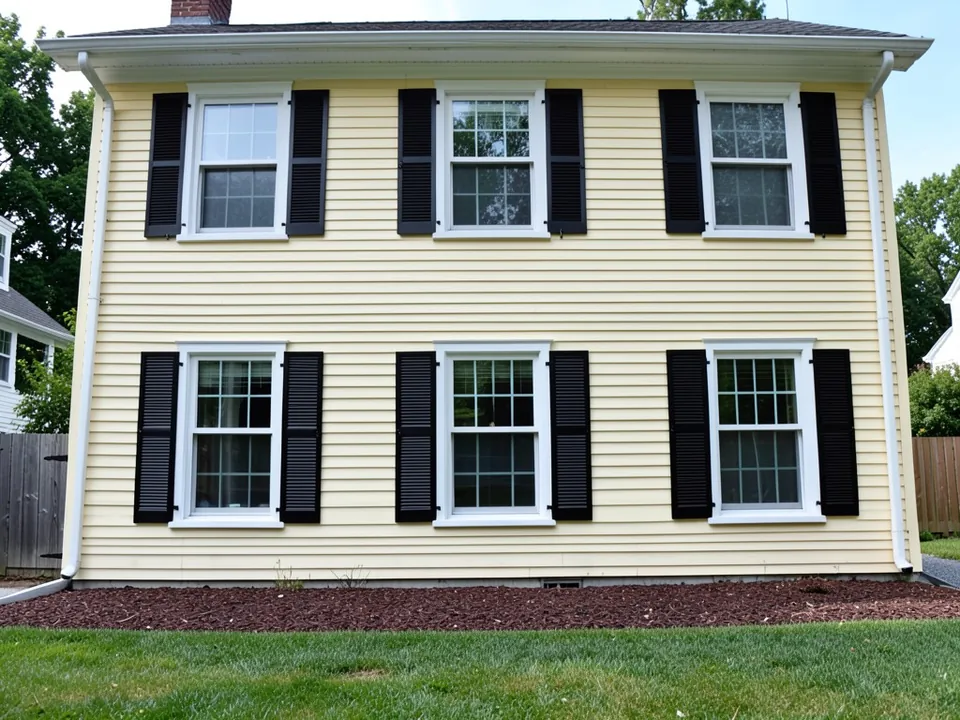
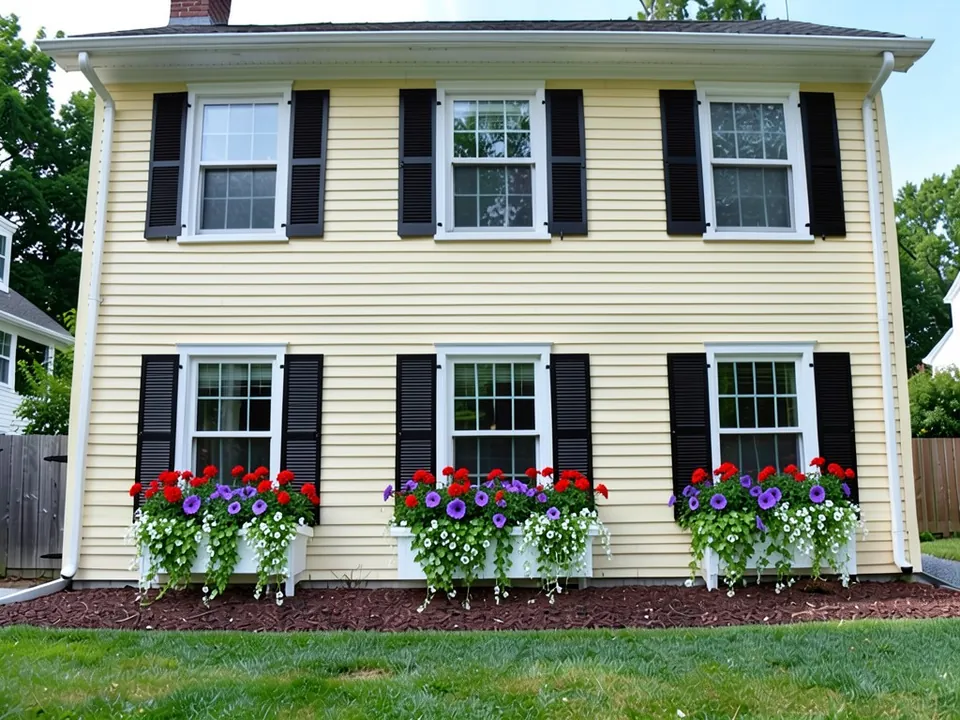
- Add ONLY a white window box under each of the three ground-floor windows, each filled with red geraniums, purple petunias, white bacopa and trailing green ivy spilling down the front of the box. Keep the house, the windows, the shutters, the mulch strip, the lawn and the camera angle exactly the same.
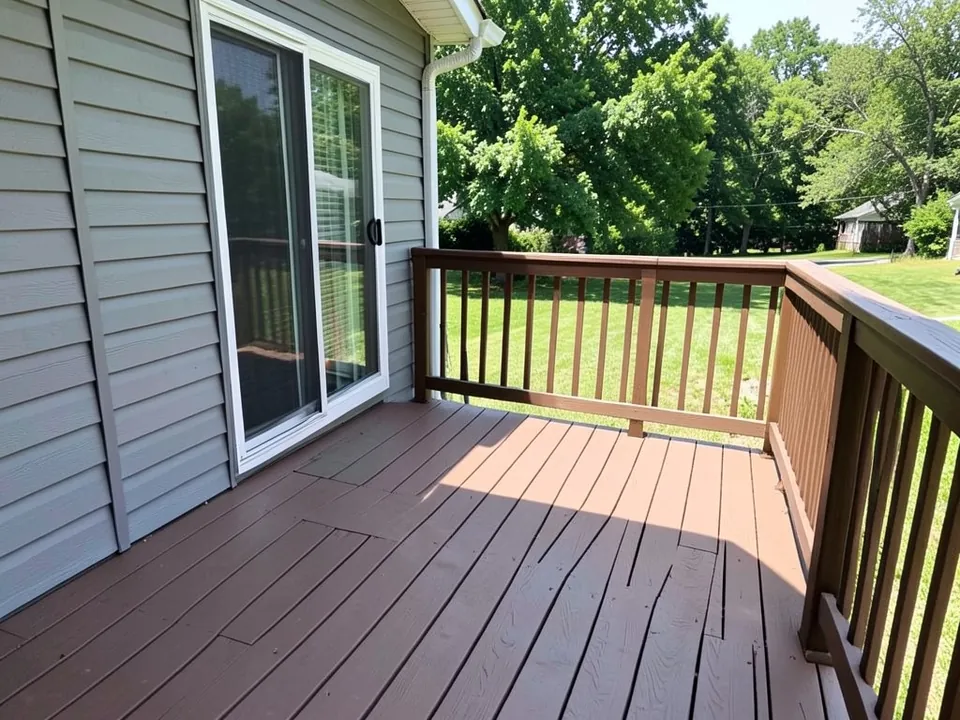
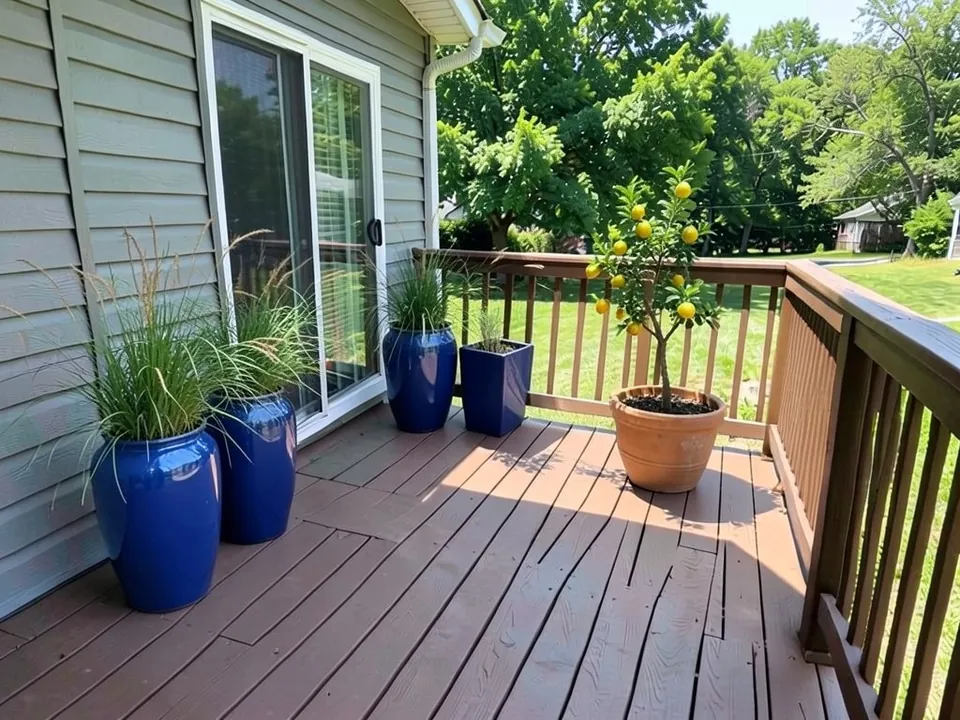
- Add ONLY large containers on the deck: three tall glazed cobalt blue pots along the railing with tall ornamental grasses, a large terracotta pot with a small lemon tree with yellow lemons, and two low square pots of lavender. Keep the deck boards, the railing, the house, the door, the lawn, the trees and the camera angle exactly the same.
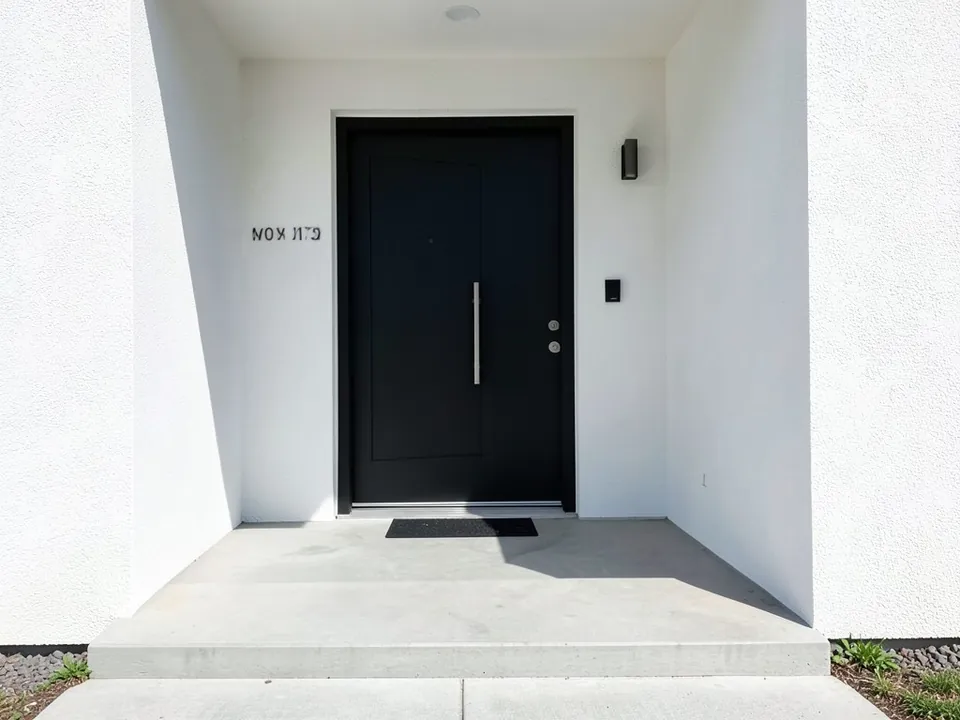
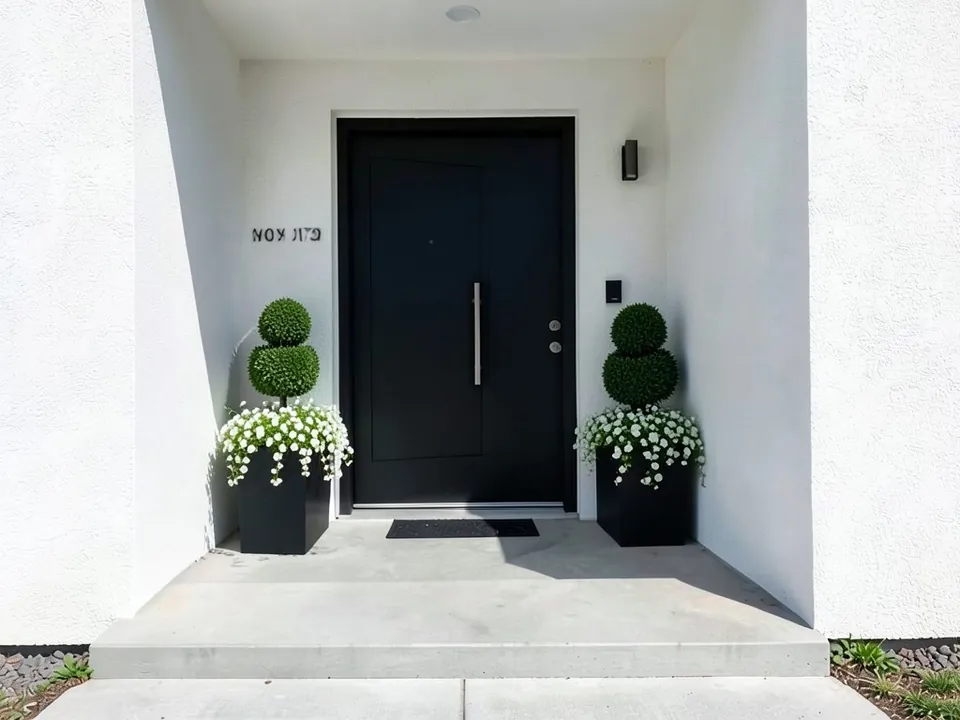
- Add ONLY a matching pair of tall square black fibreglass planters, one on each side of the door, each with a spiral-clipped boxwood topiary and white trailing bacopa around the base. Keep the house, the door, the landing, the wall, the house number and the camera angle exactly the same.
Container garden questions
What is the thriller, filler, spiller rule?
A way to plant a mixed pot: one tall thriller for height, fillers around it for the body of the pot, and spillers that tumble over the edge (Mississippi State Extension). Put the thriller in the middle of a pot seen from all sides and at the back of a pot seen from the front (Proven Winners).
How big a pot do I need for tomatoes?
At least 5 gallons, or 2 gallons for cherry tomatoes (UMD Extension). The Old Farmer's Almanac gives 5 to 10 gallons for determinate tomatoes and 15 to 25 gallons for tall indeterminate ones.
Should I put gravel in the bottom of a pot?
No. UMD Extension says gravel or broken pot pieces in the bottom will not improve drainage. Use a pot with drainage holes and fill it with potting mix.
Can I use garden soil in containers?
Use a commercial potting mix instead (Oregon State Extension). Garden soil is also heavy: about 75 pounds per cubic foot, against about 10 for a soilless mix (UMD).
How often should I water container plants?
Check them every day in summer (UMD), and water when the mix is dry about 2 inches down (Bob Vila). Water until it runs out of the drain holes (Oregon State). Small pots, terracotta and grow bags dry out fastest.
What grows in containers in the shade?
Begonias, coleus, oxalis and fuchsia (Savvy Gardening), dianella, impatiens and asparagus fern (Mississippi State Extension), and hostas and ferns for leaves. Leafy greens such as lettuce and spinach manage with 3 to 5 hours of sun (UMD).
Can I see pots and planters on a photo of my own porch?
Yes. Upload a photo to the landscape tool, choose Custom, and describe the pots: where they go, the material, the plants and what must stay. The result is a picture for planning, not a measured plan.
Is the container garden tool free?
You need an account, and it is free: 1 free render with a free account (sign in with Google or an email code). More renders come with a paid plan.
Sources for the container garden facts
- Mississippi State University Extension, How to pick plants for containers
- Mississippi State University Extension, Four container garden combos
- Proven Winners, Container garden design structure
- University of Maryland Extension, Growing Vegetables in Containers and Salad Tables
- Oregon State University Extension, Container gardening basics
- The Old Farmer's Almanac, Vegetable container size chart
- University of New Hampshire Extension, Growing herbs in containers
- Penn State Extension, Overwintering plants in containers
- University of Illinois Extension, Overwintering plants in containers
- Garden Design, Container gardening
- Bob Vila, On-trend container garden combos
- Savvy Gardening, Container garden ideas
- Home for the Harvest, Container garden ideas
- Gardening Channel, Container gardening ideas