
How far from the house to plant
Clemson University's Home & Garden Information Center (HGIC) advises spacing shrubs by their mature size, not the size in the pot: shrubs that grow taller than 6 ft should be planted so their foliage stays at least 5 ft from the wall when grown, and smaller shrubs at least 3 ft. That leaves air flow, room to paint and clean gutters, and keeps branches off the siding.
HGIC also suggests keeping mulch about 12 inches back from the foundation, which is why many beds use a narrow strip of gravel against the wall, and not planting under the eaves, where plants get little rain.
How to lay out the bed
Most foundation beds are layered: taller shrubs at the corners and between windows, lower shrubs under the windows so they never block the view, and a front edge of perennials such as hostas, or seasonal flowers. Corner groups that reach out past the corner of the house soften it. One special plant, such as a small ornamental tree or a flowering shrub, is usually enough; several compete.
A curved front edge looks softer than a straight line. Clemson HGIC suggests an entrance walk at least 4.5 ft wide, so keep shrubs back from the walk to leave that width when they are grown.
Best shrubs for the front of the house, by sun and zone
Pick shrubs by three things: your USDA hardiness zone, how much sun the front of the house gets, and how big the plant will be when grown. The sizes below are grown height x width from the sources named under the table, not the size in the pot. Most foundation beds lean on evergreens, which Clemson HGIC calls the mainstays of foundation planting, with a few flowering shrubs for colour.
| Shrub | USDA zones | Sun | Grown size (H x W) | Evergreen? | Where it fits |
|---|---|---|---|---|---|
| Green Velvet boxwood | 5a-8b | Sun to part shade | 2-3 ft x 2-3 ft | Yes | Under windows, low hedges, formal beds |
| Dwarf yaupon holly ('Nana') | 7a-9b | Sun to part shade | 3-5 ft x 3-6 ft | Yes | Boxwood look for warm climates; native holly |
| Soft Touch Japanese holly | 5a-9b | Full sun | 2-3 ft x 2-3 ft | Yes | Under windows; may struggle in hot, humid zones 8-9 |
| Inkberry (Ilex glabra) | 4a-11b | Sun to part shade | 5-10 ft x 5-8 ft (Shamrock 3-5 ft tall) | Yes | Native; pick a compact type; dislikes high pH soil |
| Hetz's Midget arborvitae | 3a-7b | Sun to part shade | 3-4 ft x 4-5 ft | Yes | Round accent; thins out in full shade |
| Dwarf Alberta spruce | 3-6 (cool climates) | Sun to part shade | 3-4 ft tall x 1.5 ft wide after 10 years | Yes | Cone shape for a corner; can reach 10-13 ft after decades |
| Sea Green juniper | 4a-9b | Full sun only | 4-6 ft x 6-8 ft | Yes | Hot, sunny fronts; give it room to spread |
| Girard's Crimson azalea | 5a-8b | Part shade | 2-4 ft x 3-4 ft | Yes | Spring color in a shaded bed |
| Bigleaf hydrangea | 6a-11b | Part shade to deep shade | 3-6 ft x 3-6 ft | No | Summer flowers on a shaded front |
| Little Lime panicle hydrangea | 3-8 | Full sun to light shade | 3-5 ft x 3-5 ft | No | Lime to white flowers in a sunny bed |
| Smooth hydrangea | 3a-9b | Sun to part shade | 3-5 ft x 3-5 ft | No | Native; white flower heads |
| Dwarf fothergilla | 5a-8b | Sun to part shade | 1.5-3 ft x 2-4 ft | No | Native; white spring flowers, low enough for windows |
| Catawba rhododendron | 4a-8b | Sun to deep shade | 6-10 ft x 8-10 ft | Yes | Corners and bed ends only; poisonous |
| Yew (Taxus x media) | 4a-7b | Sun to part shade | 2-20 ft x 2-12 ft by cultivar | Yes | Classic clipped shrub; check the cultivar's size; poisonous |
Sources: NC State Extension Gardener Plant Toolbox for every row except Little Lime hydrangea (Chicago Botanic Garden plant finder) and the Shamrock inkberry height (UConn Plant Database). The dwarf Alberta spruce page lists zones 3a to 6b with 5a missing.
Two common front-of-house shrubs come with a warning. NC State lists Japanese spirea (Spiraea japonica, including gold-leaf types such as 'Goldmound') as invasive in Virginia, Georgia, South Carolina, Tennessee, Kentucky and other states, and nandina (heavenly bamboo) as invasive in North Carolina and toxic to pets and children if eaten. Check your state's invasive plant list before you buy either.
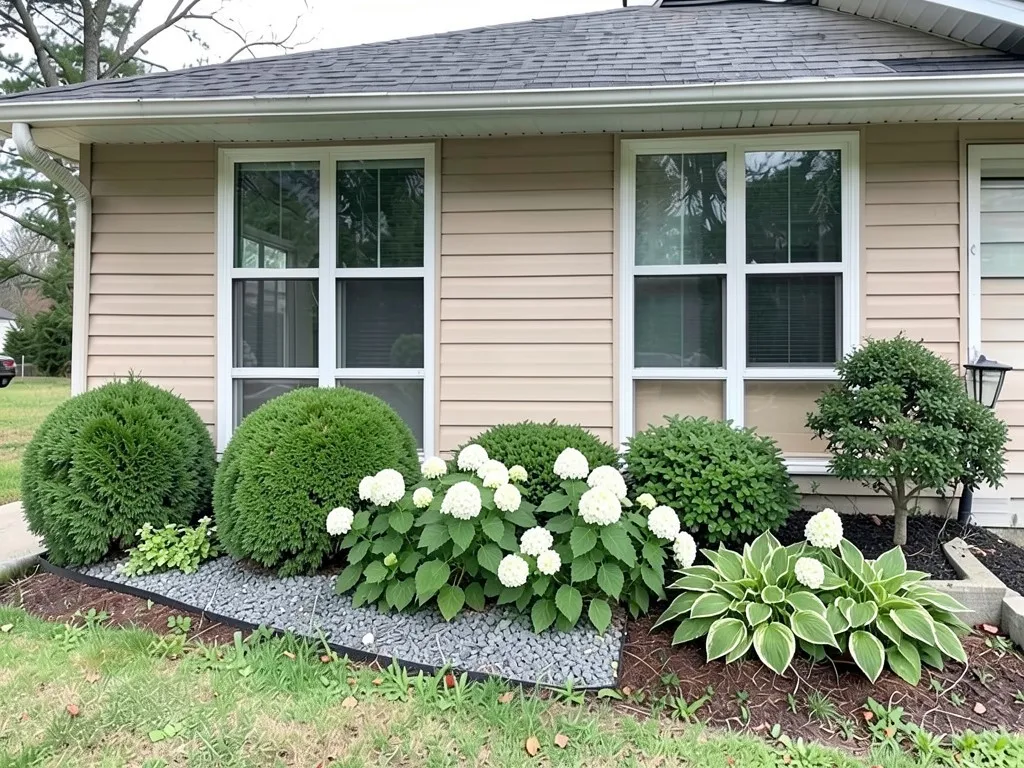
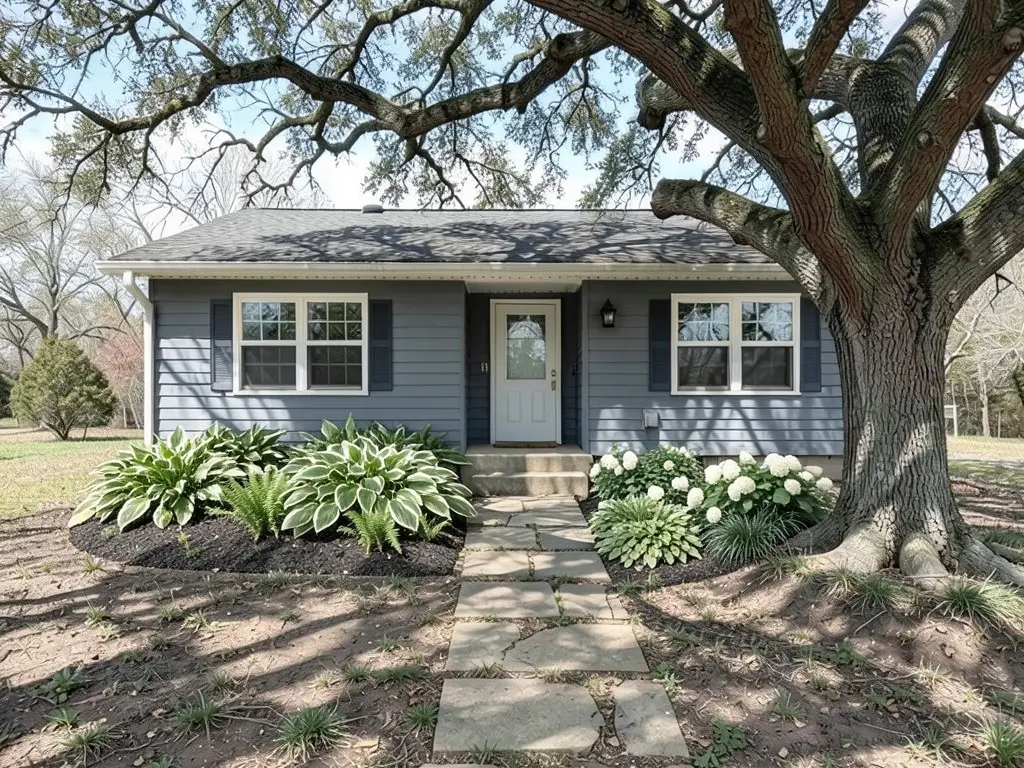
For a shady front, the table points to bigleaf hydrangea, Girard's Crimson azalea and Catawba rhododendron, with hostas and ferns along the front edge, as in the sixth example above. For a hot, sunny front, Sea Green juniper, Soft Touch holly and Little Lime hydrangea suit full sun, and ornamental grasses fill gaps, as in the seventh example.
Front of house layouts by house type
Three extension guides agree on the basics. Clemson HGIC splits a foundation planting into entrance, corner and transition areas: low plants by the door, corner groups that reach out past the corner of the house, and simple, low plantings between. University of Illinois Extension adds that you do not have to plant all the way across the foundation, and that the front door is the focal point. LSU AgCenter suggests beds 6 to 9 ft deep from the house to the front edge, and shrubs no taller than 2 to 4 ft under windows.
One-story ranch house
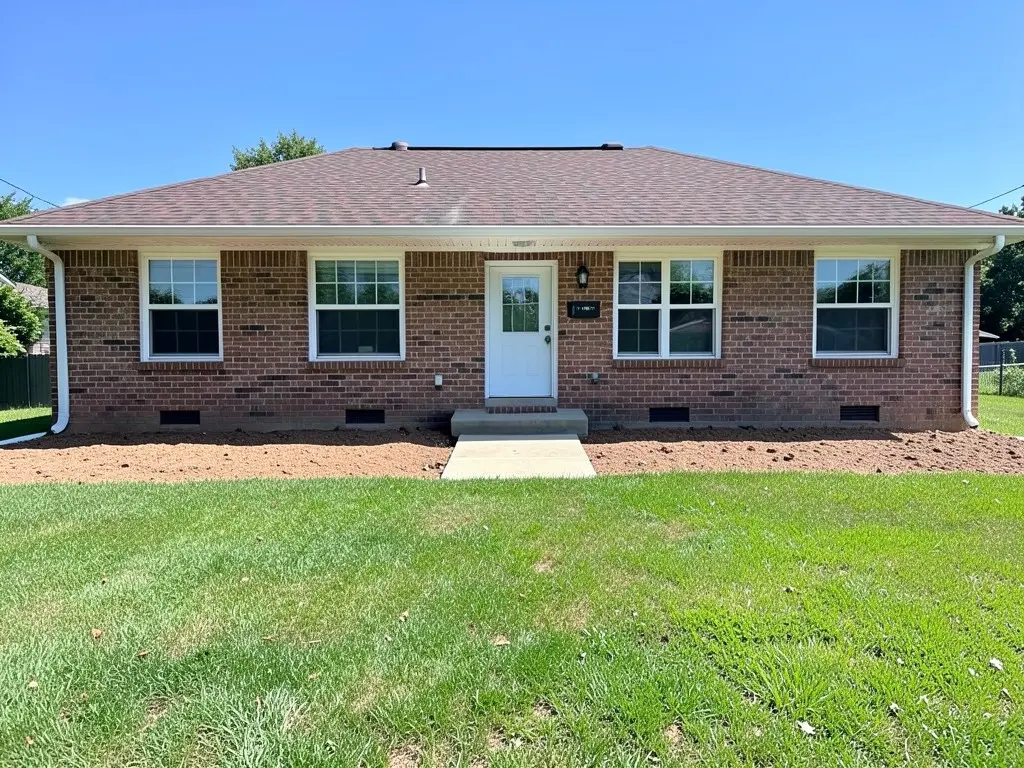
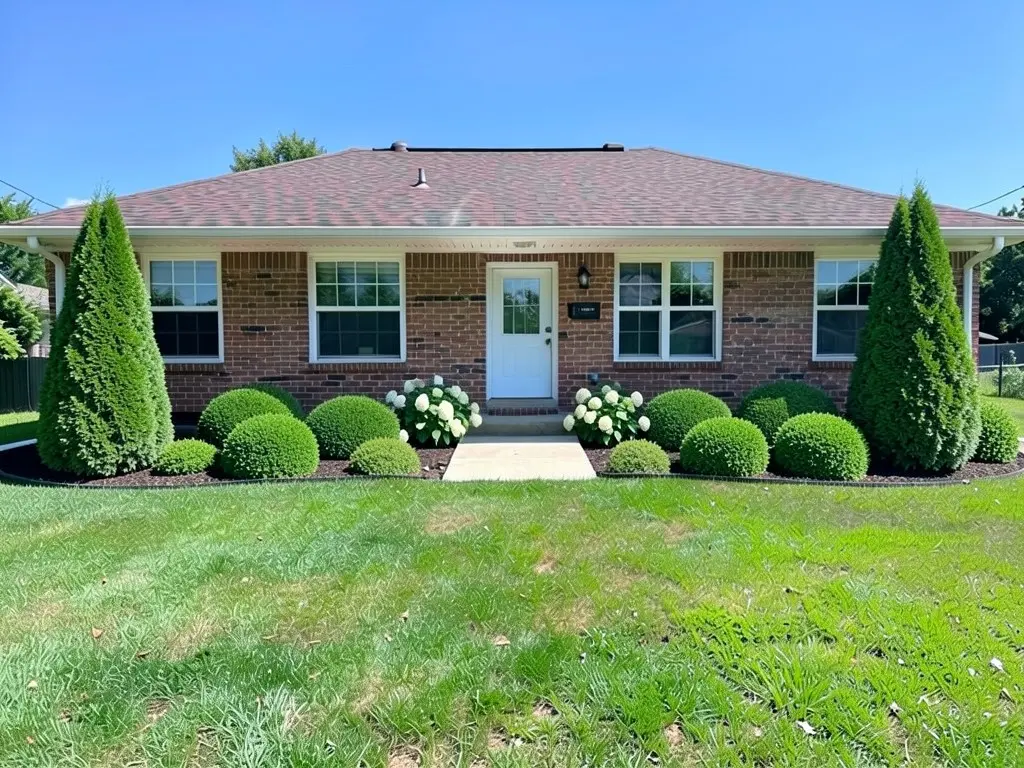
Clemson HGIC notes that small and one-story houses need smaller plantings than large two-story ones. Illinois Extension's rule: draw a V from each corner eave down to the front door, and keep the tallest corner plants no taller than two-thirds of the corner height. In the third example above, the corner evergreens already reach toward the eaves, so on a real ranch pick a shorter corner shrub or a slow dwarf conifer.
Two-story house
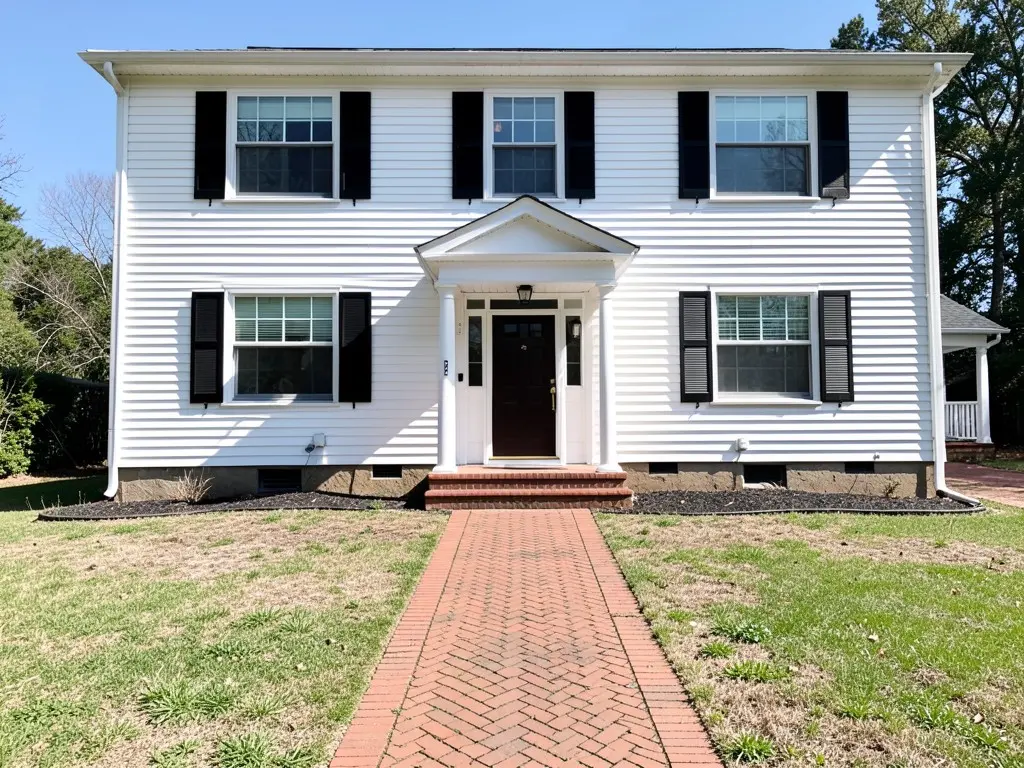
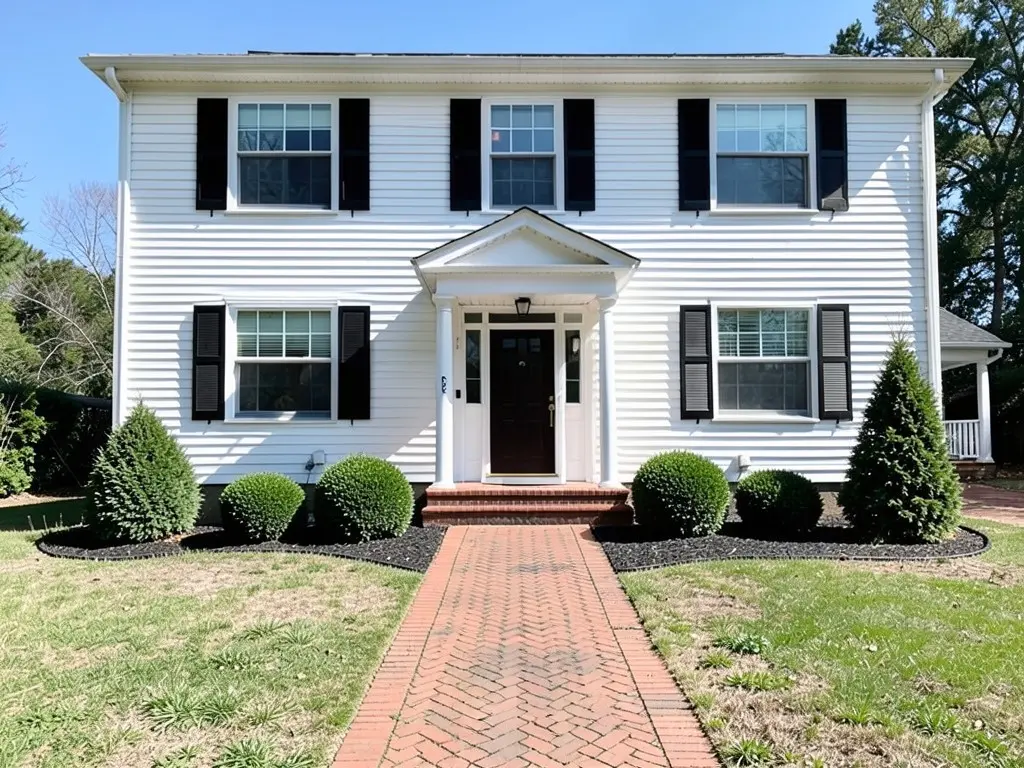
A taller house can carry larger shrubs and a deeper bed. LSU AgCenter says large shrubs should go 5 to 6 ft from the house, and Clemson asks for at least 5 ft between the wall and the foliage of any shrub over 6 ft when grown. The fourth example shows a matched bed on a colonial; on a real two-story house, a bed toward the 6 to 9 ft LSU depth would look more in scale than the narrow beds the AI drew.
Narrow house or townhouse
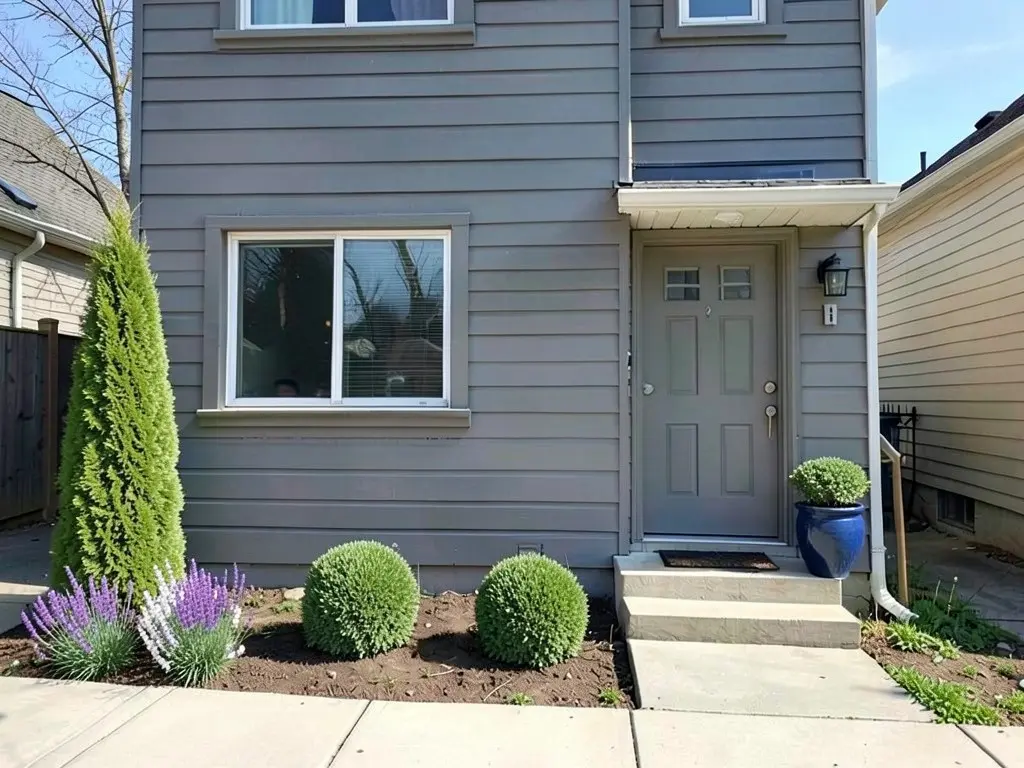
With little room, plant one or two places well instead of a full row: a narrow upright shrub at a corner, low round shrubs under the window, and a pot by the door, as in the fifth example. Clemson HGIC warns that tall upright shrubs right by the entrance are rarely right except on very large, formal homes, so keep the tall one at the corner.
House with a raised porch
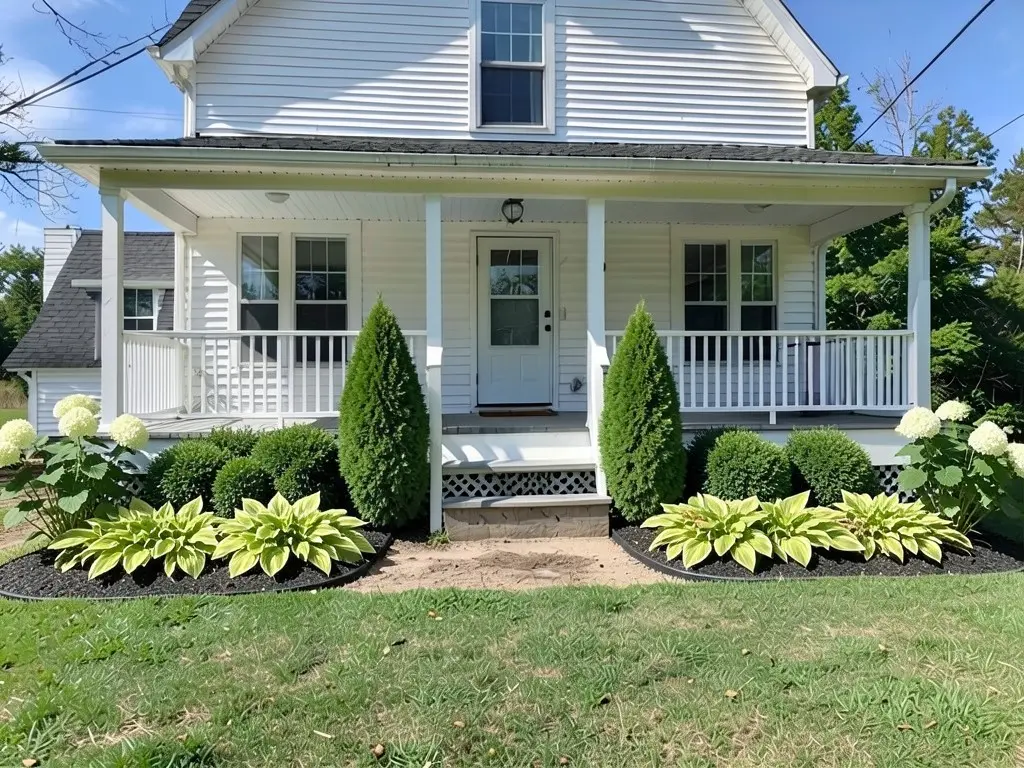
The bed in front of a porch hides the lattice or foundation under it. Use shrubs that grow just tall enough to cover it and no higher than the porch floor, keep the steps clear, and put larger flowering shrubs at the ends, as in the eighth example. Measure from the ground to the porch floor and pick shrubs whose grown height stays under that.
Modern house
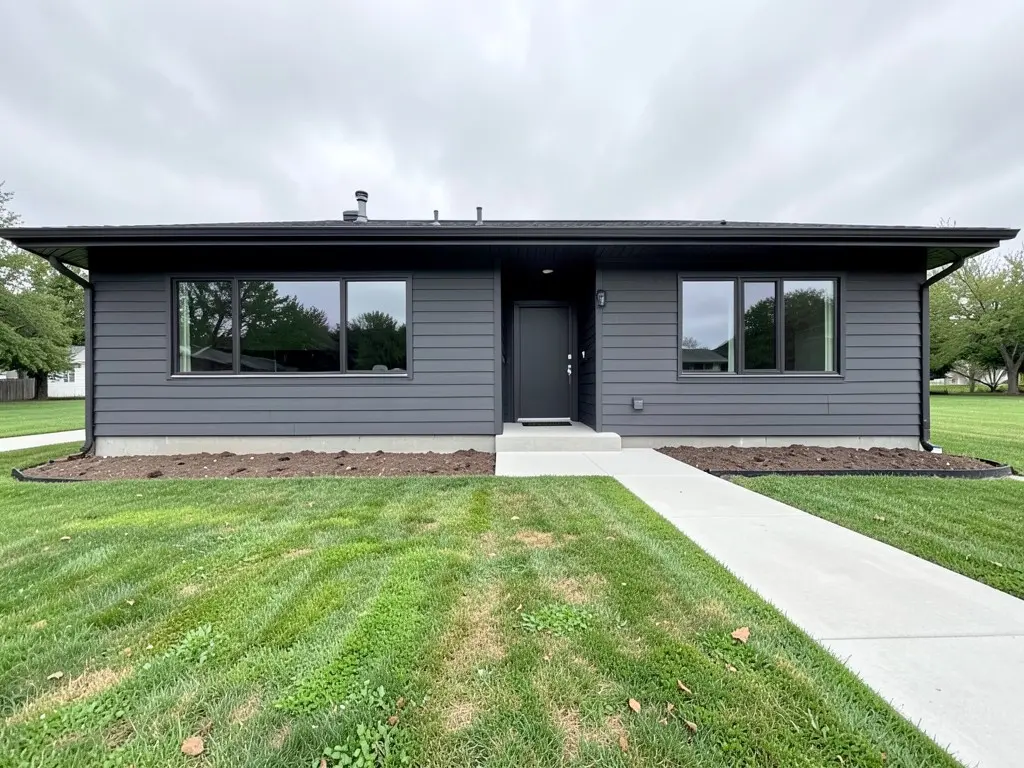
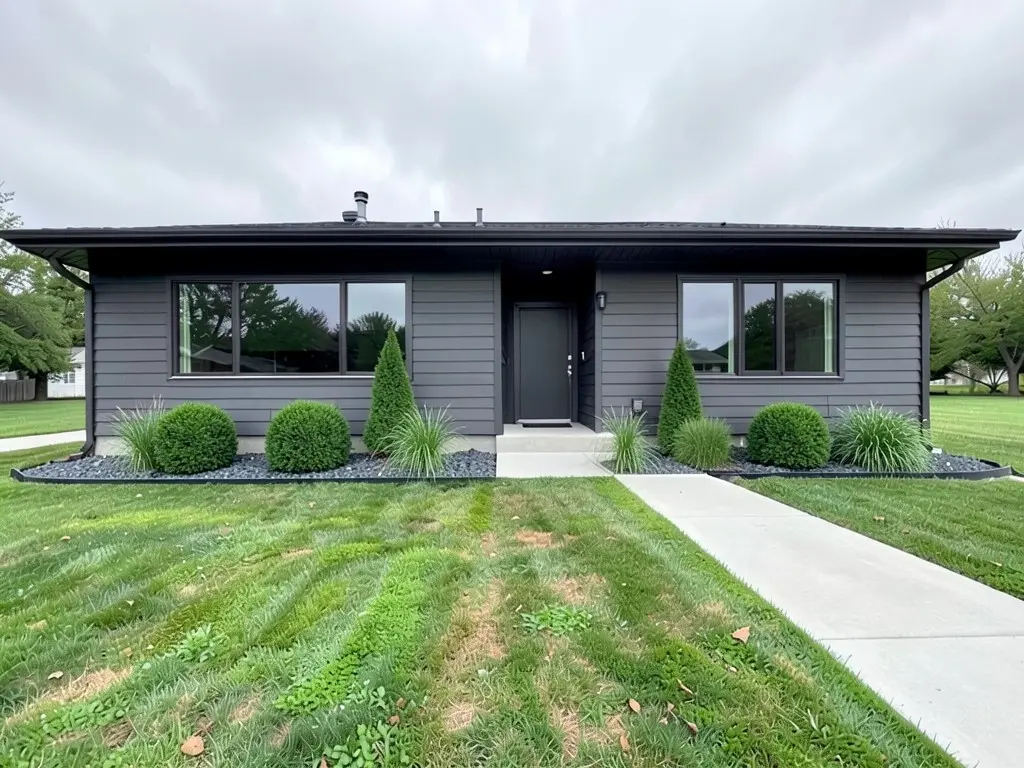
Modern fronts usually use fewer kinds of plants, repeated: one low evergreen in a row, grasses between, and a gravel or dark mulch bed with a crisp edge, as in the tenth example. Clemson's one-specimen rule still applies: one tall accent plant or pair is enough.
Symmetrical or asymmetrical?
A matched bed on each side of the door, as in the fourth example, gives a formal look, and LSU AgCenter suggests symmetry at the front door for that. Clemson HGIC is more cautious: it says symmetrical balance is often overused, and asymmetrical balance, where different plants of similar visual weight sit on each side, often suits homes better. A centred door with matching windows on both sides suits symmetry; an off-centre door or a garage on one side usually looks better asymmetrical.
Front of house landscaping for curb appeal
In the 2023 Remodeling Impact Report on outdoor features by the National Association of Realtors (NAR) and the National Association of Landscape Professionals, 92% of Realtors said they had suggested sellers improve curb appeal before listing, and 97% said curb appeal matters in attracting a buyer. The report's overall landscape upgrade (a flagstone front walk, two stone planters, five flowering shrubs, one tree and bark mulch) was estimated at $9,000, with an estimated 100% of that cost recovered at sale. These are Realtor and contractor estimates, not measured sale prices.
Virginia Cooperative Extension publication 426-087 summarizes a seven-state survey in which a well-landscaped home was rated 5.5% (Louisiana) to 11.4% (South Carolina) higher in value than the same home with no landscaping. That is perceived value from people at home shows, not sale prices. A foundation bed is the cheapest place to start, and trying it on a photo first costs nothing.
How to try a foundation bed on your own photo
The tool above is in Custom mode, which has a Custom Design Requirements box. Describe what to remove, the shrubs, flowers, gravel strip and mulch, and how far from the wall the bed starts.
- Take the photo in daylight from the street or the lawn, with the whole front of the house and the old bed in frame.
- Describe the change in the Custom Design Requirements box: what to remove, what to plant and where, and what must stay, such as the house, windows, door and walk.
- Add your photo in the Upload Your Garden Image box, then press Generate Custom Design. You sign in with an email code or Google when you generate.
- Compare the result with your photo. If something is in the wrong place or too big, name the spot and the size, and try again.
What the AI can and cannot do
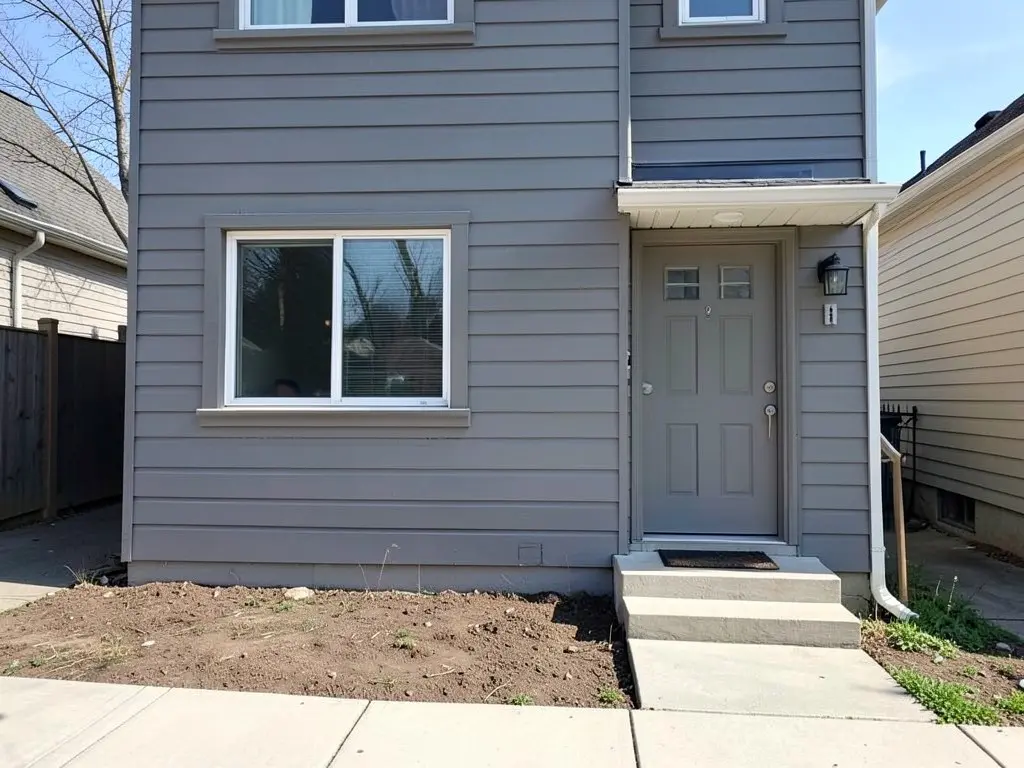
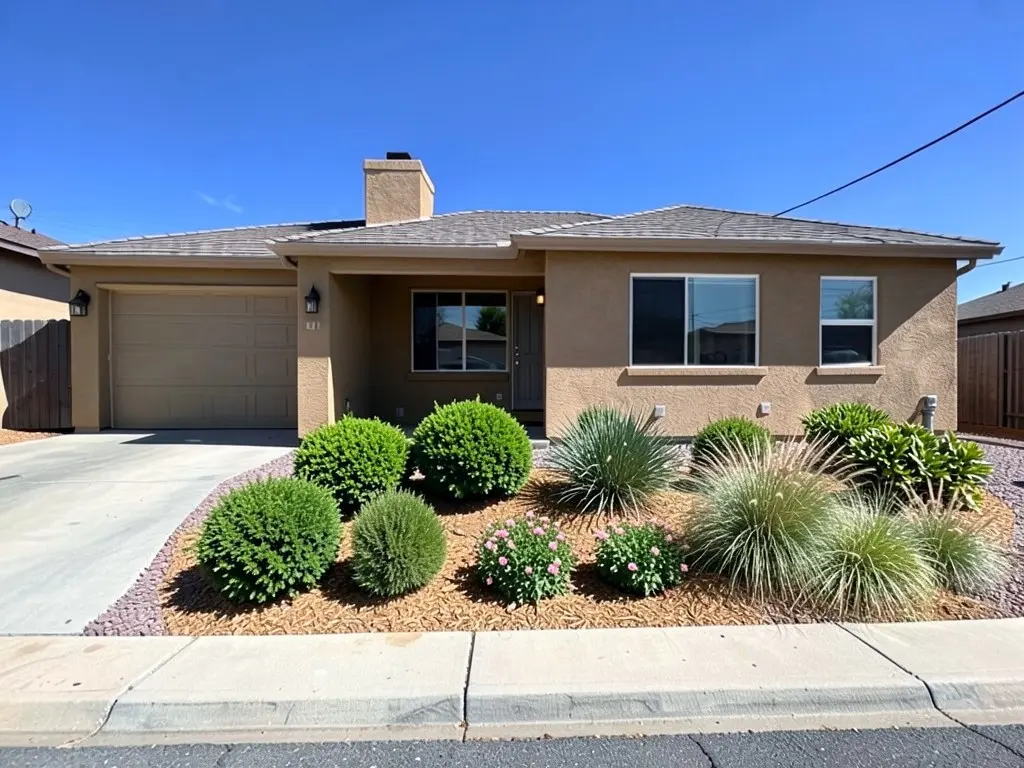
The AI shows the look of a new bed against your house. It does not know how big each plant will grow, your sun, soil or climate, or where pipes and wires run. In the examples above it set shrubs close to the wall, put a tree under the eaves and added a lamp post, so check spacing against each plant's grown size, and call 811 before you dig.
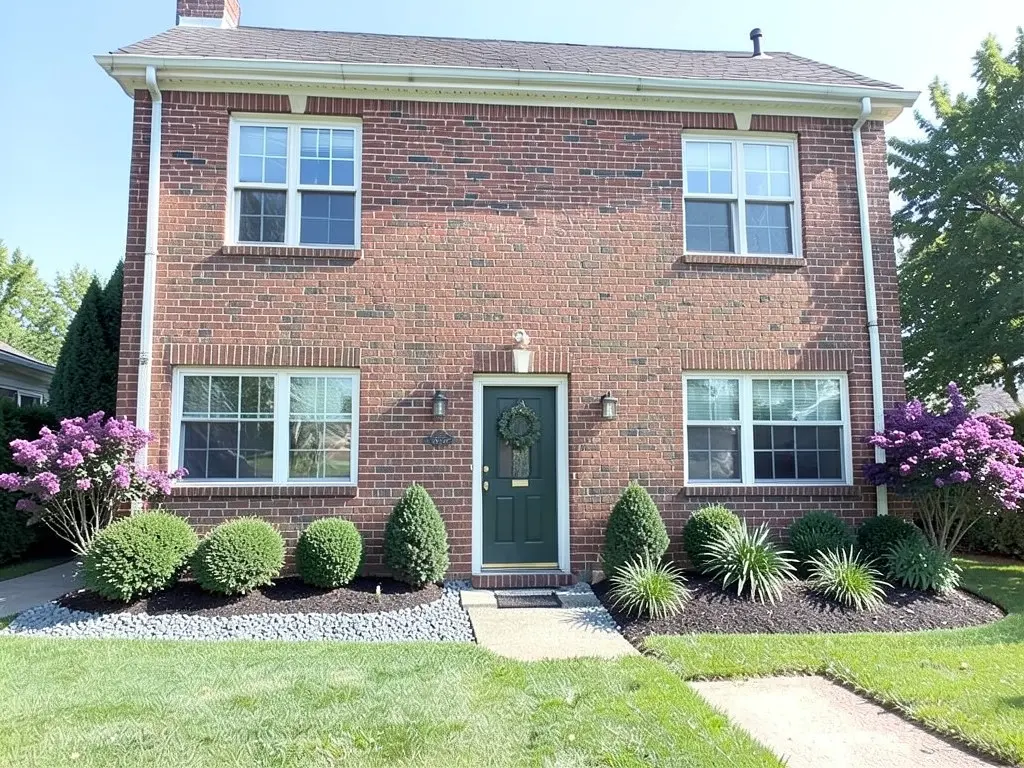
The eight newer examples show more of the same: on a two-story colonial it planted two boxwoods per side instead of three, on a sunny stucco house it filled most of the front yard instead of a three-foot strip, it added tall evergreens by a porch that we did not ask for, and where it removed overgrown shrubs it had to invent the wall behind them. The first runs of four examples went further wrong (two sides planted differently, hostas out in the yard, a redrawn house), so we ran them again and say so in each caption. Treat a result as a picture of the idea, then check sizes and spacing yourself.
Foundation planting instructions to paste into Custom mode
These are the exact instructions we used for the ten examples above, in the same order. In the tool above, Custom mode is selected: paste one into the Custom Design Requirements box, then upload your photo.
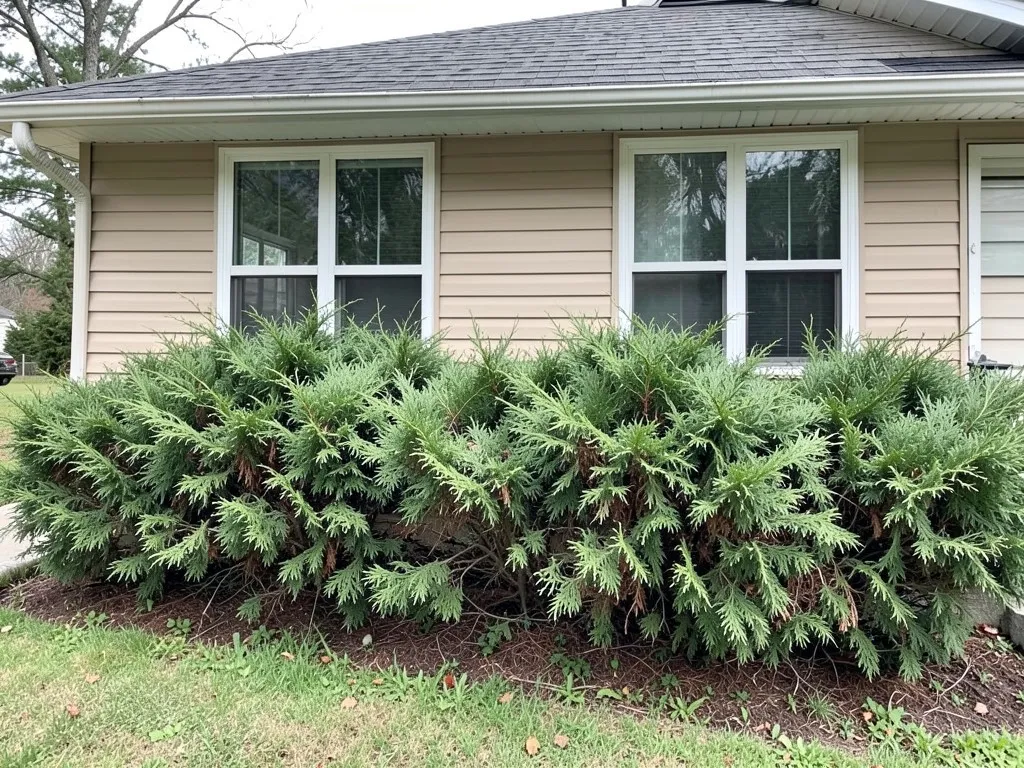
- Replace only the overgrown shrubs with a new layered foundation planting set about three feet out from the wall: a strip of gray gravel against the foundation, low rounded evergreen shrubs, white hydrangeas and hostas in front, a curved mulch bed edge and a small ornamental tree at the corner. Keep the house, the windows, the front door, the lawn, the sky and the camera angle exactly the same
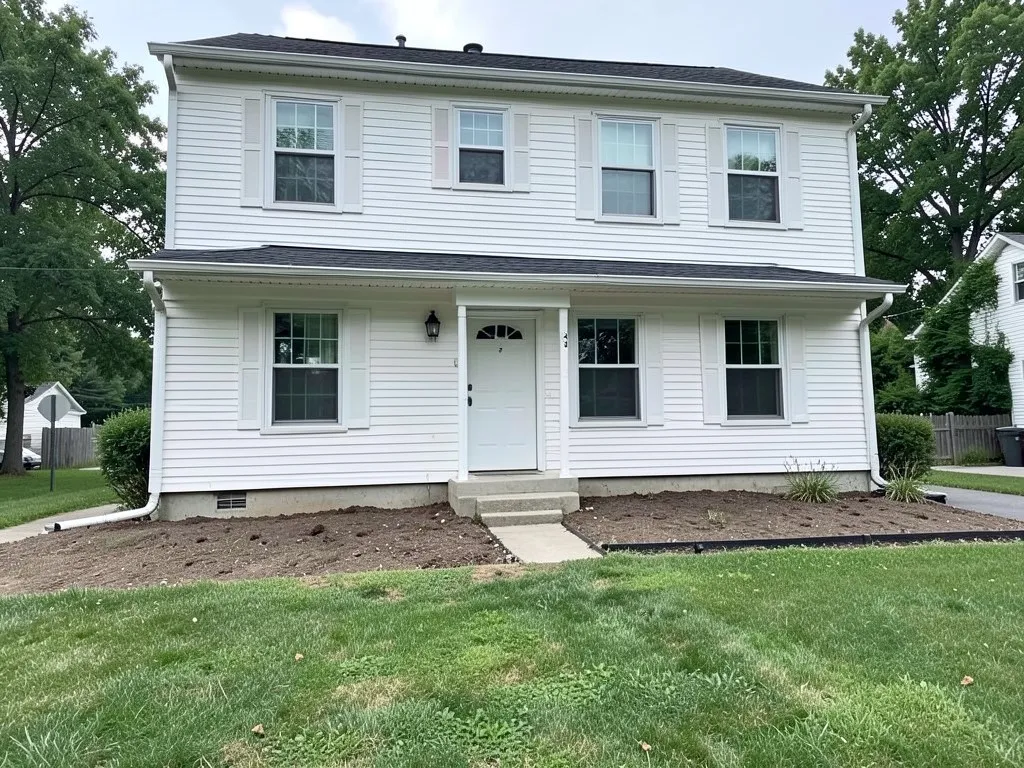
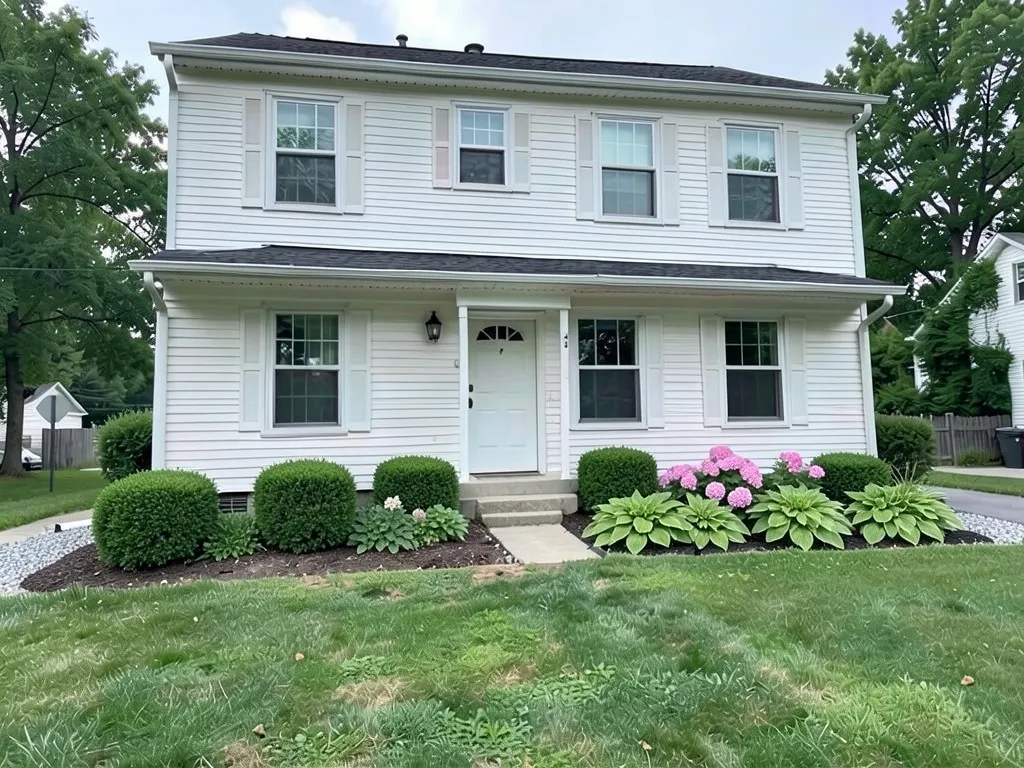
- Plant only the bare strip along the foundation: a row of rounded boxwood shrubs, pink hydrangeas between them, a front edge of green hostas, dark brown mulch and a small gravel strip next to the wall. Keep the house, the windows, the front door, the walkway, the lawn, the sky and the camera angle exactly the same
- Plant only the bare dirt strip along the foundation: a tall cone-shaped dwarf evergreen tree at each of the two house corners with a group of round evergreen shrubs around it, low round boxwood shrubs under the four windows kept well below the window sills, white hydrangeas on both sides of the front door, dark brown mulch and a curved bed edge. Keep the house, the windows, the front door, the walk, the lawn, the sky and the camera angle exactly the same.
- Plant only along the foundation of the house, the same on both sides of the front door like a mirror image: on the left side and on the right side, an identical bed of dark mulch with three clipped round boxwood shrubs under the windows and one cone-shaped evergreen at the house corner. Both sides must match exactly. Keep the house, the shutters, the windows, the portico, the brick walk, the lawn, the sky and the camera angle exactly the same.
- Plant only the narrow dirt strip in front of the house: three small round dwarf evergreen shrubs under the window, a single tall narrow columnar evergreen at the left corner, a low edge of purple and white flowers in front, and one large dark blue pot with a small shrub beside the front door. Keep the house, the window, the door, the walk, the sky and the camera angle exactly the same.
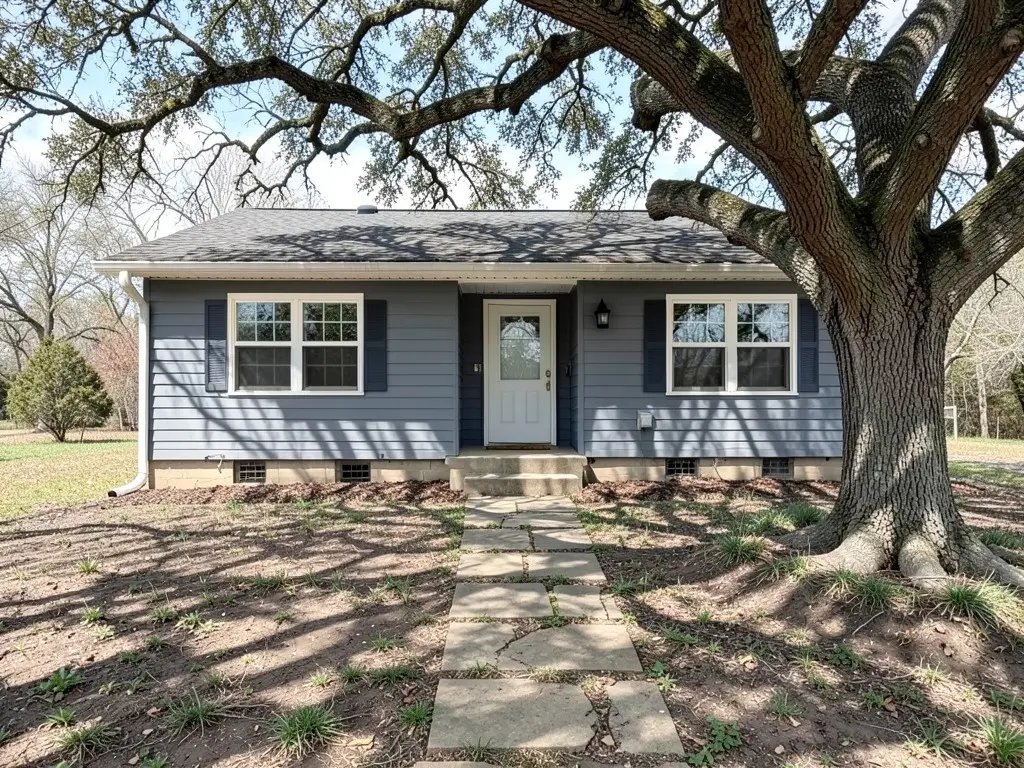
- Plant only a narrow bed directly against the house wall, along the foundation, from the left corner to the front steps and from the steps to the right corner: medium green and white hostas, ferns and a few small white hydrangea shrubs in dark mulch, all low enough to stay below the windows. Leave the yard in front of the bed, the oak tree and the stone path unchanged. Keep the house, the windows, the front door, the light and the camera angle exactly the same.
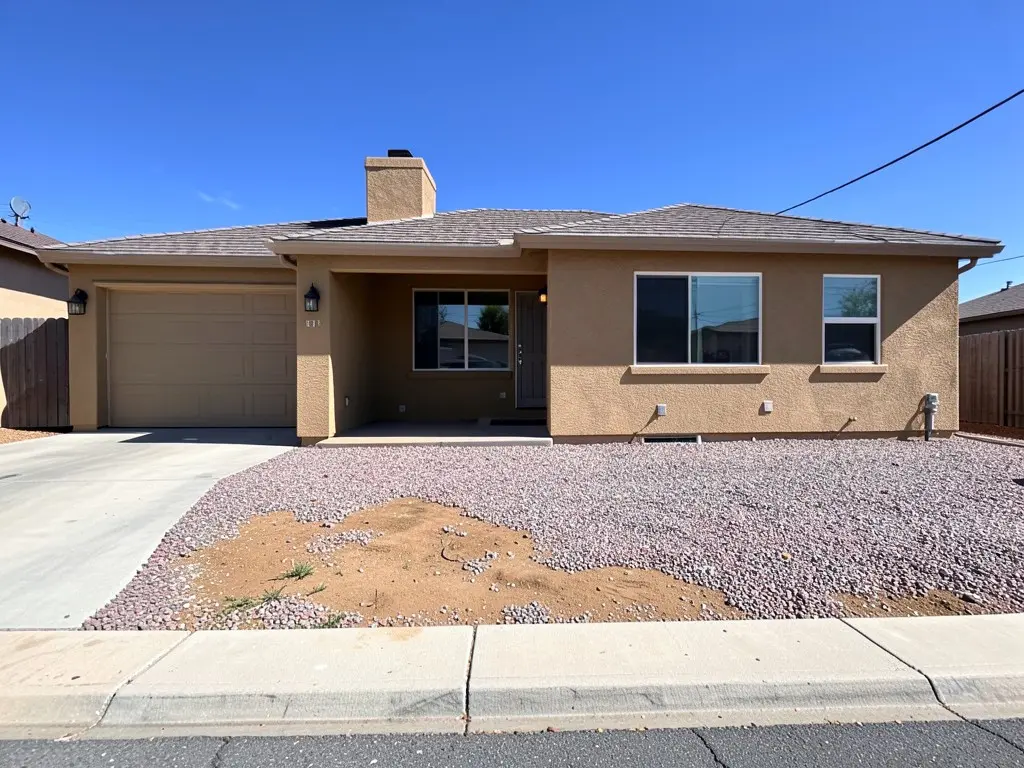
- Plant only a narrow bed directly against the house wall along the foundation, under the windows, about three feet deep: low round green shrubs, small mounding shrubs with tiny pink flowers, and clumps of ornamental grass, in light brown bark mulch. Leave the gravel yard near the street, the driveway and the sidewalk unchanged. Keep the house, the windows, the door, the garage, the sky and the camera angle exactly the same.
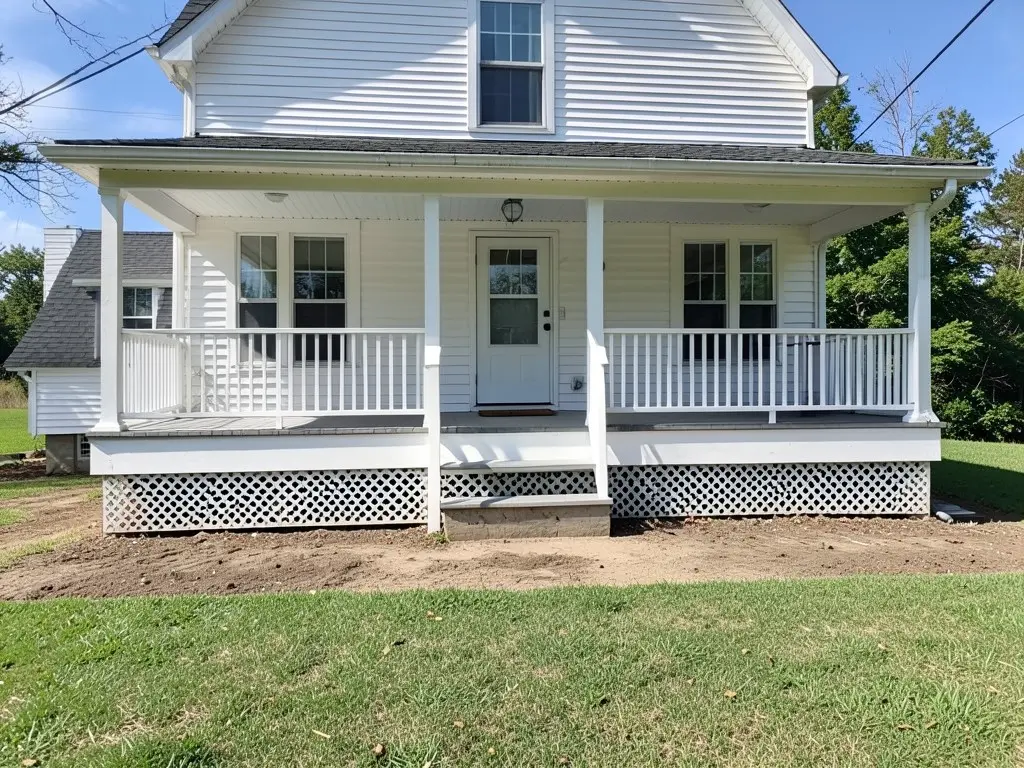
- Plant only the bare dirt in front of the porch lattice: a row of round evergreen shrubs tall enough to hide most of the lattice, white panicle hydrangeas at both ends, and a low border of green and yellow hostas in front, in dark mulch with a curved edge that leaves the steps clear. Keep the house, the porch, the railing, the steps, the lawn, the sky and the camera angle exactly the same.
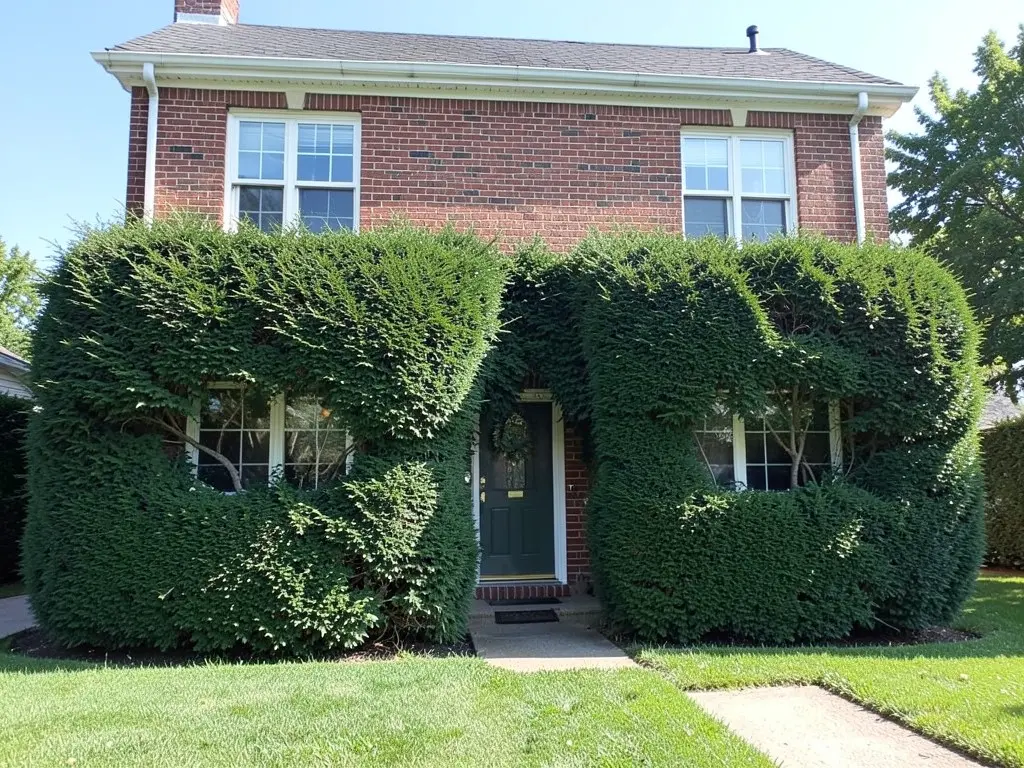
- Replace only the two huge overgrown shrubs with a new low foundation bed along the wall: a narrow gray gravel strip against the brick, small round evergreen shrubs well below the windows, purple flowering shrubs at the two corners and a front row of low perennials, in dark mulch. Do not change the house: keep the brick, every window in the same place, the front door, the walk, the lawn, the sky and the camera angle exactly the same.
- Plant only the strip along the foundation in a simple modern style: a bed of dark gray gravel with a straight steel edge, a row of identical low round evergreen shrubs, clumps of green ornamental grass between them, and three narrow columnar evergreens spaced evenly along the wall between the windows. Keep the house, the windows, the door, the path, the lawn, the sky and the camera angle exactly the same.
Frequently asked questions
How far from the house should foundation plants go?
Clemson HGIC advises at least 3 ft from the wall for shrubs under 6 ft when grown, and at least 5 ft for taller ones, measured from the foliage at mature size. Keep mulch about 12 inches back from the foundation.
What are good foundation plants?
Compact evergreen shrubs such as boxwood or dwarf holly for structure, hydrangeas or other flowering shrubs for colour, and low perennials such as hostas along the front. Ask a local nursery which plants suit your sun and climate.
Is the AI landscape tool free?
Yes, to start: 1 free render with a free account, and free renders carry a watermark. More renders and no watermark come with a paid plan.
What are the best shrubs for the front of a house?
The best ones fit your USDA zone and sun and stay small enough when grown. Common picks are dwarf boxwood, dwarf yaupon or Soft Touch holly, compact inkberry and Hetz's Midget arborvitae for evergreen structure, and hydrangeas or dwarf fothergilla for flowers. The table above gives zones, sun and grown size for each.
What shrubs grow in shade at the front of a house?
From the table: bigleaf hydrangea (part to deep shade), Girard's Crimson azalea (part shade) and Catawba rhododendron for a large corner. Hostas and ferns make a low front edge. Hetz's Midget arborvitae thins out in full shade.
How tall should shrubs under a window be?
LSU AgCenter suggests shrubs with a grown height of 2 to 4 ft under windows, and Clemson HGIC says not to use tall plants where they will eventually cover windows. Check the grown height, not the pot size.
How deep should a foundation bed be?
LSU AgCenter suggests 6 to 9 ft from the house to the front edge of the bed, with large shrubs 5 to 6 ft from the wall. A one-story house can get by with less; a two-story house usually needs the deeper end.
Should a front yard bed be symmetrical?
It depends on the house. A centred door with matching windows suits a mirror-image bed. Clemson HGIC notes symmetry is often overused and that balanced but different sides often suit homes better, especially with an off-centre door or a garage.
More yard ideas
- Front yard landscaping ideas
- Boxwood landscaping ideas
- Hydrangea landscaping ideas
- Brick house landscaping ideas
- Flower bed ideas
- Small front yard landscaping ideas
Want to see any of these on your own yard? Open our AI yard design tool, upload a photo and describe the change, or browse all AI design tools.