How to plan a garden layout
Most garden makeovers that disappoint skipped the planning: the patio went where the sun never reaches, or the plants were wrong for the soil. These steps take an afternoon and cost almost nothing.
- Measure the garden and draw it to scale on squared paper. Mark the house, the doors and windows, drains, trees, the shed and anything you will keep.
- Find the aspect: which way the garden faces from the back of the house. The RHS notes that south-facing areas get more light and warmth than any other aspect and north-facing areas get the least; south- and west-facing aspects are usually warm and sunny, east- and north-facing ones colder and shadier. Note where the sun falls in the morning, at midday and in the evening.
- Test the soil. A cheap kit gives the pH; the RHS calls pH 6.5 the best general-purpose value, letting a wide range of plants grow. If a few drops of vinegar make a soil sample fizz, there is chalk or limestone in it, and lime-hating plants such as rhododendrons, camellias and blueberries will struggle.
- List what the garden is for: eating outside, children, a dog, growing food, a shed and bins, or just sitting in the sun. Each use becomes a zone.
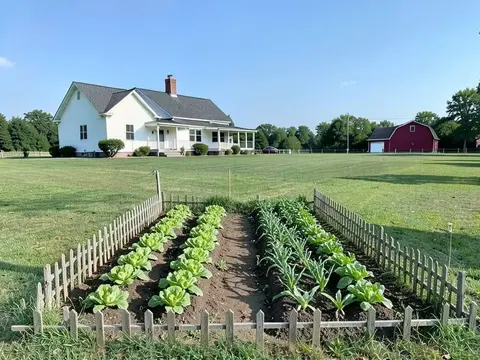
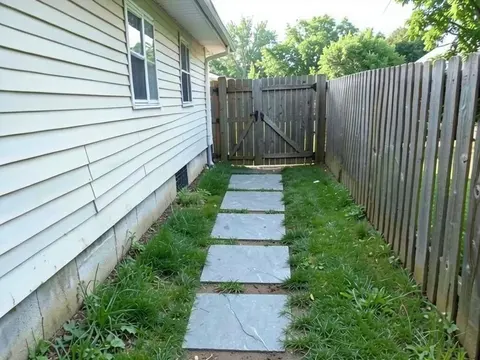
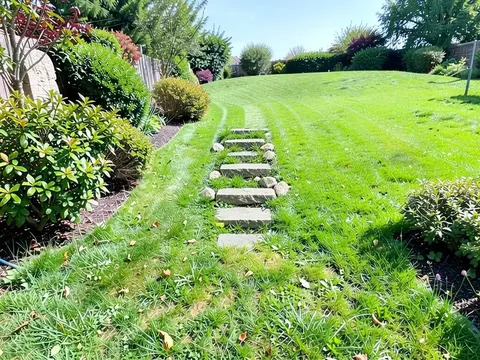
- Place the zones. Put seating where the sun is when you will use it, bins and storage near the gate (idea 7), vegetables in full sun, and link the zones with a path (idea 2).
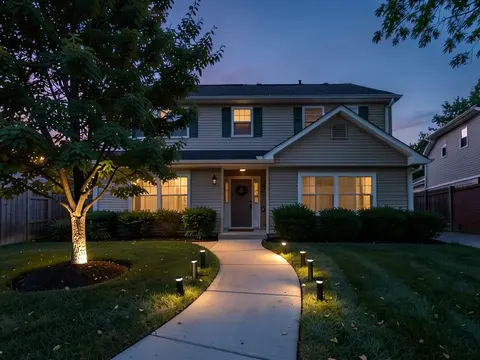
- Plant in layers: trees and climbers, then shrubs, then perennials, then ground cover, with the tall plants at the back of each border (idea 3).
- Try it on a photo before you dig. A picture of the plan on your own garden shows quickly whether the patio is too big or the border too thin.
Small garden ideas that make a garden look bigger
- Pale boundaries: Gardeners' World: walls and fences painted in pale colours make a garden feel bigger and brighter. Use masonry paint on brick and fence paint on timber.
- Overlapping circles of lawn: Two round lawns that overlap, the one further from the house slightly smaller, make the garden seem longer (Gardeners' World).
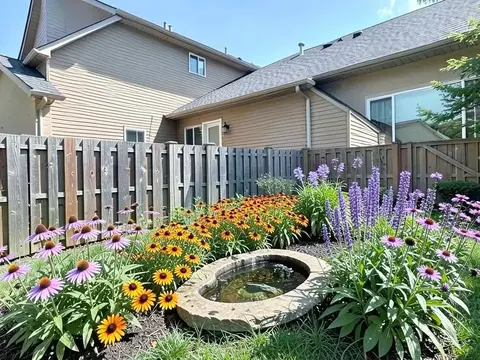
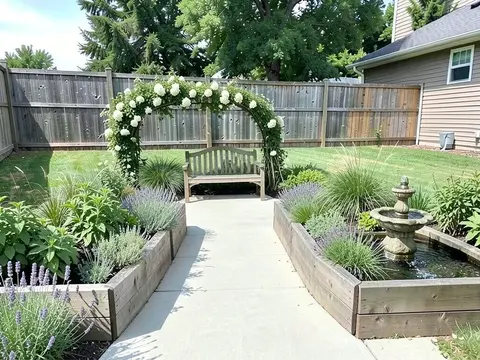
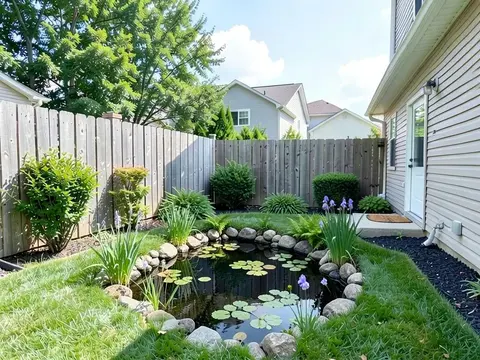
- Still water: A water bowl or small raised pond reflects light back into a dark garden or courtyard (Gardeners' World).
- One floor: One paving or gravel across the whole space reads as one room rather than several scraps (idea 1).
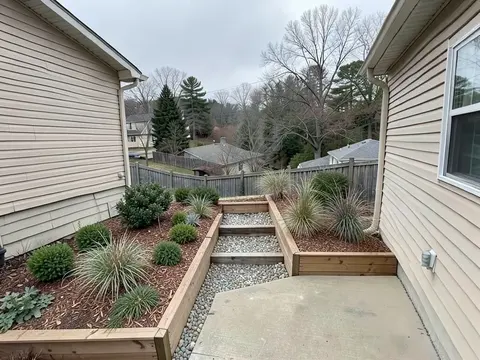
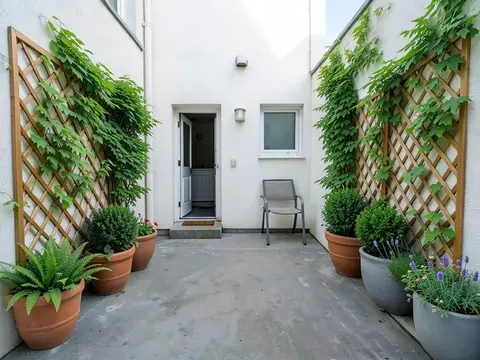
- Plant upwards: Raised beds, climbers on trellis and trees on clear stems add green without taking floor space (ideas 1 and 8).
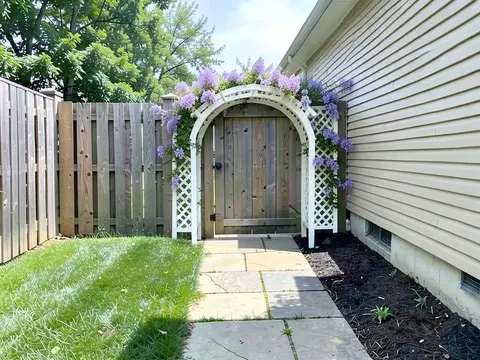
- Don't show everything at once: A curving path or an arch part way down hides the end of the garden, so it feels bigger than it is (idea 2).
Garden ideas on a budget
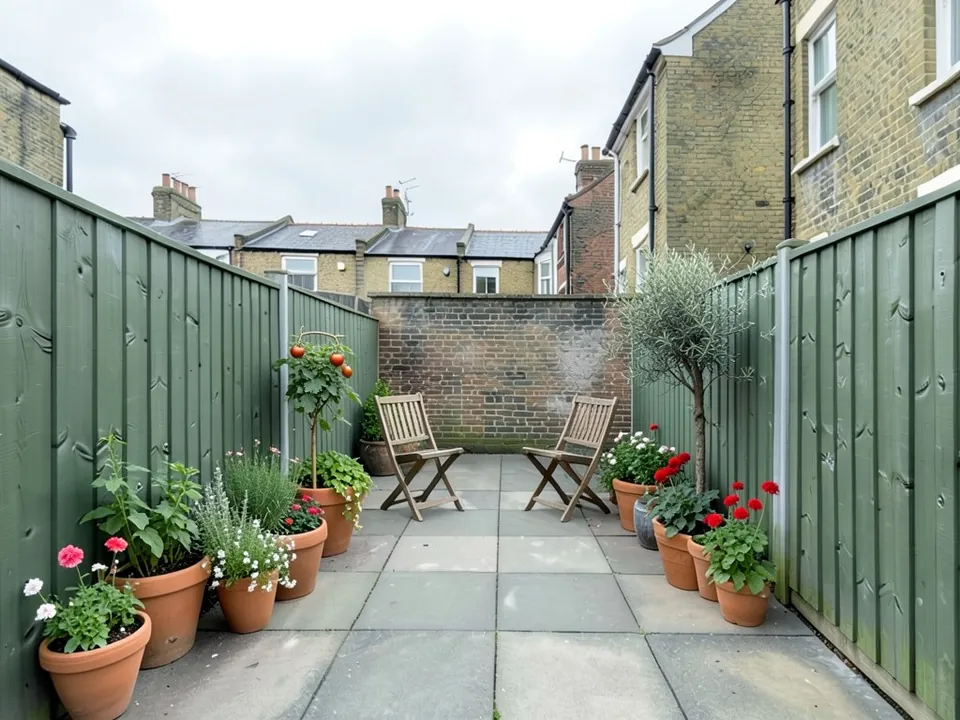
- Paint the fences: A tin of fence paint changes a whole garden in a weekend (idea 9).
- Pots before paving: Groups of pots with herbs, a tomato and bedding brighten a concrete space without building anything (idea 9).
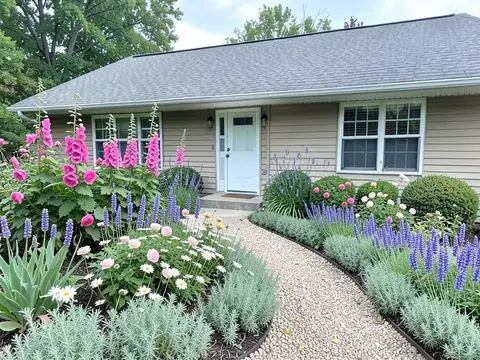
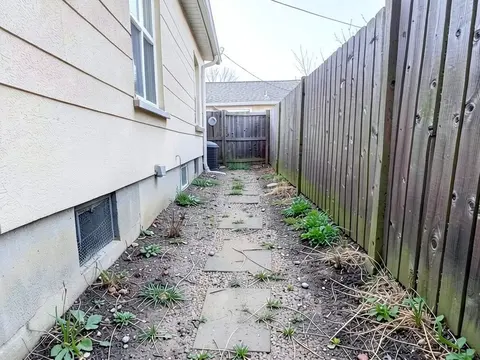
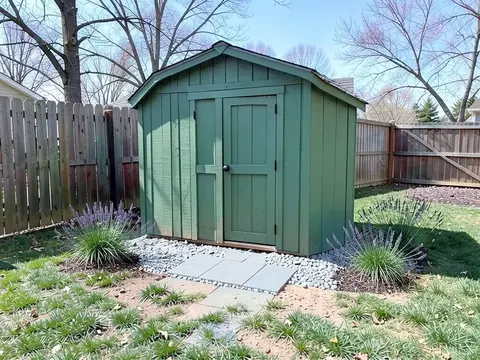
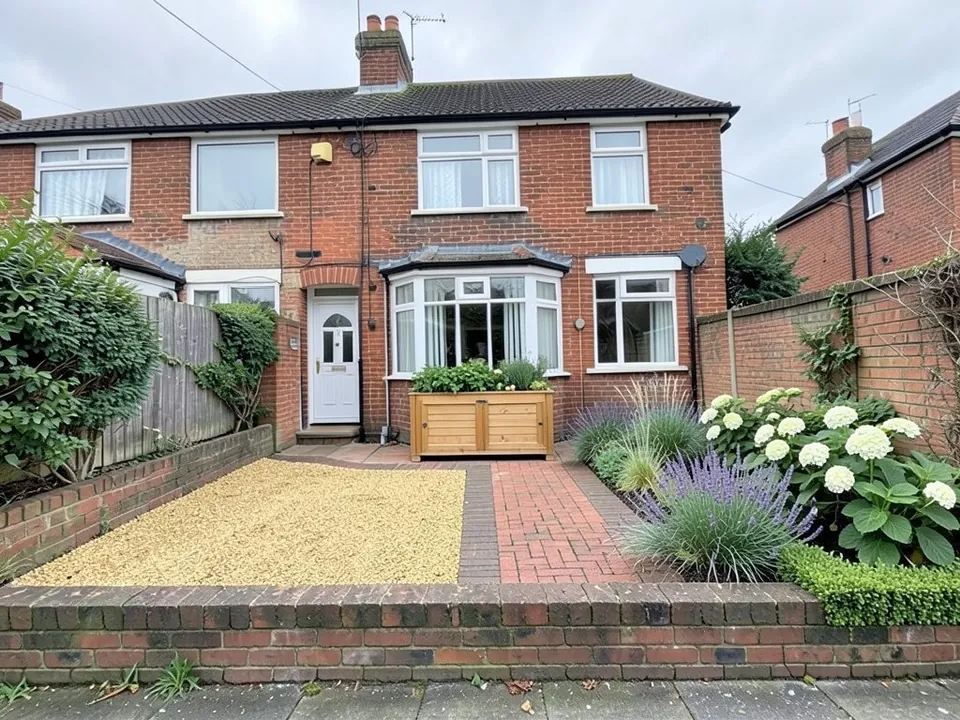
- Gravel instead of paving: Gravel usually costs less than paving to buy and lay, and in a front garden it drains, which also keeps it clear of the planning rule for impermeable surfaces (ideas 6 and 7).
- Reclaimed materials: Reclaimed bricks and sleepers cost less than new and already look weathered (ideas 1 and 5).
- Grow your own plants: Sow annuals from seed, split big clumps of perennials in spring or autumn and take cuttings of lavender and other shrubs to fill a border for very little.
- Do it in stages: Draw the whole plan first, then build one zone a season, so each piece fits the next.
Low-maintenance garden ideas
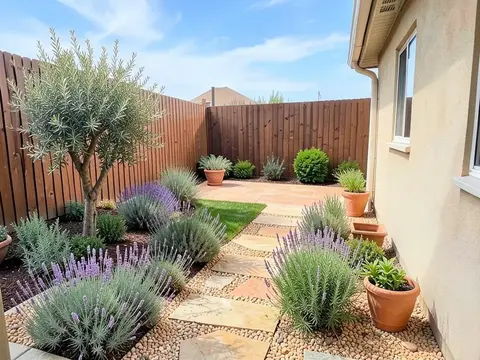
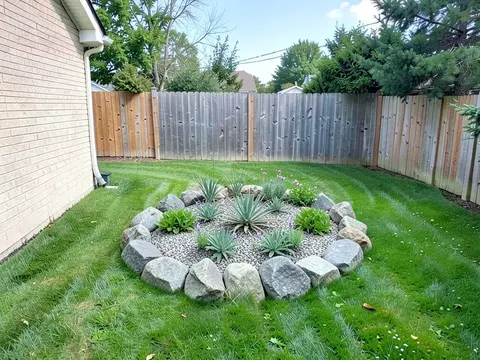
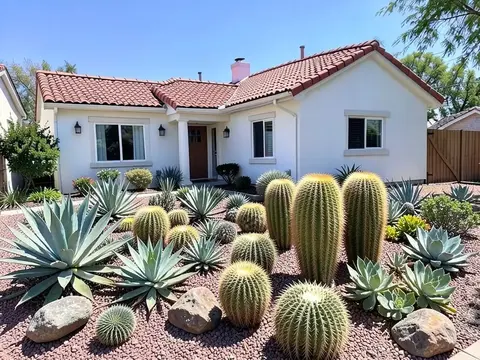
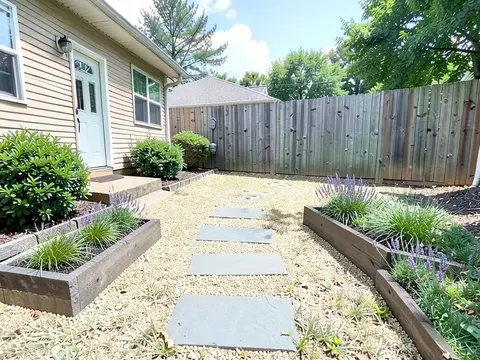
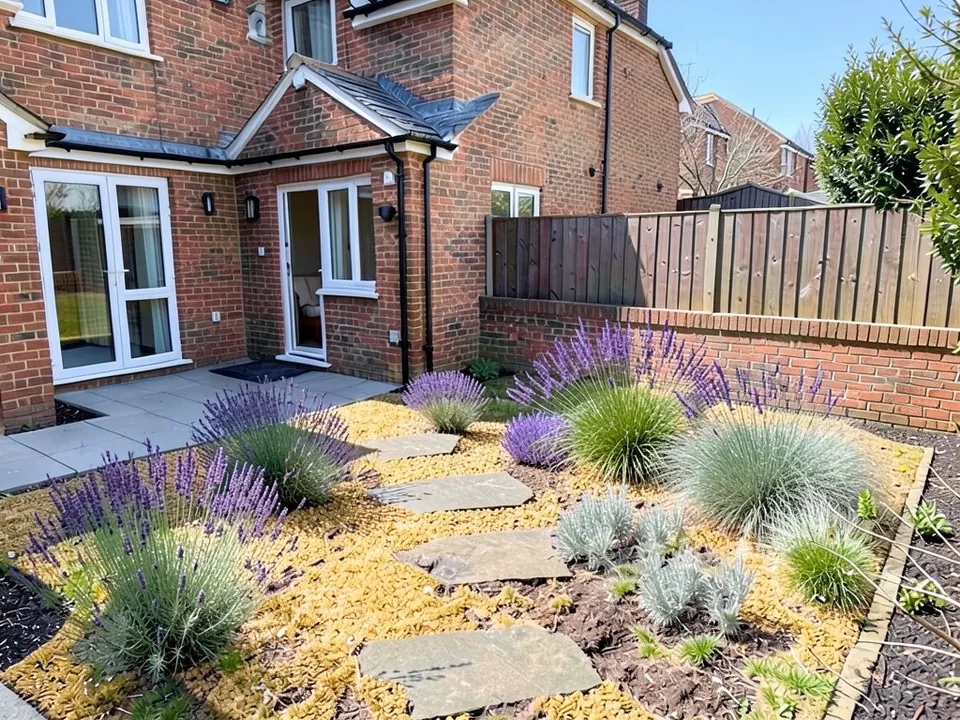
- Gravel garden: Drought-tolerant plants in gravel need no mowing and little watering once they settle (idea 6).
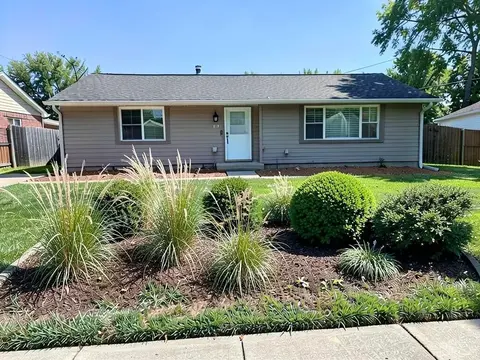
- Smaller lawn, bigger beds: A lawn needs mowing every week in the growing season; fewer, larger beds of shrubs and grasses, mulched each spring, need far less.
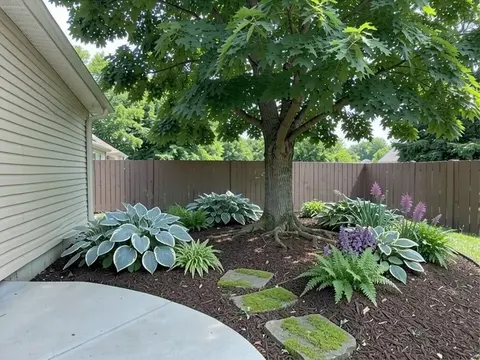
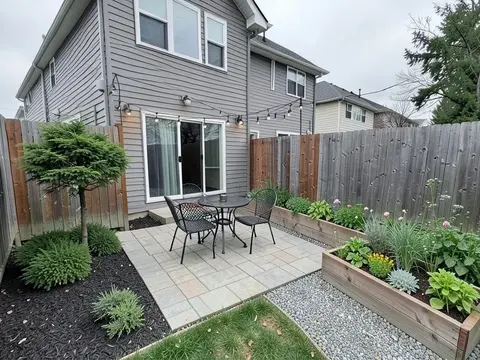
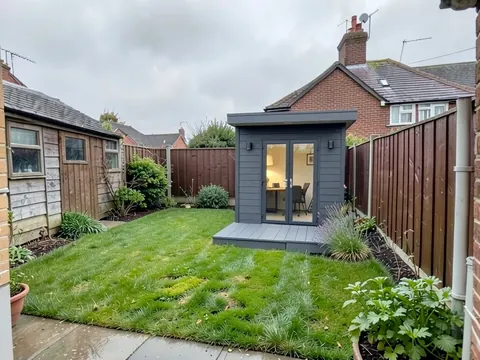
- Paving for a small, shaded garden: Where grass will not grow well, paving with planted edges is less work than a patchy lawn (idea 1).
- Shrubs and grasses over bedding: Evergreen shrubs and ornamental grasses come back every year; summer bedding has to be replanted.
- Fewer, larger pots: Pots need watering more often than beds, and big pots dry out more slowly than small ones.
See these garden ideas on a photo of your own garden
Take a photo of your garden from the back door or an upstairs window, upload it to the landscape tool, choose Custom and describe the change: what to add, what to replace and what must stay the same. The instructions we used for the 9 makeovers are below; change the plants, materials and sizes to suit your garden. The result is a picture for planning, not a measured drawing, so check sizes against your own measurements before you buy anything.
Garden instructions to paste into Custom mode
These are the exact instructions we used for the 9 makeovers above, in the same order (for 3 and 7, the second version). In the landscape tool, choose Custom, paste one into the Custom Design Requirements box, then upload a photo of your garden. Change the plants, materials and sizes to suit you, and list what must stay.
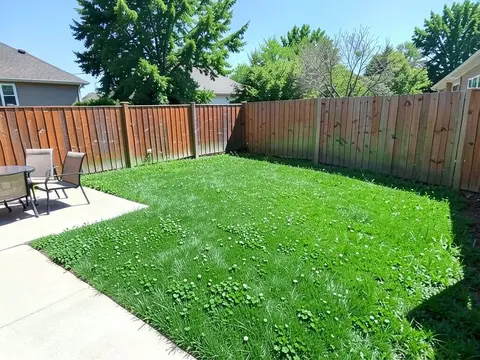
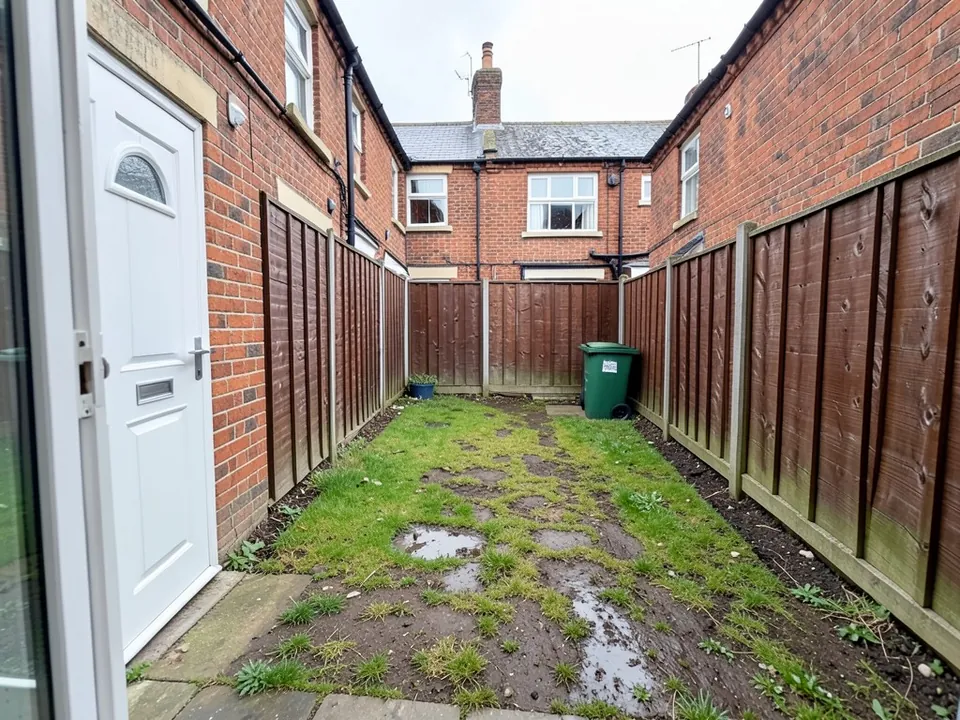
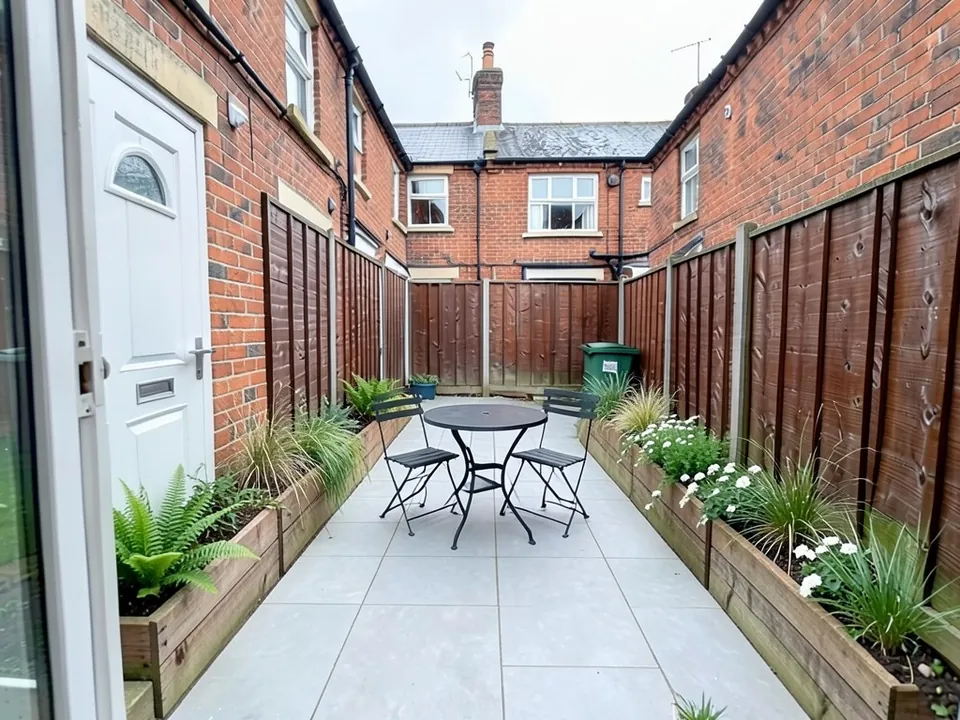
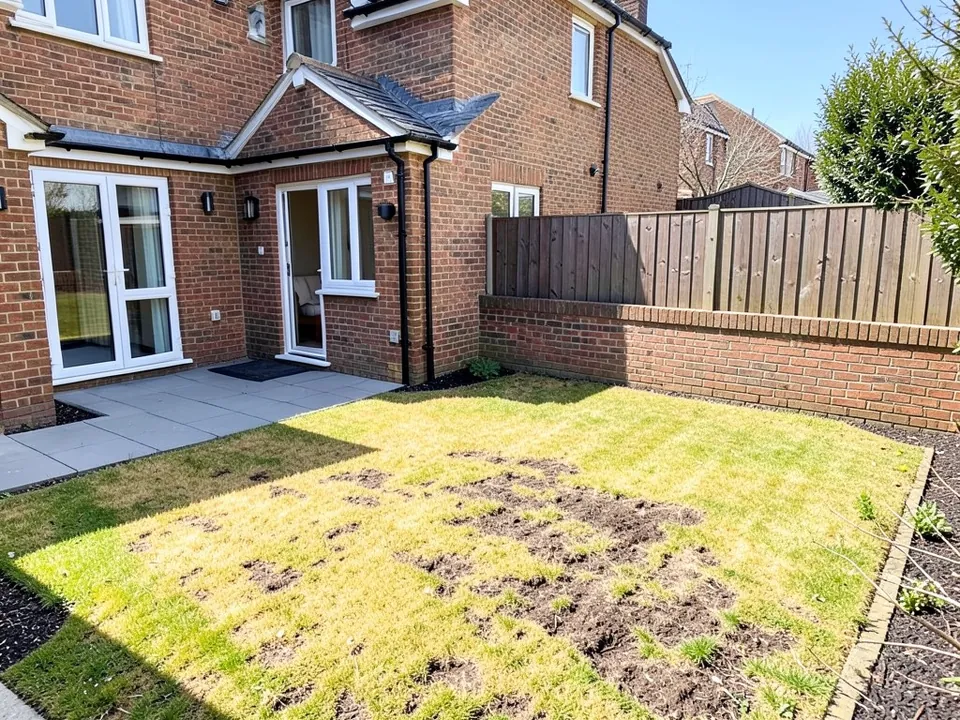
- Replace ONLY the patchy lawn with a pale grey porcelain paving patio. Along both side fences add raised beds made of wooden railway sleepers planted with ferns, ornamental grasses and white flowers, and put a small round black metal bistro table with two chairs in the middle of the patio. Keep the house, the fences, the sky and the camera angle exactly the same.
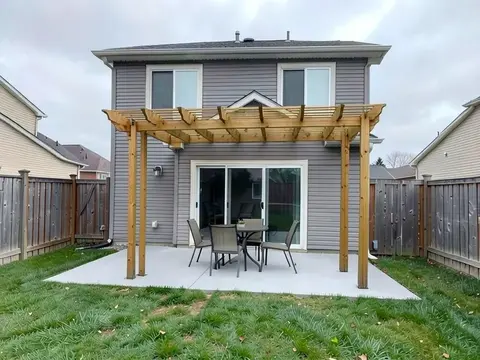
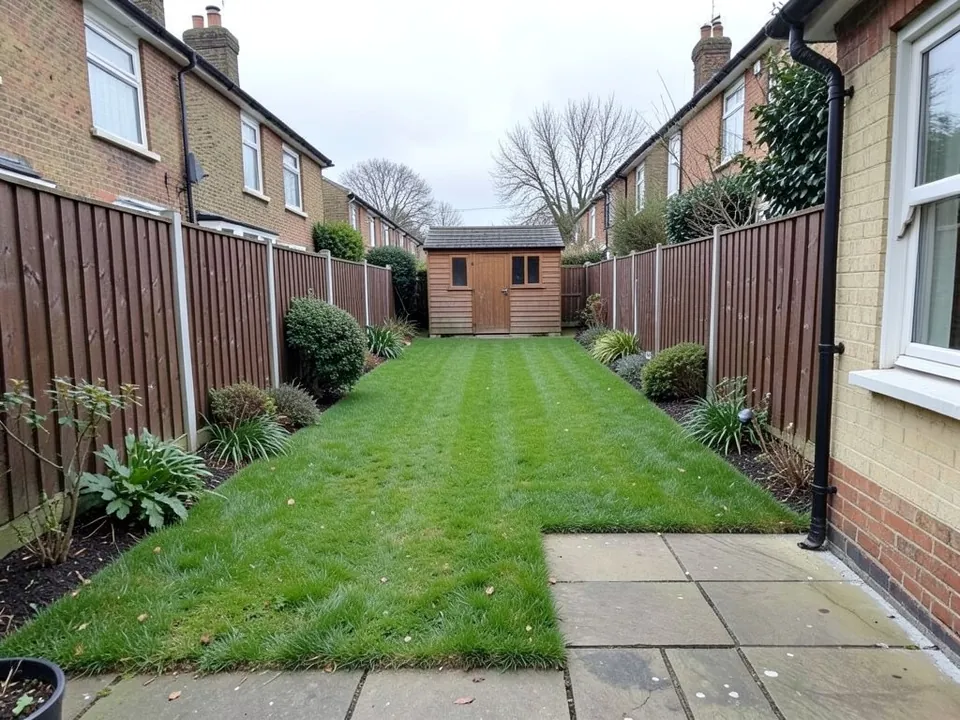
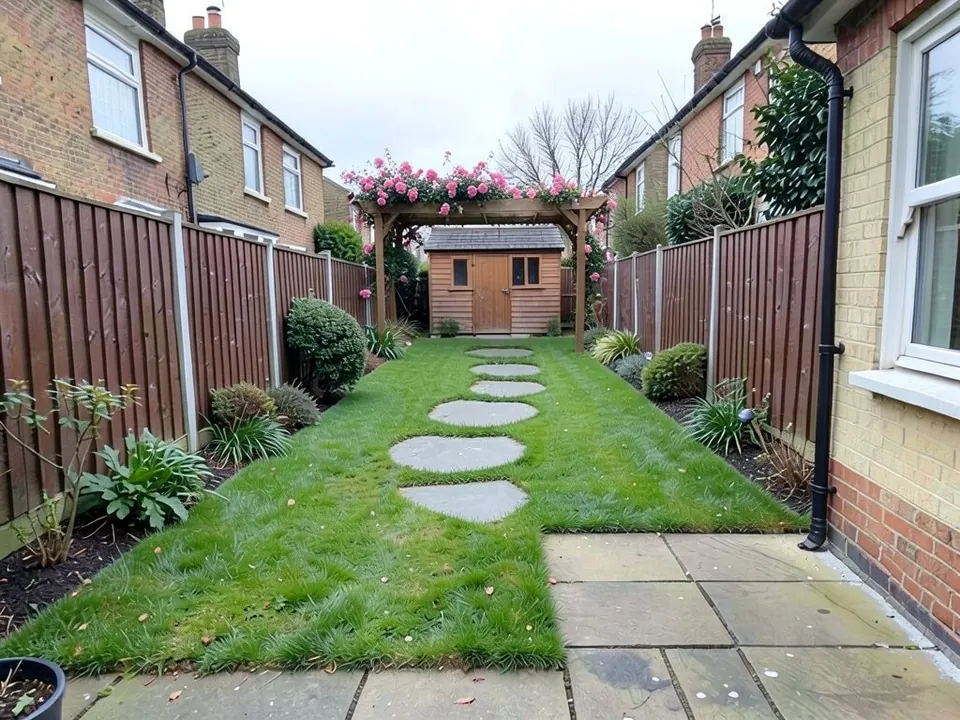
- Divide the lawn into zones: lay a curving path of large grey stepping stones through the lawn from the patio to the shed, add a wooden pergola with climbing pink roses across the garden halfway down so the path passes under it, and add deep planted borders of mixed perennials along both fences. Keep the patio, the shed, the house, the fences, the sky and the camera angle exactly the same.
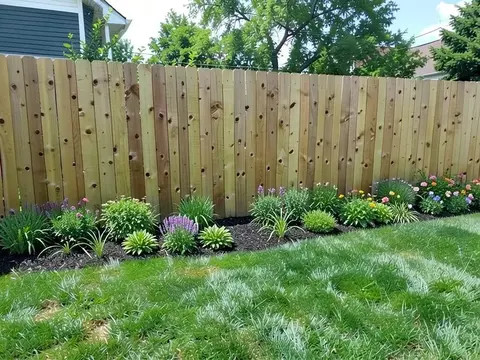
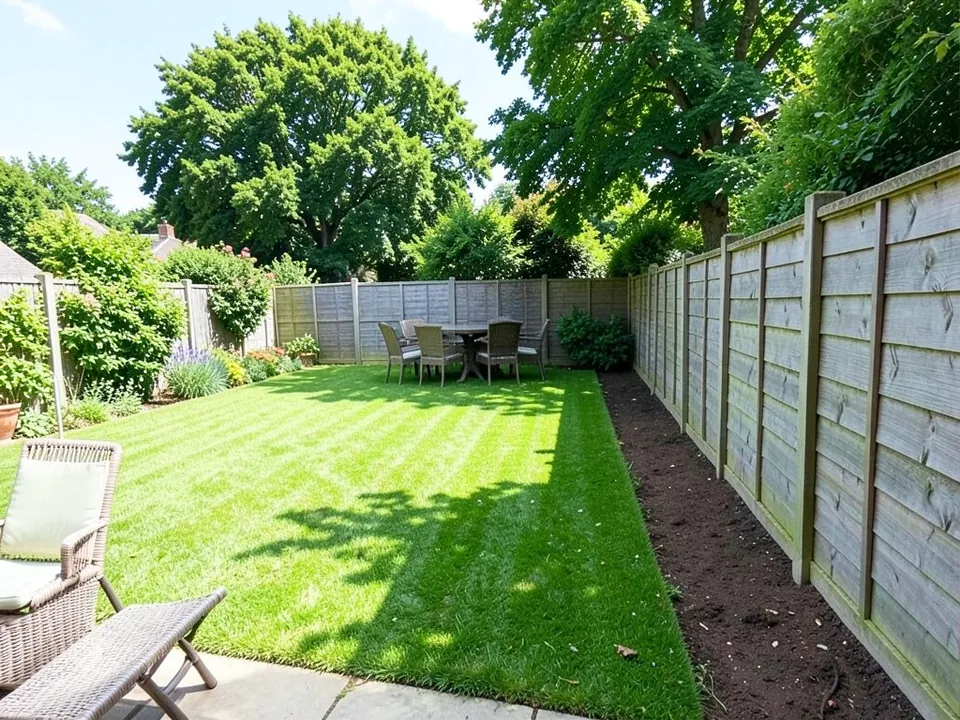
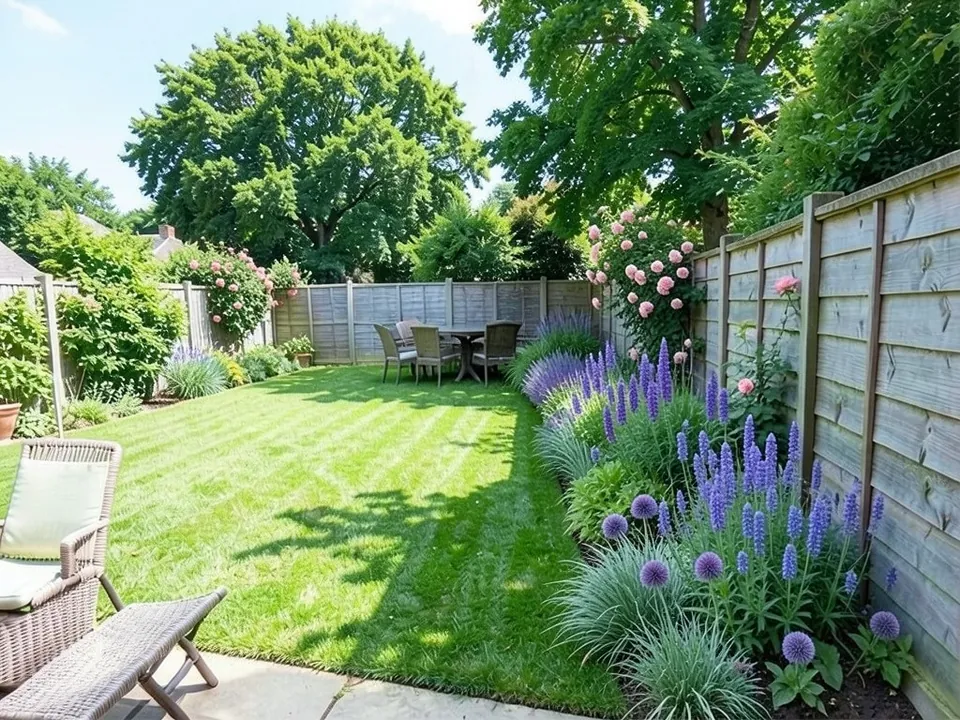
- Fill the narrow strip of bare brown soil along the right-hand wooden fence with a deep cottage garden border, widened about one metre into the lawn with a gently curved front edge, densely planted from the fence forwards: tall purple foxgloves and pink climbing roses at the back against the fence, then blue salvias, purple allium balls and lavender, with soft ornamental grasses at the front edge. The lawn on the left stays plain mown grass with no plants on it. Keep the patio and chairs, the fence, the trees, the sky and the camera angle exactly the same.
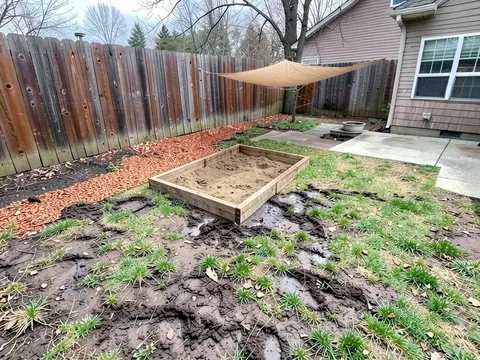
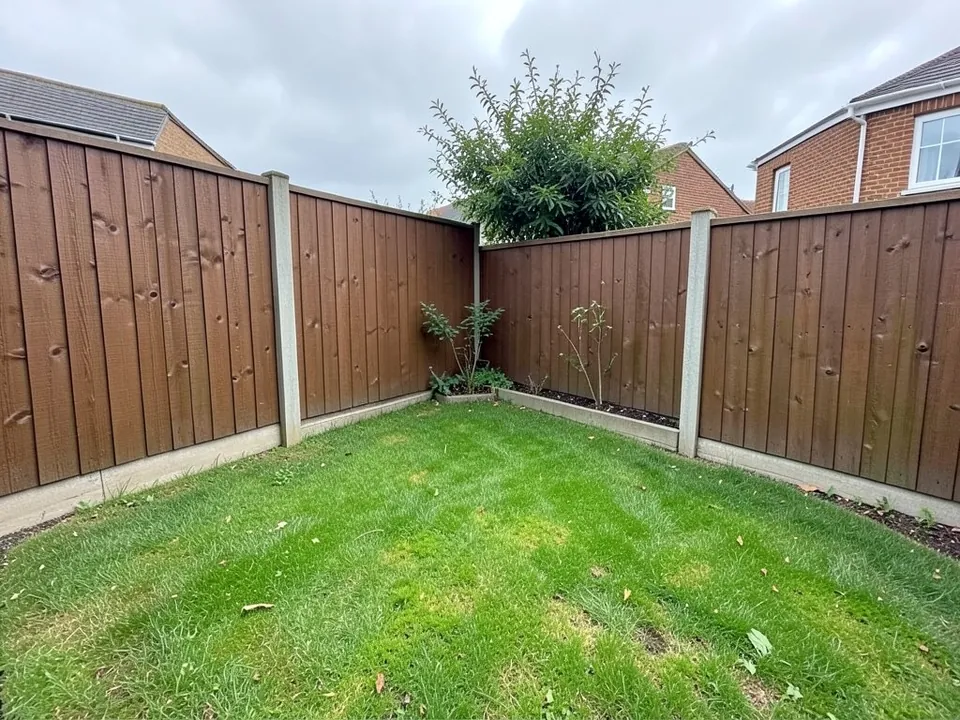
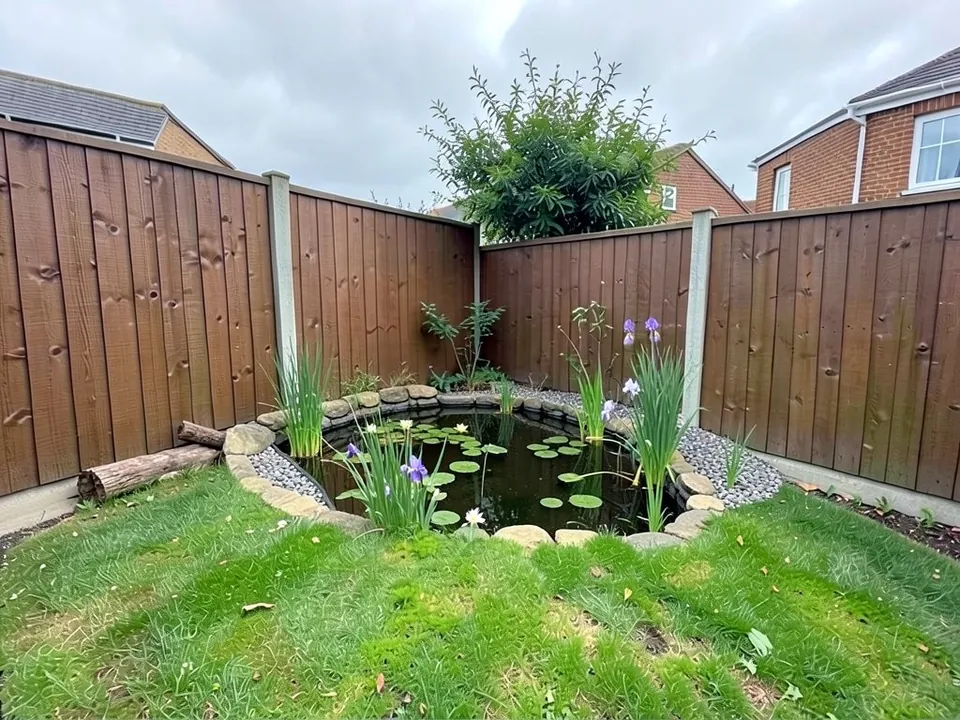
- In the corner of the lawn, dig a small irregular wildlife pond about 2 metres across with a natural stone edge on one side and a gently sloping pebble beach on the other, planted with reeds, irises and water lilies. Leave the lawn around the pond as long uncut grass with ox-eye daisies, buttercups and red clover, and add a small pile of logs by the fence. Keep the fences, the tree, the sky and the camera angle exactly the same.
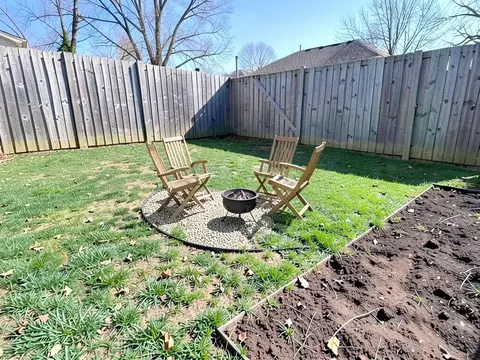
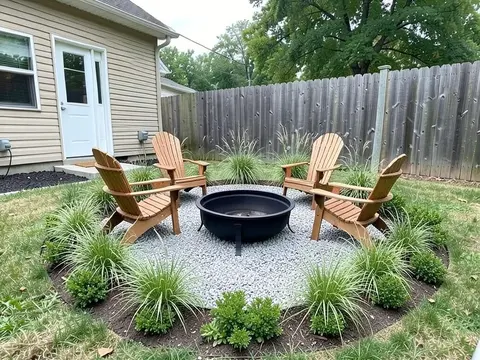
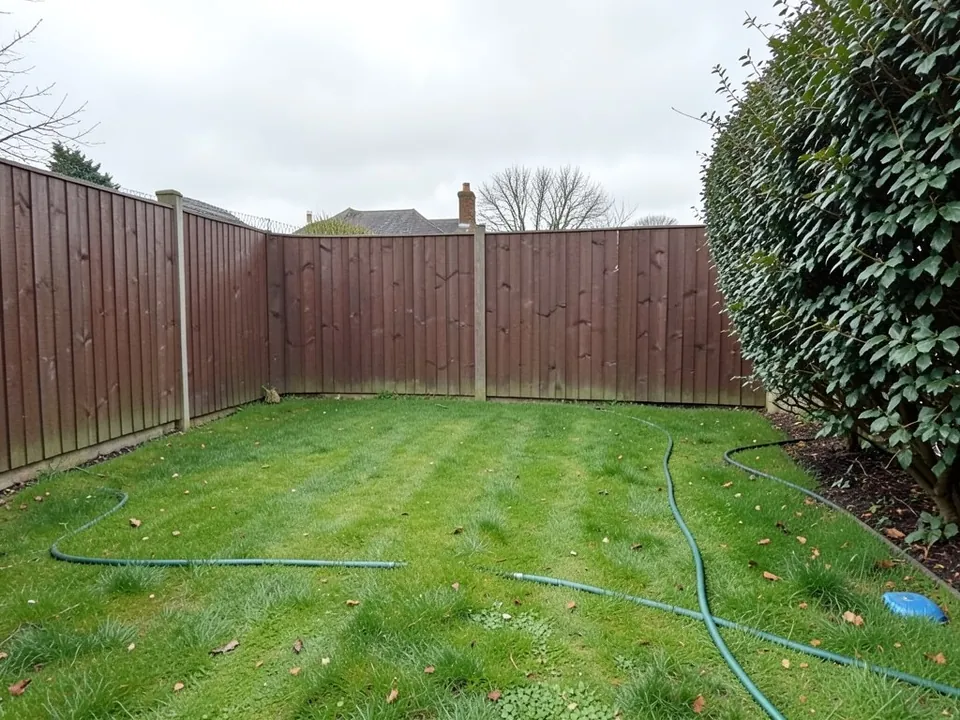
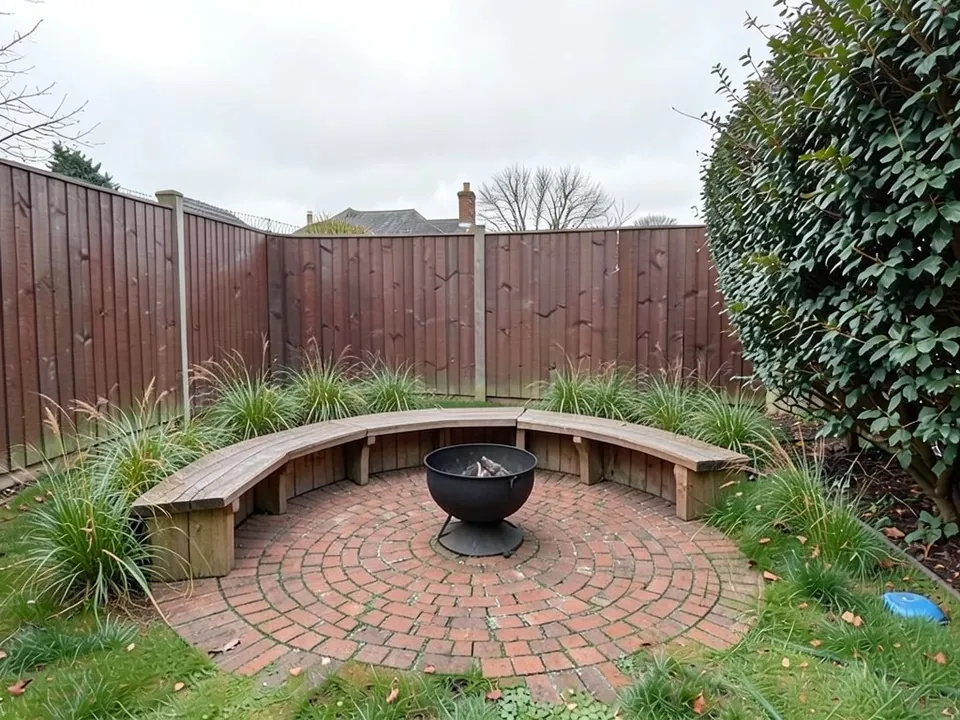
- Replace the end of the lawn with a round seating area paved in reclaimed red brick, with a curved built-in wooden bench following the circle, a black metal fire bowl in the middle, and tall ornamental grasses planted around the outside edge. Remove the hose. Keep the fence, the holly tree, the rest of the lawn, the sky and the camera angle exactly the same.
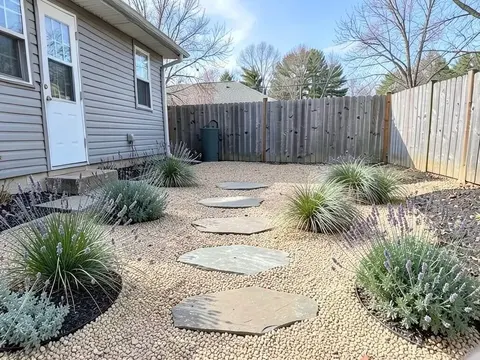
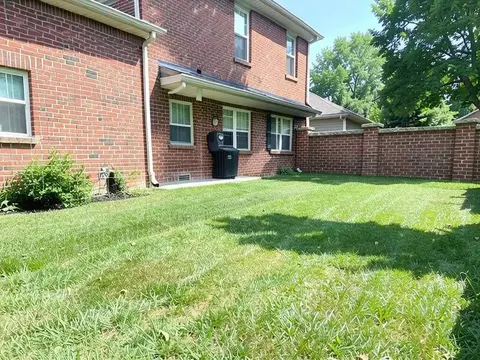
- Replace ONLY the tired lawn with a gravel garden of honey-coloured gravel, planted in loose drifts of lavender, tall purple verbena bonariensis, soft feathery ornamental grasses and grey-leaved plants, with a line of large flat stepping stones crossing it to the end wall. Keep the house, the patio, the wall and fence, the sky and the camera angle exactly the same.
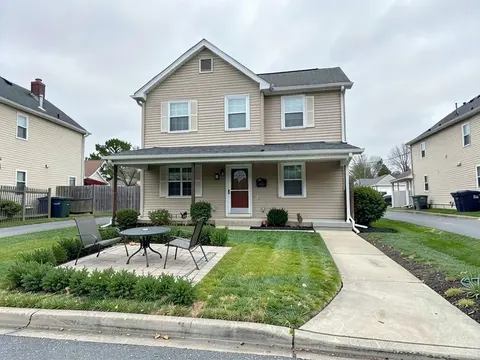
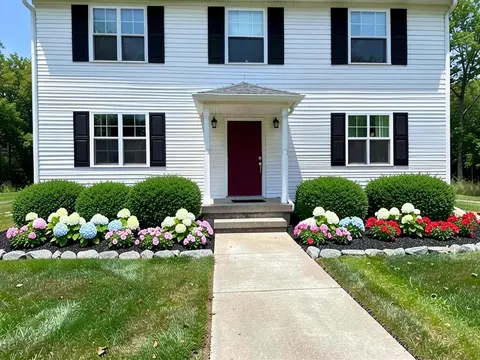
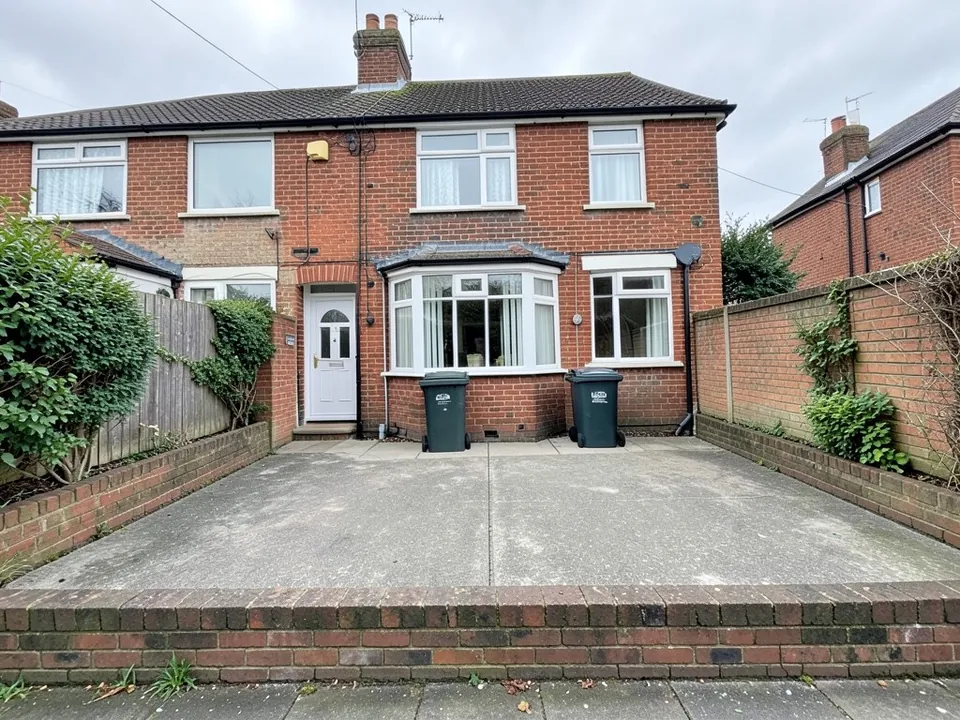
- Remove both wheelie bins from in front of the bay window and put them inside a low wooden bin store with two doors and a planted green roof, standing against the right-hand brick wall. Resurface the left half of the concrete as a parking space in fine golden gravel with a brick edge. On the right half, lay a straight red brick path from the pavement to the front door and plant the rest as a bed with a low clipped box hedge along the front wall, lavender, white hydrangeas and grasses. Keep the house, the bay window, the front door, the low front wall, the sky and the camera angle exactly the same.
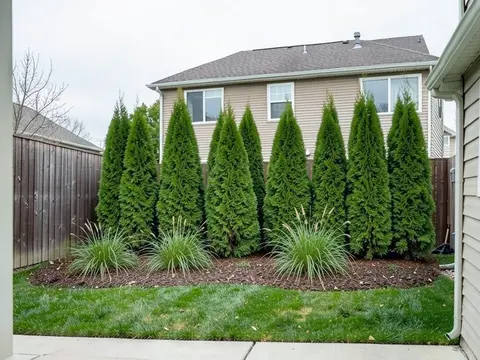
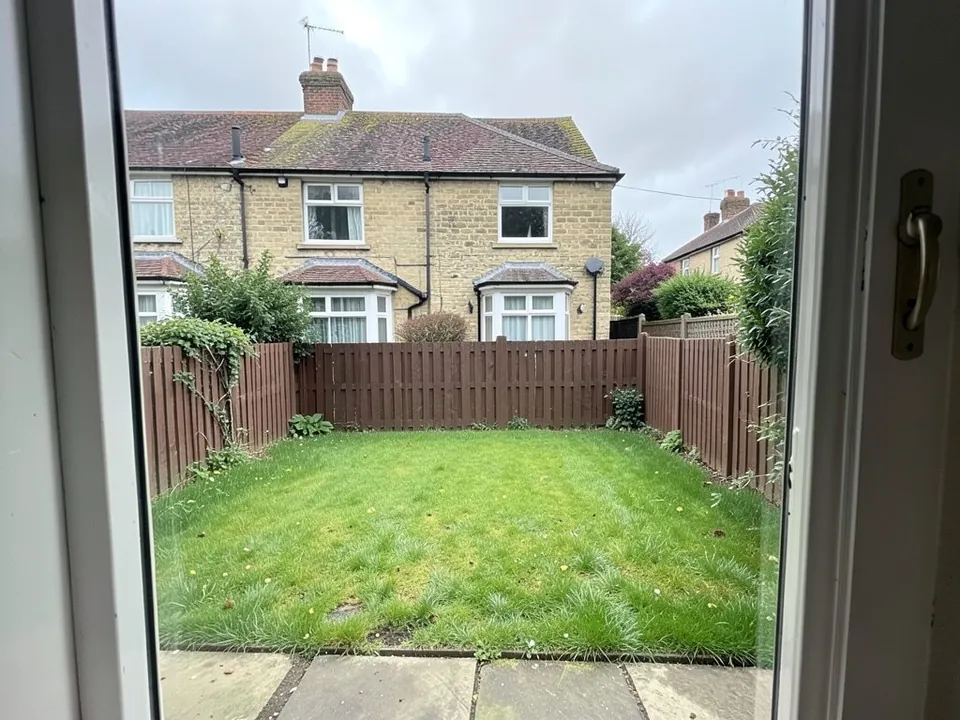
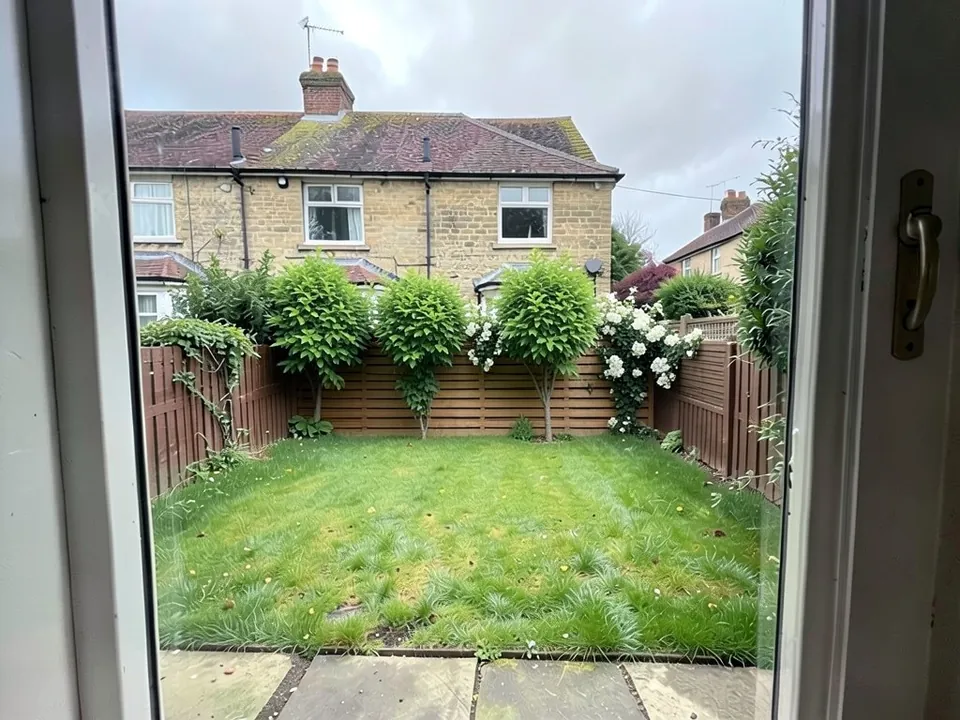
- Raise the end fence with a horizontal slatted wooden trellis panel on top, and plant a row of four pleached hornbeam trees just in front of the fence whose square clipped green canopies screen the neighbours' windows, with white climbing jasmine growing up the trellis. Keep the lawn, the side fences, the neighbouring houses, the sky and the camera angle exactly the same.
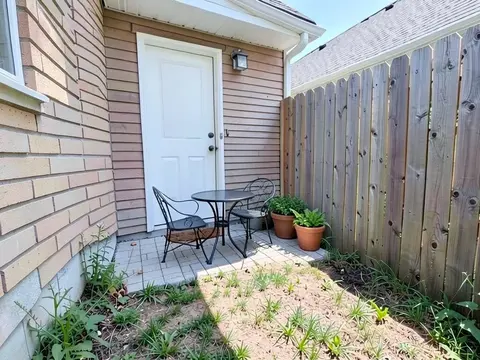
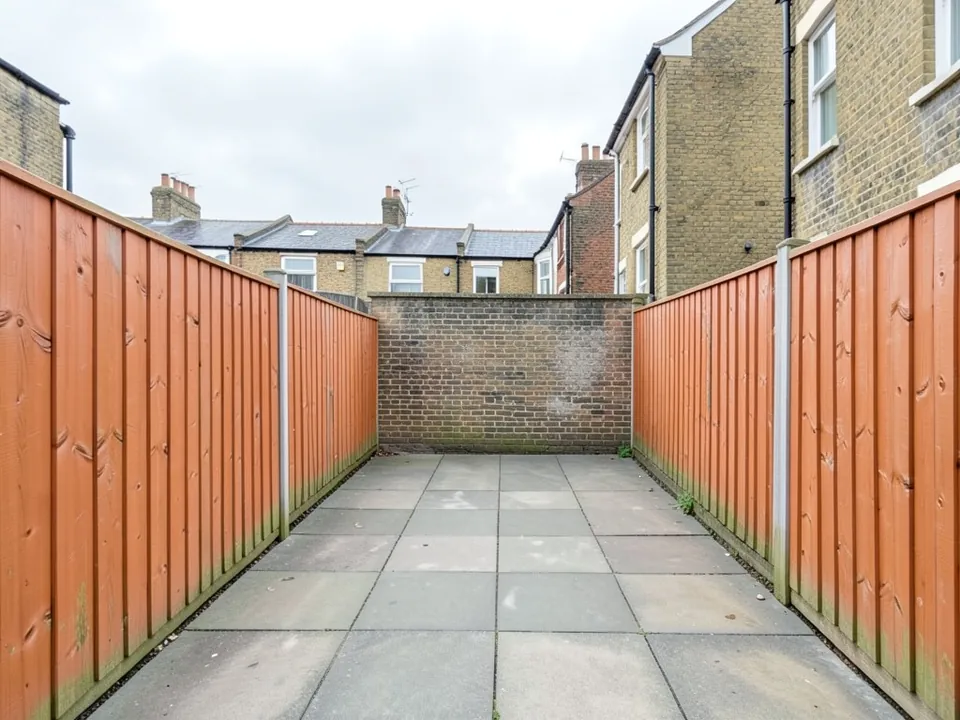
- Paint the wooden fence panels a deep sage green, and group terracotta pots of different sizes along the fences filled with herbs, a tomato plant on a cane, red geraniums, trailing white flowers and a small olive tree, with a pair of folding wooden chairs. Keep the concrete slabs, the brick wall, the sky and the camera angle exactly the same.