
How to use the mulch calculator
- Pick Feet / inches or Metres / cm. Switching converts the sizes you already typed.
- Pick the shape: Bed (length and width), Circle (diameter), Tree ring (how far across, and the gap you leave around the trunk) or Area if you already know the square feet or square metres. For a curved or L-shaped bed, split it into rectangles and circles, work out each one and add them up.
- Enter the depth, or tap a preset: 1 in (2.5 cm) to top up last year's mulch, 2 in (5 cm) for flower beds, 3 in (7.5 cm) for shrubs and tree rings, 4 in (10 cm) for paths.
- Choose your bag size. Most US bags hold 2 cu ft; 1.5 and 3 cu ft bags are common too. In metric, bags are sold in litres (50, 60, 75 or 100 L).
- Leave +10% extra on unless you have a reason to change it (see how much extra to order, below). Add a price per cubic yard (or cubic metre) and a price per bag to compare bulk with bags.
- Read the answer: cubic yards (or cubic metres) for a bulk delivery, and the number of bags for a trip to the garden centre.
The results are estimates for loose mulch. Bagged mulch is packed tight and fluffs up when you open it, and every mulch settles after a few rains, which is part of why the calculator adds 10%.
Mulch calculator formula: cubic yards and bags
In US units, with the depth in inches:
- Cubic yards = area (sq ft) × depth (in) ÷ 324
- Cubic feet = area (sq ft) × depth (in) ÷ 12
- Bags = cubic feet ÷ bag size (2 cu ft for most bags), rounded up
Example: a 10 × 10 ft bed at 3 in deep is 100 × 3 ÷ 324 = 0.93 yd³, or 25 ft³, which is 12.5 bags of 2 cu ft. With 10% extra: 1.02 yd³ (27.5 ft³), so 14 bags of 2 cu ft or 10 bags of 3 cu ft.
In metric, with the depth in centimetres:
- Cubic metres = area (m²) × depth (cm) ÷ 100
- Litres = cubic metres × 1,000; bags = litres ÷ bag size, rounded up
Example: a 3 × 3 m bed at 7.5 cm deep is 9 × 7.5 ÷ 100 = 0.68 m³. With 10% extra: 0.74 m³ (743 litres), so 15 bags of 50 litres.
For a circle, the area is 3.14 × radius² (half the diameter, squared). For a tree ring, take the area of the whole circle and subtract the small circle you leave bare around the trunk; the Tree ring shape in the calculator does that for you.
How deep should mulch be? Depth by area
Depth changes the answer more than anything else: going from 2 to 3 inches needs half as much mulch again. These are the depths the calculator guides we read recommend.
| Area | Depth | Notes |
|---|---|---|
| Top-up of existing mulch | 1–2 in (2.5–5 cm) | Top up when the old layer is thinner than about 2 in |
| Flower beds | 2–3 in (5–7.5 cm) | Fine mulch at the low end, coarse bark at the high end |
| Shrub and foundation beds | 2–3 in (5–7.5 cm) | Keep it a few inches back from the stems |
| Tree rings | 2–4 in (5–10 cm) | Flat, like a doughnut, 3–6 in (8–15 cm) back from the trunk; never piled up against the bark |
| Vegetable beds | 1–2 in (2.5–5 cm) settled | Straw goes down 4–6 in loose and settles to about 2 in |
| Paths and play areas | 3–4 in (7.5–10 cm) | Coarse wood chips; they pack down under foot traffic |
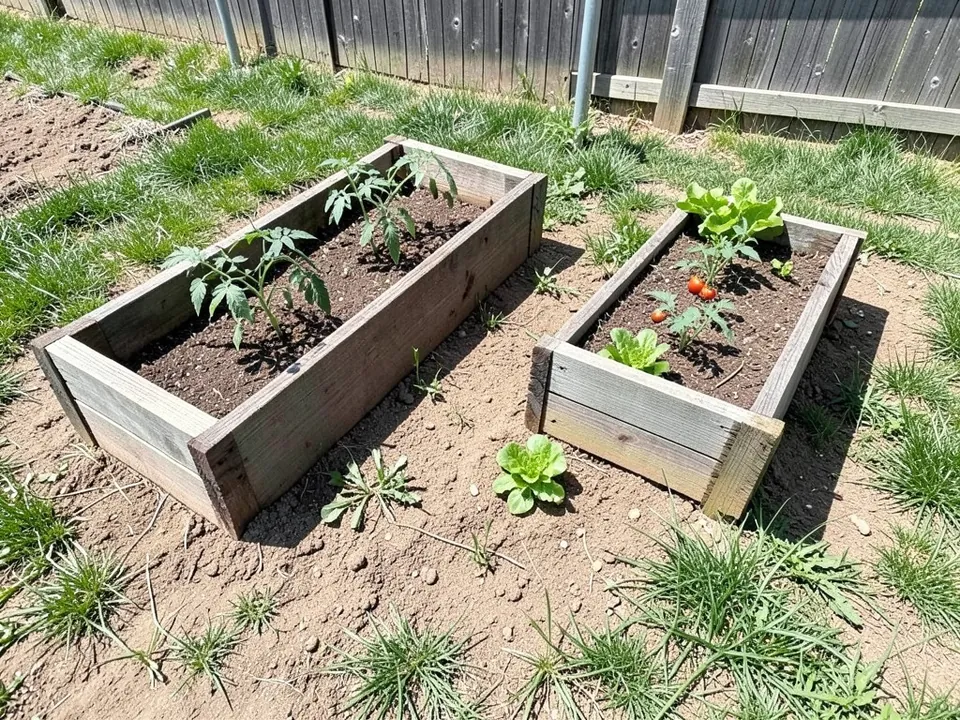
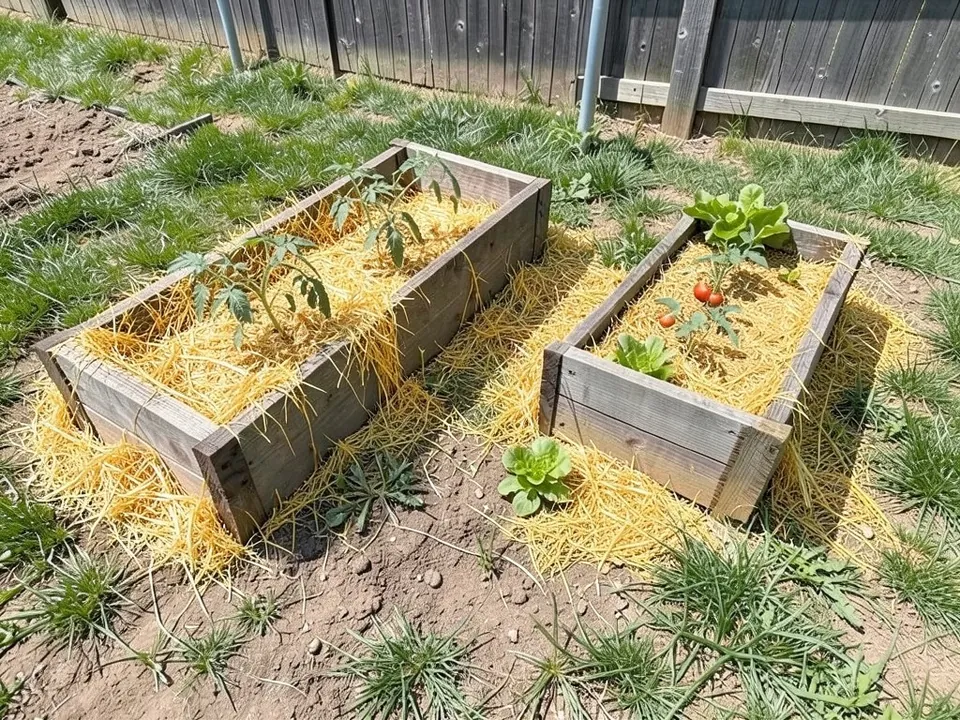
Three of these as pictures, with the sums for each. The left image of each pair was generated by AI as a stand-in for an ordinary yard, and the right image is that same picture edited by AI from a written instruction. They are not photos of real homes; we made them with our own AI model, which is not one of the models you can pick in the landscape tool. All three were run a second time, as their captions say.
1. Tree ring: shredded hardwood at 3 inches
An 8 ft ring with a 1 ft gap at the trunk is 49.5 sq ft. At 3 in deep that is 12.4 ft³ = 0.46 yd³; with 10% extra, 13.6 ft³ = 0.5 yd³, so 7 bags of 2 cu ft or 5 bags of 3 cu ft. Metric: a 2.4 m ring with a 30 cm gap at 7.5 cm = 0.37 m³ with the extra, or 8 bags of 50 L.
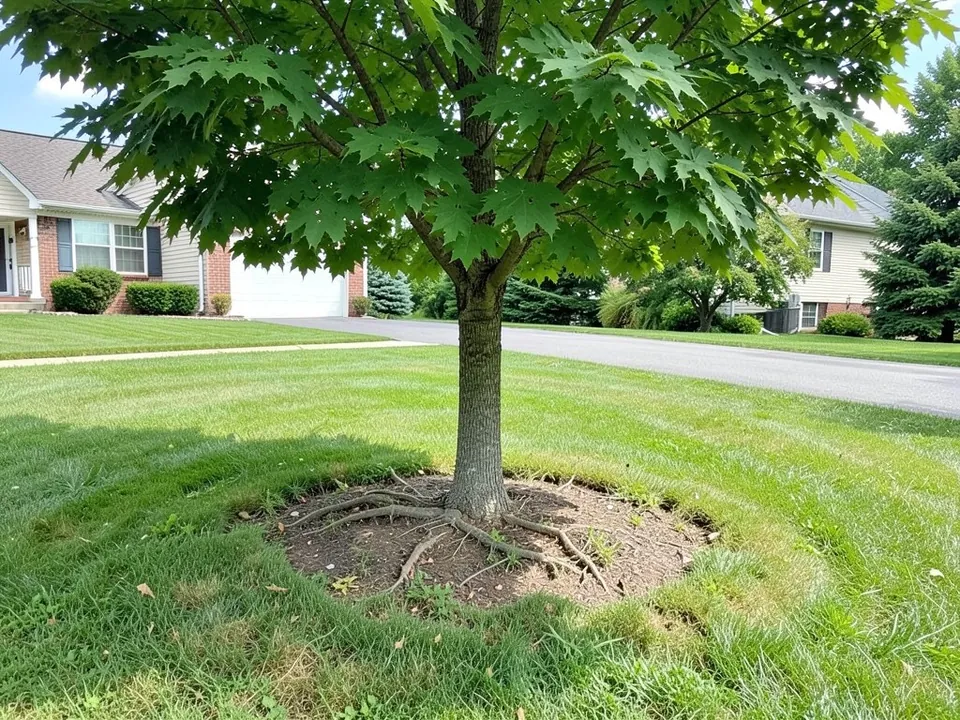
Before
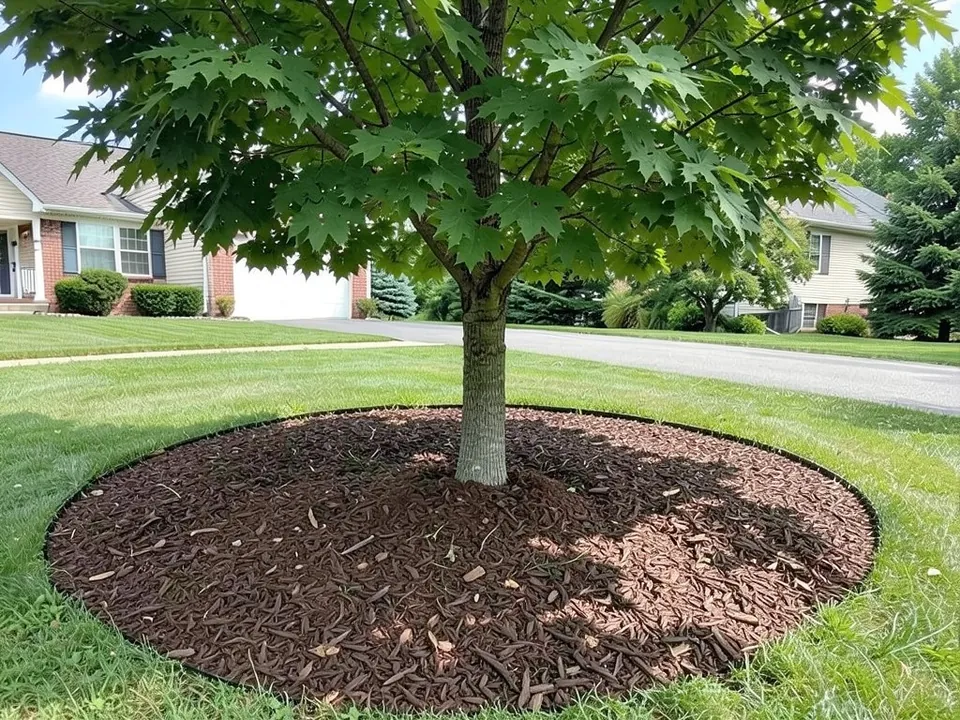
After
2. Garden path: wood chips at 4 inches
A 40 ft path, 3 ft wide, is 120 sq ft. At 4 in deep that is 40 ft³ = 1.48 yd³; with 10% extra, 1.63 yd³ or 22 bags of 2 cu ft. At this size a bulk load usually costs less than bags. Metric: 12 × 0.9 m at 10 cm = 1.19 m³ with the extra.
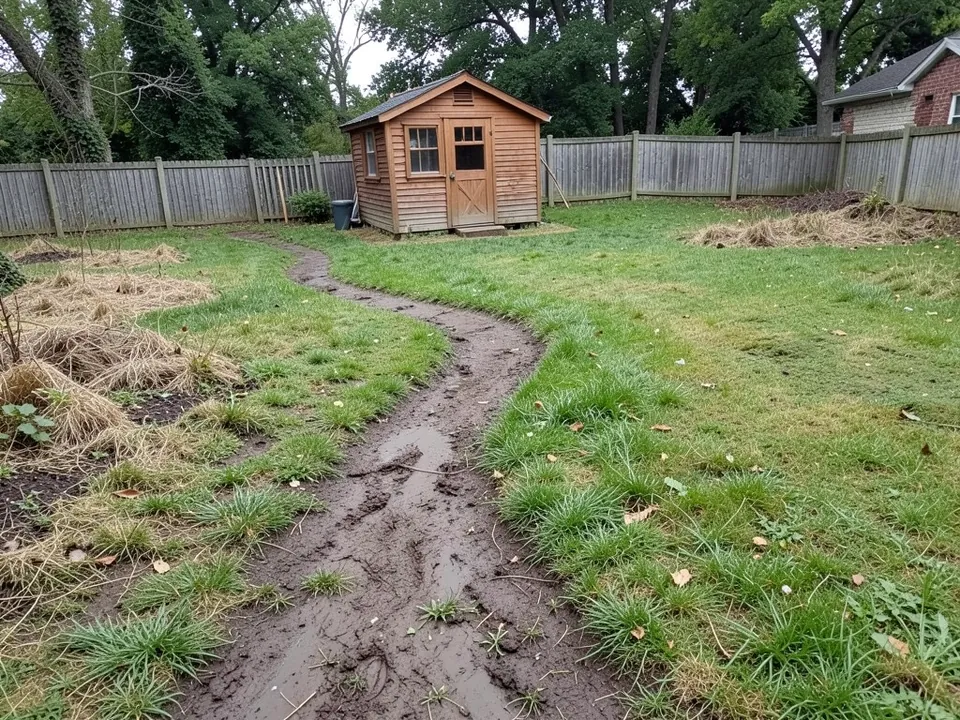
Before
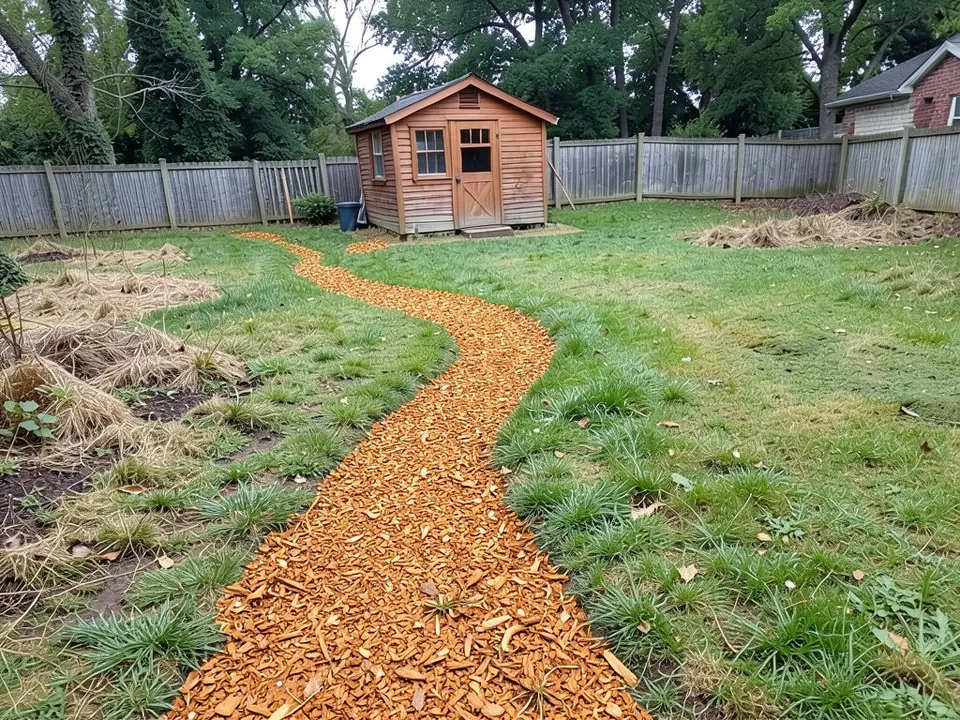
After
3. Vegetable beds: straw laid at 4 inches
Two raised beds of 8 × 4 ft are 64 sq ft. Straw goes down loose at about 4 in and settles to about 2 in, so work it out at 4 in: 21.3 ft³ = 0.79 yd³, or 0.87 yd³ with 10% extra. Metric: two 2.4 × 1.2 m beds at 10 cm = 0.63 m³ with the extra.
Before
After
Mulch colours: the same bed in black, brown, red, cedar and pine straw
The amount of mulch is the same whatever the colour; the look is not. Here is one foundation bed, a 30 × 4 ft strip, which needs 1.22 yd³ at 3 inches with 10% extra (17 bags of 2 cu ft). The first picture was generated by AI as the bare bed, and each of the others is that same picture edited by AI to add one mulch. A few weeds from the before still poke through in every version, which real weeds would also do without pulling them first.
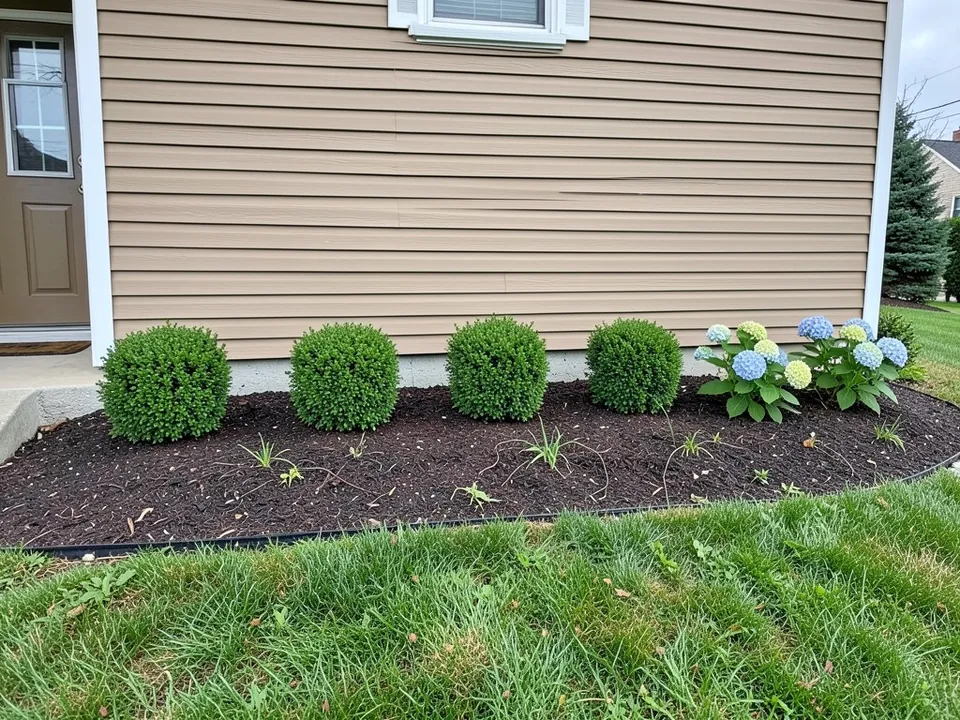
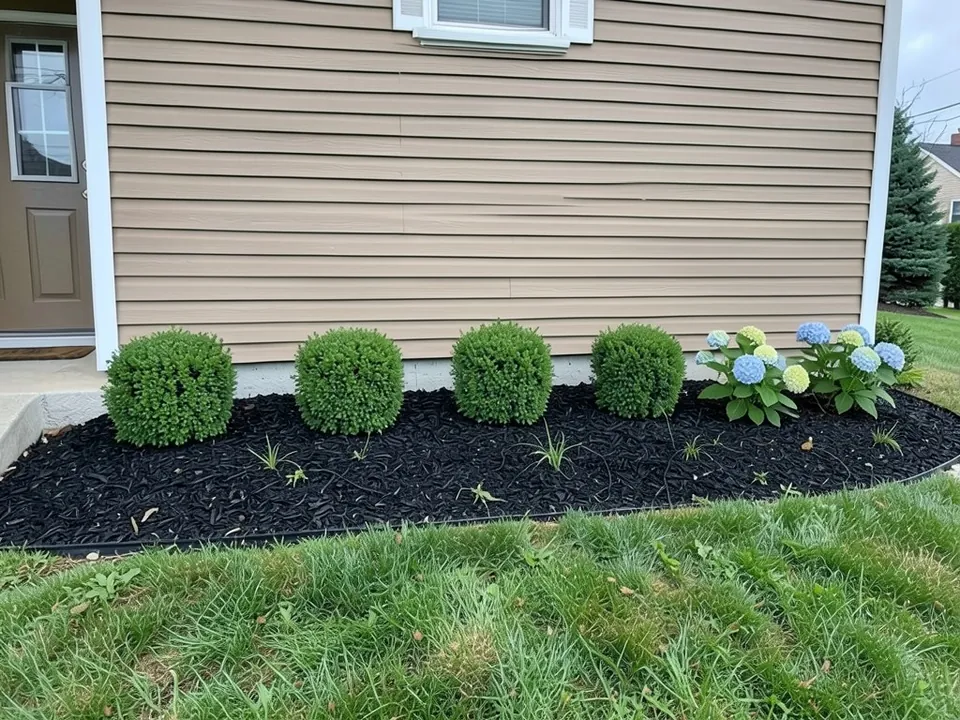
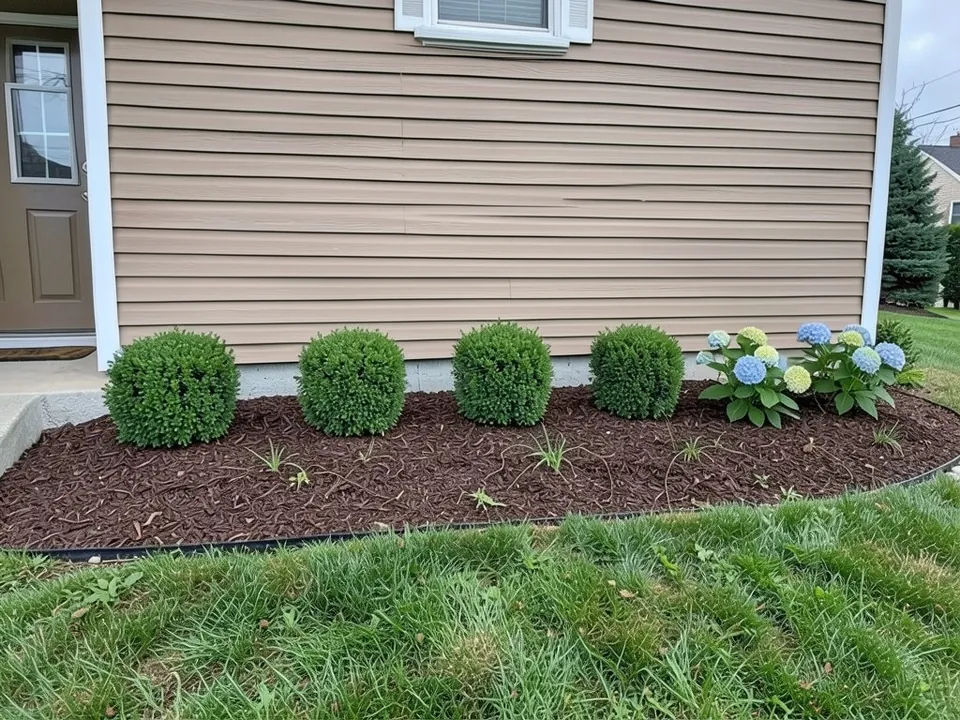
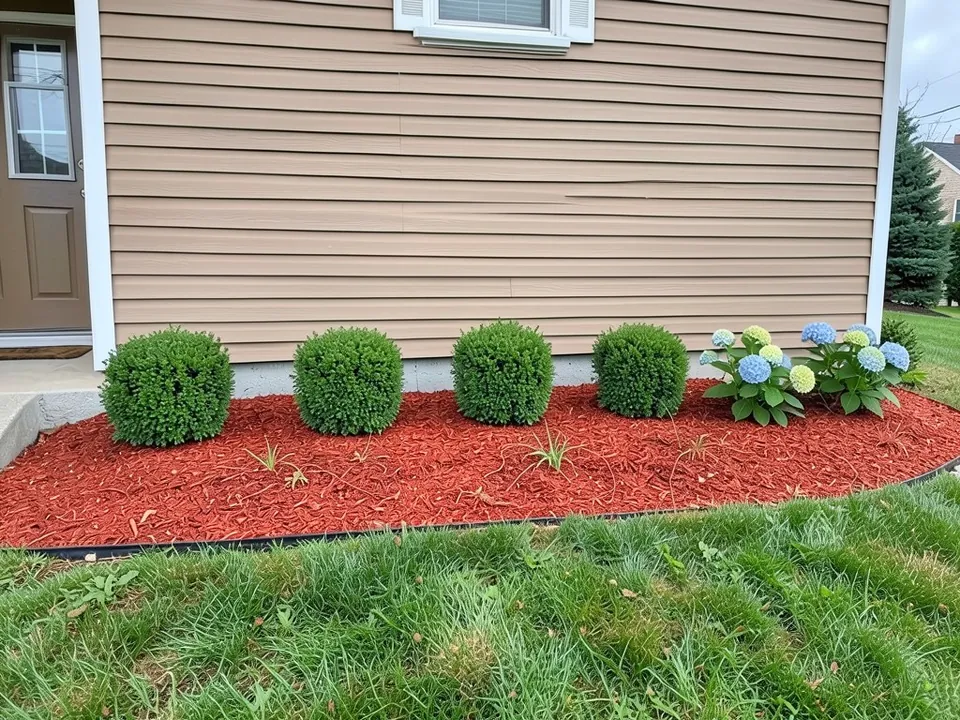
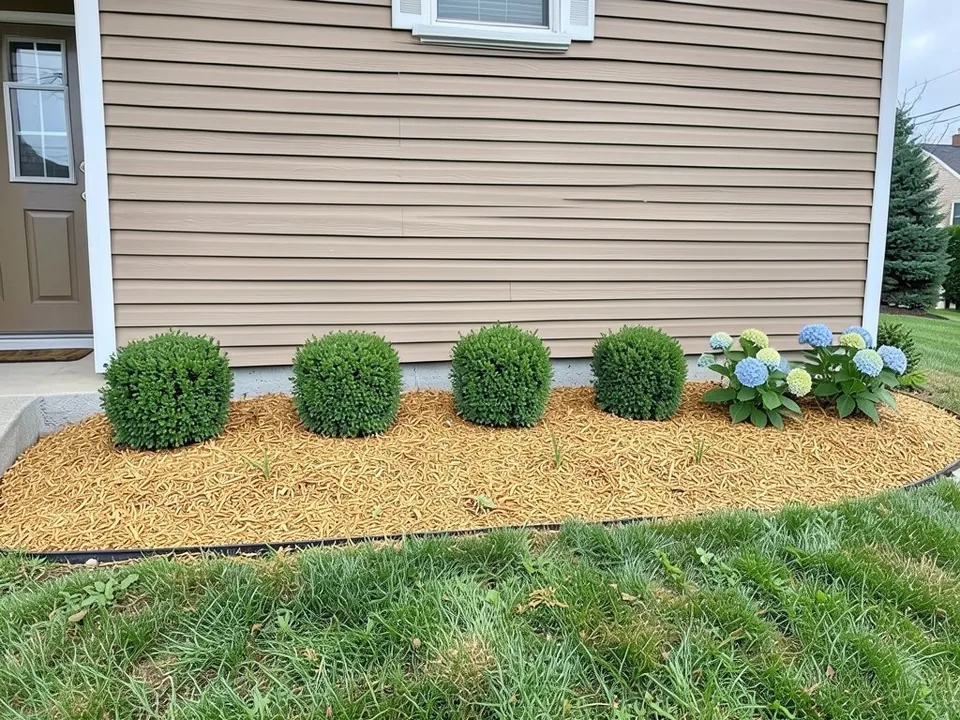
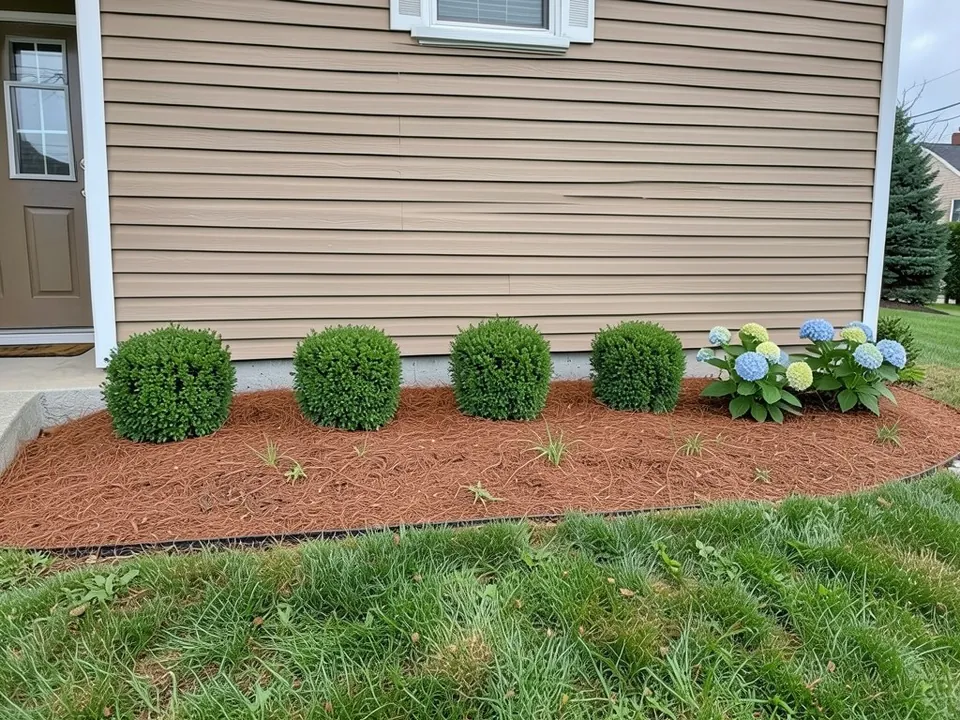
To pick a colour for your own house, upload a photo of your beds and try two or three of them side by side.
See mulch on my yard photoHow much does a yard or a bag of mulch cover?
If you already have a load or a pallet of bags in mind, work backwards. Coverage is the same for every mulch, because it is a volume.
| Depth | 1 cubic yard | 1 bag of 2 cu ft | 1 bag of 3 cu ft |
|---|---|---|---|
| 1 in | 324 sq ft | 24 sq ft | 36 sq ft |
| 2 in | 162 sq ft | 12 sq ft | 18 sq ft |
| 3 in | 108 sq ft | 8 sq ft | 12 sq ft |
| 4 in | 81 sq ft | 6 sq ft | 9 sq ft |
| Depth | 1 m³ | 1 bag of 50 L | 1 bag of 75 L |
|---|---|---|---|
| 2.5 cm | 40 m² | 2 m² | 3 m² |
| 5 cm | 20 m² | 1 m² | 1.5 m² |
| 7.5 cm | 13.3 m² | 0.67 m² | 1 m² |
| 10 cm | 10 m² | 0.5 m² | 0.75 m² |
| Bag size | Bags |
|---|---|
| 1.5 cu ft | 18 |
| 2 cu ft | 13.5 (buy 14) |
| 3 cu ft | 9 |
| 50 L (per m³) | 20 |
| 75 L (per m³) | 13.3 (buy 14) |
How much extra mulch to order
The calculator adds 10% by default. Beds are never perfectly measured, curved edges take more than you think, and fresh mulch settles after the first rains. Running short in the middle of a bed means a second trip or a second delivery charge.
- +5%: a simple rectangle you measured carefully.
- +10%: most beds, tree rings and paths.
- +15–20%: curvy beds, slopes, or shredded bark, which mats and settles more than chips.
Bagged vs bulk mulch, and what mulch costs
Garden centres sell mulch in bags, mostly 2 cu ft in the US (1.5 and 3 cu ft too) and 50–100 litres in the UK and Europe. Landscape supply yards sell bulk mulch by the cubic yard (or cubic metre) and deliver it by truck.
- Bagged mulch: about $3–$8 per 2 cu ft bag, or roughly $44–$112 per cubic yard's worth of bags.
- Bulk mulch: about $30–$135 per cubic yard before delivery, depending on the type; dyed and cedar cost more than plain hardwood.
- Delivery: often free from about 5 cubic yards.
LawnStarter's example: 5 cubic yards cost about $210 in bulk and about $228 as 68 bags. The gap grows with the job, and bulk saves dozens of plastic bags. These are US ranges from the guides below; enter your own supplier's prices in the calculator.
See mulch on a photo of your own yard
Before you buy a truckload, check the colour against your house. Upload a photo of your beds to our AI landscape tool, choose Custom and describe the mulch: the colour, where it goes and what must stay the same. For bed ideas, see our flower bed ideas and foundation planting ideas; for stone instead of mulch, use the gravel calculator.
See mulch on my yard photo1 free render with a free account (sign in with Google or an email code). More renders come with a paid plan (see pricing).
Mulch calculator questions
How do I calculate how much mulch I need?
Multiply the area in square feet by the depth in inches and divide by 324 to get cubic yards (324 = 27 cubic feet in a yard × 12 inches in a foot). For bags, multiply the area by the depth in inches, divide by 12 to get cubic feet, then divide by the bag size. In metric, multiply the area in m² by the depth in cm and divide by 100 to get cubic metres; × 1,000 gives litres. Add about 10%.
How much mulch do I need for a 10 × 10 area?
At 3 inches deep: 100 sq ft × 3 ÷ 324 = 0.93 cubic yards, or 25 cubic feet, which is 13 bags of 2 cu ft. With 10% extra, about 1 cubic yard or 14 bags. At 2 inches, about two thirds of that: 0.62 yd³ or 10 bags with the extra.
How many bags of mulch are in a yard?
13.5 bags of 2 cu ft (27 ÷ 2), so buy 14. It is 9 bags of 3 cu ft and 18 bags of 1.5 cu ft. In metric, a cubic metre is 20 bags of 50 litres or about 13.3 bags of 75 litres.
How much does a yard of mulch cover?
324 sq ft at 1 inch, 162 sq ft at 2 inches, 108 sq ft at 3 inches and 81 sq ft at 4 inches. A 2 cu ft bag covers 12 sq ft at 2 inches and 8 sq ft at 3 inches. A cubic metre covers 20 m² at 5 cm.
How deep should mulch be?
About 2–3 inches (5–7.5 cm) for flower and shrub beds, 2–4 inches for tree rings, 3–4 inches (7.5–10 cm) for paths and 1–2 inches to top up an old layer. Fine mulch can be thinner and coarse bark thicker. Deeper than about 4 inches can starve roots of air and water, and mulch piled against a trunk or stems invites rot.
Is it cheaper to buy mulch in bags or in bulk?
Bulk is usually cheaper per cubic yard once you need more than one or two yards, even with the delivery charge, and many suppliers deliver free from about 5 cubic yards. Bags make sense for one or two small beds, for a car with no trailer, or where bulk delivery is not available.
How much does a bag or a yard of mulch weigh?
A 2 cu ft bag of wood mulch weighs about 20 lb and a 3 cu ft bag about 30 lb. A cubic yard weighs roughly 400–800 lb, depending mostly on how wet it is. That is why mulch is sold by volume, not weight; this calculator works in volume only.
Can I see a mulch colour on my own yard before I buy?
Yes. Upload a photo of your beds to the landscape tool, choose Custom and describe the mulch (black, dark brown, red, natural cedar or pine straw) and what must stay the same. It is a picture for planning, not a measured drawing. You need a free account: 1 free render with a free account, and free renders carry a watermark.
Sources for the depths, coverage and prices
Read on 11 November 2026.
- CalculatorSoup, Mulch calculator: shapes, bag sizes, depth by mulch and area, coverage and extra
- LawnStarter, Mulch calculator: depths, trunk clearances, straw, tree-ring bags and prices
- Inch Calculator, Mulch calculator: bags per yard, coverage and weights
- The Old Farmer's Almanac, Mulch calculator: depth by use and 2 cu ft bags
- Savvy Gardening, Mulch calculator: the ÷324 formula, bags vs bulk
- Omni Calculator, Mulch calculator: standard bag size and weight