Small Garden Ideas: Make a Tiny Garden Feel Bigger and Look Finished

A small garden has two problems at once: little floor space and a lot of boundary. Fences, walls and the back of the house are all you see, so the best small garden ideas do three things: break up the straight lines, put plants on the walls instead of the ground, and keep one clear place to sit.

More renders come with a paid plan (see pricing).

Upload a photo of your garden, say what you want (a gravel path, raised beds, climbers on the fence, a bistro set) and our AI returns the same view with the change drawn in. Below are six before and after examples on typical small plots, with the exact instructions and an honest note on what the AI got wrong in each.

Small garden layout ideas that make the space feel bigger

Layout matters more than plants in a small garden. These five moves work for most plots, and the examples below show each one on a typical shape.

  • Bend the path: A straight path or lawn shows the whole length at once. A path that curves, or steps that shift to one side, hides part of the garden and makes it feel longer.
  • Split it into rooms: A trellis screen, a low hedge or a change of surface (patio, lawn, gravel) divides a long garden into two or three small areas, so you never see all of it from one spot.
  • Plant the edges: A planted border, or a raised bed on each side, softens the fence and gives you something to look at. The RHS notes that raised beds and borders give quick impact, even on poor soil, and that small raised beds are easier to keep weed-free.
  • Go up: Climbers on a trellis, wall pots and tiered shelves put plants on the boundary, so the floor is free for a table. The RHS describes climbers as a lush backdrop for a small plot.
  • Keep one place to sit: One patio or bench, even a small one, makes a tiny garden look finished. A mirror on a wall can brighten a dark courtyard, but it also shows the clutter, so keep the view in it tidy.

Small garden ideas by garden shape

Garden shapeWhat tends to workWhat to watch
Long and narrowA path that bends, borders that widen and narrow, a screen or a change of level that splits it into two or three areasA straight lawn down the middle makes the garden look like a corridor
Small and squareRaised beds or borders on the edges, one defined patio, one focal point such as a tree in a potA lawn too small to use; paving or gravel can serve you better
Paved courtyardClimbers and wall planters, large pots, a mirror, a bench built along one wallPots dry out fast on paving; large ones hold water longer
Small front gardenGravel or low planting, clipped evergreens, a clear path to the doorKeep the path and the door area open and easy to read
Mostly fence and wallTrellis and climbers, tiered shelves, hanging pots, a narrow raised bed at the baseCheck who owns the fence before you fix anything to it

The right idea depends on the shape you are working with. The table sets out what usually works and the main thing to watch for each type.

Small garden ideas before and after

In each pair, the left image was generated by AI as a stand-in for an ordinary small garden, and the right image is that same picture edited by AI from a written instruction. The exact instructions are listed lower on this page. None of them are photos of real customer homes.

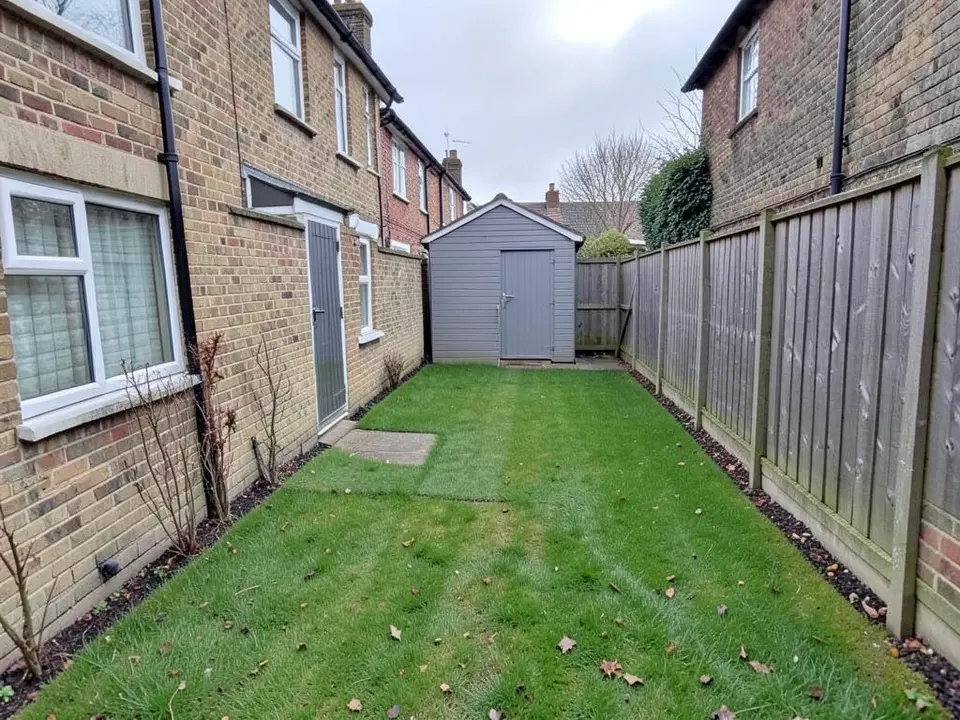
AI-generated example: a narrow rear garden of a brick terraced house, a plain strip of lawn running back to a small grey shed, a wooden fence on the right and the house wall on the left

Before

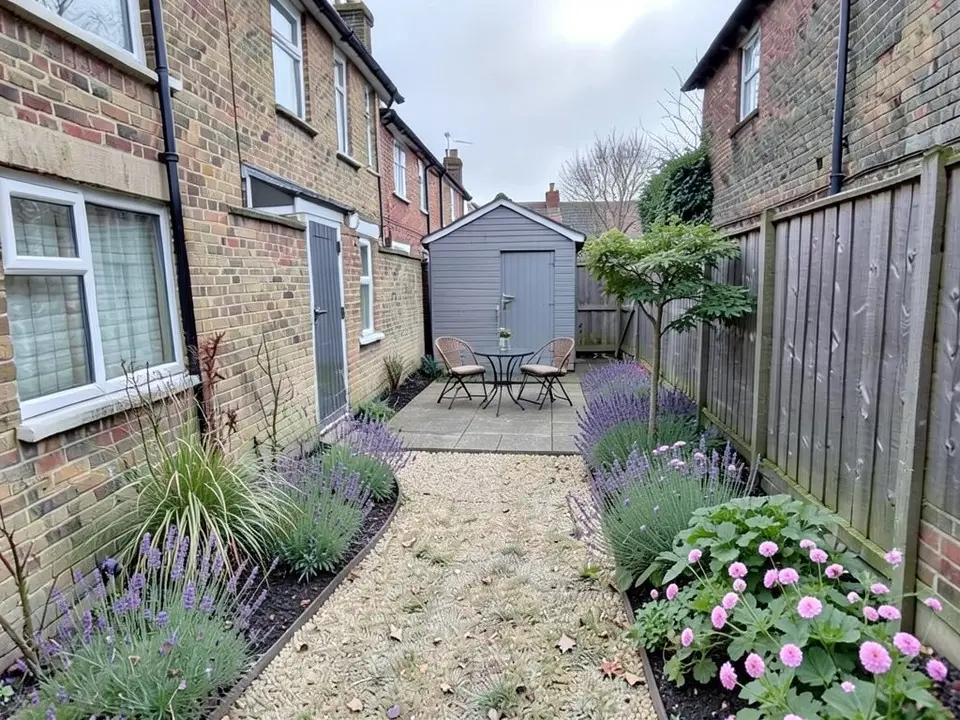
AI-edited version of the same image: the lawn replaced by a pale gravel path that bends slightly, deep borders of lavender, grasses and pink flowers along both sides, a small tree by the right fence and a bistro table with two chairs on a patio in front of the shed

After

A narrow terraced garden (first instruction below). The before image is an AI-drawn stand-in for an ordinary narrow garden, not a customer photo. What followed the instruction: the lawn is gone, a gravel path bends through the middle, both sides have planted borders with lavender and grasses, there is a small tree and a bistro set, and the shed and fence stayed. What did not: we asked for the patio at the house end and the AI put it at the shed end, and the path bends only a little. The bare stems along the house wall are unchanged.
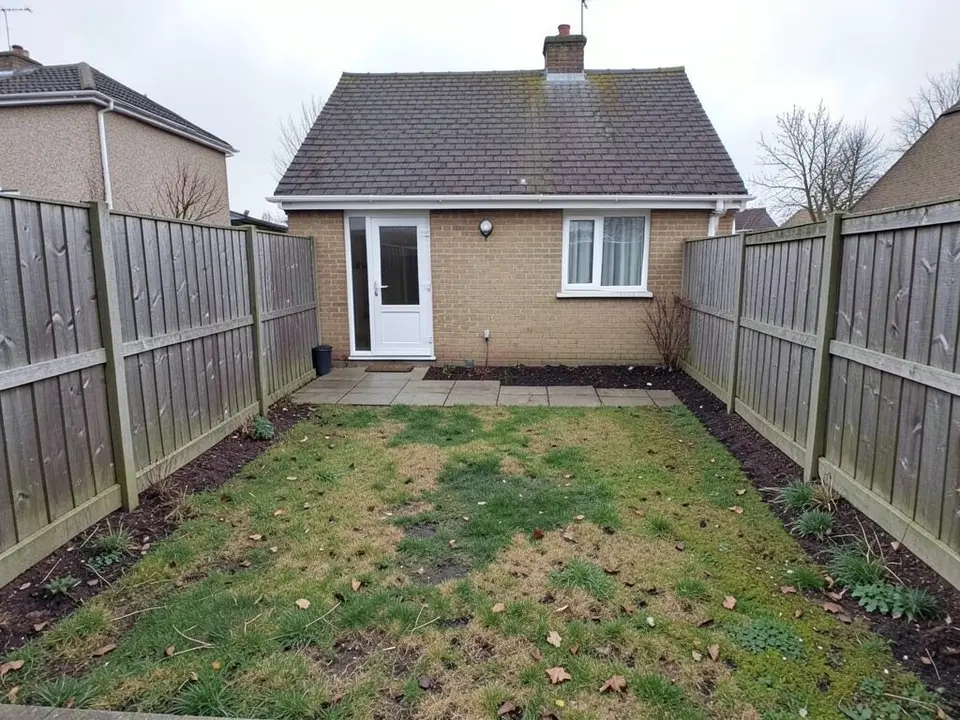
AI-generated example: a small square back garden behind a small yellow brick house, a patchy lawn in the middle, a few paving slabs by the back door and a plain timber fence on both sides

Before

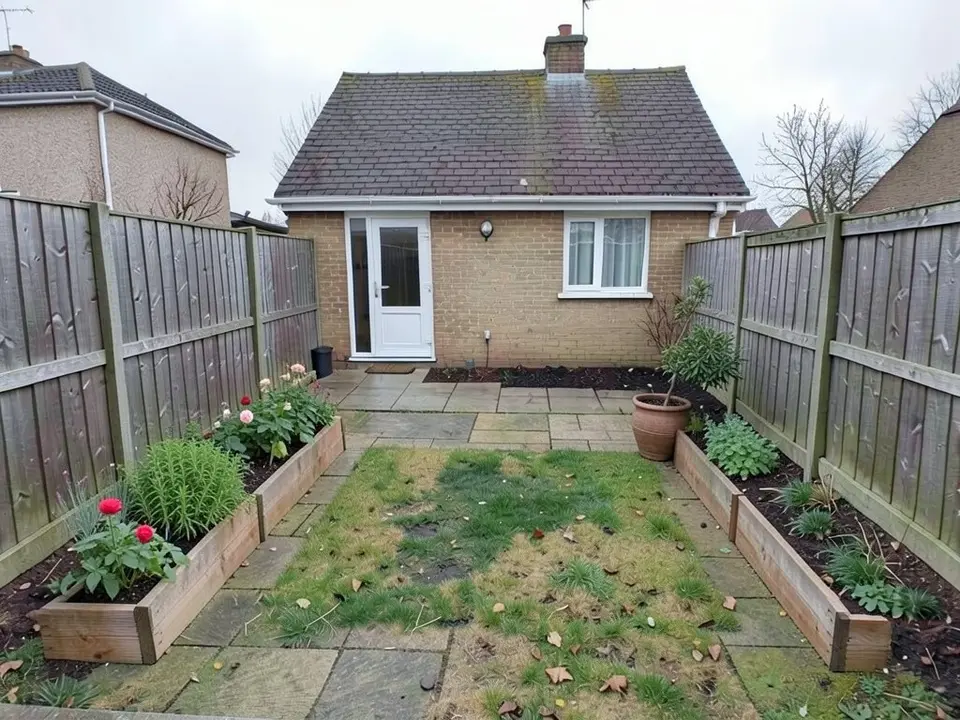
AI-edited version of the same image: two long raised timber beds with roses, herbs and green plants along the fences, wide paving slabs laid around the lawn and a tall pot with a small tree beside the back door; the patchy lawn is still in the middle

After

A small square garden (second instruction below). The before image is an AI-drawn stand-in for a tired back garden, not a customer photo. What followed the instruction: raised timber beds now run along both fences with roses and herbs, paving slabs surround the middle, and a tall pot with a small tree stands by the door. What did not: we asked it to replace the patchy lawn and it kept the patchy lawn as it was, so the patio is a paved edge, not a new seating area.
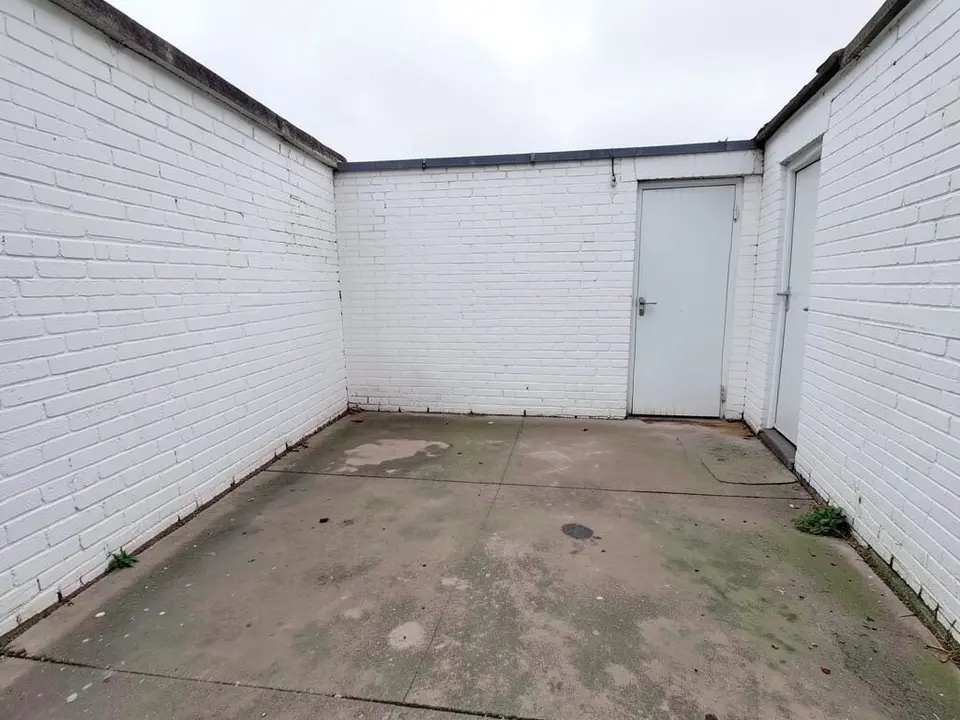
AI-generated example: a tiny courtyard with bare stained concrete paving and whitewashed brick walls on three sides, a door in the back wall and a second door on the right

Before

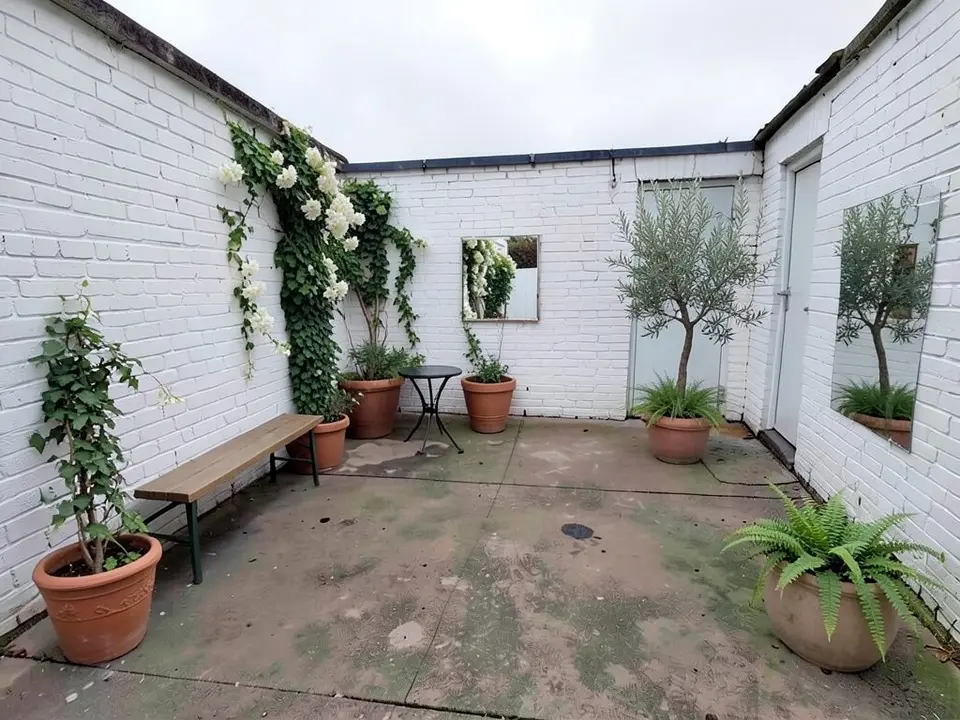
AI-edited version of the same image: a climbing plant with white flowers and ivy up the left wall, a low wooden bench, a small round table, large terracotta pots with an olive tree and a fern, and a mirror on the back wall

After

A paved courtyard (third instruction below). The before image is an AI-drawn stand-in for a tiny courtyard, not a customer photo. What followed the instruction: a flowering climber and ivy cover the left wall, a slim bench, a small bistro table, big pots with an olive tree and a fern, and a mirror on the back wall. What did not: the paving is just as stained as before, and it also hung a second, larger mirror on the right wall that we did not ask for.
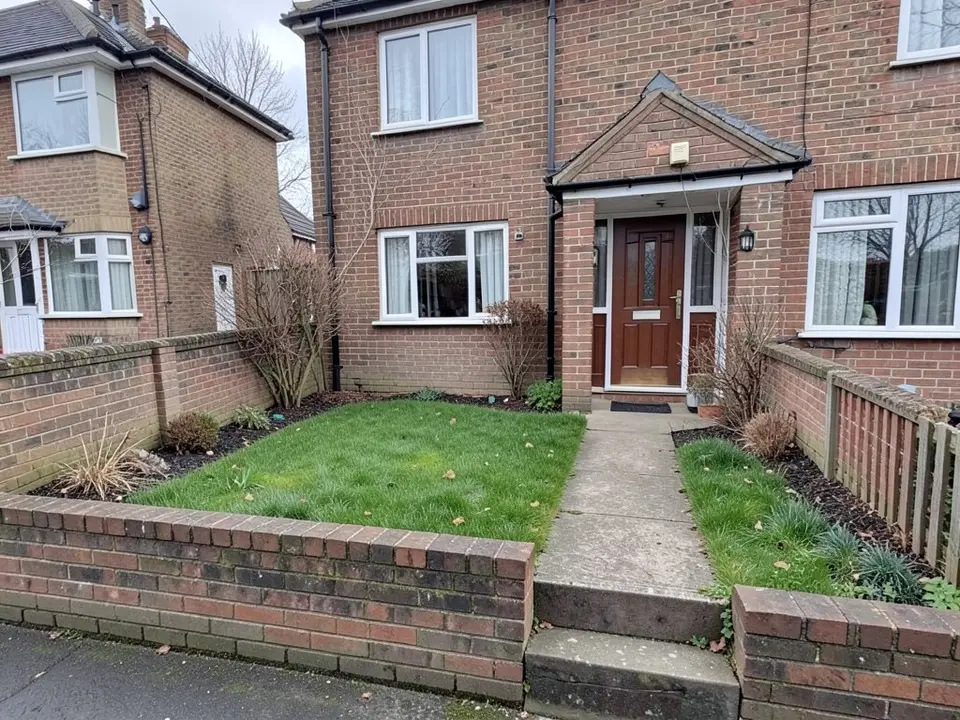
AI-generated example: the small front garden of a red brick house, a patch of grass and a concrete path to a brown front door, with a low brick wall at the pavement

Before

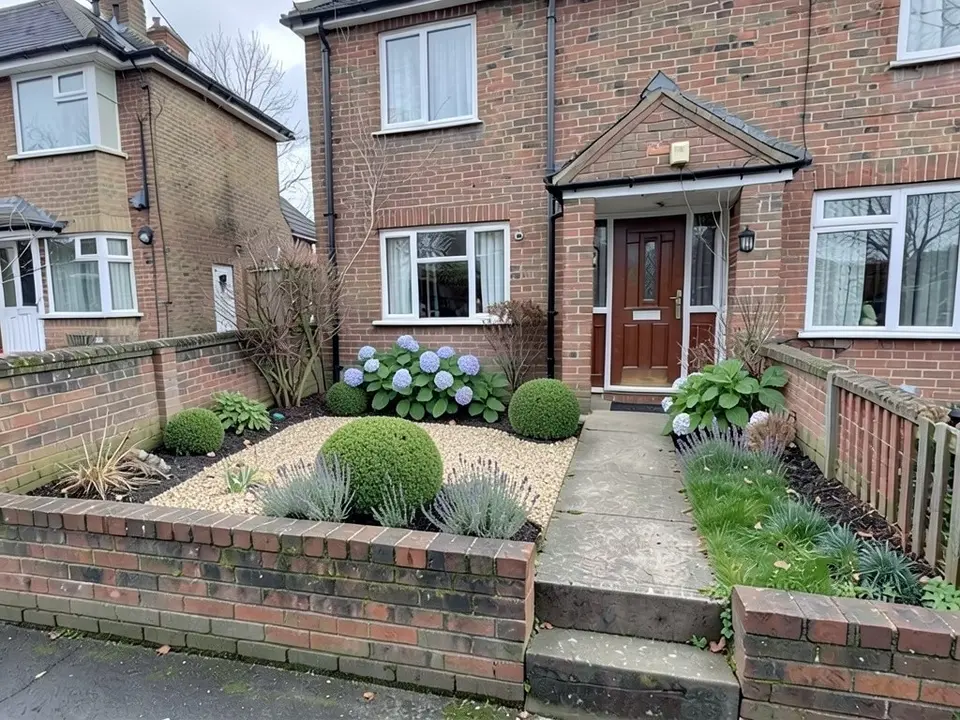
AI-edited version of the same image: the left lawn replaced by pale gravel with three clipped box balls, lavender and a blue hydrangea against the wall; the concrete path and front door are unchanged and the right-hand bed is still mostly grass

After

A small front garden (fourth instruction below). The before image is an AI-drawn stand-in for a plain front garden, not a customer photo. What followed the instruction: the left lawn became gravel with clipped box balls, lavender and a blue hydrangea, and the house, door and wall stayed the same. What did not: the path was not replaced with stone, the right-hand bed is still mostly grass, and the small tree by the gate we asked for did not appear.
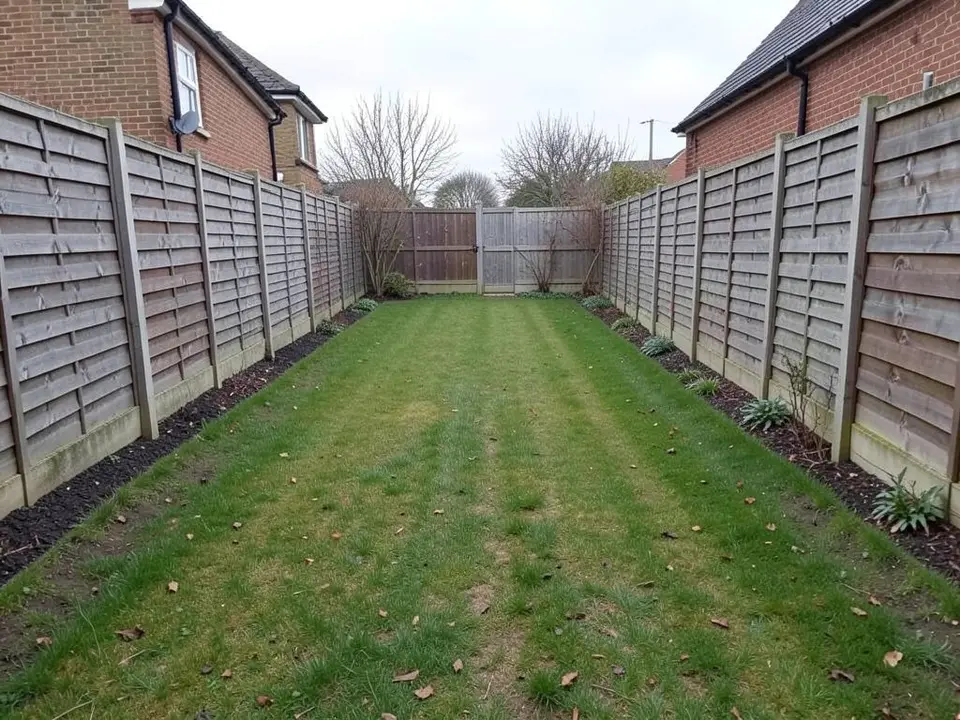
AI-generated example: a long thin back garden seen from the house, a plain lawn running back between two timber fences to a back fence with a gate

Before

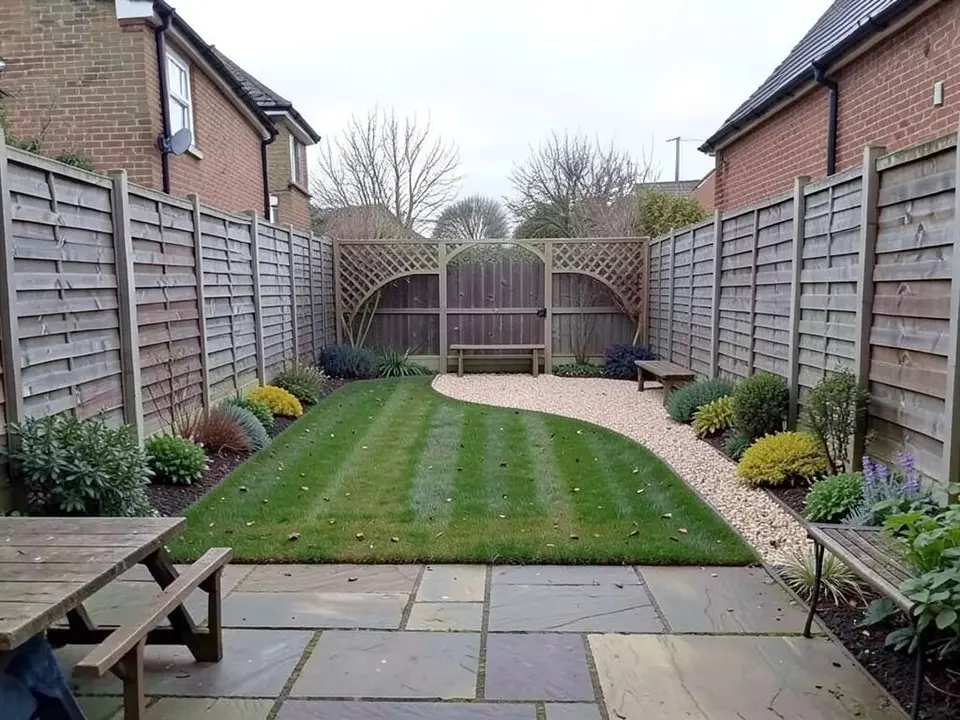
AI-edited version of the same image: a stone patio and a wooden table in the foreground, a lawn with a curved edge beyond it, a gravel path along the right side with shrub borders on both sides and a bench in front of a wooden trellis with an arch at the far end

After

A long thin garden split into rooms (fifth instruction below). The before image is an AI-drawn stand-in for a long thin garden, not a customer photo. What followed the instruction: a patio at the house end, a curved lawn, a gravel path, planted borders on both sides and a bench by a trellis panel at the far end. What did not: the AI moved the viewpoint lower and closer so the garden looks shorter than the original, and the trellis sits at the far end instead of across the middle, with a second bench added beside the gravel.
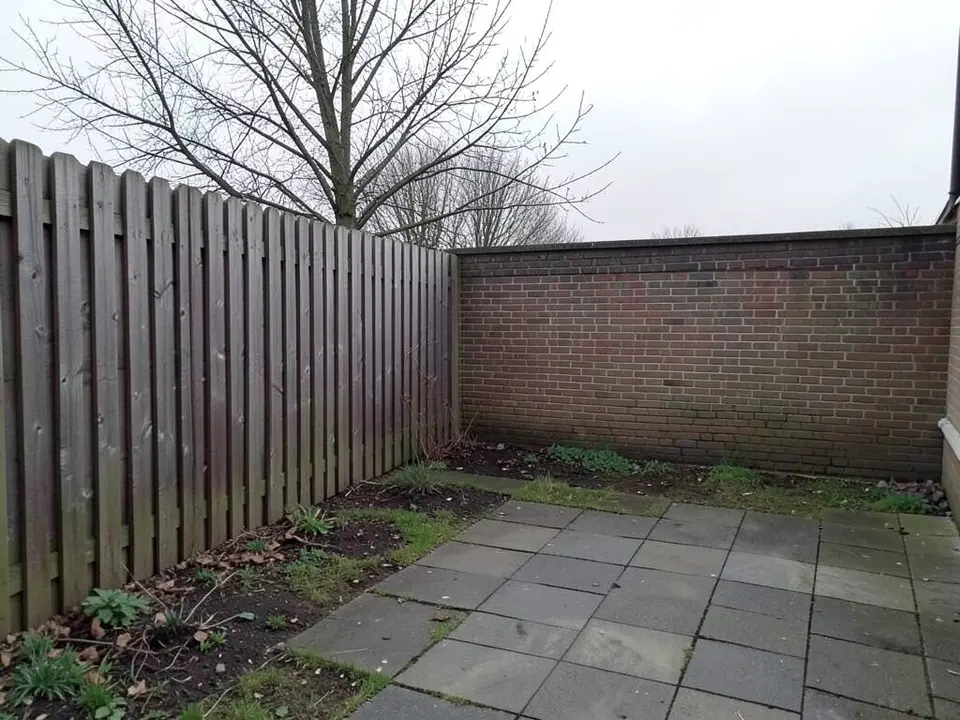
AI-generated example: a small garden with a tall bare timber fence on the left, a bare brick wall at the back and a few grey paving slabs, with no plants

Before

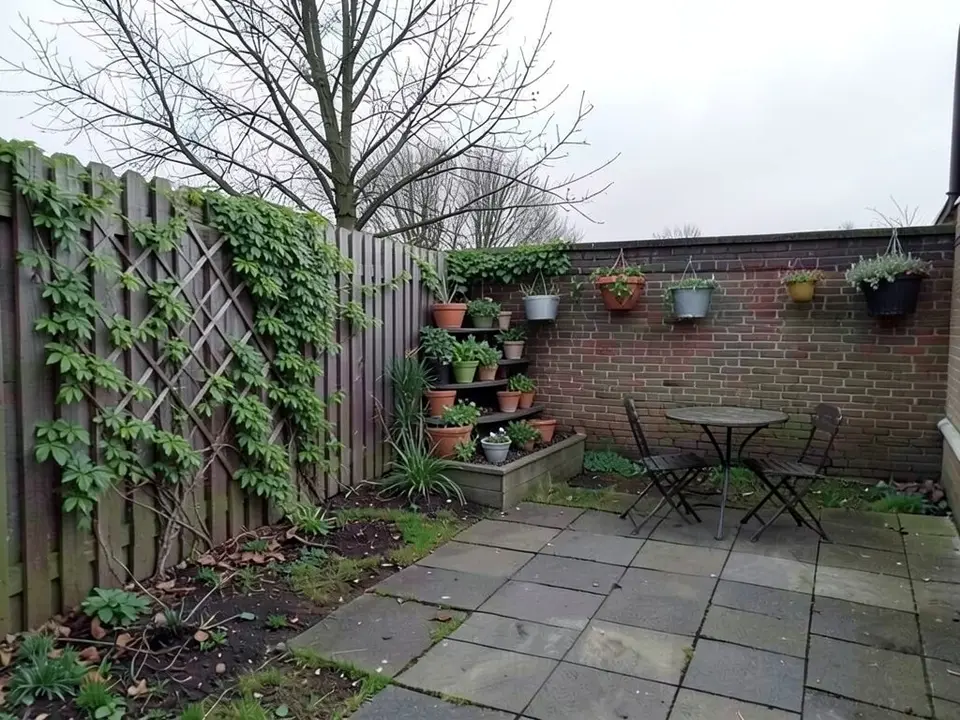
AI-edited version of the same image: a trellis covered with a green climber on the fence, a tiered shelf of pots and a narrow raised bed at its foot, hanging pots on the brick wall and a small round table with two chairs on the paving

After

A garden with no planting space, so the walls do the work (sixth instruction below). The before image is an AI-drawn stand-in for a bare small garden, not a customer photo. What followed the instruction: trellis with a climber on the fence, a tiered shelf of pots, a narrow raised bed, hanging planters on the wall and a small table with two chairs. What did not: we asked for climbers on the fence and the wall but only the fence has one, and we asked for one chair and got two. The plants are small drawings, so they do not show how the climber would look in its first year.

Plants for a small garden

Fewer kinds of plant, repeated, look calmer than one of everything. The RHS suggests evergreens and grasses for good looks with little upkeep, low box hedging or clipped box for a small cottage-style garden with fewer varieties, and a raised bed for herbs, vegetables or fruit with a few flowers for colour.

For the walls, choose climbers that suit your light, and ask a local nursery or your county extension or garden centre which do well in your soil and climate. For pots, choose the biggest ones the space allows, since they dry out more slowly than small ones.

  • Evergreens and grasses: Keep structure in winter and need little care.
  • Clipped shapes: Box balls or low hedges give a tidy edge to a path or bed (check local advice on box pests in your area).
  • Climbers: Put height on a fence or wall without taking any floor space.
  • Herbs in a raised bed: Useful and neat in a small footprint.
  • One small tree: A single multi-stem or potted tree gives height and a focal point.

How to try small garden ideas on your own photo

Use Custom mode for this. None of the Yard Redesign styles is made for a tiny garden, and Custom lets you name each change and say what must stay the same.

  1. Take a photo in daylight from the back door or the far end, so the whole garden is in frame.
  2. Open the landscape tool and sign in with Google or an email code. You get 1 free render with a free account.
  3. Under Select Landscape Mode, pick Custom.
  4. In the Custom Design Requirements box, name the changes (for example a gravel path, raised beds, climbers on the fence, a bistro table), where they go, and what must stay the same, such as the fence, shed and house.
  5. Drop your photo into Upload Your Garden Image and press Generate Custom Design.
  6. Compare the result with your photo, change one thing at a time and run it again.

What the AI can and cannot do

The AI shows a look: roughly how a path, a border or a trellis would sit in your garden. That helps you decide and explain what you want to a gardener or builder.

It is not a plan. It does not measure, it does not know your soil, light or climate, and it does not always follow the instruction: in all six examples above, at least one thing we asked for did not appear, or something we did not ask for did.

Small garden instructions to paste into Custom mode

These are the exact instructions we used for the six examples above, in the same order. In the landscape tool, choose Custom, paste one into the Custom Design Requirements box, then upload your photo. Swap in your own plants, the spot and what must stay.

  • Redesign this narrow garden: keep the same walls, fence, shed and house. Replace most of the lawn with a gravel path that curves gently from side to side, a small square patio with a bistro table and two chairs at the house end, and deep planted borders along both sides with ornamental grasses, lavender, hardy geraniums and a small multi-stem tree. Same camera angle.
  • Redesign this small square garden: keep the house, fence and camera angle. Replace the patchy lawn with a compact stone patio and a smaller square of lawn, raised timber beds along the fence planted with herbs, roses and perennials, and one small tree in a large pot. Keep it tidy and realistic.
  • Redesign this tiny courtyard: keep the same walls, paving and back door. Add tall pots and wall planters with climbing jasmine and ivy, a slim bench along one wall, a small bistro table, two large containers with an olive tree and ferns, and a mirror on the far wall. Same camera angle.
  • Redesign this small front garden: keep the house, front door and low wall. Replace the grass with gravel, a stone path to the door, planted beds with box balls, lavender and hydrangea against the wall and a single small tree by the gate. Same camera angle.
  • Turn this long thin lawn into three garden rooms: keep both fences and the camera angle. Foreground: stone patio with outdoor table. Middle: a wooden trellis screen with an arch gap across the garden, lawn with a curved edge. Far end: a small gravel area with a bench. Planted borders of shrubs and flowers along both fences.
  • Redesign this small garden using the walls: keep the fence, brick wall and paving. Add climbing plants on trellis on the fence and wall, a tiered wall shelf of pots, a narrow raised bed along the base, a small round table and chair, and hanging planters. Same camera angle.

Frequently asked questions

How can I make a small garden look bigger?

Bend the path, split the space into two or three areas with a screen or a change of surface, plant the edges, and put climbers and pots on the walls so the floor stays clear. A mirror can also help in a dark courtyard.

What is the best layout for a long, narrow garden?

Avoid one straight lawn down the middle. A path that bends, borders that widen and narrow along the length, and a trellis or hedge that splits it into rooms make it feel wider and more interesting. The long garden example above shows one version.

What are good plants for a small garden?

The RHS points to evergreens and grasses for low upkeep, climbers for a green backdrop, and raised beds for herbs or vegetables with a few flowers. Repeat a few kinds of plant instead of mixing many.

How do I make a small garden look good on a budget?

Gravel or paving can cost less to look after than a small lawn, a few large pots hold more than many small ones, and climbers on a fence use no floor space. Check prices locally, since they vary a lot.

Should I keep a lawn in a small garden?

Only if you use it. A lawn too small to walk or sit on often looks better as a patio, gravel or a planted bed. Our square garden example shows what happens when the lawn stays: the AI left it patchy, so decide first and then say so in the instruction.

What can I do with a small paved courtyard?

Use the walls. Climbers on a trellis, wall pots, a slim bench and a few big containers add green without taking floor space. The RHS also mentions a small shelter in a tiny courtyard for a private corner.

What is the difference between a small garden and a small backyard?

They are the same space with different local words. 'Garden' is the UK, Irish and Australian word for the whole outdoor space; 'backyard' is the US one. Our small backyard landscaping page covers the US wording and this page uses the UK one.

Can the AI show these ideas on my own garden photo?

Yes. Upload a photo in Custom mode and describe the changes and what must stay the same. You get 1 free render with a free account. It draws a possible look and may not follow every detail of your instruction, so check it against your own measurements before you buy anything.

More small garden ideas

If your photo is dark or soft, run it through the AI photo enhancer first, then bring it back here. The exterior design tool covers the house itself. You can read more about who builds these tools on our about page.

For more, browse all of our landscaping ideas, sorted into front yards, backyards, patios, gardens, pools, styles and regions.