
How to use the topsoil calculator
- Pick Feet / inches or Metres / cm. Switching converts the sizes you already typed.
- Pick the shape: Rectangle (length and width), Circle (diameter), Triangle (base and height) or Area if you already know the square feet or square metres. For an odd-shaped yard or bed, split it into rectangles, circles and triangles, work out each one and add them up.
- Enter the depth, or tap a preset: 1 in (2.5 cm) to top-dress a lawn, 4 in (10 cm) under new sod or turf, 6 in (15 cm) for a new lawn from seed or a new flower bed, 12 in (30 cm) to fill a raised bed.
- Choose your bag size. The usual US garden-centre bag is 40 lb, about 0.75 cu ft; check the label, because 1, 1.5 and 2 cu ft bags are sold too. In the UK, small bags are sold in litres and bulk bags hold about 0.5 or 0.75 m³.
- Leave +10% extra on unless you have a reason to change it (see how much extra to order, below). Add a price per cubic yard (or cubic metre) and a price per bag to compare bulk with bags.
- Read the answer: cubic yards (or cubic metres) for a bulk delivery, the number of bags, and the approximate weight, for suppliers that sell by the ton or tonne.
The results are estimates for loose topsoil. Soil settles after it is spread, watered and walked on, and wet soil weighs more than dry, so treat the weight as a guide and order by volume where you can.
Topsoil formula: cubic yards, bags and tons
In US units, with the depth in inches:
- Cubic yards = area (sq ft) × depth (in) ÷ 324
- Cubic feet = area (sq ft) × depth (in) ÷ 12
- Bags = cubic feet ÷ bag size (0.75 cu ft for a 40 lb bag), rounded up
- Tons = cubic yards × 1 to 1.3 (dry, loose topsoil)
Example: a 10 × 20 ft patch at 4 in deep is 200 × 4 ÷ 324 = 2.47 yd³, or 66.7 ft³. With 10% extra: 2.72 yd³ (73.3 ft³), so 98 bags of 40 lb or about 2.7–3.5 tons. At that size, a bulk delivery is the sensible way to buy it.
In metric, with the depth in centimetres:
- Cubic metres = area (m²) × depth (cm) ÷ 100
- Tonnes = cubic metres ÷ 0.67 (about 1.5 tonnes per m³)
- Bags = cubic metres × 1,000 ÷ bag size in litres, or cubic metres ÷ bulk bag size (0.5 or 0.75 m³)
Example: a 10 × 10 m lawn at 10 cm deep is 100 × 10 ÷ 100 = 10 m³. With 10% extra: 11 m³, about 16.4 tonnes, or 22 bulk bags of 0.5 m³ (15 of 0.75 m³).
For a circle, the area is 3.14 × radius² (half the diameter, squared). For a triangle, it is base × height ÷ 2.
How deep should topsoil be? Depth by project
Depth changes the answer more than anything else: a new lawn at 6 inches needs half as much topsoil again as at 4 inches. These are the depths the guides we read recommend.
| Project | Depth | Notes |
|---|---|---|
| Top-dressing a lawn | 0.5–1 in (1–2.5 cm) | Thin enough that the grass shows through |
| Levelling low spots | 1–3 in (2.5–7.5 cm) | Fill deeper dips in stages so the grass can grow through |
| Under new sod (turf) | 2–6 in (5–15 cm) | CalculatorSoup says 2–4 in; Almanac says 4–6 in; Rolawn says 100–150 mm for lawns |
| New lawn from seed | 4–6 in (10–15 cm) | On bare or builder's subsoil |
| New flower bed or border | 6–8 in (15–20 cm) | Rolawn: 150–200 mm for borders |
| Vegetable garden | 8–12 in (20–30 cm) | Rolawn: 300–400 mm for root vegetables |
| Raised beds | 6–18 in (15–45 cm) | Usually filled with a mix, not topsoil alone (see below) |
Four of these as pictures, with the sums for each. The left image of each pair was generated by AI as a stand-in for an ordinary yard, and the right image is that same picture edited by AI from a written instruction. They are not photos of real homes; we made them with our own AI model, which is not one of the models you can pick in the landscape tool. Two of the four were run more than once, as their captions say.
1. New lawn on bare subsoil: 4 inches
A 1,000 sq ft back yard at 4 in deep is 333 ft³ = 12.3 yd³; with 10% extra, 13.6 yd³, about 13.6–17.7 tons. At 6 in, 20.4 yd³ with the extra. That is far too much for bags (489 bags of 40 lb), so order bulk. Metric: 100 m² at 10 cm = 11 m³ with the extra, about 16.4 tonnes, or 22 bulk bags of 0.5 m³.
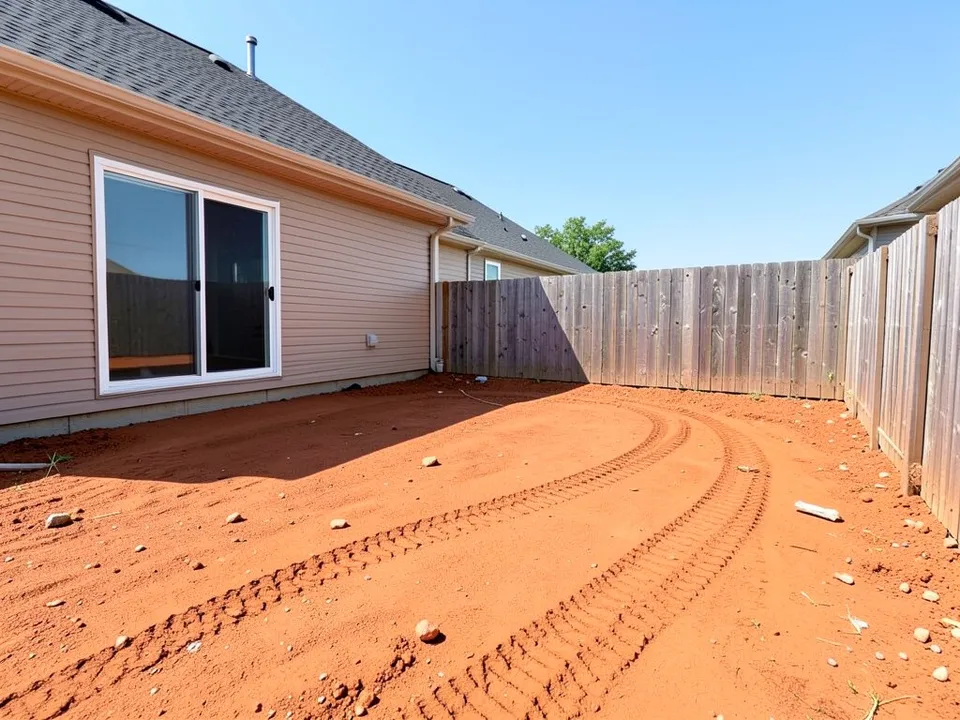
Before
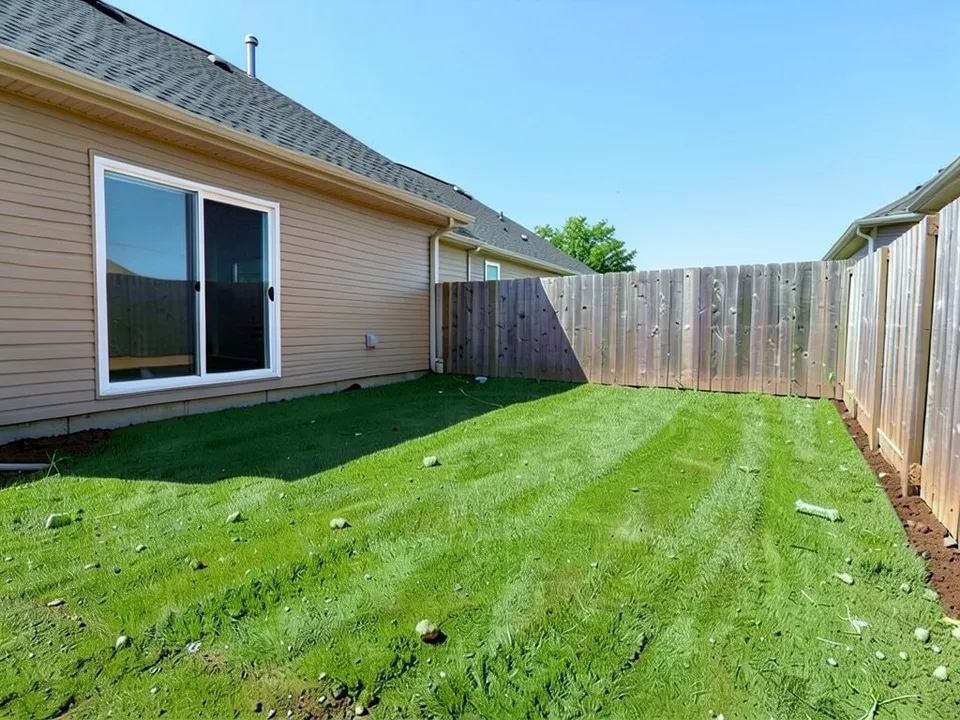
After
2. Raised beds: 12 inches deep
Three 8 × 4 ft beds, 12 in deep, are 96 ft³ = 3.56 yd³; with 10% extra, 3.9 yd³ or 141 bags of 0.75 cu ft. With the 40% topsoil, 40% compost and 20% sand mix that Almanac suggests, the topsoil share is 1.56 yd³ with the extra. Metric: three 2.4 × 1.2 m beds at 30 cm = 2.85 m³ with the extra, or 6 bulk bags of 0.5 m³.
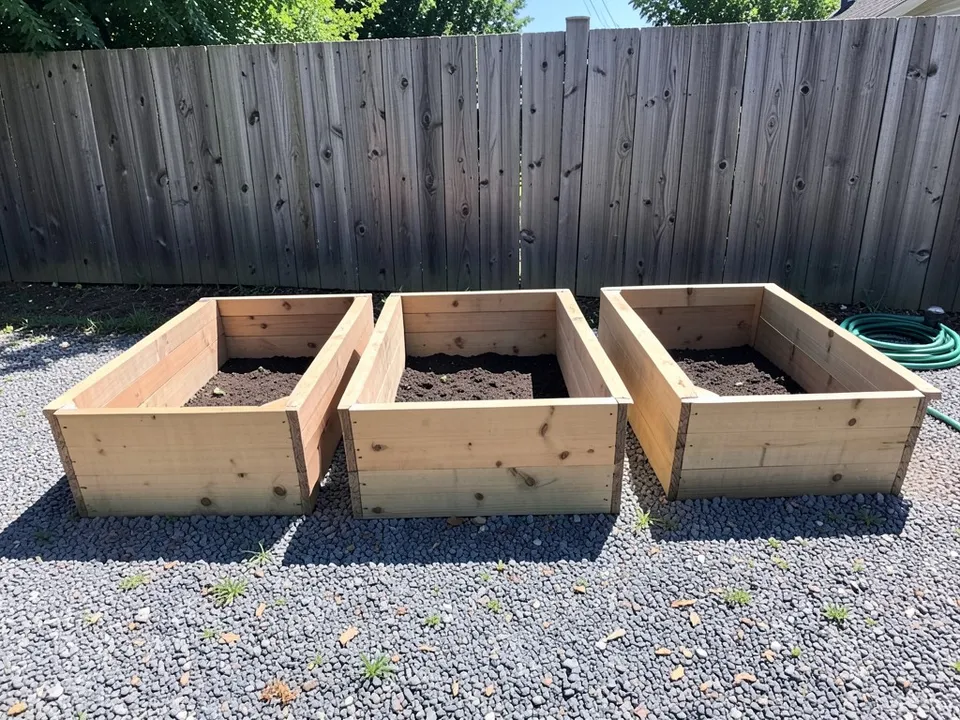
Before
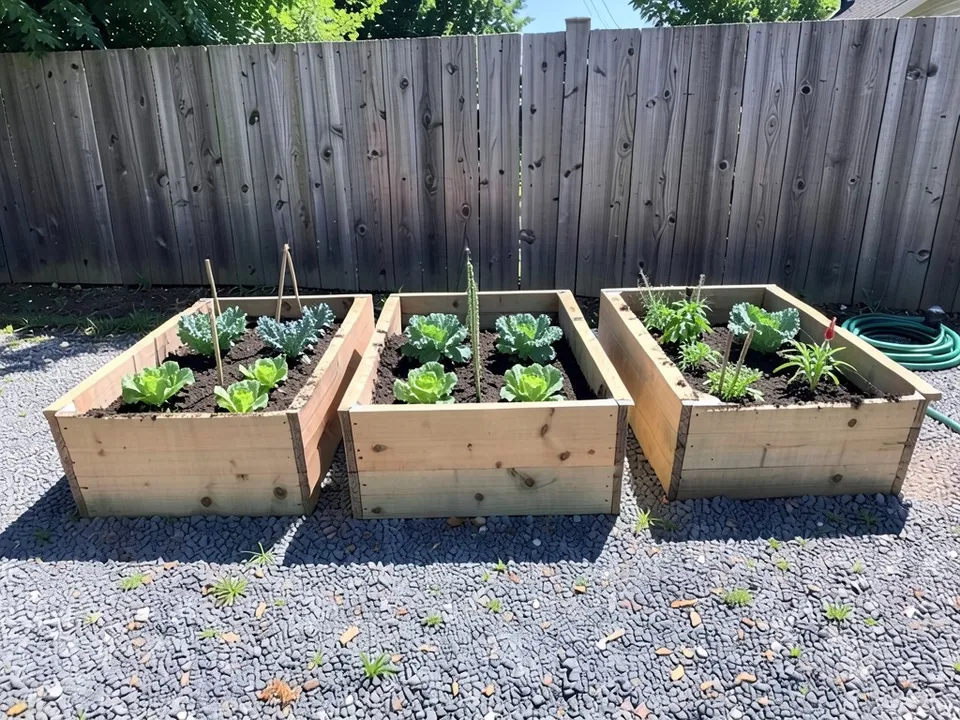
After
3. Filling sunken patches in a lawn: 2 inches
Five sunken patches that add up to about 60 sq ft, filled 2 in deep on average, take 10 ft³ = 0.37 yd³; with 10% extra, 11 ft³ = 0.41 yd³, or 15 bags of 0.75 cu ft. Metric: 6 m² at 5 cm = 0.33 m³ with the extra, or 14 bags of 25 L. For a dip deeper than about 2 in, fill it in stages and let the grass grow up through each layer.
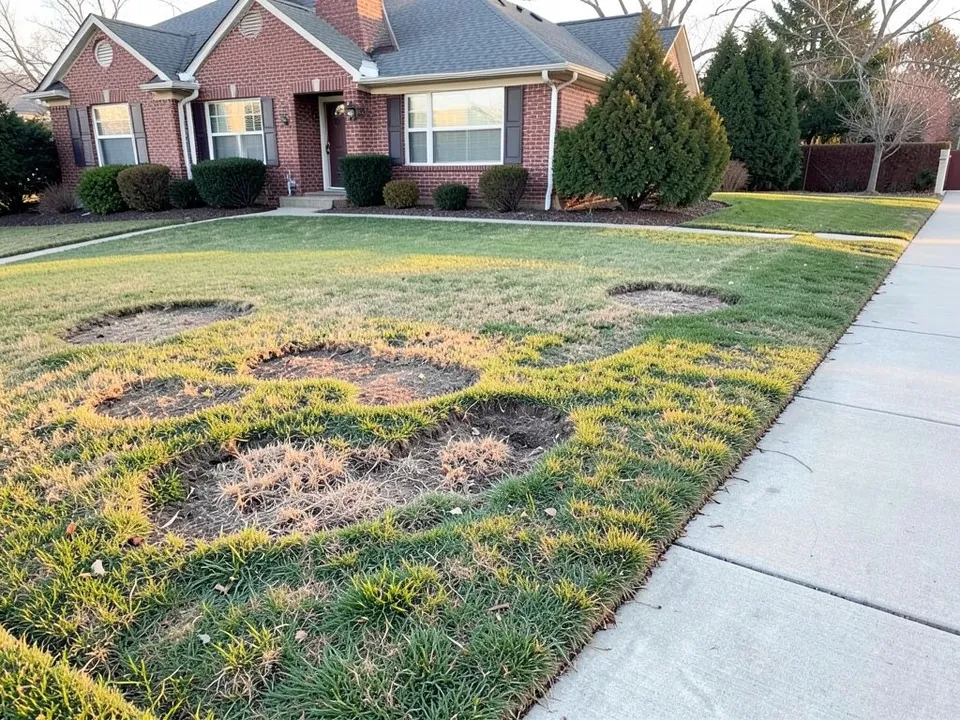
Before
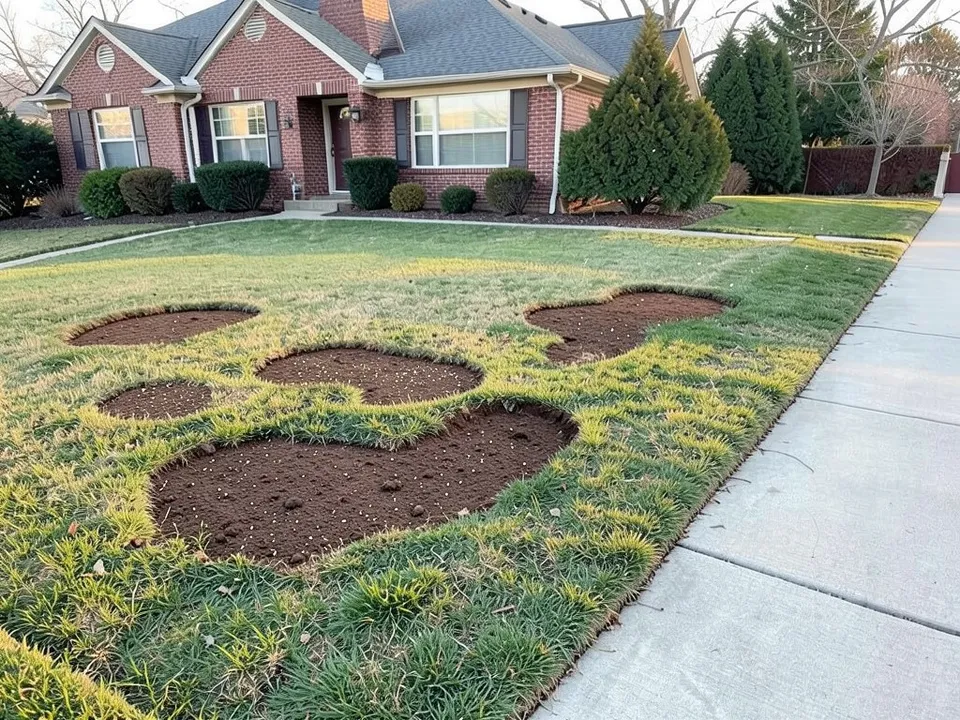
After
4. New flower border: 6 inches
A border 20 ft long and 3 ft deep (60 sq ft) at 6 in is 30 ft³ = 1.11 yd³; with 10% extra, 1.22 yd³ or 44 bags of 0.75 cu ft. Metric: 6 × 0.9 m at 15 cm = 0.89 m³ with the extra, or 2 bulk bags of 0.5 m³.
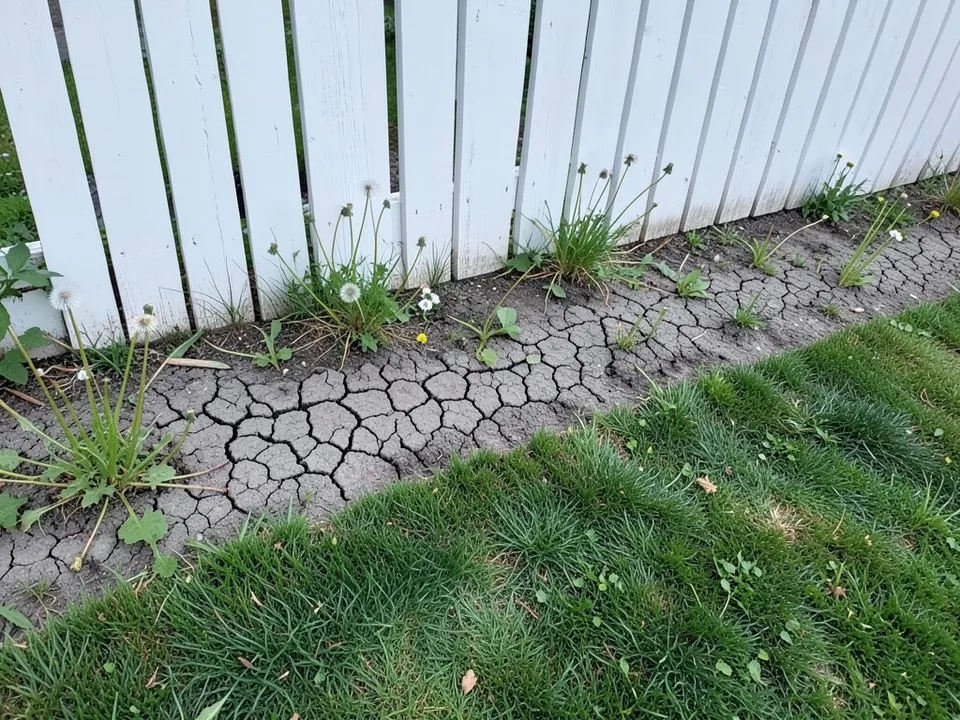
Before
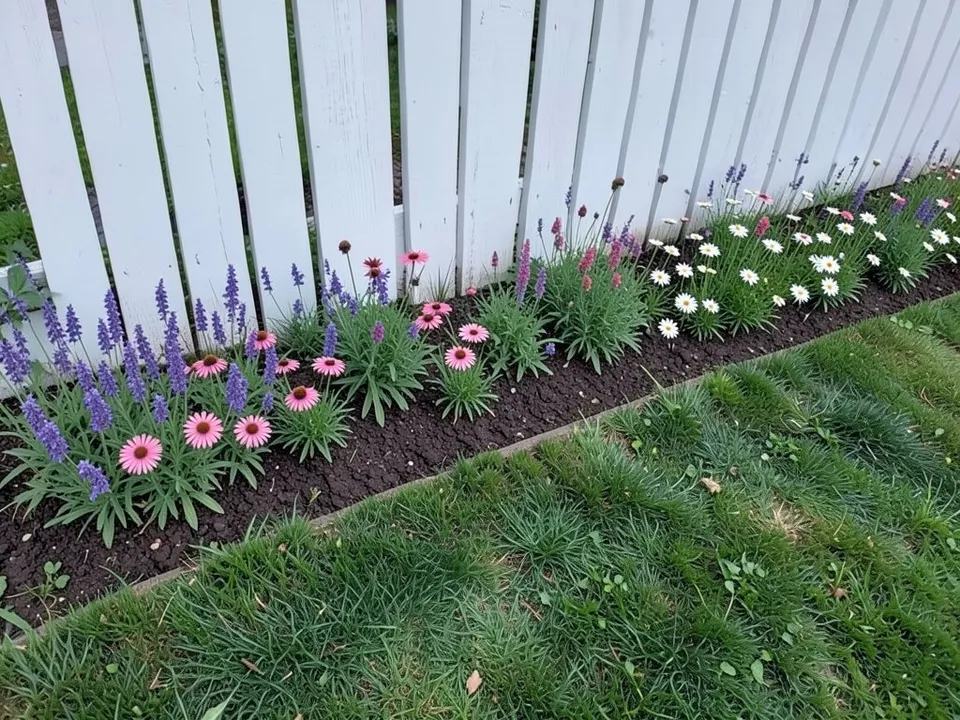
After
Planning a new lawn, bed or border? Upload a photo of your yard and see a design on it before you order the soil.
Design my yard from a photoHow much does a yard or a bag of topsoil cover?
If you already have a load or a stack of bags in mind, work backwards. Coverage is the same for every soil, because it is a volume.
| Depth | 1 cubic yard | 1 bag of 0.75 cu ft (40 lb) | 1 bag of 1 cu ft |
|---|---|---|---|
| 1 in | 324 sq ft | 9 sq ft | 12 sq ft |
| 2 in | 162 sq ft | 4.5 sq ft | 6 sq ft |
| 4 in | 81 sq ft | 2.25 sq ft | 3 sq ft |
| 6 in | 54 sq ft | 1.5 sq ft | 2 sq ft |
| 12 in | 27 sq ft | 0.75 sq ft | 1 sq ft |
| Depth | 1 m³ | 1 bulk bag of 0.5 m³ | 1 bulk bag of 0.75 m³ |
|---|---|---|---|
| 2.5 cm | 40 m² | 20 m² | 30 m² |
| 5 cm | 20 m² | 10 m² | 15 m² |
| 10 cm | 10 m² | 5 m² | 7.5 m² |
| 15 cm | 6.7 m² | 3.3 m² | 5 m² |
| 30 cm | 3.3 m² | 1.7 m² | 2.5 m² |
| Bag size | Bags |
|---|---|
| 0.75 cu ft (40 lb) | 36 |
| 1 cu ft | 27 |
| 1.5 cu ft | 18 |
| 2 cu ft | 13.5 (buy 14) |
| 25 L (per m³) | 40 |
| Bulk bag 0.5 m³ (per m³) | 2 |
How much does topsoil weigh? Yards to tons
Some suppliers sell topsoil by the ton or tonne instead of by the yard, and a truck or trailer has a weight limit, so it helps to know both. Inch Calculator gives 1.0–1.3 US tons per cubic yard for dry, loose topsoil and 1.5–1.7 tons when it is wet or compacted. Rolawn, a UK supplier, puts one tonne of standard topsoil at about 0.67 m³, which is about 1.5 tonnes per cubic metre.
- 1 cubic yard: about 1–1.3 tons dry (2,000–2,600 lb).
- 1 cubic metre: about 1.5 tonnes.
- A 40 lb bag: about 0.75 cu ft, so 36 bags (1,440 lb) make a cubic yard.
- A half-ton pickup can rarely carry even one full cubic yard of topsoil; check your payload before you load it.
How much extra topsoil to order
The calculator adds 10% by default; CalculatorSoup suggests 10–20% for settling and waste. Loose topsoil settles once it is raked, rolled and watered, ground is rarely flat, and running short halfway through a lawn means a second delivery charge.
- +5%: a small bed or raised bed you measured carefully.
- +10%: most lawns, beds and borders.
- +15–20%: uneven or sloping ground, or a new lawn you will roll firm before seeding.
Bagged vs bulk topsoil, and what topsoil costs
Garden centres sell topsoil in bags, mostly 40 lb (about 0.75 cu ft) in the US and in litres in the UK. Landscape suppliers sell it loose by the cubic yard, cubic metre or ton, and in the UK also in bulk bags of about 0.5 or 0.75 m³.
- Bulk (US): about $12–$55 per cubic yard, with delivery averaging $65–$100 (Bob Vila, citing HomeAdvisor and Angi).
- Bags (US): a cubic yard is 36 bags of 40 lb, so multiply the shelf price of one bag by 36 to compare it with a yard of bulk.
- Bulk bags (UK): Rolawn lists its topsoil bulk bags (0.5 m³ standard, 0.75 m³ large) at £129.99–£164.99 including VAT, with free delivery to most UK mainland addresses.
Screened topsoil has been sifted to take out stones, roots and clods, and costs more than unscreened; it is the one to buy for a lawn or a bed. Blends with compost cost more again and suit vegetable and raised beds. Prices vary a lot by region; enter your own supplier's prices in the calculator.
Plan the lawn or bed on a photo of your own yard
Topsoil is the first step of a new lawn, border or vegetable patch. Before you order it, upload a photo of your yard to our AI landscape tool and try a layout: where the lawn ends, how wide the beds are and what goes in them. For ideas, see our raised garden bed ideas and flower bed ideas; to finish the beds, use the mulch calculator.
Design my yard from a photo1 free render with a free account (sign in with Google or an email code). More renders come with a paid plan (see pricing).
Topsoil calculator questions
How do I calculate how much topsoil I need?
Multiply the area in square feet by the depth in inches and divide by 324 to get cubic yards (324 = 27 cubic feet in a yard × 12 inches in a foot). For bags, multiply the area by the depth in inches, divide by 12 to get cubic feet, then divide by the bag size (0.75 for a 40 lb bag). In metric, multiply the area in m² by the depth in cm and divide by 100 to get cubic metres. Add about 10%.
How much topsoil do I need for a 10 × 10 area?
At 4 inches deep: 100 sq ft × 4 ÷ 324 = 1.23 cubic yards, or 33 cubic feet. With 10% extra, 1.36 yd³, which is 49 bags of 40 lb (0.75 cu ft) or 37 bags of 1 cu ft. At 6 inches, half as much again: about 2 yd³ with the extra.
How many bags of topsoil are in a yard?
36 bags of 0.75 cu ft (the usual 40 lb bag), 27 bags of 1 cu ft, 18 bags of 1.5 cu ft and 13.5 bags of 2 cu ft. In metric, a cubic metre is 40 bags of 25 litres or 2 bulk bags of 0.5 m³.
How much does a yard of topsoil weigh?
About 1 to 1.3 US tons (2,000–2,600 lb) dry and loose, and about 1.5 to 1.7 tons wet or compacted (Inch Calculator). In metric, Rolawn puts one tonne of standard topsoil at about 0.67 m³, so a cubic metre is about 1.5 tonnes. If your supplier sells by weight, ask which figure they use.
How much does a yard of topsoil cover?
324 sq ft at 1 inch, 162 sq ft at 2 inches, 81 sq ft at 4 inches, 54 sq ft at 6 inches and 27 sq ft at 12 inches. A cubic metre covers 10 m² at 10 cm and about 6.7 m² at 15 cm.
How deep should topsoil be for a new lawn?
About 4–6 inches (10–15 cm) for a new lawn from seed, and the guides we read give 2–6 inches under new sod: CalculatorSoup says 2–4 in, Almanac 4–6 in and Rolawn 100–150 mm for lawns. To level an existing lawn, 1–3 inches; to top-dress it, half an inch to an inch.
Should I fill a raised bed with topsoil only?
Usually not. Topsoil alone can pack down in a raised bed. Almanac suggests a mix of 40% topsoil, 40% compost and 20% sand. Use the calculator for the full bed volume, then take 40% of it for the topsoil.
Is it cheaper to buy topsoil in bags or in bulk?
Bulk is far cheaper per cubic yard. Bob Vila, citing HomeAdvisor, puts bulk topsoil at $12–$55 per cubic yard, with delivery averaging $65–$100. A cubic yard is 36 bags of 40 lb, so multiply your store's bag price by 36 to compare. Bags make sense for a raised bed or a few patches; for a lawn, order bulk.
Sources for the depths, weights and prices
Read on 11 November 2026.
- CalculatorSoup, Topsoil calculator: shapes, bag sizes, depth by project and 10–20% settling and waste
- The Old Farmer's Almanac, Topsoil calculator: depths by project and the raised-bed mix
- Inch Calculator, Soil calculator: weight per cubic yard and bag sizes
- Omni Calculator, Soil calculator: bags per cubic yard and soil density
- Rolawn, Calculating topsoil requirements: depths in mm and tonnes to cubic metres
- Rolawn, Topsoil: bulk bag sizes (0.5 and 0.75 m³) and prices
- Bob Vila, How to hire garden soil delivery: topsoil price per cubic yard and delivery cost