
What goes in a sensory garden
Each part of the garden is chosen for a sense. Scent: lavender, rosemary, mint and scented climbers such as jasmine, ideally planted around the seat where people stop. Touch: soft lamb's ear, ornamental grasses and smooth stone. Sound: moving water, grasses that rustle, gravel underfoot. Sight: strong colour and contrast. Taste: herbs and edible flowers such as pansies and nasturtiums.
Keep anything edible in one clearly marked bed, and keep plants that are toxic or spiny out of reach, especially in gardens for children. Many designers also add a quiet corner without water or chimes, for visitors who find noise too much.
Paths and raised beds people can actually use
Accessible garden guides commonly suggest a main path about 5 ft wide, or 4 ft with places to turn around, and side paths at least 3 ft wide. A firm, smooth surface such as pavers or compacted fine gravel works for wheelchairs and walkers; loose bark mulch does not. Loop paths let people walk around without turning back.
Oregon State University Extension suggests raised beds about 2 ft high, or up to about 3 ft on legs for people who garden standing or seated, and no more than about 4 ft wide when you can reach in from both sides (narrower for children). That way nobody has to step into the bed.
How to try a sensory garden on your own photo
The tool above is in Custom mode, which has a Custom Design Requirements box. Describe the path, the beds and their height, the plants, the seat and any water, and where each one goes.
- Take the photo in daylight from where you usually see that part of the yard, with the fence, wall or patio in frame.
- Describe the change in the Custom Design Requirements box: what to add, where it goes, and what must stay, such as the house, fence or patio.
- Use Upload Your Garden Image to add the photo, then click Generate Custom Design. You sign in with an email code or Google when you generate.
- Compare the result with your photo. If something is in the wrong place or too big, name the spot and the size, and try again.
What the AI can and cannot do
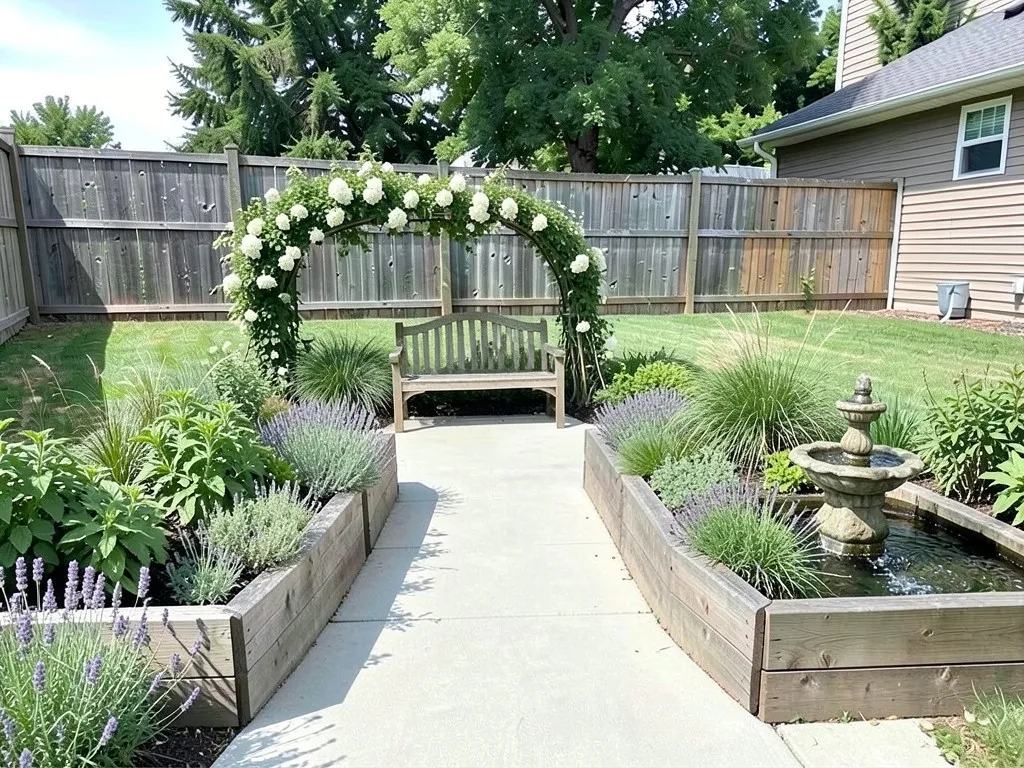
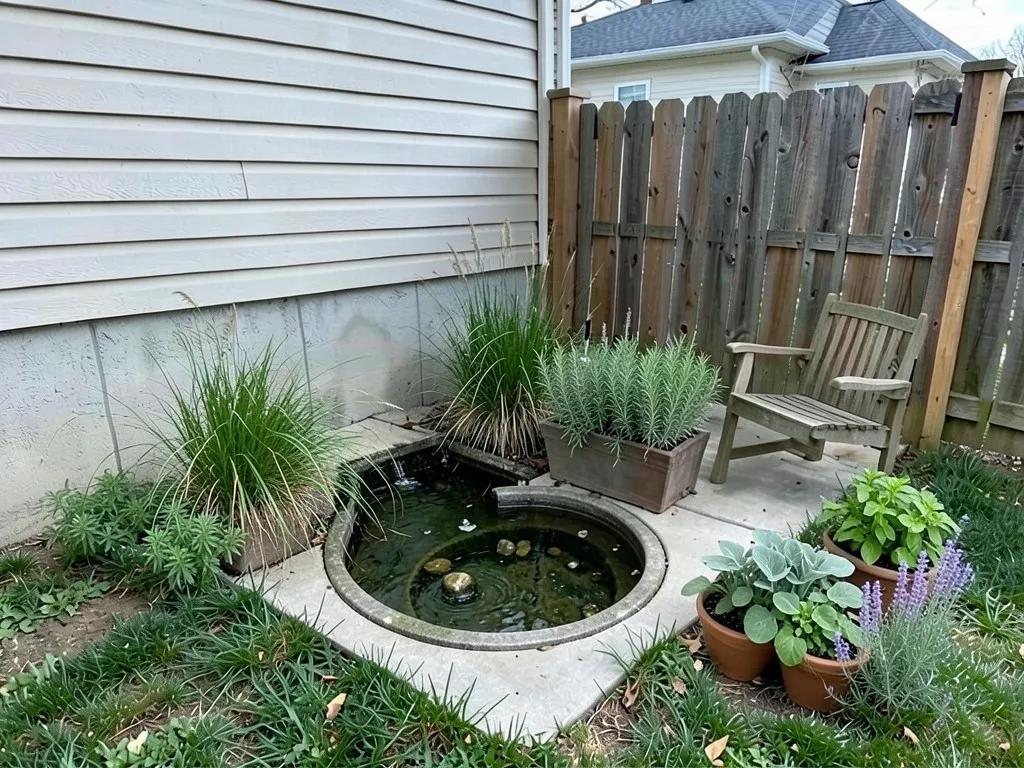
The AI shows the look: where a path, beds, a bench and water could sit in your yard. It does not measure path widths or bed heights, check sun, drainage or plant safety. In the examples above it drew a straight path instead of a loop, made the beds lower than asked and sank a pond into a patio, so check each result against your plan and measure on the ground.
Sensory garden instructions to paste into Custom mode
These are the exact instructions we used for the two examples above, in the same order. In the tool above, Custom mode is selected: paste one into the Custom Design Requirements box, then upload your photo.
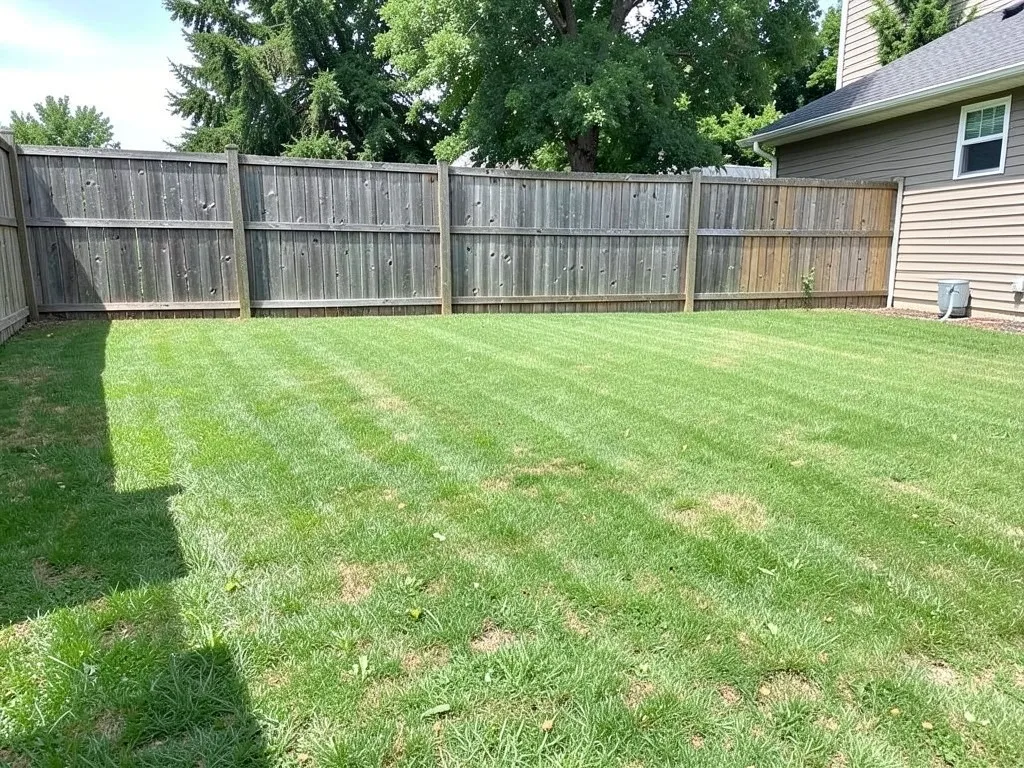
- Turn only the lawn into a sensory garden: a wide smooth concrete paver loop path, two waist-high wooden raised beds with herbs, lavender borders, ornamental grasses, a wooden bench under an arch covered in climbing jasmine, and a small bubbling stone fountain. Keep the fence, the house, the trees behind, the sky and the camera angle exactly the same
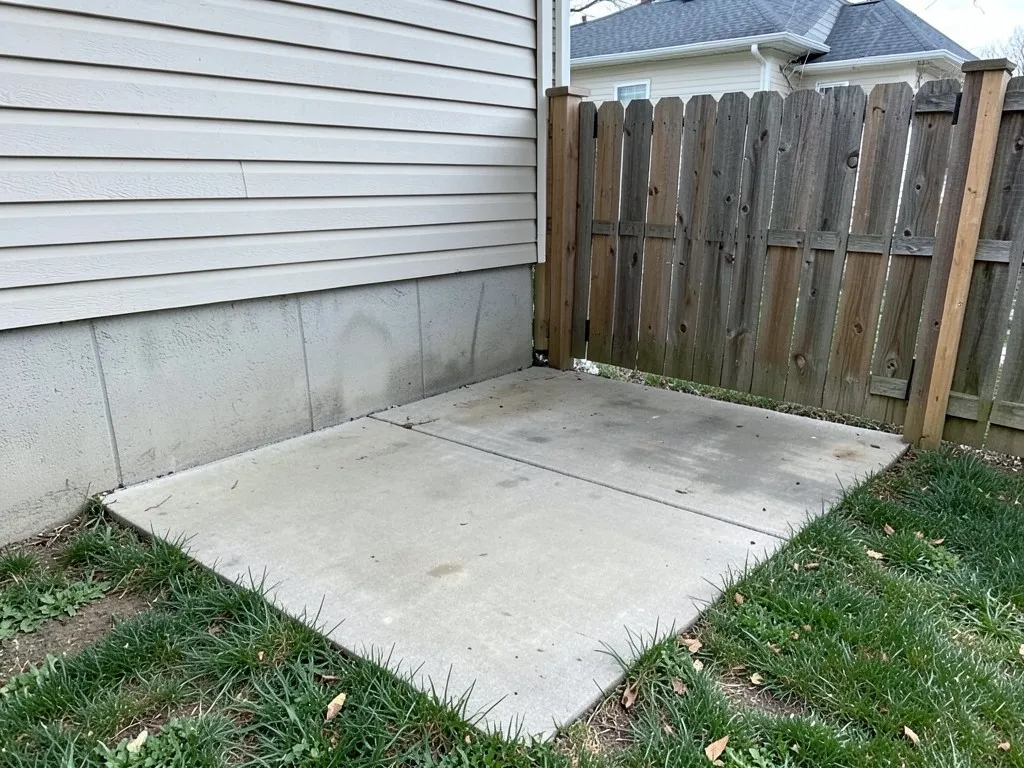
- Add a sensory garden to this corner: a small bubbling bowl water feature, tall ornamental grasses, wind-safe herb planters with rosemary and mint, lamb's ear and lavender in pots, and a wooden chair. Keep the concrete patio, the house wall, the fence, the sky and the camera angle exactly the same
Frequently asked questions
What plants are good for a sensory garden?
Pick for each sense: lavender, rosemary and mint for scent, lamb's ear and ornamental grasses for touch, grasses and water for sound, bright flowers for sight, and herbs or edible flowers such as pansies and nasturtiums for taste. Keep edible plants in one marked bed.
How high should raised beds be in a sensory garden?
Oregon State University Extension suggests about 2 ft high, or up to about 3 ft on legs for gardening while standing or seated, and no wider than about 4 ft if you reach in from both sides.
Is the AI landscape tool free?
Yes, to start: 1 free render with a free account, and free renders carry a watermark. If you want more renders without the watermark, choose a paid plan.
More yard ideas
- Butterfly garden ideas
- Vegetable garden ideas
- Cottage garden ideas
- Garden arbor ideas
- Pond landscaping ideas
- Small backyard landscaping ideas
Want to see any of these on your own yard? Open our AI yard design tool, upload a photo and describe the change, or browse all AI design tools.